The Labrador Retriever is a friendly, outgoing breed beloved as a family companion and devoted working dog.
How the Labrador Retriever coat is built, and what that means when you groom it.
Critical: A Labrador Retriever should not be shaved.
The undercoat keeps heat out as well as in, and the outer coat shields the skin from sun and insect bites. Clipping the whole coat off removes both. It often grows back patchy, soft or a different colour, and in some animals the guard hairs never return properly. Brush the undercoat out instead of cutting it off.
Information: A Labrador Retriever drops its undercoat in heavy bursts.
The undercoat comes out in heavy bursts over a few weeks. An undercoat rake, or a bath followed by a proper blow-dry, clears it far faster than daily brushing. Clipping the coat down is not a shortcut for this.
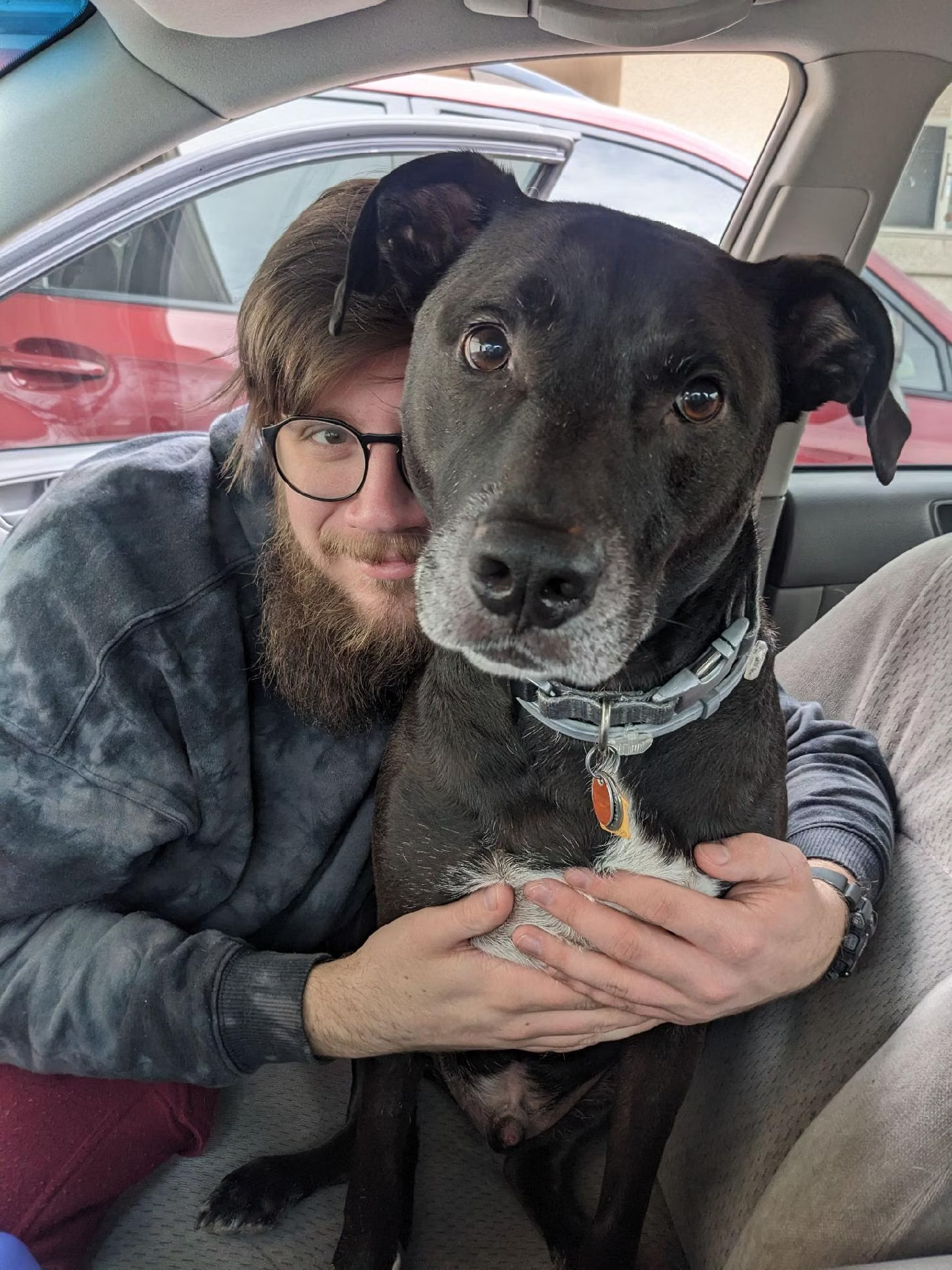
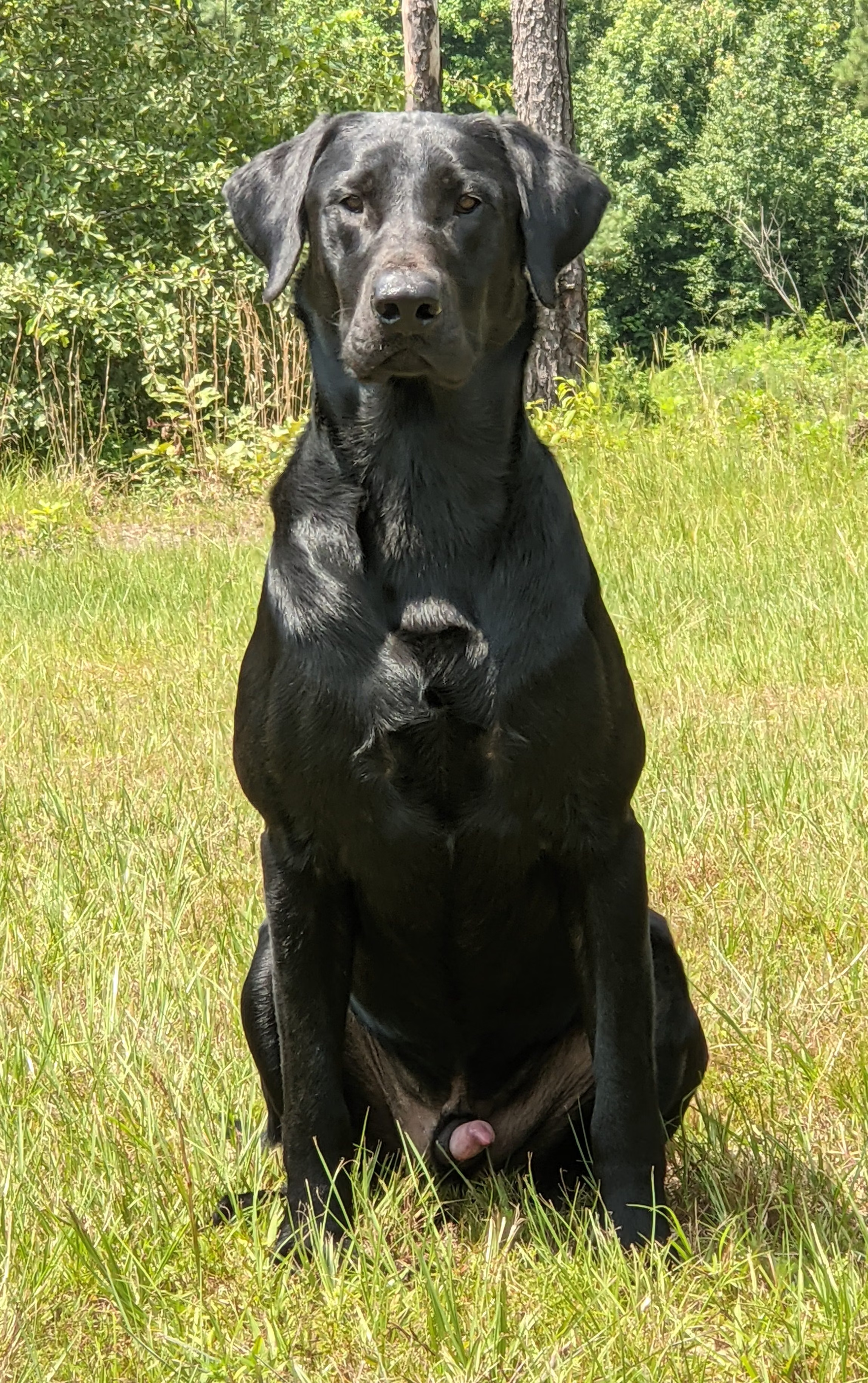
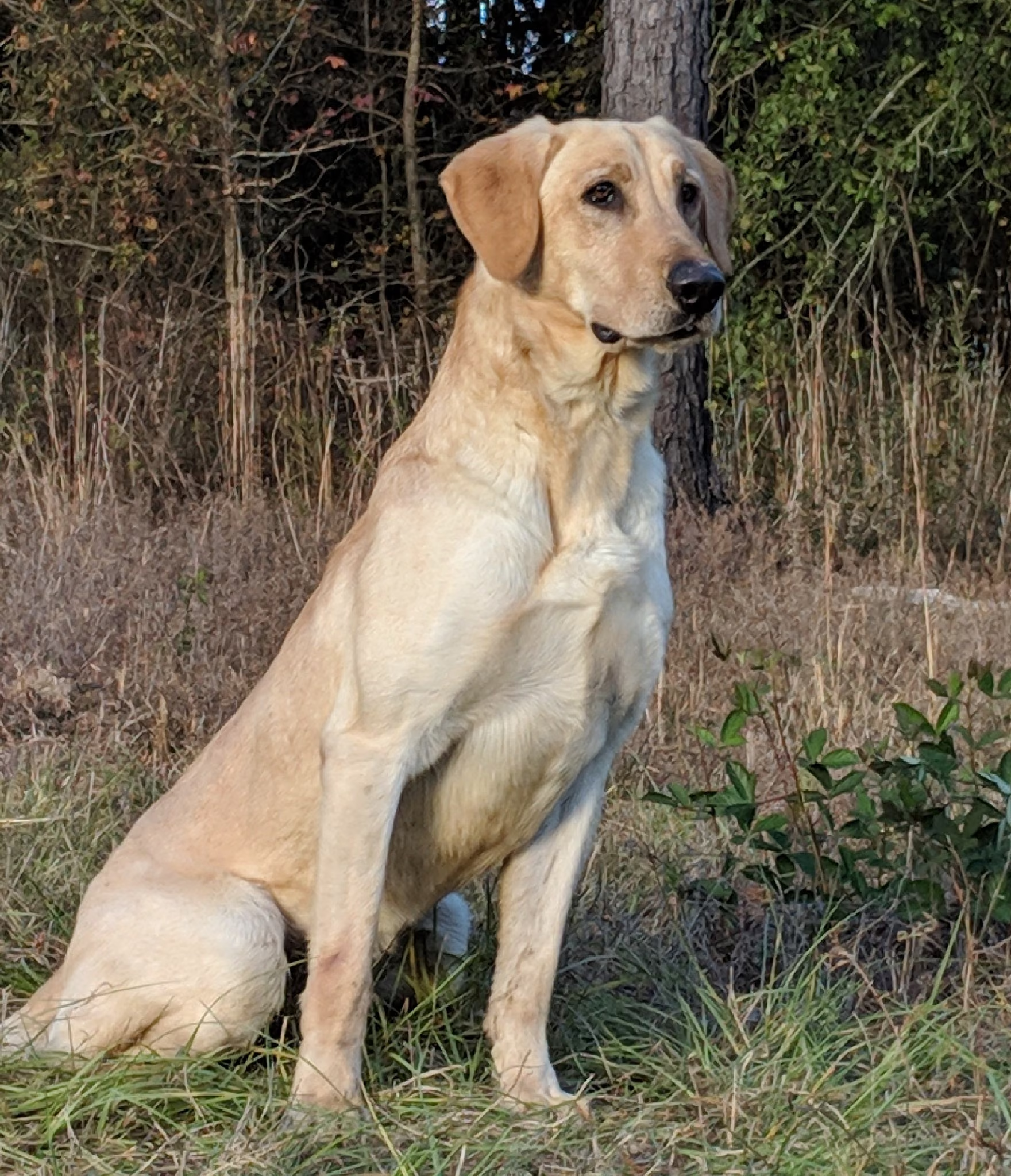
A few of the Labrador Retriever profiles members have added to United Pet Club.
The Labrador Retriever is a medium-to-large gun dog shaped by British sporting estates, celebrated throughout the United Kingdom for its amiable nature, responsive training, and a short water-shedding double coat. Adults measure roughly 21.5 to 24.5 inches at the withers and live for approximately 11 to 13 years.
The Labrador Retriever is a medium-to-large gun dog whose early development was driven by British estates in the nineteenth century, even though its working ancestor, the St. John's water dog, came from Newfoundland. Today it is the most widely registered breed with The Kennel Club, holding that position for more consecutive years than any other breed in Britain.
The breed is valued for a reliable, steady temperament, a willingness to work closely with people, and a strong retrieving instinct that makes it equally at home in a shooting field or a family sitting room. Labradors serve across the UK as guide dogs, assistance dogs for disabled people, medical alert dogs, and search-and-rescue dogs.
The coat is short, dense, and naturally water-resistant, lying over a thick insulating undercoat. It sheds moderately throughout the year with two heavier seasonal moults. The breed standard recognises three colours: black, yellow, and chocolate.
| Attribute | Detail |
|---|---|
| Origin | Newfoundland; developed by British sporting estates (Earl of Malmesbury, Duke of Buccleuch) |
| Size | Medium to large; 55 to 80 lb (25 to 36 kg) |
| Lifespan | About 11 to 13 years |
| Group/role | Gun dog; retriever, assistance and detection work |
| Good with | Children, families, other dogs; generally social with strangers |
Labradors are well suited to active British households that can commit to daily outdoor exercise in all weathers and provide consistent, reward-based training from puppyhood. They are a reasonable choice for first-time owners prepared to invest time and effort, and they generally thrive in family homes with children. The breed is unsuitable for sedentary households, for those who cannot tolerate heavy shedding, or for owners who are regularly absent for long working hours, as Labradors are highly social and will gain weight rapidly without adequate stimulation.
The Labrador Retriever is descended from the St. John's water dog of Newfoundland and was developed into its modern form by British sporting estates during the nineteenth century. The Kennel Club recognised the breed in 1903 and the American Kennel Club followed in 1917.
The Labrador's story begins not in Britain but on the island of Newfoundland, where a robust working dog known as the St. John's dog or the lesser Newfoundland assisted fishermen during the 1700s and early 1800s. Bred for cold water and hard labour, these dogs hauled nets, retrieved lines, and fetched fish with remarkable endurance.
British sportsmen and merchants who encountered them in Newfoundland began shipping dogs back to England in the early 1800s. The Earl of Malmesbury was among the first to keep a dedicated kennel, and the Duke of Buccleuch's line, which merged with Malmesbury stock in the 1880s, became foundational to the breed we know today. It was during this British development that the name "Labrador" entered common use, somewhat confusingly given that the dogs came from Newfoundland rather than the Labrador coast.
The Labrador Retriever Club was founded in the United Kingdom in 1916 and remains the breed's principal club in Britain, organising field trials and maintaining the breed's working tradition. The Kennel Club granted formal recognition in 1903. Black was predominant in early registered stock; yellow and chocolate were present from the beginning but became fashionable later. Today all three colours are equally common in UK show and working lines.
Labradors are powerfully built, well-balanced dogs with a broad skull, the characteristic otter tail, and a short dense double coat in black, yellow, or chocolate. Dogs stand between 22.5 and 24.5 inches and bitches between 21.5 and 23.5 inches.
The Labrador Retriever presents a balanced, substantially built frame: deep through the chest, strong through the loin, and well angulated front and rear. The skull is wide and cleanly modelled, the muzzle strong and neither snipey nor heavy. A breed hallmark is the otter tail, round in section, very thick at the root, and tapering towards the tip with no feathering; it acts as a powerful swimming rudder. The coat lies flat and close with no wave or feather; the outer coat is hard and weather-resistant, and the undercoat dense enough to provide insulation in cold water.
| Trait | Detail |
|---|---|
| Height | Males 22.5 to 24.5 in (57 to 62 cm); females 21.5 to 23.5 in (55 to 60 cm) |
| Weight | Males 65 to 80 lb (29 to 36 kg); females 55 to 70 lb (25 to 32 kg) |
| Coat | Short, dense, straight double coat; water-resistant |
| Colours | Black, yellow (pale cream to fox-red), chocolate |
| Eyes | Brown or hazel; kind, alert expression |
All three colours are equally correct under the Kennel Club standard. In yellow, the shade runs from the palest cream through gold to deep fox-red; fox-red and golden autumn shades enjoy considerable popularity in UK show rings. White chest markings are permissible but not desirable. The double coat produces two main seasonal moults, in spring and autumn, with a background level of steady shedding year-round. Some breeders advertise "silver" Labradors, a dilute form of chocolate; this colour is not accepted by The Kennel Club and should not command a premium.
Labradors are outgoing, even-tempered, and motivated to please, making them agreeable with family members, strangers, and other animals. Their high energy demands a productive outlet to prevent destructive behaviour.
The Labrador Retriever has earned its reputation as Britain's family dog through a genuinely tractable temperament. Dogs are strongly bonded to their owners yet rarely possessive or clingy, and they adapt comfortably to households that include children, other dogs, cats, and frequent visitors.
Most Labradors greet unfamiliar people with enthusiasm rather than suspicion, which makes them practically useless as guard dogs but enormously companionable in busy homes. They lack the territorial instinct of many other breeds and are generally willing to accept new people and situations when properly socialised.
The retrieval instinct is strong and persistent; a Labrador that is under-exercised or under-stimulated will almost always express its frustration through chewing, digging, or boisterous indoor behaviour. Regular physical exercise combined with structured training channels this drive productively and produces the calm, reliable companion the breed is known for.
| Trait | Rating |
|---|---|
| Affection | 5 |
| Energy | 5 |
| Trainability | 5 |
| Vocalness | 3 |
| Shedding | 4 |
Labradors require weekly brushing, a minimum of one hour's exercise daily, and consistent human company. The coat produces substantial seasonal moults, so regular grooming is a practical necessity rather than a cosmetic preference.
Labradors can cope in a flat provided they receive ample daily outdoor time, but they are genuinely happiest with access to a garden. A securely fenced garden is advisable; these dogs follow interesting scents with great determination and will exploit any gap. Owners who work full-time should make arrangements for company or exercise during the day, as a Labrador left alone for extended periods frequently develops separation-related behaviour problems.
Labradors perform well on a complete, life-stage-appropriate diet served in weighed portions. Most adults do well on two meals per day totalling around 2.5 to 3 cups of a quality complete dry food, though exact amounts depend on the food's energy density and the individual dog's activity level.
Select a complete dry or wet dog food that meets FEDIAF nutritional guidelines for the appropriate life stage, or work with a veterinary nutritionist to formulate a home-cooked diet. Because Labradors are physiologically motivated to eat beyond their energy requirements, feeding to an exact measured amount is essential; free-feeding almost always leads to obesity. Adjust the daily ration based on the dog's body condition score, which should show ribs easily felt but not visible. Always provide fresh water.
| Life stage | Amount per day | Meals per day |
|---|---|---|
| Puppy (2 to 6 months) | About 2 to 3 cups | 3 to 4 |
| Puppy (6 to 12 months) | About 2.5 to 3.5 cups | 2 to 3 |
| Adult | About 2.5 to 3 cups | 2 |
| Senior/less active | About 2 to 2.5 cups | 2 |
Treat calories should not exceed ten per cent of the daily total; account for them by reducing the main meal accordingly. Many owners portion out a small amount of the dog's daily kibble allocation to use as training rewards, avoiding extra calories entirely. Fish oil supplementation is popular for coat condition and joint health, particularly in working Labradors, but is not necessary when feeding a complete and balanced diet. Consult your vet before adding any supplement to the feeding regimen.
Labradors have a typical lifespan of 11 to 13 years and are generally hardy, but the breed carries known predispositions to hip and elbow dysplasia, obesity, and heritable eye conditions. Purchasing from health-tested, Kennel Club registered breeding stock meaningfully reduces the risk.
Labradors are a robustly healthy breed by most measures, though they carry a higher-than-average risk of several orthopaedic and metabolic conditions. The most impactful health issue in everyday practice is obesity, which exacerbates hip and elbow problems, increases anaesthetic risk, and shortens the dog's useful working and companion life considerably. The Kennel Club and the Labrador Retriever Club operate formal health schemes, and reputable breeders participate in these and share results through the KC Health Test Results finder.
| Condition | Signs | Note |
|---|---|---|
| Hip dysplasia | Limping, stiffness, trouble rising | Screened by BVA/KC hip scoring in breeding dogs |
| Elbow dysplasia | Front-leg lameness, reluctance to exercise | Inherited; BVA/KC elbow grading recommended |
| Obesity | Excess weight, low stamina | Largely preventable with careful portion control and daily exercise |
| Progressive retinal atrophy | Night blindness, declining vision | Inherited; DNA tests available; Kennel Club Assured Breeders required to test |
| Exercise-induced collapse | Weakness or collapse after intense activity | Linked to a known gene; DNA test available |
| Ear infections | Head shaking, odour, scratching | Drop ears trap moisture; weekly cleaning reduces recurrence |
Labradors are consistently rated among the most trainable breeds owing to their intelligence, food motivation, and cooperative nature. Early socialisation and reward-based training underpinned by clear, consistent handling produce the most reliable results.
The Labrador's trainability is the foundation of its widespread use in the UK as a guide dog with Guide Dogs, an assistance dog with organisations such as Canine Partners, a medical alert dog, and a dual-purpose explosives or drugs detection dog with police and border forces. This versatility stems from the breed's combination of intelligence, biddability, and an almost inexhaustible interest in food rewards. Training works best when sessions are kept short (five to ten minutes), frequent, and genuinely enjoyable for the dog.
Labradors reach sexual maturity between six and twelve months but should only be bred once fully mature and health-tested. Gestation is approximately 63 days and litters typically contain six to eight puppies.
Bitches generally come into season for the first time between six and twelve months of age. Responsible breeders, and particularly those operating under the Kennel Club Assured Breeder scheme, do not mate a bitch on her first or second season but wait until she is physically and mentally mature and has passed the required health evaluations for hips, elbows, eyes, and any relevant DNA conditions. Most bitches cycle roughly every six months.
Gestation lasts approximately 63 days from conception. Litter sizes of six to eight puppies are most common, though the breed regularly produces litters of ten or more. Puppies arrive blind, deaf, and entirely reliant on the mother for warmth and colostrum in the first fortnight.
Well-run litters begin weaning onto wet puppy food at three to four weeks. The socialisation window between three and twelve weeks is the most influential period for future temperament; puppies that experience a variety of people, surfaces, sounds, and gentle handling during this time consistently develop into more confident, settled adult dogs. Kennel Club registered puppies should leave for new homes at eight weeks with a puppy pack that includes vaccination records, a microchip registration document, and dietary advice.
| Metric | Value |
|---|---|
| Sexual maturity | About 6 to 12 months |
| Heat cycles | Roughly twice per year |
| Gestation | About 63 days |
| Average litter size | 6 to 8 puppies |
| Weaning age | About 6 to 8 weeks |
| Age to new home | About 8 weeks |
Your Labrador Retriever's details on a record that satisfies UK microchip law: free with United Pet Club, for life, with nothing to renew.
Microchipping has been compulsory for dogs in England, Scotland and Wales since 2016, and the rules are strict about keeping the details behind the chip current. A free United Pet Club profile holds your Labrador Retriever's record for the whole of its life, with your phone number and address sitting where a scan can reach them. Registering your dog is done in minutes and costs nothing, now or later.
A chip without a registration is a serial number and nothing more. File your Labrador Retriever's fifteen digit number with United Pet Club and it becomes a route back to you: free for life, open to every chip brand sold in Britain, and searchable whenever a scanner finds it. Microchip registration takes less time than the kettle, and a free account covers the profile too.
Set up a free United Pet Club account, add your Labrador Retriever's details and a photo, and save. The profile stays live for the whole of the dog's life at no charge, and the chip number can be added the moment you have it.
Key the fifteen digit number into your free United Pet Club account with your current address and phone number. The lifetime plan accepts any brand a British vet implants, and amendments after a house move are free.
Yes. Dogs in England, Scotland and Wales have had to be chipped since 2016, with the keeper's details kept current. The law covers the chip; keeping the record pointing at a live phone number is what United Pet Club handles, free.
Nothing at all. The United Pet Club lifetime plan covers the profile, the microchip record and every amendment without a fee, so there is no renewal to remember.
Common questions from UK buyers about the Labrador Retriever, covering size, shedding, suitability with children, lifespan, cost, and the breed's history in Britain.
A Labrador dog stands between 22.5 and 24.5 inches at the shoulder and typically weighs between 65 and 80 lb. Bitches are somewhat lighter and shorter, usually 55 to 70 lb and 21.5 to 23.5 inches. Well-fed UK show Labradors often sit towards the upper end of these ranges.
Yes, and British owners should expect it. The breed has a dense double coat that moults moderately year-round with two considerably heavier seasonal moults in spring and autumn. A good deshedding brush used daily during peak moult periods keeps the problem manageable.
Labradors have held the position of Britain's most popular family dog for good reason. They are typically gentle, patient, and boisterous in equal measure, which suits most family households. As with any large, energetic breed, close supervision is sensible when very young children are involved.
The average Labrador lifespan is 11 to 13 years. Keeping the dog at a lean body weight is the single most effective thing owners can do to push towards the upper end of that range, alongside regular veterinary care.
Prices from reputable Kennel Club Assured Breeders with health-tested parents typically range from around £1,000 to over £2,000. Puppies from working or field-trial bloodlines may be priced differently. Rehoming through a breed rescue is considerably cheaper and gives an adult dog a second chance.
Grooming and training are relatively straightforward, but the breed needs substantial daily exercise and is not suited to a largely inactive lifestyle. Weight management requires active ongoing effort from the owner, as Labradors are among the breeds most consistently seen as overweight by veterinary surgeons.
The modern breed was very much shaped in Britain. Although the ancestor of the Labrador came from Newfoundland, it was British estates in the nineteenth century, principally those of the Earl of Malmesbury and the Duke of Buccleuch, that established the type we recognize today. The Kennel Club was the first registry to grant formal recognition, in 1903.