

Irish Setter
The Irish Setter is an outgoing, fun-loving breed famous for its flowing mahogany coat and exuberant spirit.
- Size
- Large
- Lifespan
- 12–15 years
- Origin
- Ireland
- Temperament
- Outgoing
- Standard colors
- Mahogany, Red and Chestnut
Characteristics
Coat and grooming
How the Irish Setter coat is built, and what that means when you groom it.
- Coat layers
- Single coat
- Coat texture
- Silky
- Coat length
- Medium
- Shedding
- Moderate shedding
Grooming guidance
Caution: A Irish Setter coat mats easily.
Fine or long hair tangles at the base of the coat, out of sight, where the mats tighten and pull on the skin. Brushing has to reach right down to the roots in sections, not just skim the surface.
Irish Setter colors and patterns
What each club's breed standard says about every Irish Setter color and pattern. Point at a ruling to see the club's own wording.
Breed standards describe the Irish Setter in Mahogany, Red and Chestnut. Standard patterns: Solid.
| Color or pattern | AKC | UKC | KC | FCI | KUSA |
|---|---|---|---|---|---|
| Mahogany | Standard (“Mahogany”) | Standard (“mahogany”) | No ruling | No ruling | No ruling |
| Red | Standard (“Red”) | No ruling | Standard (“Red”) | No ruling | No ruling |
| Chestnut | Standard (“Chestnut”) | Standard (“Rich chestnut red”) | Standard (“Rich chestnut”) | Standard (“Rich chestnut”) | Standard (“Rich chestnut”) |
| Patterns | |||||
| Solid | Standard | Standard | Standard | Standard | Standard |
| Sable | Not recognised (“with no black”) | Not recognised (“with no trace of black”) | Not recognised (“with no trace of black”) | Not recognised (“with no trace of black”) | Not recognised (“with no trace of black”) |

%22%3E%3Crect%20x%3D%220%22%20y%3D%220%22%20width%3D%2264%22%20height%3D%2264%22%20fill%3D%22url(%23g)%22%2F%3E%3Cg%20fill%3D%22none%22%20stroke%3D%22%231C1C1C%22%20stroke-width%3D%221%22%20stroke-linecap%3D%22round%22%20stroke-linejoin%3D%22round%22%3E%3Cpath%20d%3D%22M15.7%2014.8l1.9%203.6M26.4%2024.1l1.2%204.1M42.7%2029.5l0.1%203.3M35.9%2025l1.6%203.2M31.3%2028.1l0.7%203.7M15.5%2011.1l1.6%203.6M41.1%2023.8l0.6%203.2M12.1%2020.7l1.2%203M15.4%2011.2l0.8%203.8M42.9%2027.3l0.7%202.9M48.2%2033.2l0.5%204.1M23.1%2024.7l1.4%203.4M51.9%2036.1l0.3%204.3M18.7%2023.9l1.2%203.7M50.4%2027.4l0.5%204.1M18.4%2020.4l0.1%203.1M55.6%2021.4l1.1%203.9M18.6%2024.9l1.7%203.8M8.3%2023.2l1.7%202.9M18.7%2024.2l0.2%203.1M46.4%2022.7l0.6%202.6M14.3%207l0.9%203.5M50.5%2024.9l0.5%203.7M23.2%2024.7l1.2%204.3M10.5%2022.3l1.6%203.4M56.9%2018.2l1.1%202.5M20.8%2021.7l1.1%203.5M10.9%2020.2l0.2%203.9M6.6%2023.3l1%202.4M54.5%2021.7l0.9%203.8M13.3%2021l0.4%203M11.7%2019.5l0.3%204M39%2023.2l0.7%202.5M20.8%2016.7l0%202.6M18.4%2016l0.2%202.6M46.4%2038.2l1.4%203.2M12.9%2022.6l0.6%203.3M13%2020.9l0.3%204.3M35.3%2024.9l1.3%202.3M29.5%2022.1l0.5%202.8M36.6%2023.4l0.2%204.3M20.5%2017.6l0.7%204.1M18.3%2020.6l0.6%203M20.5%2025.8l0.5%203.8M23.5%2040.2l1.1%202.9M22.8%2024.9l1.5%203M25.5%2023.1l0.5%203.3M47.7%2024.7l1.5%203.7M12.9%2018.4l1.9%203.8M29.5%2023.7l0.5%204.1M37.7%2026.5l0%202.9M16.8%2016.4l0.1%203.3M49.8%2028l1.7%203.8M29.4%2025.5l0.5%203.6M9.3%2023l1.3%203.1M47.4%2025.6l0.5%203.5M48.1%2023.8l1.6%203.2M9.9%2018.3l1.3%202.5M12.2%2016.6l0.4%203.2M22%2022.1l1.4%202.7M43.9%2024.7l1.4%203.9M14.3%2020l1.8%203.2M46.3%2040.1l0.3%203.6M14.9%207l0.3%204M17.5%2016.7l1.2%202.4M54.6%2040l1%203.5M13.3%2013.9l1.6%204.2M15.3%2016.5l1.2%202.9M23.8%2038.5l0.2%203.8M18.2%2019l0.6%203M11.2%2023.6l0.7%204.1M33.1%2023.2l0.9%204.3M13.6%2019.9l0.4%204.5M19.7%2023.1l1.9%203.7M50.5%2027.1l0.3%204.1M28.2%2028.5l0.2%203.8M29%2028.4l0.1%204M47.7%2024.5l0.6%202.5M10.7%2017.2l1.4%202.7M25.5%2040.3l0.6%204.1M37.6%2022.8l0.7%204.4M57%2018.6l0.2%203.4M16.9%2022.2l1.7%203.8M43.5%2024.7l1.8%203.4M49.2%2026l1.5%203.6M47.7%2032.3l0.4%203.7M35.4%2030.8l0.5%202.7M47%2026.1l1%203.9M24.3%2028.1l1.5%204.2M50.5%2023.8l1.3%203.4M58.1%2014.1l0.3%202.6M13.9%2018.2l0.7%202.5M8.2%2021l0.7%202.9M41.4%2026.4l0.4%202.7M16.3%2020.4l0.5%204.3M43.4%2025.9l1.2%203.2M32.3%2022.4l0.3%203.9M43.6%2025.9l2.1%203.8M33.5%2026.3l1.5%203M48.3%2030.6l1.4%203.4M44.2%2024.7l0.9%203.2M12.3%2017.7l0.9%203.7M46.2%2032l1.9%203.4M51%2028.3l0.1%203.7M30.4%2023.1l1.1%203.2M52.6%2022.6l0.9%204.3M16.6%2015.4l0.9%203.1M58.4%2012.8l0.3%202.8M42.8%2032.5l1.8%203.2%22%2F%3E%3Cpath%20d%3D%22M16.4%2026.1l0.1%204.3M14%2017.1l1.3%202.8M36.9%2027.2l1.3%202.6M38.6%2025.8l0.4%203.6M57.6%2014.3l0.3%203.9M14.7%208.2l1%204.3M53.4%2023l1.9%203.4M51.5%2030.3l0.8%202.7M56.2%2020l1.9%203.5M15.9%2010l0.2%202.8M15.8%2022.6l1.8%203.9%22%2F%3E%3C%2Fg%3E%3C%2Fg%3E%3Cuse%20href%3D%22%23s%22%20fill%3D%22none%22%20stroke%3D%22%233B2A20%22%20stroke-opacity%3D%220.6%22%20stroke-width%3D%221%22%20stroke-linejoin%3D%22round%22%2F%3E%3Cellipse%20cx%3D%223.2%22%20cy%3D%2221.7%22%20rx%3D%221.3%22%20ry%3D%221.2%22%20fill%3D%22%231C1C1C%22%2F%3E%3Ccircle%20cx%3D%2210.8%22%20cy%3D%2219.3%22%20r%3D%221.1%22%20fill%3D%22%231C1C1C%22%2F%3E%3C%2Fsvg%3E)
| Color or pattern | AKC | UKC | KC | FCI | KUSA |
|---|---|---|---|---|---|
| Brown | Standard (“dark to medium brown”) | Standard (“dark to medium brown in color”) | No ruling | No ruling | No ruling |
| Dark brown | Standard (“dark to medium brown”) | Standard (“dark to medium brown in color”) | Standard (“Dark hazel to dark brown”) | Standard (“Dark hazel or dark brown”) | Standard (“Dark hazel to dark brown”) |
| Hazel | No ruling | No ruling | Standard (“Dark hazel to dark brown”) | Standard (“Dark hazel or dark brown”) | Standard (“Dark hazel to dark brown”) |
| Color or pattern | AKC | UKC | KC | FCI | KUSA |
|---|---|---|---|---|---|
| Black | Standard (“Nose black or chocolate”) | Standard (“Black or chocolate”) | Standard (“dark mahogany, dark walnut or black”) | Standard (“dark mahogany, or dark walnut or black”) | Standard (“dark mahogany, dark walnut or black”) |
| Liver | Standard (“Nose black or chocolate”) | Standard (“Black or chocolate”) | Standard (“dark mahogany, dark walnut or black”) | Standard (“dark mahogany, or dark walnut or black”) | Standard (“dark mahogany, dark walnut or black”) |
What the rulings mean
- Standard
- Described by the club's breed standard.
- Not recognised
- The club does not accept this colour or pattern for the breed.
Color changes
How a Irish Setter's colors can change over its life.
Blackchanges toSnow nose
Nose · With the season · can change back
Blackchanges toPink
Nose · With the season · can change back
%22%3E%3Crect%20x%3D%2217%22%20y%3D%2210%22%20width%3D%2230%22%20height%3D%2242%22%20fill%3D%22url(%23g)%22%2F%3E%3C%2Fg%3E%3Cuse%20href%3D%22%23s%22%20fill%3D%22none%22%20stroke%3D%22%233B2A20%22%20stroke-opacity%3D%220.6%22%20stroke-width%3D%221%22%20stroke-linejoin%3D%22round%22%2F%3E%3Cpath%20d%3D%22M12.5%2037Q13%2032%2018.5%2032Q23.5%2032.5%2023.5%2036.5Q20.5%2035.5%2018.8%2037Q17.4%2038.6%2018%2041.5Q13.6%2040.4%2012.5%2037Z%22%20fill%3D%22%231C1C1C%22%20fill-opacity%3D%220.8%22%20stroke%3D%22%23F5F5F0%22%20stroke-opacity%3D%220.4%22%20stroke-width%3D%220.9%22%2F%3E%3Cpath%20d%3D%22M51.5%2037Q51%2032%2045.5%2032Q40.5%2032.5%2040.5%2036.5Q43.5%2035.5%2045.2%2037Q46.6%2038.6%2046%2041.5Q50.4%2040.4%2051.5%2037Z%22%20fill%3D%22%231C1C1C%22%20fill-opacity%3D%220.8%22%20stroke%3D%22%23F5F5F0%22%20stroke-opacity%3D%220.4%22%20stroke-width%3D%220.9%22%2F%3E%3Cpath%20d%3D%22M32%2040V50%22%20fill%3D%22none%22%20stroke%3D%22%231C1C1C%22%20stroke-width%3D%221.3%22%20stroke-opacity%3D%220.5%22%20stroke-linecap%3D%22round%22%20stroke-linejoin%3D%22round%22%2F%3E%3Cellipse%20cx%3D%2232%22%20cy%3D%2221%22%20rx%3D%2212%22%20ry%3D%223.5%22%20fill%3D%22%23F5F5F0%22%20fill-opacity%3D%220.18%22%2F%3E%3C%2Fsvg%3E)
Sources
Each ruling comes from the club's published breed standard or color list.
Health
Conditions recorded as more common in the Irish Setter than in its species as a whole. A higher risk is not a diagnosis: many never develop any of them, and your vet can say which screening tests are worth doing.
High risk
- Gastrointestinal system
Gastric dilatation-volvulus
Moderate evidence
This content is for educational purposes and is not a substitute for professional veterinary advice. If you are worried about your pet, contact your veterinarian.
All health conditionsMeet some of our Irish Setter
A few of the Irish Setter profiles members have added to United Pet Club.

About the Irish Setter
The Irish Setter is a large, sociable gundog from Ireland, noted for its mahogany coat and high energy. It suits active households able to provide daily exercise and company.
The Irish Setter is a large gundog developed in Ireland to find and point game birds for the gun. Its long, silky coat in deep chestnut to mahogany red is unmistakable, and the frame is built to cover ground at pace. Adults commonly weigh 27 to 32 kilograms (60 to 70 pounds) and stand 25 to 27 inches at the withers.
Temperament is where the breed makes its mark. Irish Setters are friendly, playful and openly affectionate towards people, children among them. They are inclined to greet strangers as friends rather than as a threat, which makes them poor guard dogs but thoroughly reliable companions. Their energy is considerable, and a setter denied sufficient activity may grow restless and destructive indoors.
This is a dog that wishes to be part of the household. It fares badly when left on its own for long spells and forms strong attachments to its family. Early training and steady exercise channel that exuberance into a manageable, agreeable house dog.
| Attribute | Detail |
|---|---|
| Origin | Ireland |
| Size | Large (27 to 32 kg, 25 to 27 in) |
| Lifespan | 12 to 15 years |
| Group/role | Gundog group, bird dog (setter) |
| Good with | Children, families, other dogs |
Who it suits
The Irish Setter is at home in an active household that relishes daily time outdoors and wants a sociable, hands-on dog. It suits families with children and owners prepared to commit to an hour or more of exercise each day. It is a less happy match for those away from home for long hours, those wanting a guard dog, or anyone who would prefer a calm, low-energy companion.
History and origin
The Irish Setter was developed in Ireland across the 18th and 19th centuries as a bird dog, its solid red coat fixed through selective breeding in the 1800s.
The Irish Setter has its roots in Ireland, where sportsmen wanted a fast, wide-ranging dog able to locate game birds over open country. The first setters in Ireland emerged in the 18th century, put together from a mixture of spaniels, pointers and other setter types. Many of these early dogs were red and white rather than solid red.
As the 1800s wore on, Irish breeders increasingly favoured the solid mahogany red now associated with the breed. The red and white variety persisted as a distinct line and is recognised today as the Irish Red and White Setter, a separate breed. The solid red dog became the better known of the pair.
The breed won admirers beyond Ireland during the 19th century and was among the earlier breeds recognised as the modern dog fancy took shape. In Britain it is registered with The Kennel Club, and it was also entered with the American Kennel Club in 1878. By the early twentieth century the Irish Setter was well established across Britain and North America, serving as a working gundog and as a show and companion breed.
Generations of favour as a pet drew some breeding towards looks rather than field ability. Working and show lines diverged somewhat, field-bred setters tending to be lighter and more driven. Both types retain the same friendly nature and red coat.
Appearance and breed standard
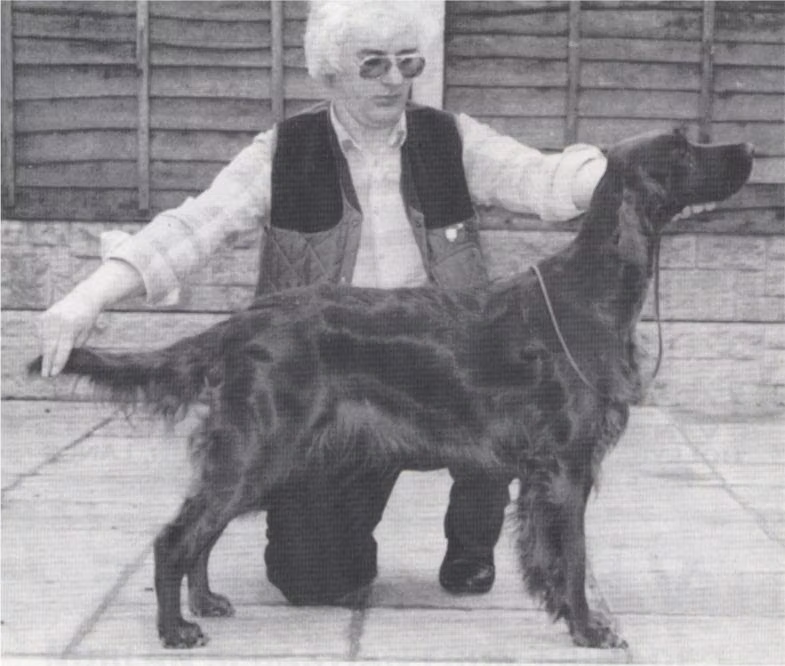
The Irish Setter is a tall, lean dog with a long mahogany coat, feathering on the ears, legs and tail, and a balanced, athletic outline.
The Irish Setter has an elegant, racy build that hints at speed and stamina. The body is a little longer than it is tall, with a deep chest, a long neck and clean lines. The head is long and lean, the muzzle moderately deep, and the expression soft and alert. The tail is carried roughly level with the back and tapers to a point.
| Trait | Standard |
|---|---|
| Height | Males 26 to 27 in; females 24 to 26 in |
| Weight | Males 29 to 32 kg; females 25 to 27 kg |
| Coat | Moderate length, flat and silky, with feathering |
| Colours | Chestnut to mahogany red; small white markings permitted |
| Eyes | Medium, dark to medium brown, kind expression |
Coat and colours
The coat is short and fine over the head and the front of the legs, and longer elsewhere. Feathering falls from the ears, the backs of the legs, the underside and the tail. Colour runs from a rich chestnut to a deep mahogany red, with no black. The standard permits small patches of white on the chest, throat or toes, though extensive white markings are not typical of the solid red breed. Regular grooming keeps the feathering free of mats.
Temperament and personality
Irish Setters are friendly, playful and outgoing dogs that bond closely with their families and get on well with children and other pets.
The Irish Setter is among the more sociable of the gundog breeds. Affectionate and openly friendly, it tends to greet callers with enthusiasm rather than suspicion. With family, children included, it is gentle and playful, though its size and high energy mean young children should be supervised lest anyone be knocked over during play.
The breed generally gets on with other dogs and can share a home with cats and other pets when reared alongside them, though its bird-dog ancestry leaves it keenly drawn to small running creatures. It is no guard dog and rarely displays aggression.
Irish Setters are slow to mature and keep a puppyish, mischievous streak well into adulthood. Intelligent but readily distracted, they call for patience in training. Boredom and isolation are the principal behavioural risks: a setter short of exercise and company may bark, chew or dig. Steady work for both mind and body keeps the character at its best.
| Trait | Rating |
|---|---|
| Affection | 5 |
| Energy | 5 |
| Trainability | 3 |
| Vocalness | 3 |
| Shedding | 3 |
Care and grooming
The Irish Setter needs regular brushing for its feathered coat, at least an hour of daily exercise, and a home with room to move and human company.
Grooming
- Brush two to three times a week to prevent mats forming in the feathering on the ears, legs and tail
- Bathe every four to six weeks or as required, drying the coat thoroughly
- Trim the hair around the feet and ears to keep them clean
- Check and clean the ears weekly, as the drop ears can trap moisture and lead to infection
- Trim the nails every few weeks and brush the teeth several times a week
Exercise
- Provide at least 60 to 90 minutes of activity daily
- Combine walks with off-lead running in a safe, fenced area
- Add games of fetch, scent work or dog sports to occupy the mind
- Avoid vigorous exercise straight after meals to reduce the risk of bloat
Environment
The Irish Setter does best in a home with a securely fenced garden and an active family. It can adapt to suburban life given enough daily exercise, but it is unsuited to long hours alone or to being kept outdoors as a kennel dog. It wants to live indoors with its people.
Nutrition and feeding
Feed the Irish Setter a complete diet suited to a large, active dog, divided into two meals a day to reduce the risk of bloat.
The Irish Setter is a large, athletic dog with genuine exercise needs, so it requires a complete and balanced diet formulated for its life stage and activity level. Working or sporting setters burn more calories than a mainly home-based companion, and quantities should be adjusted to keep the dog lean. Keep an eye on body condition: the ribs should be easy to feel but not to see.
| Life stage | Amount per day | Meals |
|---|---|---|
| Puppy (2 to 6 months) | Per growth-formula label, frequent feeding | 3 to 4 |
| Adolescent (6 to 12 months) | About 2.5 to 3 cups | 2 to 3 |
| Adult (1 to 7 years) | About 2.5 to 3.5 cups | 2 |
| Senior (7+ years) | Reduced for lower activity | 2 |
Treats and supplements
Keep treats to around 10 percent of daily calories to guard against weight gain. Most setters on a complete commercial diet require no supplements. A vet may suggest joint support for large active dogs or omega-3 fatty acids for coat and skin. Always keep fresh water to hand, particularly around exercise.
Health and common conditions
The Irish Setter is generally healthy with a lifespan of 12 to 15 years, but is prone to bloat, hip dysplasia, and certain eye and ear problems.
The Irish Setter is a fairly hardy breed with a typical lifespan of 12 to 15 years. As with most large, deep-chested dogs, its most urgent health concern is gastric dilatation-volvulus, known as bloat, in which the stomach fills with gas and may twist. This is a life-threatening emergency. Responsible breeders screen for hip and eye conditions, and buying from health-tested lines reduces the likelihood of inherited disease.
| Condition | Signs | Note |
|---|---|---|
| Bloat (GDV) | Swollen belly, retching without vomiting, restlessness | Emergency; seek veterinary care at once |
| Hip dysplasia | Stiffness, limping, difficulty rising | Screen breeding dogs; manage weight |
| Progressive retinal atrophy | Night blindness, loss of vision over time | DNA tests available for some forms |
| Ear infections | Head shaking, odour, scratching at ears | Linked to drop ears; clean and dry regularly |
| Hypothyroidism | Weight gain, lethargy, coat changes | Managed with daily medication |
Preventive care
- Annual veterinary examinations, with twice-yearly checks for older dogs
- Keep vaccinations and parasite control up to date
- Maintain a healthy weight to protect the joints
- Feed two smaller meals and avoid hard exercise around mealtimes to reduce the risk of bloat
- Choose breeders who test for hip and eye conditions
Training and socialization
Irish Setters are intelligent but easily distracted, so they train best with short, upbeat, reward-based sessions and early socialisation.
The Irish Setter is clever and keen to please, but its playful, distractible nature means training calls for patience and consistency. As the breed matures slowly and may behave like a puppy for two or three years, owners should expect a longer training timeline than with some other gundogs. Harsh methods backfire with this sensitive breed, which responds far better to encouragement than to correction.
Begin socialisation early. Exposing a puppy to a wide range of people, places, dogs and situations builds the confident, friendly adult the breed is known for.
Basics
- Start with name recognition and attention games in a quiet space
- Teach sit, down and stay with small food rewards
- Establish a reliable recall early, as the breed loves to run and chase
- Work on loose-lead walking to manage a strong, energetic dog
- Keep sessions short, around 5 to 10 minutes, and end on a success
- Introduce scent work, fetch or dog sports to channel energy as the dog matures
Breeding and raising puppies
Irish Setters reach breeding maturity around two years, carry litters for about 63 days, and typically have six to twelve puppies.
Responsible breeding of Irish Setters begins with health screening of both parents for hip dysplasia and inherited eye conditions, together with a sound, friendly temperament. Breeders generally wait until a dog is physically and mentally mature, around two years of age, rather than breeding at first season or first fertility.
Bitches come into season roughly twice a year. After a successful mating, gestation runs about 63 days from conception. Litters are usually medium to large, often six to twelve puppies, in keeping with the breed's size.
Newborn puppies are blind, deaf and wholly dependent on the dam for warmth and feeding in the first weeks. The breeder's role is to keep the whelping area clean and warm, monitor weight gain, and begin gentle handling and socialisation as the puppies develop. Puppies usually move to new homes at around eight weeks, by which time weaning is complete and early socialisation has begun. Given the breed's slow maturity, new owners should plan for a prolonged adolescence.
| Metric | Value |
|---|---|
| Breeding maturity | Around 2 years |
| Season | About twice per year |
| Gestation | About 63 days |
| Litter size | 6 to 12 puppies (typical) |
| Weaning / homing age | About 8 weeks |
Irish Setter registration and microchipping in the UK
Your Irish Setter's details on a record that satisfies UK microchip law: free with United Pet Club, for life, with nothing to renew.
Registering an Irish Setter in the United Kingdom
When a dog warden or rescue centre picks up a stray Irish Setter, the chip scan is the first move, and the record behind it decides how the story ends. Keep yours pointing home with a free United Pet Club profile. Register your dog once, and the record stands for life without a renewal letter ever landing on the mat.
The implant happens at the vet surgery; the record is your half of the bargain, and the 2016 regulations expect it kept up to date. Register the microchip free on the lifetime plan: any brand a British vet implants is accepted, amendments after moving house cost nothing, and the record stays searchable through the lookups rescue centres and wardens turn to first. Create your free account and square it away this evening.
How do I register my Irish Setter in the UK?
Set up a free United Pet Club account, add your Irish Setter's details and a photo, and save. The profile stays live for the whole of the dog's life at no charge, and the chip number can be added the moment you have it.
How do I register my Irish Setter's microchip?
Key the fifteen digit number into your free United Pet Club account with your current address and phone number. The lifetime plan accepts any brand a British vet implants, and amendments after a house move are free.
Is microchipping an Irish Setter required by law in the UK?
Yes. Dogs in England, Scotland and Wales have had to be chipped since 2016, with the keeper's details kept current. The law covers the chip; keeping the record pointing at a live phone number is what United Pet Club handles, free.
How much does it cost to register an Irish Setter in the UK?
Nothing at all. The United Pet Club lifetime plan covers the profile, the microchip record and every amendment without a fee, so there is no renewal to remember.
Frequently asked questions
Common questions about the Irish Setter's size, temperament, care needs, lifespan and suitability as a family dog.
How big do Irish Setters get?
Irish Setters are a large breed. Males stand about 26 to 27 inches at the withers and weigh 29 to 32 kilograms (65 to 70 pounds), while bitches are a little smaller at 24 to 26 inches and 25 to 27 kilograms (55 to 60 pounds).
Are Irish Setters good family dogs?
Yes. They are friendly, playful and affectionate with people and generally good with children and other dogs. Owing to their size and energy, play with young children should be supervised.
Are Irish Setters hard to care for?
They are moderately demanding. The main commitments are daily exercise of at least an hour, regular brushing of the feathered coat and weekly ear care. They also need company and dislike being left alone for long.
How long do Irish Setters live?
The typical lifespan is 12 to 15 years. Regular veterinary care, a healthy weight and buying from health-tested lines all help support a long life.
Are Irish Setters easy to train?
They are intelligent but easily distracted and slow to mature, so training takes patience. Short, upbeat, reward-based sessions and early socialisation work best.
Do Irish Setters make good guard dogs?
No. They are too friendly and outgoing to be guard dogs and tend to welcome strangers. They may bark to announce callers but are not protective.
How much exercise does an Irish Setter need?
Allow at least 60 to 90 minutes of activity every day, ideally with a chance to run safely off lead, plus games or dog sports to keep the mind occupied.
From the community
Ask about the Irish SetterNo questions about the Irish Setter yet. Be the first to ask.
Browse Dog breeds