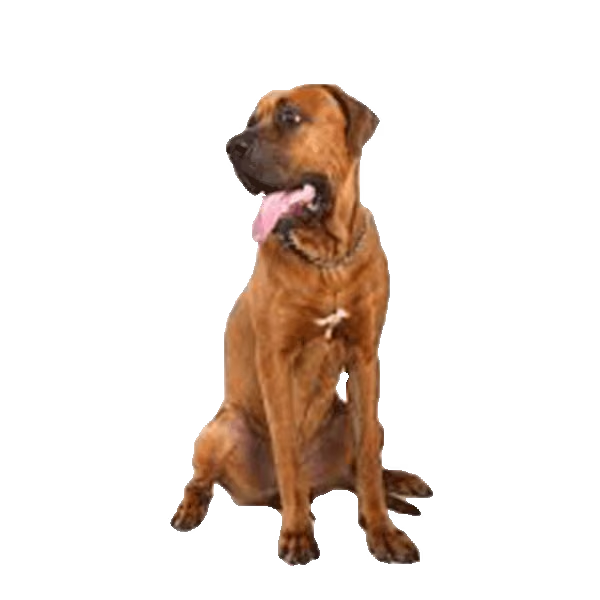
The Hanoverian Scenthound is a calm, intensely focused tracking dog bred to follow wounded game with unwavering determination.
How the Hanoverian Scenthound coat is built, and what that means when you groom it.
The Hanoverian Scenthound is a large German tracking dog known for its calm focus and its ability to follow the scent trail of wounded game over long distances.
| Attribute | Detail |
|---|---|
| Origin | Germany |
| Size | Large |
| Lifespan | 10 to 12 years |
| Group / role | Scenthound, game tracking |
| Good with | Experienced active owners and hunting households |
The Hanoverian Scenthound was developed in Germany during the 19th century from older German tracking hounds to follow wounded game on the blood trail.
The Hanoverian Scenthound is a large, heavily built hound with a short, dense coat in shades of red to brindle, a deep chest and an alert, serious expression.
| Trait | Detail |
|---|---|
| Height | About 50 to 55 cm (20 to 22 in) at the shoulder |
| Weight | About 25 to 40 kg (55 to 88 lb) |
| Coat | Short, dense and close lying |
| Colours | Red, fawn and brindle shades, often with a darker mask |
| Eyes | Dark, with a calm and focused expression |
The Hanoverian Scenthound is calm, loyal and reserved, bonding closely with its handler while staying intensely focused once it is on a trail.
| Trait | Rating |
|---|---|
| Affection | 3 |
| Energy | 4 |
| Trainability | 4 |
| Vocalness | 3 |
| Shedding | 3 |
The Hanoverian Scenthound needs little grooming but a great deal of physical and mental exercise, ideally through scent work and time outdoors.
The Hanoverian Scenthound needs a complete, high quality diet matched to its large size and working activity level, split across two daily meals.
| Life stage | Amount per day | Meals |
|---|---|---|
| Puppy (2 to 6 months) | Per growth formula on the label, divided | 3 to 4 |
| Adolescent (6 to 12 months) | Adjusted to growth and activity | 2 to 3 |
| Adult | About 300 to 450 g of quality dry food, by weight and activity | 2 |
| Senior | Slightly reduced, watch the weight | 2 |
The Hanoverian Scenthound is generally a hardy working breed with a lifespan of 10 to 12 years, though it can face joint problems, ear infections and bloat.
| Condition | Signs | Note |
|---|---|---|
| Hip and elbow dysplasia | Stiffness, limping, trouble rising | More common in large breeds; screening of the parents helps |
| Bloat (gastric torsion) | Swollen belly, retching, distress | Medical emergency; act fast |
| Ear infections | Head shaking, odour, scratching | Long drop ears trap moisture and debris |
| Working injuries | Cuts, strains, sore paws | From rough terrain during tracking |
The Hanoverian Scenthound is intelligent and trainable with a strong work ethic, responding best to a consistent handler and channelled scent work.
Hanoverian Scenthound breeding is usually tied to proven working ability and health screening, with litters typically averaging around six to eight puppies.
| Metric | Value |
|---|---|
| Sexual maturity | Around 12 to 18 months |
| Recommended breeding age | After full maturity and health checks |
| Gestation | About 63 days (roughly 9 weeks) |
| Average litter size | About 6 to 8 puppies |
| Weaning | Around 6 to 8 weeks |
Your Hanoverian Scenthound's details on a record that satisfies UK microchip law: free with United Pet Club, for life, with nothing to renew.
When a dog warden or rescue centre picks up a stray Hanoverian Scenthound, the chip scan is the first move, and the record behind it decides how the story ends. Keep yours pointing home with a free United Pet Club profile. Register your dog once, and the record stands for life without a renewal letter ever landing on the mat.
A chip without a registration is a serial number and nothing more. File your Hanoverian Scenthound's fifteen digit number with United Pet Club and it becomes a route back to you: free for life, open to every chip brand sold in Britain, and searchable whenever a scanner finds it. Microchip registration takes less time than the kettle, and a free account covers the profile too.
Set up a free United Pet Club account, add your Hanoverian Scenthound's details and a photo, and save. The profile stays live for the whole of the dog's life at no charge, and the chip number can be added the moment you have it.
Key the fifteen digit number into your free United Pet Club account with your current address and phone number. The lifetime plan accepts any brand a British vet implants, and amendments after a house move are free.
Yes. Dogs in England, Scotland and Wales have had to be chipped since 2016, with the keeper's details kept current. The law covers the chip; keeping the record pointing at a live phone number is what United Pet Club handles, free.
Nothing at all. The United Pet Club lifetime plan covers the profile, the microchip record and every amendment without a fee, so there is no renewal to remember.
Common questions about the Hanoverian Scenthound cover its size, temperament, care needs, lifespan, suitability and availability.
It is a large breed, standing about 50 to 55 cm (20 to 22 in) at the shoulder and weighing roughly 25 to 40 kg (55 to 88 lb), with heavy bone built for endurance.
It is calm and loyal at home, reserved with strangers and intensely focused once it is on a scent trail. It bonds closely with one main handler.
Grooming is easy, as the short coat needs little upkeep. The demanding part is exercise and mental work: the dog needs daily activity and ideally real scent work to stay balanced.
Typical lifespan is 10 to 12 years with good care, a healthy weight and routine veterinary attention.
It can be steady and loyal with its family, but it is first and foremost a working tracking dog. It suits active, experienced owners who can give it a job rather than a quiet household pet role.
No. The breed is uncommon and mostly goes to hunting and tracking homes in Germany and nearby countries. Buyers usually work through a recognised breed club or working breeder and may have to wait for a litter.
It can be sociable with other dogs, but its strong tracking and prey drive means small animals may be chased. Early socialisation and supervision help.
