
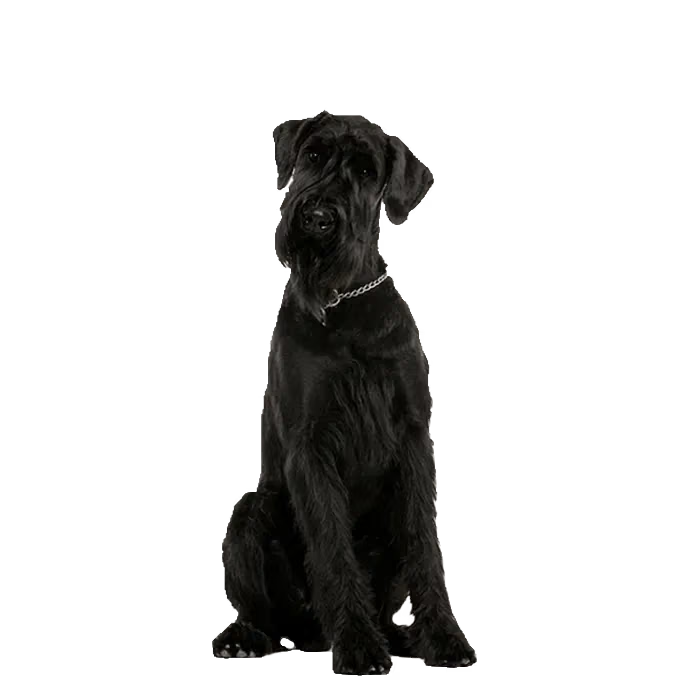
German Wirehaired Pointer
The German Wirehaired Pointer is a devoted, all-purpose hunting companion known for its rugged coat and tireless work ethic.
- Size
- Large
- Lifespan
- 12–14 years
- Origin
- Germany
- Temperament
- Devoted
- Standard colors
- Black, White and Liver
Characteristics
Coat and grooming
How the German Wirehaired Pointer coat is built, and what that means when you groom it.
- Coat layers
- Double coat
- Coat texture
- Wire
- Coat length
- Medium
- Shedding
- Moderate shedding
Grooming guidance
Critical: A German Wirehaired Pointer should not be shaved.
The undercoat keeps heat out as well as in, and the outer coat shields the skin from sun and insect bites. Clipping the whole coat off removes both. It often grows back patchy, soft or a different colour, and in some animals the guard hairs never return properly. Brush the undercoat out instead of cutting it off.
Caution: A German Wirehaired Pointer coat should be hand-stripped rather than clipped.
A wire coat is meant to be pulled out at the root once the hair is ready to release. Clippers cut it off part way instead, leaving the soft undercoat behind. The result is a coat that grows back limp and faded, and the weatherproof texture only returns after the hair is stripped out again.
German Wirehaired Pointer colors and patterns
What each club's breed standard says about every German Wirehaired Pointer color and pattern. Point at a ruling to see the club's own wording.
Breed standards describe the German Wirehaired Pointer in Black, White and Liver. Standard patterns: Solid, Bicolour, Roan and Spotted.
| Color or pattern | FCI | AKC | UKC | KC | KUSA |
|---|---|---|---|---|---|
| Black | Standard (“Black roan, with or without patches”) | Fault (“Black & White”) | Standard (“Solid black”) | Standard (“black and white”) | Standard (“Black roan, with or without patches”) |
| White | Standard (“Light roan”) | Standard (“Liver & White”) | Standard (“liver and white ticked”) | Standard (“Liver and white”) | Standard (“Light roan”) |
| Liver | Standard (“Brown with or without white chest patch”) | Standard (“Liver”) | Standard (“Solid liver”) | Standard (“solid liver”) | Standard (“Brown with or without white chest patch”) |
| Albino | Not recognised | No ruling | Disqualifying (“Albinism”) | Not recognised | Not recognised |
| Patterns | |||||
| Solid | Standard (“Brown with or without white chest patch”) | Standard (“solid liver”) | Standard (“Solid liver”) | Standard (“solid liver”) | Standard (“Brown with or without white chest patch”) |
| Bicolour | No ruling | Standard (“The coat is liver and white”) | Standard (“liver and white”) | Standard (“Liver and white”) | No ruling |
| Roan | Standard (“Brown roan with or without patches”) | Standard (“Roan”) | Standard (“liver and white ticked”) | Standard (“Liver & White Ticked”) | Standard (“Brown roan with or without patches”) |
| Spotted | Standard (“Brown roan with or without patches”) | Standard (“Spotted”) | Standard (“liver and white spotted”) | Not recognised | Standard (“Brown roan with or without patches”) |
| Tricolour | No ruling | No ruling | No ruling | Fault (“Solid black and tricoloured highly undesirable”) | No ruling |

%22%3E%3Cpath%20d%3D%22M0%2023L9.5%2020.4L14%2025.4L19%2029.6Q21%2035%2023.5%2035.5Q36%2033%2050%2036L56%2040V64H0Z%22%20fill%3D%22%23F5F5F0%22%2F%3E%3C%2Fg%3E%3Cuse%20href%3D%22%23s%22%20fill%3D%22none%22%20stroke%3D%22%233B2A20%22%20stroke-opacity%3D%220.6%22%20stroke-width%3D%221%22%20stroke-linejoin%3D%22round%22%2F%3E%3Cellipse%20cx%3D%223.2%22%20cy%3D%2221.7%22%20rx%3D%221.3%22%20ry%3D%221.2%22%20fill%3D%22%231C1C1C%22%2F%3E%3Ccircle%20cx%3D%2210.8%22%20cy%3D%2219.3%22%20r%3D%221.1%22%20fill%3D%22%231C1C1C%22%2F%3E%3C%2Fsvg%3E)
%22%3E%3Cg%20fill%3D%22none%22%20stroke%3D%22%23F5F5F0%22%20stroke-width%3D%221.15%22%20stroke-linecap%3D%22round%22%20stroke-linejoin%3D%22round%22%3E%3Cpath%20d%3D%22M28.6%2025h.1M51.3%2028.8h.1M34.7%2024.3h.1M34.2%2041.6h.1M51%2044.2h.1M55.9%2024.7h.1M27.5%2026.3h.1M18.5%2028.6h.1M25.2%2028.9h.1M24.2%2019.3h.1M20.6%2017.6h.1M34.1%2030.6h.1M57.3%2023.3h.1M23.5%2030.7h.1M26.5%2023.1h.1M40%2031.5h.1M51.7%2038.6h.1M20.2%2022.1h.1M40.4%2037.8h.1M35%2043.1h.1M20.6%2031.7h.1M27.8%2031.9h.1M17.2%2021.1h.1M38.1%2037.7h.1M25.3%2040.5h.1M32%2029.3h.1M41.6%2039.5h.1M23.6%2024h.1M26.4%2018.6h.1M30.3%2031.9h.1M31.2%2035.2h.1M36.5%2043.7h.1M35.2%2026.3h.1M55.6%2019.1h.1M22.4%2036.8h.1M39.2%2020h.1M49.5%2039.1h.1M33.6%2033.5h.1M36.4%2032.4h.1M56.3%2042.4h.1M54.8%2031.2h.1M36.9%2023.2h.1M52.7%2019.1h.1M21.5%2033.8h.1M48.6%2028h.1M36.6%2017.5h.1M45.6%2031.3h.1M37.9%2030.5h.1M17%2031.8h.1M21.1%2043.1h.1M55.7%2021.1h.1M30.8%2041.9h.1M57.4%2038.4h.1M54.8%2026.9h.1M29.1%2017.5h.1M24.3%2037.7h.1M26%2032h.1M39.3%2022.8h.1M53.5%2029h.1M53.3%2023.3h.1M20%2038.4h.1M28.3%2044.7h.1M28.6%2039.8h.1M51.9%2041.1h.1M52.3%2033.7h.1M19.6%2042.2h.1M19%2033h.1M47.8%2021.7h.1M45.7%2024.8h.1M24.6%2035.5h.1M29.8%2036.8h.1M50.7%2032h.1M29.5%2043.5h.1M28.2%2041.5h.1M47.4%2034.8h.1M25.4%2033.7h.1M50.2%2041.2h.1M27.7%2029.5h.1M21.5%2024.8h.1M55.5%2017.5h.1M41.2%2044.3h.1M39.2%2018.4h.1M41.1%2042.5h.1M54.7%2035.3h.1M42.8%2034.5h.1M30.1%2023h.1M42.6%2025.1h.1M32.9%2024.4h.1M42.4%2032.4h.1M49.7%2022.2h.1M49.1%2043.1h.1M38%2035.2h.1M47.7%2043.8h.1M43.1%2022.4h.1M22.4%2040.4h.1M44.4%2019.8h.1M53.3%2040.1h.1M20.7%2029.3h.1M55.6%2043.9h.1M17.6%2039.2h.1M41.7%2028.9h.1M44.1%2036.3h.1M24.3%2043.6h.1M26.4%2038.1h.1M30.3%2029.2h.1M31.5%2030.8h.1M32.1%2023h.1M18.3%2040.9h.1M48%2033.4h.1M36.4%2038.7h.1M31.9%2020.8h.1M32.6%2026.2h.1M22%2031.2h.1M53.4%2021.7h.1M41.9%2017.7h.1M53.3%2037.3h.1M47.7%2040.3h.1M54.4%2033.7h.1M33.6%2037.5h.1M25.3%2017.2h.1M37.6%2019.7h.1M31.6%2019h.1M29.2%2019.6h.1M50.7%2027.3h.1M22%2022.1h.1M31%2037.8h.1M56.5%2026.6h.1M34.7%2039.5h.1M56.5%2040.8h.1M47.6%2038h.1M48.6%2026.1h.1M49.7%2034.2h.1M45.4%2027.4h.1M22.6%2038.9h.1M56.5%2035.3h.1M35.1%2021h.1M41.9%2020.1h.1M37.6%2040h.1M32.6%2044.4h.1M37.9%2025.2h.1M26.6%2043h.1M18.9%2036.7h.1M47.2%2028.9h.1M30.5%2026.2h.1M17.4%2027.3h.1M47.1%2017.2h.1M22.3%2044.3h.1M32.5%2042.4h.1M23.6%2025.7h.1M31.4%2024.9h.1%22%2F%3E%3Cpath%20d%3D%22M26%2020.9h.1M41.2%2023.8h.1M39.9%2026.4h.1M28.5%2033.4h.1M42.8%2043.8h.1M17.6%2034.3h.1M34%2017.1h.1M31.2%2017.2h.1M46.5%2036.1h.1M25.1%2022.1h.1M50.3%2023.7h.1M20.2%2026.6h.1M20.8%2020.4h.1M50.9%2017.3h.1M49.5%2020.2h.1M52.9%2044.1h.1M23.9%2017.8h.1M43.2%2028.1h.1M57.6%2030h.1M52%2025.6h.1M19.2%2019.1h.1M19.5%2024.4h.1M32.8%2040.1h.1M36.1%2027.7h.1M39.6%2029.5h.1M38.4%2041.5h.1M47.9%2019.4h.1M49.1%2031.7h.1M55.9%2036.9h.1M29.2%2027.2h.1M46%2043.5h.1M44.6%2028.8h.1M47.5%2031.5h.1M22.8%2020h.1M27.6%2017.1h.1M43.1%2018.6h.1M54.3%2020h.1M57.2%2033.8h.1M44.5%2043.8h.1M27.1%2035.5h.1M45.3%2041.8h.1M56.7%2028.8h.1M36.7%2021.4h.1M43.3%2042.3h.1M17.3%2022.9h.1M32.7%2035.5h.1M30.5%2039.8h.1M29.1%2021.2h.1M34.5%2018.8h.1M25.8%2027h.1%22%2F%3E%3C%2Fg%3E%3Cpath%20d%3D%22M56.3%2038.4l0%201.2M40%2027.2l-0.3%201.3M32.6%2043.6l-0.4%201.5M29%2023.3l0.8%201.5M55.1%2044l0.4%201.1M47.5%2022.5l-0.2%201.6M42.9%2038.6l0.7%201.2M35.2%2041.8l-0.5%201.7M26.9%2040l-0.1%201.2M41%2042.8l-0.1%201.6M18.4%2021.2l0.7%201.3M49.4%2019.3l-0.5%201.4M50.1%2041.7l0%201.8M28.2%2041.8l-0.6%201.2M55.5%2027.1l0.2%201.2M44.7%2019.3l0.5%201.7M48.6%2020.5l-0.8%201.4M43.7%2039.6l0.3%201.1M22.1%2033.8l-0.6%201.6M50.1%2038.1l-0.5%201.3M51.8%2044.1l-0.1%201.8M39%2017.5l0%201.4M30.2%2026.7l0.2%201.4M25.8%2031.2l0.2%201.6M29.6%2043.5l0.1%201M43.7%2018.3l0.1%201.5M29.6%2018.2l0.3%201.6M24.4%2017.6l0.3%201.1M22%2028.2l-0.6%201.6M25.9%2043.3l-0.3%201.4M22.2%2024.3l0.3%201.3M47.3%2029.2l-0.2%201.4M21.8%2033.2l0.5%200.9M32.9%2037l0.4%201M40%2029.9l0.8%201.4M17.4%2038.3l0.2%201.3M31%2039.2l0%201.2M37.3%2033.7l0.3%201.5M48.1%2040.5l0%201.6M33.9%2031.2l0.1%201.2M29.8%2035.2l-0.4%201M25.1%2037.3l-0.2%201.5M30.2%2039.8l0.5%201M44.6%2034.8l0.4%200.9M55.3%2034.2l0%201.7M50.6%2017.9l0.4%201M30.2%2034.9l-0.4%201.4M19.5%2035.7l-0.5%201.7M40.7%2028.7l0.8%201.4M23.3%2029l-0.4%201.4M17%2040.5l-0.2%201M48.4%2023.2l-0.3%201M37.3%2025.1l-0.4%201.3M23%2021.4l-0.4%201.3M20.4%2017.2l-0.1%201.3M42.3%2020.4l0.6%201.4M41%2031.8l0.6%201.2M45.4%2034.3l-0.1%201.2M32.5%2018l0%201.3M46.2%2021.6l0.1%201.4M30.5%2022.3l0.5%201.1M58%2044.6l0.3%201.5M57.1%2033.9l0.8%201.4M18.3%2042.6l0.3%201M40.5%2035.1l-0.6%201.4M38.8%2044.3l-0.3%201.1%22%20fill%3D%22none%22%20stroke%3D%22%23F5F5F0%22%20stroke-width%3D%220.8%22%20stroke-linecap%3D%22round%22%20stroke-linejoin%3D%22round%22%2F%3E%3C%2Fg%3E%3Cuse%20href%3D%22%23s%22%20fill%3D%22none%22%20stroke%3D%22%233B2A20%22%20stroke-opacity%3D%220.6%22%20stroke-width%3D%221%22%20stroke-linejoin%3D%22round%22%2F%3E%3Crect%20x%3D%2220%22%20y%3D%2258%22%20width%3D%223.6%22%20height%3D%222%22%20fill%3D%22%234A4038%22%2F%3E%3Crect%20x%3D%2226%22%20y%3D%2258%22%20width%3D%223.6%22%20height%3D%222%22%20fill%3D%22%234A4038%22%2F%3E%3Crect%20x%3D%2244%22%20y%3D%2258%22%20width%3D%223.6%22%20height%3D%222%22%20fill%3D%22%234A4038%22%2F%3E%3Crect%20x%3D%2250%22%20y%3D%2258%22%20width%3D%223.6%22%20height%3D%222%22%20fill%3D%22%234A4038%22%2F%3E%3Ccircle%20cx%3D%229.5%22%20cy%3D%2211.5%22%20r%3D%221.1%22%20fill%3D%22%231C1C1C%22%2F%3E%3C%2Fsvg%3E)
%22%3E%3Cpath%20d%3D%22M51.6%2041h.1M30.7%2035.3h.1M34.9%2031.1h.1M20.4%2027h.1M24.3%2023.8h.1M13.7%2024.5h.1M48.1%2027.8h.1M22.6%2055.1h.1M26.3%2044.6h.1M46.2%2044.7h.1M32.1%2051.9h.1M40.9%2027.7h.1M52.9%2034.5h.1M57.9%2012.4h.1M49.9%2048.7h.1M44.5%2024.7h.1M45.7%2033.8h.1M31.4%2025h.1M15.2%2015.8h.1M52.2%2055.6h.1M37%2023.9h.1M54.6%2045.7h.1M22.9%2041.7h.1M25.2%2028.6h.1%22%20fill%3D%22none%22%20stroke%3D%22%231C1C1C%22%20stroke-width%3D%223.6%22%20stroke-linecap%3D%22round%22%20stroke-linejoin%3D%22round%22%2F%3E%3Cpath%20d%3D%22M20.5%2032.5h.1M17.8%2021.7h.1M39.4%2032.8h.1M50.4%2023h.1M5.4%2023.9h.1M24.5%2034.2h.1M55.2%2023.5h.1M47.5%2039.1h.1M41.7%2037.8h.1M27.2%2038.4h.1M31.9%2040.9h.1M14.6%207.5h.1M20.7%2018.3h.1M29.1%2055.7h.1M45.2%2051.3h.1M57.6%2017.4h.1M24%2048.9h.1M31.5%2047.4h.1M30.3%2030.9h.1M54%2050.8h.1M11.2%2017.8h.1M52.6%2028.7h.1M36.7%2036.9h.1%22%20fill%3D%22none%22%20stroke%3D%22%231C1C1C%22%20stroke-width%3D%222.4%22%20stroke-linecap%3D%22round%22%20stroke-linejoin%3D%22round%22%2F%3E%3C%2Fg%3E%3Cuse%20href%3D%22%23s%22%20fill%3D%22none%22%20stroke%3D%22%233B2A20%22%20stroke-opacity%3D%220.6%22%20stroke-width%3D%221%22%20stroke-linejoin%3D%22round%22%2F%3E%3Cellipse%20cx%3D%223.2%22%20cy%3D%2221.7%22%20rx%3D%221.3%22%20ry%3D%221.2%22%20fill%3D%22%231C1C1C%22%2F%3E%3Ccircle%20cx%3D%2210.8%22%20cy%3D%2219.3%22%20r%3D%221.1%22%20fill%3D%22%231C1C1C%22%2F%3E%3C%2Fsvg%3E)
%22%3E%3Cellipse%20cx%3D%2212.6%22%20cy%3D%2222.6%22%20rx%3D%223.2%22%20ry%3D%222.8%22%20fill%3D%22%23847865%22%2F%3E%3Ccircle%20cx%3D%2212%22%20cy%3D%2217.2%22%20r%3D%221.25%22%20fill%3D%22%23847865%22%2F%3E%3Crect%20x%3D%220%22%20y%3D%2247%22%20width%3D%2264%22%20height%3D%2217%22%20fill%3D%22%23847865%22%2F%3E%3Cpath%20d%3D%22M8.6%2018L12%2015.8L5.8%2021.8L3.2%2021.4Z%22%20fill%3D%22%23F5F5F0%22%2F%3E%3Cpath%20d%3D%22M1.5%2021.2L9%2018.6L12.6%2021L12.2%2026.2L3.5%2024.4Z%22%20fill%3D%22%23F5F5F0%22%2F%3E%3Cpath%20d%3D%22M14%2024.5L18.5%2026Q19.5%2033%2023%2039L18%2040Q17%2033%2014%2028Z%22%20fill%3D%22%23F5F5F0%22%2F%3E%3Cpath%20d%3D%22M21%2035.5Q35%2033.5%2048%2036.5V42H21Z%22%20fill%3D%22%23F5F5F0%22%2F%3E%3Crect%20x%3D%220%22%20y%3D%2252.5%22%20width%3D%2264%22%20height%3D%2212%22%20fill%3D%22%23F5F5F0%22%2F%3E%3Ccircle%20cx%3D%2258.4%22%20cy%3D%2212.8%22%20r%3D%222.6%22%20fill%3D%22%23F5F5F0%22%2F%3E%3C%2Fg%3E%3Cuse%20href%3D%22%23s%22%20fill%3D%22none%22%20stroke%3D%22%233B2A20%22%20stroke-opacity%3D%220.6%22%20stroke-width%3D%221%22%20stroke-linejoin%3D%22round%22%2F%3E%3Cellipse%20cx%3D%223.2%22%20cy%3D%2221.7%22%20rx%3D%221.3%22%20ry%3D%221.2%22%20fill%3D%22%231C1C1C%22%2F%3E%3Ccircle%20cx%3D%2210.8%22%20cy%3D%2219.3%22%20r%3D%221.1%22%20fill%3D%22%231C1C1C%22%2F%3E%3C%2Fsvg%3E)
| Color or pattern | FCI | AKC | UKC | KC | KUSA |
|---|---|---|---|---|---|
| Brown | No ruling | Standard (“Eyes are brown”) | No ruling | Standard (“hazel or darker”) | No ruling |
| Dark brown | Standard (“As dark as possible”) | No ruling | Standard (“as dark as possible”) | Standard (“hazel or darker”) | Standard (“As dark as possible”) |
| Hazel | No ruling | No ruling | No ruling | Standard (“hazel or darker”) | No ruling |
| Yellow | No ruling | Fault (“Yellow eyes are not desirable”) | No ruling | No ruling | No ruling |
| Patterns | |||||
| Odd-eyed | Disqualifying (“differently coloured eyes”) | No ruling | No ruling | No ruling | Disqualifying (“differently coloured eyes”) |
%22%3E%3Ccircle%20cx%3D%2216%22%20cy%3D%2232%22%20r%3D%228%22%20fill%3D%22%23D9C3A0%22%2F%3E%3Ccircle%20cx%3D%2216%22%20cy%3D%2232%22%20r%3D%223.4%22%20fill%3D%22%231C1C1C%22%2F%3E%3Ccircle%20cx%3D%2213.6%22%20cy%3D%2229.6%22%20r%3D%221.3%22%20fill%3D%22%23F5F5F0%22%2F%3E%3C%2Fg%3E%3Cpath%20d%3D%22M3%2032Q16%2017%2029%2032Q16%2047%203%2032Z%22%20fill%3D%22none%22%20stroke%3D%22%233B2A20%22%20stroke-opacity%3D%220.75%22%20stroke-width%3D%221.4%22%20stroke-linejoin%3D%22round%22%2F%3E%3Cpath%20d%3D%22M35%2032Q48%2017%2061%2032Q48%2047%2035%2032Z%22%20fill%3D%22%23F5F5F0%22%2F%3E%3Cg%20clip-path%3D%22url(%23e1)%22%3E%3Ccircle%20cx%3D%2248%22%20cy%3D%2232%22%20r%3D%228%22%20fill%3D%22%23847865%22%2F%3E%3Ccircle%20cx%3D%2248%22%20cy%3D%2232%22%20r%3D%223.4%22%20fill%3D%22%231C1C1C%22%2F%3E%3Ccircle%20cx%3D%2245.6%22%20cy%3D%2229.6%22%20r%3D%221.3%22%20fill%3D%22%23F5F5F0%22%2F%3E%3C%2Fg%3E%3Cpath%20d%3D%22M35%2032Q48%2017%2061%2032Q48%2047%2035%2032Z%22%20fill%3D%22none%22%20stroke%3D%22%233B2A20%22%20stroke-opacity%3D%220.75%22%20stroke-width%3D%221.4%22%20stroke-linejoin%3D%22round%22%2F%3E%3C%2Fsvg%3E)
| Color or pattern | FCI | AKC | UKC | KC | KUSA |
|---|---|---|---|---|---|
| Black | Standard (“Strongly pigmented corresponding to the colour of the coat”) | No ruling | Standard (“black in black dogs”) | Standard (“Nose liver or black”) | Standard (“Strongly pigmented corresponding to the colour of the coat”) |
| Liver | Standard (“Strongly pigmented corresponding to the colour of the coat”) | Standard (“The nose is dark brown”) | Standard (“Dark brown in liver dogs”) | Standard (“Nose liver or black”) | Standard (“Strongly pigmented corresponding to the colour of the coat”) |
| Pink | No ruling | Fault (“A spotted or flesh colored nose is to be penalized”) | No ruling | No ruling | No ruling |
| Patterns | |||||
| Butterfly nose | No ruling | Fault (“A spotted or flesh colored nose is to be penalized”) | No ruling | No ruling | No ruling |
%22%3E%3Cpath%20d%3D%22M28.4%2019.1C29.9%2017.7%2032.2%2016.4%2034%2016C35.8%2015.6%2037.4%2016%2039.2%2016.6C41.1%2017.2%2044.4%2018.5%2045.1%2019.5C45.8%2020.6%2044.3%2021.9%2043.3%2023.1C42.2%2024.3%2040.9%2025.9%2039%2026.6C37.1%2027.2%2034.3%2027.3%2032%2026.9C29.6%2026.4%2025.6%2025.3%2025%2024C24.4%2022.7%2026.9%2020.4%2028.4%2019.1Z%22%20fill%3D%22%23E8A0B4%22%2F%3E%3Cpath%20d%3D%22M23.8%2037.7C24.6%2037.5%2026.2%2037.9%2027.4%2038.1C28.5%2038.2%2030.2%2037.9%2030.8%2038.4C31.4%2039%2031.2%2040.7%2030.9%2041.5C30.7%2042.3%2029.9%2042.9%2029.1%2043.3C28.4%2043.8%2027.4%2044.6%2026.4%2044.4C25.4%2044.2%2023.8%2042.9%2023.1%2042.1C22.4%2041.3%2022.2%2040.2%2022.3%2039.5C22.4%2038.8%2022.9%2038%2023.8%2037.7Z%22%20fill%3D%22%23E8A0B4%22%2F%3E%3Cpath%20d%3D%22M10.5%2027.2C10.4%2026.7%2010.4%2025.4%2011%2025C11.5%2024.6%2013%2024.6%2013.9%2024.6C14.8%2024.6%2015.6%2024.5%2016.1%2024.9C16.6%2025.3%2017%2026.2%2017%2026.9C17.1%2027.7%2016.8%2028.8%2016.4%2029.4C15.9%2029.9%2014.9%2030.4%2014.2%2030.3C13.4%2030.1%2012.3%2028.8%2011.7%2028.3C11.1%2027.8%2010.6%2027.8%2010.5%2027.2Z%22%20fill%3D%22%23E8A0B4%22%2F%3E%3C%2Fg%3E%3Cuse%20href%3D%22%23s%22%20fill%3D%22none%22%20stroke%3D%22%233B2A20%22%20stroke-opacity%3D%220.6%22%20stroke-width%3D%221%22%20stroke-linejoin%3D%22round%22%2F%3E%3Cpath%20d%3D%22M12.5%2037Q13%2032%2018.5%2032Q23.5%2032.5%2023.5%2036.5Q20.5%2035.5%2018.8%2037Q17.4%2038.6%2018%2041.5Q13.6%2040.4%2012.5%2037Z%22%20fill%3D%22%231C1C1C%22%20fill-opacity%3D%220.8%22%20stroke%3D%22%23F5F5F0%22%20stroke-opacity%3D%220.4%22%20stroke-width%3D%220.9%22%2F%3E%3Cpath%20d%3D%22M51.5%2037Q51%2032%2045.5%2032Q40.5%2032.5%2040.5%2036.5Q43.5%2035.5%2045.2%2037Q46.6%2038.6%2046%2041.5Q50.4%2040.4%2051.5%2037Z%22%20fill%3D%22%231C1C1C%22%20fill-opacity%3D%220.8%22%20stroke%3D%22%23F5F5F0%22%20stroke-opacity%3D%220.4%22%20stroke-width%3D%220.9%22%2F%3E%3Cpath%20d%3D%22M32%2040V50%22%20fill%3D%22none%22%20stroke%3D%22%231C1C1C%22%20stroke-width%3D%221.3%22%20stroke-opacity%3D%220.5%22%20stroke-linecap%3D%22round%22%20stroke-linejoin%3D%22round%22%2F%3E%3Cellipse%20cx%3D%2232%22%20cy%3D%2221%22%20rx%3D%2212%22%20ry%3D%223.5%22%20fill%3D%22%23F5F5F0%22%20fill-opacity%3D%220.18%22%2F%3E%3C%2Fsvg%3E)
What the rulings mean
- Standard
- Described by the club's breed standard.
- Fault
- Named by the club's breed standard as a fault: the animal can be shown but is penalised.
- Disqualifying
- The club's breed standard disqualifies an animal of this colour or pattern.
- Not recognised
- The club does not accept this colour or pattern for the breed.
Color changes
How a German Wirehaired Pointer's colors can change over its life.
Blackchanges toRust
Coat · With body condition · can change back
Blackchanges toGrey
Coat · Progressive
Blackchanges toBrown
Coat · In the sun · can change back
Whitechanges toRoan
Coat · With age · from 2 weeks
Blackchanges toSnow nose
Nose · With the season · can change back
Blackchanges toPink
Nose · With the season · can change back
%22%3E%3Crect%20x%3D%2217%22%20y%3D%2210%22%20width%3D%2230%22%20height%3D%2242%22%20fill%3D%22url(%23g)%22%2F%3E%3C%2Fg%3E%3Cuse%20href%3D%22%23s%22%20fill%3D%22none%22%20stroke%3D%22%233B2A20%22%20stroke-opacity%3D%220.6%22%20stroke-width%3D%221%22%20stroke-linejoin%3D%22round%22%2F%3E%3Cpath%20d%3D%22M12.5%2037Q13%2032%2018.5%2032Q23.5%2032.5%2023.5%2036.5Q20.5%2035.5%2018.8%2037Q17.4%2038.6%2018%2041.5Q13.6%2040.4%2012.5%2037Z%22%20fill%3D%22%231C1C1C%22%20fill-opacity%3D%220.8%22%20stroke%3D%22%23F5F5F0%22%20stroke-opacity%3D%220.4%22%20stroke-width%3D%220.9%22%2F%3E%3Cpath%20d%3D%22M51.5%2037Q51%2032%2045.5%2032Q40.5%2032.5%2040.5%2036.5Q43.5%2035.5%2045.2%2037Q46.6%2038.6%2046%2041.5Q50.4%2040.4%2051.5%2037Z%22%20fill%3D%22%231C1C1C%22%20fill-opacity%3D%220.8%22%20stroke%3D%22%23F5F5F0%22%20stroke-opacity%3D%220.4%22%20stroke-width%3D%220.9%22%2F%3E%3Cpath%20d%3D%22M32%2040V50%22%20fill%3D%22none%22%20stroke%3D%22%231C1C1C%22%20stroke-width%3D%221.3%22%20stroke-opacity%3D%220.5%22%20stroke-linecap%3D%22round%22%20stroke-linejoin%3D%22round%22%2F%3E%3Cellipse%20cx%3D%2232%22%20cy%3D%2221%22%20rx%3D%2212%22%20ry%3D%223.5%22%20fill%3D%22%23F5F5F0%22%20fill-opacity%3D%220.18%22%2F%3E%3C%2Fsvg%3E)
Sources
Each ruling comes from the club's published breed standard or color list.
Meet some of our German Wirehaired Pointer
A few of the German Wirehaired Pointer profiles members have added to United Pet Club.
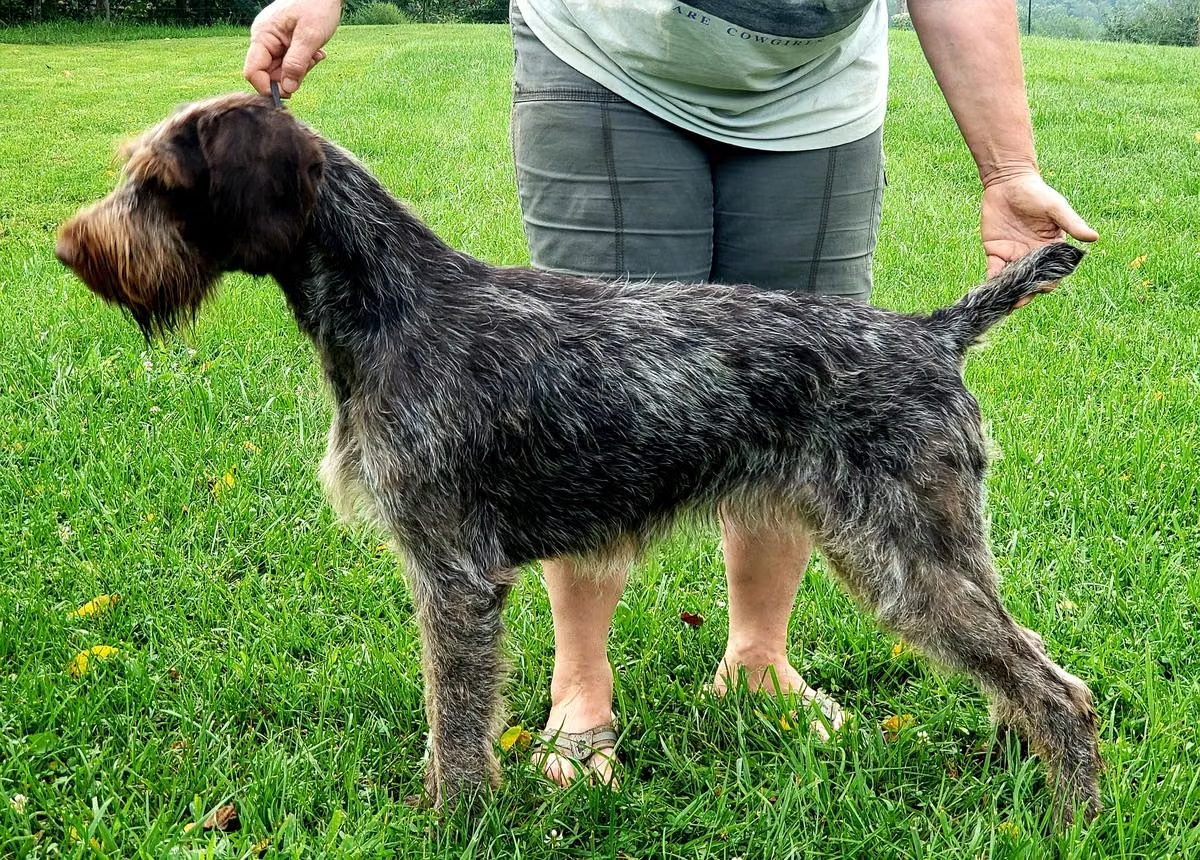
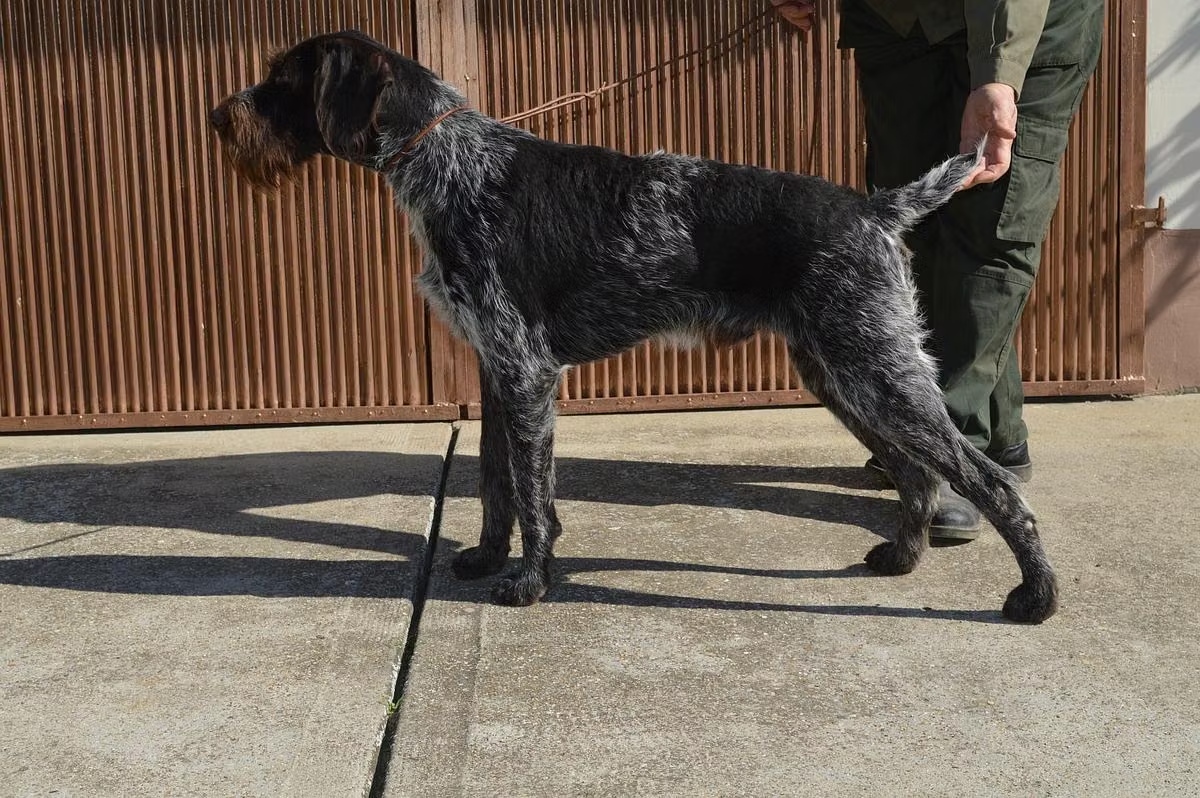

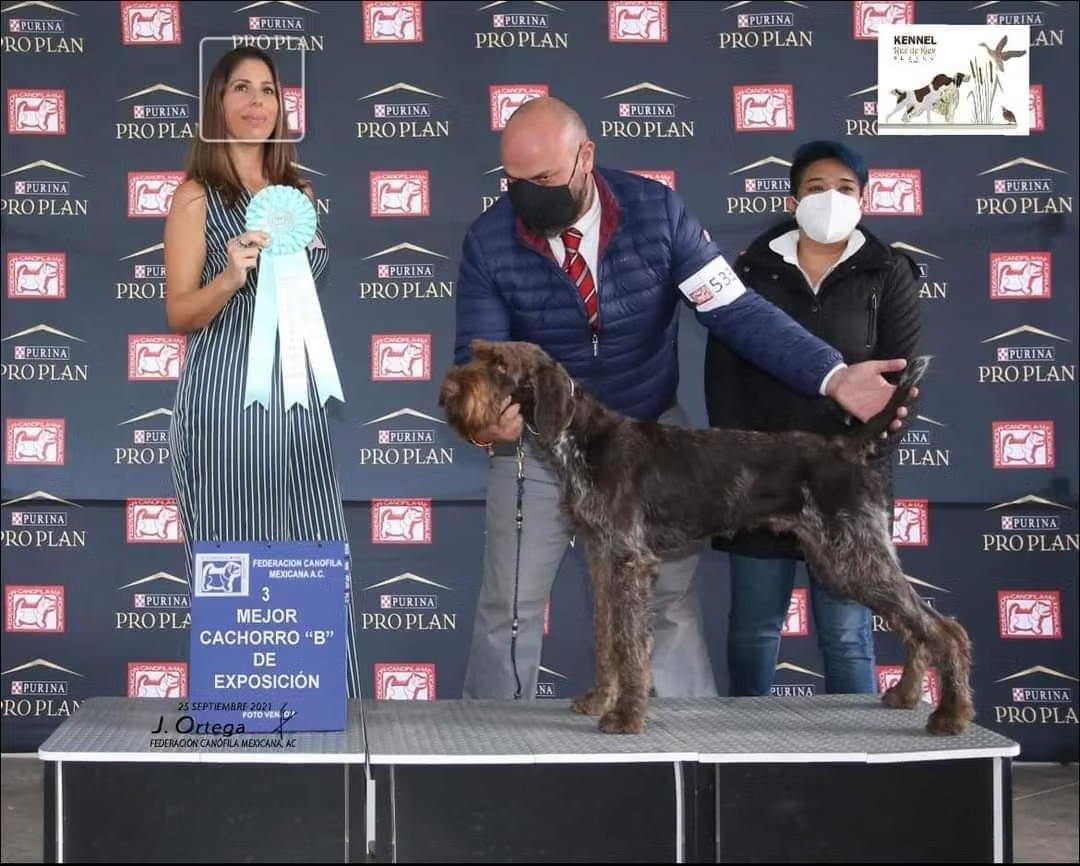
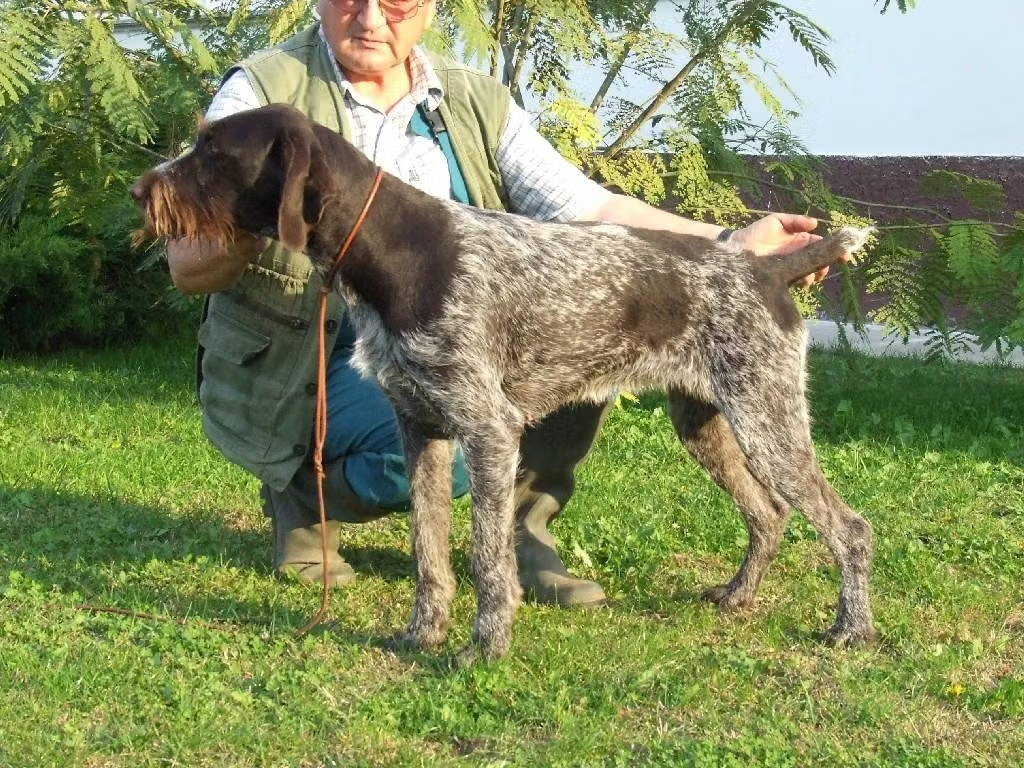
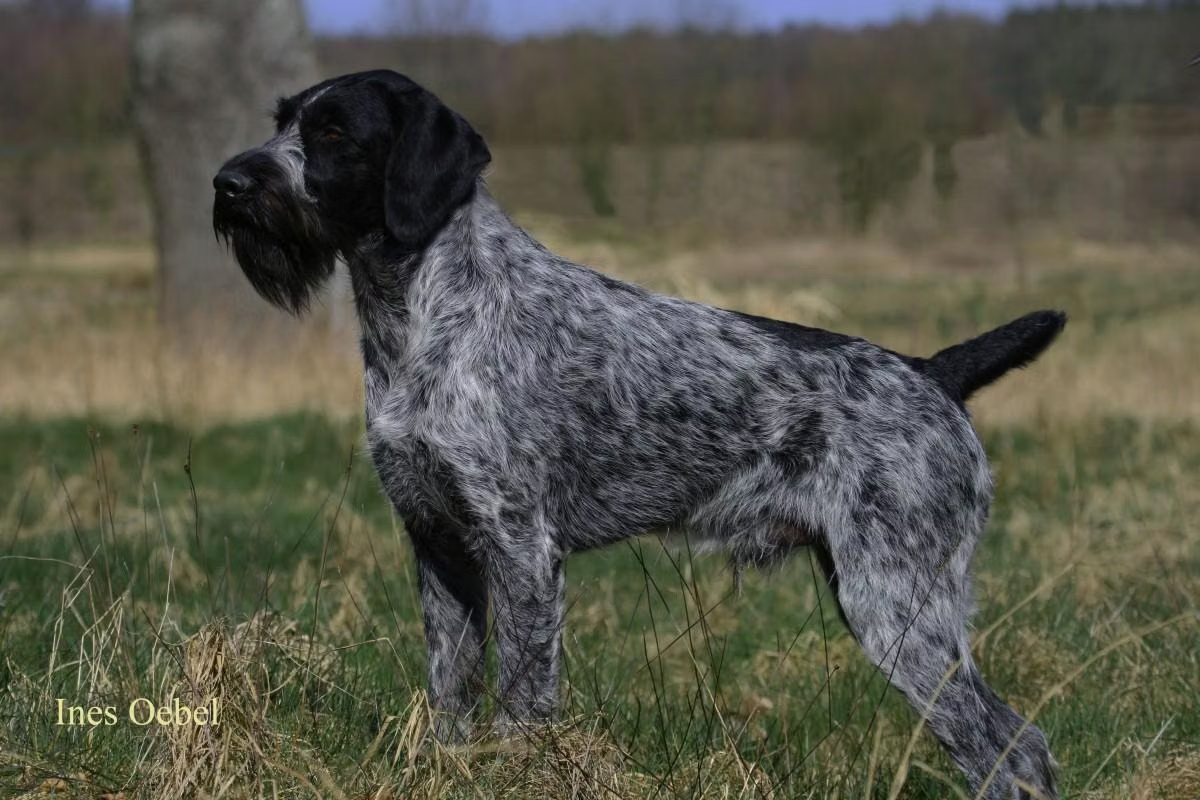
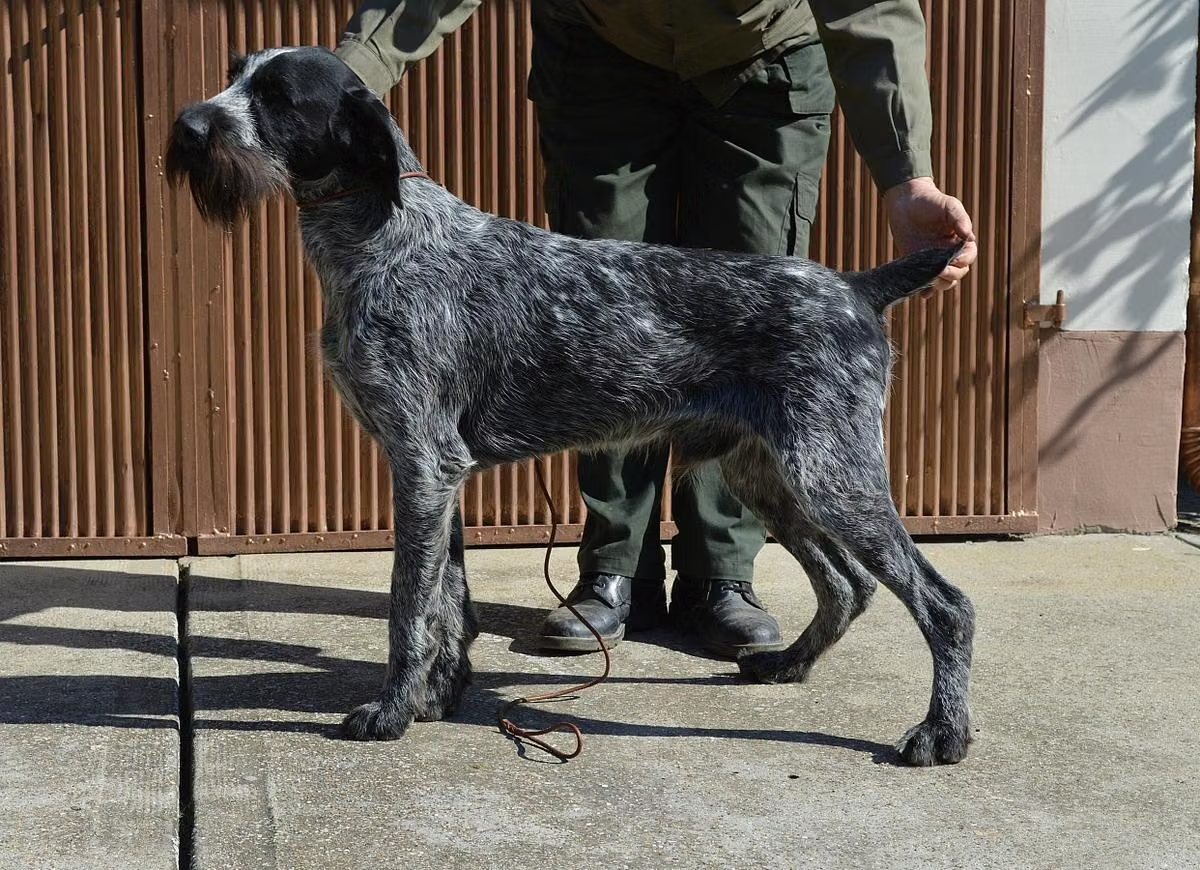
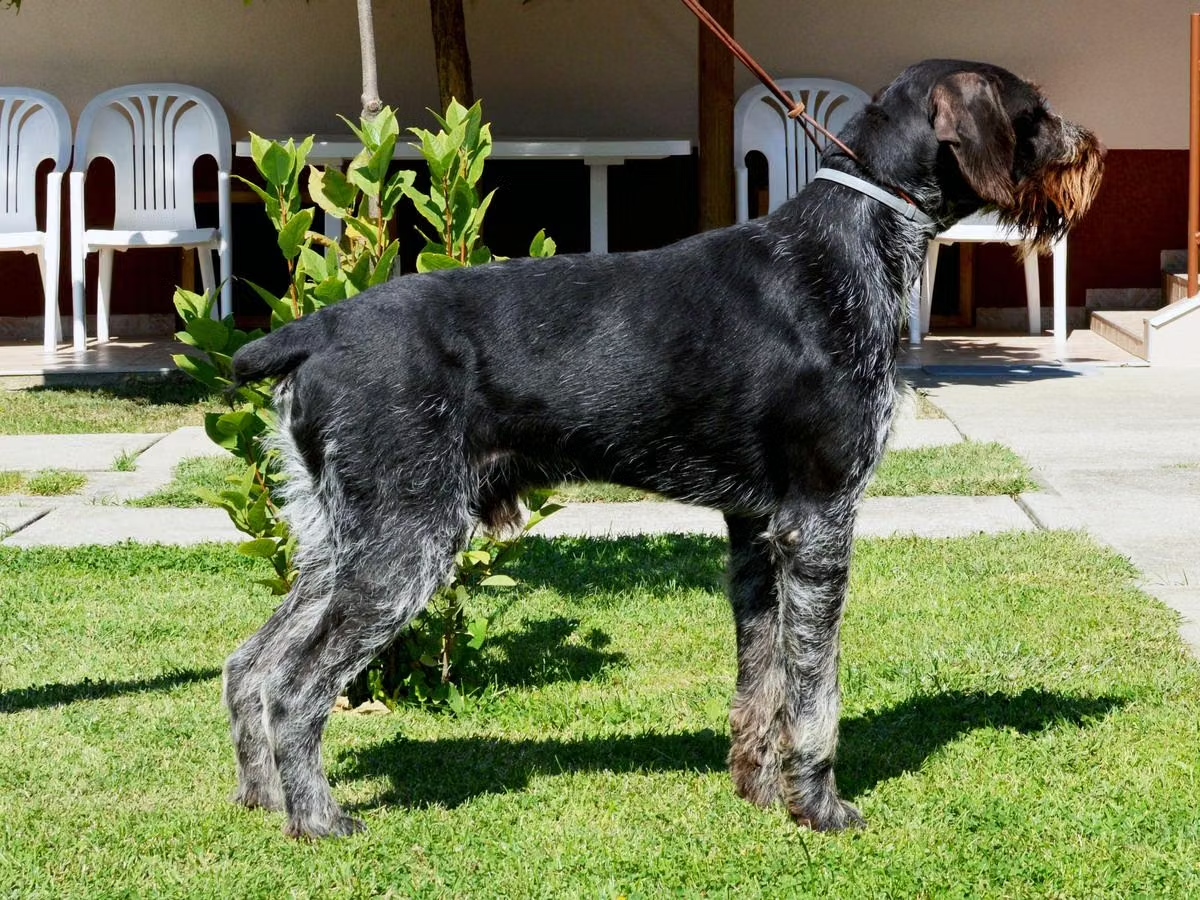
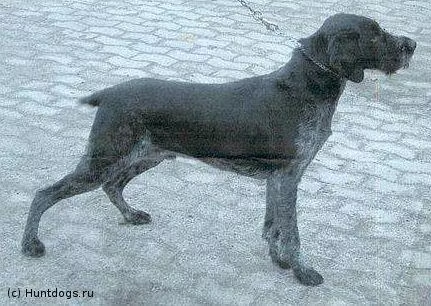
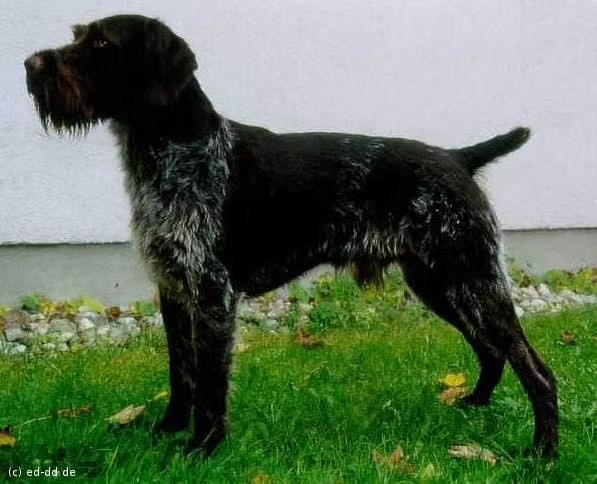
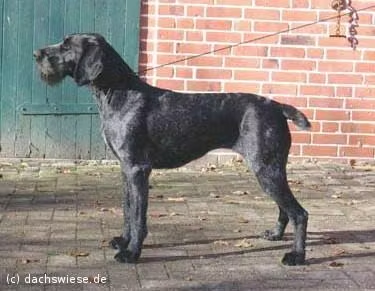
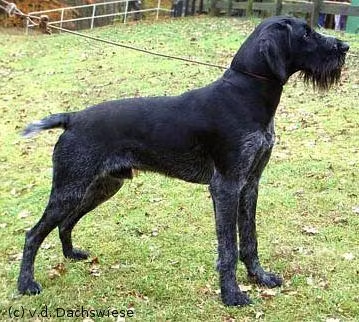
German Wirehaired Pointer breed guide
A large, robust and versatile gundog from Germany, the German Wirehaired Pointer combines a dense wire coat built for all weathers, intense devotion to its family, and a tireless working drive suited to British shooting and country pursuits.
The German Wirehaired Pointer, or Deutsch Drahthaar in its country of origin, is a large hunt-point-retrieve (HPR) gundog developed to work across varied ground in all weathers. In Britain the breed sits within The Kennel Club's Gundog Group and is valued by shooting enthusiasts for its ability to hunt-up, point, and retrieve both furred and feathered game over a single day in the field.
The dog is perceptive and loyal, forming a close bond with its household. It tends to settle its affection on one family and treats unfamiliar visitors with reserve, a quality rooted in its working instinct rather than ill temper. Because the breed was selected for stamina across full days on rough shooting ground, it carries a high energy level and needs purposeful daily activity to remain settled and content in the home.
Lifespan is typically 12 to 14 years. Owners prepared to commit to substantial daily exercise, consistent training, and regular company will find the breed a rewarding, long-lived working partner.
| Item | Detail |
|---|---|
| Origin | Germany |
| Size | Large |
| Lifespan | 12 to 14 years |
| KC group | Gundog (hunt, point, retrieve) |
| Good with | Family members it knows well; older, calm children; other dogs when socialised early |
Who suits this breed
The German Wirehaired Pointer is ideally matched to those who shoot, work dogs in the field, participate in HPR trials, or pursue other energetic country activities and want an all-round companion for them. It does best when owners are home for much of the day or can bring the dog along. Dedicated first-time owners who are prepared for daily vigorous exercise and sustained obedience work can manage the breed. It is a poor fit for flat or small-house living without very high activity levels, for households absent most of the day, or for anyone who prefers a calm and undemanding pet.
Origins and development
Created in Germany during the latter half of the nineteenth century as a single all-purpose gundog capable of pointing, tracking, and retrieving in any terrain, the breed received formal recognition at the turn of the twentieth century.
German sportsmen in the second half of the 1800s sought one dog able to handle every stage of a day's shooting: finding and pointing birds, tracking and retrieving game, working dense covert, and swimming cold water. Maintaining a kennel of specialist dogs was the alternative; the goal of a single versatile animal drove the breeding programme that produced the Deutsch Drahthaar.
Breeders combined several existing types, drawing principally from the Pudelpointer, the German Shorthaired Pointer, and rough-coated varieties including the Griffon and the Stichelhaar. Selection targeted the hard wire coat that sheds debris and resists cold water, combined with scenting ability, drive, and tractability. The Deutsch Drahthaar Club was established in Germany in 1902, and from the outset breeders linked registration to proven working performance rather than appearance alone.
The Kennel Club in Britain recognises the German Wirehaired Pointer within the Gundog Group. Under the Animal Welfare Act 2006 tail docking of dogs in England and Wales requires a veterinary certificate confirming the dog is intended for work; Scotland maintains an outright ban. British owners with working dogs should verify local regulations before docking is considered. A separate organisation, the Deutsch Drahthaar Group, registers dogs under the original name against German-style working test standards.
Size and physical description
A large, well-balanced gundog standing approximately 56 to 66 cm at the withers, the German Wirehaired Pointer is immediately identified by its harsh wire coat, heavy brow, and pronounced beard.
Built for sustained work across rough terrain rather than speed, the German Wirehaired Pointer has a slightly rectangular outline: body fractionally longer than its height at the withers, with a well-developed chest, sound bone, and a tail that was traditionally docked short. Under current English and Welsh law, docking requires veterinary authorisation for working dogs; the rules differ in Scotland. The wire coat and the serious, bearded face are the most immediately recognisable characteristics of the breed.
| Trait | Detail |
|---|---|
| Height | Dogs roughly 61 to 66 cm; bitches smaller, generally 56 cm and above at the withers |
| Weight | Approximately 23 to 32 kg; dogs toward the heavier end |
| Coat | Harsh, flat, wiry outer coat approximately 2.5 to 5 cm in length over a dense seasonal undercoat; pronounced eyebrows and full beard |
| Colour | Liver and white in ticked, spotted, or roan patterns; solid liver also seen; head typically solid liver, sometimes with a white blaze |
| Eyes | Oval, medium brown, set beneath heavy brows, with an alert expression |
Coat and colour
The wiry outer coat is the breed's practical hallmark. It lies flat to the body, sheds burrs and debris efficiently, and resists water penetration on wet shooting days. The dense undercoat thickens for the British autumn and winter months and thins naturally through summer. Coat colour runs through combinations of liver and white; ticked or roan patterning is most common; a liver head is typical; a white blaze features in some individuals. Black-based colouring falls outside The Kennel Club standard.
Temperament and behaviour
Steady and devoted within its family, the German Wirehaired Pointer is naturally watchful toward strangers and carries substantial energy that benefits from structured daily work and broad early socialisation.
The German Wirehaired Pointer forms a close bond with its household and typically attaches most strongly to one person. With family it is warm and even-tempered. With strangers it is naturally reserved and watchful, qualities that make it a capable watchdog, though responsible breeding and thorough socialisation are needed to ensure this reserve does not develop into anxiety or excessive wariness.
Drive and stamina are central to the breed's character. Selected for sustained field performance over many generations, it seeks an outlet for its energy at all times. Without sufficient exercise and mental stimulation it readily defaults to barking, destructive chewing, digging, or restless pacing. It is an intelligent dog that learns quickly, but its independent streak means training benefits from variety, patience, and consistency rather than repetition alone.
With children it is raised alongside, the breed is usually patient, though its size and exuberance suit older children and teenagers better than toddlers. Around other dogs it generally manages well with early socialisation. The prey drive is marked and applies readily to small animals, so homes sharing space with cats, rabbits, or other small pets require careful supervised introductions.
| Trait | Rating |
|---|---|
| Affection toward family | 5 |
| Energy level | 5 |
| Trainability | 4 |
| Tendency to bark | 3 |
| Moulting | 3 |
Grooming, exercise, and living needs
The German Wirehaired Pointer requires moderate coat care and considerable daily exercise. It does best with outdoor space, regular work, and an owner who is home and active.
Grooming
The wire coat is relatively straightforward to maintain compared with many sporting breeds.
- Brush once or twice weekly to remove loose hair, debris from the field, and tangles around the beard.
- Hand-strip or arrange professional stripping twice yearly to preserve the correct harsh texture; repeated clipping softens the coat permanently.
- Clean and dry the beard thoroughly after meals and following water work to prevent odour and skin soreness.
- Bathe only when clearly necessary; frequent bathing removes the oils that keep the coat weather-resistant.
- Trim nails regularly, attend to teeth several times a week, and check ear canals after swimming or beating in wet cover.
Exercise
This is a high-drive working breed that needs real activity, not token lead walks.
- Aim for at least one to two hours of vigorous exercise daily.
- Rough shooting, HPR work, spaniel-style hunting, swimming, extended trail walking, and retrieving all suit the breed.
- Supplement physical work with scent exercises, obedience sessions, or HPR training to provide mental engagement.
- Keep the dog securely on the lead or within a fenced area in open country, as the prey drive can override even a well-trained recall.
Living environment
A house with a securely fenced garden suits this breed well. The double coat copes with the damp and cold of a typical British autumn and winter without difficulty. Extended periods left alone or confined regularly lead to problem behaviours. Heat tolerance is lower than cold tolerance; shade and fresh water are necessities during any unusually warm spells.
Feeding and nutrition
Feed the German Wirehaired Pointer a complete diet suited to a large, active dog, split into two meals daily, with amounts adjusted to workload and body condition throughout the year.
A high-quality complete food formulated for active or working breeds suits the German Wirehaired Pointer well. Adequate protein and fat support the muscle mass and energy demands of a dog in regular work; gundogs during the shooting season may require more calories during their peak working months. Adjust portions to the individual dog's age, current weight, and weekly activity load, and ensure constant access to fresh water, particularly after exertion. The breed's deep chest creates susceptibility to gastric dilatation-volvulus (bloat); splitting daily intake into two meals and avoiding strenuous activity for an hour either side of feeding reduces that risk.
| Life stage | Daily amount | Meals per day |
|---|---|---|
| Puppy (2 to 6 months) | Per label for projected adult weight, divided across meals | 3 to 4 |
| Junior (6 to 12 months) | Per label, tapering toward adult quantity | 2 to 3 |
| Adult (1 to 7 years) | Roughly 2.5 to 3.5 cups dry food; more for working dogs in season | 2 |
| Veteran (7+ years) | Modest calorie reduction if activity decreases; monitor body condition | 2 |
Treats and supplements
Limit treats to roughly 10 percent of daily calorie intake to avoid unbalancing the diet or contributing to weight gain. Choose small, low-calorie rewards for training. Most dogs fed a complete food have no need for additional supplements; consult a veterinary surgeon before introducing joint-support, omega-3, or other products, as individual requirements differ and excessive supplementation can cause harm.
Health and common conditions
Generally hardy with a lifespan of 12 to 14 years, the German Wirehaired Pointer carries certain heritable conditions that owners should be aware of, including hip and elbow dysplasia, eye disease, ear infections, and bloat.
The German Wirehaired Pointer is a robust working breed; most individuals live 12 to 14 years with attentive care. Choosing a breeder who participates in the BVA/KC hip and elbow scoring schemes and whose breeding animals carry current BVA/KC/ISDS eye certificates significantly reduces the risk of heritable health problems. The conditions listed below appear in the breed but will not affect every individual.
| Condition | Signs | Note |
|---|---|---|
| Hip dysplasia | Stiffness, hindquarter lameness, reluctance to jump | Heritable joint malformation; BVA/KC hip score screening recommended for all breeding stock |
| Elbow dysplasia | Forelimb lameness, typically worse after exercise | BVA/KC elbow grading available; screen breeding dogs |
| Eye conditions (cataracts, progressive retinal atrophy) | Cloudy eye, night blindness, bumping into objects | Annual BVA/KC/ISDS eye testing helps identify problems before they progress |
| Ear infections | Head shaking, scratching at the ear, discharge, odour | Pendulous ear flaps combined with frequent swimming trap moisture; dry ears thoroughly after water work |
| Bloat (gastric dilatation-volvulus) | Distended rigid abdomen, unproductive retching, restlessness and distress | A veterinary emergency; deep-chested breeds carry elevated risk |
Preventive health management
- Keep vaccinations current in line with your veterinary surgeon's protocol.
- Apply year-round flea, tick, and heartworm prevention, particularly for dogs working in fields and water.
- Schedule annual health checks with your vet; twice-yearly for dogs over seven.
- Keep the dog lean to reduce stress on joints.
- Brush teeth routinely and arrange professional dental scaling when advised.
- Dry ear canals thoroughly after every swim or water work session.
Trainability and training basics
Intelligent and motivated to work alongside its handler, the German Wirehaired Pointer is highly trainable but benefits greatly from early, consistent reward-based training and broad socialisation.
The German Wirehaired Pointer learns new behaviours readily and takes genuine satisfaction in cooperative work with its handler. These qualities make it trainable, but success depends on consistent, clear instruction from the owner. A bored or under-worked dog of this breed will entertain itself in ways most owners find unwelcome. Short, varied sessions of 5 to 15 minutes repeated several times daily produce better results than single lengthy drilling sessions. Harsh or forceful methods are counterproductive with a sensitive, intelligent dog; firm but fair handling backed by well-timed rewards achieves far more. Thorough early socialisation is particularly important given the breed's natural wariness around strangers and its pronounced prey drive.
Training foundations
- Start socialisation in puppyhood: positive, controlled exposure to a wide range of people, dogs, surfaces, sounds, and environments.
- Teach fundamental cues first: name, sit, down, stay, and a reliable recall.
- Build the recall specifically and proof it under increasing distraction -- prey drive can readily override a poorly maintained recall in the field.
- Keep sessions short and always end on a successful repetition.
- Introduce impulse-control exercises such as leave it and wait, which are particularly useful around small animals and game.
- As the dog matures, channel its working drive into retrieving, HPR training, scent work, or competitive field events.
- Proof every trained behaviour in new environments and against real distractions before relying on it away from familiar ground.
Breeding and puppy development
German Wirehaired Pointers reach sexual maturity before 12 months, but responsible breeders wait for full physical and mental maturity plus health clearances before mating, with litters typically 7 to 9 puppies following a 63-day gestation.
Bitches typically reach sexual maturity between 6 and 12 months, but responsible breeders delay mating until the bitch has fully matured physically and mentally -- usually near two years old -- and has been cleared through relevant health screening. Gestation is approximately 63 days from conception. Litters most commonly run to 7 to 9 puppies, though both smaller and larger litters are recorded.
Newborn puppies are completely dependent on the dam; they are born with eyes and ear canals sealed. Eyes open between 10 and 14 days. Weaning onto solid food begins around 3 to 4 weeks and is generally complete by 7 to 8 weeks. Systematic early handling and calm, positive exposure to everyday sights and sounds during the first 8 weeks help establish the stable adult temperament the breed is capable of. Puppies go to their new homes at 8 weeks or later. Ethical breeders prioritise sound hips, healthy eyes, and a reliable working temperament, and complete BVA/KC hip and elbow evaluations on both parents before mating.
| Parameter | Value |
|---|---|
| Sexual maturity | 6 to 12 months (recommended breeding age: around 2 years) |
| Gestation length | Approximately 63 days |
| Typical litter size | 7 to 9 puppies |
| Eyes open | Approximately 10 to 14 days |
| Weaning complete | Approximately 7 to 8 weeks |
| Go-home age | 8 weeks or later |
German Wirehaired Pointer registration and microchipping in the UK
Your German Wirehaired Pointer's details on a record that satisfies UK microchip law: free with United Pet Club, for life, with nothing to renew.
Registering a German Wirehaired Pointer in the United Kingdom
Microchipping has been compulsory for dogs in England, Scotland and Wales since 2016, and the rules are strict about keeping the details behind the chip current. A free United Pet Club profile holds your German Wirehaired Pointer's record for the whole of its life, with your phone number and address sitting where a scan can reach them. Registering your dog is done in minutes and costs nothing, now or later.
A chip without a registration is a serial number and nothing more. File your German Wirehaired Pointer's fifteen digit number with United Pet Club and it becomes a route back to you: free for life, open to every chip brand sold in Britain, and searchable whenever a scanner finds it. Microchip registration takes less time than the kettle, and a free account covers the profile too.
How do I register my German Wirehaired Pointer in the UK?
Set up a free United Pet Club account, add your German Wirehaired Pointer's details and a photo, and save. The profile stays live for the whole of the dog's life at no charge, and the chip number can be added the moment you have it.
How do I register my German Wirehaired Pointer's microchip?
Key the fifteen digit number into your free United Pet Club account with your current address and phone number. The lifetime plan accepts any brand a British vet implants, and amendments after a house move are free.
Is microchipping a German Wirehaired Pointer required by law in the UK?
Yes. Dogs in England, Scotland and Wales have had to be chipped since 2016, with the keeper's details kept current. The law covers the chip; keeping the record pointing at a live phone number is what United Pet Club handles, free.
How much does it cost to register a German Wirehaired Pointer in the UK?
Nothing at all. The United Pet Club lifetime plan covers the profile, the microchip record and every amendment without a fee, so there is no renewal to remember.
Frequently asked questions
Common questions from UK owners and prospective buyers cover size, suitability for families and shooting, exercise requirements, lifespan, living with other pets, and how to find the breed.
How large does a German Wirehaired Pointer grow?
Dogs typically stand 61 to 66 cm at the withers and weigh 25 to 32 kg. Bitches are noticeably smaller, generally 56 cm or above and proportionally lighter.
Is the German Wirehaired Pointer a good family dog?
Yes, for active families who can meet its exercise and mental needs. The breed is devoted to the people it lives with and patient with children it grows up alongside, though its size and boisterous energy suit older children and teenagers better than very young ones. Early and continued socialisation is important given its natural reserve with strangers.
Is it suitable for shooting in the UK?
Very much so. As an HPR breed it is designed for a full day in the field, capable of hunting-up, pointing, tracking, and retrieving furred and feathered game. Many owners run the breed in HPR field trials.
How much exercise does it need?
At minimum one to two hours of genuine vigorous exercise daily. Shooting days, long walks over varied terrain, swimming, and structured retrieving work all suit the breed. Mental stimulation through training and scent work is equally important.
What is the typical lifespan?
Most German Wirehaired Pointers live 12 to 14 years when kept lean, exercised consistently, and given routine veterinary care.
Do they moult heavily?
Moulting is moderate. The coat sheds more during seasonal changes; weekly brushing and twice-yearly stripping keep it manageable.
Where can I find a reputable breeder in the UK?
Contact The Kennel Club's Find a Puppy service and reach out to the German Wirehaired Pointer Club. If you want a dog registered to Deutsch Drahthaar working standards, approach the Deutsch Drahthaar Group. Be prepared for a waiting list with established working breeders.
From the community
Ask about the German Wirehaired PointerNo questions about the German Wirehaired Pointer yet. Be the first to ask.
Browse Dog breeds