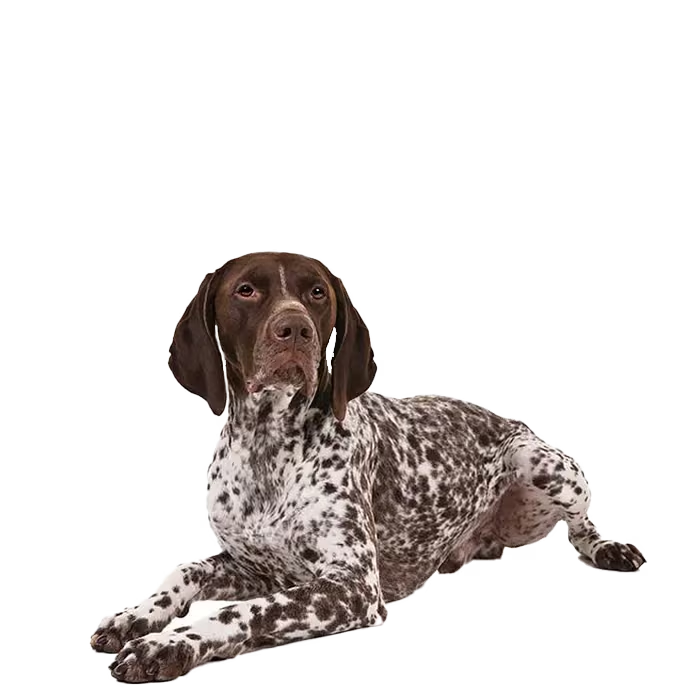
The German Shorthaired Pointer is a friendly, versatile gundog prized for its boundless energy and eager-to-please nature.
How the German Shorthaired Pointer coat is built, and what that means when you groom it.
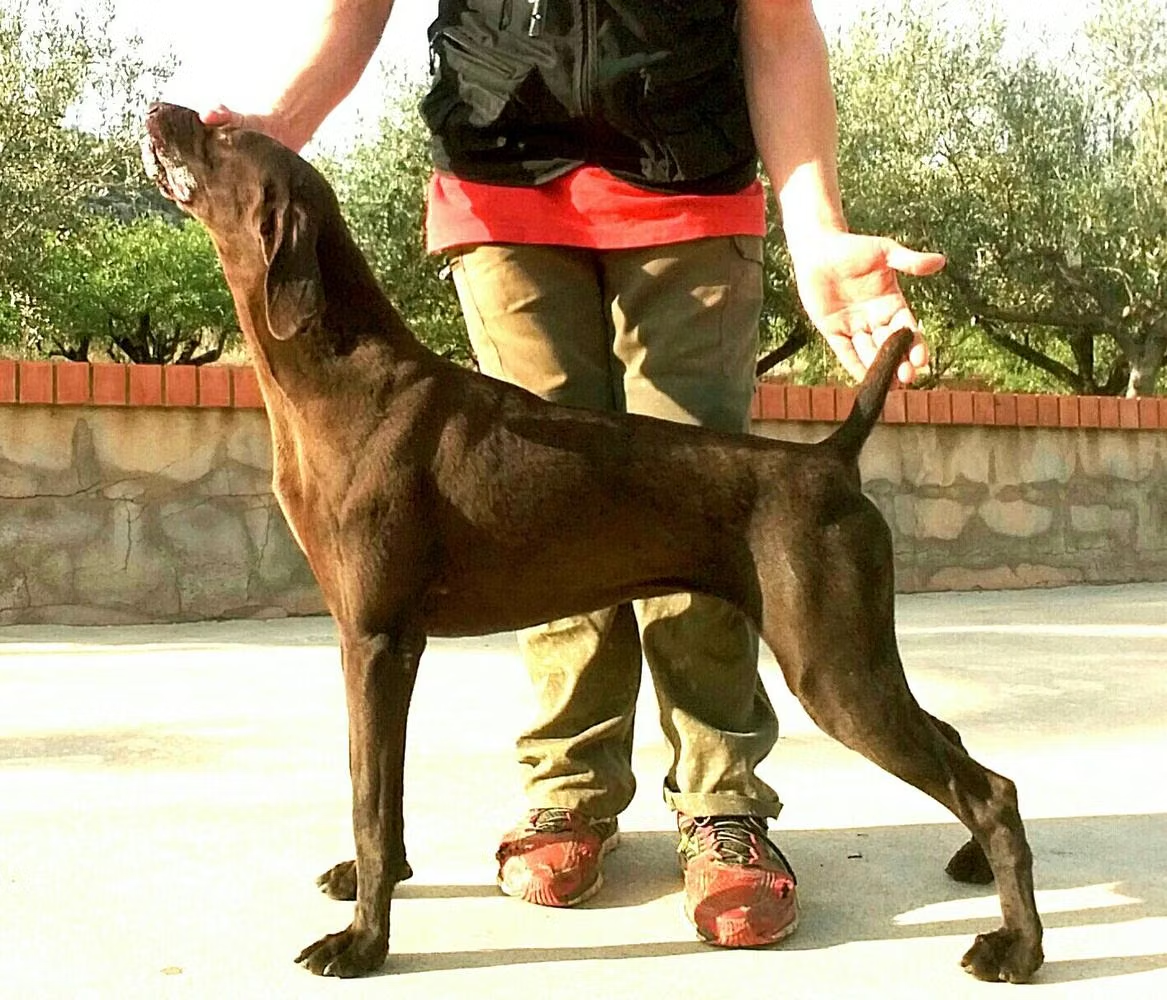
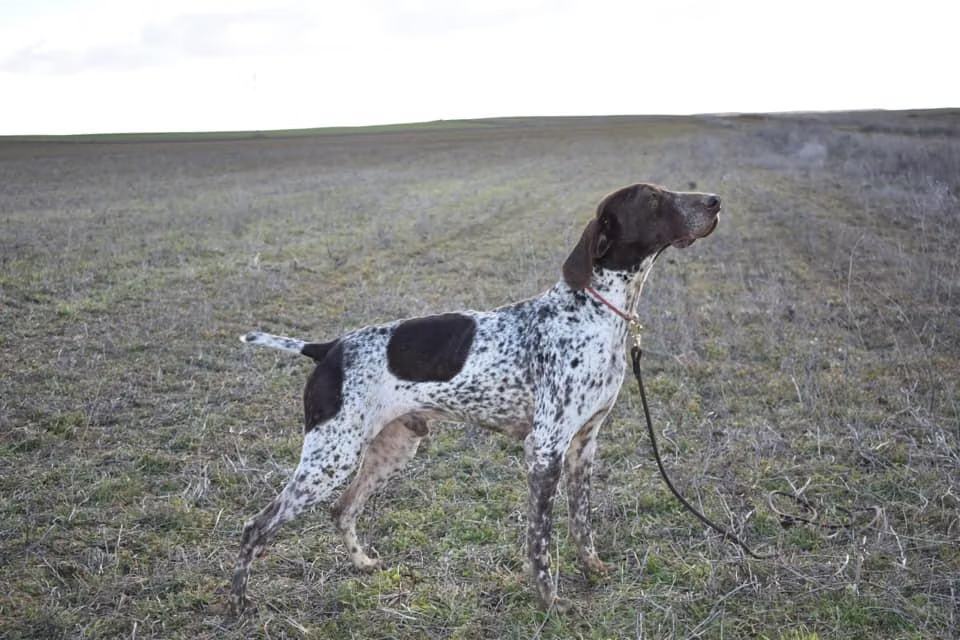
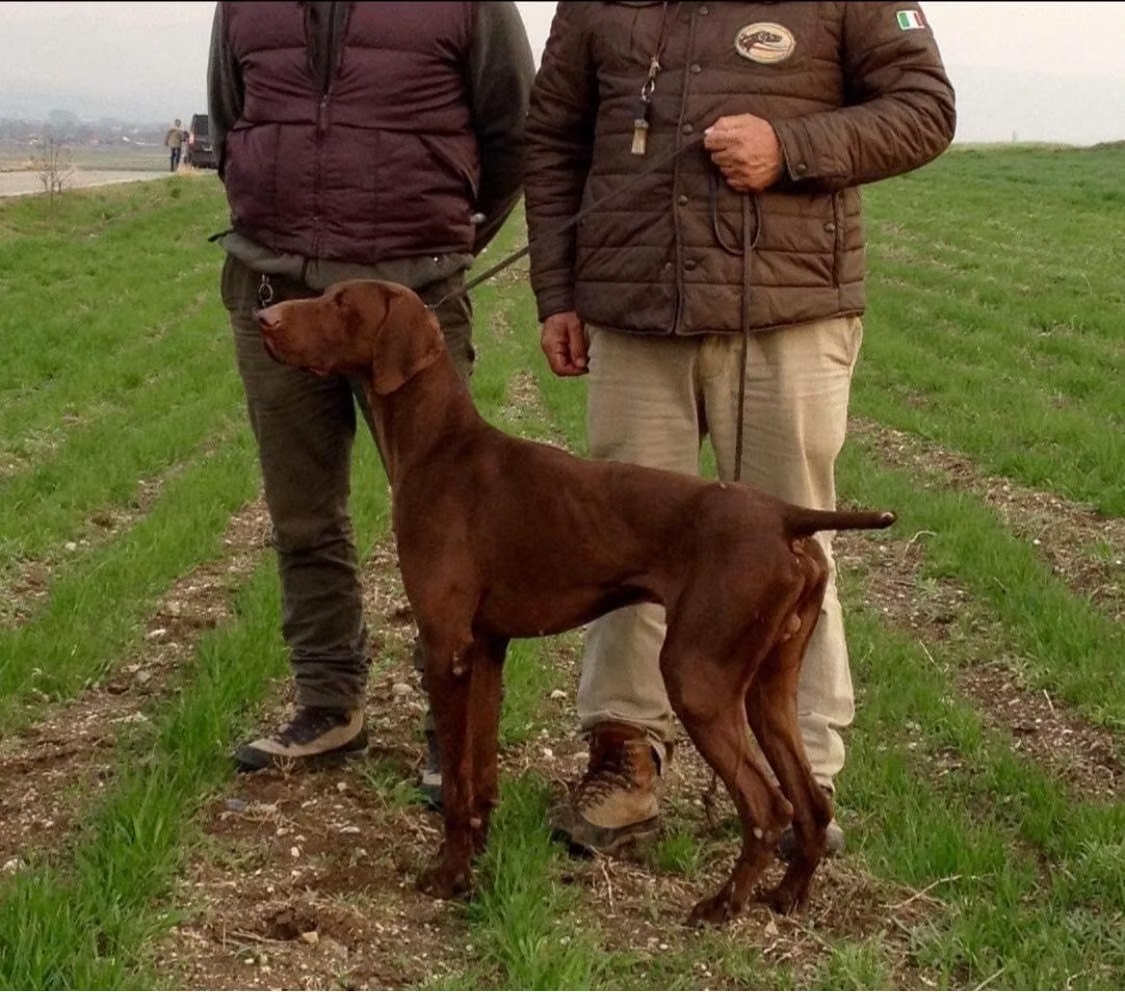
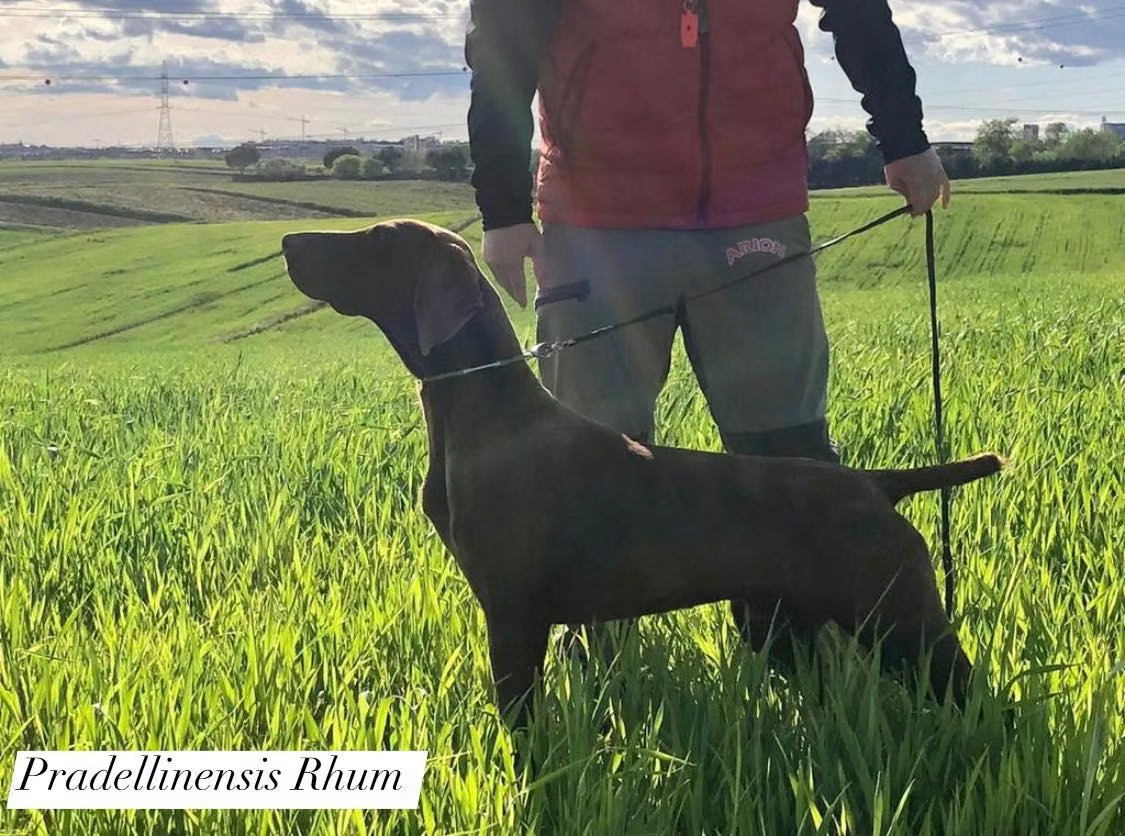
A few of the German Shorthaired Pointer profiles members have added to United Pet Club.
The German Shorthaired Pointer is a large, friendly gundog of German origin, valued for its energy, intelligence and versatility in the field.
The German Shorthaired Pointer, frequently abbreviated to GSP, is a large hunting dog bred in Germany. It was developed to point and to retrieve game on land and in water, and that combination of tasks is why it is classed as a versatile gundog or pointing dog. A strong working drive sits alongside an affectionate, biddable temperament towards the household.
The typical German Shorthaired Pointer is tall and lean, with a short coat over a steady, athletic frame. Adults tend to live for 10 to 14 years. The breed is friendly within the family and sociable in general, yet its considerable energy means it fares best with owners able to keep it properly occupied.
The Kennel Club in the United Kingdom places the German Shorthaired Pointer within the gundog group. In Britain the breed is worked in the shooting field and competed in field trials, agility and obedience, as well as being kept as an active family companion.
| Item | Detail |
|---|---|
| Origin | Germany |
| Size | Large |
| Lifespan | 10 to 14 years |
| Group/role | Gundog (versatile pointing dog: pointing and retrieving) |
| Good with | Active families, older children, and households able to provide daily exercise |
The German Shorthaired Pointer is best matched to households that can provide sustained daily exercise and mental work. It suits those who work dogs in the shooting field, runners and active families who want a dog fully involved in their routine. It is a poor choice for anyone out of the house for long hours, or for those wanting a placid, low-energy companion, since a GSP that is under-exercised becomes restless and is apt to chew or dig.
The German Shorthaired Pointer was developed in 19th-century Germany by crossing older pointing dogs with scenthounds and other breeds into a single all-purpose gundog.
The German Shorthaired Pointer was developed in Germany over the course of the 1800s. German breeders sought a single dog able to find and point game, to follow the line of wounded quarry, and to retrieve from both land and water. Before this, sportsmen had commonly kept several specialised breeds for these separate tasks.
The foundation stock included the German Bird Dog together with older Spanish and continental pointing types. It is widely accepted that breeders added scenthound blood to improve tracking ability and give a keener nose. Crosses to the English Pointer are credited with refining the outline and improving the dog's style on point.
A formal breed standard was settled towards the end of the 19th century. The German studbook for the breed, maintained by the Klub Kurzhaar, recorded the early pedigrees, and the dog Hektor 1 is frequently cited among the first registered animals. Selective breeding rewarded working ability together with a clean, athletic appearance.
The breed reached the United States during the 1920s and was recognised by the American Kennel Club in 1930. It later became established in Britain, where The Kennel Club recognises it within the gundog group, and it moved from sporting and field-trial circles into wider use as a companion. The German Shorthaired Pointer is now kept throughout the world for both work and family life.
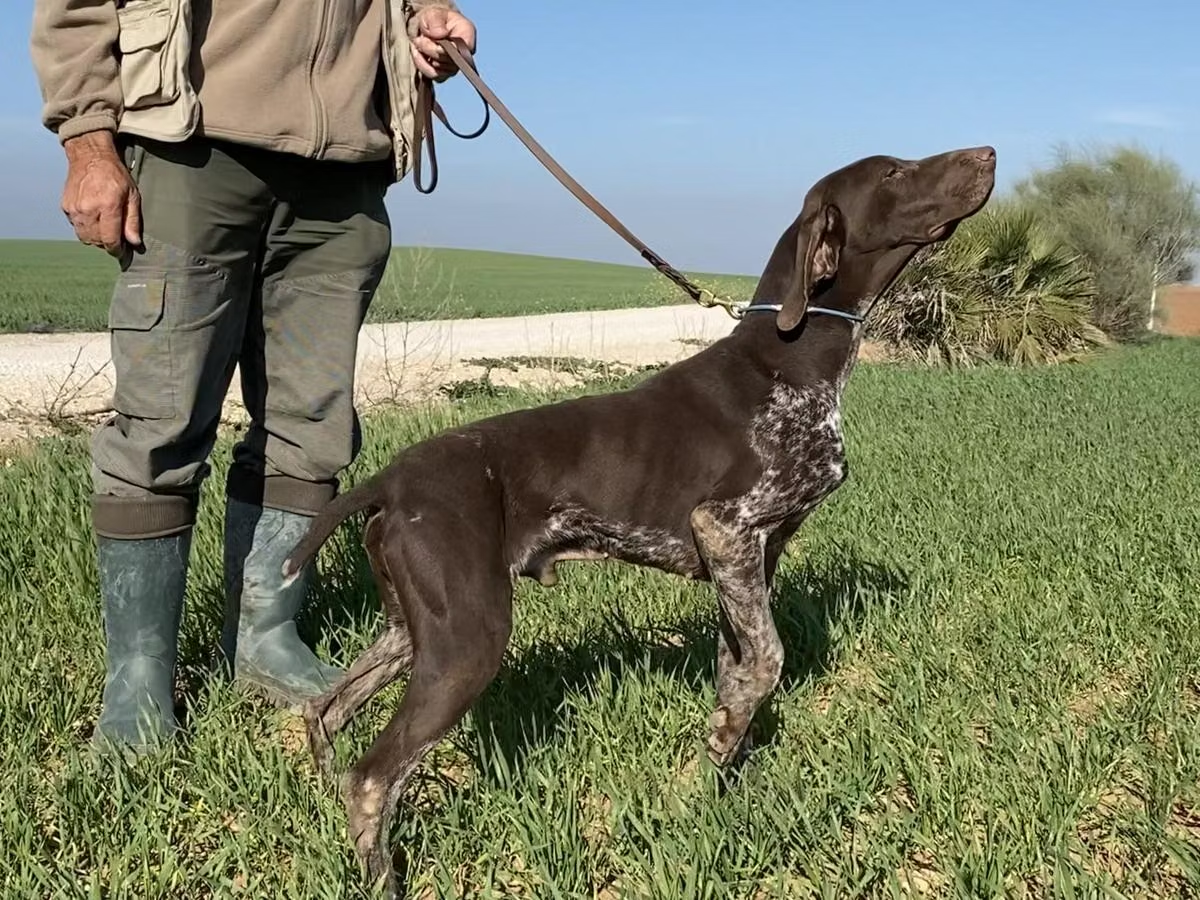
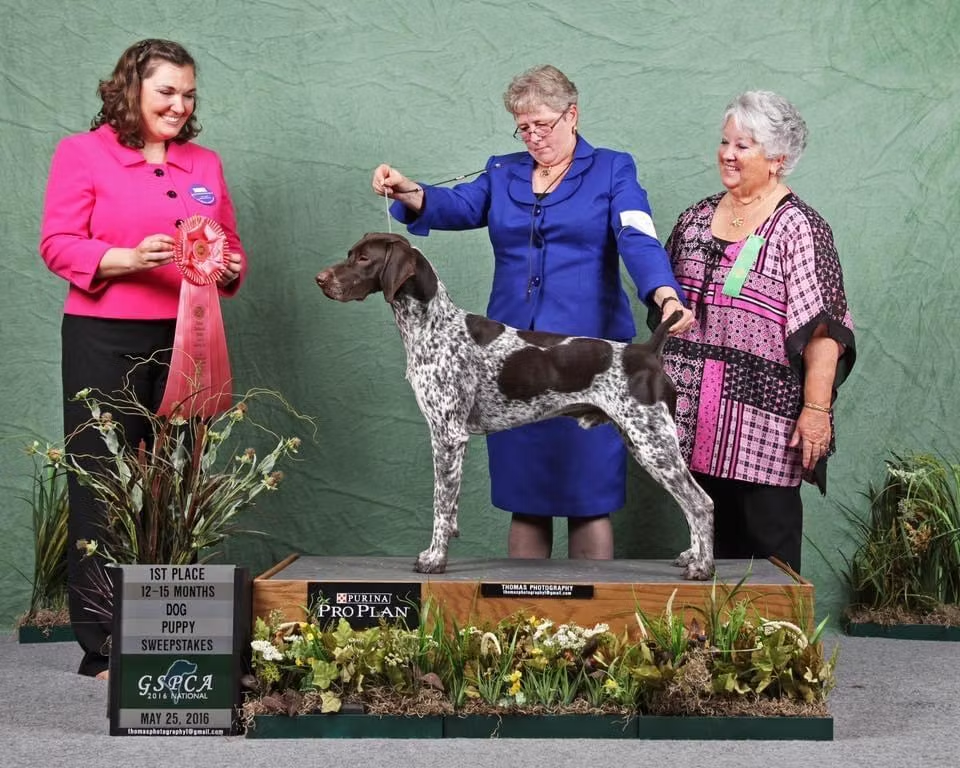
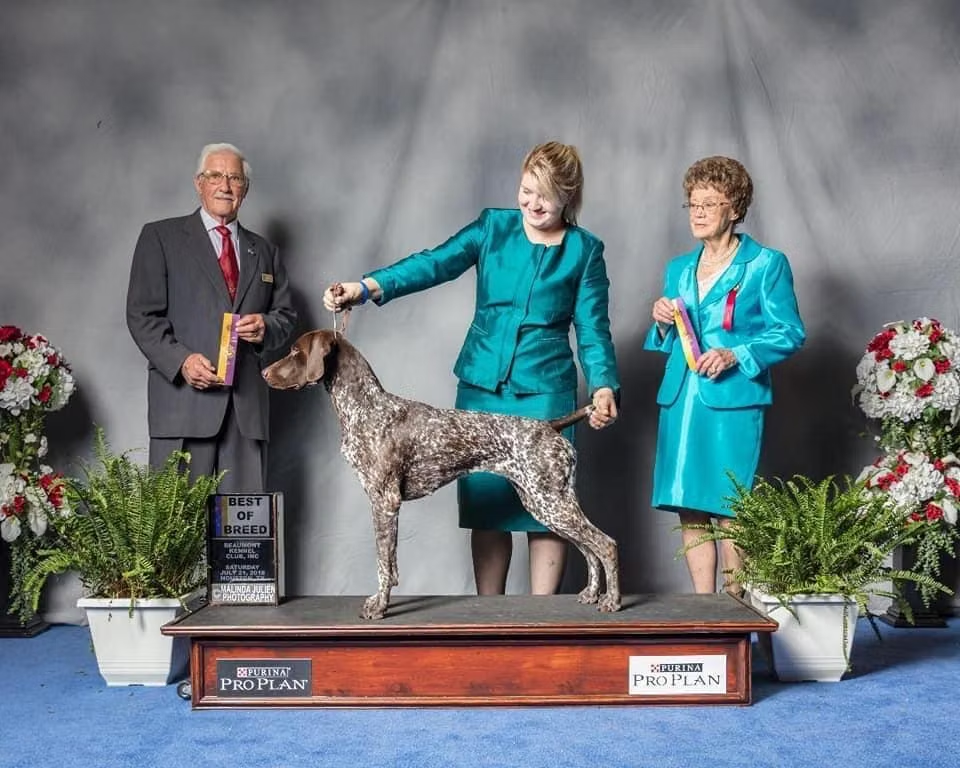
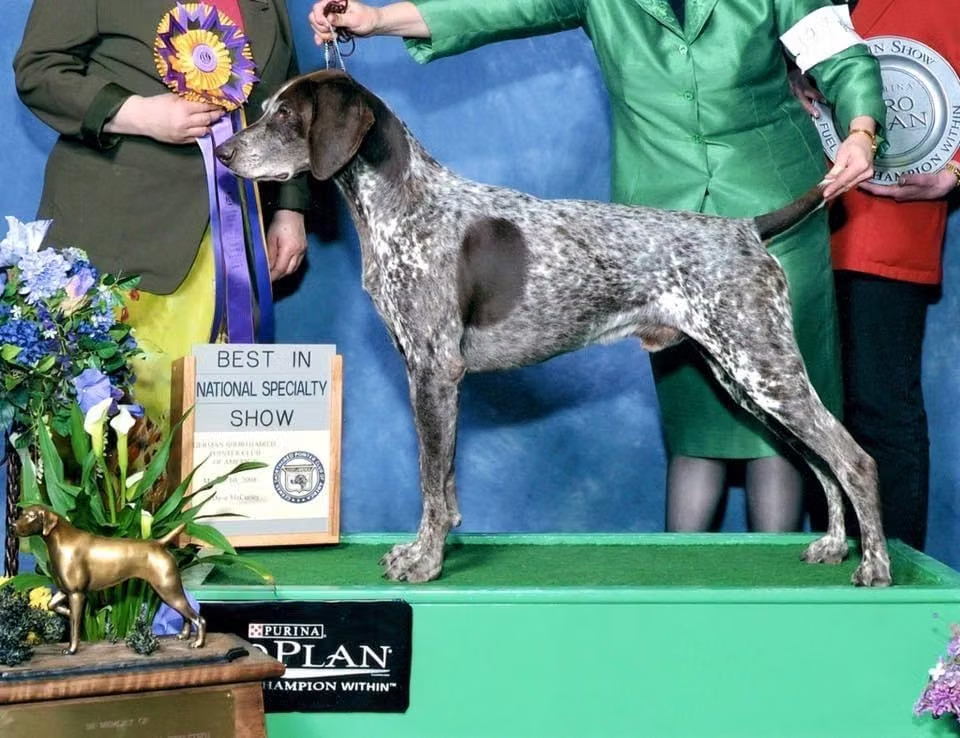
The German Shorthaired Pointer is a large, athletic dog with a short liver-and-white coat, a lean muscular body and a clean, aristocratic head.
The German Shorthaired Pointer is balanced and powerful, its build athletic rather than heavy. The body is marginally longer than it is tall, with a deep chest, a level back and well-muscled limbs. The head is clean, carrying a long muzzle, broad drop ears set high, and dark almond-shaped eyes. The tail has traditionally been docked in some countries. In the United Kingdom, tail docking is prohibited under the Animal Welfare Act 2006 except in specific working-dog exemptions, so prospective UK owners should note that the vast majority of GSPs born here carry a full, natural tail.
The action is smooth and far-reaching, as befits a dog bred to cover ground for hours at a stretch. The overall outline conveys speed, stamina and control.
| Trait | Detail |
|---|---|
| Height | Males about 23 to 25 inches (58 to 64 cm); females about 21 to 23 inches (53 to 59 cm) at the shoulder |
| Weight | Males about 55 to 70 lb (25 to 32 kg); females about 45 to 60 lb (20 to 27 kg) |
| Coat | Short, dense and flat with a slightly coarse texture; water-resistant |
| Colours | Liver (solid), liver and white, liver roan, ticked, and patched patterns |
| Eyes | Almond-shaped, medium size, usually dark brown |
The coat is short and lies close to the body, so it dries quickly and is straightforward to keep clean. The principal pigment is liver, a deep reddish-brown. Common patterns take in solid liver, liver and white, liver roan, and assorted ticked or patched combinations. Black-and-white variants occur and are accepted by some registries, though not by the original German standard. As the short coat affords little protection in severe cold, the breed may require a coat during harsh winter weather.
The German Shorthaired Pointer is friendly, intelligent and eager to please, bonding closely with its family while remaining alert around strangers and other animals.
The German Shorthaired Pointer is affectionate and thoroughly people-oriented. It forms strong bonds with its family and often wishes to be close to its owners, which can give rise to separation distress if it is left alone for too long. The breed is intelligent and eager to please, qualities that make it responsive in training, though it is equally quick to acquire bad habits under inconsistent handling.
Within the family the GSP is gentle and playful, and it is generally good with older children able to match its energy. Towards strangers it inclines to be alert and welcoming rather than aggressive, and early socialisation helps it remain settled in unfamiliar circumstances.
With other dogs the breed is usually sociable. Having been bred to hunt birds and small game, it can show a strong prey drive towards cats, rabbits and birds, so careful introductions and supervision are sensible in households with small pets. This is an energetic dog that requires an outlet; deprived of one, it may become bored and destructive.
| Trait | Rating |
|---|---|
| Affection | 5 |
| Energy | 5 |
| Trainability | 4 |
| Vocalness | 3 |
| Shedding | 3 |
The German Shorthaired Pointer needs a great deal of daily exercise and very little grooming, and is best suited to an active home with secure outdoor space.
The short coat asks little in the way of upkeep, though it does moult, more heavily in spring and autumn.
This is a high-energy working breed that requires a good deal of activity each day.
The German Shorthaired Pointer is best kept in a home with a securely fenced garden and access to open ground for running. It can adapt to smaller accommodation only where its exercise needs are met in full. Being athletic, it can jump or climb fencing, so any boundary should be high and secure. Because the coat is thin, the dog needs shelter from the cold and ought not to be left outdoors in low temperatures for prolonged periods.
The German Shorthaired Pointer needs a complete diet matched to its high activity level, given in measured meals to maintain its lean, athletic build.
As an active large breed, the German Shorthaired Pointer requires a complete and balanced diet with sufficient protein and fat to fuel its energy. A working or sporting dog may need more calories than a pet kept at moderate activity. Choose a food formulated for the dog's life stage, and adjust the quantity to keep the dog lean rather than overweight. You should be able to feel the ribs without pressing hard.
Feed adults two meals a day rather than a single large one, which helps reduce the risk of bloat in a deep-chested breed. Provide fresh water at all times, and particularly after exercise.
| Life stage | Amount per day | Meals per day |
|---|---|---|
| Puppy (2 to 6 months) | About 2 to 3 cups, split across meals | 3 to 4 |
| Puppy (6 to 12 months) | About 2.5 to 3.5 cups | 2 to 3 |
| Adult | About 2.5 to 3.5 cups | 2 |
| Senior or less active | About 2 to 3 cups | 2 |
Keep treats to roughly 10 per cent of daily calories so they do not unbalance the diet. Small training treats suit a food-motivated breed such as the GSP. Most dogs on a complete commercial diet require no supplements. Consult a veterinary surgeon before adding joint, omega-3, or other supplements, particularly for growing puppies or elderly dogs.
The German Shorthaired Pointer is generally healthy and lives 10 to 14 years, though it is prone to hip dysplasia, bloat and a few other conditions that screening helps manage.
The German Shorthaired Pointer is usually a healthy, hardy breed with a typical lifespan of 10 to 14 years. In common with many large, deep-chested dogs, it carries certain known health risks. Buying from breeders who screen their stock and keeping abreast of veterinary care reduce the likelihood of serious problems. Keeping the dog at a lean body weight protects the joints throughout its life.
| Condition | Signs | Note |
|---|---|---|
| Hip dysplasia | Limping, stiffness, difficulty rising | Hereditary; screen breeding dogs and keep weight down |
| Gastric dilatation-volvulus (bloat) | Swollen belly, retching without vomiting, restlessness | Life-threatening emergency in deep-chested dogs; needs immediate veterinary care |
| Elbow dysplasia | Front-leg lameness, reduced range of motion | Inherited joint condition; screening helps |
| Ear infections | Head shaking, odour, scratching at the ears | Drop ears trap moisture; clean and dry the ears regularly |
| Hypothyroidism | Weight gain, low energy, coat changes | Managed with daily medication once diagnosed |
The German Shorthaired Pointer is intelligent and eager to please, making it highly trainable when given consistent, reward-based work and an outlet for its energy.
The German Shorthaired Pointer learns quickly and genuinely wants to work with its handler, so it takes readily to training. That same intelligence means it grows bored with repetition and needs varied, engaging sessions. A tired, mentally exercised GSP is a good deal easier to train than one with pent-up energy. Early socialisation with people, other dogs and everyday situations helps the dog grow into a settled adult.
German Shorthaired Pointers reach sexual maturity around 6 to 12 months, carry litters for about 63 days, and usually produce 8 to 12 puppies weaned by about 8 weeks.
German Shorthaired Pointers usually reach sexual maturity between 6 and 12 months, though responsible breeders wait until a dog is physically and mentally mature, often beyond 2 years, and until health screening is complete before breeding from it. Bitches come into season roughly twice a year.
Gestation lasts about 63 days from conception. Litters are commonly large, often 8 to 12 puppies. Newborn pups are helpless and depend wholly on the dam for warmth and milk during the first weeks. The eyes open at around 10 to 14 days, and puppies begin to move about and explore from roughly 3 weeks.
Weaning usually begins around 3 to 4 weeks and is finished near 8 weeks, once solid food has fully replaced nursing. Puppies should remain with the dam and littermates until at least 8 weeks, which supports healthy social development. Early handling and gentle exposure to new sights and sounds help to produce confident adults.
| Metric | Value |
|---|---|
| Sexual maturity | About 6 to 12 months (breeding recommended later) |
| Heat cycle (female) | Roughly twice per year |
| Gestation | About 63 days |
| Average litter size | 8 to 12 puppies |
| Eyes open | About 10 to 14 days |
| Weaning age | About 8 weeks |
| Recommended age to leave litter | 8 weeks or older |
Your German Shorthaired Pointer's details on a record that satisfies UK microchip law: free with United Pet Club, for life, with nothing to renew.
Give your German Shorthaired Pointer five minutes of paperwork before it needs rescuing. The free profile takes a name, a date of birth, a photo and your contact details, and it lives on a registry that never charges for the privilege. Dog registration works whether the chip is already in or still on the to-do list.
The implant happens at the vet surgery; the record is your half of the bargain, and the 2016 regulations expect it kept up to date. Register the microchip free on the lifetime plan: any brand a British vet implants is accepted, amendments after moving house cost nothing, and the record stays searchable through the lookups rescue centres and wardens turn to first. Create your free account and square it away this evening.
Set up a free United Pet Club account, add your German Shorthaired Pointer's details and a photo, and save. The profile stays live for the whole of the dog's life at no charge, and the chip number can be added the moment you have it.
Key the fifteen digit number into your free United Pet Club account with your current address and phone number. The lifetime plan accepts any brand a British vet implants, and amendments after a house move are free.
Yes. Dogs in England, Scotland and Wales have had to be chipped since 2016, with the keeper's details kept current. The law covers the chip; keeping the record pointing at a live phone number is what United Pet Club handles, free.
Nothing at all. The United Pet Club lifetime plan covers the profile, the microchip record and every amendment without a fee, so there is no renewal to remember.
Common questions about the German Shorthaired Pointer cover its size, temperament, care needs, lifespan, suitability for families, and how easy it is to find.
It is a large breed. Males stand about 23 to 25 inches at the shoulder and weigh roughly 55 to 70 lb. Females are a little smaller, about 21 to 23 inches and 45 to 60 lb.
Yes, for active families. They are friendly and affectionate and generally do well with older children. Their high energy and strong prey drive mean they need supervision around very young children and small pets.
Grooming is easy owing to the short coat, but the exercise demands are considerable. The breed needs 1 to 2 hours of vigorous activity daily, plus mental work. Owners who cannot manage that may find the dog restless or destructive.
The typical lifespan is 10 to 14 years. Good nutrition, regular veterinary care and a healthy weight help a dog reach the upper end of that range.
They are usually sociable with other dogs. Because they were bred to hunt birds and small game, they may chase cats, rabbits and birds. Early socialisation and careful introductions help.
Yes. They are intelligent and eager to please, which makes them very trainable with consistent, reward-based methods. They bore easily, so sessions should be short and varied, and recall training should begin early.
They are a popular and widely kept breed, so puppies are generally available from reputable breeders, and adults come up through breed rescue. Look for breeders registered with The Kennel Club who screen for hip, elbow and eye conditions.