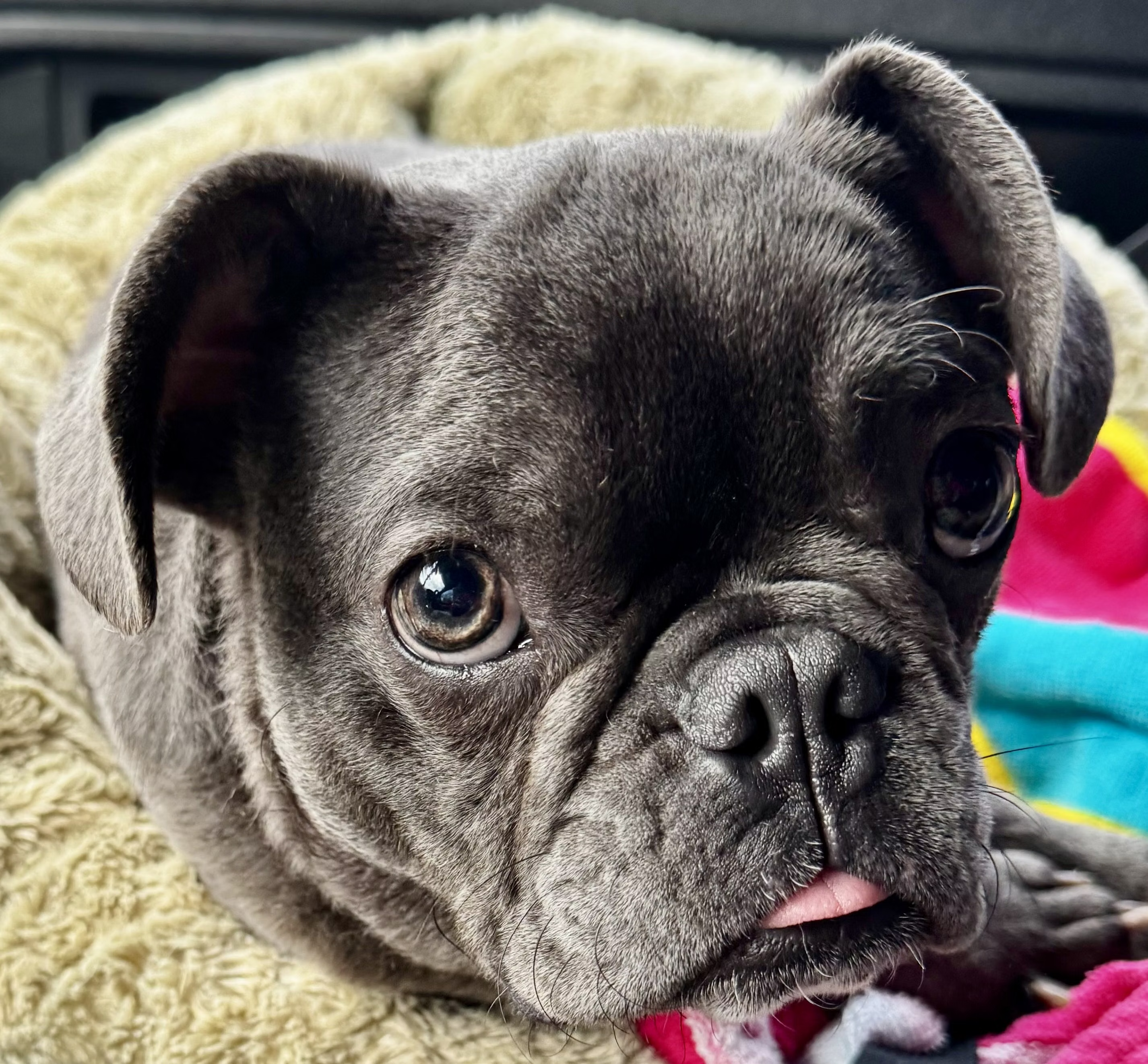
The French Bulldog is a playful, affectionate breed with signature bat ears and an adaptable, easygoing charm that suits city living.
How the French Bulldog coat is built, and what that means when you groom it.
A few of the French Bulldog profiles members have added to United Pet Club.
The French Bulldog is a small companion dog from France, known for its bat ears, compact body, and easygoing, affectionate nature that suits flat and apartment living.
The French Bulldog is a small companion breed that weighs under 13 kg and stands roughly 28 to 33 cm at the shoulder. It has a heavy-boned, compact frame, a short muzzle, and upright rounded ears that gave rise to the nickname "bat ears." The smooth single coat lies close to the body and comes in a range of solid and patterned colours.
The breed was developed in 19th-century France from small bulldog types and became a fixture of city households. It was bred purely for companionship rather than work, and that purpose shows in its temperament. French Bulldogs are friendly, affectionate, playful, and alert, and they form close attachments to the people they live with.
The breed adapts well to small living spaces. It needs modest daily exercise, tolerates being indoors, and is quiet compared with many small dogs. Because of its flat face, it is sensitive to heat and strenuous activity, which shapes much of its day-to-day care.
| Attribute | Detail |
|---|---|
| Origin | France |
| Size | Small (under 13 kg) |
| Lifespan | 10 to 12 years |
| Group / role | Companion dog |
| Good with | Families, singles, seniors, flat and house households |
The French Bulldog fits people who want a small, low-distance companion rather than a running or hiking partner. It works for those in flats, first-time owners, and households where someone is home for much of the day, since the breed prefers company and can struggle when left alone for long stretches. Owners need to be comfortable managing heat sensitivity and the routine health monitoring that a flat-faced breed requires.
The French Bulldog descends from small bulldogs taken from England to France in the 1800s, where it was refined into a distinct companion breed with upright bat ears.
The French Bulldog traces back to the bulldogs of England. As bull-baiting was banned in England in 1835, the bulldog shifted toward companionship, and breeders produced smaller toy versions. These small bulldogs were popular among lace workers in Nottingham and the surrounding English Midlands.
During the Industrial Revolution, many of these lace workers moved to France for work and brought their small dogs with them. The toy bulldogs gained a following in Normandy and in Paris through the second half of the 19th century. French breeders crossed them with local dogs over time, and a distinct type took shape.
The upright, rounded "bat ear" became the defining feature of the French type, setting it apart from the English bulldog's rose ear. The breed became fashionable in Parisian city life, kept by shopkeepers, café owners, and, later, more affluent owners and artists. Breed clubs formed near the end of the century to record and standardise the type.
The French Bulldog reached the United States in the 1890s. The French Bull Dog Club of America was founded in 1897, and American fanciers strongly favoured the bat ear, which helped fix it as the standard. The breed has remained a companion dog throughout its history and has grown into one of the most widely kept small breeds in many countries.
The French Bulldog is a small, muscular dog with a flat face, large upright bat ears, a short smooth coat, and a compact, heavy-boned body.
The French Bulldog has a sturdy, compact build that looks larger than its weight suggests. The head is square and large in proportion to the body, with a short muzzle, heavy wrinkles above a short nose, and a slightly undershot jaw. The ears are the breed's most recognisable trait: broad at the base, rounded at the top, and carried upright. The body is short and well-muscled with a level topline, a broad chest, and a short tail that may be straight or screwed.
| Trait | Standard |
|---|---|
| Height | 28 to 33 cm at the shoulder |
| Weight | Under 13 kg |
| Coat | Short, smooth, fine, single layer |
| Colours | Brindle, fawn, white, cream, and combinations such as brindle and white |
| Eyes | Dark, round, set wide and low on the skull |
The coat is short, fine, and smooth, with a single layer and no significant undercoat. Standard colours include brindle, fawn, white, and cream, along with pied patterns that combine white with patches of colour. Some colour and coat variations, such as solid black, liver, and merle, fall outside many breed-club standards and are not recognised for the show ring. Grooming needs are low, but the facial folds need regular cleaning to stay dry.
French Bulldogs are friendly, affectionate, and playful companions that bond closely with their households, are generally good with people and other pets, and tend to be quiet.
The French Bulldog is an even-tempered companion that thrives on human contact. It is affectionate and playful at home and tends to follow its people from room to room. The breed is alert and will notice visitors, but it is not a persistent barker and rarely makes a reliable guard dog.
With family members the breed is gentle and patient, and it usually does well with children when interactions are supervised. Towards strangers most French Bulldogs are friendly or politely curious rather than wary. They generally get along with other dogs and with cats, especially when socialised early, though some individuals can be possessive over toys or attention.
The breed dislikes being left alone for long periods and can develop separation-related behaviour such as whining or destructiveness. Early socialisation and consistent routines help. Frenchies have a stubborn streak and a sense of humour, so they respond better to patient, reward-based handling than to repetitive drilling.
| Trait | Rating |
|---|---|
| Affection | 5 |
| Energy | 2 |
| Trainability | 3 |
| Vocalness | 2 |
| Shedding | 3 |
French Bulldogs need light daily exercise, simple coat care with regular facial-fold cleaning, and a cool, indoor environment to manage their heat sensitivity.
Day-to-day care of a French Bulldog centres on managing its flat-faced anatomy, keeping its skin folds clean, and protecting it from heat. The breed is otherwise low-maintenance and suited to indoor life.
The French Bulldog is built for indoor living and adapts well to flats and houses. It needs a climate-controlled space because it cannot cool itself efficiently in heat or humidity. The breed should not be left outdoors in hot conditions and is a poor swimmer, since its heavy front and short muzzle make staying afloat difficult. Keep water and shaded rest areas available, and never leave the dog in a parked vehicle.
French Bulldogs do best on a measured, complete diet fed in two daily meals, with portions controlled to prevent the weight gain the breed is prone to.
French Bulldogs need a complete and balanced diet formulated for their life stage. Because the breed gains weight easily and extra weight adds strain to its breathing and joints, portion control matters more than for many dogs. Measure food rather than free-feeding, and adjust the amount to keep the dog at a lean body condition where the ribs can be felt under a light layer of fat.
| Life stage | Amount per day | Meals |
|---|---|---|
| Puppy (2 to 6 months) | Per puppy-formula label, by weight | 3 to 4 |
| Puppy (6 to 12 months) | Per puppy-formula label, by weight | 2 to 3 |
| Adult | About 120 to 180 ml of dry food | 2 |
| Senior | Reduced calories, adjusted to activity | 2 |
Keep treats to no more than about 10 percent of daily calories and subtract them from meal portions. A complete commercial diet usually supplies all required nutrients, so supplements are not needed unless a vet recommends them for a specific issue such as joint or skin support. Provide fresh water at all times, and feed from a shallow bowl that the short muzzle can reach comfortably.
French Bulldogs live about 10 to 12 years and are prone to breathing, spinal, eye, and skin problems linked to their flat face and compact body.
The French Bulldog has an average lifespan of 10 to 12 years. It is an affectionate, sturdy companion, but its body shape brings a higher rate of certain health problems than many breeds. Most of these conditions can be managed when caught early, and a careful breeder, a healthy weight, and regular veterinary care all reduce risk.
| Condition | Signs | Note |
|---|---|---|
| Brachycephalic airway syndrome | Noisy breathing, snoring, exercise and heat intolerance | Linked to the flat face; severe cases may need surgery |
| Intervertebral disc disease | Back pain, weakness, dragging hind legs | The short, screwed tail and spine raise risk |
| Skin fold dermatitis | Redness, odour, or irritation in facial and tail folds | Prevented with regular cleaning and drying |
| Eye problems (cherry eye, ulcers) | Red mass in the eye corner, squinting, discharge | Prominent eyes are easily injured |
| Allergies | Itching, ear infections, paw licking | May be food or environmental |
French Bulldogs are intelligent but independent, so short, reward-based sessions and early socialisation produce better results than repetitive drilling.
The French Bulldog is smart and eager to please its people, but it also has an independent, stubborn side. It learns well when training is short, positive, and tied to food or play, and it loses interest with long, repetitive sessions. Keep training to a few minutes at a time and end on a success. House-training can take patience and benefits from a consistent schedule and crate routine.
French Bulldog breeding is demanding: small litters, frequent need for artificial insemination, and a high rate of caesarean section due to the breed's narrow hips and large-headed pups.
Breeding French Bulldogs requires significant veterinary involvement and carries higher costs and risks than breeding most dogs. Females generally reach sexual maturity by about 8 to 12 months, but responsible breeders wait until at least 2 years of age and confirm the dog is healthy through screening before any mating.
Natural mating is often difficult because of the breed's body shape, so artificial insemination is common. Gestation runs about 63 days. Litters are small, typically averaging around three puppies. Pups tend to have large heads relative to the mother's narrow pelvis, so most French Bulldog litters are delivered by planned caesarean section under veterinary supervision.
Raising the young requires close monitoring. Newborns are vulnerable to chilling and need a warm, clean whelping area and frequent nursing. Breeders watch weight gain daily during the first weeks. Puppies are usually weaned by around 6 to 8 weeks, with early socialisation beginning before they go to new homes. Because of the health concerns tied to the breed, ethical breeding programmes prioritise health screening of the parents over appearance.
| Metric | Value |
|---|---|
| Sexual maturity | About 8 to 12 months |
| Recommended breeding age | From about 2 years |
| Gestation | About 63 days |
| Average litter size | Around 3 puppies |
| Typical delivery | Planned caesarean section |
| Weaning age | About 6 to 8 weeks |
Your French Bulldog's details on a record that satisfies UK microchip law: free with United Pet Club, for life, with nothing to renew.
Microchipping has been compulsory for dogs in England, Scotland and Wales since 2016, and the rules are strict about keeping the details behind the chip current. A free United Pet Club profile holds your French Bulldog's record for the whole of its life, with your phone number and address sitting where a scan can reach them. Registering your dog is done in minutes and costs nothing, now or later.
A chip without a registration is a serial number and nothing more. File your French Bulldog's fifteen digit number with United Pet Club and it becomes a route back to you: free for life, open to every chip brand sold in Britain, and searchable whenever a scanner finds it. Microchip registration takes less time than the kettle, and a free account covers the profile too.
Set up a free United Pet Club account, add your French Bulldog's details and a photo, and save. The profile stays live for the whole of the dog's life at no charge, and the chip number can be added the moment you have it.
Key the fifteen digit number into your free United Pet Club account with your current address and phone number. The lifetime plan accepts any brand a British vet implants, and amendments after a house move are free.
Yes. Dogs in England, Scotland and Wales have had to be chipped since 2016, with the keeper's details kept current. The law covers the chip; keeping the record pointing at a live phone number is what United Pet Club handles, free.
Nothing at all. The United Pet Club lifetime plan covers the profile, the microchip record and every amendment without a fee, so there is no renewal to remember.
Common questions about French Bulldog size, temperament, care needs, lifespan, suitability, and availability.
French Bulldogs are a small breed. They stand about 28 to 33 cm at the shoulder and weigh under 13 kg, with a compact, heavy-boned build.
They are friendly, affectionate, playful, and alert. Frenchies bond closely with their people, are usually good with children and other pets, and tend to be quiet rather than yappy.
Grooming and exercise needs are low, but the breed needs careful heat management, regular facial-fold cleaning, and routine health monitoring because of its flat face. That makes day-to-day care moderate overall.
The average lifespan is 10 to 12 years. A healthy weight, early veterinary care, and avoiding heat and over-exertion help support a longer, more comfortable life.
Yes. They adapt well to small spaces, need only light daily exercise, and are generally easygoing. They suit flat dwellers and many first-time owners, provided someone is around for much of the day.
They dislike long periods alone and can develop separation-related behaviour, so they are best for households with regular company. They are also poor swimmers and should be kept away from unsupervised water.
The breed is one of the most popular small dogs in the UK and is widely available, but demand is high. Healthy puppies from health-tested parents are limited, so reputable breeders often have waiting lists.