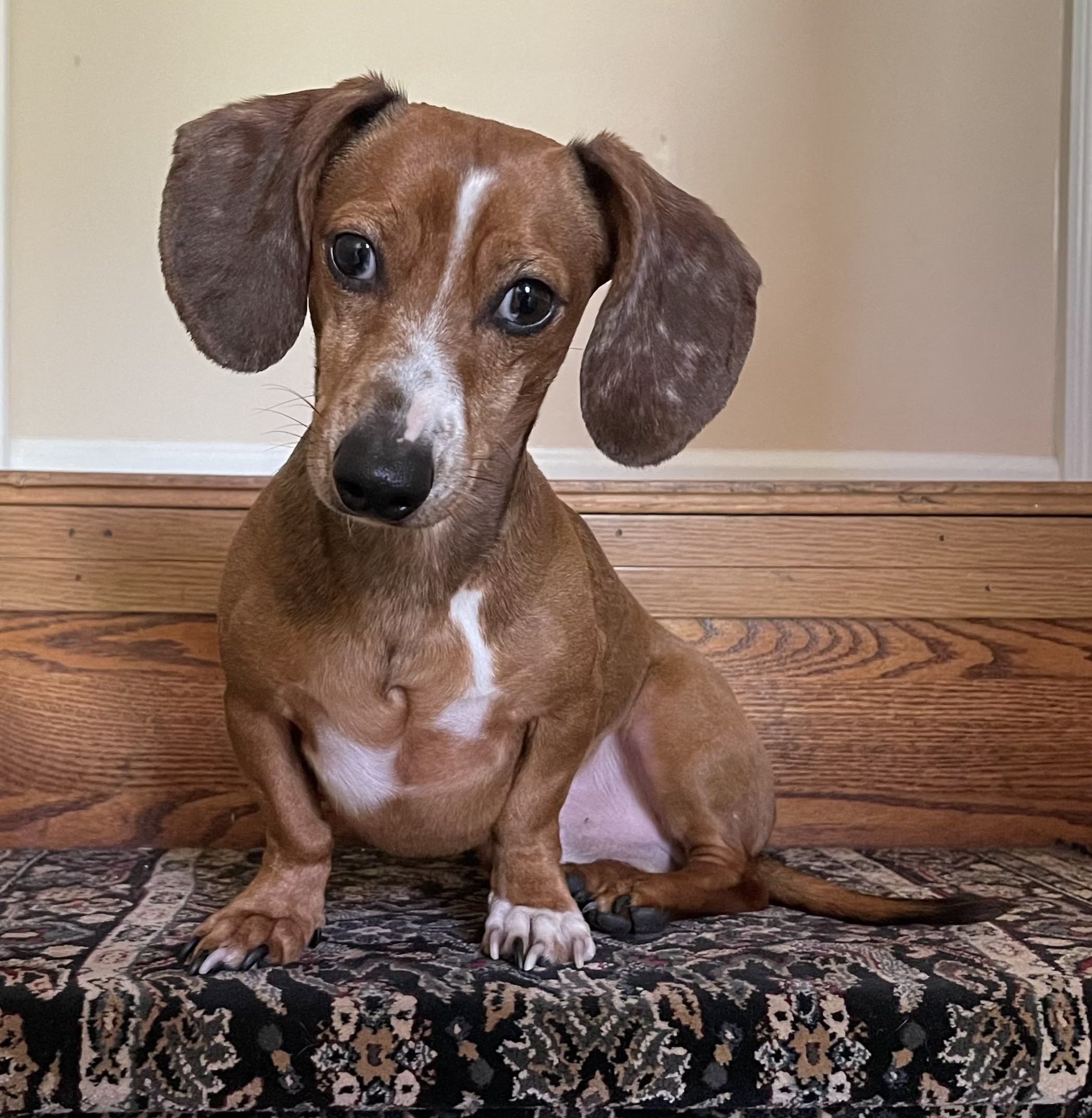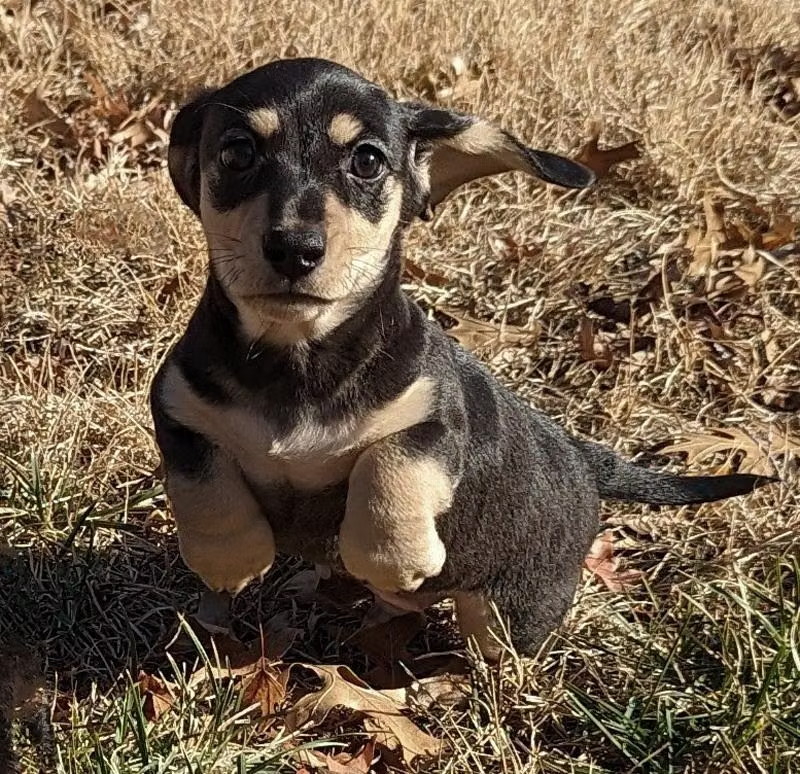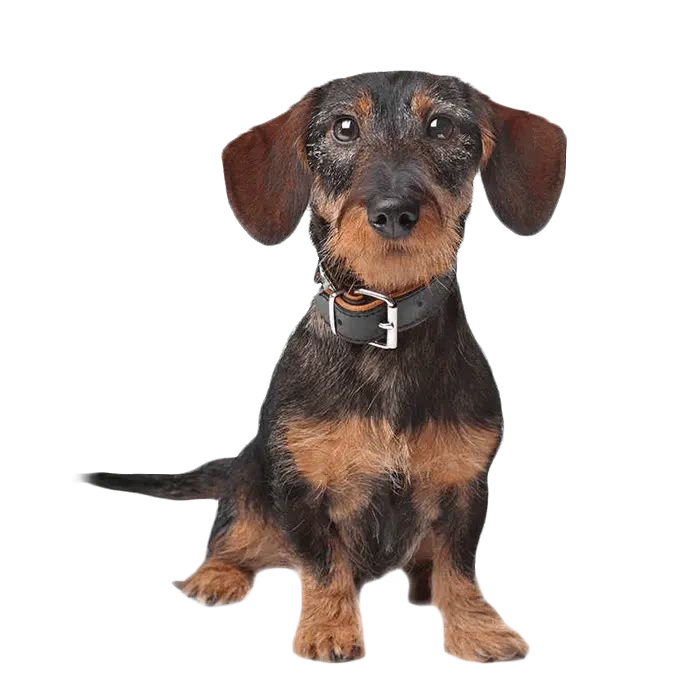
The Dachshund is a spirited, curious little hound known for its long body, big personality, and courageous, devoted nature.
How the Dachshund coat is built, and what that means when you groom it.
A few of the Dachshund profiles members have added to United Pet Club.
The Dachshund is a small German scent hound with a long body and short legs, bred to hunt badgers and other burrow-dwelling animals. It is known for a bold, curious, and devoted personality.
The Dachshund is a small hound breed that originated in Germany. The name translates literally as "badger dog," which points to the work the breed was developed to do. Its long body, deep chest, and short legs allowed it to enter burrows and corner game underground. Today the same physical traits give the breed its distinctive silhouette.
Despite its size, the Dachshund has a large personality. Owners often describe it as devoted, stubborn, curious, spirited, and courageous. It forms strong bonds with its family and tends to attach closely to one or two people. The breed retains a strong prey drive and a tendency to follow its nose, both legacies of its hunting past.
The Dachshund comes in two sizes (standard and miniature) and three coat types (smooth, longhaired, and wirehaired). This variety means buyers can find a version that suits different households, though the core temperament stays consistent across all of them.
| Attribute | Detail |
|---|---|
| Origin | Germany |
| Size | Small |
| Lifespan | 12 to 16 years |
| Group / role | Hound; originally bred to hunt badgers and burrow game |
| Good with | Families and single owners; supervise around very young children and small pets |
The Dachshund fits owners who want a small, characterful companion and can give consistent, patient training. Its independent streak means it is not always eager to please, so first-time owners should be ready for a dog with opinions. The breed adapts to flats and houses alike, provided it gets daily walks and mental stimulation. Because of its back structure, it suits homes where jumping from furniture and climbing stairs can be limited.
The Dachshund was developed in Germany to hunt badgers and other burrowing animals, with its recognisable form taking shape over several centuries before formal breed standards arrived in the 1800s.
The Dachshund developed in Germany, where dogs of its general type were used to track and flush burrowing animals. The breed's purpose is recorded in its name: "Dachs" means badger and "Hund" means dog. Hunters needed a dog small enough to enter a badger sett yet bold enough to confront the animal inside, and the long, low body answered that need.
Dogs resembling the modern Dachshund appear in German records from earlier centuries, but deliberate breeding toward a fixed type accelerated through the 1700s and 1800s. Breeders selected for a deep chest to give lung capacity, short legs for digging and tunnel work, and a loud, carrying voice that helped hunters locate the dog underground.
The three coat varieties arose to suit different terrain and game. The smooth coat is regarded as the original. The longhaired type is thought to have come from crosses with spaniels or similar dogs, and the wirehaired type from crosses that added terrier-like coats for protection in rough cover. Standard and miniature sizes were also distinguished, with smaller dogs used for smaller quarry such as rabbits.
By the late 1800s the breed had formal recognition in Germany, and clubs and standards followed in other countries. The Dachshund spread internationally as both a working hunter and a household companion, and the companion role gradually became the more common one.
The Dachshund has a long, low-set body, a deep chest, short legs, and a confident carriage. It comes in two sizes and three coat types across a wide range of colours and patterns.
The Dachshund is instantly recognisable for its elongated body and short legs. The chest is deep and the keel prominent, giving the front a forward-projecting line. The head is long and tapering, with a slightly arched skull and a strong muzzle. The ears are set high and hang close to the cheeks, and the eyes are medium-sized and almond-shaped. The dog carries itself with an alert, self-assured air that is larger than its frame suggests.
| Trait | Standard |
|---|---|
| Height | Standard about 20 to 23 cm (8 to 9 in); miniature about 13 to 15 cm (5 to 6 in) at the shoulder |
| Weight | Standard about 7 to 15 kg (16 to 32 lb); miniature about 5 kg (11 lb) or under |
| Coat | Three types: smooth, longhaired, wirehaired |
| Colours | Red, cream, black and tan, chocolate and tan, and others; patterns include dapple, brindle, sable, and piebald |
| Eyes | Medium, almond-shaped, dark in most colours |
The smooth coat is short, dense, and shiny, and needs the least grooming. The longhaired coat is sleek and slightly wavy, longest on the ears, chest, underside, and tail. The wirehaired coat is harsh and dense with a softer undercoat, plus a beard and bushy eyebrows.
Solid reds and creams are common, as are the two-colour black-and-tan and chocolate-and-tan combinations. Patterns such as dapple (a marbled effect), brindle, sable, and piebald also occur. Some colour and pattern combinations carry health considerations, so coat colour should not be the only factor when choosing a dog.
The Dachshund is devoted, curious, and courageous, with a stubborn independent streak rooted in its hunting background. It bonds closely with its family and can be reserved or vocal towards strangers.
The Dachshund packs a strong personality into a small body. It is devoted to its people and often picks a favourite person to shadow around the house. Curiosity and spirit show in its constant interest in scents, sounds, and small moving things, a direct echo of its hunting heritage. The same heritage gives it courage that can border on recklessness towards animals it sees as quarry.
With family, the breed is affectionate and playful and enjoys close contact. With strangers it can be reserved or watchful, and many Dachshunds bark readily at visitors and unfamiliar noises, which makes them effective alert dogs. Early, consistent socialisation helps temper suspicion and reduce excessive barking.
Around other pets the picture is mixed. A Dachshund raised with other dogs usually does well, but its prey drive means small pets such as rabbits, rodents, and birds can trigger chasing. With children it can be a good companion when interactions are calm and supervised; rough handling risks its long back and may prompt a defensive reaction. The stubborn streak is real, so owners should expect a dog that questions commands and rewards patience over force.
| Trait | Rating |
|---|---|
| Affection | 5 |
| Energy | 3 |
| Trainability | 2 |
| Vocalness | 4 |
| Shedding | 2 |
Dachshund care centres on coat-appropriate grooming, moderate daily exercise, and protecting the long back from strain. Each coat type has slightly different upkeep.
Day-to-day care of a Dachshund is manageable, but the breed's body shape calls for some specific habits. Grooming needs vary by coat, and exercise must build muscle and fitness without putting the spine at risk.
The Dachshund adapts well to flats and houses. It tolerates cold poorly because of its short coat and low body, so the smooth variety in particular benefits from a coat or jumper in winter. Ramps or steps at sofas and beds help it move up and down without jumping. A securely fenced garden is useful, since the breed will dig and follow scents under or through gaps.
Dachshunds need a complete, portion-controlled diet that keeps them lean, because excess weight strains their long backs. Feeding amounts depend on size, age, and activity.
A complete and balanced dog food suited to the Dachshund's size and life stage covers its nutritional needs. Because the breed gains weight easily and carries that weight on a vulnerable spine, portion control matters more than for many breeds. Measure meals rather than free-feeding, and adjust amounts to keep ribs easily felt under a thin layer of fat. Standard and miniature Dachshunds need different quantities, and individual needs vary with metabolism and exercise.
| Life stage | Amount per day | Meals |
|---|---|---|
| Puppy (miniature) | About 60 to 125 ml (1/4 to 1/2 cup) | 3 to 4 |
| Puppy (standard) | About 125 to 250 ml (1/2 to 1 cup) | 3 to 4 |
| Adult (miniature) | About 125 to 175 ml (1/2 to 3/4 cup) | 2 |
| Adult (standard) | About 175 to 375 ml (3/4 to 1 1/2 cups) | 2 |
| Senior | Reduce slightly from adult amount; choose lower-calorie food | 2 |
Keep treats to roughly 10 per cent of daily calories and subtract them from meal portions. Small, low-calorie treats work well for training a food-motivated breed. Most Dachshunds on a complete diet do not need supplements; ask a vet before adding joint, skin, or other products, especially for dogs with back or weight concerns. Fresh water should always be available.
Dachshunds typically live 12 to 16 years but are prone to spinal disc disease tied to their long backs, along with dental, eye, and weight-related problems. Lean body condition and careful handling reduce risk.
The Dachshund is generally a long-lived breed, with a typical lifespan of 12 to 16 years. Its defining body shape, however, brings a higher risk of back problems than most breeds face. The most significant concern is intervertebral disc disease, a condition where the cushioning discs between vertebrae bulge or rupture and press on the spinal cord. Keeping the dog lean, limiting jumping, and handling it correctly all help lower the risk.
| Condition | Signs | Note |
|---|---|---|
| Intervertebral disc disease (IVDD) | Back pain, reluctance to move, wobbly or dragging hind legs, sudden weakness | The most serious breed concern; seek urgent veterinary care for sudden signs |
| Obesity | Weight gain, difficulty feeling ribs, low energy | Adds strain to the spine and joints; managed by diet and exercise |
| Dental disease | Bad breath, tartar, red gums, tooth loss | Common in small breeds; regular brushing and cleanings help |
| Eye conditions (such as PRA) | Cloudiness, night-vision loss, bumping into objects | Some forms are inherited; breeders can screen parents |
| Patellar luxation | Skipping gait, intermittent hind-leg lameness | Kneecap slips out of place; ranges from mild to surgical |
Dachshunds are intelligent but independent and stubborn, which makes training slower than with eager-to-please breeds. Short, consistent, reward-based sessions work best.
Training a Dachshund tests patience. The breed is intelligent and capable of learning a wide range of commands, but it was bred to work alone underground and make its own decisions, so it often weighs whether a command is worth obeying. This independence reads as stubbornness during training. Food motivation is usually high, which gives owners a useful tool, but the breed bores quickly and resists repetitive drilling. House training in particular can take longer than average and benefits from a steady routine and crate use.
Keep sessions short and frequent, and end on a success. Early socialisation to people, dogs, and everyday situations reduces wariness and barking. Consistency among all household members prevents the dog from learning that rules are negotiable.
Dachshund breeding requires attention to spinal and genetic health, careful pairing of colours and patterns, and supervision through pregnancy and whelping. Litters are typically small.
Responsible Dachshund breeding starts with health and temperament rather than appearance. Females generally reach sexual maturity within their first year, but breeders usually wait until a bitch is physically mature and has passed relevant health screening before a first mating. Because the breed is prone to spinal disease and certain eye conditions, breeding stock should be evaluated for these issues, and dogs with a history of back problems are best left out of a breeding programme.
Gestation lasts about 63 days. Litters are typically small, often around three to six puppies, with miniatures tending towards the lower end. Whelping should be monitored, and a vet consulted if labour stalls or the dam shows distress. Newborn puppies depend fully on the dam for warmth and feeding in the early weeks; the breeder provides a clean, warm whelping area and watches weight gain closely.
Puppies begin weaning at around three to four weeks and continue socialisation through the critical early period. Exposure to gentle handling, household sounds, and new people during this time shapes adult behaviour. Particular care is needed with colour and pattern pairings: mating two dapple-patterned dogs together can produce serious health defects in puppies, so this combination is avoided by careful breeders.
| Metric | Value |
|---|---|
| Sexual maturity | Around 6 to 12 months (breed later, after health testing) |
| Gestation | About 63 days |
| Average litter size | About 3 to 6 puppies |
| Weaning | Around 3 to 4 weeks, completed by about 7 to 8 weeks |
| Health screening | Spinal and eye evaluations; avoid dapple-to-dapple pairings |
Your Dachshund's details on a record that satisfies UK microchip law: free with United Pet Club, for life, with nothing to renew.
Microchipping has been compulsory for dogs in England, Scotland and Wales since 2016, and the rules are strict about keeping the details behind the chip current. A free United Pet Club profile holds your Dachshund's record for the whole of its life, with your phone number and address sitting where a scan can reach them. Registering your dog is done in minutes and costs nothing, now or later.
A chip without a registration is a serial number and nothing more. File your Dachshund's fifteen digit number with United Pet Club and it becomes a route back to you: free for life, open to every chip brand sold in Britain, and searchable whenever a scanner finds it. Microchip registration takes less time than the kettle, and a free account covers the profile too.
Set up a free United Pet Club account, add your Dachshund's details and a photo, and save. The profile stays live for the whole of the dog's life at no charge, and the chip number can be added the moment you have it.
Key the fifteen digit number into your free United Pet Club account with your current address and phone number. The lifetime plan accepts any brand a British vet implants, and amendments after a house move are free.
Yes. Dogs in England, Scotland and Wales have had to be chipped since 2016, with the keeper's details kept current. The law covers the chip; keeping the record pointing at a live phone number is what United Pet Club handles, free.
Nothing at all. The United Pet Club lifetime plan covers the profile, the microchip record and every amendment without a fee, so there is no renewal to remember.
Common questions about Dachshund size, temperament, care difficulty, lifespan, suitability, and availability.
Dachshunds come in two sizes. Standard Dachshunds stand about 20 to 23 cm (8 to 9 in) at the shoulder and weigh roughly 7 to 15 kg (16 to 32 lb). Miniatures stand about 13 to 15 cm (5 to 6 in) and usually weigh 5 kg (11 lb) or less.
The breed is devoted, curious, spirited, and courageous, with a notable stubborn and independent streak. It bonds closely with its family, can be reserved with strangers, and tends to bark at visitors and unfamiliar noises.
Daily care is moderate. Grooming depends on coat type, exercise needs are modest, and the main demands are keeping the dog lean and protecting its long back from jumping and rough handling. Training takes patience because of the breed's independence.
Dachshunds typically live 12 to 16 years. Good weight management, dental care, and back protection support a long, healthy life.
They can be good family companions for households that handle them gently and supervise interactions with very young children. Their long backs are vulnerable to rough handling, and their prey drive means care is needed around small pets such as rabbits and rodents.
The breed is most associated with intervertebral disc disease (IVDD), a spinal condition linked to its long body. Keeping the dog lean, limiting jumping, using ramps, and lifting it correctly all reduce the risk.
The Dachshund is a popular and widely kept breed, so puppies are generally available from breeders, and adults turn up in rescues and breed-specific shelters. Choose a breeder who health-tests parents for spinal and eye conditions and avoids dapple-to-dapple pairings.