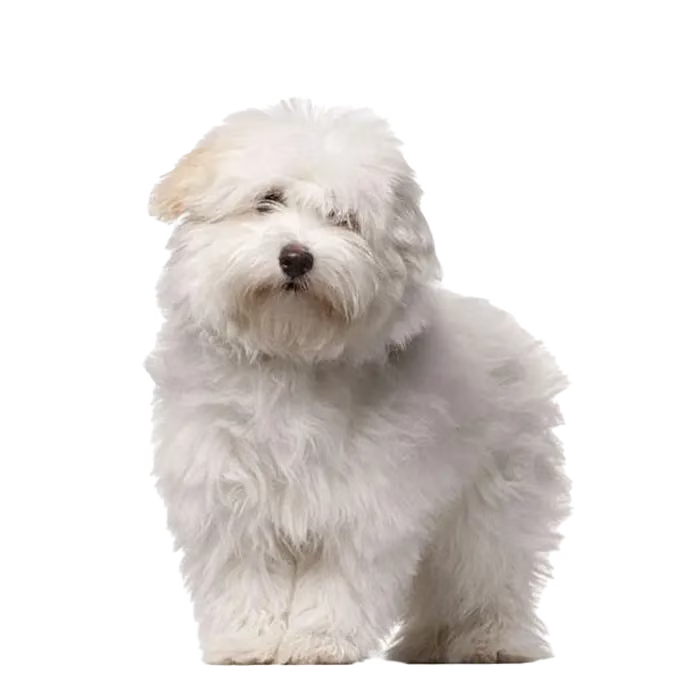
The Coton de Tulear is an affectionate, playful companion breed from Madagascar with a soft cotton-like coat and a sunny, people-loving personality.
How the Coton de Tulear coat is built, and what that means when you groom it.
Caution: A Coton de Tulear coat mats easily.
Fine or long hair tangles at the base of the coat, out of sight, where the mats tighten and pull on the skin. Brushing has to reach right down to the roots in sections, not just skim the surface.
Information: A Coton de Tulear needs clipping every few weeks.
This coat keeps growing rather than shedding out, so it has to be trimmed every few weeks. Left to grow it mats down against the skin and traps moisture, dirt and heat.
The Coton de Tulear is a small companion dog from Madagascar known for its soft cotton-like coat and a friendly, people-oriented personality.
The Coton de Tulear is a small companion breed associated with the island of Madagascar, where its name references the port city of Tulear (Toliara). The breed takes the first part of its name from the French word for cotton, a reference to the soft, fluffy texture of its coat.
Cotons are bred as companions rather than for work, and the temperament reflects that history. The breed is affectionate and sociable, tends to stay close to its people, and usually gets along with children, visitors, and other pets. Dogs of this type are playful into adulthood and respond well to attention and gentle handling.
At a typical adult weight in the single-digit kilograms, the Coton is suited to flats and houses alike. The white coat needs regular grooming, but the breed does not carry the heavy exercise demands of a working dog. A reported lifespan of 15 to 19 years places it among the longer-lived small breeds.
| Attribute | Detail |
|---|---|
| Origin | Madagascar (exact origins unknown) |
| Size | Small |
| Lifespan | 15 to 19 years |
| Group/role | Companion dog |
| Good with | Children, families, other pets, visitors |
The Coton de Tulear fits households that can give a dog regular company. It is a strong match for families, single owners, and older adults who want a small, affectionate dog and can keep up with coat care. The breed prefers not to be left alone for long stretches, so it suits people who are at home often or can arrange company during the day. Owners who dislike routine brushing should bear in mind that the coat needs frequent attention.
The Coton de Tulear developed on Madagascar as a small companion dog, though its exact early origins are not documented.
The Coton de Tulear is tied to Madagascar, the large island off the south-east coast of Africa, and to the port city of Tulear in the island's south-west. The breed's exact origins are not documented, and accounts of how its ancestors reached the island differ.
A common explanation links the breed to small white dogs that travelled aboard ships and arrived at the Madagascan coast, where they bred with local dogs. Over time a small, white, soft-coated companion type became established on the island. Because reliable early records are lacking, much of this early history is reconstructed rather than firmly dated.
The Coton became associated with companionship rather than work, kept as a household and lapdog. The breed later drew attention from dog enthusiasts outside Madagascar, which led to its spread to Europe and North America in the second half of the 20th century.
As the breed moved into the wider pedigree dog world, kennel clubs in several countries recognised it and published standards describing its size, coat, and temperament. The white cotton-textured coat and the friendly disposition remain the features most consistently emphasised across these descriptions.
The Coton de Tulear is a small white dog with a soft, cotton-textured coat, a rounded build, and dark, expressive eyes.
The Coton de Tulear is a small, lightly built dog with a level back and a tail carried over the back when the dog is alert. The overall impression is of a compact companion covered in a soft, profuse coat. The head is fairly broad with a short muzzle and dark, round eyes set well apart.
| Trait | Description |
|---|---|
| Height | Roughly 23 to 30 cm at the shoulder |
| Weight | About 3.5 to 6 kg |
| Coat | Long, soft, cotton-textured; not coarse or wiry |
| Colours | Predominantly white; some markings permitted in places |
| Eyes | Dark, round, set wide apart |
The defining feature is the coat. It is soft and dense with a texture often compared to cotton, and it stands away from the body rather than lying flat. White is the dominant colour, and a clean white coat is what most descriptions of the breed call for. Faint shadings or light markings may appear, particularly on the ears or on puppies, and some of these can fade as the dog matures. The coat grows long and needs regular grooming to stay free of mats.
The Coton de Tulear is friendly, affectionate, and playful, bonding closely with its household and generally getting along with children and other animals.
The Coton de Tulear is a companion dog first, and its temperament reflects that. Dogs of this type are affectionate and form close attachments to the people they live with. They tend to follow their owners from room to room and enjoy being included in daily activity.
With family, the Coton is gentle and playful, and the playfulness usually continues well past puppyhood. With strangers, the breed is generally sociable rather than guarded, though individuals vary and some are more reserved at first meeting. The Coton is intelligent and attentive, which makes it responsive to its owner's mood.
The breed normally does well with children who handle it kindly and with other dogs and household pets. Because it bonds so closely, the Coton can struggle with long periods alone and may become unhappy if isolated for much of the day. Early socialisation helps it stay confident around new people, places, and animals.
| Trait | Rating |
|---|---|
| Affection | 5 |
| Energy | 3 |
| Trainability | 4 |
| Vocalness | 2 |
| Shedding | 2 |
The Coton de Tulear needs regular coat care and moderate daily exercise, and it suits indoor living close to its people.
The main ongoing task with a Coton de Tulear is coat care. The soft coat tangles easily and needs frequent brushing to prevent mats. Beyond grooming, the breed has moderate exercise needs and adapts well to indoor life.
The Coton de Tulear suits flats and houses and does not need a large garden. What it needs most is company. The breed prefers being near its people and is not well suited to spending long days alone. A calm indoor space, access to its household, and regular handling keep it settled and content.
The Coton de Tulear does well on a complete small-breed diet fed in measured portions across two daily meals.
The Coton de Tulear does well on a complete and balanced dog food suited to its size and life stage. Small breeds have small stomachs and relatively high energy needs for their weight, so a quality food in correctly measured portions matters. Because the breed is small and easy to overfeed, watch the body condition and adjust amounts to keep the dog lean.
| Life stage | Amount per day | Meals |
|---|---|---|
| Puppy (2 to 6 months) | Per food label, split small | 3 to 4 |
| Junior (6 to 12 months) | About 70 to 110 g | 2 to 3 |
| Adult | About 60 to 100 g | 2 |
| Senior | Adult amount, adjusted for activity | 2 |
Keep treats to a small share of daily calories, around ten per cent, so they do not unbalance the diet or add weight. Plain options such as small pieces of carrot work well for training. Fresh water should be available at all times. A dog on a complete commercial diet usually needs no extra supplements; ask a veterinary surgeon before adding any, particularly for puppies or older dogs.
The Coton de Tulear is generally a healthy, long-lived small breed, with a reported lifespan of 15 to 19 years and a few conditions worth monitoring.
The Coton de Tulear is generally a robust small breed and is among the longer-lived companion dogs, with a reported lifespan of 15 to 19 years. As with any breed, certain conditions appear more often than in the general dog population, and responsible breeding plus routine veterinary care reduce the risk of several of them.
| Condition | Signs | Note |
|---|---|---|
| Patellar luxation | Skipping steps, intermittent hind-leg lameness | Kneecap slips out of place; common in small breeds |
| Hip dysplasia | Stiffness, reluctance to jump or run | Joint malformation; screened by responsible breeders |
| Progressive retinal atrophy | Night vision loss, eventual blindness | Inherited eye disease; DNA tests exist |
| Luxating patella related arthritis | Long-term joint stiffness with age | May follow untreated kneecap issues |
| Dental disease | Bad breath, tartar, sore gums | Small mouths are prone to crowding and buildup |
The Coton de Tulear is intelligent and eager to please, which makes it responsive to consistent, reward-based training.
The Coton de Tulear is intelligent and attentive to its owner, and it generally enjoys the interaction that training provides. The breed responds best to reward-based methods and short, upbeat sessions. Harsh corrections tend to backfire with a sensitive companion dog and can make it wary. Consistency from everyone in the household helps the dog learn what is expected.
The Coton de Tulear is a small breed that produces modest litters and benefits from health screening of breeding stock.
Breeding the Coton de Tulear calls for the same care given to any small companion breed. Dogs reach physical maturity before they are bred, and responsible programmes screen breeding stock for the knee, hip, and eye conditions known in the breed before pairing. Mating is planned around the female's season.
Gestation in dogs lasts roughly two months. As a small breed, the Coton tends to have modest litters. Whelping should be monitored, and a veterinary surgeon consulted if the dam shows signs of difficulty, since small dogs can face complications during delivery.
Raising the young centres on warmth, nutrition for the nursing dam, and gradual weaning. Early gentle handling and exposure to household sights and sounds help puppies develop into confident, sociable adults. Puppies normally stay with the litter until they are old enough to leave for new homes.
| Metric | Value |
|---|---|
| Sexual maturity | Around 6 to 12 months (breed when fully mature) |
| Gestation | Approximately 58 to 68 days |
| Average litter size | About 3 to 5 puppies |
| Weaning age | Around 6 to 8 weeks |
| Health screening | Knees, hips, and eyes recommended |
Your Coton de Tulear's details on a record that satisfies UK microchip law: free with United Pet Club, for life, with nothing to renew.
Microchipping has been compulsory for dogs in England, Scotland and Wales since 2016, and the rules are strict about keeping the details behind the chip current. A free United Pet Club profile holds your Coton de Tulear's record for the whole of its life, with your phone number and address sitting where a scan can reach them. Registering your dog is done in minutes and costs nothing, now or later.
The implant happens at the vet surgery; the record is your half of the bargain, and the 2016 regulations expect it kept up to date. Register the microchip free on the lifetime plan: any brand a British vet implants is accepted, amendments after moving house cost nothing, and the record stays searchable through the lookups rescue centres and wardens turn to first. Create your free account and square it away this evening.
Set up a free United Pet Club account, add your Coton de Tulear's details and a photo, and save. The profile stays live for the whole of the dog's life at no charge, and the chip number can be added the moment you have it.
Key the fifteen digit number into your free United Pet Club account with your current address and phone number. The lifetime plan accepts any brand a British vet implants, and amendments after a house move are free.
Yes. Dogs in England, Scotland and Wales have had to be chipped since 2016, with the keeper's details kept current. The law covers the chip; keeping the record pointing at a live phone number is what United Pet Club handles, free.
Nothing at all. The United Pet Club lifetime plan covers the profile, the microchip record and every amendment without a fee, so there is no renewal to remember.
Common questions about the Coton de Tulear cover its size, temperament, care needs, lifespan, and suitability as a pet.
It is a small breed, typically around 23 to 30 cm at the shoulder and about 3.5 to 6 kg in weight.
Friendly, affectionate, playful, and sociable. The breed bonds closely with its people and generally gets along with children and other pets.
Care is moderate overall, but the soft coat tangles easily and needs frequent brushing. Exercise needs are modest, and the breed adapts well to indoor living.
The reported lifespan is 15 to 19 years, which places the breed among the longer-lived small companion dogs.
Yes. It is gentle and playful with children and visitors and suits families, single owners, and older adults who can offer regular company.
It prefers not to be. The breed bonds tightly to its household and can become distressed when left alone for long periods, so having company during the day helps.
It is associated with Madagascar and the port city of Tulear, though its exact early origins are not documented.
