

Bracco Italiano
The Bracco Italiano is a gentle, affectionate Italian pointing dog that pairs a sweet family temperament with a strong, methodical hunting style.
- Size
- Large
- Lifespan
- 12–14 years
- Origin
- Italy
- Temperament
- Gentle
- Standard colors
- White, Brown and Orange
Characteristics
Coat and grooming
How the Bracco Italiano coat is built, and what that means when you groom it.
- Coat layers
- Single coat
- Coat texture
- Smooth
- Coat length
- Short
- Shedding
- Moderate shedding
Bracco Italiano colors and patterns
What each club's breed standard says about every Bracco Italiano color and pattern. Point at a ruling to see the club's own wording.
Breed standards describe the Bracco Italiano in White, Brown and Orange. Standard patterns: Solid, Bicolour and Roan.
| Color or pattern | FCI | AKC | UKC | KC | KUSA |
|---|---|---|---|---|---|
| White | Standard (“White”) | Standard (“White”) | Standard (“Solid white”) | Standard (“White”) | Standard (“White”) |
| Brown | Standard (“White with more or less large brown patches”) | Standard (“White & Brown”) | Standard (“White with orange or chestnut patches”) | Standard (“White with orange, amber or chestnut markings”) | Standard (“White with more-or-less large brown patches”) |
| Orange | Standard (“White with patches of varied size of an orange or more or less dark amber colour”) | Standard (“White & Orange”) | Standard (“White with orange or chestnut patches”) | Standard (“White with orange, amber or chestnut markings”) | Standard (“White with patches of varied size of an orange, or more-or-less dark amber colour”) |
| Black | Disqualifying (“Coat black, white and black”) | Disqualifying (“Any trace of black on coat or mucous membranes”) | Disqualifying (“Black, black and white”) | Not recognised | Disqualifying (“Coat black, white and black”) |
| Albino | Disqualifying (“Absence of pigmentation (Albinism)”) | Disqualifying (“Albinism”) | Disqualifying (“Albinism”) | Not recognised | Disqualifying (“Absence of pigmentation (Albinism)”) |
| Fawn | Disqualifying (“fawn”) | Disqualifying (“fawn”) | Disqualifying (“fawn”) | Not recognised | Disqualifying (“fawn”) |
| Yellow | Not recognised | Not recognised (“It is not lemon or yellow”) | Not recognised | Not recognised | Not recognised |
| Lemon | Not recognised | Not recognised (“It is not lemon or yellow”) | Not recognised | Not recognised | Not recognised |
| Patterns | |||||
| Solid | Standard (“White”) | Standard (“solid white”) | Standard (“Solid white”) | Standard (“White”) | Standard (“White”) |
| Bicolour | Standard (“White with patches of varied size”) | Standard (“White & Orange”) | Standard (“White with orange or chestnut patches”) | Standard (“White with orange, amber or chestnut markings”) | Standard (“White with patches of varied size”) |
| Roan | Standard (“orange roan”) | Standard (“patches, ticking, or roan”) | Standard (“Orange or chestnut roan”) | Standard (“White may be speckled. Roan with solid markings”) | Standard (“orange roan”) |
| Tricolour | Disqualifying (“tricolour”) | Disqualifying (“Tricolor”) | Disqualifying (“tricolor”) | Fault (“Tricolour highly undesirable”) | Disqualifying (“tricolour”) |
| Tan point | Disqualifying (“tan markings”) | Disqualifying (“tan markings”) | Disqualifying (“any tan markings”) | Not recognised | Disqualifying (“tan markings”) |

%22%3E%3Cpath%20d%3D%22M0%2023L9.5%2020.4L14%2025.4L19%2029.6Q21%2035%2023.5%2035.5Q36%2033%2050%2036L56%2040V64H0Z%22%20fill%3D%22%23F5F5F0%22%2F%3E%3C%2Fg%3E%3Cuse%20href%3D%22%23s%22%20fill%3D%22none%22%20stroke%3D%22%233B2A20%22%20stroke-opacity%3D%220.6%22%20stroke-width%3D%221%22%20stroke-linejoin%3D%22round%22%2F%3E%3Cellipse%20cx%3D%223.2%22%20cy%3D%2221.7%22%20rx%3D%221.3%22%20ry%3D%221.2%22%20fill%3D%22%231C1C1C%22%2F%3E%3Ccircle%20cx%3D%2210.8%22%20cy%3D%2219.3%22%20r%3D%221.1%22%20fill%3D%22%231C1C1C%22%2F%3E%3C%2Fsvg%3E)
%22%3E%3Cg%20fill%3D%22none%22%20stroke%3D%22%23F5F5F0%22%20stroke-width%3D%221.15%22%20stroke-linecap%3D%22round%22%20stroke-linejoin%3D%22round%22%3E%3Cpath%20d%3D%22M28.6%2025h.1M51.3%2028.8h.1M34.7%2024.3h.1M34.2%2041.6h.1M51%2044.2h.1M55.9%2024.7h.1M27.5%2026.3h.1M18.5%2028.6h.1M25.2%2028.9h.1M24.2%2019.3h.1M20.6%2017.6h.1M34.1%2030.6h.1M57.3%2023.3h.1M23.5%2030.7h.1M26.5%2023.1h.1M40%2031.5h.1M51.7%2038.6h.1M20.2%2022.1h.1M40.4%2037.8h.1M35%2043.1h.1M20.6%2031.7h.1M27.8%2031.9h.1M17.2%2021.1h.1M38.1%2037.7h.1M25.3%2040.5h.1M32%2029.3h.1M41.6%2039.5h.1M23.6%2024h.1M26.4%2018.6h.1M30.3%2031.9h.1M31.2%2035.2h.1M36.5%2043.7h.1M35.2%2026.3h.1M55.6%2019.1h.1M22.4%2036.8h.1M39.2%2020h.1M49.5%2039.1h.1M33.6%2033.5h.1M36.4%2032.4h.1M56.3%2042.4h.1M54.8%2031.2h.1M36.9%2023.2h.1M52.7%2019.1h.1M21.5%2033.8h.1M48.6%2028h.1M36.6%2017.5h.1M45.6%2031.3h.1M37.9%2030.5h.1M17%2031.8h.1M21.1%2043.1h.1M55.7%2021.1h.1M30.8%2041.9h.1M57.4%2038.4h.1M54.8%2026.9h.1M29.1%2017.5h.1M24.3%2037.7h.1M26%2032h.1M39.3%2022.8h.1M53.5%2029h.1M53.3%2023.3h.1M20%2038.4h.1M28.3%2044.7h.1M28.6%2039.8h.1M51.9%2041.1h.1M52.3%2033.7h.1M19.6%2042.2h.1M19%2033h.1M47.8%2021.7h.1M45.7%2024.8h.1M24.6%2035.5h.1M29.8%2036.8h.1M50.7%2032h.1M29.5%2043.5h.1M28.2%2041.5h.1M47.4%2034.8h.1M25.4%2033.7h.1M50.2%2041.2h.1M27.7%2029.5h.1M21.5%2024.8h.1M55.5%2017.5h.1M41.2%2044.3h.1M39.2%2018.4h.1M41.1%2042.5h.1M54.7%2035.3h.1M42.8%2034.5h.1M30.1%2023h.1M42.6%2025.1h.1M32.9%2024.4h.1M42.4%2032.4h.1M49.7%2022.2h.1M49.1%2043.1h.1M38%2035.2h.1M47.7%2043.8h.1M43.1%2022.4h.1M22.4%2040.4h.1M44.4%2019.8h.1M53.3%2040.1h.1M20.7%2029.3h.1M55.6%2043.9h.1M17.6%2039.2h.1M41.7%2028.9h.1M44.1%2036.3h.1M24.3%2043.6h.1M26.4%2038.1h.1M30.3%2029.2h.1M31.5%2030.8h.1M32.1%2023h.1M18.3%2040.9h.1M48%2033.4h.1M36.4%2038.7h.1M31.9%2020.8h.1M32.6%2026.2h.1M22%2031.2h.1M53.4%2021.7h.1M41.9%2017.7h.1M53.3%2037.3h.1M47.7%2040.3h.1M54.4%2033.7h.1M33.6%2037.5h.1M25.3%2017.2h.1M37.6%2019.7h.1M31.6%2019h.1M29.2%2019.6h.1M50.7%2027.3h.1M22%2022.1h.1M31%2037.8h.1M56.5%2026.6h.1M34.7%2039.5h.1M56.5%2040.8h.1M47.6%2038h.1M48.6%2026.1h.1M49.7%2034.2h.1M45.4%2027.4h.1M22.6%2038.9h.1M56.5%2035.3h.1M35.1%2021h.1M41.9%2020.1h.1M37.6%2040h.1M32.6%2044.4h.1M37.9%2025.2h.1M26.6%2043h.1M18.9%2036.7h.1M47.2%2028.9h.1M30.5%2026.2h.1M17.4%2027.3h.1M47.1%2017.2h.1M22.3%2044.3h.1M32.5%2042.4h.1M23.6%2025.7h.1M31.4%2024.9h.1%22%2F%3E%3Cpath%20d%3D%22M26%2020.9h.1M41.2%2023.8h.1M39.9%2026.4h.1M28.5%2033.4h.1M42.8%2043.8h.1M17.6%2034.3h.1M34%2017.1h.1M31.2%2017.2h.1M46.5%2036.1h.1M25.1%2022.1h.1M50.3%2023.7h.1M20.2%2026.6h.1M20.8%2020.4h.1M50.9%2017.3h.1M49.5%2020.2h.1M52.9%2044.1h.1M23.9%2017.8h.1M43.2%2028.1h.1M57.6%2030h.1M52%2025.6h.1M19.2%2019.1h.1M19.5%2024.4h.1M32.8%2040.1h.1M36.1%2027.7h.1M39.6%2029.5h.1M38.4%2041.5h.1M47.9%2019.4h.1M49.1%2031.7h.1M55.9%2036.9h.1M29.2%2027.2h.1M46%2043.5h.1M44.6%2028.8h.1M47.5%2031.5h.1M22.8%2020h.1M27.6%2017.1h.1M43.1%2018.6h.1M54.3%2020h.1M57.2%2033.8h.1M44.5%2043.8h.1M27.1%2035.5h.1M45.3%2041.8h.1M56.7%2028.8h.1M36.7%2021.4h.1M43.3%2042.3h.1M17.3%2022.9h.1M32.7%2035.5h.1M30.5%2039.8h.1M29.1%2021.2h.1M34.5%2018.8h.1M25.8%2027h.1%22%2F%3E%3C%2Fg%3E%3Cpath%20d%3D%22M56.3%2038.4l0%201.2M40%2027.2l-0.3%201.3M32.6%2043.6l-0.4%201.5M29%2023.3l0.8%201.5M55.1%2044l0.4%201.1M47.5%2022.5l-0.2%201.6M42.9%2038.6l0.7%201.2M35.2%2041.8l-0.5%201.7M26.9%2040l-0.1%201.2M41%2042.8l-0.1%201.6M18.4%2021.2l0.7%201.3M49.4%2019.3l-0.5%201.4M50.1%2041.7l0%201.8M28.2%2041.8l-0.6%201.2M55.5%2027.1l0.2%201.2M44.7%2019.3l0.5%201.7M48.6%2020.5l-0.8%201.4M43.7%2039.6l0.3%201.1M22.1%2033.8l-0.6%201.6M50.1%2038.1l-0.5%201.3M51.8%2044.1l-0.1%201.8M39%2017.5l0%201.4M30.2%2026.7l0.2%201.4M25.8%2031.2l0.2%201.6M29.6%2043.5l0.1%201M43.7%2018.3l0.1%201.5M29.6%2018.2l0.3%201.6M24.4%2017.6l0.3%201.1M22%2028.2l-0.6%201.6M25.9%2043.3l-0.3%201.4M22.2%2024.3l0.3%201.3M47.3%2029.2l-0.2%201.4M21.8%2033.2l0.5%200.9M32.9%2037l0.4%201M40%2029.9l0.8%201.4M17.4%2038.3l0.2%201.3M31%2039.2l0%201.2M37.3%2033.7l0.3%201.5M48.1%2040.5l0%201.6M33.9%2031.2l0.1%201.2M29.8%2035.2l-0.4%201M25.1%2037.3l-0.2%201.5M30.2%2039.8l0.5%201M44.6%2034.8l0.4%200.9M55.3%2034.2l0%201.7M50.6%2017.9l0.4%201M30.2%2034.9l-0.4%201.4M19.5%2035.7l-0.5%201.7M40.7%2028.7l0.8%201.4M23.3%2029l-0.4%201.4M17%2040.5l-0.2%201M48.4%2023.2l-0.3%201M37.3%2025.1l-0.4%201.3M23%2021.4l-0.4%201.3M20.4%2017.2l-0.1%201.3M42.3%2020.4l0.6%201.4M41%2031.8l0.6%201.2M45.4%2034.3l-0.1%201.2M32.5%2018l0%201.3M46.2%2021.6l0.1%201.4M30.5%2022.3l0.5%201.1M58%2044.6l0.3%201.5M57.1%2033.9l0.8%201.4M18.3%2042.6l0.3%201M40.5%2035.1l-0.6%201.4M38.8%2044.3l-0.3%201.1%22%20fill%3D%22none%22%20stroke%3D%22%23F5F5F0%22%20stroke-width%3D%220.8%22%20stroke-linecap%3D%22round%22%20stroke-linejoin%3D%22round%22%2F%3E%3C%2Fg%3E%3Cuse%20href%3D%22%23s%22%20fill%3D%22none%22%20stroke%3D%22%233B2A20%22%20stroke-opacity%3D%220.6%22%20stroke-width%3D%221%22%20stroke-linejoin%3D%22round%22%2F%3E%3Crect%20x%3D%2220%22%20y%3D%2258%22%20width%3D%223.6%22%20height%3D%222%22%20fill%3D%22%234A4038%22%2F%3E%3Crect%20x%3D%2226%22%20y%3D%2258%22%20width%3D%223.6%22%20height%3D%222%22%20fill%3D%22%234A4038%22%2F%3E%3Crect%20x%3D%2244%22%20y%3D%2258%22%20width%3D%223.6%22%20height%3D%222%22%20fill%3D%22%234A4038%22%2F%3E%3Crect%20x%3D%2250%22%20y%3D%2258%22%20width%3D%223.6%22%20height%3D%222%22%20fill%3D%22%234A4038%22%2F%3E%3Ccircle%20cx%3D%229.5%22%20cy%3D%2211.5%22%20r%3D%221.1%22%20fill%3D%22%231C1C1C%22%2F%3E%3C%2Fsvg%3E)
%22%3E%3Cellipse%20cx%3D%2212.6%22%20cy%3D%2222.6%22%20rx%3D%223.2%22%20ry%3D%222.8%22%20fill%3D%22%23847865%22%2F%3E%3Ccircle%20cx%3D%2212%22%20cy%3D%2217.2%22%20r%3D%221.25%22%20fill%3D%22%23847865%22%2F%3E%3Crect%20x%3D%220%22%20y%3D%2247%22%20width%3D%2264%22%20height%3D%2217%22%20fill%3D%22%23847865%22%2F%3E%3Cpath%20d%3D%22M8.6%2018L12%2015.8L5.8%2021.8L3.2%2021.4Z%22%20fill%3D%22%23F5F5F0%22%2F%3E%3Cpath%20d%3D%22M1.5%2021.2L9%2018.6L12.6%2021L12.2%2026.2L3.5%2024.4Z%22%20fill%3D%22%23F5F5F0%22%2F%3E%3Cpath%20d%3D%22M14%2024.5L18.5%2026Q19.5%2033%2023%2039L18%2040Q17%2033%2014%2028Z%22%20fill%3D%22%23F5F5F0%22%2F%3E%3Cpath%20d%3D%22M21%2035.5Q35%2033.5%2048%2036.5V42H21Z%22%20fill%3D%22%23F5F5F0%22%2F%3E%3Crect%20x%3D%220%22%20y%3D%2252.5%22%20width%3D%2264%22%20height%3D%2212%22%20fill%3D%22%23F5F5F0%22%2F%3E%3Ccircle%20cx%3D%2258.4%22%20cy%3D%2212.8%22%20r%3D%222.6%22%20fill%3D%22%23F5F5F0%22%2F%3E%3C%2Fg%3E%3Cuse%20href%3D%22%23s%22%20fill%3D%22none%22%20stroke%3D%22%233B2A20%22%20stroke-opacity%3D%220.6%22%20stroke-width%3D%221%22%20stroke-linejoin%3D%22round%22%2F%3E%3Cellipse%20cx%3D%223.2%22%20cy%3D%2221.7%22%20rx%3D%221.3%22%20ry%3D%221.2%22%20fill%3D%22%231C1C1C%22%2F%3E%3Ccircle%20cx%3D%2210.8%22%20cy%3D%2219.3%22%20r%3D%221.1%22%20fill%3D%22%231C1C1C%22%2F%3E%3C%2Fsvg%3E)
%22%3E%3Ccircle%20cx%3D%2212%22%20cy%3D%2217.2%22%20r%3D%221.25%22%20fill%3D%22%23C4996A%22%2F%3E%3Cpath%20d%3D%22M1.5%2021.2L9%2018.6L12.6%2021L12.2%2026.2L3.5%2024.4Z%22%20fill%3D%22%23C4996A%22%2F%3E%3Cpath%20d%3D%22M10%2026L14.5%2026.4L18.2%2029.2L13.5%2029.8Z%22%20fill%3D%22%23C4996A%22%2F%3E%3Cellipse%20cx%3D%2221.2%22%20cy%3D%2230.6%22%20rx%3D%221.6%22%20ry%3D%222.3%22%20fill%3D%22%23C4996A%22%2F%3E%3Crect%20x%3D%220%22%20y%3D%2247%22%20width%3D%2264%22%20height%3D%2217%22%20fill%3D%22%23C4996A%22%2F%3E%3Cpath%20d%3D%22M51.5%2024.5L55%2027L54.2%2032L50.5%2028.5Z%22%20fill%3D%22%23C4996A%22%2F%3E%3Cpath%20d%3D%22M45%2038.5L48%2039L48.5%2047L45.5%2047Z%22%20fill%3D%22%23C4996A%22%2F%3E%3C%2Fg%3E%3Cuse%20href%3D%22%23s%22%20fill%3D%22none%22%20stroke%3D%22%233B2A20%22%20stroke-opacity%3D%220.6%22%20stroke-width%3D%221%22%20stroke-linejoin%3D%22round%22%2F%3E%3Cellipse%20cx%3D%223.2%22%20cy%3D%2221.7%22%20rx%3D%221.3%22%20ry%3D%221.2%22%20fill%3D%22%231C1C1C%22%2F%3E%3Ccircle%20cx%3D%2210.8%22%20cy%3D%2219.3%22%20r%3D%221.1%22%20fill%3D%22%231C1C1C%22%2F%3E%3C%2Fsvg%3E)
| Color or pattern | FCI | AKC | UKC | KC | KUSA |
|---|---|---|---|---|---|
| Brown | Standard (“of a more or less dark ochre or brown colour depending on the coat colour”) | Standard (“a dark amber to orange or brown color depending on the color of the coat”) | Standard (“Dark ochre or brown in color, depending on coat color”) | Standard (“Dark ochre or brown, depending on coat colour”) | Standard (“of a more or less dark ochre or brown colour depending on the coat colour”) |
| Amber | Standard (“of a more or less dark ochre or brown colour depending on the coat colour”) | Standard (“a dark amber to orange or brown color depending on the color of the coat”) | Standard (“Dark ochre or brown in color, depending on coat color”) | Standard (“Dark ochre or brown, depending on coat colour”) | Standard (“of a more or less dark ochre or brown colour depending on the coat colour”) |
| Blue | Disqualifying (“Wall eye”) | Disqualifying (“Wall eye is a disqualification”) | Disqualifying (“Wall eyes”) | No ruling | Disqualifying (“Wall eye”) |
| Color or pattern | FCI | AKC | UKC | KC | KUSA |
|---|---|---|---|---|---|
| Liver | Standard (“more or less pink – to flesh-coloured or brown, depending on the colour of the coat”) | Standard (“brown or from pale pink to more or less deep fleshy red depending on the color of the coat”) | Standard (“Brown, pink or flesh colored depending on coat color”) | Standard (“pale pink to dark brown, depending on coat colour, but never black”) | Standard (“more-or-less pink to flesh-coloured or brown, depending on the colour of the coat”) |
| Pink | Standard (“more or less pink – to flesh-coloured or brown, depending on the colour of the coat”) | Standard (“brown or from pale pink to more or less deep fleshy red depending on the color of the coat”) | Standard (“Brown, pink or flesh colored depending on coat color”) | Standard (“pale pink to dark brown, depending on coat colour, but never black”) | Standard (“more-or-less pink to flesh-coloured or brown, depending on the colour of the coat”) |
| Black | Disqualifying (“Pigmentation of skin and annexes with traces of black”) | Disqualifying (“Any trace of black on coat or mucous membranes”) | Disqualifying (“Mucous membranes or skin that is black or has traces of black”) | Not recognised (“pale pink to dark brown, depending on coat colour, but never black”) | Disqualifying (“Pigmentation of skin and annexes with traces of black”) |
What the rulings mean
- Standard
- Described by the club's breed standard.
- Fault
- Named by the club's breed standard as a fault: the animal can be shown but is penalised.
- Disqualifying
- The club's breed standard disqualifies an animal of this colour or pattern.
- Not recognised
- The club does not accept this colour or pattern for the breed.
Color changes
How a Bracco Italiano's colors can change over its life.
Whitechanges toRoan
Coat · With age · from 2 weeks
Sources
Each ruling comes from the club's published breed standard or color list.
Meet some of our Bracco Italiano
A few of the Bracco Italiano profiles members have added to United Pet Club.


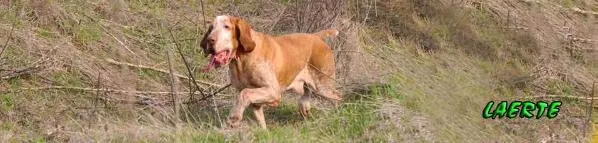


About the Bracco Italiano
The Bracco Italiano is a large Italian pointing breed that combines a gentle, affectionate family temperament with a methodical hunting style. It typically lives 12 to 14 years.
The Bracco Italiano is one of the oldest pointing breeds in Europe. It was developed in Italy to find and point game birds, then hold steady while the hunter approached. The breed works at a measured trotting pace rather than a fast gallop, which suits hunters who follow on foot.
At home the Bracco is gentle and people-oriented. The breed forms close bonds with its family and tends to stay near its people rather than range off on its own. The long ears, loose skin, and soft expression give the dog a calm, serious look that matches its even disposition.
This is a substantial dog with real working drive. A Bracco that gets enough physical activity and human contact is usually quiet and easy in the house. Without those outlets, the same dog can become restless and difficult to settle.
| Attribute | Detail |
|---|---|
| Origin | Italy |
| Size | Large |
| Lifespan | 12 to 14 years |
| Group / role | Pointing gundog |
| Good with | Families, children, and other dogs when socialised |
Who it suits
The Bracco Italiano suits active households that can offer daily exercise and steady companionship. The breed fits hunters who want a pointing dog that works close and at a moderate pace, and it also fits family owners who can meet its activity needs without a hunting background. It is a poor match for people who are away from home for long stretches, because the breed dislikes being left alone for extended periods.
History and origin
The Bracco Italiano is an ancient Italian pointing breed whose ancestors date back centuries. Two regional types were later merged into the single standard recognised today.
The Bracco Italiano traces its roots to the Italian peninsula and is counted among the oldest pointing breeds. Dogs of a similar stamp appear in Italian art and writing from the Renaissance period, used to find game for hunters working with nets and, later, with firearms.
For much of its history the breed existed in two regional forms. A heavier, often white-and-orange type was associated with the Piedmont region in the northwest, while a leaner, frequently roan-brown type was linked to Lombardy in the north. The two shared a common purpose but differed in build and colour.
The breed declined sharply during the upheavals of the early twentieth century, and numbers fell low enough to threaten its survival. Italian breeders worked to recover the population and to consolidate the regional types into one recognised standard, which describes a single Bracco Italiano with two accepted colour patterns.
The breed gained wider recognition outside Italy in the later twentieth and early twenty-first centuries, as gundog enthusiasts in other countries imported dogs and established breeding lines abroad. It remains valued both as a working pointer and as a family companion.
Appearance and breed standard
The Bracco Italiano is a large, powerfully built pointing dog with a distinctive long head, drooping ears, and a short, dense coat in white-and-orange or roan-brown patterns.
The Bracco Italiano is a large, athletic dog of solid bone and squarish-to-rectangular outline. The head is the breed's most recognisable feature: long and lean with a pronounced occiput, a slight downward slope to the muzzle, and long, low-set ears that frame the face. Loose skin and a soft, almost solemn expression complete the look. The body is deep through the chest and built for steady, ground-covering movement at a trot.
| Trait | Standard |
|---|---|
| Height | Roughly 55 to 67 cm (about 22 to 26 in) at the withers |
| Weight | About 25 to 40 kg (55 to 88 lb) |
| Coat | Short, dense, and glossy |
| Colours | White, white and orange, white and chestnut, or roan in those shades |
| Eyes | Fairly large, soft expression, amber to ochre depending on coat |
Coat and colours
The coat is short, fine, and shiny, lying close to the body and needing little grooming. Two colour families are recognised. The first is white, often with orange or amber markings, sometimes broken with roan. The second is white with chestnut markings, again sometimes appearing as a darker roan. A symmetrical mask on the head is common and acceptable. Nose pigment ranges from fleshy to brown in the chestnut dogs.
Temperament and personality
The Bracco Italiano is affectionate, gentle, and intelligent. It bonds closely with its family, is generally good with children and other dogs, and dislikes being left alone.
The Bracco Italiano is known for a sweet, steady character. The breed is affectionate with its family and tends to seek out human company, often following its people from room to room. With children it is usually patient and gentle, though its size means supervision is sensible around very young children.
With strangers the Bracco is typically friendly or politely reserved rather than sharp or suspicious. It is not a guarding breed by nature, although its size and deep voice can deter visitors. With other dogs it is generally sociable, especially when raised with them, and many tolerate cats they have grown up alongside.
The flip side of this devotion is sensitivity. The breed responds poorly to harsh handling and can become anxious or destructive if isolated for long periods. A bored or under-exercised Bracco may dig, chew, or vocalise. Mental work and daily contact keep the temperament at its best.
| Trait | Rating |
|---|---|
| Affection | 5 |
| Energy | 4 |
| Trainability | 4 |
| Vocalness | 3 |
| Shedding | 3 |
Care and grooming
The Bracco Italiano needs daily exercise and steady companionship. Its short coat is low-maintenance, but the long ears and loose facial skin need routine attention.
Grooming
- Brush the short coat once a week with a rubber mitt or bristle brush to remove loose hair.
- Check and clean the long, drooping ears regularly, since the shape traps moisture and raises the risk of infection.
- Wipe the loose skin and folds around the face and lips to keep them clean and dry.
- Trim nails every few weeks and brush the teeth several times a week.
- Bathe only when the dog is dirty, as the coat sheds dirt fairly well on its own.
Exercise
- Provide at least one to two hours of activity a day, split across walks, free running, and play.
- Give the dog room to move at its natural trot; long walks and off-lead runs in safe areas suit it well.
- Add scent games, retrieving, or field work to use the breed's natural drive.
- Build distance gradually in young dogs to protect growing joints.
Environment
The Bracco Italiano does best in a home with secure outdoor space and a family that is around for much of the day. It can live in a variety of settings provided its exercise needs are met, but it is not suited to long hours alone or to owners who cannot commit to daily activity. A securely fenced garden is helpful, as a bird-finding instinct can pull the dog towards interesting scents.
Nutrition and feeding
The Bracco Italiano needs a balanced diet suited to a large, active dog, with portions adjusted for life stage and workload to prevent weight gain.
Feed a complete diet formulated for large active breeds, with protein and fat levels that match the dog's workload. Working and field dogs burn more energy than companion dogs and may need more food during the hunting season. Because the breed has a deep chest, splitting the daily ration into two meals and avoiding heavy exercise right after eating are sensible precautions. Keep the dog at a lean, well-muscled weight rather than allowing it to carry extra body fat.
| Life stage | Amount per day | Meals |
|---|---|---|
| Puppy (2 to 6 months) | Per puppy-food label, divided | 3 to 4 |
| Junior (6 to 12 months) | Per label for projected adult weight | 2 to 3 |
| Adult (active) | Roughly 350 to 500 g of quality dry food | 2 |
| Senior / less active | Reduced portion, lower calorie | 2 |
Treats and supplements
Keep treats to about ten per cent of daily calories and use them for training rewards. Most dogs on a complete diet need no supplements, but a veterinary surgeon may suggest joint support for a large working breed or a fish-oil source for coat and skin. Always confirm supplement use with a vet before starting.
Health and common conditions
The Bracco Italiano is generally a sound breed with a 12 to 14 year lifespan, though it is prone to a few large-breed orthopaedic problems and ear issues tied to its drooping ears.
The Bracco Italiano is generally healthy and typically lives 12 to 14 years. As a large, deep-chested breed it shares some of the orthopaedic and gastric risks common to dogs of its build, and its long ears make ear care an ongoing concern. Buying from breeders who screen their stock reduces the chance of inherited problems.
| Condition | Signs | Note |
|---|---|---|
| Hip and elbow dysplasia | Stiffness, limping, reluctance to rise | Screened in breeding stock; manage weight and joint load |
| Bloat (gastric torsion) | Swollen belly, retching, restlessness | Emergency; split meals and rest after eating help reduce risk |
| Ear infections | Head shaking, odour, scratching at ears | Linked to long pendulous ears; clean and check regularly |
| Eye conditions (e.g. entropion) | Squinting, discharge, rubbing the eye | Caused by eyelid or lid-margin faults; may need veterinary treatment |
Preventive care
- Keep vaccinations and parasite control up to date.
- Maintain a lean body weight to protect joints and reduce strain.
- Schedule annual veterinary check-ups, and twice yearly for older dogs.
- Clean ears and inspect skin folds on a regular schedule.
- Choose puppies from parents with hip, elbow, and eye screening results.
Training the Bracco Italiano
The Bracco Italiano is intelligent and eager to please, which makes it trainable, but it is sensitive and responds best to patient, reward-based methods.
The Bracco Italiano is intelligent and naturally cooperative, and it usually wants to work with its handler. That makes the breed responsive to training, especially for field tasks like pointing and retrieving. The main thing to manage is sensitivity. Harsh corrections tend to shut the breed down or make it anxious, so calm, consistent handling works far better. Early socialisation with people, dogs, and everyday situations helps produce a confident adult.
Basics
- Start socialisation and gentle handling in puppyhood, exposing the dog to varied people, places, and sounds.
- Teach name recognition and a reliable recall early, since the breed's nose can lead it astray.
- Build core obedience (sit, down, stay, leave it) in short, upbeat sessions.
- Introduce field or scent work once basic control is solid, if the dog will be used for hunting.
- Keep practising manners into adulthood to maintain focus and steadiness.
Breeding and raising young
The Bracco Italiano is a large breed that reaches breeding maturity slowly, carries average litters, and benefits from health-screened parents and careful early socialisation of puppies.
As a large breed, the Bracco Italiano matures slowly and should not be bred until it is physically and mentally mature, generally well into the second year. Responsible breeding starts with screening both parents for hip and elbow dysplasia and for known eye conditions, and selecting for sound temperament as well as conformation.
Gestation in dogs runs about nine weeks. Litters are typically moderate in size for a large breed. The dam needs increased nutrition through late pregnancy and lactation, and a quiet, clean whelping area.
Early handling shapes much of the adult dog. Puppies benefit from gentle daily handling, exposure to household sounds and surfaces, and contact with people before they leave for new homes. Because the breed is sensitive and people-focused, this early socialisation has a lasting effect on confidence and trainability. Puppies should stay with the dam and littermates until they are old enough to be weaned and settled, usually around eight weeks.
| Metric | Value |
|---|---|
| Breeding maturity | Best after about 18 to 24 months |
| Gestation | About 63 days (roughly 9 weeks) |
| Typical litter size | Around 6 to 10 puppies |
| Weaning age | Roughly 6 to 8 weeks |
| Recommended health screens | Hips, elbows, and eyes of both parents |
Bracco Italiano registration and microchipping in the UK
Your Bracco Italiano's details on a record that satisfies UK microchip law: free with United Pet Club, for life, with nothing to renew.
Registering a Bracco Italiano in the United Kingdom
When a dog warden or rescue centre picks up a stray Bracco Italiano, the chip scan is the first move, and the record behind it decides how the story ends. Keep yours pointing home with a free United Pet Club profile. Register your dog once, and the record stands for life without a renewal letter ever landing on the mat.
The implant happens at the vet surgery; the record is your half of the bargain, and the 2016 regulations expect it kept up to date. Register the microchip free on the lifetime plan: any brand a British vet implants is accepted, amendments after moving house cost nothing, and the record stays searchable through the lookups rescue centres and wardens turn to first. Create your free account and square it away this evening.
How do I register my Bracco Italiano in the UK?
Set up a free United Pet Club account, add your Bracco Italiano's details and a photo, and save. The profile stays live for the whole of the dog's life at no charge, and the chip number can be added the moment you have it.
How do I register my Bracco Italiano's microchip?
Key the fifteen digit number into your free United Pet Club account with your current address and phone number. The lifetime plan accepts any brand a British vet implants, and amendments after a house move are free.
Is microchipping a Bracco Italiano required by law in the UK?
Yes. Dogs in England, Scotland and Wales have had to be chipped since 2016, with the keeper's details kept current. The law covers the chip; keeping the record pointing at a live phone number is what United Pet Club handles, free.
How much does it cost to register a Bracco Italiano in the UK?
Nothing at all. The United Pet Club lifetime plan covers the profile, the microchip record and every amendment without a fee, so there is no renewal to remember.
Frequently asked questions
Common questions about the Bracco Italiano cover its size, temperament, care needs, lifespan, suitability for families, and availability.
How big does a Bracco Italiano get?
It is a large breed. Adults generally stand about 55 to 67 cm (22 to 26 in) at the shoulder and weigh roughly 25 to 40 kg (55 to 88 lb), with males larger than females.
Is the Bracco Italiano good with families and children?
Yes. The breed is affectionate and gentle and usually does well with children. Because of its size, supervise interactions with very young children.
Is the Bracco Italiano hard to care for?
Grooming is straightforward thanks to the short coat, but the breed needs one to two hours of daily exercise, regular ear care, and steady companionship. It is a moderate to demanding breed in terms of time, not coat care.
How long does a Bracco Italiano live?
Most live 12 to 14 years with good care, regular veterinary attention, and a healthy weight.
Can a Bracco Italiano live in a flat?
It can adapt to different homes if its exercise needs are fully met, but it suits a household with space and people around for much of the day better than long hours alone in a small space.
Does the Bracco Italiano need a lot of exercise?
Yes. As a working pointing breed it needs daily physical activity plus mental stimulation. Without enough exercise it can become restless and destructive.
Are Bracco Italianos easy to find in the UK?
They are less common than mainstream gundog breeds, so finding a puppy may involve a wait or travelling to a reputable breeder who health-tests their dogs.