The Boxer is a playful, devoted breed known for its boundless energy, expressive face, and loyal guardianship of family.
How the Boxer coat is built, and what that means when you groom it.
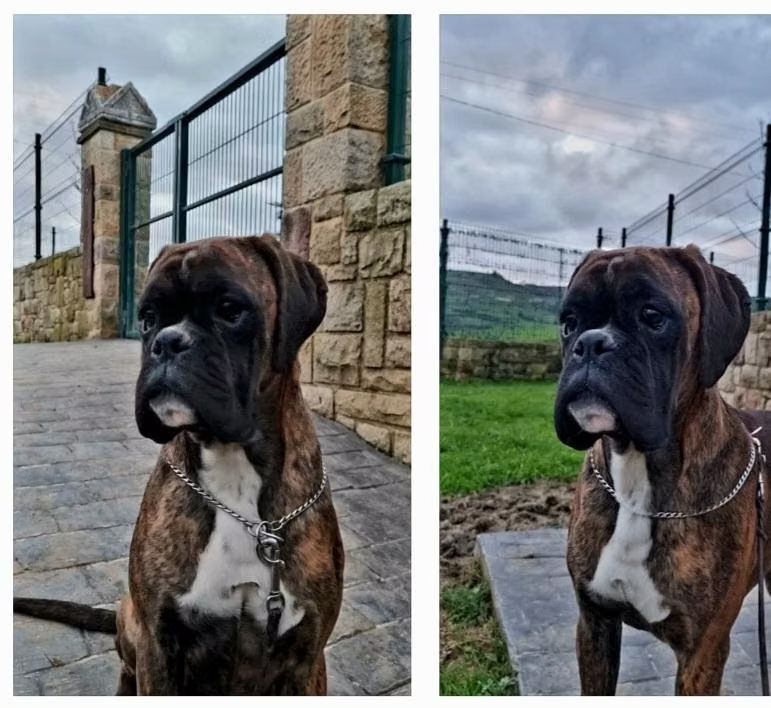
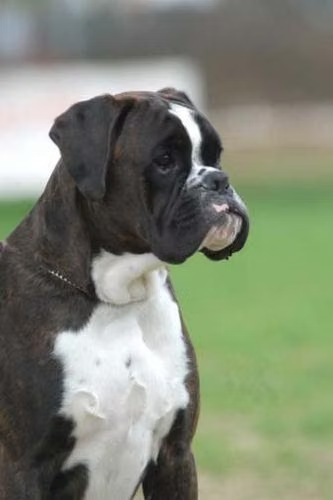
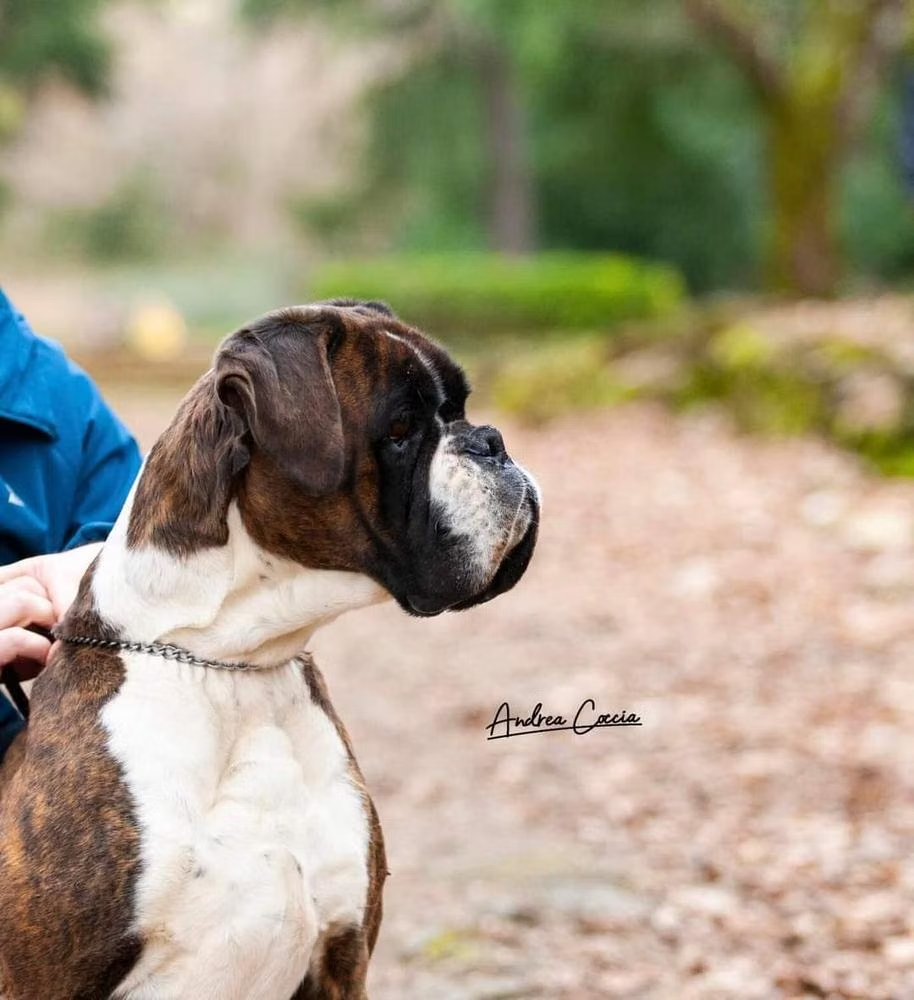
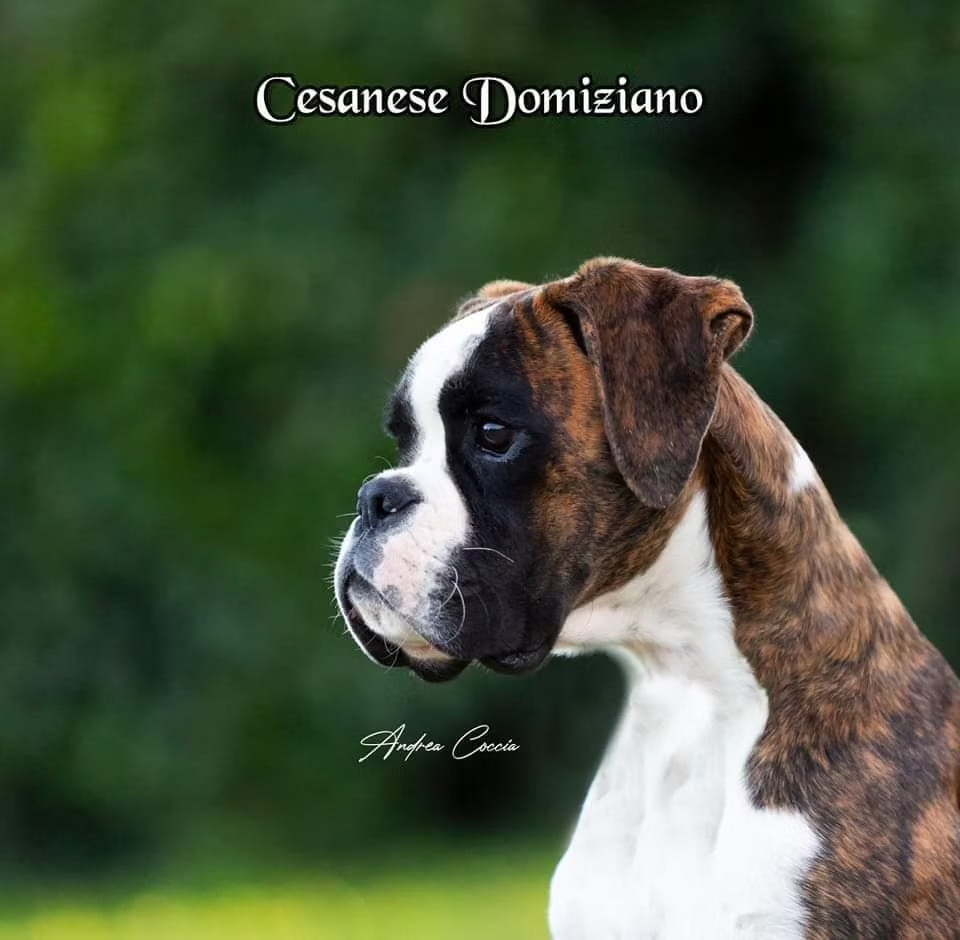
A few of the Boxer profiles members have added to United Pet Club.
The Boxer is a large working dog from Germany, well known for its exuberant and loyal temperament, expressive face, and devoted attachment to family.
The Boxer is a medium-to-large working dog that was developed in Germany towards the end of the 19th century. Adults typically stand 53 to 63 cm at the shoulder and weigh 25 to 32 kg. The breed is recognised by its short muzzle, square head, deep chest, and close-fitting, short coat. Movement is athletic and free, reflecting origins as a hunting and guard dog.
Boxers retain a puppy-like playfulness well into maturity and often seem younger than their years. They form strong attachments to the people they share their home with and strongly prefer company to long periods alone. The breed is patient and gentle with children it knows, which is one reason it has remained a firm favourite as a family dog in Britain.
Energy is a hallmark of the breed. A Boxer needs daily exercise and mental occupation to remain settled indoors. Without sufficient activity, it can become restless and destructive. Owners who commit to brisk walks, play sessions, and basic training generally find the Boxer adaptable and rewarding to live with.
| Attribute | Detail |
|---|---|
| Origin | Germany |
| Size | Large (25 to 32 kg) |
| Lifespan | 10 to 12 years |
| Group / role | Working dog; guardian and companion |
| Good with | Children and familiar people; needs careful introductions to other dogs |
The Boxer fits active households that can commit to daily exercise and want a dog that stays closely involved in family life. It is a sensible choice for homes with children, for owners who enjoy training, and for people who want a loyal, engaged companion. It is less suited to owners who are absent for long hours or who want a calm, low-energy dog.
The Boxer was developed in Germany in the late 1800s from the Bullenbeisser and an English Bulldog cross, and was standardised by a Munich breed club in 1895.
The Boxer descends from the Bullenbeisser, a German hunting dog used to hold large game such as boar and deer until hunters arrived. As large estates and big-game hunting declined through the 19th century, the working role of the Bullenbeisser faded, and breeders began developing a smaller, more versatile dog.
The modern Boxer took shape in Germany in the 1880s and 1890s, when the Bullenbeisser was crossed with an English Bulldog imported from Britain. This cross fixed the short muzzle, square head, and compact body that define the breed today. The first dogs recognisably of the type appeared in Munich.
A group of enthusiasts founded the Deutscher Boxer Club in Munich in 1895, and the first breed standard followed shortly afterwards. The club organised the earliest shows and maintained pedigree records, placing the breed on a consistent footing. The name Boxer is commonly linked to the way the dogs use their front paws during play, though the precise origin of the name remains uncertain.
The breed spread beyond Germany in the early 20th century and gained considerable popularity after both World Wars, when returning servicemen brought dogs home. Boxers served as messenger and guard dogs during wartime, and their trainability and even temperament helped them transition into roles as police, service, and family dogs. In Britain, the Kennel Club places the Boxer in the Working Group.
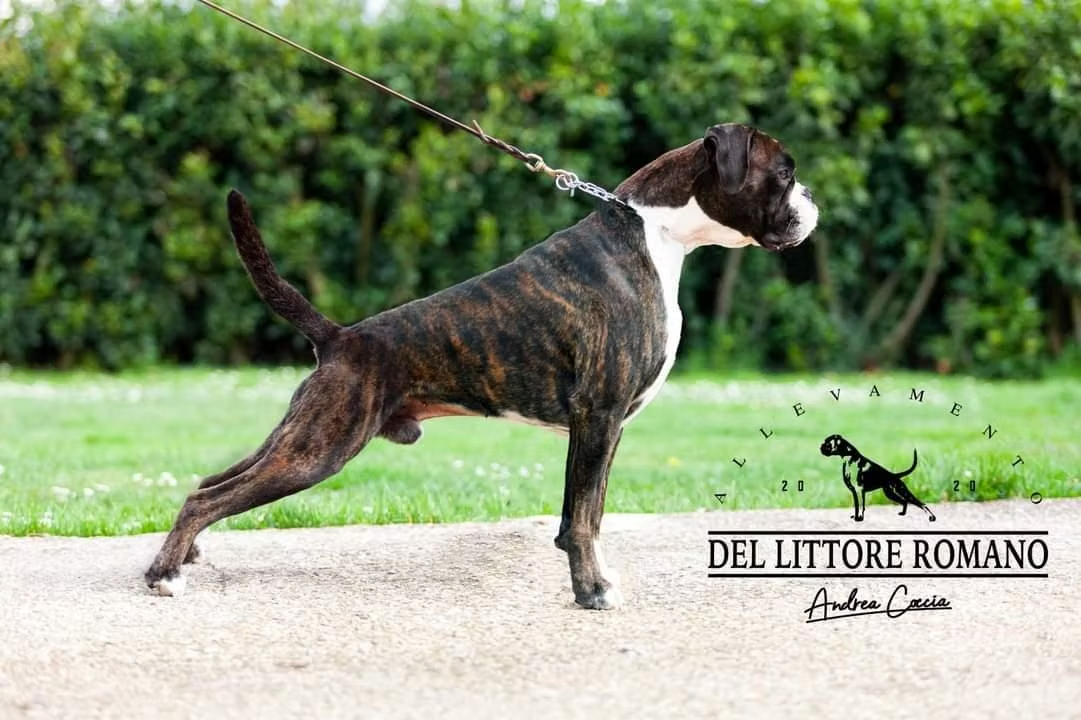
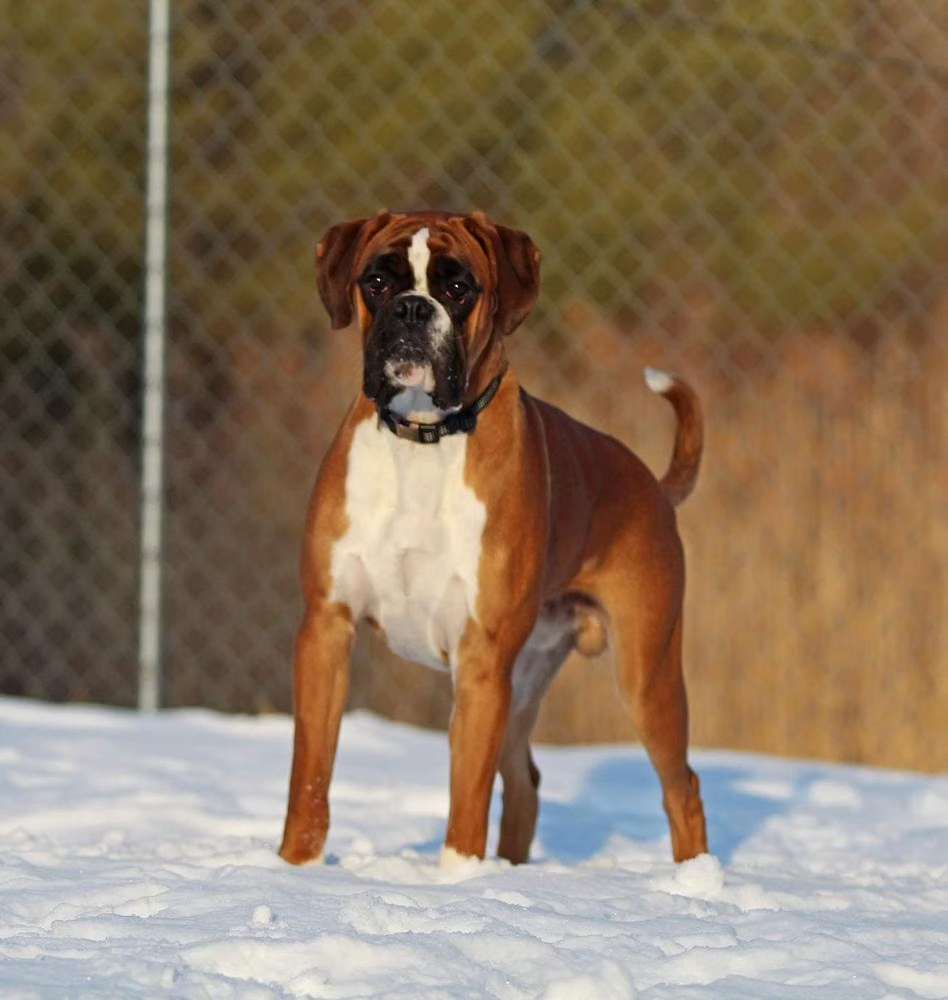
The Boxer is a square-built, muscular dog with a short broad muzzle, deep chest, and a tight short coat in fawn or brindle, often with white markings.
The Boxer has a square, athletic build with clean lines and well-defined muscle. The head is its most striking feature: a broad, blunt muzzle, a slightly undershot jaw, and a furrowed brow that lend the face an alert, enquiring expression. The chest is deep, the back short and straight, and the legs strong and straight when viewed from the front. The overall impression is of power combined with agility.
| Feature | Standard |
|---|---|
| Height | Males 57 to 63 cm; females 53 to 59 cm at the shoulder |
| Weight | Males 27 to 32 kg; females 25 to 29 kg |
| Coat | Short, smooth, lying close to the body |
| Colours | Fawn and brindle, with or without white markings |
| Eyes | Dark brown, set forward, with an alert expression |
The coat is short and lies flat, which makes grooming simple but provides little protection against cold or strong sun. Recognised colours are fawn, which ranges from light tan to deep reddish brown, and brindle, which shows dark stripes over a fawn base. White markings on the chest, feet, and face are common and accepted. Dogs that are more than one-third white, or entirely white, fall outside the Kennel Club breed standard and may carry a higher risk of deafness. The muzzle is typically marked with a dark mask.
The Boxer is playful, devoted, and energetic, gentle with family and children, naturally protective with strangers, and able to live with other pets when socialised early.
The Boxer is exuberant and affectionate. It retains a playful streak throughout much of its life and frequently seeks attention and interaction from the people it lives with. With family members, including children, the breed is patient and tolerant, though its size and enthusiasm mean that play with small children should be supervised.
With strangers, the Boxer is alert and watchful, tending to assess new people before accepting them, which makes it a capable watchdog. Early and consistent socialisation prevents this caution from developing into wariness. Towards other dogs, some Boxers, particularly entire males, can be assertive, so introductions should be handled carefully. A Boxer raised alongside cats and other household pets usually coexists with them comfortably.
The breed is intelligent and forms deep attachments, but it can be stubborn and is sensitive to heavy-handed handling. It responds best to firm, consistent guidance paired with reward. A bored or under-exercised Boxer is more likely to chew, dig, or become vocal.
| Trait | Rating |
|---|---|
| Affection | 5 |
| Energy | 5 |
| Trainability | 3 |
| Vocalness | 2 |
| Shedding | 2 |
The Boxer is low-maintenance to groom but requires substantial daily exercise and does not tolerate temperature extremes well.
The short coat demands little work, but routine care keeps the dog healthy and comfortable.
The Boxer is an athletic breed that needs significant daily activity to remain balanced.
The Boxer is happiest as an indoor dog living close to its family. A home with a securely fenced garden suits the breed well, but it should not be left outside for long periods. The short coat and flat face make the Boxer sensitive to both heat and cold, so it needs shelter and attentive care in extreme weather. Flat living can work provided the dog receives sufficient daily exercise outdoors.
An adult Boxer needs a balanced, protein-rich diet of roughly 2 to 3 cups of quality food per day, split into two meals to reduce bloat risk.
The Boxer is an active, muscular dog that thrives on a complete diet with good-quality animal protein and moderate fat. Choose a food formulated for large, active breeds and match the quantity to the dog's weight, age, and activity level. Because the breed is deep-chested and prone to bloat, meals should be divided rather than given all at once, and vigorous exercise should be avoided immediately before and after feeding. Some Boxers have food sensitivities, so introduce any change in diet gradually.
| Life stage | Amount per day | Meals |
|---|---|---|
| Puppy (2 to 6 months) | 2 to 3 cups | 3 to 4 |
| Adolescent (6 to 12 months) | 2.5 to 3.5 cups | 2 to 3 |
| Adult (1 to 7 years) | 2 to 3 cups | 2 |
| Senior (7 years and older) | 2 to 2.5 cups | 2 |
Keep treats to roughly 10 per cent of daily calorie intake to prevent weight gain, which places strain on the joints and heart. Lean meat, plain vegetables such as carrots, and commercial training treats are suitable in small quantities. Most Boxers on a complete diet need no supplements, though a veterinary surgeon may recommend joint support for older or heavily exercised dogs. Fresh water should always be available.
The Boxer lives about 10 to 12 years and is prone to several cancers, heart conditions, hip dysplasia, and bloat, so regular veterinary screening is important.
The Boxer has a typical lifespan of 10 to 12 years. The breed is generally robust and active, but it carries a higher risk of certain serious conditions than many other breeds, including several types of cancer and two inherited heart conditions. Responsible breeders screen for heart disease and hip problems, and prospective buyers should ask to see health-test results for the parents. Regular veterinary check-ups help detect problems early, when they are most responsive to treatment.
| Condition | Signs | Note |
|---|---|---|
| Cancer (mast cell tumours, lymphoma) | Lumps, swelling, weight loss, lethargy | Boxers have an above-average cancer rate; have skin lumps checked promptly |
| Boxer cardiomyopathy (ARVC) | Fainting, weakness, irregular heartbeat | Inherited heart-rhythm disorder; screened by Holter monitor |
| Aortic stenosis | Tiring easily, fainting, heart murmur | Congenital narrowing near the heart; detected on examination and ultrasound |
| Hip dysplasia | Stiffness, limping, difficulty rising | Inherited joint condition; breeding stock should be hip-scored |
| Bloat (gastric torsion) | Swollen abdomen, retching, distress | Life-threatening emergency; feed split meals and restrict exercise near mealtimes |
The Boxer is intelligent and keen but independent-minded, so it trains best with early, consistent, reward-based sessions kept short and varied.
The Boxer learns quickly and enjoys working with its owner, but it has an independent streak and can switch off during dull, repetitive exercises. The breed matures slowly and remains playful, which means a young Boxer may push boundaries. Consistent rules from the outset, observed by everyone in the household, prevent the dog from acquiring unwanted habits. Boxers are sensitive to tone and do not respond well to harsh corrections, which tend to make them anxious or resistant. Keep sessions short, positive, and frequent to maintain the dog's engagement.
Boxers reach breeding maturity around 18 to 24 months, carry litters of about 6 to 8 puppies over a 63-day gestation, and should be health-tested before mating.
Boxers reach sexual maturity earlier than full physical and mental maturity. Although females may cycle from around six to twelve months, responsible breeding waits until both parents are physically mature and have passed health screening, normally around 18 to 24 months. Heart screening for cardiomyopathy and aortic stenosis, along with hip evaluation, is standard before breeding because several of the breed's serious conditions are inherited.
Gestation lasts approximately 63 days. Litters average six to eight puppies, though larger litters occur. The breed's broad head means some litters require veterinary assistance during whelping, and a proportion of Boxer litters are delivered by caesarean section. The dam should be monitored carefully throughout pregnancy and whelping.
Puppies are weaned at around six to eight weeks. During this period, early handling and gentle exposure to household sights and sounds lay the foundations for a confident adult. Reputable breeders keep puppies with the dam and littermates until at least eight weeks so they develop normal canine behaviour before moving to new homes.
| Metric | Value |
|---|---|
| Breeding maturity | About 18 to 24 months |
| Gestation | About 63 days |
| Average litter size | 6 to 8 puppies |
| Weaning age | 6 to 8 weeks |
| Recommended pre-breeding tests | Heart screening and hip evaluation |
Your Boxer's details on a record that satisfies UK microchip law: free with United Pet Club, for life, with nothing to renew.
Microchipping has been compulsory for dogs in England, Scotland and Wales since 2016, and the rules are strict about keeping the details behind the chip current. A free United Pet Club profile holds your Boxer's record for the whole of its life, with your phone number and address sitting where a scan can reach them. Registering your dog is done in minutes and costs nothing, now or later.
A chip without a registration is a serial number and nothing more. File your Boxer's fifteen digit number with United Pet Club and it becomes a route back to you: free for life, open to every chip brand sold in Britain, and searchable whenever a scanner finds it. Microchip registration takes less time than the kettle, and a free account covers the profile too.
Set up a free United Pet Club account, add your Boxer's details and a photo, and save. The profile stays live for the whole of the dog's life at no charge, and the chip number can be added the moment you have it.
Key the fifteen digit number into your free United Pet Club account with your current address and phone number. The lifetime plan accepts any brand a British vet implants, and amendments after a house move are free.
Yes. Dogs in England, Scotland and Wales have had to be chipped since 2016, with the keeper's details kept current. The law covers the chip; keeping the record pointing at a live phone number is what United Pet Club handles, free.
Nothing at all. The United Pet Club lifetime plan covers the profile, the microchip record and every amendment without a fee, so there is no renewal to remember.
Common questions about the Boxer's size, temperament, care needs, lifespan, suitability for families, and availability.
Boxers are a large breed. Males stand about 57 to 63 cm at the shoulder and weigh 27 to 32 kg, while females stand about 53 to 59 cm and weigh 25 to 29 kg.
The Boxer is playful, devoted, and energetic. It is gentle and patient with family and children, alert and protective with strangers, and can live with other pets when socialised from an early age.
Grooming is straightforward given the short coat, but exercise demands are high. The breed needs 60 to 90 minutes of activity daily and tolerates neither heat nor cold well, so it suits committed, active owners.
A Boxer typically lives 10 to 12 years. The breed is susceptible to certain cancers and heart conditions, so regular veterinary check-ups and health-screening of breeding stock are important.
Yes. Boxers form close bonds with their families and are generally patient with children they know. Their size and energy mean play with small children should be supervised.
Boxers are naturally alert and watchful with strangers, making them effective watchdogs. With proper socialisation they assess new people calmly rather than reacting aggressively.
The Boxer is a well-established breed registered with the Kennel Club in the Working Group, so puppies are generally obtainable from established breeders and the breed appears in rescue organisations. Choose breeders who health-test the parents for heart and hip conditions.