

Beauceron
The Beauceron is a loyal, powerful French herding dog prized for its intelligence, courage, and steadfast guarding instinct.
- Size
- Large
- Lifespan
- 10–12 years
- Origin
- France
- Temperament
- Loyal
- Standard colors
- Black, Grey and Tan
Characteristics
Coat and grooming
How the Beauceron coat is built, and what that means when you groom it.
- Coat layers
- Double coat
- Coat texture
- Smooth
- Coat length
- Short
- Shedding
- Seasonal shedding
Grooming guidance
Critical: A Beauceron should not be shaved.
The undercoat keeps heat out as well as in, and the outer coat shields the skin from sun and insect bites. Clipping the whole coat off removes both. It often grows back patchy, soft or a different colour, and in some animals the guard hairs never return properly. Brush the undercoat out instead of cutting it off.
Information: A Beauceron drops its undercoat in heavy bursts.
The undercoat comes out in heavy bursts over a few weeks. An undercoat rake, or a bath followed by a proper blow-dry, clears it far faster than daily brushing. Clipping the coat down is not a shortcut for this.
Beauceron colors and patterns
What each club's breed standard says about every Beauceron color and pattern. Point at a ruling to see the club's own wording.
Breed standards describe the Beauceron in Black, Grey and Tan. Standard patterns: Harlequin and Tan point.
| Color or pattern | FCI | AKC | UKC | KC | KUSA |
|---|---|---|---|---|---|
| Black | Standard (“the black is pure black”) | Standard (“Black & Tan”) | Standard (“the black is deep”) | Standard (“black and tan”) | Standard (“the black is pure black”) |
| Grey | Standard (“harlequin: grey, black and tan”) | Standard (“Gray Black & Tan”) | Standard (“gray, black and tan, in a pattern of blue-gray patches”) | Standard (“grey and black patches”) | Standard (“harlequin: grey, black and tan”) |
| Tan | Standard (“the tan, red squirrel coloured”) | Standard (“Black & Tan”) | Standard (“the bright rust markings”) | Standard (“black and tan”) | Standard (“the tan, red squirrel-coloured”) |
| Patterns | |||||
| Harlequin | Standard (“harlequin (blue-mottled with tan markings)”) | Standard (“Harlequin”) | Standard (“Harlequin”) | Standard (“Harlequin”) | Standard (“harlequin (blue mottled with tan markings)”) |
| Tan point | Standard (“black and tan (black with tan markings)”) | Standard (“Black & Tan”) | Standard (“Black and Tan”) | Standard (“Black and Tan”) | Standard (“black and tan (black with tan markings)”) |
| Solid | Disqualifying (“complete absence of tan markings”) | Disqualifying (“complete absence of markings”) | Disqualifying (“a complete absence of tan markings”) | Not recognised | Disqualifying (“complete absence of tan markings”) |
%22%3E%3Cpath%20d%3D%22M12.7%2024.3L8.8%2024.8L8.7%2028.3L5.8%2026.6L3.6%2026.1L2.6%2024.4L4%2022.8L1.8%2019.8L5.8%2021.3L7.1%2021.3L9.4%2020.7L10.1%2022.3ZM20.5%2028.4L22.6%2026.5L23.5%2024.1L26.6%2026.5L29.5%2024.2L28.9%2027.3L31.2%2028.3L32.4%2030.9L28.3%2030.6L26.7%2031.2L24.3%2031.8L23%2030.1ZM28%2040.3L27.1%2039.3L25.9%2038.8L25.6%2037.6L26.2%2036.5L27%2035L29%2033.7L31.4%2034.5L31.2%2036.9L30.4%2038.1L30.9%2039.6L29.5%2040.3ZM48.4%2028.4L45.6%2029.3L42.9%2029.2L42.3%2026.2L39.3%2025.4L38.4%2022.5L41.8%2021.5L43%2018.4L46.3%2018.3L49%2020.2L47.5%2023.6L46.9%2025ZM50.6%2015.8L54%2018L56.7%2016.5L56.9%2018.9L56.7%2020.2L57%2021.5L56.5%2023.3L54.3%2024.7L51.2%2024.7L49.2%2022.7L50.7%2020.4L51.9%2019.3ZM39%2023.7L38.8%2024.7L38.8%2026.3L37.4%2027.2L35.9%2026.5L35.5%2025.1L34.8%2024.3L34%2022.9L35.3%2022L36.6%2022.4L37.3%2022.8L38.5%2022.7ZM49.4%2025.7L49.6%2024.3L50.7%2024.2L51.2%2025.5L51.9%2025.8L52.8%2026.6L52.1%2027.5L51.5%2028.2L50.6%2027.8L49.6%2028.3L48.3%2027.9L48.1%2026.4ZM22.9%2015.9L22.7%2016.9L23.3%2017.9L22.4%2018.6L21.2%2018.8L20%2018.7L18.1%2018.8L17.6%2017.6L18.6%2016.6L18.7%2015.4L20.3%2015.1L21.7%2015.3ZM51.5%2039.7L49.7%2039.7L49.2%2040L48.4%2040.6L47.3%2040.3L46.7%2039.5L46.1%2038.3L46.9%2037.2L48.2%2036.5L49.5%2037.5L50.9%2037.4L51.8%2038.4Z%22%20fill%3D%22%23847865%22%2F%3E%3Cpath%20d%3D%22M3%2021.2L9%2018.5L12%2019L10.5%2025L4%2024Z%22%20fill%3D%22%23847865%22%2F%3E%3C%2Fg%3E%3Cuse%20href%3D%22%23s%22%20fill%3D%22none%22%20stroke%3D%22%233B2A20%22%20stroke-opacity%3D%220.6%22%20stroke-width%3D%221%22%20stroke-linejoin%3D%22round%22%2F%3E%3Cellipse%20cx%3D%223.2%22%20cy%3D%2221.7%22%20rx%3D%221.3%22%20ry%3D%221.2%22%20fill%3D%22%231C1C1C%22%2F%3E%3Ccircle%20cx%3D%2210.8%22%20cy%3D%2219.3%22%20r%3D%221.1%22%20fill%3D%22%231C1C1C%22%2F%3E%3C%2Fsvg%3E)
%22%3E%3Ccircle%20cx%3D%2212%22%20cy%3D%2217.2%22%20r%3D%221.25%22%20fill%3D%22%23C4996A%22%2F%3E%3Cpath%20d%3D%22M1.5%2021.2L9%2018.6L12.6%2021L12.2%2026.2L3.5%2024.4Z%22%20fill%3D%22%23C4996A%22%2F%3E%3Cpath%20d%3D%22M10%2026L14.5%2026.4L18.2%2029.2L13.5%2029.8Z%22%20fill%3D%22%23C4996A%22%2F%3E%3Cellipse%20cx%3D%2221.2%22%20cy%3D%2230.6%22%20rx%3D%221.6%22%20ry%3D%222.3%22%20fill%3D%22%23C4996A%22%2F%3E%3Crect%20x%3D%220%22%20y%3D%2247%22%20width%3D%2264%22%20height%3D%2217%22%20fill%3D%22%23C4996A%22%2F%3E%3Cpath%20d%3D%22M51.5%2024.5L55%2027L54.2%2032L50.5%2028.5Z%22%20fill%3D%22%23C4996A%22%2F%3E%3Cpath%20d%3D%22M45%2038.5L48%2039L48.5%2047L45.5%2047Z%22%20fill%3D%22%23C4996A%22%2F%3E%3C%2Fg%3E%3Cuse%20href%3D%22%23s%22%20fill%3D%22none%22%20stroke%3D%22%233B2A20%22%20stroke-opacity%3D%220.6%22%20stroke-width%3D%221%22%20stroke-linejoin%3D%22round%22%2F%3E%3Cellipse%20cx%3D%223.2%22%20cy%3D%2221.7%22%20rx%3D%221.3%22%20ry%3D%221.2%22%20fill%3D%22%231C1C1C%22%2F%3E%3Ccircle%20cx%3D%2210.8%22%20cy%3D%2219.3%22%20r%3D%221.1%22%20fill%3D%22%231C1C1C%22%2F%3E%3C%2Fsvg%3E)

| Color or pattern | FCI | AKC | UKC | KC | KUSA |
|---|---|---|---|---|---|
| Blue | Standard (“for the harlequin variety, wall eyes are admitted”) | Standard (“for the Harlequin, walleye is acceptable”) | Standard (“wall eyes are acceptable in the harlequin color”) | Standard (“for the Harlequin variety, wall eyes can occur”) | Standard (“for the harlequin variety, wall eyes are admitted”) |
| Dark brown | Standard (“dark brown”) | Standard (“dark brown”) | Standard (“always dark”) | Standard (“dark”) | Standard (“dark brown”) |
| Hazel | Standard (“never lighter than dark hazel”) | Standard (“never lighter than dark hazel”) | Standard (“never being lighter than dark hazel”) | No ruling | Standard (“never lighter than dark hazel”) |
| Light brown | Disqualifying (“eyes too light”) | No ruling | No ruling | No ruling | Disqualifying (“eyes too light”) |
| Yellow | No ruling | Disqualifying (“yellow eyes”) | Disqualifying (“yellow eyes”) | No ruling | No ruling |
| Patterns | |||||
| Odd-eyed | No ruling | Standard (“for the Harlequin, walleye is acceptable”) | No ruling | No ruling | No ruling |
%22%3E%3Ccircle%20cx%3D%2216%22%20cy%3D%2232%22%20r%3D%228%22%20fill%3D%22%23D9C3A0%22%2F%3E%3Ccircle%20cx%3D%2216%22%20cy%3D%2232%22%20r%3D%223.4%22%20fill%3D%22%231C1C1C%22%2F%3E%3Ccircle%20cx%3D%2213.6%22%20cy%3D%2229.6%22%20r%3D%221.3%22%20fill%3D%22%23F5F5F0%22%2F%3E%3C%2Fg%3E%3Cpath%20d%3D%22M3%2032Q16%2017%2029%2032Q16%2047%203%2032Z%22%20fill%3D%22none%22%20stroke%3D%22%233B2A20%22%20stroke-opacity%3D%220.75%22%20stroke-width%3D%221.4%22%20stroke-linejoin%3D%22round%22%2F%3E%3Cpath%20d%3D%22M35%2032Q48%2017%2061%2032Q48%2047%2035%2032Z%22%20fill%3D%22%23F5F5F0%22%2F%3E%3Cg%20clip-path%3D%22url(%23e1)%22%3E%3Ccircle%20cx%3D%2248%22%20cy%3D%2232%22%20r%3D%228%22%20fill%3D%22%23847865%22%2F%3E%3Ccircle%20cx%3D%2248%22%20cy%3D%2232%22%20r%3D%223.4%22%20fill%3D%22%231C1C1C%22%2F%3E%3Ccircle%20cx%3D%2245.6%22%20cy%3D%2229.6%22%20r%3D%221.3%22%20fill%3D%22%23F5F5F0%22%2F%3E%3C%2Fg%3E%3Cpath%20d%3D%22M35%2032Q48%2017%2061%2032Q48%2047%2035%2032Z%22%20fill%3D%22none%22%20stroke%3D%22%233B2A20%22%20stroke-opacity%3D%220.75%22%20stroke-width%3D%221.4%22%20stroke-linejoin%3D%22round%22%2F%3E%3C%2Fsvg%3E)
| Color or pattern | FCI | AKC | UKC | KUSA |
|---|---|---|---|---|
| Black | Standard (“always black”) | Standard (“always black”) | Standard (“always black in color”) | Standard (“always black”) |
| Patterns | ||||
| Butterfly nose | Disqualifying (“with unpigmented areas”) | Disqualifying (“nose ... with unpigmented areas”) | Disqualifying (“unpigmented areas in nose”) | Disqualifying (“with unpigmented areas”) |
%22%3E%3Cpath%20d%3D%22M28.4%2019.1C29.9%2017.7%2032.2%2016.4%2034%2016C35.8%2015.6%2037.4%2016%2039.2%2016.6C41.1%2017.2%2044.4%2018.5%2045.1%2019.5C45.8%2020.6%2044.3%2021.9%2043.3%2023.1C42.2%2024.3%2040.9%2025.9%2039%2026.6C37.1%2027.2%2034.3%2027.3%2032%2026.9C29.6%2026.4%2025.6%2025.3%2025%2024C24.4%2022.7%2026.9%2020.4%2028.4%2019.1Z%22%20fill%3D%22%23E8A0B4%22%2F%3E%3Cpath%20d%3D%22M23.8%2037.7C24.6%2037.5%2026.2%2037.9%2027.4%2038.1C28.5%2038.2%2030.2%2037.9%2030.8%2038.4C31.4%2039%2031.2%2040.7%2030.9%2041.5C30.7%2042.3%2029.9%2042.9%2029.1%2043.3C28.4%2043.8%2027.4%2044.6%2026.4%2044.4C25.4%2044.2%2023.8%2042.9%2023.1%2042.1C22.4%2041.3%2022.2%2040.2%2022.3%2039.5C22.4%2038.8%2022.9%2038%2023.8%2037.7Z%22%20fill%3D%22%23E8A0B4%22%2F%3E%3Cpath%20d%3D%22M10.5%2027.2C10.4%2026.7%2010.4%2025.4%2011%2025C11.5%2024.6%2013%2024.6%2013.9%2024.6C14.8%2024.6%2015.6%2024.5%2016.1%2024.9C16.6%2025.3%2017%2026.2%2017%2026.9C17.1%2027.7%2016.8%2028.8%2016.4%2029.4C15.9%2029.9%2014.9%2030.4%2014.2%2030.3C13.4%2030.1%2012.3%2028.8%2011.7%2028.3C11.1%2027.8%2010.6%2027.8%2010.5%2027.2Z%22%20fill%3D%22%23E8A0B4%22%2F%3E%3C%2Fg%3E%3Cuse%20href%3D%22%23s%22%20fill%3D%22none%22%20stroke%3D%22%233B2A20%22%20stroke-opacity%3D%220.6%22%20stroke-width%3D%221%22%20stroke-linejoin%3D%22round%22%2F%3E%3Cpath%20d%3D%22M12.5%2037Q13%2032%2018.5%2032Q23.5%2032.5%2023.5%2036.5Q20.5%2035.5%2018.8%2037Q17.4%2038.6%2018%2041.5Q13.6%2040.4%2012.5%2037Z%22%20fill%3D%22%231C1C1C%22%20fill-opacity%3D%220.8%22%20stroke%3D%22%23F5F5F0%22%20stroke-opacity%3D%220.4%22%20stroke-width%3D%220.9%22%2F%3E%3Cpath%20d%3D%22M51.5%2037Q51%2032%2045.5%2032Q40.5%2032.5%2040.5%2036.5Q43.5%2035.5%2045.2%2037Q46.6%2038.6%2046%2041.5Q50.4%2040.4%2051.5%2037Z%22%20fill%3D%22%231C1C1C%22%20fill-opacity%3D%220.8%22%20stroke%3D%22%23F5F5F0%22%20stroke-opacity%3D%220.4%22%20stroke-width%3D%220.9%22%2F%3E%3Cpath%20d%3D%22M32%2040V50%22%20fill%3D%22none%22%20stroke%3D%22%231C1C1C%22%20stroke-width%3D%221.3%22%20stroke-opacity%3D%220.5%22%20stroke-linecap%3D%22round%22%20stroke-linejoin%3D%22round%22%2F%3E%3Cellipse%20cx%3D%2232%22%20cy%3D%2221%22%20rx%3D%2212%22%20ry%3D%223.5%22%20fill%3D%22%23F5F5F0%22%20fill-opacity%3D%220.18%22%2F%3E%3C%2Fsvg%3E)
What the rulings mean
- Standard
- Described by the club's breed standard.
- Disqualifying
- The club's breed standard disqualifies an animal of this colour or pattern.
- Not recognised
- The club does not accept this colour or pattern for the breed.
Color changes
How a Beauceron's colors can change over its life.
Blackchanges toRust
Coat · With body condition · can change back
Blackchanges toGrey
Coat · Progressive
Blackchanges toBrown
Coat · In the sun · can change back
Tan pointchanges toSaddle
Coat · With age · from 6 to 156 weeks
Bluechanges toDark brown
Eyes · With age · from 2 weeks
Bluechanges toBrown
Eyes · With age · from 2 weeks
Bluechanges toLight brown
Eyes · With age · from 2 weeks
Bluechanges toAmber
Eyes · With age · from 2 weeks
Bluechanges toHazel
Eyes · With age · from 2 weeks
Bluechanges toYellow
Eyes · With age · from 2 weeks
Blackchanges toSnow nose
Nose · With the season · can change back
Blackchanges toPink
Nose · With the season · can change back
%22%3E%3Cpath%20d%3D%22M22.5%2018.5Q24%2021%2025%2021.5L47%2022.5Q50%2022.5%2051.5%2023.5L54%2026Q55%2032%2053%2034Q46%2031.5%2038%2033Q30%2034.5%2025.5%2032Q22.5%2026%2022.5%2018.5Z%22%20fill%3D%22%231C1C1C%22%2F%3E%3Cpath%20d%3D%22M51%2024L56%209L63%209L61%2019L54.5%2028Z%22%20fill%3D%22%231C1C1C%22%2F%3E%3Cpath%20d%3D%22M2%2021.2L7.5%2019.2L8.5%2023.6L3.5%2024.2Z%22%20fill%3D%22%231C1C1C%22%20fill-opacity%3D%220.85%22%2F%3E%3C%2Fg%3E%3Cuse%20href%3D%22%23s%22%20fill%3D%22none%22%20stroke%3D%22%233B2A20%22%20stroke-opacity%3D%220.6%22%20stroke-width%3D%221%22%20stroke-linejoin%3D%22round%22%2F%3E%3Cellipse%20cx%3D%223.2%22%20cy%3D%2221.7%22%20rx%3D%221.3%22%20ry%3D%221.2%22%20fill%3D%22%231C1C1C%22%2F%3E%3Ccircle%20cx%3D%2210.8%22%20cy%3D%2219.3%22%20r%3D%221.1%22%20fill%3D%22%231C1C1C%22%2F%3E%3C%2Fsvg%3E)
%22%3E%3Crect%20x%3D%2217%22%20y%3D%2210%22%20width%3D%2230%22%20height%3D%2242%22%20fill%3D%22url(%23g)%22%2F%3E%3C%2Fg%3E%3Cuse%20href%3D%22%23s%22%20fill%3D%22none%22%20stroke%3D%22%233B2A20%22%20stroke-opacity%3D%220.6%22%20stroke-width%3D%221%22%20stroke-linejoin%3D%22round%22%2F%3E%3Cpath%20d%3D%22M12.5%2037Q13%2032%2018.5%2032Q23.5%2032.5%2023.5%2036.5Q20.5%2035.5%2018.8%2037Q17.4%2038.6%2018%2041.5Q13.6%2040.4%2012.5%2037Z%22%20fill%3D%22%231C1C1C%22%20fill-opacity%3D%220.8%22%20stroke%3D%22%23F5F5F0%22%20stroke-opacity%3D%220.4%22%20stroke-width%3D%220.9%22%2F%3E%3Cpath%20d%3D%22M51.5%2037Q51%2032%2045.5%2032Q40.5%2032.5%2040.5%2036.5Q43.5%2035.5%2045.2%2037Q46.6%2038.6%2046%2041.5Q50.4%2040.4%2051.5%2037Z%22%20fill%3D%22%231C1C1C%22%20fill-opacity%3D%220.8%22%20stroke%3D%22%23F5F5F0%22%20stroke-opacity%3D%220.4%22%20stroke-width%3D%220.9%22%2F%3E%3Cpath%20d%3D%22M32%2040V50%22%20fill%3D%22none%22%20stroke%3D%22%231C1C1C%22%20stroke-width%3D%221.3%22%20stroke-opacity%3D%220.5%22%20stroke-linecap%3D%22round%22%20stroke-linejoin%3D%22round%22%2F%3E%3Cellipse%20cx%3D%2232%22%20cy%3D%2221%22%20rx%3D%2212%22%20ry%3D%223.5%22%20fill%3D%22%23F5F5F0%22%20fill-opacity%3D%220.18%22%2F%3E%3C%2Fsvg%3E)
Sources
Each ruling comes from the club's published breed standard or color list.
Meet some of our Beauceron
A few of the Beauceron profiles members have added to United Pet Club.
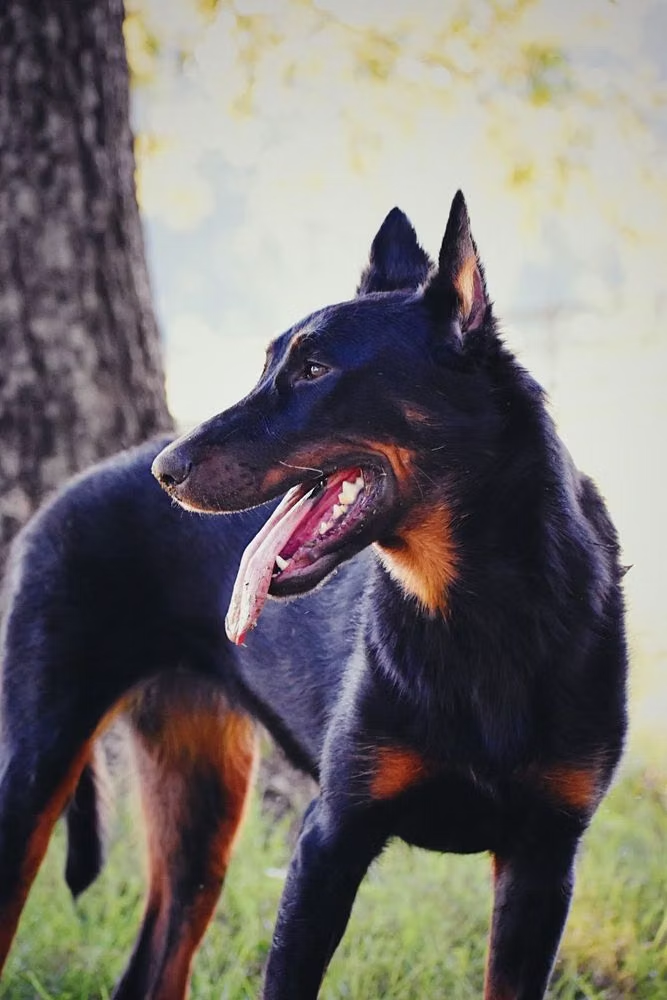


About the Beauceron
The Beauceron is a large French herding and guarding dog, loyal and intelligent, suited to experienced, active owners who can provide work and structure.
The Beauceron is a large working dog from France, bred to herd sheep and cattle and to guard livestock and property. Adults stand roughly 61 to 70 centimetres at the shoulder and weigh between about 32 and 50 kilograms, with a deep chest, strong bone, and an athletic build. The breed is sometimes called the Berger de Beauce or Bas Rouge, the latter a reference to the tan markings on the lower legs.
This is a confident, intelligent dog with a strong sense of duty. The Beauceron bonds closely with its family and tends to be reserved around strangers, watching carefully before warming. It carries a herding heritage that shows in its alertness, its instinct to control movement, and its willingness to work long hours in the field.
The coat is short and dense over the body, with slightly longer hair on the underside of the tail and the backs of the legs. Most Beaucerons are black and tan, though a grey, black, and tan pattern known as harlequin also occurs. A distinctive feature of the breed is the double dewclaws on each hind leg, which the breed standard specifically calls for.
| Attribute | Detail |
|---|---|
| Origin | France |
| Size | Large (about 32 to 50 kg) |
| Lifespan | 10 to 12 years |
| Group / role | Herding and guarding |
| Good with | Family and older children when raised and trained; needs early socialisation with other pets |
Who it suits
The Beauceron suits owners who can provide consistent training, daily physical work, and clear guidance. It does best with people who enjoy active routines such as long walks, running, herding trials, tracking, or protection sports. First-time dog owners often find the breed demanding because of its size, intelligence, and guarding instincts. A securely fenced garden and time spent with the family suit it far better than long hours left alone.
History of the Beauceron
The Beauceron developed on the plains of northern France as a herding and guarding dog and was formally described in the late nineteenth century.
The Beauceron takes its name from the Beauce region, an agricultural plain to the south-west of Paris. The breed developed among French farm dogs used to move and guard flocks of sheep and herds of cattle. These dogs needed stamina to cover open ground, intelligence to manage livestock, and the courage to protect stock from predators and theft.
The breed was first described in detail in 1809 by the priest Abbe Rozier, who wrote about French herding dogs and distinguished the short-coated plains dog from the long-coated mountain type. The long-coated relative became known as the Briard, while the short-coated dog became the Beauceron. The two were recognised as separate breeds towards the end of the nineteenth century.
In 1893 the veterinarian Pierre Megnin set out a clear description of the breed, and the first breed club, the Club des Amis du Beauceron, was founded in France in 1922. A written standard followed, fixing traits such as the black and tan coat, the double hind dewclaws, and the herding build.
During the twentieth century the Beauceron served in both World Wars as a military and messenger dog, carrying communications, detecting mines, and tracking. The breed remains a working dog in France today, used for herding, police and military tasks, and protection sports, as well as being kept as a family companion.
Appearance of the Beauceron
The Beauceron is a large, muscular dog with a short black and tan coat, double dewclaws on each hind leg, and a balanced, powerful outline.
The Beauceron is a substantial herding dog with a rectangular, well-muscled body and a confident, upright stance. The head is long and proportionate, with a flat or slightly rounded skull, a strong muzzle, and dark brown eyes set fairly wide apart. Ears may be left natural, where they fold close to the head, or in some regions were historically cropped to stand erect. The chest is deep and the legs are straight and strong, giving the breed an easy, ground-covering gait.
| Trait | Standard |
|---|---|
| Height | Males about 65 to 70 cm; females about 61 to 68 cm |
| Weight | About 32 to 50 kg |
| Coat | Short, dense, and coarse on the body; slightly longer on tail and rear legs |
| Colours | Black and tan; grey, black, and tan (harlequin) |
| Eyes | Dark brown; one wall eye permitted in harlequins |
Coat and colours
The outer coat is short, lying flat and dense with a thick undercoat that allows the dog to work in cold and wet conditions. The most common pattern is black and tan, with the rich tan markings appearing on the legs, chest, eyebrows, muzzle, and under the tail. The leg markings are the source of the nickname Bas Rouge, meaning 'red stockings'.
The harlequin pattern combines patches of grey with the black and tan, and the standard favours a balanced spread of colour without too much grey. A defining feature of the breed is the double dewclaws on each hind leg, set low and forming well-separated digits. Single hind dewclaws or their absence are considered faults in the show ring.
Beauceron temperament
The Beauceron is loyal, intelligent, and protective, devoted to its family while watchful around strangers, with a strong working drive that needs an outlet.
The Beauceron is a confident, level-headed dog with a deep attachment to its family. It tends to be calm and steady in the home once mature, but its guarding instinct keeps it alert to its surroundings. With its own people it is affectionate and cooperative, often following family members from room to room.
With strangers the Beauceron is naturally reserved. It assesses new people before accepting them and rarely greets visitors with immediate warmth. Early and continued socialisation is important so that this caution does not tip into suspicion. The breed is patient with children it has grown up with, though its size and energy mean interactions with very young children should be supervised at all times.
Around other animals the Beauceron can live well alongside pets it is raised with, but its herding background can prompt it to chase or control movement, and some individuals show dominance towards other dogs. Steady introductions and consistent boundaries help it settle into a multi-pet household. This is a working breed that needs a job, and a Beauceron without enough mental and physical activity can become difficult to manage.
| Trait | Rating |
|---|---|
| Affection | 4 |
| Energy | 5 |
| Trainability | 5 |
| Vocalness | 2 |
| Shedding | 3 |
Caring for a Beauceron
The Beauceron needs daily exercise, regular brushing, and a home with space and structure to channel its working energy.
The Beauceron is straightforward to groom but demanding in terms of activity and engagement. Its care centres on meeting its physical and mental needs rather than coat upkeep.
Grooming
- Brush the short coat once or twice a week to remove loose hair and spread skin oils.
- Expect heavier shedding during seasonal coat changes in spring and autumn, when more frequent brushing helps.
- Bathe only when the dog is dirty, as the coat sheds mud and grime reasonably well on its own.
- Trim nails regularly, including the double hind dewclaws, and check that they do not catch or overgrow.
- Clean the ears and brush the teeth on a routine basis.
Exercise
- Provide at least 1 to 2 hours of activity per day across walks, runs, and play.
- Add tasks that engage the mind, such as obedience drills, scent work, herding, or structured fetch.
- Offer secure off-lead exercise in a fenced area where possible.
- Consider dog sports such as tracking, agility, or protection work to give the breed a clear purpose.
Environment
The Beauceron does best in a home with a securely fenced garden and an active household. It tolerates cold and wet weather well thanks to its dense undercoat. It is not suited to long periods of isolation or to flat life unless the owner commits to substantial daily exercise and companionship.
Beauceron nutrition
The Beauceron needs a balanced diet suited to a large, active dog, fed in measured portions to support its working build and protect its joints.
A Beauceron should eat a complete and balanced diet formulated for large, active dogs. Daily amounts depend on age, weight, and activity level, with working dogs needing considerably more than companions kept to a moderate routine. Because the breed is deep-chested, dividing the daily ration into two meals rather than one large meal is standard practice and helps reduce the risk of bloat.
| Life stage | Amount per day | Meals |
|---|---|---|
| Puppy (2 to 6 months) | About 3 to 5 cups, split across meals | 3 to 4 |
| Adolescent (6 to 12 months) | About 3 to 4 cups | 2 to 3 |
| Adult | About 3 to 5 cups by size and activity | 2 |
| Senior | Adjusted lower for reduced activity | 2 |
Treats and supplements
Keep treats to about 10 per cent of daily calories so the main diet stays balanced. For a large, athletic breed, some owners and veterinary surgeons use joint support such as glucosamine, though any supplement should be discussed with a vet first. Provide constant access to fresh water, particularly around periods of exercise. Avoid large meals immediately before or after vigorous activity to lower the risk of stomach upset and bloat.
Beauceron health
The Beauceron is generally healthy with a lifespan of 10 to 12 years, though as a large deep-chested breed it can be prone to joint problems and bloat.
The Beauceron is a hardy working breed with a typical lifespan of 10 to 12 years. Responsible breeding and routine veterinary care help keep the breed sound, but its size and deep chest bring certain conditions that owners should be aware of. Sourcing a puppy from breeders who screen their stock for hip and heart problems reduces the risk of inherited disease. The Kennel Club recommends health testing for prospective breeding dogs.
| Condition | Signs | Note |
|---|---|---|
| Hip dysplasia | Stiffness, lameness, difficulty rising | Screen breeding dogs; keep the dog at a lean weight |
| Gastric dilatation-volvulus (bloat) | Swollen belly, retching without vomiting, distress | Emergency; deep-chested breeds are at higher risk |
| Dilated cardiomyopathy | Lethargy, cough, collapse | Detected through cardiac screening |
| Osteochondritis dissecans | Lameness in a young, growing dog | Linked to rapid growth and joint stress |
Preventive care
- Keep core vaccinations and parasite control up to date.
- Maintain a lean body weight to protect the joints.
- Schedule annual veterinary examinations, with cardiac checks for an older dog.
- Feed measured meals and avoid vigorous exercise immediately after eating to lower bloat risk.
- Choose puppies from breeders who screen hips and hearts in accordance with KC health-testing recommendations.
Training a Beauceron
The Beauceron is highly intelligent and trainable, responding well to consistent, fair handling and early socialisation from a confident owner.
The Beauceron is among the more trainable working breeds, quick to learn and willing to work with a handler it respects. That intelligence comes with a degree of independence, so the breed responds best to an owner who is consistent, calm, and clear about expectations. Harsh handling tends to backfire and can undermine trust, while fair, structured training builds a reliable companion. Because the breed matures slowly, often not settling mentally until around two to three years of age, patience across a long timeline pays off.
Socialisation should begin in puppyhood and continue throughout the dog's life. Introducing a young Beauceron to varied people, places, sounds, and other animals helps temper its natural wariness and supports a balanced adult temperament.
Basics
- Start socialisation early, introducing the puppy to a range of people, dogs, and environments.
- Teach core obedience cues such as sit, down, stay, and recall with short daily sessions.
- Establish consistent house rules that every family member follows.
- Add a job or sport, such as herding, tracking, or competitive obedience, to channel the working drive.
- Keep sessions varied and engaging to hold the attention of a fast-learning dog.
Breeding the Beauceron
The Beauceron reaches breeding maturity slowly, carries average litters for a large breed, and benefits from health screening of both parents.
The Beauceron matures slowly, both physically and mentally, and responsible breeders wait until a dog is fully grown and health-tested before breeding. Females are generally not bred until they are at least two years old, by which point hip and cardiac screening results are available. Mating follows the female's season, and gestation in dogs runs approximately 63 days.
Litter size in the Beauceron tends to be moderate to large, commonly around six to eight puppies, though larger litters do occur. Newborn puppies are born with the hind dewclaws that define the breed, and breeders assess these alongside coat colour and structure. Puppies are weaned at around 6 to 8 weeks, with early handling and socialisation beginning within the litter to encourage the calm, steady temperament the breed is valued for. Given the breed's working background and guarding drive, careful selection of breeding stock for sound temperament is every bit as important as physical health.
| Metric | Value |
|---|---|
| Female breeding age | Usually from about 2 years |
| Gestation | About 63 days |
| Average litter size | About 6 to 8 puppies |
| Weaning age | About 6 to 8 weeks |
| Recommended screening | Hip evaluation and cardiac check of both parents |
Beauceron registration and microchipping in the UK
Your Beauceron's details on a record that satisfies UK microchip law: free with United Pet Club, for life, with nothing to renew.
Registering a Beauceron in the United Kingdom
When a dog warden or rescue centre picks up a stray Beauceron, the chip scan is the first move, and the record behind it decides how the story ends. Keep yours pointing home with a free United Pet Club profile. Register your dog once, and the record stands for life without a renewal letter ever landing on the mat.
A chip without a registration is a serial number and nothing more. File your Beauceron's fifteen digit number with United Pet Club and it becomes a route back to you: free for life, open to every chip brand sold in Britain, and searchable whenever a scanner finds it. Microchip registration takes less time than the kettle, and a free account covers the profile too.
How do I register my Beauceron in the UK?
Set up a free United Pet Club account, add your Beauceron's details and a photo, and save. The profile stays live for the whole of the dog's life at no charge, and the chip number can be added the moment you have it.
How do I register my Beauceron's microchip?
Key the fifteen digit number into your free United Pet Club account with your current address and phone number. The lifetime plan accepts any brand a British vet implants, and amendments after a house move are free.
Is microchipping a Beauceron required by law in the UK?
Yes. Dogs in England, Scotland and Wales have had to be chipped since 2016, with the keeper's details kept current. The law covers the chip; keeping the record pointing at a live phone number is what United Pet Club handles, free.
How much does it cost to register a Beauceron in the UK?
Nothing at all. The United Pet Club lifetime plan covers the profile, the microchip record and every amendment without a fee, so there is no renewal to remember.
Beauceron frequently asked questions
Common questions about the Beauceron cover its size, temperament, care demands, lifespan, suitability, and how easily it can be found.
How big does a Beauceron get?
The Beauceron is a large breed. Males stand about 65 to 70 centimetres at the shoulder and females about 61 to 68 centimetres, with weight ranging from roughly 32 to 50 kilograms depending on size and sex.
Is the Beauceron a good family dog?
It can be a devoted family dog for households that can meet its needs. It bonds closely with its family and is patient with children it has been raised alongside, though its size and guarding instincts mean close supervision with young children and thorough early socialisation are both essential.
Is the Beauceron hard to care for?
Grooming is straightforward, but the breed is demanding in terms of exercise and training. It needs 1 to 2 hours of activity a day plus mental stimulation, and it suits an experienced, active owner who provides clear structure.
How long do Beaucerons live?
The typical lifespan is 10 to 12 years. Keeping the dog lean, providing routine veterinary care, and choosing from health-screened breeding lines all support a full, healthy life.
Is the Beauceron good for first-time owners?
It is not generally recommended as a first dog. Its intelligence, working drive, and protective nature call for confident, consistent handling that suits owners who already have experience with working breeds.
Are Beaucerons rare?
The breed is well established in France and present across many countries, but it is considerably less common than popular companion breeds in Britain. Finding a puppy often means contacting a dedicated breeder registered with the Kennel Club and waiting for a planned litter.
Why do Beaucerons have double dewclaws?
Double dewclaws on each hind leg are a long-standing feature of the breed and are required by the breed standard. They are a traditional identifying trait of the Beauceron rather than a fault.
From the community
Ask about the BeauceronNo questions about the Beauceron yet. Be the first to ask.
Browse Dog breeds