

Beagle
The Beagle is a friendly, curious little hound beloved for its merry temperament and excellent companionship with families.
- Size
- Small
- Lifespan
- 12–15 years
- Origin
- England
- Temperament
- Friendly
- Standard colors
- Black, White and Blue and 6 more
Characteristics
Coat and grooming
How the Beagle coat is built, and what that means when you groom it.
- Coat layers
- Double coat
- Coat texture
- Smooth
- Coat length
- Short
- Shedding
- Seasonal shedding
Grooming guidance
Critical: A Beagle should not be shaved.
The undercoat keeps heat out as well as in, and the outer coat shields the skin from sun and insect bites. Clipping the whole coat off removes both. It often grows back patchy, soft or a different colour, and in some animals the guard hairs never return properly. Brush the undercoat out instead of cutting it off.
Information: A Beagle drops its undercoat in heavy bursts.
The undercoat comes out in heavy bursts over a few weeks. An undercoat rake, or a bath followed by a proper blow-dry, clears it far faster than daily brushing. Clipping the coat down is not a shortcut for this.
Beagle colors and patterns
What each club's breed standard says about every Beagle color and pattern. Point at a ruling to see the club's own wording.
Breed standards describe the Beagle in Black, White, Blue, Badger grey, Brown, Tan, Hare, Red and Lemon. Standard patterns: Solid, Bicolour, Tricolour, Piebald, Roan and Tan point.
| Color or pattern | FCI | AKC | UKC | KC | KUSA |
|---|---|---|---|---|---|
| Black | Standard (“Tricolour (black, tan and white)”) | Standard (“Black Tan & White”) | Standard (“Usually tri-color (black, white and tan)”) | Standard (“Tricolour (black, tan and white)”) | Standard (“Tricolour (black, tan, and white)”) |
| White | Standard (“all white”) | Standard (“Black Tan & White”) | Standard (“Usually tri-color (black, white and tan)”) | Standard (“all white”) | Standard (“all white”) |
| Blue | Standard (“blue, white and tan”) | Standard (“Blue Tan & White”) | Standard (“all typical hound color combinations are acceptable”) | Standard (“blue, white and tan”) | Standard (“blue, white and tan”) |
| Badger grey | Standard (“badger pied”) | No ruling | No ruling | No ruling | No ruling |
| Brown | Not recognised | Standard (“Brown & White”) | No ruling | Not recognised | Not recognised |
| Tan | Standard (“Tricolour (black, tan and white)”) | Standard (“Black Tan & White”) | Standard (“Usually tri-color (black, white and tan)”) | Standard (“Tricolour (black, tan and white)”) | Standard (“Tricolour (black, tan, and white)”) |
| Hare | Standard (“hare pied”) | No ruling | No ruling | No ruling | No ruling |
| Red | Standard (“red and white”) | Standard (“Red & White”) | Standard (“all typical hound color combinations are acceptable”) | Standard (“red and white”) | Standard (“red and white”) |
| Lemon | Standard (“lemon pied; lemon and white”) | Standard (“Lemon & White”) | Standard (“all typical hound color combinations are acceptable”) | Standard (“lemon pied; lemon and white”) | Standard (“lemon pied; lemon and white”) |
| Fawn | Not recognised | Alternate (“Black Fawn & White”) | No ruling | Not recognised | Not recognised |
| Albino | Not recognised | No ruling | Disqualifying (“Albinism”) | Not recognised | Not recognised |
| Chocolate | Not recognised | No ruling | No ruling | Not recognised | Not recognised |
| Patterns | |||||
| Solid | Standard (“all white”) | Alternate (“White”) | Disqualifying (“Solid color”) | Standard (“all white”) | Standard (“all white”) |
| Bicolour | Standard (“lemon and white; red and white; tan and white; black and white”) | Standard (“Lemon & White”) | Standard (“all typical hound color combinations are acceptable”) | Standard (“lemon and white; red and white; tan and white; black and white”) | Standard (“lemon and white; red and white; tan and white; black and white”) |
| Tricolour | Standard (“Tricolour (black, tan and white)”) | Standard (“Black Tan & White”) | Standard (“Usually tri-color (black, white and tan)”) | Standard (“Tricolour (black, tan and white)”) | Standard (“Tricolour (black, tan, and white)”) |
| Piebald | Standard (“badger pied; hare pied; lemon pied”) | No ruling | Standard (“all typical hound color combinations are acceptable”) | Standard (“badger pied; hare pied; lemon pied”) | Standard (“badger pied; hare pied; lemon pied”) |
| Roan | Standard (“all the above mentioned colours can be found as mottle”) | Standard (“Ticked”) | Standard (“all typical hound color combinations are acceptable”) | Standard (“all the above mentioned colours can be found as mottle”) | Standard (“all the above-mentioned colours can be found as mottle”) |
| Tan point | Standard (“blue, white and tan”) | Standard (“Black & Tan”) | Standard (“Usually tri-color (black, white and tan)”) | Standard (“Blue White & Tan”) | Standard (“blue, white and tan”) |
| Spotted | No ruling | Alternate (“Spotted”) | No ruling | Not recognised | Not recognised |
| Brindle | No ruling | Disqualifying (“Merle and Brindle Color Patterns”) | Disqualifying (“Brindle”) | Not recognised | Not recognised |
| Merle | No ruling | Disqualifying (“Merle and Brindle Color Patterns”) | Disqualifying (“Merle”) | Not recognised | Not recognised |
| Reverse brindle | No ruling | Disqualifying (“Merle and Brindle Color Patterns”) | Disqualifying (“Brindle”) | Not recognised | Not recognised |
| Double merle | No ruling | No ruling | No ruling | Not recognised | Not recognised |


| Color or pattern | FCI | AKC | UKC | KC | KUSA |
|---|---|---|---|---|---|
| Brown | No ruling | Standard (“of a brown or hazel color”) | Standard (“brown or hazel in color”) | No ruling | No ruling |
| Dark brown | Standard (“Dark brown or hazel”) | No ruling | No ruling | Standard (“Dark brown or hazel”) | Standard (“Dark brown or hazel”) |
| Hazel | Standard (“Dark brown or hazel”) | Standard (“of a brown or hazel color”) | Standard (“brown or hazel in color”) | Standard (“Dark brown or hazel”) | Standard (“Dark brown or hazel”) |
| Color or pattern | FCI | KC | KUSA |
|---|---|---|---|
| Black | Standard (“preferably black”) | Standard (“preferably black”) | Standard (“preferably black”) |
What the rulings mean
- Standard
- Described by the club's breed standard.
- Alternate
- Registrable with the club but not described by its breed standard, such as an AKC alternate colour.
- Disqualifying
- The club's breed standard disqualifies an animal of this colour or pattern.
- Not recognised
- The club does not accept this colour or pattern for the breed.
Color changes
How a Beagle's colors can change over its life.
Blackchanges toRust
Coat · With body condition · can change back
Blackchanges toGrey
Coat · Progressive
Blackchanges toBrown
Coat · In the sun · can change back
Whitechanges toRoan
Coat · With age · from 2 weeks
Tan pointchanges toSaddle
Coat · With age · from 6 to 156 weeks
Blackchanges toSnow nose
Nose · With the season · can change back
Blackchanges toPink
Nose · With the season · can change back


Sources
Each ruling comes from the club's published breed standard or color list.
Meet some of our Beagle
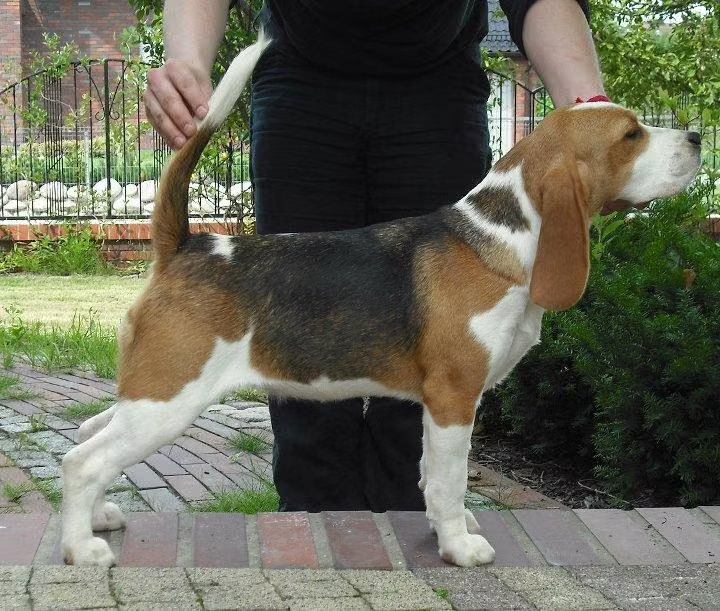
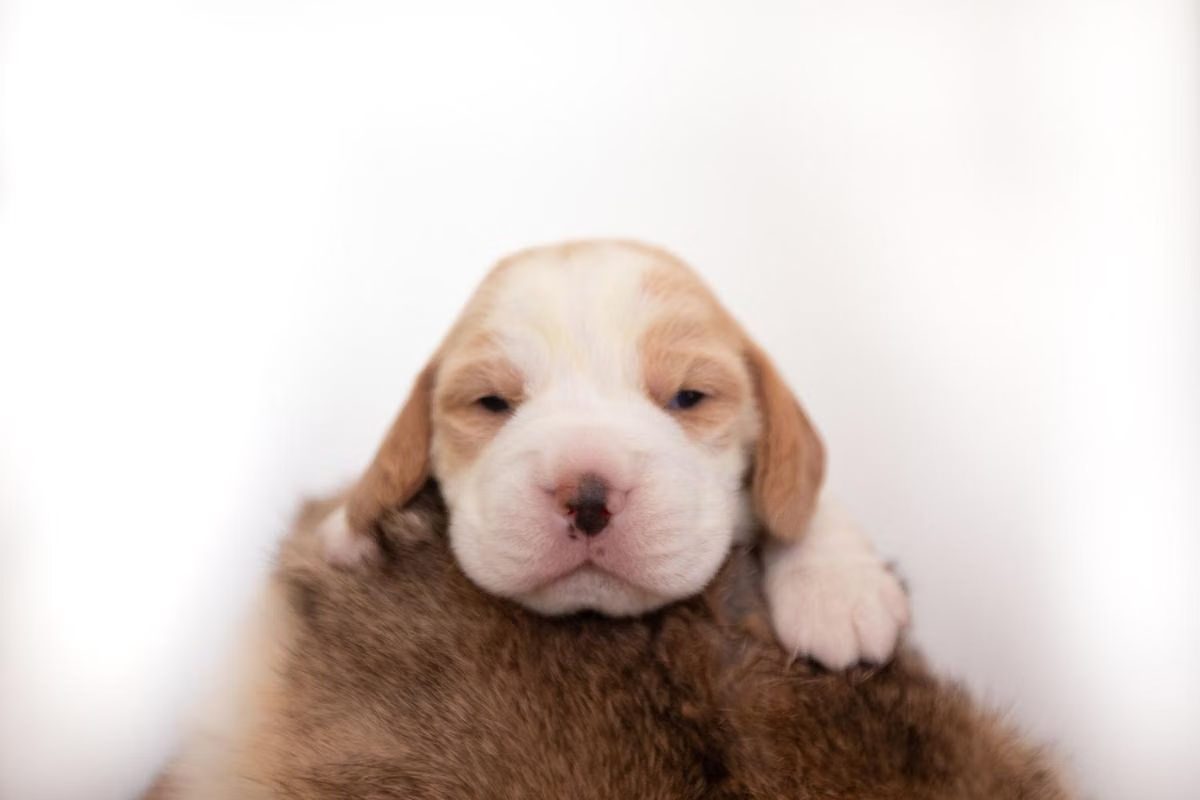
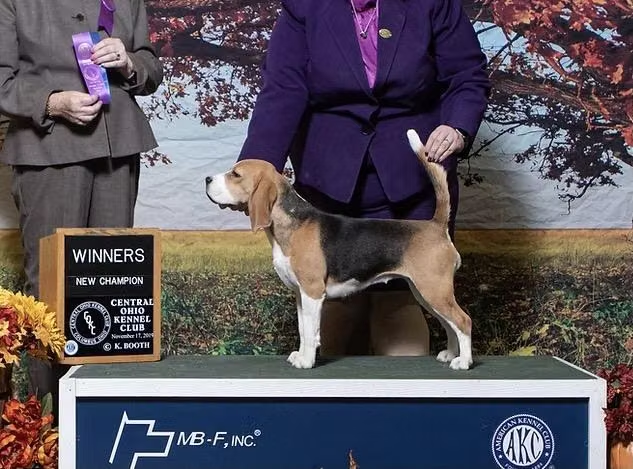
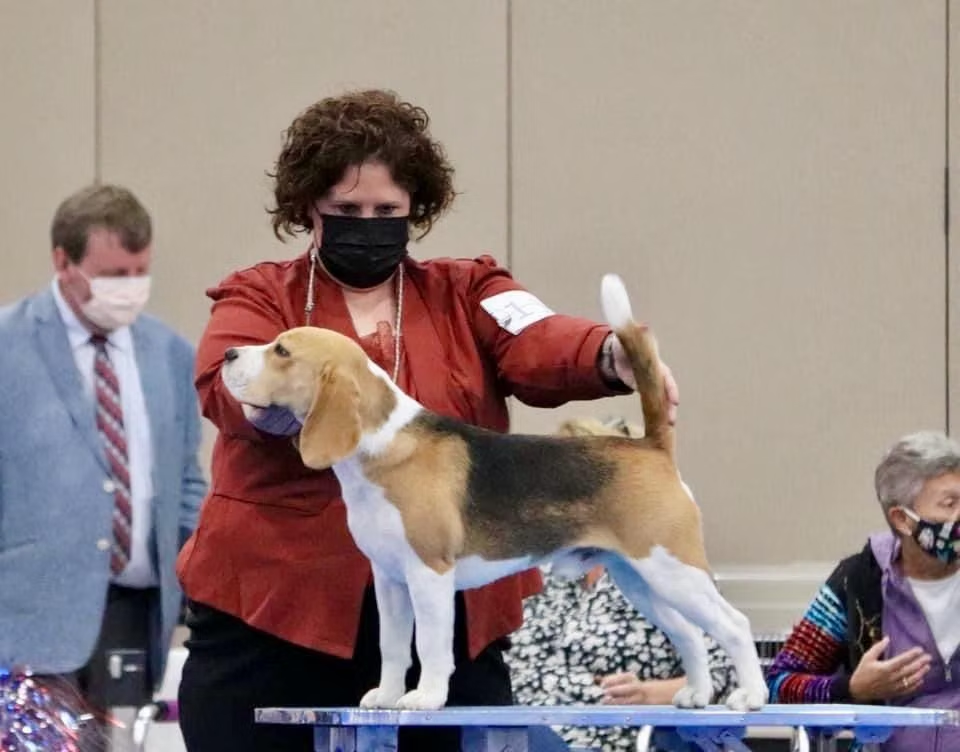
A few of the Beagle profiles members have added to United Pet Club.








About the Beagle
The Beagle is a small scent hound from England, valued for its friendly, curious nature and strong fit with active families.
The Beagle is a small hound developed in England to hunt rabbits and hares by scent. It is among the most popular companion dogs in the world, partly because its size suits both houses and flats and partly because its temperament works well around children.
A Beagle is friendly, curious and sociable. The breed was bred to work in packs, so most individuals enjoy company and dislike long stretches alone. That same pack heritage gives the Beagle a steady, even temper and a tendency to get along with other dogs.
The nose drives much of the behaviour. A Beagle that catches an interesting scent may follow it with single-minded focus, which is charming in the garden and frustrating on a walk. Owners who understand this trait, rather than fight it, tend to get the best results.
| Attribute | Detail |
|---|---|
| Origin | England |
| Size | Small |
| Lifespan | 12 to 15 years |
| Group / role | Hound (scent hunting, companionship) |
| Good with | Children, other dogs, active families |
Who the Beagle suits
The Beagle suits households that can offer daily exercise, company and a securely fenced area. It is a good match for families with children and for people who already keep another dog. It is a weaker match for those who are away for long hours, who want an off-lead dog in open spaces, or who cannot tolerate a vocal hound. First-time owners can do well with a Beagle as long as they commit to early training and patience with recall.
History and origins
The modern Beagle was bred in England as a small pack hound for hunting rabbits and hares, and was standardised in the 19th century.
Small hounds used to hunt hares have existed in England for centuries, and the name Beagle appears in English records as far back as the 1400s. These early dogs varied widely in size and type, and the term covered several kinds of small scent hound rather than a single breed.
During the 1700s, hunting on foot with packs of small hounds was a common rural pursuit. Beagles were prized because a person could follow them without a horse, and their pace suited hunting rabbits and hares across enclosed farmland.
The breed took its modern shape in the 19th century. English breeders, including Reverend Phillip Honeywood, who assembled a noted pack in the 1830s, worked to set a more consistent type. Thomas Johnson later refined the breed for both looks and working ability, producing the recognisable Beagle of today.
The Beagle reached the United States in the years after the American Civil War, where it became popular both as a rabbit-hunting dog and as a family companion. It remains one of the most widely kept breeds in many countries, and its keen nose has also made it a common choice for detection work at airports and borders.
Appearance and breed standard
The Beagle is a compact, sturdy hound with a short weatherproof coat, long drop ears, and the familiar tricolour or hound-colour markings.
The Beagle looks like a smaller version of the English Foxhound: solid and square in build rather than delicate. The body is firm and muscular for its size, the back is level, and the tail is carried up with a white tip that is easy to see in long grass. The head is broad with a gently domed skull, a square muzzle, and large, soft hazel or brown eyes that give the breed its mild expression. The ears are long, low set and rounded at the tip.
| Trait | Standard |
|---|---|
| Height | 33 to 41 cm (13 to 16 in) at the shoulder |
| Weight | 9 to 14 kg (20 to 30 lb) |
| Coat | Short, dense, weatherproof double coat |
| Colours | Tricolour (black, tan, white); also tan and white, lemon and white, red and white |
| Eyes | Large, hazel or brown, gentle expression |
Coat and colours
Many registries split the Beagle into two height classes: under 33 cm (13 in) and from 33 to 38 cm (13 to 15 in). The coat is short and close, with enough density to shed rain and resist the field. The classic pattern is tricolour, but a wide range of hound colours is accepted, including lemon and white, red and white, and tan and white. Markings vary between individuals, and a tricolour pup may lighten as it matures. Grooming demands are low, though the coat does shed steadily through the year.
Temperament and behaviour
Beagles are friendly, curious, and sociable pack dogs that bond closely with families and generally welcome other dogs, but they are scent-driven and can be vocal.
The Beagle has a merry, even temperament that has kept it popular as a family dog. It is affectionate with its people, patient with children, and rarely aggressive. Bred to work in packs, the Beagle is naturally sociable and usually gets on well with other dogs, and it can live happily alongside cats it has grown up with.
With strangers the Beagle tends to be open and welcoming rather than protective, which makes it a poor guard dog. It will often bark or bay at an unfamiliar arrival, but the greeting that follows is usually friendly.
The defining trait is the nose. A Beagle reads the world through scent and can become so absorbed in a trail that it ignores calls and commands. This is not stubbornness for its own sake but a strong working drive. The breed also tends to be vocal, with a distinctive bay, and it does not cope well with isolation. A Beagle left alone for long periods may bark, howl or chew.
| Trait | Rating |
|---|---|
| Affection | 5 |
| Energy | 4 |
| Trainability | 3 |
| Vocalness | 4 |
| Shedding | 3 |
Care and daily needs
Beagles need around an hour of daily exercise, a secure fence, regular ear checks, and company, with only modest grooming.
Grooming
- Brush the coat once or twice a week to remove loose hair and limit shedding
- Bathe only when needed, since the coat carries little odour when clean
- Check and clean the long ears weekly, as the drop shape traps moisture and wax
- Trim nails every few weeks and brush teeth several times a week
Exercise
- Provide about 60 minutes of activity each day, split across walks and play
- Use long sniff-led walks to satisfy the breed's need to track scent
- Add scent games, food puzzles and hide-and-seek to work the mind
- Keep the dog on a lead or inside a fence in open areas, since a scent trail can override recall
Environment
The Beagle adapts to houses and flats as long as it gets daily exercise and company. A securely fenced garden is important, because Beagles dig and follow scents under or over weak boundaries. The breed is sociable and does best when it is not left alone for long stretches; many Beagle owners keep a second pet or arrange company during the working day.
Nutrition and feeding
Beagles do well on a complete, life-stage diet fed in measured meals, with strict portion control because the breed is prone to overeating and weight gain.
The Beagle thrives on a complete and balanced diet matched to its age, weight and activity level. The breed has a strong appetite and a famous willingness to scavenge, so it gains weight easily. Measure each meal rather than feeding free choice, and keep food and bins out of reach. Adjust the amount to keep a visible waist and easily felt ribs.
| Life stage | Amount per day | Meals |
|---|---|---|
| Puppy (2 to 6 months) | About 150 to 280 g, by growth | 3 to 4 |
| Junior (6 to 12 months) | About 180 to 250 g | 2 to 3 |
| Adult (1 to 7 years) | About 150 to 220 g | 2 |
| Senior (8 years and older) | About 130 to 190 g, lower calorie | 2 |
Treats and supplements
Use treats for training, but count them towards the daily total and keep them under about 10 per cent of calories. Low-calorie options such as small pieces of carrot or plain cooked vegetables suit a breed that watches its weight. Most Beagles on a complete diet need no extra supplements; ask a vet before adding joint or other products.
Health and lifespan
The Beagle is generally healthy and lives 12 to 15 years, with the main concerns being obesity, ear infections, and some inherited eye and spinal conditions.
The Beagle is a hardy breed and most individuals live 12 to 15 years. Many of the health issues that affect Beagles are manageable with good weight control, routine ear care and responsible breeding. Because the breed is so food-motivated, obesity is one of the largest threats to its long-term health and worsens joint and back problems.
| Condition | Signs | Note |
|---|---|---|
| Obesity | Weight gain, no visible waist, low stamina | Largely preventable with portion control and exercise |
| Ear infections | Head-shaking, odour, redness, scratching | Linked to the long drop ears; check weekly |
| Intervertebral disc disease | Back pain, reluctance to jump, weakness | More likely in overweight dogs |
| Hypothyroidism | Weight gain, lethargy, coat changes | Diagnosed by blood test, managed with medication |
| Glaucoma and cherry eye | Red or cloudy eye, visible eye mass | Eye conditions seen in the breed; vet assessment needed |
Preventive care
- Keep the dog at a lean body condition and weigh it regularly
- Clean and inspect the ears every week
- Keep vaccinations, worming and parasite control up to date
- Schedule annual veterinary checks, with more frequent visits for seniors
- Buy from breeders who screen for eye and hip conditions
Training the Beagle
Beagles are intelligent but scent-driven and food-motivated, so training works best with short, reward-based sessions and a strong focus on recall.
The Beagle is intelligent and learns quickly, but it was bred to follow its own nose rather than wait for instructions. This independence can read as stubbornness. The breed responds far better to reward than to correction, and because it is so food-motivated, treats are a powerful training tool. Keep sessions short and varied to hold attention, and start early, since habits set young are easier than habits broken later. Recall is the hardest and most important skill: a Beagle on a scent may simply not hear a call, so practise it from puppyhood and keep the dog on a lead in unsecured areas.
Basics
- Begin with name response and eye contact in a quiet room
- Teach sit, down and stay using small food rewards
- Build recall on a long line, rewarding heavily every time the dog returns
- Add loose-lead walking, allowing planned sniff breaks as a reward
- Proof each skill gradually in busier, more scent-filled places
Breeding and raising puppies
Beagles reach breeding maturity in their second year, carry litters for about 63 days, and typically have around six puppies.
Beagles reach sexual maturity at around six to twelve months, but responsible breeders wait until a bitch is physically and mentally mature, usually after about two years, before breeding. Health screening of both parents for eye and hip conditions is part of responsible practice.
Gestation lasts about 63 days. Litters are commonly around six puppies, though the number ranges from a few to ten or more. Most Beagles whelp without difficulty given the breed's moderate size and build.
Puppies are born blind and deaf and depend fully on the dam for the first weeks. Eyes open at about two weeks, and weaning onto solid food begins from around three to four weeks. Early handling and gentle exposure to people, sounds and other animals during the socialisation window, roughly three to twelve weeks, shape a confident adult. Puppies should stay with the dam and littermates until at least eight weeks of age.
| Metric | Value |
|---|---|
| Sexual maturity | 6 to 12 months |
| Recommended breeding age | About 2 years and older |
| Gestation | About 63 days |
| Average litter size | About 6 puppies (range 1 to 10+) |
| Weaning | About 6 to 8 weeks |
| Leave dam | 8 weeks or later |
Beagle registration and microchipping in the UK
Your Beagle's details on a record that satisfies UK microchip law: free with United Pet Club, for life, with nothing to renew.
Registering a Beagle in the United Kingdom
Microchipping has been compulsory for dogs in England, Scotland and Wales since 2016, and the rules are strict about keeping the details behind the chip current. A free United Pet Club profile holds your Beagle's record for the whole of its life, with your phone number and address sitting where a scan can reach them. Registering your dog is done in minutes and costs nothing, now or later.
A chip without a registration is a serial number and nothing more. File your Beagle's fifteen digit number with United Pet Club and it becomes a route back to you: free for life, open to every chip brand sold in Britain, and searchable whenever a scanner finds it. Microchip registration takes less time than the kettle, and a free account covers the profile too.
How do I register my Beagle in the UK?
Set up a free United Pet Club account, add your Beagle's details and a photo, and save. The profile stays live for the whole of the dog's life at no charge, and the chip number can be added the moment you have it.
How do I register my Beagle's microchip?
Key the fifteen digit number into your free United Pet Club account with your current address and phone number. The lifetime plan accepts any brand a British vet implants, and amendments after a house move are free.
Is microchipping a Beagle required by law in the UK?
Yes. Dogs in England, Scotland and Wales have had to be chipped since 2016, with the keeper's details kept current. The law covers the chip; keeping the record pointing at a live phone number is what United Pet Club handles, free.
How much does it cost to register a Beagle in the UK?
Nothing at all. The United Pet Club lifetime plan covers the profile, the microchip record and every amendment without a fee, so there is no renewal to remember.
Frequently asked questions
Common questions about Beagle size, temperament, care, lifespan, suitability, and availability.
How big does a Beagle get?
A Beagle is a small hound, standing about 33 to 41 cm (13 to 16 in) at the shoulder and weighing roughly 9 to 14 kg (20 to 30 lb). Many registries divide the breed into two height classes, under 13 inches and 13 to 15 inches.
Are Beagles good family dogs?
Yes. Beagles are friendly, curious and sociable, and they are patient with children. Their pack heritage means they usually enjoy company and get on well with other dogs.
Are Beagles easy to care for?
Grooming is easy, with weekly brushing and routine ear checks. The harder parts are exercise and training: a Beagle needs about an hour of activity a day, a secure fence and consistent recall work because it follows scents.
How long do Beagles live?
Beagles typically live 12 to 15 years. Keeping the dog lean, cleaning the ears and keeping up with veterinary care all support a long, healthy life.
Do Beagles bark a lot?
Beagles are vocal and have a distinctive bay. They tend to sound off at arrivals and when excited, and a Beagle left alone too long may bark or howl, so they are not the quietest choice for shared housing.
Is a Beagle right for me?
A Beagle suits an active household that can offer company, daily exercise and a secure garden. It is less suited to people who are away for long hours or who want a reliable off-lead dog in open spaces.
Are Beagles easy to find?
Beagles are one of the most popular breeds in many countries, so puppies are widely available. Choose a breeder who health-tests the parents, and check rescue centres and breed rescues, where Beagles also turn up regularly.
From the community
Ask about the BeagleNo questions about the Beagle yet. Be the first to ask.
Browse Dog breeds