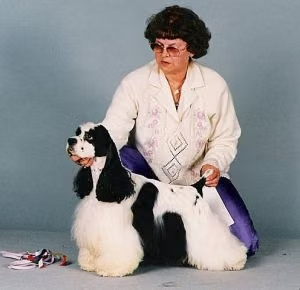
The American Cocker Spaniel is a merry, affectionate companion with a flowing coat and a cheerful, people-loving disposition.
How the American Cocker Spaniel coat is built, and what that means when you groom it.
Critical: A American Cocker Spaniel should not be shaved.
The undercoat keeps heat out as well as in, and the outer coat shields the skin from sun and insect bites. Clipping the whole coat off removes both. It often grows back patchy, soft or a different colour, and in some animals the guard hairs never return properly. Brush the undercoat out instead of cutting it off.
Caution: A American Cocker Spaniel coat mats easily.
Fine or long hair tangles at the base of the coat, out of sight, where the mats tighten and pull on the skin. Brushing has to reach right down to the roots in sections, not just skim the surface.
A few of the American Cocker Spaniel profiles members have added to United Pet Club.
The American Cocker Spaniel is a small, amiable companion dog originating in the United States, valued for its flowing coat and its cheerful, people-orientated disposition.
The American Cocker Spaniel is a small gundog that was developed in the United States from spaniels exported from England. It is the smaller of the two cocker spaniel breeds, the other being the English Cocker Spaniel. The breed may be identified by its rounded head, its long low-set ears, and a long silky coat that frequently reaches the ground.
The American Cocker is bred principally as a companion and show dog, notwithstanding origins that lay in flushing and retrieving game birds. Adults ordinarily stand at approximately 34 to 39 centimetres at the shoulder and weigh in the region of 7 to 14 kilograms. The breed possesses a steady, affectionate nature and is inclined to bond closely with the household in which it lives.
The coat demands regular attention, and the long ears and folded skin require routine cleaning. Provided that grooming is consistent and daily activity remains moderate, the breed accommodates itself readily to a broad range of living arrangements.
| Attribute | Detail |
|---|---|
| Origin | United States |
| Size | Small |
| Lifespan | 10 to 14 years |
| Group/role | Gundog, now chiefly companion and show |
| Good with | Children, families, and other pets when socialised |
The American Cocker Spaniel is well suited to families, couples, and individuals who are able to provide daily companionship and time for grooming. It fares well with children and ordinarily gets along with other dogs and cats. Those who desire a small, gentle dog and are prepared to commit to weekly coat care and regular ear cleaning will find it a fitting choice. Owners who travel frequently or are absent for long hours may regard the breed's need for company as a drawback.
The American Cocker Spaniel was developed in the United States during the late nineteenth and early twentieth centuries from English cocker spaniels, and was recognised as a separate breed in 1946.
Spaniels possess a long history in Europe as hunting dogs employed to flush and retrieve birds. The term "cocker" derives from the breed's use in the hunting of woodcock. Smaller spaniels were brought from England to North America during the nineteenth century, whereupon breeders began to select for a smaller, rounder type.
An early and influential dog was a black cocker named Obo II, whelped in the United States in the 1880s and frequently cited as a foundation of the American line. Over the ensuing decades, American breeders selected for a shorter back, a domed skull, and a fuller coat, which by degrees distinguished the American type from its English relations.
The American Kennel Club registered cocker spaniels from its earliest years, yet the English and American types were exhibited together until the disparities in size and head shape became too pronounced. In 1946 the AKC recognised the English Cocker Spaniel and the American Cocker Spaniel as two distinct breeds.
Throughout the mid-twentieth century the American Cocker became one of the most popular dogs in the United States, assisted in part by its standing as a household companion. Its popularity has waxed and waned over the years, yet it retains a steady presence in the show ring and as a family dog.
The American Cocker Spaniel is a small, compact dog with a rounded head, long feathered ears, and a long silky coat available in a wide range of colours.
The American Cocker Spaniel possesses a sturdy, compact body that is marginally longer than it is tall. The head is rounded with a well-defined stop, a square muzzle, and large dark eyes that lend the breed a soft expression. The ears are long, set low, and clothed in long hair. The coat is short and fine upon the head and longer over the body, legs, ears, and chest, where it frequently hangs in feathering.
| Trait | Detail |
|---|---|
| Height | Approximately 34 to 39 cm at the shoulder; bitches marginally smaller than dogs |
| Weight | About 7 to 14 kg |
| Coat | Silky, flat or slightly wavy, short upon the head and longer with feathering on the body and legs |
| Colours | Black, black and tan, buff, brown, red, and parti-colour combinations with white |
| Eyes | Large, round, dark brown, set to look forward |
The coat occurs in solid colours such as black, buff, brown, and red, in black and tan, and in parti-colours that combine white with one or more further colours. Solid colours ought to be even, with limited white permitted in certain patterns. The long coat requires regular brushing to prevent matting, and many companion owners keep the body coat trimmed shorter so as to reduce upkeep. The feathering upon the ears and legs gathers dirt readily and demands frequent attention.
The American Cocker Spaniel is amiable, affectionate, and gentle, bonding closely with its family and ordinarily getting along well with children, strangers, and other pets.
The American Cocker Spaniel possesses a cheerful, even temperament and prefers to remain near its household. It is affectionate towards family members and is inclined to form strong attachments, which may give rise to clingy behaviour or distress if it is left alone for lengthy periods. The breed is gentle and patient, qualities that render it a frequent choice for households with children.
With strangers the breed is ordinarily welcoming rather than guarded, though early socialisation assists in preventing timidity. American Cockers generally get along with other dogs and with cats, particularly when reared alongside them. Certain individuals may prove sensitive or timid, and so calm, consistent handling answers better than harsh correction.
The breed is playful and takes pleasure in games and walks, yet in most homes it is not a high-drive working dog. It can be vocal, and some dogs bark at callers or unfamiliar sounds. Settled routines and gentle training assist in keeping barking and separation-related behaviour within bounds.
| Trait | Rating |
|---|---|
| Affection | 5 |
| Energy | 3 |
| Trainability | 4 |
| Vocalness | 3 |
| Shedding | 3 |
The American Cocker Spaniel requires regular coat grooming, routine ear cleaning, and moderate daily exercise, and it fares best in a home where it enjoys regular company.
The American Cocker Spaniel adapts to flats or houses provided that it receives daily exercise and company. It is an indoor dog that ought to live with the family rather than being left out of doors. Because it is disinclined to be alone for lengthy spells, a home in which someone is present for much of the day suits it best.
The American Cocker Spaniel fares well on a complete, balanced dog food fed in measured portions, with care taken to avoid overfeeding, as the breed puts on weight readily.
Feed the American Cocker Spaniel a complete and balanced dog food appropriate to its life stage and size. The breed puts on weight readily, and so portion control and regular weighing are of consequence. Quantities depend upon the dog's weight, age, and activity level, and the figures below serve as general guidance. Fresh water ought always to be available.
| Life stage | Amount per day | Meals per day |
|---|---|---|
| Puppy (2 to 6 months) | Per product guidance, divided into smaller portions | 3 to 4 |
| Junior (6 to 12 months) | Approximately 1 to 1.5 cups of dry food | 2 to 3 |
| Adult | Approximately 1 to 2 cups of dry food | 2 |
| Senior | Adjusted downward for lower activity | 2 |
Keep treats to roughly 10 per cent of daily calories so as to avoid weight gain. Use small, low-fat treats during training. Most dogs on a complete commercial diet require no supplements; consult a veterinary surgeon before adding any, including joint or skin supplements, since needs vary from one individual to another.
The American Cocker Spaniel ordinarily lives 10 to 14 years and is prone to ear infections and to several eye and skin conditions, which routine care and veterinary examinations assist in managing.
The American Cocker Spaniel generally lives 10 to 14 years. It is on the whole a healthy breed, yet its build and coat render it prone to certain complaints, especially ear infections and eye conditions. Purchasing from breeders who screen their dogs and maintaining routine care diminish the risk of several inherited and acquired issues.
| Condition | Signs | Note |
|---|---|---|
| Ear infections | Head shaking, scratching, odour, discharge | Common owing to long, heavy ears; routine cleaning assists in prevention |
| Cataracts | Cloudy eyes, loss of vision | May develop with age or be inherited; treatable by surgery in some cases |
| Progressive retinal atrophy | Night blindness, gradual loss of vision | Inherited; genetic testing of breeding dogs reduces the risk |
| Glaucoma | Red, painful eye, squinting, loss of vision | Requires prompt veterinary attention |
| Skin and coat problems | Itching, hot spots, infections | Associated with allergies and with moisture trapped in the coat |
| Hip dysplasia | Stiffness, limping, difficulty rising | Joint condition; weight control and screening assist |
The American Cocker Spaniel is intelligent and eager to please, and it responds best to gentle, consistent training founded upon rewards rather than correction.
The American Cocker Spaniel is a quick learner that wishes to please its handler, which renders it fairly straightforward to train. The breed is sensitive, and so harsh methods may leave it anxious or withdrawn. Short, cheerful sessions with food and praise answer best. Early socialisation with people, other animals, and everyday situations assists in preventing timidity and excessive barking.
Bitches of the American Cocker Spaniel ordinarily reach maturity within their first year, carry litters for roughly 63 days, and produce an average of three to seven puppies.
Bitches of the American Cocker Spaniel generally attain sexual maturity at around 6 to 12 months, though responsible breeders wait until a bitch is physically mature, frequently at around two years, before breeding. Health screening of both parents for eye and hip conditions is standard practice. Mating is timed to the bitch's season.
Gestation lasts approximately 63 days. Litters ordinarily number three to seven puppies, with variation between individuals. Most whelpings are uncomplicated, yet the breeder ought to be prepared to assist and to involve a veterinary surgeon should difficulties arise.
Newborn puppies depend entirely upon the dam for the first weeks. Weaning commences at around three to four weeks, and puppies are ordinarily ready to leave for new homes at about eight weeks, following early socialisation, a first veterinary examination, and initial vaccinations. Early gentle handling assists in producing well-adjusted adults.
| Metric | Value |
|---|---|
| Sexual maturity | About 6 to 12 months |
| Recommended breeding age (bitch) | Around 2 years, after health testing |
| Gestation | About 63 days |
| Average litter size | 3 to 7 puppies |
| Weaning | About 3 to 4 weeks |
| Ready for new homes | About 8 weeks |
Your American Cocker Spaniel's details on a record that satisfies UK microchip law: free with United Pet Club, for life, with nothing to renew.
When a dog warden or rescue centre picks up a stray American Cocker Spaniel, the chip scan is the first move, and the record behind it decides how the story ends. Keep yours pointing home with a free United Pet Club profile. Register your dog once, and the record stands for life without a renewal letter ever landing on the mat.
The implant happens at the vet surgery; the record is your half of the bargain, and the 2016 regulations expect it kept up to date. Register the microchip free on the lifetime plan: any brand a British vet implants is accepted, amendments after moving house cost nothing, and the record stays searchable through the lookups rescue centres and wardens turn to first. Create your free account and square it away this evening.
Set up a free United Pet Club account, add your American Cocker Spaniel's details and a photo, and save. The profile stays live for the whole of the dog's life at no charge, and the chip number can be added the moment you have it.
Key the fifteen digit number into your free United Pet Club account with your current address and phone number. The lifetime plan accepts any brand a British vet implants, and amendments after a house move are free.
Yes. Dogs in England, Scotland and Wales have had to be chipped since 2016, with the keeper's details kept current. The law covers the chip; keeping the record pointing at a live phone number is what United Pet Club handles, free.
Nothing at all. The United Pet Club lifetime plan covers the profile, the microchip record and every amendment without a fee, so there is no renewal to remember.
Common questions about the American Cocker Spaniel concern its size, temperament, grooming requirements, lifespan, suitability for families, and availability.
It is a small breed. Adults stand approximately 34 to 39 centimetres at the shoulder and weigh about 7 to 14 kilograms, dogs being marginally larger than bitches.
Yes. The breed is gentle, affectionate, and playful, and it ordinarily fares well with children and with other dogs and cats, particularly when socialised early. Supervise interactions with very young children as you would with any dog.
The principal commitment is grooming. The long coat requires brushing several times a week and trimming every six to eight weeks, and the ears require weekly cleaning. Exercise requirements are moderate, and so the breed is otherwise uncomplicated for most owners.
They ordinarily live 10 to 14 years given good care, a healthy weight, and regular veterinary examinations.
They can be vocal and may bark at callers or unfamiliar sounds. Early training and socialisation assist in keeping barking at a manageable level.
They bond closely with their household and may become distressed when alone for lengthy periods. They suit homes in which someone is present for much of the day, and solitude should be built up gradually.
Yes. The breed is well established in the United States and is available from registered breeders and through breed rescue organisations. Choosing a breeder who screens for eye and hip conditions is advisable.