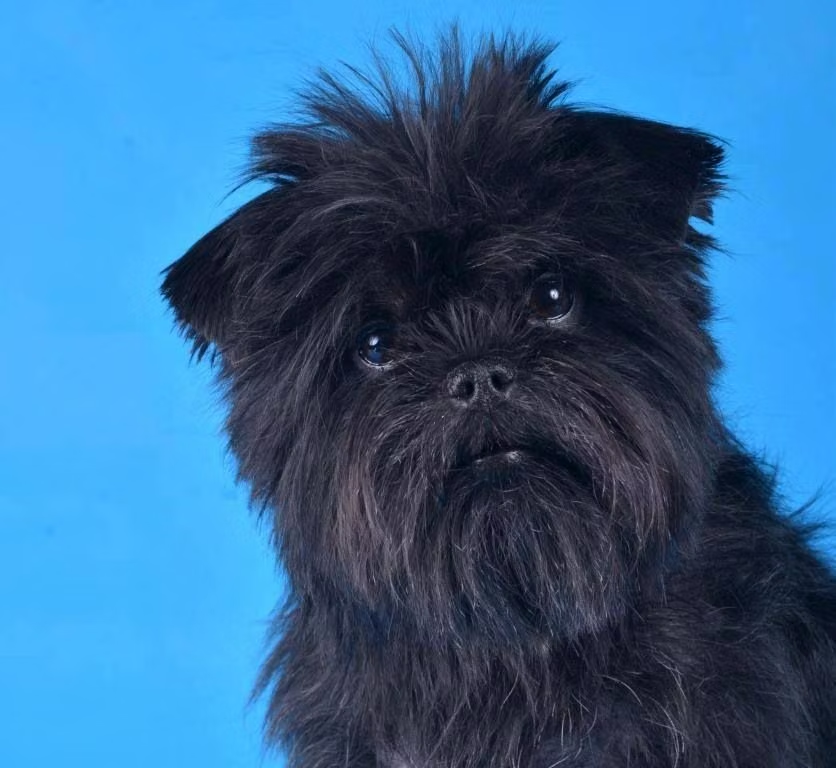
The Affenpinscher is a mischievous, monkey-faced toy breed known for its curious, confident personality and amusing antics.
How the Affenpinscher coat is built, and what that means when you groom it.
Caution: A Affenpinscher coat should be hand-stripped rather than clipped.
A wire coat is meant to be pulled out at the root once the hair is ready to release. Clippers cut it off part way instead, leaving the soft undercoat behind. The result is a coat that grows back limp and faded, and the weatherproof texture only returns after the hair is stripped out again.
A few of the Affenpinscher profiles members have added to United Pet Club.
The Affenpinscher is a small toy dog from Germany, known for its monkey-like face and a curious, confident, mischievous character.
The Affenpinscher is a toy breed that weighs only a few kilograms but carries itself with the confidence of a much larger dog. The name comes from the German word for monkey, a reference to the short muzzle, prominent eyes, and shaggy facial hair that give the breed its distinctive expression. Owners often describe the look as comical and alert at once.
This is a busy, inquisitive companion. The Affenpinscher likes to investigate its surroundings, follow people around the home, and entertain itself when left to its own devices. Its terrier-like roots show in a bold attitude and a readiness to stand its ground, which is part of why the breed is so often described as mischievous.
Despite the small size, the Affenpinscher is sturdy and active rather than fragile. It forms close bonds with its household and prefers to stay near its people. The breed suits owners who want a characterful small dog and who can match its energy with play and attention.
| Attribute | Detail |
|---|---|
| Origin | Germany |
| Size | Toy |
| Lifespan | 12 to 15 years |
| Group / role | Toy companion, historical ratter |
| Good with | Adults, older considerate children, calm households |
The Affenpinscher fits people who enjoy an alert, entertaining small dog and who can give it daily company. It does well in flats and houses alike. Households with very young children should supervise interactions, since a small dog can be injured by rough handling and the breed will assert itself if pushed.
The Affenpinscher developed in Germany as a small working ratter for homes, shops, and stables before becoming a companion breed.
The Affenpinscher originated in Germany, where small rough-coated dogs of this type were kept to control rats and mice. Early examples worked in kitchens, shops, granaries, and stables, hunting vermin in tight spaces where a small, quick dog had an advantage.
These working dogs were larger and more varied than the modern breed. Over time, breeders selected smaller individuals suited to indoor life, and the dog shifted from a stable ratter towards a household companion. The short muzzle and dense facial hair that define the breed today were fixed during this period.
The Affenpinscher is considered one of the older toy types in continental Europe, and it influenced the development of other small rough-coated breeds. As living conditions changed and rodent control moved away from working dogs, the breed survived chiefly as a companion valued for its personality and appearance.
The breed gained formal recognition from kennel clubs and remains relatively uncommon compared with many other toy breeds. Numbers have stayed modest, and the Affenpinscher is more often seen as a specialist enthusiast's dog than a widely owned pet.
The Affenpinscher is a small, compact dog with a wiry coat, a short muzzle, dark round eyes, and a monkey-like facial expression.
The Affenpinscher is small and square in outline, with a body roughly as long as it is tall at the shoulder. The head is round with a domed forehead, a short muzzle, and a slightly undershot jaw. The dark, round eyes and the bushy eyebrows, moustache, and chin hair create the monkey-like expression the breed is named for.
The ears may stand erect or fold, and the tail is carried high. The overall impression is of a sturdy, alert little dog rather than a delicate one.
| Trait | Standard |
|---|---|
| Height | About 23 to 30 cm at the shoulder |
| Weight | Roughly 3 to 6 kg |
| Coat | Dense, rough, wiry; shaggy on the head and face |
| Colours | Most commonly black; also grey, silver, red, and black and tan |
| Eyes | Dark, round, medium sized |
The coat is harsh and wiry, about 2.5 cm long on the body and longer and shaggier around the head, neck, and chest. Black is the most familiar colour, though grey, silver, red, and black and tan also occur depending on the registry. The texture is functional and weather resistant, and many owners hand-strip or trim the coat to maintain its shape and character.
The Affenpinscher is confident, curious, and playful, loyal to its household and bold towards strangers and other animals for its size.
The Affenpinscher is lively and self-assured. It is curious about its environment and quick to investigate noises, visitors, and changes in the home, which makes it an attentive watchdog despite its size. The breed is often amusing to watch, with a habit of clowning and an obvious enjoyment of attention.
With its own family the Affenpinscher is affectionate and loyal, and it likes to stay close to its people. It can be reserved or assertive with strangers and will bark to announce them. Towards other dogs and pets it tends to be fearless and will not back down easily, so introductions and supervision matter, particularly with much larger dogs.
The breed can be stubborn and has a strong sense of its own opinions. It responds best to owners who set consistent rules and keep interactions positive. Bored or under-stimulated Affenpinschers may become noisy or get into mischief.
| Trait | Rating |
|---|---|
| Affection | 4 |
| Energy | 4 |
| Trainability | 3 |
| Vocalness | 4 |
| Shedding | 2 |
The Affenpinscher needs regular coat care, daily activity, and close company, and adapts well to flat or smaller home living.
The Affenpinscher adapts well to flats and small homes as long as it gets company and daily activity. It prefers to be near its people and can become noisy or restless if isolated for long periods. A secure space is important, because the breed is curious and can be determined about exploring.
The Affenpinscher needs a measured, good-quality diet sized for a toy breed, split into small meals to support its fast metabolism.
The Affenpinscher does well on a complete, good-quality dog food formulated for small or toy breeds. Because the breed is small and active, portions are modest but the food should be energy dense and balanced for its life stage. Measure meals rather than free-feeding, since toy dogs gain weight easily and even a small surplus is significant on a 4 kg frame.
Toy breeds can be prone to low blood sugar, especially as puppies, so regular meals through the day help keep energy stable. Provide fresh water at all times and adjust amounts based on weight, age, and activity.
| Life stage | Amount per day | Meals |
|---|---|---|
| Puppy (2 to 6 months) | Per product guide for weight | 3 to 4 |
| Adult | About 30 to 60 g of dry food | 2 |
| Senior | Slightly reduced, weight dependent | 2 |
Keep treats to a small share of daily calories and use them mainly for training. Most Affenpinschers on a complete diet need no supplements unless a veterinary surgeon advises otherwise. Dental chews and appropriately sized food can help, since small breeds are prone to dental problems.
The Affenpinscher is generally healthy with a lifespan of 12 to 15 years, though it can face dental, joint, and short-muzzle-related issues.
The Affenpinscher is a generally sturdy toy breed with a typical lifespan of 12 to 15 years. As with many small dogs, dental disease and joint conditions are among the more common concerns, and the short muzzle can make hot weather and heavy exertion harder to tolerate. Responsible breeding and routine veterinary care help manage most issues.
| Condition | Signs | Note |
|---|---|---|
| Patellar luxation | Skipping or limping on a hind leg | Common in toy breeds; ranges from mild to surgical |
| Dental disease | Bad breath, tartar, tooth loss | Small jaws crowd teeth; regular dental care helps |
| Hip issues | Stiffness, reduced activity | Some lines show developmental hip problems |
| Heat sensitivity | Heavy panting, distress in warm weather | Short muzzle reduces cooling; avoid overexertion |
| Eye conditions | Cloudiness, redness, vision changes | Prominent eyes are more exposed to injury |
The Affenpinscher is intelligent but independent, so it learns best with short, consistent, reward-based sessions started early.
The Affenpinscher is clever and capable of learning a wide range of commands, but it has an independent streak and can be stubborn. It does not respond well to harsh handling. Short, varied, reward-based sessions hold its attention better than long, repetitive drills. Early socialisation with people, other dogs, and everyday situations helps temper the breed's bold, sometimes scrappy attitude.
Housetraining can take patience, which is common among toy breeds, so a consistent routine and supervision are important. Because the Affenpinscher is alert and quick to bark, teaching a 'quiet' cue early is worthwhile.
The Affenpinscher produces small litters, and breeding requires health screening and care given the toy size and short-muzzled head.
Affenpinschers reach sexual maturity in the first year, though responsible breeders wait until a dog is physically mature and health tested before breeding. Litters are small, which is typical for toy breeds. The short, broad head can make whelping more difficult, so experienced supervision and veterinary support are advisable.
Dams need attentive care during pregnancy and nursing, and newborn toy puppies are fragile and vulnerable to chilling and low blood sugar. Puppies should stay with the dam and littermates through the early weeks to support healthy social development before going to new homes. Screening breeding stock for patellar and hip problems and for eye conditions helps reduce inherited issues.
The Kennel Club registers Affenpinschers in the UK, and breeders are encouraged to follow KC health-testing guidance before putting dogs to work.
| Metric | Value |
|---|---|
| Sexual maturity | Around 6 to 12 months |
| Recommended breeding age | After physical maturity and health testing |
| Gestation | About 58 to 68 days |
| Average litter size | 1 to 3 puppies |
| Weaning age | About 6 to 8 weeks |
| Independence | Typically homed from about 8 to 12 weeks |
Your Affenpinscher's details on a record that satisfies UK microchip law: free with United Pet Club, for life, with nothing to renew.
When a dog warden or rescue centre picks up a stray Affenpinscher, the chip scan is the first move, and the record behind it decides how the story ends. Keep yours pointing home with a free United Pet Club profile. Register your dog once, and the record stands for life without a renewal letter ever landing on the mat.
A chip without a registration is a serial number and nothing more. File your Affenpinscher's fifteen digit number with United Pet Club and it becomes a route back to you: free for life, open to every chip brand sold in Britain, and searchable whenever a scanner finds it. Microchip registration takes less time than the kettle, and a free account covers the profile too.
Set up a free United Pet Club account, add your Affenpinscher's details and a photo, and save. The profile stays live for the whole of the dog's life at no charge, and the chip number can be added the moment you have it.
Key the fifteen digit number into your free United Pet Club account with your current address and phone number. The lifetime plan accepts any brand a British vet implants, and amendments after a house move are free.
Yes. Dogs in England, Scotland and Wales have had to be chipped since 2016, with the keeper's details kept current. The law covers the chip; keeping the record pointing at a live phone number is what United Pet Club handles, free.
Nothing at all. The United Pet Club lifetime plan covers the profile, the microchip record and every amendment without a fee, so there is no renewal to remember.
Common questions about the Affenpinscher cover its size, temperament, care needs, lifespan, suitability, and availability.
It is a toy breed, standing about 23 to 30 cm at the shoulder and weighing roughly 3 to 6 kg.
It is curious, confident, playful, and often mischievous. It is loyal to its family and bold towards strangers and larger dogs for its size.
Care is moderate. The wiry coat needs regular brushing and periodic stripping or trimming, and the breed needs daily activity and company, but exercise needs are modest.
The typical lifespan is 12 to 15 years with good care.
It suits adults and households with older, considerate children. Interactions with very young children should be supervised because of the dog's small size and assertive nature.
The breed is relatively uncommon in the UK, so finding a puppy from a Kennel Club-registered or assured breeder can take time and may involve a waiting list.
It is alert and tends to bark at noises and visitors. Early training of a 'quiet' cue helps manage this.