
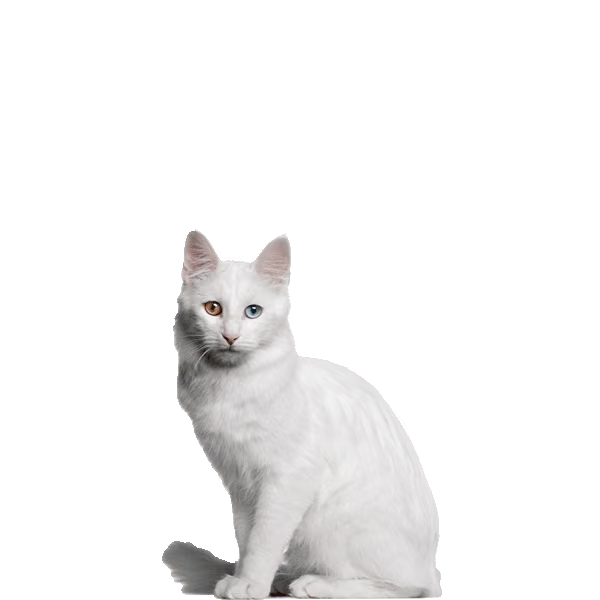
Turkish Vankedisi
The Turkish Vankedisi is the pure-white Van variety, prized for its active, affectionate temperament and loyal bond with its people.
- Size
- Large
- Lifespan
- 12–17 years
- Origin
- Turkey
- Temperament
- Active
- Standard colors
- White
Characteristics
Coat and grooming
How the Turkish Vankedisi coat is built, and what that means when you groom it.
- Coat layers
- Single coat
- Coat texture
- Silky
- Coat length
- Medium
- Shedding
- Seasonal shedding
Grooming guidance
Caution: A Turkish Vankedisi coat mats easily.
Fine or long hair tangles at the base of the coat, out of sight, where the mats tighten and pull on the skin. Brushing has to reach right down to the roots in sections, not just skim the surface.
Information: A Turkish Vankedisi drops its undercoat in heavy bursts.
The undercoat comes out in heavy bursts over a few weeks. An undercoat rake, or a bath followed by a proper blow-dry, clears it far faster than daily brushing. Clipping the coat down is not a shortcut for this.
Turkish Vankedisi colors and patterns
What each club's breed standard says about every Turkish Vankedisi color and pattern. Point at a ruling to see the club's own wording.
Breed standards describe the Turkish Vankedisi in White. Standard patterns: Solid.
| Color or pattern | TICA | GCCF |
|---|---|---|
| White | Standard (“Solid white”) | Standard (“Chalk white”) |
| Patterns | ||
| Solid | Standard (“Solid”) | No ruling |

| Color or pattern | TICA | GCCF |
|---|---|---|
| Blue | Standard (“blue”) | Standard (“Blue-eyed”) |
| Amber | Standard (“amber”) | Standard (“Light to medium amber”) |
| Orange | No ruling | Disqualifying (“Orange”) |
| Copper | No ruling | Disqualifying (“copper”) |
| Patterns | ||
| Odd-eyed | Standard (“odd eyed”) | Standard (“Odd-eyed”) |
%22%3E%3Ccircle%20cx%3D%2216%22%20cy%3D%2232%22%20r%3D%228%22%20fill%3D%22%23D9C3A0%22%2F%3E%3Ccircle%20cx%3D%2216%22%20cy%3D%2232%22%20r%3D%223.4%22%20fill%3D%22%231C1C1C%22%2F%3E%3Ccircle%20cx%3D%2213.6%22%20cy%3D%2229.6%22%20r%3D%221.3%22%20fill%3D%22%23F5F5F0%22%2F%3E%3C%2Fg%3E%3Cpath%20d%3D%22M3%2032Q16%2017%2029%2032Q16%2047%203%2032Z%22%20fill%3D%22none%22%20stroke%3D%22%233B2A20%22%20stroke-opacity%3D%220.75%22%20stroke-width%3D%221.4%22%20stroke-linejoin%3D%22round%22%2F%3E%3Cpath%20d%3D%22M35%2032Q48%2017%2061%2032Q48%2047%2035%2032Z%22%20fill%3D%22%23F5F5F0%22%2F%3E%3Cg%20clip-path%3D%22url(%23e1)%22%3E%3Ccircle%20cx%3D%2248%22%20cy%3D%2232%22%20r%3D%228%22%20fill%3D%22%23847865%22%2F%3E%3Ccircle%20cx%3D%2248%22%20cy%3D%2232%22%20r%3D%223.4%22%20fill%3D%22%231C1C1C%22%2F%3E%3Ccircle%20cx%3D%2245.6%22%20cy%3D%2229.6%22%20r%3D%221.3%22%20fill%3D%22%23F5F5F0%22%2F%3E%3C%2Fg%3E%3Cpath%20d%3D%22M35%2032Q48%2017%2061%2032Q48%2047%2035%2032Z%22%20fill%3D%22none%22%20stroke%3D%22%233B2A20%22%20stroke-opacity%3D%220.75%22%20stroke-width%3D%221.4%22%20stroke-linejoin%3D%22round%22%2F%3E%3C%2Fsvg%3E)
| Color or pattern | TICA | GCCF |
|---|---|---|
| Pink | Standard (“pink”) | Standard (“pink”) |
| Color or pattern | TICA | GCCF |
|---|---|---|
| Pink | Standard (“pink”) | Standard (“pink”) |
What the rulings mean
- Standard
- Described by the club's breed standard.
- Disqualifying
- The club's breed standard disqualifies an animal of this colour or pattern.
Color changes
How a Turkish Vankedisi's colors can change over its life.
Whitechanges toShaded
Coat · With age
Whitechanges toChinchilla
Coat · With age
Whitechanges toPointed
Coat · With age · from 1 to 52 weeks
Solidchanges toSmoke
Coat · With age · from 3 to 104 weeks
Bluechanges toGreen
Eyes · With age · from 4 to 17 weeks
Bluechanges toYellow
Eyes · With age · from 4 to 17 weeks
Bluechanges toGold
Eyes · With age · from 4 to 17 weeks
Bluechanges toCopper
Eyes · With age · from 4 to 17 weeks
Bluechanges toOrange
Eyes · With age · from 4 to 17 weeks
Bluechanges toHazel
Eyes · With age · from 4 to 17 weeks
Bluechanges toAmber
Eyes · With age · from 4 to 17 weeks
Pinkchanges toSeal
Nose · With age · from 1 to 52 weeks
Pinkchanges toBlue
Nose · With age · from 1 to 52 weeks
Pinkchanges toChocolate
Nose · With age · from 1 to 52 weeks
Pinkchanges toLilac
Nose · With age · from 1 to 52 weeks
Pinkchanges toSeal
Paw pads · With age · from 1 to 52 weeks
Pinkchanges toBlue
Paw pads · With age · from 1 to 52 weeks
Pinkchanges toChocolate
Paw pads · With age · from 1 to 52 weeks
Pinkchanges toLilac
Paw pads · With age · from 1 to 52 weeks
%22%3E%3Crect%20x%3D%220%22%20y%3D%220%22%20width%3D%2264%22%20height%3D%2264%22%20fill%3D%22url(%23g)%22%2F%3E%3Cg%20fill%3D%22none%22%20stroke%3D%22%231C1C1C%22%20stroke-width%3D%221%22%20stroke-opacity%3D%220.85%22%20stroke-linecap%3D%22round%22%20stroke-linejoin%3D%22round%22%3E%3Cpath%20d%3D%22M18.9%2025.7l0.2%202.1M42.7%2033.1l1%202.1M12.6%2020.7l0.9%201.7M17.3%2012.7l1%201.7M25.9%2022.4l0.4%201.6M50.2%2029l0.1%201.6M29.2%2028l0.5%202.1M43.2%2022.9l1%202.2M42.4%2029.9l0.2%202.2M8.4%2023.4l1%202.1M7.8%2018.4l0.4%202M35%2027.9l0.5%202.2M35.9%2038.5l0.6%201.6M29.3%2032.6l0.5%201.4M34.8%2022l0.7%202.2M37.6%2020.6l0.7%202.2M18.2%2037.7l0.4%202.1M9.9%2029l0%201.5M9.9%2014l0.1%202M37%2030.4l0.5%202.3M13%2028.5l0.6%202M38.3%2049.6l0.6%201.9M18.4%2047.4l0.7%201.4M40%2026.9l0.2%201.6M57.5%2010.7l0.4%201.4M39.6%2030.3l0.3%202.1M54.9%2018.7l0.7%201.5M48%2028.3l0.4%202M23%2050.3l0.1%202.3M28.2%2036.1l0.5%202.1M57.9%2014.4l0.6%201.4M10.6%2023.3l1%202.1M17.5%2042.7l0.8%201.4M52.1%2026l0.1%201.6M38.6%2032.2l0.1%202.2M30.9%2037.8l0.7%201.7M56.6%2017l0.9%201.9M42.5%2028.7l1%201.8M24.4%2048.9l0%201.7M8.7%2022.3l0.4%201.4M16.6%2039.9l0.5%201.4M7.1%2021.8l0.8%202.2M34.1%2034.2l0.3%201.7M9.9%2025.5l0%201.6M43.1%2035.1l0%202M37.7%2051.3l0.3%201.7M31.7%2031.3l0.3%202.3M23.8%2036.6l0.9%201.8M16.6%2053.5l0.4%202.3M24.4%2041.2l0.6%201.8M39.9%2046.6l0.4%201.8M10.4%2021.8l0.1%202.1M47.2%2051l0.7%202.3M42.9%2027.4l0.1%202M20.5%2022.8l0.4%202.1M49.2%2032.2l0.6%201.3M15.8%2030.1l0.4%202.1M46.2%2053.6l0.6%201.4M15.1%2020.1l0.7%202M23.4%2043.9l0.4%201.6M38.8%2029.4l0.4%202.1M36.8%2034.7l0.4%201.9M48.3%2028.4l0.6%202M26.9%2029.6l0.4%201.6M28.4%2036.5l0.4%201.4M19.2%2034.3l0.5%202.1M7.2%2028.1l0.1%201.6M15.9%2019.7l0.6%201.3M23.4%2022.8l0.9%201.8M16.3%2019.8l0.2%202.1M21.9%2053l0.4%202M48.5%2028.5l0.7%201.8M16.9%2012.9l0.6%202.3M26.8%2033.1l0%201.7M46.2%2044.1l0.2%202.1M30.5%2025.1l0.1%201.7M42.1%2032.2l0.1%201.6M8.7%2021.9l0.6%202.2M29.2%2024.5l0.6%202M22.1%2040.7l1.1%201.9M24.3%2033.3l0.7%201.8M53.9%2026.4l0.1%202.4M21.4%2026.6l0.9%202M39.2%2025.3l0.1%201.9M32.4%2035.3l1%202M48.9%2031.4l0%201.6M24.8%2022.1l0.4%202.2M46.4%2054.6l0.7%201.8M25.1%2031.7l0.5%202.1M24.7%2043.5l0%201.4M23.1%2033.3l0.9%201.6M37.9%2039.5l0.5%201.3M45.7%2041.2l0.9%201.8M50.1%2029.5l0.4%201.8M46.6%2049.6l0.5%202.2M54%2024.3l0.5%202.3M5.9%2025.6l0.1%201.5M15.5%2022.8l0.9%202M26.3%2027.8l0%202.1M30.1%2020.3l0.1%202.3M18.1%2016.7l0.5%201.8M19.1%2024.1l0.9%201.8M12.7%2018.8l0.7%201.4M20.8%2031.1l0.6%201.5M16.9%2025.9l0.1%201.5M11.6%2014.8l0.1%202.3M10.8%2018.5l0.8%201.8M33.5%2038l0.6%201.4M30.6%2028.8l0.3%202.1M39.1%2031.7l0.9%201.9M34.6%2021.3l0.3%202%22%2F%3E%3Cpath%20d%3D%22M17.6%2040.5l0.7%202.1M46.2%2038.1l0.4%201.7M5.1%2020.5l0.2%201.6M21.8%2022.3l0.3%201.4M26.3%2021l0.9%201.6M32.6%2037.5l0.5%201.4M33.5%2031.6l0.6%201.6M39.2%2039l0.9%201.6M11.4%2022.8l0.7%201.8%22%2F%3E%3C%2Fg%3E%3C%2Fg%3E%3Cuse%20href%3D%22%23s%22%20fill%3D%22none%22%20stroke%3D%22%233B2A20%22%20stroke-opacity%3D%220.6%22%20stroke-width%3D%221%22%20stroke-linejoin%3D%22round%22%2F%3E%3Cpath%20d%3D%22M3.4%2022.3L5.4%2022.5L4.3%2024Z%22%20fill%3D%22%23E8A0B4%22%2F%3E%3Ccircle%20cx%3D%229.6%22%20cy%3D%2221.2%22%20r%3D%221.1%22%20fill%3D%22%231C1C1C%22%2F%3E%3C%2Fsvg%3E)
%22%3E%3Cg%20fill%3D%22none%22%20stroke%3D%22%231C1C1C%22%20stroke-width%3D%221.1%22%20stroke-opacity%3D%220.9%22%20stroke-linecap%3D%22round%22%20stroke-linejoin%3D%22round%22%3E%3Cpath%20d%3D%22M37.4%2030.7l0.7%201.3M18.9%2028.6l0.1%201.1M46.5%2033.6l0.3%201.3M35.8%2023.2l0.1%201.4M19.6%2045.1l0%201.2M34.4%2037.4l0%200.9M48.4%2037.9l0.2%201.2M29.8%2023.5l0.4%201.4M9.3%2013.8l0.2%201.1M45.6%2044.2l0.3%200.8M24.4%2028.2l0.1%200.8M41.2%2035l0.1%200.9M41%2030.9l0.1%201.2M40.9%2025.1l0.3%201.4M28.4%2034.5l0.6%201.1M26.7%2024.1l0.1%200.8M47.3%2050.1l0.3%201.4M17.7%2049.5l0.5%201.3M29%2024.1l0.4%201.1M38.6%2038.1l0%201M33.4%2026.9l0.6%201M25.7%2028.1l0.1%200.9M18.3%2038.1l0.6%201.2M47.5%2028.1l0.4%201.1M25.6%2022l0.1%200.9M29.5%2027l0.5%201.1M39.5%2021.4l0.1%201.2M40.9%2048.2l0.2%201.1M17.8%2013.2l0.5%201.2M27.3%2031.6l0%201M21.3%2023.5l0.2%200.9M40.9%2054.1l0.3%200.9M20.9%2028.2l0.7%201.2M26.2%2022.2l0.1%200.8M40.9%2050.9l0.3%201.4M35.2%2030.2l0.2%200.8M50.4%2031.3l0.1%201.3M43.6%2036l0.3%200.9M33.7%2039.1l0.3%200.9M48.6%2049.9l0.3%201.1M44.4%2021.9l0.2%200.9M40.3%2040.9l0.4%201M51.8%2031.5l0.1%201.4M42%2038l0.3%201M41.3%2027.1l0.6%201.1M27.2%2032.2l0.3%201.3M28%2024.6l0%201.2M29%2038.5l0.1%201.1M56%2014.4l0.6%201.3M51%2031.2l0.3%200.8M49%2024.2l0.6%201.1M39.1%2029l0.5%201.2M38.7%2037.6l0.2%201.4M24.3%2046.6l0.4%200.8M23.1%2037.4l0.2%200.8M43%2035.9l0%201M35.4%2027l0.5%201M29.7%2039.1l0.2%201.4M32.8%2037.2l0%201M7.4%2022.7l0.1%201.1M31.3%2020.3l0.6%201.1M21.7%2033.3l0.5%201.1M16.5%2043.9l0.2%201.1M22.7%2024l0%201.4M41.6%2034.2l0.7%201.3M27.1%2036.9l0.2%201.1M49.4%2029.1l0.4%200.9M34.4%2020.6l0.3%201.1M21.6%2037.3l0%201.4M47.1%2029.2l0.7%201.3M50.6%2024.8l0.3%201M49.7%2029.2l0.7%201.2M19.4%2045.4l0.2%201.5M48.6%2026.5l0.6%201.2M23%2022.5l0.4%201M39.9%2051.5l0.2%201.1M6.7%2020.5l0.2%200.9M44.8%2033l0.2%201.4M37.7%2045.6l0.4%201.2M29.9%2037.9l0.2%200.9M24%2020.8l0.4%201M42.7%2021l0.4%201M42%2030.3l0.4%201.1M21.6%2045l0.4%201.1M18.5%2017l0.1%201M9.6%2016.4l0.1%201.3M19.5%2045.9l0.1%201M46.9%2049.9l0.4%201.3M18.6%2020.1l0.1%200.9M38.5%2038.8l0.1%201.4M46.9%2032.3l0.5%201.1M49.4%2031.7l0.3%200.9M48.5%2040.7l0.2%201.4M30.5%2033.5l0.4%201.3M46.3%2041.6l0.3%200.9M23.1%2044.7l0.2%201.1M16.7%2027.5l0%201M37.8%2029.3l0.1%201.2M42.9%2036.9l0.2%201.1M31%2025.3l0.2%201.1M17.5%2052.8l0.6%201.1M11%2021.5l0.4%201M22.5%2029.1l0.5%201.1M27.5%2032.1l0.4%200.9M39.6%2023.3l0.1%201.2M52.1%2027l0.6%201.3M28.8%2029.6l0%201.5M37.9%2025.5l0.5%200.8M33.2%2022.6l0.1%201.2M15.7%2015.4l0.3%200.8M47.7%2053.4l0.1%200.9%22%2F%3E%3Cpath%20d%3D%22M20.7%2023.3l0.6%201.1M6.7%2027.8l0.5%201.3M17%2012.8l0.2%201.2M21.7%2036.2l0%201.3M12.3%2019.9l0.2%200.8M17.2%2025.6l0.4%201.2M42.3%2022.6l0%201.2M24.7%2028.4l0.3%201.4M44.5%2038.7l0%201.4%22%2F%3E%3C%2Fg%3E%3Cpath%20d%3D%22M3.5%2022.6L5.4%2022.6%22%20fill%3D%22none%22%20stroke%3D%22%231C1C1C%22%20stroke-width%3D%221%22%20stroke-linecap%3D%22round%22%20stroke-linejoin%3D%22round%22%2F%3E%3C%2Fg%3E%3Cuse%20href%3D%22%23s%22%20fill%3D%22none%22%20stroke%3D%22%233B2A20%22%20stroke-opacity%3D%220.6%22%20stroke-width%3D%221%22%20stroke-linejoin%3D%22round%22%2F%3E%3Cpath%20d%3D%22M3.4%2022.3L5.4%2022.5L4.3%2024Z%22%20fill%3D%22%23E8A0B4%22%2F%3E%3Ccircle%20cx%3D%229.6%22%20cy%3D%2221.2%22%20r%3D%221.1%22%20fill%3D%22%231C1C1C%22%2F%3E%3C%2Fsvg%3E)
%22%3E%3Cpath%20d%3D%22M5.5%2017L7.5%207L12%2015ZM14%2015L17.5%207L20%2018.5Z%22%20fill%3D%22%23847865%22%2F%3E%3Cellipse%20cx%3D%227.6%22%20cy%3D%2223.6%22%20rx%3D%225%22%20ry%3D%225.2%22%20fill%3D%22%23847865%22%2F%3E%3Crect%20x%3D%220%22%20y%3D%2244%22%20width%3D%2264%22%20height%3D%2220%22%20fill%3D%22%23847865%22%2F%3E%3Cpath%20d%3D%22M50%2027L53.5%205L64%203L64%2013L59%2024L53%2033Z%22%20fill%3D%22%23847865%22%2F%3E%3C%2Fg%3E%3Cuse%20href%3D%22%23s%22%20fill%3D%22none%22%20stroke%3D%22%233B2A20%22%20stroke-opacity%3D%220.6%22%20stroke-width%3D%221%22%20stroke-linejoin%3D%22round%22%2F%3E%3Cpath%20d%3D%22M3.4%2022.3L5.4%2022.5L4.3%2024Z%22%20fill%3D%22%23E8A0B4%22%2F%3E%3Ccircle%20cx%3D%229.6%22%20cy%3D%2221.2%22%20r%3D%221.1%22%20fill%3D%22%231C1C1C%22%2F%3E%3C%2Fsvg%3E)
%22%3E%3Crect%20x%3D%220%22%20y%3D%220%22%20width%3D%2264%22%20height%3D%2264%22%20fill%3D%22%231C1C1C%22%2F%3E%3Crect%20x%3D%220%22%20y%3D%220%22%20width%3D%2264%22%20height%3D%2264%22%20fill%3D%22url(%23g)%22%2F%3E%3Cpath%20d%3D%22M17.5%2030.4l0.2%203.7M48.5%2036.2l-0.3%203.1M40.1%2038.4l0.7%202.8M21.3%2029.4l0.3%202.9M38.5%2024l-0.7%202.7M19.4%2041l0.9%203.8M47.2%2026.3l0.3%203M28.1%2031.1l-0.4%202.6M21%2027l-0.7%203.4M20.1%2035l0.7%202.8M27.4%2035.9l1.2%203.6M31.5%2032.2l0.5%202.5M43.7%2038.4l0.2%202.9M15.5%2027.6l0.2%203M33.5%2029.7l0%203.8M50%2028l0.5%203.8M50.1%2029.5l-0.2%203.3M39.4%2037.1l0.8%203M31.1%2025l1%203.1M19.5%2028.3l0.3%203.1M29.5%2034.2l-0.3%203.8M50.4%2033.8l-0.5%202.6M39.3%2028.8l1.2%203.8M36.6%2037.2l-0.3%202.8M41.6%2026.3l-0.7%202.7M24.2%2038.3l-0.2%203.3M20.5%2033.1l0.7%203M24%2032.2l-0.7%203.3M42.7%2038.5l-0.6%203.8M20.4%2038.2l0.2%203.3M37.5%2036.9l-0.8%202.4M36%2035.3l-0.7%202.9M46.2%2033.2l-0.8%203.8M38.1%2030.5l-0.6%203.6M29%2038.9l-0.7%203.7M42.8%2031.3l0.1%203.1M22.5%2025.1l0.4%202.9M47.4%2025l0.2%203M24.7%2032l-0.8%203.2M14.8%2024.5l1.1%203.3%22%20fill%3D%22none%22%20stroke%3D%22%23F5F5F0%22%20stroke-width%3D%221%22%20stroke-opacity%3D%220.85%22%20stroke-linecap%3D%22round%22%20stroke-linejoin%3D%22round%22%2F%3E%3C%2Fg%3E%3Cuse%20href%3D%22%23s%22%20fill%3D%22none%22%20stroke%3D%22%233B2A20%22%20stroke-opacity%3D%220.6%22%20stroke-width%3D%221%22%20stroke-linejoin%3D%22round%22%2F%3E%3Cpath%20d%3D%22M3.4%2022.3L5.4%2022.5L4.3%2024Z%22%20fill%3D%22%23E8A0B4%22%2F%3E%3Ccircle%20cx%3D%229.6%22%20cy%3D%2221.2%22%20r%3D%221.1%22%20fill%3D%22%231C1C1C%22%2F%3E%3C%2Fsvg%3E)
Sources
Each ruling comes from the club's published breed standard or color list.
About the Turkish Vankedisi
The Turkish Vankedisi is the pure-white variety of the Turkish Van, a large, active cat from Turkey known for its affectionate and loyal nature.
The Turkish Vankedisi is a large, semi-longhaired cat that originates in Turkey. The name distinguishes the solid white form of the Turkish Van from the more familiar van-patterned cats that carry colour only on the head and tail. In its homeland the white cats are considered a distinct expression of the same regional type, and the word Vankedisi is used in Turkey to mark this all-white coat.
This is an athletic, energetic breed. Cats of this type stay playful well into adulthood and form a close bond with the people they live with. They are intelligent and curious, and many enjoy water and fetching games more than the average house cat. Owners often describe a dog-like attachment to one or two favourite people.
Despite the long appearance of the coat, the Vankedisi carries a single coat with little undercoat, which keeps grooming demands moderate. The breed suits a household that can give it space, interaction, and daily activity rather than a quiet, hands-off home.
| Attribute | Detail |
|---|---|
| Origin | Turkey |
| Size | Large |
| Lifespan | 12 to 17 years |
| Group / role | Natural breed, companion cat |
| Good with | Engaged families, older children, other active pets |
Who it suits
The Vankedisi fits an owner who wants an interactive, busy cat and can provide play, climbing space, and company. It is less suited to people who are away for long stretches or who prefer a calm lap cat that asks for little.
History and origin of the Turkish Vankedisi
The Turkish Vankedisi is the pure-white form of the Turkish Van, a natural breed from the Lake Van region of eastern Turkey.
The Turkish Van is a natural breed from the area around Lake Van in eastern Turkey. Cats of this type have lived in the region for a long time as free-living and semi-domestic animals, adapted to a climate of hot summers and cold winters. The breed was not created by deliberate crossing but developed in place over many generations.
Western interest in the breed grew in the mid twentieth century, when British visitors brought cats home from Turkey and began to establish them abroad. The classic Turkish Van that became known internationally carried the van pattern: a mostly white body with coloured markings restricted to the head and tail.
Alongside the patterned cats, all-white cats appeared in the same population. In Turkey these solid white cats are known as Vankedisi, meaning the Van cat, and are regarded with particular esteem in their home region. They share the build, coat type, and temperament of the patterned Van and differ mainly in carrying no colour on the coat.
Because the white form is closely tied to the same regional stock, breed programmes and Turkish institutions have worked to preserve both the patterned and the all-white cats as part of the same native heritage.
Turkish Vankedisi appearance and breed standard
The Turkish Vankedisi is a large, semi-longhaired cat with a pure white, water-resistant single coat and a substantial, muscular body.
The Vankedisi is a large, powerful cat with a long, sturdy body and broad shoulders. Males are noticeably bigger than females and may take three to five years to reach full size and muscle. The coat is semi-long, soft, and described as having a texture similar to cashmere, with a plumed tail that is often the most heavily furred part of the body.
The defining feature of the Vankedisi is the solid white coat, with no van markings on the head or tail. The coat is largely a single coat with little undercoat, which gives it a degree of water resistance and helps explain the breed's tolerance of water.
| Trait | Standard |
|---|---|
| Height | Around 25 to 35 cm at the shoulder |
| Weight | Roughly 4 to 9 kg, males larger than females |
| Coat | Semi-long, soft, single coat with a plumed tail |
| Colours | Pure white (the defining Vankedisi feature) |
| Eyes | Amber, blue, or odd-eyed (one amber and one blue) |
Coat and colours
The coat is white across the whole body. Eye colour varies and includes amber, blue, and odd-eyed cats that have one eye of each colour. As a single-coated breed, the Vankedisi sheds a seasonal heavy coat in warmer months and carries a fuller coat in winter.
Turkish Vankedisi temperament and behaviour
The Turkish Vankedisi is affectionate, playful, and loyal, forming strong bonds with its people while staying active and intelligent throughout life.
The Vankedisi is an active, affectionate cat that bonds closely with its household. Many cats of this type attach strongly to one or two people and follow them around the home, seeking interaction rather than waiting to be approached. They stay playful into adulthood and need games, toys, and attention to remain content.
With family the breed is warm and engaged. With strangers individual cats vary: some are confident and outgoing, while others are reserved until they are comfortable. With other pets the Vankedisi can do well when raised alongside them, helped by its sociable and energetic nature, though its high activity level means a very quiet older animal may find it tiring.
Intelligence is a defining trait. These cats learn routines quickly, can be taught to fetch, and often work out how to open or reach things. Many also show an unusual interest in water and may play in sinks or dip toys in their bowls.
| Trait | Rating |
|---|---|
| Affection | 5 |
| Energy | 5 |
| Trainability | 4 |
| Vocalness | 3 |
| Shedding | 3 |
Turkish Vankedisi care and grooming
The Turkish Vankedisi needs regular brushing, plenty of daily exercise, and an enriched indoor environment to stay healthy and content.
The Vankedisi is a single-coated breed, so grooming is moderate rather than heavy, but its activity and intelligence make daily interaction important.
Grooming
- Brush once or twice a week, increasing to several times a week during seasonal shedding
- Check and gently clean the ears as needed
- Trim claws every few weeks
- Bathe only occasionally; the coat is water-resistant and rarely needs it
- Keep the white coat clean by checking the tail and rear after litter use
Exercise
- Provide daily active play sessions of at least 20 to 30 minutes
- Offer climbing structures, cat trees, and high perches
- Use puzzle feeders and fetch toys to engage the breed's intelligence
- Rotate toys to keep interest high
Environment
The Vankedisi does best in a home with vertical space and room to run. It tolerates a range of climates given its origins but should be kept comfortable in extreme heat. Because it is curious and water-loving, secure any open water hazards and provide safe outlets for that interest.
Turkish Vankedisi nutrition and feeding
The Turkish Vankedisi needs a complete, protein-rich cat food portioned to its large size and high activity level, adjusted across life stages.
As an obligate carnivore, the Vankedisi needs a complete and balanced cat food built around animal protein. Given its large frame and high energy, portion to body condition rather than a fixed amount, and adjust as the cat grows, slows with age, or is neutered. Fresh water should always be available, and many of these cats prefer a fountain.
| Life stage | Amount per day | Meals |
|---|---|---|
| Kitten (2 to 12 months) | Per package guidance, fed to growth | 3 to 4 |
| Adult (1 to 7 years) | About 50 to 80 g dry or equivalent wet, to condition | 2 |
| Senior (7 years and older) | Adjusted to lower activity and weight | 2 |
Treats and supplements
Keep treats to no more than about 10 per cent of daily calories. A cat on a complete diet usually needs no extra supplements; discuss any additions, such as joint or skin support, with a veterinary surgeon before starting them.
Turkish Vankedisi health and common conditions
The Turkish Vankedisi is generally a hardy natural breed with a lifespan of 12 to 17 years, though white cats with blue eyes carry a raised risk of deafness.
The Vankedisi is a robust natural breed and many individuals live to the upper end of the 12 to 17 year range with good care. As a largely undeveloped landrace it has a broad genetic base, but a few concerns are worth monitoring. The most notable is congenital deafness, which is linked to the white coat and blue eyes in cats generally and is more likely in white, blue-eyed individuals, including odd-eyed cats on the blue-eyed side.
| Condition | Signs | Note |
|---|---|---|
| Congenital deafness | No response to sound, very deep sleep | Linked to white coat and blue eyes; more likely in blue-eyed cats |
| Hypertrophic cardiomyopathy | Lethargy, fast breathing, weakness | Heart muscle disease seen across many cat breeds |
| Obesity | Weight gain, reduced activity | Manage with portion control and play |
| Dental disease | Bad breath, tartar, gum redness | Common in cats; helped by dental care |
Preventive care
- Annual veterinary check-ups, more often for seniors
- Keep vaccinations and parasite control current
- Hearing checks for blue-eyed kittens
- Routine dental care and weight monitoring
- Maintain a consistent activity routine
Training the Turkish Vankedisi
The intelligent and food-motivated Turkish Vankedisi responds well to positive, reward-based training, including fetch and basic cues.
The Vankedisi is among the more trainable cats. Its intelligence, energy, and strong bond with its people make it receptive to reward-based training, and many enjoy learning tricks as a form of play. Short, frequent sessions work better than long ones, and consistency matters more than duration. The breed's love of fetch makes retrieve games one of the easiest behaviours to build on.
Basics
- Start with litter training, which most kittens pick up quickly
- Reward the cat for coming to its name using treats or play
- Teach a simple target or fetch behaviour to channel energy
- Introduce a scratching post early and reward its use
- Use a carrier with positive associations to ease veterinary visits
Breeding the Turkish Vankedisi
The Turkish Vankedisi reaches full maturity slowly, with queens producing modest litters that are raised with strong maternal care.
Breeding the Vankedisi calls for attention to the breed's slow maturation and to the deafness risk tied to the white coat. Although queens can reach sexual maturity within the first year, the breed is slow to develop physically and males in particular may not reach full size until three to five years of age. Responsible programmes test and track hearing, since white-to-white pairings can raise the chance of deaf, blue-eyed kittens.
Gestation runs about 63 to 67 days, and litters are typically moderate in size. Queens of this type are usually attentive mothers, and kittens benefit from an enriched environment and early, gentle handling to support the breed's sociable temperament. Kittens generally go to new homes after weaning and an initial vaccination and health check, usually around twelve weeks.
| Metric | Value |
|---|---|
| Sexual maturity | From around 7 to 12 months |
| Full physical maturity | 3 to 5 years (males slower) |
| Gestation | About 63 to 67 days |
| Average litter size | Roughly 3 to 5 kittens |
| Weaning age | Around 8 to 12 weeks |
Microchip and registration for your Turkish Vankedisi
England now requires chipped pet cats, and a free United Pet Club record keeps your Turkish Vankedisi on the right side of that rule for life.
How to register a Turkish Vankedisi in the United Kingdom
Start your Turkish Vankedisi's paperwork with the profile: name, colouring, a photo and your contact details, saved to a registry that never sends a bill. Cat registration works with or without a chip, so there is nothing to wait for.
Until the fifteen digit number is lodged in a registry, your Turkish Vankedisi's chip identifies nobody. Lodge it free with United Pet Club: the lifetime plan takes any brand, keeps every update free, and leaves the record searchable day and night. Microchip registration first, then a free account if you are new here.
How do I register my Turkish Vankedisi in the UK?
Create a free United Pet Club account, add your Turkish Vankedisi's name, colouring and a photo, and save. The profile is free for the whole of the cat's life, and England's cat microchipping rule makes a current record worth having from day one.
How do I register my Turkish Vankedisi's microchip?
Enter the fifteen digit number from your paperwork into your free United Pet Club account with your address, phone and email. The lifetime plan never charges for the record or for keeping it current.
Does a Turkish Vankedisi have to be microchipped in the UK?
In England, yes: pet cats have needed a chip since June 2024, with kittens done by twenty weeks. Scotland and Wales have not followed yet, but a chipped and registered Turkish Vankedisi is covered wherever you live.
What does it cost to register a Turkish Vankedisi in the UK?
Nothing. Profile, chip record and unlimited amendments are free for life with United Pet Club, wherever in the UK you and the cat happen to live.
Turkish Vankedisi frequently asked questions
Common questions about the Turkish Vankedisi cover its size, temperament, care needs, lifespan, suitability, and availability.
How big does a Turkish Vankedisi get?
It is a large cat. Weights commonly range from about 4 to 9 kg, with males clearly larger than females and slow to reach full size, often taking three to five years.
What is the Turkish Vankedisi like to live with?
It is affectionate, playful, and loyal, often bonding closely with one or two people. It stays active and intelligent throughout life and seeks interaction rather than waiting to be approached.
Is the Turkish Vankedisi hard to care for?
Care is moderate. The single coat needs brushing once or twice a week, but the high energy and intelligence mean it needs daily play and an enriched home more than heavy grooming.
How long do Turkish Vankedisi cats live?
The typical lifespan is 12 to 17 years, and many reach the upper end with good veterinary care, diet, and weight management.
Is the Turkish Vankedisi a good family pet?
Yes, for active households. It does well with engaged families and older children and can live with other pets, but it is not suited to homes that are empty for long hours or want a quiet lap cat.
Why are some Turkish Vankedisi cats deaf?
Deafness is linked to the white coat and blue eyes in cats generally. White, blue-eyed individuals, including odd-eyed cats on the blue side, carry a raised risk, so hearing checks on kittens are advised.
Are Turkish Vankedisi cats rare in the UK?
The pure-white Van form is uncommon outside Turkey, where it is regarded as part of a native heritage. Availability through breeders in the UK and elsewhere is limited compared with more widespread breeds.