
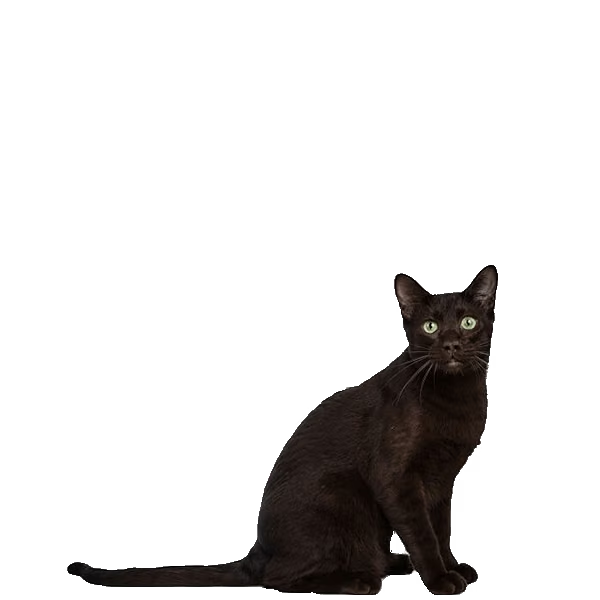
Suphalak
The Suphalak is a rare solid-copper Thai breed treasured for its affectionate, intelligent nature and devotion to its people.
- Size
- Medium
- Lifespan
- 12–16 years
- Origin
- Thailand
- Temperament
- Affectionate
- Standard colors
- Chocolate
Characteristics
Coat and grooming
How the Suphalak coat is built, and what that means when you groom it.
- Coat layers
- Single coat
- Coat texture
- Smooth
- Coat length
- Short
- Shedding
- Low shedding
Suphalak colors and patterns
What each club's breed standard says about every Suphalak color and pattern. Point at a ruling to see the club's own wording.
Breed standards describe the Suphalak in Chocolate.
| Color or pattern | WCF |
|---|---|
| Chocolate | Standard (“Chocolate”) |
| Color or pattern | WCF |
|---|---|
| Yellow | Standard (“light yellow / Golden yellow”) |
| Gold | Standard (“rich golden / intense gold”) |
| Green | Standard (“slightly green shade”) |
| Color or pattern | WCF |
|---|---|
| Chocolate | Standard (“chocolate brown”) |
| Color or pattern | WCF |
|---|---|
| Cinnamon | Standard (“cinnamon”) |
What the rulings mean
- Standard
- Described by the club's breed standard.
Sources
Each ruling comes from the club's published breed standard or color list.
About the Suphalak cat
The Suphalak is a rare, solid-copper cat from Thailand. Medium-sized and people-oriented, it is valued for its affectionate nature and intelligent character.
The Suphalak is a natural breed from Thailand, recognisable by its even copper-to-brown coat with no markings, pattern, or shading. The name translates roughly to 'good fortune' or 'of golden complexion', and the cat appears in old Thai cat-poem traditions alongside other native breeds. It is a medium-sized, muscular cat that stays closely attached to the people it lives with.
Most Suphalaks weigh between 3.5 and 5.5 kilograms, with males typically heavier than females. The breed is uncommon outside Thailand, and population numbers remain small. A cat is judged by the solidity and depth of its single copper colour, the absence of any visible pattern, and a balanced, athletic body.
Temperament is the defining feature for most households. Suphalaks tend to follow their owners from room to room, seek interaction, and stay engaged with family activity rather than retreating to a quiet corner.
| Attribute | Detail |
|---|---|
| Origin | Thailand |
| Size | Medium (3.5-5.5 kg) |
| Lifespan | 12-16 years |
| Group/role | Natural Thai companion breed |
| Good with | Families, attentive owners, other cats |
Who it suits
The Suphalak fits homes where someone is around for much of the day and wants an interactive cat. It does well with families, including those with older, gentle children, and it usually accepts other cats and calm dogs. It is a poor match for households that are empty for long stretches, as the breed seeks company and can become bored when left alone for extended periods.
Suphalak cat history and origin
The Suphalak is a native Thai cat documented in old cat-poem traditions and revived through small breeding efforts in Thailand in recent decades.
The Suphalak belongs to the group of native Thai cats described in the Tamra Maew, a body of illustrated cat-poem manuscripts that recorded the kingdom's prized cats. These works grouped cats by appearance and ascribed good fortune to certain solid colours. A uniform copper-brown cat matching the Suphalak description appears among them, which is the basis for the breed's long-claimed history in Thailand.
For much of the modern era, the solid copper cat was rare and not formally separated from other Thai cats in Western breeding programmes. Cats of similar appearance sometimes surfaced from Burmese and related Thai lines, which complicated efforts to identify a distinct population.
In recent decades, breeders in Thailand worked to re-establish the solid copper cat as a recognised native breed, selecting for the deep single colour and the traditional body type. These efforts kept numbers small and concentrated in Thailand.
The Suphalak remains uncommon worldwide. It is best understood as one of Thailand's traditional cats, valued domestically for its colour and temperament rather than as a widely exported show breed.
Suphalak cat appearance
The Suphalak is a medium, muscular cat with a short, glossy coat in an even solid copper-to-brown colour and no markings of any kind.
The Suphalak has a balanced, moderately muscular body of medium size, neither cobby nor extreme in any direction. The head is rounded with a gentle profile, medium-large ears, and expressive eyes. The legs are in proportion to the body and the tail tapers slightly to the tip. The overall impression is of an athletic, well-knit cat.
The coat is short, fine, and lies close to the body with a smooth shine. The single most important feature is colour: an even, solid copper-brown across the entire coat, without tabby markings, shading, ticking, or white patches.
| Feature | Description |
|---|---|
| Height | Approx. 23-28 cm at shoulder |
| Weight | 3.5-5.5 kg |
| Coat | Short, fine, close-lying, glossy |
| Colours | Solid copper to brown, no markings |
| Eyes | Rounded, amber to golden |
Coat and colours
The defining trait is a uniform copper-brown coat with no pattern. Colour should run evenly from root to tip, and the same shade should carry across the body, legs, and tail. Any tabby ghost markings, paler shading, or white spotting is considered a fault against the breed's solid-colour standard. The short coat shows the underlying muscle and gives the cat a sleek outline.
Suphalak cat temperament
The Suphalak is affectionate, playful, and loyal, staying close to its people and engaging readily with family members and other pets.
The Suphalak is a people-oriented cat that forms strong bonds with its household. It tends to stay near its owners, join in daily activity, and ask for attention through following, vocalising, and seeking laps. Many owners describe it as a cat that wants to be part of whatever is going on.
With family the breed is gentle and affectionate, and it usually tolerates handling well, which makes it suitable for households with considerate children. With strangers it is generally friendly but may take a short while to warm up. With other pets it commonly accepts other cats and calm dogs, particularly when introduced gradually.
The Suphalak is intelligent and playful into adulthood. It enjoys interactive toys, puzzle feeders, and games that involve its owner. Without enough stimulation or company it can grow bored, so steady interaction matters more for this breed than for more independent cats.
| Trait | Rating |
|---|---|
| Affection | 5 |
| Energy | 4 |
| Trainability | 4 |
| Vocalness | 3 |
| Shedding | 2 |
Suphalak cat care and grooming
The Suphalak is low-maintenance to groom but needs daily interaction, play, and an enriched indoor environment to stay content.
Grooming
- Brush the short coat once a week to remove loose hair and keep the shine.
- Check and clean the ears as needed, and watch for wax buildup.
- Trim nails every few weeks.
- Brush the teeth regularly and provide dental care to reduce tartar.
- Bathing is rarely needed as the coat stays clean on its own.
Exercise
- Schedule one or two daily play sessions with wand or chase toys.
- Offer puzzle feeders and rotating toys to keep the mind occupied.
- Provide a cat tree or shelves for climbing and vantage points.
- Use short training games to channel the breed's intelligence.
Environment
The Suphalak does best as an indoor cat with company for much of the day. It needs vertical space, scratching surfaces, and access to its people. Because the breed seeks interaction, a second compatible pet can help when the household is away during working hours.
Suphalak cat nutrition and feeding
The Suphalak needs a complete, protein-forward cat diet portioned to its activity level, with measured meals and fresh water always available.
The Suphalak should eat a complete and balanced cat food appropriate to its life stage. As an obligate carnivore, it does best on diets where animal protein is the main ingredient. Portion to maintain a lean body where the ribs can be felt but not seen, as the breed can gain weight if overfed and underexercised. Fresh water should always be available, and a mix of wet and dry food can help with hydration.
| Life stage | Amount per day | Meals |
|---|---|---|
| Kitten (2-6 months) | Per package, free-fed or 3-4 portions | 3-4 |
| Junior (6-12 months) | Approx. 60-80 g dry equivalent | 3 |
| Adult (1-7 years) | Approx. 50-70 g dry equivalent | 2 |
| Senior (8+ years) | Adjust to weight and activity | 2 |
Treats and supplements
Keep treats to roughly ten per cent of daily calories and account for them in the overall ration. A cat on a complete commercial diet usually needs no extra supplements. Discuss any supplement, such as joint or coat support for older cats, with a veterinary surgeon before adding it.
Suphalak cat health
The Suphalak is generally a healthy natural breed with a 12 to 16 year lifespan, supported by routine veterinary care and weight management.
As a natural breed from a broad native population, the Suphalak is generally robust and not associated with a long list of breed-specific disorders. Typical lifespan is 12 to 16 years with good care. The main day-to-day risks are the same as for most domestic cats: dental disease, obesity, and the urinary and kidney problems common in ageing cats. Because the breed is uncommon, owners should keep records and report unusual health findings to help breeders track the population.
| Condition | Signs | Note |
|---|---|---|
| Dental disease | Bad breath, drooling, reduced eating | Regular brushing and check-ups help |
| Obesity | Weight gain, low activity | Measure food and keep play routine |
| Chronic kidney disease | Increased thirst, weight loss | More common in senior cats |
| Lower urinary tract issues | Straining, blood in urine | Seek prompt care; can be urgent |
Preventive care
- Annual veterinary examination, more often for senior cats.
- Keep core vaccinations and parasite prevention current.
- Maintain dental hygiene with brushing and regular checks.
- Monitor weight and adjust food before excess builds up.
- Provide fresh water and a clean litter tray to support urinary health.
Suphalak cat training
The Suphalak is intelligent and trainable, responding well to short, reward-based sessions for litter use, handling, and simple tricks.
The Suphalak is an intelligent, people-focused cat that takes well to training. Its desire to interact with its owner makes it responsive to games that reward cooperation. Keep sessions short, end on a success, and use food rewards or play the cat values. The breed can learn to come when called, accept handling and grooming, use a scratching post, and perform simple tricks such as sit or target touch.
Basics
- Introduce a clean litter tray early and keep it in a quiet, accessible spot.
- Reward calm handling of paws, ears, and mouth to make grooming and vet visits easier.
- Redirect scratching to a post and reward its use.
- Teach a recall by pairing a sound or word with a treat.
- Add target or trick training in short daily sessions to engage the cat's intelligence.
Suphalak cat breeding
The Suphalak is a rare breed bred to preserve its even solid copper colour and friendly type, with typical feline maturity, gestation, and litter size.
Suphalak breeding centres on preserving the even solid copper-brown coat and the friendly, balanced type whilst keeping the small population healthy. Because the breed is uncommon, responsible breeders prioritise genetic diversity and temperament alongside colour, and they screen breeding cats for general health.
Cats reach sexual maturity in the same range as other domestic cats, though responsible breeders usually wait until a queen is fully mature before her first litter. Mating, pregnancy, and the raising of kittens follow normal feline patterns. Gestation runs about nine weeks, and litters are typically small to moderate in size.
Kittens stay with the mother and littermates through weaning and early socialisation, which is important for a breed prized for its sociable nature. Early gentle handling helps produce the confident, people-oriented adult the Suphalak is known for. Kittens should not go to new homes until they are weaned, litter-trained, and well socialised.
| Metric | Value |
|---|---|
| Sexual maturity | Around 5-10 months |
| Recommended first breeding | After full maturity (12+ months) |
| Gestation | Approx. 63-67 days |
| Average litter size | 3-5 kittens |
| Weaning age | Approx. 8-10 weeks |
| Earliest rehoming | 12+ weeks, fully socialised |
Microchip and registration for your Suphalak
England now requires chipped pet cats, and a free United Pet Club record keeps your Suphalak on the right side of that rule for life.
How to register a Suphalak in the United Kingdom
A Suphalak that lives entirely indoors can still end up at a rescue centre; a propped-open door is all it takes. The free United Pet Club profile keeps your name, number and the cat's photo where a scan can find them. Register your cat once and the record holds for the whole of her life.
Until the fifteen digit number is lodged in a registry, your Suphalak's chip identifies nobody. Lodge it free with United Pet Club: the lifetime plan takes any brand, keeps every update free, and leaves the record searchable day and night. Microchip registration first, then a free account if you are new here.
How do I register my Suphalak in the UK?
Create a free United Pet Club account, add your Suphalak's name, colouring and a photo, and save. The profile is free for the whole of the cat's life, and England's cat microchipping rule makes a current record worth having from day one.
How do I register my Suphalak's microchip?
Enter the fifteen digit number from your paperwork into your free United Pet Club account with your address, phone and email. The lifetime plan never charges for the record or for keeping it current.
Does a Suphalak have to be microchipped in the UK?
In England, yes: pet cats have needed a chip since June 2024, with kittens done by twenty weeks. Scotland and Wales have not followed yet, but a chipped and registered Suphalak is covered wherever you live.
What does it cost to register a Suphalak in the UK?
Nothing. Profile, chip record and unlimited amendments are free for life with United Pet Club, wherever in the UK you and the cat happen to live.
Suphalak cat frequently asked questions
Common questions about the Suphalak cover its size, temperament, care needs, lifespan, suitability as a family pet, and availability in the UK.
How big does a Suphalak get?
It is a medium-sized cat, with most adults weighing about 3.5 to 5.5 kilograms. Males are usually heavier than females, and the body is muscular and athletic rather than large.
What is the Suphalak's temperament like?
It is affectionate, playful, loyal, and people-oriented. Suphalaks tend to follow their owners, seek attention, and stay engaged with family activity, and they generally get along with other cats and calm dogs.
Is the Suphalak hard to care for?
Grooming is straightforward because of the short coat, which needs only weekly brushing. The bigger commitment is social: the breed wants daily interaction and play, so it suits homes where it is not left alone for long stretches.
How long do Suphalaks live?
Typical lifespan is 12 to 16 years with good nutrition, weight management, and routine veterinary care.
Is the Suphalak a good family cat?
Yes. Its gentle, affectionate nature suits families, including those with older, considerate children, provided someone is home enough to give it the company it needs.
Are Suphalaks rare or easy to find in the UK?
They are rare, especially outside Thailand. Population numbers are small, so finding a kitten can take time and usually means working with a breeder focused on this native Thai breed.
What colour is a Suphalak?
A solid, even copper-to-brown coat with no tabby markings, shading, or white patches. The depth and uniformity of this single colour is the breed's defining feature.