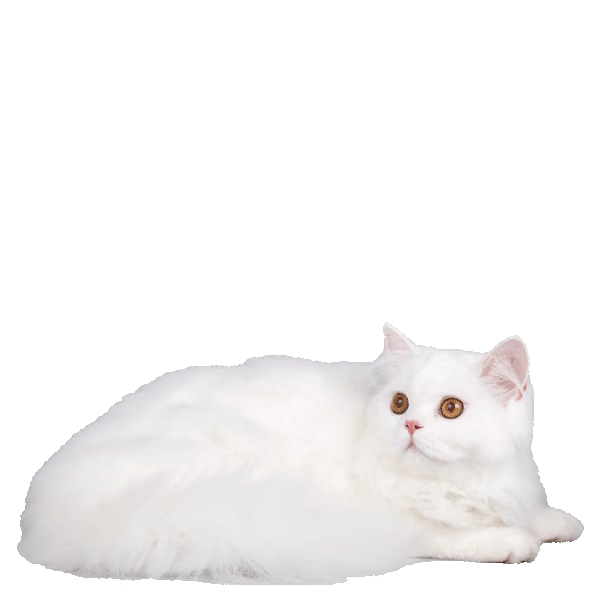
The Khao Manee is an affectionate, sociable breed revered in Thailand for its pure white coat and jewel-like eyes.
How the Khao Manee coat is built, and what that means when you groom it.
The Khao Manee is a medium-sized, short-haired cat from Thailand, known for its pure white coat and bright jewel-like eyes. It is affectionate, playful, and strongly people-oriented.
The Khao Manee is a short-haired cat that originated in Thailand. The name translates roughly to 'white gem', a reference to the breed's solid white coat and clear, luminous eyes. It is a medium-sized cat with a muscular yet elegant build and a smooth, close-lying coat.
The breed is best known for its eye colour. Many Khao Manee have two eyes of the same shade, but the cat most prized in its homeland is odd-eyed, with one blue eye and one of gold, green, or amber. The contrast against the white coat is the breed's defining feature.
In personality, the Khao Manee is sociable and closely bonded to its people. It tends to follow household members from room to room, enjoys interactive play well into adulthood, and is generally vocal and curious. It suits owners who want an involved, active companion rather than an independent or aloof cat.
| Attribute | Detail |
|---|---|
| Origin | Thailand |
| Size | Medium |
| Lifespan | 10 to 14 years |
| Group / role | Companion / domestic short-hair |
| Good with | Families, children, other cats, and dogs when socialised |
The Khao Manee fits an active household where someone is home often. It does well with families, including children who handle cats gently, and it usually accepts other pets. Because it seeks attention and dislikes long stretches alone, it is less suited to homes where it would be left by itself for most of the day. A second pet can help keep it company.
The Khao Manee is an ancient white cat of Thailand, recorded in Thai cat literature for centuries and developed as a recognised breed in the West from the late twentieth century onward.
The Khao Manee is a natural breed from Thailand, where solid white cats have been kept and admired for a very long time. White cats appear in old Thai cat manuscripts, the painted and written records that catalogued the cats of the region, placing the type in Thai history well before modern breeding programmes existed.
For much of its history the white cat of Thailand was a local treasure rather than an internationally traded breed. Accounts associate prized white cats with Thai households of high standing, and the cats were not widely exported, which kept the population concentrated in their country of origin.
Organised breeding outside Thailand is recent. Khao Manee were brought to the United States and Europe from the late 1990s and into the 2000s, and breeders worked to establish the type abroad while maintaining ties to Thai foundation cats. Cat registries later recognised the breed for showing and pedigree registration, including The Kennel Club and its affiliated bodies.
Because the founding population was small and geographically limited, breeders have placed considerable weight on maintaining genetic diversity and on the breed's signature traits: an all-white coat and clear, well-pigmented eyes, including the odd-eyed pattern.
The Khao Manee is a medium-sized, muscular short-haired cat with a pure white coat and striking eyes that may be blue, gold, green, or odd-coloured.
The Khao Manee has a medium build that is muscular and athletic without being heavy. The body is moderately long, the legs are in proportion, and the overall outline is smooth and balanced. The head is a modified wedge with a moderate muzzle, and the ears are medium to large and set fairly upright.
The coat is short, smooth, and close to the body, with little undercoat. This single, fine coat gives the breed a sleek appearance and keeps grooming demands low.
| Trait | Standard |
|---|---|
| Height | Around 23 to 25 cm at the shoulder |
| Weight | Around 3.5 to 5 kg |
| Coat | Short, smooth, single, close-lying |
| Colours | Pure white only |
| Eyes | Blue, gold, green, or odd-eyed (one blue, one gold or green) |
The Khao Manee is recognised in a single colour: pure white. There are no markings, shading, or patches in the accepted standard, and kittens may occasionally show a small spot of colour on the head that usually fades as they mature.
Eye colour carries particular importance in this breed. Eyes may be blue, gold, or green, and the odd-eyed combination of one blue eye paired with a gold or green eye is especially valued. Whatever the colour, the standard calls for eyes that are clear and well defined against the white coat.
The Khao Manee is affectionate, sociable, and intelligent, bonding closely with its household and remaining playful and interactive throughout its life.
The Khao Manee is an outgoing, people-oriented cat. It forms strong attachments to its family and likes to be where the activity is, often following household members from room to room and settling near them. It tends to greet visitors rather than hide from them.
With children it is generally patient and playful, provided handling is gentle. It usually gets along with other cats and with dogs that are accustomed to cats, and a companion animal can help when the household is away during the day. The breed is intelligent and curious, so it investigates new objects, opens cupboards, and learns household routines quickly.
This is a fairly vocal breed. The Khao Manee uses a range of sounds to communicate and will let its owners know when it wants attention, food, or play. Owners who prefer a quiet, hands-off cat may find it demanding, while those who want an interactive companion tend to value the constant engagement.
| Trait | Rating |
|---|---|
| Affection | 5 |
| Energy | 4 |
| Trainability | 4 |
| Vocalness | 4 |
| Shedding | 2 |
The Khao Manee is low-maintenance to groom thanks to its short single coat, but it needs daily interaction and play to stay content.
The short, single coat needs little upkeep. A weekly routine keeps the cat clean and the coat in good condition.
This is an active cat that needs daily play to burn energy and stay mentally occupied.
The Khao Manee is an indoor-suited cat that wants company and stimulation. Its white coat offers little protection from strong sun, so an indoor or supervised outdoor setup is sensible. Provide window perches, scratching posts, and quiet resting spots. Because the breed dislikes long periods of isolation, a companion pet or a household where someone is often home works best.
The Khao Manee does well on a complete, meat-based cat food matched to its life stage, fed in measured portions across one or two meals a day.
As an obligate carnivore, the Khao Manee needs a diet built around animal protein. Choose a complete and balanced commercial cat food appropriate to the cat's age and activity level, with named meat as the main ingredient. Both wet and dry foods can work, and many owners combine the two to support hydration whilst keeping dry food available. Fresh water should always be on hand.
| Life stage | Amount per day | Meals |
|---|---|---|
| Kitten (2 to 12 months) | Per package guidance, fed to appetite | 3 to 4 |
| Adult (1 to 7 years) | Around 200 to 300 kcal | 2 |
| Senior (7+ years) | Adjusted to weight and activity | 2 |
Keep treats to no more than about ten per cent of daily calories to prevent weight gain. A cat on a complete commercial diet usually needs no extra supplements. Discuss any supplement, such as joint support for older cats, with a veterinarian before adding it, and weigh the cat regularly so portions can be adjusted as needed.
The Khao Manee is generally healthy with a lifespan of 10 to 14 years, though its white coat and possible blue eyes call for attention to sun exposure and deafness linked to the white-coat gene.
The Khao Manee is considered a generally healthy, hardy breed with a typical lifespan of 10 to 14 years. As a natural breed with a relatively small founding population, responsible breeding for genetic diversity helps keep the population sound. The main breed-specific concerns relate to its white coat and eye pigmentation.
| Condition | Signs | Note |
|---|---|---|
| Congenital deafness | No response to sound, in one or both ears | Linked to the dominant white gene, more often in blue-eyed cats; can be screened by a hearing test |
| Sunburn and skin damage | Reddened or sore skin on ears and nose | White coat offers little UV protection; limit strong sun exposure |
| Dental disease | Bad breath, drooling, reluctance to eat | Common across domestic cats; prevented with dental care |
| Obesity | Weight gain, reduced activity | Manage with measured portions and daily play |
The Khao Manee is intelligent and people-focused, which makes it quick to learn cues, tricks, and household routines through reward-based training.
The Khao Manee learns readily. Its intelligence and desire to interact with people make it one of the more trainable cats, and it can pick up its name, simple commands, and even tricks such as fetch. Clicker training works well because the breed responds to clear feedback paired with a reward. Short, regular sessions hold its attention better than long ones, and training also gives the cat the mental exercise it needs.
The Khao Manee reaches breeding maturity in its first year, with pregnancies of around 63 to 67 days and small to average litters, and breeders manage the white-coat gene carefully.
Female Khao Manee usually reach sexual maturity between five and ten months, though responsible breeders wait until a cat is physically mature, generally past its first year, before breeding. Pregnancy lasts about 63 to 67 days. Litters are typically small to average for a cat, and queens are generally attentive mothers. Kittens are weaned at around eight weeks but are usually kept with the mother and littermates until twelve to fourteen weeks for proper socialisation before going to new homes.
Because the all-white coat is tied to a dominant white gene associated with congenital deafness, breeding programmes pay close attention to pairings and to hearing screening. Maintaining genetic diversity is also a priority given the breed's small foundation, so outcrossing to approved Thai foundation cats is part of some programmes. Breeding should be left to experienced, registered breeders working under registry guidelines and veterinary oversight.
| Metric | Value |
|---|---|
| Sexual maturity | 5 to 10 months |
| Recommended first breeding | After 12 months |
| Gestation | About 63 to 67 days |
| Typical litter size | 3 to 5 kittens |
| Weaning age | Around 8 weeks |
| Ready for new home | 12 to 14 weeks |
England now requires chipped pet cats, and a free United Pet Club record keeps your Khao Manee on the right side of that rule for life.
Since June 2024, pet cats in England must be microchipped, with kittens chipped by twenty weeks, and a chip is only useful once a record stands behind it. A free United Pet Club profile ties your details to your Khao Manee for life. Registering your cat takes a few minutes, suits indoor cats as much as roamers, and costs nothing.
The vet surgery implants the chip; recording it is yours to do, and in England the law now expects it done for cats. Register the microchip with United Pet Club free on the lifetime plan: every brand is accepted, amendments after moving house cost nothing, and the record answers the database checks rescue centres run on every stray. Create your free account and have both jobs sorted the same afternoon.
Create a free United Pet Club account, add your Khao Manee's name, colouring and a photo, and save. The profile is free for the whole of the cat's life, and England's cat microchipping rule makes a current record worth having from day one.
Enter the fifteen digit number from your paperwork into your free United Pet Club account with your address, phone and email. The lifetime plan never charges for the record or for keeping it current.
In England, yes: pet cats have needed a chip since June 2024, with kittens done by twenty weeks. Scotland and Wales have not followed yet, but a chipped and registered Khao Manee is covered wherever you live.
Nothing. Profile, chip record and unlimited amendments are free for life with United Pet Club, wherever in the UK you and the cat happen to live.
Common questions about the Khao Manee cover its size, temperament, care needs, lifespan, suitability, and how to find one.
The Khao Manee is a medium-sized cat. Adults usually weigh around 3.5 to 5 kg and stand about 23 to 25 cm at the shoulder, with a muscular yet elegant build.
It is affectionate, sociable, and intelligent. The breed bonds closely with its people, stays playful into adulthood, and tends to be vocal and attention-seeking.
Grooming is straightforward because of the short single coat, which needs only weekly brushing. The greater commitment is time and attention, since the breed wants daily play and dislikes being left alone for long periods.
A typical lifespan is 10 to 14 years. Routine veterinary care, dental hygiene, and a healthy weight help the cat reach the upper end of that range.
Yes. It generally does well with children who handle it gently and gets along with other cats and cat-friendly dogs, which suits active, sociable households.
The all-white coat is linked to a gene associated with congenital deafness, which is more common in blue-eyed cats. Reputable breeders hearing-test kittens, and an affected cat can still live a full life indoors.
The breed is uncommon outside Thailand, so availability is limited. Look for a registered breeder who tests for hearing and health and follows The Kennel Club or recognised registry guidelines, and expect a waiting list.
