
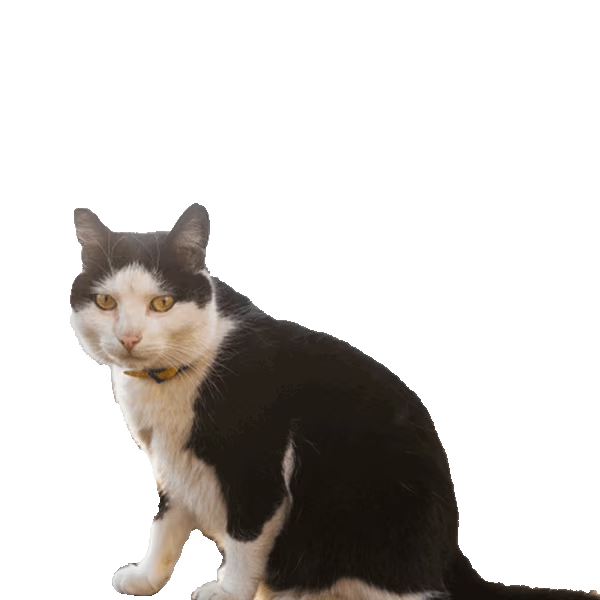
Cyprus
The Cyprus is a friendly, affectionate breed valued for its sociable, easygoing nature and naturally robust island heritage.
- Size
- Medium
- Lifespan
- 12–15 years
- Origin
- Cyprus
- Temperament
- Friendly
Characteristics
Coat and grooming
How the Cyprus coat is built, and what that means when you groom it.
- Coat layers
- Double coat
- Coat texture
- Silky
- Coat length
- Medium
- Shedding
- Moderate shedding
Grooming guidance
Critical: A Cyprus should not be shaved.
The undercoat keeps heat out as well as in, and the outer coat shields the skin from sun and insect bites. Clipping the whole coat off removes both. It often grows back patchy, soft or a different colour, and in some animals the guard hairs never return properly. Brush the undercoat out instead of cutting it off.
Caution: A Cyprus coat mats easily.
Fine or long hair tangles at the base of the coat, out of sight, where the mats tighten and pull on the skin. Brushing has to reach right down to the roots in sections, not just skim the surface.
About the Cyprus cat
The Cyprus is a medium-sized natural cat breed from the island of Cyprus, valued for its sociable, good-natured temperament and the sturdy constitution it has acquired through centuries of island existence.
The Cyprus is a medium-sized domestic cat whose origins lie on the Mediterranean island of Cyprus. It is classed as a natural breed, which means its original form developed through local conditions and ordinary selection pressure rather than any deliberate programme of crossing established breeds. Cats of this kind have shared the island with people for an exceptionally long time, and the contemporary breed retains the resilience and balanced proportions of those free-ranging forebears.
In terms of build, the Cyprus occupies a sensible middle ground, neither slight nor heavy, with a body that reads as athletic and well muscled. Owners tend to describe the breed as friendly and affectionate, possessed of an easygoing, obliging manner that fits comfortably into an active household. This is a cat that notices what is happening around it and remains genuinely interested in the people it knows.
Day to day, the Cyprus is a reliable and engaged companion. It seeks out company, involves itself in household routines, and sustains a reasonable level of energy right through adulthood. The coat is short to medium and requires very little effort to maintain, which most owners find rather convenient.
| Attribute | Detail |
|---|---|
| Origin | Cyprus |
| Size | Medium |
| Lifespan | 12 to 15 years |
| Group / role | Natural breed, companion cat |
| Good with | Families, older children, other cats; people who want a sociable pet |
Who it suits
The Cyprus is well suited to a home that can offer it regular company and some daily activity. It settles comfortably with adults, older children, or other cats, and it tends to do well where someone is about for a good part of the day. Those who want an affectionate, interactive companion rather than an aloof or independent cat will generally find the breed quite satisfying. Anyone away for extended stretches ought to consider keeping a second pet or providing additional enrichment to account for the Cyprus's sociable disposition.
History and origin
The Cyprus is descended from cats that have inhabited the island of Cyprus for thousands of years, with modern breeding programmes working to document and standardise the long-established local type.
The association between cats and Cyprus is a remarkably long one. Archaeological work on the island has turned up evidence of cats kept in close proximity to people during the early Neolithic period, among the oldest documented links between humans and cats anywhere in the world. The cats living on Cyprus today are widely regarded as part of that same unbroken lineage.
For most of its history the Cyprus was a working and farm cat rather than a registered breed with formal papers. It earned its keep in villages, monasteries, and rural settings by controlling rodent populations, all the whilst living in close daily contact with people. The island's hot, dry summers and cooler mountain winters favoured a tough, adaptable animal, and this is precisely what centuries of island life produced.
In more recent decades, breeders and cat fanciers set about documenting the local type as something distinct and drawing up a standard to describe it. The aim was to preserve the natural Cyprus cat and secure formal recognition for it, not to alter its character or introduce foreign lines. The breed is therefore best understood as the standardised form of a long-rooted island population.
Because the Cyprus arose from an established native population rather than from a single founding pair, precise founding dates and modern pedigrees are necessarily limited in scope. The consistent thread running through its history is continuity: a working island cat that has been kept and valued on Cyprus across millennia and is now recognised as a named breed.
Appearance
The Cyprus is a medium to large, well-muscled cat with a short to medium coat that occurs in a wide range of colours and patterns.
The Cyprus presents a balanced, athletic appearance. The body is medium in length and solidly built, supported on legs of moderate length with firm musculature. The head is rounded with a gentle profile, the ears are medium to fairly large and set reasonably wide apart, and the eyes are large and expressive. The overall impression is of a sturdy, natural, working-type cat rather than anything extreme or overly refined.
| Trait | Typical range |
|---|---|
| Height (at shoulder) | About 23 to 30 cm |
| Weight | About 4 to 6 kg, males larger than females |
| Coat | Short to medium, lying close to the body |
| Colours | Many, including tabby, solid, bicolour, and other patterns |
| Eyes | Large, rounded; colour often relates to coat colour |
Coat and colours
The coat is short to medium in length and is straightforward to maintain. As the breed stems from a broad island population, colour and pattern vary considerably. Tabby patterns are particularly common, whilst solid colours, bicolours, and assorted other markings appear regularly. No single colour is prescribed, and the breed standard accepts a wide palette. The coat typically thickens during the winter months and lightens again as the warmer weather returns.
Temperament
The Cyprus is a friendly, affectionate, and sociable cat with an active and good-natured character that suits households where it can be involved and engaged.
The Cyprus is noted for a warm, people-orientated personality. It forms strong bonds with its family and regularly seeks out company, following household members from room to room and settling comfortably close by. The breed is affectionate without becoming overbearing, and most individuals are happiest when they can participate in the ordinary business of the household.
With family the Cyprus is gentle and even-tempered, and it generally gets on well with older children who handle it with some care. With strangers it tends to be confident rather than anxious, though it appreciates, as most cats do, the chance to approach unfamiliar people at its own pace. Amongst other pets it is typically sociable, and sharing a home with another cat often suits it rather well, helping to satisfy its need for ongoing interaction.
The breed maintains a fair amount of energy throughout its life. It enjoys play, climbing, and observing its surroundings, and it stays alert and engaged well into adulthood. Vocally, it is not especially demanding and communicates in a measured, moderate fashion.
| Trait | Rating |
|---|---|
| Affection | 5 |
| Energy | 4 |
| Trainability | 3 |
| Vocalness | 2 |
| Shedding | 3 |
Care and grooming
The Cyprus requires only routine grooming, regular active play, and a safe indoor or supervised outdoor environment to remain healthy and content.
The Cyprus is a relatively low-maintenance breed where grooming and general upkeep are concerned. Its core requirements are regular company, daily activity, and a secure space where it can climb and observe.
Grooming
- Brush once or twice a week to remove loose hair and limit shedding around the home.
- Increase brushing frequency during seasonal coat changes in spring and autumn.
- Check the ears weekly and clean gently only when genuinely necessary.
- Trim claws every few weeks and ensure a sturdy scratching post is always available.
- Brush teeth regularly or follow a dental care routine recommended by your vet.
Exercise
- Offer at least two short, active play sessions each day using wand toys or interactive chase toys.
- Provide climbing furniture such as a cat tree or wall-mounted shelves to channel the breed's energy productively.
- Rotate toys and introduce puzzle feeders to keep the cat mentally stimulated.
- Whilst the Cyprus manages well on its own during the day, in households where people are frequently absent for long periods, a second cat can provide welcome companionship.
Environment
The Cyprus adapts well to indoor living when provided with sufficient vertical space and environmental enrichment. It can equally enjoy supervised outdoor access or a secure run. The breed comes from a Mediterranean climate, so a warm, draught-free resting place is particularly appreciated.
Nutrition and feeding
The Cyprus does well on a complete, meat-based cat food offered in measured daily portions, with fresh water always available.
Cats are obligate carnivores, and the Cyprus is no exception, it requires a diet built around animal protein. A complete commercial food that meets recognised nutritional standards will cover its core dietary needs. Portions should be tailored to the individual cat's age, body weight, and activity level, with fresh water available at all times. As the Cyprus is an active, well-muscled breed, keeping it at a lean body condition through measured feeding is a sensible way to avoid excess weight.
| Life stage | Amount per day | Meals |
|---|---|---|
| Kitten (2 to 12 months) | Per package guidance, fed to appetite whilst growing | 3 to 4 |
| Adult (1 to 7 years) | About 50 to 70 g dry, or equivalent wet food | 2 |
| Senior (7 years and older) | Adjusted to weight and activity | 2 |
Treats and supplements
Treats should make up no more than roughly ten per cent of the cat's daily calorie intake so that the core diet remains properly balanced. A Cyprus on a complete commercial food will ordinarily have no need for additional supplements. Before introducing any supplement, a joint support product or a skin and coat preparation, for instance, it is worth discussing it with your vet, since unnecessary additions can unsettle nutritional balance.
Health
The Cyprus is a generally robust natural breed with a typical lifespan of 12 to 15 years, well served by routine veterinary care and sensible weight management.
As a natural breed rooted in a long-established island population, the Cyprus tends to be hardy and is not predisposed to the narrow hereditary problems sometimes encountered in heavily engineered breeds. Most individuals lead healthy lives of roughly 12 to 15 years with proper care. The conditions listed below are general feline health concerns worth monitoring rather than disorders that are specific to this breed.
| Condition | Signs | Note |
|---|---|---|
| Dental disease | Bad breath, drooling, trouble eating | Common in cats; regular dental care helps prevent it |
| Obesity | Weight gain, low activity | Manage with measured feeding and play |
| Parasites | Scratching, poor coat, digestive upset | Use routine flea and worm prevention |
| Kidney disease (older cats) | Increased thirst, weight loss | Senior screening aids early detection |
Preventive care
- Keep core vaccinations and parasite prevention up to date.
- Schedule an annual veterinary check, increasing to twice yearly for senior cats.
- Maintain a lean body condition through careful portion control.
- Provide regular dental care and examine teeth and gums routinely.
- Consider neutering or spaying, both of which support long-term health.
Training
The Cyprus is moderately trainable and responds well to patient, reward-based methods covering litter habits, handling, and simple cues.
The Cyprus is an intelligent, sociable cat that picks up household routines and simple behaviours readily when training is consistent and positive. Like most cats it works for incentives rather than instructions, so keeping sessions short and frequent tends to produce the best results. Its people-orientated nature means it is generally willing to engage with an owner who keeps training calm and predictable.
Basics
- Introduce a clean, quiet litter tray early and maintain consistency in its placement.
- Reward use of the scratching post reliably to help protect furniture.
- Accustom the cat to gentle handling, carriers, and grooming from a young age.
- Build simple cues, such as coming when called, by pairing the desired action consistently with a small reward.
- Redirect unwanted behaviour towards an acceptable alternative rather than resorting to punishment.
Breeding
The Cyprus reaches breeding maturity within its first year, with a standard feline gestation of approximately nine weeks and typical litters of four to six kittens.
The Cyprus follows the general reproductive pattern of domestic cats. Females ordinarily reach sexual maturity between five and ten months of age, though responsible breeders customarily wait until a queen is fully grown before proceeding with mating. Cats are seasonal breeders across much of their range and may produce more than one litter in a year. Mating triggers ovulation in cats, so successful pairings frequently result in pregnancy.
Gestation lasts approximately 63 to 65 days. Litters typically comprise four to six kittens, with some natural variation between individuals. Queens generally manage birth and the early stages of kitten care competently, with kittens nursing for several weeks before weaning begins.
Kittens should remain with their mother and littermates until they are at least twelve weeks of age. This period is important for socialisation, particularly relevant for a breed that is prized for its friendly, sociable character. Gentle handling during this time helps kittens develop into confident, well-adjusted adults. Anyone breeding the Cyprus ought to screen for general feline health concerns, maintain current vaccination and parasite control records, and rehome kittens only with owners who are properly prepared for the responsibility.
| Metric | Value |
|---|---|
| Sexual maturity | About 5 to 10 months |
| Gestation | About 63 to 65 days |
| Average litter size | 4 to 6 kittens |
| Weaning age | About 6 to 8 weeks |
| Recommended rehoming age | 12 weeks or older |
Microchip and registration for your Cyprus
England now requires chipped pet cats, and a free United Pet Club record keeps your Cyprus on the right side of that rule for life.
How to register a Cyprus in the United Kingdom
A Cyprus that lives entirely indoors can still end up at a rescue centre; a propped-open door is all it takes. The free United Pet Club profile keeps your name, number and the cat's photo where a scan can find them. Register your cat once and the record holds for the whole of her life.
The vet surgery implants the chip; recording it is yours to do, and in England the law now expects it done for cats. Register the microchip with United Pet Club free on the lifetime plan: every brand is accepted, amendments after moving house cost nothing, and the record answers the database checks rescue centres run on every stray. Create your free account and have both jobs sorted the same afternoon.
How do I register my Cyprus in the UK?
Create a free United Pet Club account, add your Cyprus's name, colouring and a photo, and save. The profile is free for the whole of the cat's life, and England's cat microchipping rule makes a current record worth having from day one.
How do I register my Cyprus's microchip?
Enter the fifteen digit number from your paperwork into your free United Pet Club account with your address, phone and email. The lifetime plan never charges for the record or for keeping it current.
Does a Cyprus have to be microchipped in the UK?
In England, yes: pet cats have needed a chip since June 2024, with kittens done by twenty weeks. Scotland and Wales have not followed yet, but a chipped and registered Cyprus is covered wherever you live.
What does it cost to register a Cyprus in the UK?
Nothing. Profile, chip record and unlimited amendments are free for life with United Pet Club, wherever in the UK you and the cat happen to live.
Frequently asked questions
Common questions about the Cyprus cat address its size, temperament, care requirements, lifespan, suitability as a pet, and where to find one.
How big does a Cyprus cat get?
The Cyprus is a medium-sized cat, typically weighing around 4 to 6 kg, with males generally larger than females. It has a solid, well-muscled build rather than a slight or delicate frame.
What is the Cyprus cat's temperament like?
The breed is friendly, affectionate, and sociable, with a good-natured, active character. It bonds closely with its family and tends to get on well with older children and other cats.
Is the Cyprus cat hard to care for?
Not at all. It needs only weekly brushing, daily play, and a safe indoor or supervised environment. The short to medium coat is straightforward to maintain, which keeps grooming pleasantly simple.
How long do Cyprus cats live?
A typical lifespan is 12 to 15 years. As a hardy natural breed, the Cyprus commonly enjoys good health throughout its life with routine veterinary care and sensible weight management.
Is the Cyprus cat a good family pet?
Quite. Its affectionate, sociable nature suits family households and homes that include other cats. It thrives where it has regular company and sufficient room to stay active.
Are Cyprus cats easy to find?
The breed is common on the island of Cyprus but rather less available elsewhere. Outside the region, finding a kitten is likely to take more time and is best approached through reputable breeders.
Do Cyprus cats need another pet for company?
Not strictly, but they are sociable cats that genuinely enjoy company. In households where people are regularly away for extended periods, a second cat can make a considerable difference to their wellbeing.