
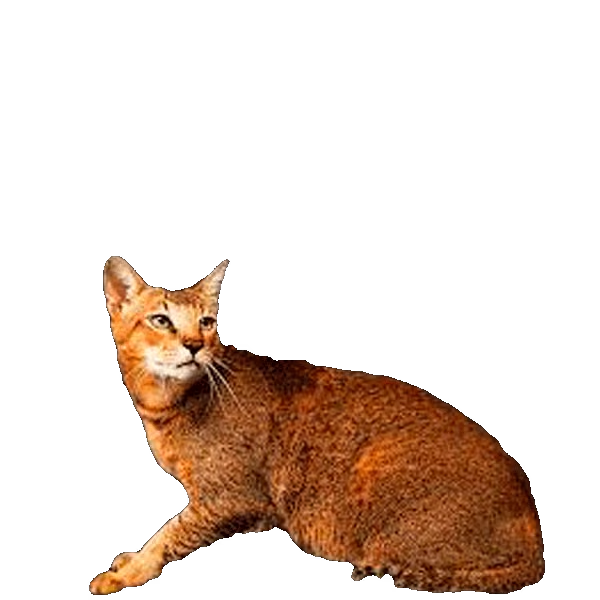
Chausie
The Chausie is an energetic, athletic breed prized for its wild jungle-cat looks and curious, highly active personality.
- Size
- Large
- Lifespan
- 12–15 years
- Origin
- United States
- Temperament
- Energetic
- Standard colors
- Black and Brown
Characteristics
Coat and grooming
How the Chausie coat is built, and what that means when you groom it.
- Coat layers
- Double coat
- Coat texture
- Smooth
- Coat length
- Short
- Shedding
- Moderate shedding
Grooming guidance
Critical: A Chausie should not be shaved.
The undercoat keeps heat out as well as in, and the outer coat shields the skin from sun and insect bites. Clipping the whole coat off removes both. It often grows back patchy, soft or a different colour, and in some animals the guard hairs never return properly. Brush the undercoat out instead of cutting it off.
Chausie colors and patterns
What each club's breed standard says about every Chausie color and pattern. Point at a ruling to see the club's own wording.
Breed standards describe the Chausie in Black and Brown. Standard patterns: Solid, Ticked tabby and Grizzle.
| Color or pattern | TICA | LOOF |
|---|---|---|
| Black | Standard (“Black”) | Standard (“Noir”) |
| Brown | Standard (“Brown Ticked Tabby”) | Standard (“Brown ticked tabby”) |
| Patterns | ||
| Solid | Standard (“Solid”) | Standard (“solide”) |
| Ticked tabby | Standard (“Ticked Tabby”) | Standard (“ticked tabby”) |
| Grizzle | Standard (“Grizzled”) | No ruling |
| Mackerel tabby | No ruling | Disqualifying (“mackerel”) |
| Classic tabby | No ruling | Disqualifying (“classic tabby”) |

%22%3E%3Cg%20fill%3D%22none%22%20stroke%3D%22%231C1C1C%22%20stroke-width%3D%221.25%22%20stroke-linecap%3D%22round%22%20stroke-linejoin%3D%22round%22%3E%3Cpath%20d%3D%22M55.8%2023.1l-0.3%201.9M7.5%2020.6l0.6%201.7M43.9%2028.2l-0.3%201.7M39.2%2031.8l0.6%201.1M9.8%2028l-0.3%201.8M20.7%2029.6l0.1%202M39.9%2031.8l0.2%201.3M17.1%2022.1l0.7%201.1M38.7%2052.5l0.9%201.4M45.2%2051l0.6%201.2M50.4%2024.5l0.1%201.9M18.8%2054.3l0%202.1M17.3%2036l0.3%201.2M25.9%2029.2l0.2%201.6M49.4%2036.5l0.7%201.3M40.1%2025l-0.6%202.1M27.5%2025.6l0.4%201.2M8.8%2024.9l0.1%201.8M47.9%2022.8l0.5%201.3M32.8%2031.8l0.8%201.9M23.4%2050.6l-0.2%202.2M28.4%2023.9l-0.5%201.6M24.9%2040.6l0.4%201.7M58.1%2015.3l-0.5%201.7M29.6%2021.6l1.1%201.9M49.8%2029.3l0.4%202M5.8%2019.1l0%201.3M13.1%2025.3l0.6%201.5M52%2027l0.6%201.7M8%2022.4l0.5%201.1M18.4%2031.3l-0.1%201.6M24.8%2021.5l-0.6%202.1M53.6%2021.9l0.2%201.5M53.2%2022.7l0.3%201.6M33.5%2028.3l-0.6%201.7M22.9%2020.9l-0.4%201.3M57.4%2010.8l-0.2%202M48%2053.3l-0.6%201.8M17%2015.6l0.6%201.1M25.7%2031.6l0.9%201.1M22.6%2053.7l0.1%201.6M17.5%2017.5l-0.4%201.7M19.4%2046.5l0.1%201.8M27.3%2037.2l-0.6%202M12.9%2024.8l0.5%201.8M28.5%2030.1l0.3%201.5M17.7%2021.4l-0.4%201.2M18%2052.8l-0.3%201.8M9.1%2021.6l1.3%201.8M38.4%2043.5l0.1%201.9M32.1%2021.8l1.1%201.6M32%2034.5l0%201.9M53.8%2022.7l0.1%202M18.2%2028.8l0.4%201.8M19.3%2019.5l-0.2%201.3M40.4%2028.1l0.8%201.1M46.7%2037.8l-0.2%201.3M51.2%2029.1l-0.6%201.8M20.7%2031l0.1%201.9M30.6%2035.4l0.9%201.9M36.3%2021.9l-0.5%201.9M45.9%2039.6l0.1%201.8M35.5%2035.5l-0.3%201.3M43.2%2024.8l-0.2%201.9M42.8%2023.2l0.8%201.8M15.8%2026l0.8%201.5M38.2%2048.8l-0.4%201.3M35.2%2029.3l-0.6%202M42.9%2029.6l-0.1%201.2M30%2034.8l1%201.4M30.1%2027l0.6%202M45.5%2033.7l0.7%201.1M49.1%2028.9l0.5%201.4M52%2029.1l-0.6%202M29.5%2027.2l-0.6%202M55.9%2016.3l-0.5%201.7M29%2022.9l0.6%201.7M34.3%2029.2l0.4%202.1M29.4%2024.1l0.1%201.5M21.6%2040.3l-0.1%201.6M43.5%2034l0.8%201.8M46.1%2048.7l0.4%201.9M40.8%2052.9l0.4%201.5M45.9%2039.5l-0.1%202.1M7.6%2028.3l0.2%201.7M16.7%2054.8l0.7%201.2M24.8%2033.3l-0.3%201.2M25.6%2038.4l-0.1%201.9M24.4%2052.5l0.6%201.4M40.7%2047.1l0.2%202.1M37.8%2047.4l0.6%201.3M10.2%2022l0.2%202.1M7.3%2017.6l0.8%201.9M44.8%2042.9l0.4%201.1M38.2%2029l-0.1%201.9M56.6%2015.8l-0.2%201.5M38.1%2033.9l1.1%201.6M42.9%2027.2l-0.3%201.2M6%2020.9l0.7%201.1M55.5%2013.2l-0.2%201.3M19.6%2028.9l0.3%202M35.9%2034l-0.2%202.1M12.8%2016l0.2%202.1M45.9%2038.9l-0.2%201.2M46.5%2029.8l-0.3%201.7M31.1%2037l0.7%201.6M37.7%2030.8l0.8%201.6M20.5%2024.7l1.2%201.5%22%2F%3E%3Cpath%20d%3D%22M21.8%2031.8l0.7%202M12.1%2027.4l0.1%202.1M6.5%2020.9l-0.3%201.3M37.6%2048l1%201.6M47.8%2039.2l0.7%201.3M47.3%2050l-0.5%201.5M43.9%2033.6l-0.4%202.1M39.8%2032.3l-0.1%201.3M18.2%2018.3l0.1%201.5M25.1%2038.2l0.7%201.4M42.9%2028.2l0.9%201.9M17.3%2029.8l0.9%201.9M50.6%2028.2l0.5%201.9M40.1%2025.6l0%201.2M29.6%2023.7l0%201.8M57.7%2013.6l0.5%201.5M22.7%2030.1l-0.1%202.2M46.8%2049.4l0.6%201.1M47.8%2052.5l-0.4%201.6M31.5%2020.6l0.6%202M20.5%2030.6l0.6%201.6M37.3%2027.1l-0.2%201.8M36.4%2037.5l0.9%201.1M21.7%2042.2l-0.2%201.2M42.8%2022.6l0.4%201.8M37.9%2040.4l0.5%201.5M52.6%2023.4l0.4%202M34.2%2027.8l0.8%201.4M16.1%2023l1.1%201.5M55.6%2021.9l0.4%201.6M17.6%2053.4l0.9%201.5M41.9%2030l1%201.7M16.8%2054.6l0.4%202.2M40.3%2030.9l0.6%201.4M18.9%2034.3l1.3%201.6M34.5%2021.7l0.5%201.8M42.4%2036.5l1%201.8M23.3%2040.2l-0.3%201.7M21.1%2029.8l0.5%201.4M58%2010.8l0%202M41.7%2035.4l0.8%202M10.3%2021.9l-0.2%201.7%22%2F%3E%3C%2Fg%3E%3Cpath%20d%3D%22M15%2047H50M15%2051H50%22%20fill%3D%22none%22%20stroke%3D%22%231C1C1C%22%20stroke-width%3D%221.6%22%20stroke-linecap%3D%22round%22%20stroke-linejoin%3D%22round%22%2F%3E%3Ccircle%20cx%3D%2259.8%22%20cy%3D%227.8%22%20r%3D%222%22%20fill%3D%22%231C1C1C%22%2F%3E%3Cpath%20d%3D%22M12.6%2015.5l.6%204.2M15%2015.5l-.2%204.2%22%20fill%3D%22none%22%20stroke%3D%22%231C1C1C%22%20stroke-width%3D%221%22%20stroke-linecap%3D%22round%22%20stroke-linejoin%3D%22round%22%2F%3E%3C%2Fg%3E%3Cuse%20href%3D%22%23s%22%20fill%3D%22none%22%20stroke%3D%22%233B2A20%22%20stroke-opacity%3D%220.6%22%20stroke-width%3D%221%22%20stroke-linejoin%3D%22round%22%2F%3E%3Cpath%20d%3D%22M3.4%2022.3L5.4%2022.5L4.3%2024Z%22%20fill%3D%22%23E8A0B4%22%2F%3E%3Ccircle%20cx%3D%229.6%22%20cy%3D%2221.2%22%20r%3D%221.1%22%20fill%3D%22%231C1C1C%22%2F%3E%3C%2Fsvg%3E)
%22%3E%3Cg%20fill%3D%22none%22%20stroke%3D%22%23F5F5F0%22%20stroke-width%3D%221.1%22%20stroke-linecap%3D%22round%22%20stroke-linejoin%3D%22round%22%3E%3Cpath%20d%3D%22M51.8%2048.2l1%203.9M57%2019.4l0.9%203.4M35.6%2022.4l2.5%204.3M54.7%2043.7l0%203.8M30.3%2038.2l0.4%203.3M29.4%2048.1l1.8%203.7M22.9%2035.8l0.5%204.8M27%2035.6l1.9%203.7M17.2%2016.4l0.1%203.9M15.5%2026.2l0.4%203.5M35.7%2027.4l1.2%202.8M27.3%2038.6l1.2%203.6M44.1%2042.1l1.1%203.4M41%2026.7l2.2%204.3M48.3%2027l0.6%203.4M49.6%2037.4l1.6%203.5M48.9%2029.3l1.8%203.7M40%2033.6l1%203M23.7%2034.5l2.1%203.7M53.8%2028.5l0%203.9M41.2%2026.3l2.3%204.2M16.9%2017.7l1.3%204.3M44%2030.8l1.6%203M34.6%2034.6l0.1%203.8M13.1%2013.6l2%204.4M38.9%2033.1l1.5%204.3M45.5%2027.8l0.4%203.4M14.9%2023.8l0.9%204.6M11.8%2024l1.1%204.3M25.9%2031.7l0.3%203.5M39%2023.7l2.1%204M19.7%2034.2l1.1%202.9M39.7%2027.2l2.3%204.4M21%2032.6l1%203M53.4%2031.5l1.9%204.5M43.4%2032.8l0.9%203.4M31.4%2029.1l0%204.6M12.8%2023.7l1.3%203.9M45.9%2042.2l1.5%202.7M54.2%2041l1.1%204.7M26.2%2055l0.7%204.3M18.7%2015.6l0.4%204.6M50.3%2032.5l0.8%204.1M32.1%2051.6l0.6%203.4M24%2021.4l0.9%204.5M48.9%2033.8l0.6%204.9M47.3%2030.5l1.5%203.3M36.5%2034.8l0.6%204.1M24.1%2047.8l0.3%203.4M29.9%2028.1l1.9%203.7M19.8%2019l1.5%203.4M37.7%2033.7l0.6%203.6M39.2%2029.4l0.3%204.1M51%2025.1l0.5%203.8M43.9%2030.4l0.2%203.5M29.3%2038.8l0.5%204.6M42.8%2046l0.5%204.8M53.4%2022l0.2%204M25.1%2051.1l0.2%203M33.5%2034.7l0.9%202.9M19.1%2028.5l0.7%203.4M6.4%2023.2l0.8%203.8M50.8%2042.2l0.2%204M44.7%2046.2l1.9%204.5M13.7%2015.7l2%204.2M46.1%2026.7l0.8%204.7M47.1%2025.3l0.1%203.8M35.6%2035.3l0.7%204.3M31.6%2052.3l0.3%203.4M51.6%2036.3l0.3%204M52.1%2028.7l1.6%203.6M48.6%2028.3l0.4%203.2M15.4%2011.6l0.5%204.2M37.5%2034.9l0.9%203.6M30.4%2033.3l0.3%204.1M49.9%2053.6l0.5%204M48%2036l0.4%203.4M25.3%2034.1l1.9%203.7M42.5%2037.3l1.3%203.4M46.2%2028.3l0.8%203.8M53.5%2041.1l0.8%204.4M24.1%2052.9l1.4%204.5M20.8%2032l1.5%203.9M46.2%2046l1.1%204.6M14.4%2019.4l0.7%203.5M11.6%2018.8l1.2%204M42.2%2027.7l1.6%202.8M24.7%2030l1.7%203.5M55.5%2023.3l0.1%204.6M53.4%2044.6l0.9%204.8M19.4%2022l1%203.1M43.6%2023.9l1.4%203.2M22.4%2020.3l0.6%203.9M15%2019.3l1.8%204.3M18.3%2029.3l1.6%203.7M46.3%2033.8l1.5%203M44.4%2035.9l1.6%202.9M53.3%2036.3l0%203.3M40.2%2025.2l1.3%203.2M41.7%2030.3l1.2%204.7M26%2039.8l0.6%203.8M32.4%2027.6l0.6%204M7.7%2023.3l0.1%203.3M17.5%2020.9l1.2%203.2M8.1%2021.8l0.5%203.1M10.4%2021.4l2.1%204.1M46.3%2043l1.9%203.6M43.2%2054.9l1.1%203.8M14.6%2019.8l1.3%203.6M31.7%2038.5l0.8%203.5M49.3%2026.7l1%203.2%22%2F%3E%3Cpath%20d%3D%22M46.7%2037.9l0.8%204.2M32.3%2037l1.4%204.1M18%2018.6l1.8%203.4M22.5%2023.8l0.6%203.6M50%2050.2l0.1%203.6M41.3%2038.1l1.1%203.1M44.1%2050.8l1.9%203.4M32.2%2045.8l1.9%204.4M52%2050.3l1.3%204.5M34.9%2025.1l1.2%203.7M42.9%2024.8l1.4%204M9.9%2023.9l0.5%203.1M25.4%2046.1l1.7%203.2M45.8%2053.5l0.2%204.5M23%2045.6l0.3%203.8M51%2038.8l0.9%203.4M22.1%2053.2l1.2%203.6M55%2040.1l0.2%204M36.8%2025.5l0.2%203M15%2011.2l1%204.6M14.6%206.6l1.5%204.1M13.9%2012.1l1.5%203.2M22.4%2028.6l1.4%204M42%2032.8l1.6%203.9M54%2047.8l1.1%203.4M54.1%2048.2l0.5%203.2M24.8%2034.7l0.6%204.5M7.8%2021.4l0.1%203.2M15.9%2024.4l1.7%203.3M28.4%2035.5l1.1%204.3M40.8%2026.2l0.4%203.4M21.2%2034.1l1%203.2M16.4%2023.8l1.2%204.8M29.2%2056l0.9%204.2M25.4%2039.6l1.1%204.9M17.6%2018.9l1.7%203.4M50.5%2050.3l1.5%203M43.3%2040.6l0.6%203.4M44.3%2041.6l1%203.8M7.8%2024.5l0.4%204.8M45.7%2040.1l1.6%203.6M13.4%2019.8l1.1%204.8M58%2015.7l0%203.3M24.2%2038.3l0.3%204.5M30.1%2045l1.6%204.7M18.1%2016.2l2.1%204M24.1%2027l2.1%204M50.3%2053.6l1.4%204.1M53.7%2049.7l0.8%203.4M37.1%2028.9l2.4%204.1M27.3%2038.9l0.4%204.2M52.8%2041.4l1%203M24.8%2027.3l1.4%203.2M28.3%2024.9l2%204.2M54.2%2036.5l1.4%203.8M47.6%2029.9l1.9%203.9M49%2036.5l1.5%204.7M46.2%2027.3l0.1%204.3M52.3%2041.9l1.1%203.2M24.5%2050.4l2.1%203.7M10.2%2024.7l0.1%204.4M8.7%2020.5l1.6%203.5M54.5%2042.8l1.7%203.9M20.1%2017.4l2%203.4M22.4%2021.6l0.7%203.9M24.8%2052l0%203.5M38%2037.6l1.5%203.8M38.3%2035.9l1.2%204.6M16.9%2021.4l1%203.1M57.2%2014.1l1.1%203.8M49%2038.3l1.9%204.5M43.5%2035.4l0.4%203.5M25.9%2054.8l0.8%204.4M31.4%2051.5l1.9%204.4M48.8%2026.1l1.5%203.8M21.3%2033.2l1.9%203.5M13.4%2017.6l0%204.4M43.5%2029l1.1%202.9M45.6%2051.7l0%203.8M7.7%2018.9l1.4%203M23.4%2021.6l1.1%203.6M29.2%2025.2l1.6%203.6M23.3%2051l0%203.3M23.6%2053.5l1.5%204.3M43.5%2053l0.3%203.6M29.9%2039.1l0.3%203.6M51.8%2033.5l0.6%203.9M39.9%2032.1l1.4%203.5M28.6%2024.3l0.5%203.6M18.7%2029.3l0.7%204.9M52.1%2024.9l2.1%204M26.8%2027.4l0.4%203.5M6.8%2021.5l0.4%204.4M24.6%2048.5l1%204.6M52.2%2024.3l1.2%203.7M4.8%2020.7l1.5%202.9M47%2024.4l1.4%203.2M44.9%2028l1%202.8M44.1%2055.5l1.5%203.9M31%2027.9l0.5%204.4M35%2033.6l0.5%203M27.2%2024.7l0.4%203.2M13.7%2024.9l0%204.6M16.7%2017l0.8%203.9M45.9%2046.8l0.2%203.5M33.2%2036.5l0.7%202.9M17.2%2020.7l2.2%204.1M30%2050.7l2%204.1M23.6%2042.9l1.4%204.7M27.8%2033.9l1.6%204.3M53.7%2036.4l1%203M54.2%2034.4l1.4%203.1%22%2F%3E%3Cpath%20d%3D%22M32.1%2046.4l2.2%203.8M54.6%2020.7l1.8%204.1M54.4%2040.4l1.8%204.1M38.4%2031l1.5%203.9M50.4%2050.2l0.6%204.4M23.5%2019.6l1.3%203.3M51.5%2044l1.1%203.7%22%2F%3E%3C%2Fg%3E%3C%2Fg%3E%3Cuse%20href%3D%22%23s%22%20fill%3D%22none%22%20stroke%3D%22%233B2A20%22%20stroke-opacity%3D%220.6%22%20stroke-width%3D%221%22%20stroke-linejoin%3D%22round%22%2F%3E%3Cellipse%20cx%3D%223.2%22%20cy%3D%2221.7%22%20rx%3D%221.3%22%20ry%3D%221.2%22%20fill%3D%22%231C1C1C%22%2F%3E%3Ccircle%20cx%3D%2210.8%22%20cy%3D%2219.3%22%20r%3D%221.1%22%20fill%3D%22%231C1C1C%22%2F%3E%3C%2Fsvg%3E)
%22%3E%3Cpath%20d%3D%22M20%2021Q34%2018.8%2048%2022%22%20fill%3D%22none%22%20stroke%3D%22%231C1C1C%22%20stroke-width%3D%222.2%22%20stroke-linecap%3D%22round%22%20stroke-linejoin%3D%22round%22%2F%3E%3Cpath%20d%3D%22M24.5%2021.5q-1.2%208%20.4%2016M28.6%2021q-1.2%208%20.4%2016.6M32.7%2020.7q-1.2%208%20.4%2016.8M36.8%2020.7q-1.2%208%20.4%2016.8M40.9%2021q-1.2%208%20.4%2016.6M45%2021.8q-1%207%20.4%2014%22%20fill%3D%22none%22%20stroke%3D%22%231C1C1C%22%20stroke-width%3D%221.6%22%20stroke-linecap%3D%22round%22%20stroke-linejoin%3D%22round%22%2F%3E%3Cpath%20d%3D%22M15%2044H50M15%2048H50%22%20fill%3D%22none%22%20stroke%3D%22%231C1C1C%22%20stroke-width%3D%221.8%22%20stroke-linecap%3D%22round%22%20stroke-linejoin%3D%22round%22%2F%3E%3Cpath%20d%3D%22M50%2022H62M51%2017H62M52%2012H63%22%20fill%3D%22none%22%20stroke%3D%22%231C1C1C%22%20stroke-width%3D%221.8%22%20stroke-linecap%3D%22round%22%20stroke-linejoin%3D%22round%22%2F%3E%3Ccircle%20cx%3D%2259.8%22%20cy%3D%227.8%22%20r%3D%222%22%20fill%3D%22%231C1C1C%22%2F%3E%3Cpath%20d%3D%22M12.6%2015.5l.6%204.2M15%2015.5l-.2%204.2M9%2025.2l4.6%201M9.6%2027.4l4%20.2%22%20fill%3D%22none%22%20stroke%3D%22%231C1C1C%22%20stroke-width%3D%221.1%22%20stroke-linecap%3D%22round%22%20stroke-linejoin%3D%22round%22%2F%3E%3C%2Fg%3E%3Cuse%20href%3D%22%23s%22%20fill%3D%22none%22%20stroke%3D%22%233B2A20%22%20stroke-opacity%3D%220.6%22%20stroke-width%3D%221%22%20stroke-linejoin%3D%22round%22%2F%3E%3Cpath%20d%3D%22M3.4%2022.3L5.4%2022.5L4.3%2024Z%22%20fill%3D%22%23E8A0B4%22%2F%3E%3Ccircle%20cx%3D%229.6%22%20cy%3D%2221.2%22%20r%3D%221.1%22%20fill%3D%22%231C1C1C%22%2F%3E%3C%2Fsvg%3E)
%22%3E%3Cpath%20d%3D%22M20%2021Q34%2018.8%2048%2022%22%20fill%3D%22none%22%20stroke%3D%22%231C1C1C%22%20stroke-width%3D%222.2%22%20stroke-linecap%3D%22round%22%20stroke-linejoin%3D%22round%22%2F%3E%3Ccircle%20cx%3D%2235%22%20cy%3D%2229.5%22%20r%3D%222.4%22%20fill%3D%22%231C1C1C%22%2F%3E%3Ccircle%20cx%3D%2235%22%20cy%3D%2229.5%22%20r%3D%225.6%22%20fill%3D%22none%22%20stroke%3D%22%231C1C1C%22%20stroke-width%3D%222.2%22%2F%3E%3Ccircle%20cx%3D%2235%22%20cy%3D%2229.5%22%20r%3D%229.4%22%20fill%3D%22none%22%20stroke%3D%22%231C1C1C%22%20stroke-width%3D%222.2%22%2F%3E%3Cpath%20d%3D%22M15%2044H50M15%2048H50%22%20fill%3D%22none%22%20stroke%3D%22%231C1C1C%22%20stroke-width%3D%221.8%22%20stroke-linecap%3D%22round%22%20stroke-linejoin%3D%22round%22%2F%3E%3Cpath%20d%3D%22M50%2022H62M51%2017H62M52%2012H63%22%20fill%3D%22none%22%20stroke%3D%22%231C1C1C%22%20stroke-width%3D%221.8%22%20stroke-linecap%3D%22round%22%20stroke-linejoin%3D%22round%22%2F%3E%3Ccircle%20cx%3D%2259.8%22%20cy%3D%227.8%22%20r%3D%222%22%20fill%3D%22%231C1C1C%22%2F%3E%3Cpath%20d%3D%22M12.6%2015.5l.6%204.2M15%2015.5l-.2%204.2M9%2025.2l4.6%201M9.6%2027.4l4%20.2%22%20fill%3D%22none%22%20stroke%3D%22%231C1C1C%22%20stroke-width%3D%221.1%22%20stroke-linecap%3D%22round%22%20stroke-linejoin%3D%22round%22%2F%3E%3C%2Fg%3E%3Cuse%20href%3D%22%23s%22%20fill%3D%22none%22%20stroke%3D%22%233B2A20%22%20stroke-opacity%3D%220.6%22%20stroke-width%3D%221%22%20stroke-linejoin%3D%22round%22%2F%3E%3Cpath%20d%3D%22M3.4%2022.3L5.4%2022.5L4.3%2024Z%22%20fill%3D%22%23E8A0B4%22%2F%3E%3Ccircle%20cx%3D%229.6%22%20cy%3D%2221.2%22%20r%3D%221.1%22%20fill%3D%22%231C1C1C%22%2F%3E%3C%2Fsvg%3E)
What the rulings mean
- Standard
- Described by the club's breed standard.
- Disqualifying
- The club's breed standard disqualifies an animal of this colour or pattern.
Color changes
How a Chausie's colors can change over its life.
Brownchanges toCopal
Coat · With age · from 0 to 52 weeks
Blackchanges toRusset
Coat · Progressive
Blackchanges toBrown
Coat · With body condition · can change back
Blackchanges toBrown
Coat · In the sun · can change back
Blackchanges toBrown
Coat · Progressive
Solidchanges toSmoke
Coat · With age · from 3 to 104 weeks
Pinkchanges toSeal
Paw pads · With age · from 1 to 52 weeks
Pinkchanges toBlue
Paw pads · With age · from 1 to 52 weeks
Pinkchanges toChocolate
Paw pads · With age · from 1 to 52 weeks
Pinkchanges toLilac
Paw pads · With age · from 1 to 52 weeks
%22%3E%3Crect%20x%3D%220%22%20y%3D%220%22%20width%3D%2264%22%20height%3D%2264%22%20fill%3D%22%231C1C1C%22%2F%3E%3Crect%20x%3D%220%22%20y%3D%220%22%20width%3D%2264%22%20height%3D%2264%22%20fill%3D%22url(%23g)%22%2F%3E%3Cpath%20d%3D%22M17.5%2030.4l0.2%203.7M48.5%2036.2l-0.3%203.1M40.1%2038.4l0.7%202.8M21.3%2029.4l0.3%202.9M38.5%2024l-0.7%202.7M19.4%2041l0.9%203.8M47.2%2026.3l0.3%203M28.1%2031.1l-0.4%202.6M21%2027l-0.7%203.4M20.1%2035l0.7%202.8M27.4%2035.9l1.2%203.6M31.5%2032.2l0.5%202.5M43.7%2038.4l0.2%202.9M15.5%2027.6l0.2%203M33.5%2029.7l0%203.8M50%2028l0.5%203.8M50.1%2029.5l-0.2%203.3M39.4%2037.1l0.8%203M31.1%2025l1%203.1M19.5%2028.3l0.3%203.1M29.5%2034.2l-0.3%203.8M50.4%2033.8l-0.5%202.6M39.3%2028.8l1.2%203.8M36.6%2037.2l-0.3%202.8M41.6%2026.3l-0.7%202.7M24.2%2038.3l-0.2%203.3M20.5%2033.1l0.7%203M24%2032.2l-0.7%203.3M42.7%2038.5l-0.6%203.8M20.4%2038.2l0.2%203.3M37.5%2036.9l-0.8%202.4M36%2035.3l-0.7%202.9M46.2%2033.2l-0.8%203.8M38.1%2030.5l-0.6%203.6M29%2038.9l-0.7%203.7M42.8%2031.3l0.1%203.1M22.5%2025.1l0.4%202.9M47.4%2025l0.2%203M24.7%2032l-0.8%203.2M14.8%2024.5l1.1%203.3%22%20fill%3D%22none%22%20stroke%3D%22%23F5F5F0%22%20stroke-width%3D%221%22%20stroke-opacity%3D%220.85%22%20stroke-linecap%3D%22round%22%20stroke-linejoin%3D%22round%22%2F%3E%3C%2Fg%3E%3Cuse%20href%3D%22%23s%22%20fill%3D%22none%22%20stroke%3D%22%233B2A20%22%20stroke-opacity%3D%220.6%22%20stroke-width%3D%221%22%20stroke-linejoin%3D%22round%22%2F%3E%3Cpath%20d%3D%22M3.4%2022.3L5.4%2022.5L4.3%2024Z%22%20fill%3D%22%23E8A0B4%22%2F%3E%3Ccircle%20cx%3D%229.6%22%20cy%3D%2221.2%22%20r%3D%221.1%22%20fill%3D%22%231C1C1C%22%2F%3E%3C%2Fsvg%3E)
Sources
Each ruling comes from the club's published breed standard or color list.
About the Chausie
The Chausie is a large, athletic domestic cat with a wild jungle-cat appearance and a curious, high-energy personality. It originates in the United States and typically lives 12 to 15 years.
The Chausie is a large domestic cat developed in the United States to preserve the long-legged, lean look of a wild jungle cat while having the temperament of a house pet. The name comes from the scientific name of the jungle cat, Felis chaus, which was crossed with domestic cats during the breed's early development. The result is a tall, muscular cat that moves with the loose, springy gait of a much wilder animal.
Owners describe the Chausie as curious, intelligent, and almost always in motion. These cats investigate cupboards, follow people from room to room, and learn household routines quickly. They form strong attachments to the people they live with and tend to dislike being left alone for long stretches.
This is not a low-effort lap cat. A Chausie needs space to run and climb, plenty of interaction, and a household that is comfortable with a busy, athletic animal. In the right home it is affectionate, playful, and engaging well into adulthood.
| Attribute | Detail |
|---|---|
| Origin | United States |
| Size | Large |
| Lifespan | 12 to 15 years |
| Group / role | Domestic companion cat (hybrid lineage) |
| Good with | Active families, older children, cat-savvy owners; best with another playful pet |
Who it suits
The Chausie suits people who want an interactive, athletic cat and can give it daily attention and room to move. It does well with experienced owners, active households, and homes where someone is around for much of the day. It is a poor match for anyone wanting a calm, sedentary cat or a pet that copes well with long hours alone.
History and origins of the Chausie
The Chausie is a modern American breed created by crossing the wild jungle cat (Felis chaus) with domestic cats, then breeding the offspring toward a stable, tame type.
The Chausie is a recent breed by feline standards, developed in the United States in the late twentieth century. Its foundation comes from pairings between the jungle cat, Felis chaus, a medium-sized wild cat native to parts of Asia and the Middle East, and domestic cats. Reports of jungle cat and domestic cat hybrids existed long before any organised breeding programme, which gave breeders a starting point.
Breeders worked to keep the tall, athletic body and wild appearance of the jungle cat while producing a reliable, even-tempered companion. Because early hybrids can be unpredictable, the programme focused on later generations that were several steps removed from the wild ancestor. Cats further from the wild foundation are generally calmer and better suited to home life.
The breed gained formal recognition for development and showing within The International Cat Association, which records generation labels (such as F1, F2, and F3) that show how many generations separate a cat from its wild ancestor. These labels matter for both temperament and, in some regions, legal ownership.
Today the Chausie remains uncommon. Litters are small, the gene pool is limited, and responsible breeders screen carefully, so demand often outpaces availability.
Chausie appearance and breed standard
The Chausie is a tall, lean, muscular cat with long legs, large ears, and a short coat in a small range of natural colours. Adults are noticeably larger than most domestic cats.
The Chausie has a long, lean, deep-chested body built for running and jumping. The legs are long and the hindquarters are powerful, giving the cat a tall, upright stance and an easy, athletic stride. The head is moderately wedge-shaped with large, often tufted ears set high, and the overall impression is of a small wild cat rather than a typical house cat. Adults are large: many males weigh roughly 7 to 11 kg (15 to 24 lb) and females somewhat less, with a frame that looks long rather than heavy.
| Trait | Typical range |
|---|---|
| Height (at shoulder) | Approx. 35 to 45 cm (14 to 18 in) |
| Weight | Approx. 5 to 11 kg (11 to 24 lb); males larger than females |
| Coat | Short, dense, close-lying |
| Colours | Solid black, brown ticked tabby, black grizzled tabby |
| Eyes | Gold to yellow, sometimes light green |
Coat and colours
The Chausie wears a short, dense coat that lies close to the body and needs little upkeep. The breed standard recognises a narrow set of natural colours: solid black, brown (or grizzled) ticked tabby, and black grizzled tabby, a pattern that echoes the agouti banding of the wild jungle cat. The ticked tabby shows individual hairs banded with light and dark colour, which gives the coat a flecked, wild look. Eye colour is usually gold to yellow and deepens as the cat matures.
Chausie temperament and personality
The Chausie is curious, intelligent, and very active, with strong bonds to its people and a need for constant stimulation. It is affectionate but rarely calm.
The Chausie is a busy, inquisitive cat that wants to be part of whatever is happening. It bonds closely with its household and tends to follow favourite people around, supervise daily tasks, and seek out interaction. Many Chausies stay playful and kitten-like for years, well past the age when other cats settle down.
With family the breed is affectionate and loyal. With strangers it is often cautious at first and may take time to warm up, though a well-socialised Chausie usually relaxes once it judges a visitor safe. With other pets it generally does best alongside another energetic cat or a confident dog that can match its pace; a single Chausie left alone in a quiet home is prone to boredom and the trouble that follows.
This breed is intelligent and easily bored. Without enough activity it may open cupboards, climb to high places, or invent its own entertainment. Owners often note that a Chausie needs a job to do as much as it needs food and water.
| Trait | Rating |
|---|---|
| Affection | 4 |
| Energy | 5 |
| Trainability | 4 |
| Vocalness | 3 |
| Shedding | 2 |
Chausie care and grooming
The Chausie needs little grooming but heavy daily exercise, vertical space, and steady company. Its main care demand is mental and physical stimulation, not coat upkeep.
Day-to-day care for a Chausie is light on grooming and heavy on activity. The short coat is easy to maintain, but the breed's energy and intelligence mean the real work is keeping it engaged.
Grooming
- Brush once a week to remove loose hair and spread skin oils.
- Check ears weekly and clean gently if needed.
- Trim claws every few weeks and provide sturdy scratching posts.
- Brush teeth regularly or use a dental care routine advised by a vet.
Exercise
- Schedule one to two active play sessions a day with wand toys or chase games.
- Provide tall cat trees, shelves, and perches so the cat can climb and survey.
- Offer puzzle feeders and rotate toys to keep the mind busy.
- Consider leash training or a secure outdoor enclosure for safe outdoor time.
Environment
The Chausie does best in a roomy home with vertical space and room to run. It is not well suited to a small, quiet flat unless the owner commits to heavy daily play. Because it bonds strongly and dislikes isolation, a second active pet or a household with people around for much of the day helps prevent boredom and stress.
Chausie nutrition and feeding
The Chausie is a large, active cat that needs a high-protein, meat-based diet and steady feeding portions matched to its size and energy. Some lines digest plant-heavy foods poorly.
The Chausie is a large, high-energy cat, and its diet should reflect that. A meat-based food high in animal protein suits the breed well. Some Chausies, particularly those closer to the wild foundation, tolerate grain and plant-heavy diets poorly and may do better on foods with limited fillers; watch for loose stools or poor coat condition and adjust with a vet's guidance. Fresh water should always be available.
| Life stage | Amount per day | Meals |
|---|---|---|
| Kitten (to 12 months) | Free-fed or per-pack growth amount | 3 to 4 |
| Adult (1 to 7 years) | Portion matched to weight and activity | 2 |
| Senior (7+ years) | Slightly reduced; monitor weight | 2 |
Treats and supplements
Keep treats to a small share of daily calories so the cat keeps its lean build. Plain cooked meat makes a good reward. A healthy Chausie on a complete, balanced diet usually needs no supplements; add them only on a vet's advice, for example to support joints in an older cat.
Chausie health and common conditions
The Chausie is generally healthy and lives 12 to 15 years, though some lines have digestive sensitivities and the breed is prone to a few inherited conditions seen across many cats.
The Chausie is generally a sturdy, healthy breed with a typical lifespan of 12 to 15 years. Its limited gene pool and hybrid background mean responsible breeding and screening matter. The condition most associated with the breed is digestive sensitivity in some lines, where cats struggle to digest plant-based ingredients and need a meat-forward diet to stay well.
| Condition | Signs | Note |
|---|---|---|
| Digestive sensitivity | Loose stools, weight loss, poor coat | More common in lines closer to the wild foundation; manage with diet |
| Hypertrophic cardiomyopathy (HCM) | Lethargy, breathing difficulty, sudden collapse | Heart disease seen in many cat breeds; ask about screening |
| Dental disease | Bad breath, drooling, reluctance to eat | Common in cats generally; prevent with dental care |
| Obesity (if under-exercised) | Weight gain, reduced activity | Avoid with portion control and daily exercise |
Preventive care
- Keep up annual veterinary check-ups and core vaccinations.
- Maintain regular parasite control for fleas and worms.
- Follow a dental care routine and have teeth checked yearly.
- Feed a suitable diet and monitor weight to keep the cat lean.
- Ask the breeder about health testing of the parent cats.
Chausie training and enrichment
The Chausie is intelligent and trainable, and responds well to reward-based methods. It can learn tricks, leash walking, and games, which also helps burn its high energy.
The Chausie is one of the more trainable cat breeds. Its intelligence and drive to interact make it receptive to teaching, and training doubles as enrichment for a cat that needs mental work. Many Chausies learn to fetch, walk on a harness, and respond to a name or cue. Short, frequent sessions work better than long ones, and the cat's curiosity usually does much of the work once it understands a reward is on offer.
Basics
- Start young and keep sessions short, a few minutes at a time.
- Use a clear marker, such as a clicker or a consistent word, paired with a treat.
- Teach one simple behaviour at a time, such as coming when called.
- Build up to fetch, harness walking, or puzzle games as the cat gains confidence.
- End each session on a success and before the cat loses interest.
Chausie breeding and raising kittens
The Chausie is bred carefully from a small gene pool, often using later-generation cats. Litters are typically small, and early generations can present fertility and temperament challenges.
Breeding the Chausie is specialised work. The breed descends from crosses between the wild jungle cat and domestic cats, and males in the first few hybrid generations are often infertile, which is a known hurdle in hybrid breeding. For this reason breeders rely heavily on later-generation cats and a limited pool of proven lines.
Females reach sexual maturity at roughly the same age as other domestic cats, and gestation runs close to the feline norm of about 63 to 67 days. Litters tend to be small. Kittens benefit from early, consistent handling so they grow into the confident, sociable adults the breed is known for; socialisation in the first weeks has a lasting effect on temperament.
Responsible breeders screen breeding cats for health, register generations accurately, and place kittens in homes prepared for an active, demanding cat. Anyone considering breeding should also check local laws, since some regions restrict ownership of early-generation hybrids.
| Metric | Value |
|---|---|
| Gestation | Approx. 63 to 67 days |
| Typical litter size | Small (often 2 to 4 kittens) |
| Early-generation males | Often infertile (F1 to F3) |
| Weaning age | Around 8 to 12 weeks |
| Generation labels | F1, F2, F3 onward (steps from wild ancestor) |
Microchip and registration for your Chausie
England now requires chipped pet cats, and a free United Pet Club record keeps your Chausie on the right side of that rule for life.
How to register a Chausie in the United Kingdom
Start your Chausie's paperwork with the profile: name, colouring, a photo and your contact details, saved to a registry that never sends a bill. Cat registration works with or without a chip, so there is nothing to wait for.
The vet surgery implants the chip; recording it is yours to do, and in England the law now expects it done for cats. Register the microchip with United Pet Club free on the lifetime plan: every brand is accepted, amendments after moving house cost nothing, and the record answers the database checks rescue centres run on every stray. Create your free account and have both jobs sorted the same afternoon.
How do I register my Chausie in the UK?
Create a free United Pet Club account, add your Chausie's name, colouring and a photo, and save. The profile is free for the whole of the cat's life, and England's cat microchipping rule makes a current record worth having from day one.
How do I register my Chausie's microchip?
Enter the fifteen digit number from your paperwork into your free United Pet Club account with your address, phone and email. The lifetime plan never charges for the record or for keeping it current.
Does a Chausie have to be microchipped in the UK?
In England, yes: pet cats have needed a chip since June 2024, with kittens done by twenty weeks. Scotland and Wales have not followed yet, but a chipped and registered Chausie is covered wherever you live.
What does it cost to register a Chausie in the UK?
Nothing. Profile, chip record and unlimited amendments are free for life with United Pet Club, wherever in the UK you and the cat happen to live.
Chausie frequently asked questions
Common questions about the Chausie cover its size, temperament, care needs, lifespan, suitability as a pet, and how hard it is to find.
How big does a Chausie get?
The Chausie is a large cat. It is tall and long-legged, with many males weighing roughly 7 to 11 kg and females somewhat less. The body looks long and lean rather than heavy.
What is the Chausie's temperament like?
It is curious, intelligent, and very active, with strong bonds to its people. It stays playful for years, is affectionate with family, and can be cautious with strangers at first.
Is the Chausie hard to care for?
Grooming is easy thanks to the short coat, but the breed needs heavy daily exercise, mental stimulation, and company. It is best for committed, active owners rather than people wanting a calm cat.
How long does a Chausie live?
A Chausie typically lives 12 to 15 years with good care, a suitable diet, and regular veterinary check-ups.
Is the Chausie a good family pet?
Yes, in an active household. It suits families with older children and other energetic pets, and does best where someone is home much of the day. It dislikes being left alone for long periods.
Are Chausies easy to find in the UK?
No. The breed is uncommon, litters are small, and the gene pool is limited, so kittens from responsible breeders can involve waiting lists. Some regions also restrict early-generation hybrids.
Can a Chausie be trained?
Yes. It is among the more trainable cat breeds and responds well to reward-based methods. Many learn fetch, harness walking, and simple cues.