The Yorkshire Terrier is a spirited, confident toy breed with a glamorous coat and a bold, affectionate personality.
How the Yorkshire Terrier coat is built, and what that means when you groom it.
Caution: A Yorkshire Terrier coat mats easily.
Fine or long hair tangles at the base of the coat, out of sight, where the mats tighten and pull on the skin. Brushing has to reach right down to the roots in sections, not just skim the surface.
Information: A Yorkshire Terrier needs clipping every few weeks.
This coat keeps growing rather than shedding out, so it has to be trimmed every few weeks. Left to grow it mats down against the skin and traps moisture, dirt and heat.
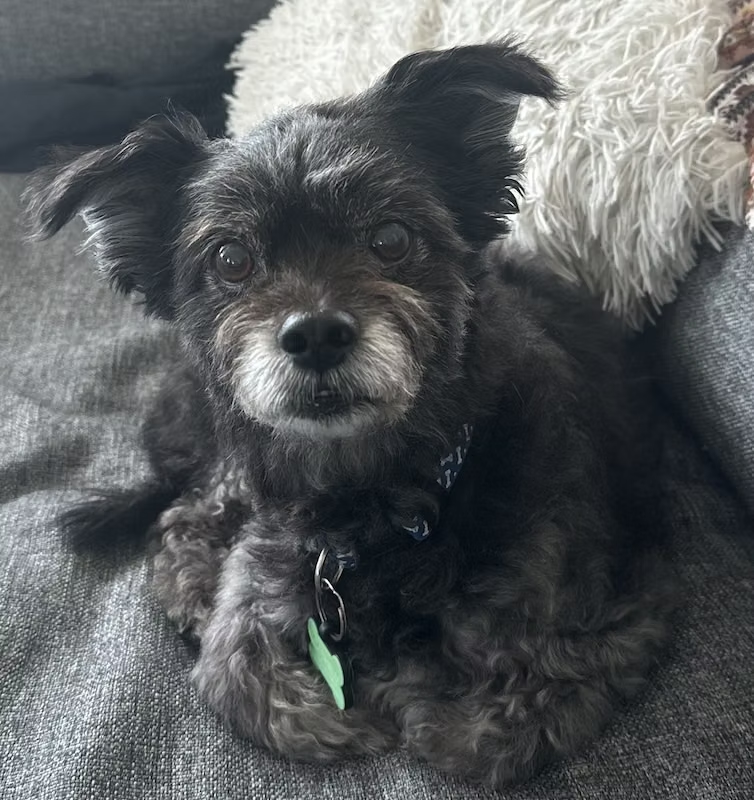
A few of the Yorkshire Terrier profiles members have added to United Pet Club.
The Yorkshire Terrier is a toy breed from England, weighing up to 7 pounds, with a long silky coat and a bold, devoted nature.
The Yorkshire Terrier is a small companion dog that developed in the north of England during the 19th century. Adults typically weigh up to 7 pounds and stand 7 to 8 inches at the shoulder, placing the breed squarely in the toy category. The temperament, however, is closer to that of a working terrier: alert, busy, and quick to react to anything out of the ordinary.
The most recognisable feature is the coat. Kept long, it falls in a straight, fine, glossy curtain of steel blue and tan that can reach the floor. Many owners prefer a shorter trim for daily life, which reduces grooming demands without altering the dog's character. The breed carries itself with an upright, self-assured posture.
Yorkshire Terriers form strong attachments to their people and often shadow one favourite person throughout the day. They adapt readily to apartments and smaller homes, travel well because of their compact size, and stay active and curious well into their senior years.
| Attribute | Detail |
|---|---|
| Origin | England |
| Size | Toy (up to 7 lb) |
| Lifespan | 11 to 15 years |
| Group/role | Companion (terrier origin) |
| Good with | Adults, gentle older children, dog-savvy households |
The Yorkshire Terrier suits people who want a small, devoted companion and can commit to regular coat care. It does well in apartments and with owners who are home regularly. Because of its small, delicate frame, it is a better fit for adults and older children who understand how to handle a toy dog. The breed can live happily with other pets when introduced with care, though its terrier instincts mean it may give chase to smaller animals.
The Yorkshire Terrier was developed in northern England in the mid-1800s, bred down from working terriers kept by mill and mine workers to control vermin.
The breed took shape in the counties of Yorkshire and Lancashire during the mid-19th century. Workers who moved from Scotland to the textile mills and coal pits of northern England brought small terriers with them. Those dogs were crossed with local terrier types to produce a compact, hardworking ratter suited to mills, warehouses, and domestic premises.
Several now-extinct or regional terriers contributed to the early bloodlines, including types such as the Clydesdale and Paisley terriers from Scotland. Early specimens were larger and rougher in coat than the modern dog, and breeders gradually selected for smaller size and a finer, longer coat.
One dog, a male named Huddersfield Ben born in 1865, is widely cited as a foundation sire whose offspring set the type. By the 1870s the breed had moved from working kennels into the show ring and into the parlours of the wealthy, and the name Yorkshire Terrier became standard. The Kennel Club in England recognised the breed in 1886.
The Yorkshire Terrier reached North America in the late 19th century and was recognised by the American Kennel Club in 1885. The Canadian Kennel Club (CKC) recognises the breed in the Toy Group. Through the 20th century it shifted almost entirely from working ratter to household companion and has remained one of the more popular toy breeds since.
The Yorkshire Terrier is a compact toy dog up to 7 pounds with a long, fine, steel blue and tan coat and a level, confident outline.
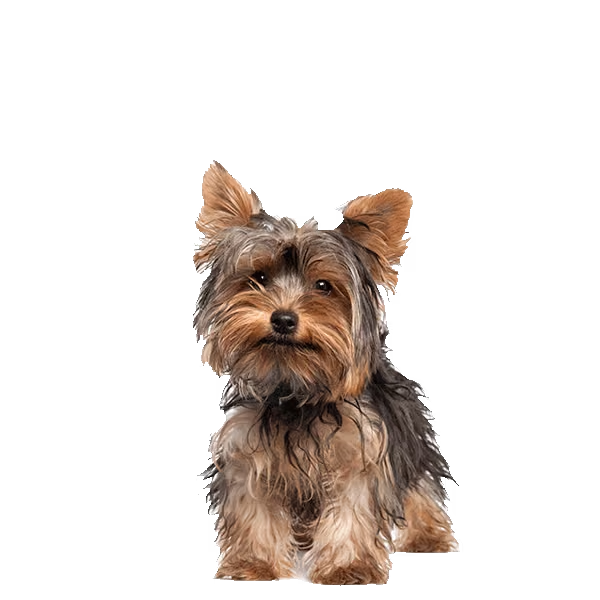
The Yorkshire Terrier has a small, well-proportioned body carried with an upright, self-assured stance. The head is small and flat on top, with a medium muzzle and dark, alert eyes. The ears are small, V-shaped, and carried erect. The body is compact and level along the back, and the tail is carried slightly above the topline.
| Trait | Standard |
|---|---|
| Height | 7 to 8 in (18 to 20 cm) |
| Weight | Up to 7 lb (3.2 kg) |
| Coat | Long, fine, straight, silky, single coat |
| Colours | Steel blue and tan (puppies born black and tan) |
| Eyes | Medium, dark, with dark rims |
The defining feature is a long, glossy single coat with a texture close to human hair. The body colour is a dark steel blue running from the back of the head to the base of the tail, while the head, chest, and legs are a clear golden tan. Puppies are born black and tan and develop the adult blue colour gradually over the first one to two years. Because the coat is a single layer, the breed sheds very little, but the hair grows continuously and needs regular trimming or daily brushing to prevent matting. Many pet owners keep a short, even clip often called a puppy cut for easier upkeep.
Yorkshire Terriers are affectionate and devoted with their owners, bold and alert toward strangers, and energetic for their small size.
The Yorkshire Terrier combines the affection of a lap dog with the boldness of a working terrier. With family, the breed is loving and loyal and often bonds closely with one person. These dogs enjoy close contact and will seek out laps and warm spots, but they are not passive: they stay busy, investigate their surroundings, and want to be part of daily household life.
Toward strangers the Yorkshire Terrier tends to be cautious and watchful. It will often bark to announce visitors or unfamiliar sounds, which makes it an effective small watchdog. Early socialisation helps temper this alertness so it does not become persistent barking or wariness.
With other pets, results vary. Many Yorkshire Terriers live peacefully with other dogs and with cats they were raised alongside. The terrier prey drive can surface around small animals such as rodents, so supervision is sensible. The breed can also show a stubborn, confident streak, and some individuals do not recognise how small they are, which means owners should manage interactions with much larger dogs to keep the Yorkie safe.
| Trait | Rating |
|---|---|
| Affection | 5 |
| Energy | 4 |
| Trainability | 3 |
| Vocalness | 4 |
| Shedding | 1 |
Yorkshire Terriers need regular coat grooming, modest daily exercise, and a warm, secure indoor environment suited to a small toy dog.
The Yorkshire Terrier is well suited to apartments and smaller homes, including the condo and townhouse settings common across Canadian cities. Its single coat offers little insulation, so the breed feels the cold and benefits from a dog sweater or coat outdoors in winter and a warm sleeping spot indoors. Secure fencing or supervised outdoor time matters, because the breed is small enough to slip through gaps and may chase after small animals. Stairs and high furniture can put strain on a tiny frame, so ramps or pet steps help protect the joints and back.
Yorkshire Terriers need a small, calorie-dense diet formulated for toy breeds, fed in measured portions across two or more meals a day.
Yorkshire Terriers do best on a complete diet formulated for small or toy breeds. Because their stomachs and daily food volume are small, the food should be nutrient-dense, with quality protein as the first ingredient. Small kibble sizes are easier to chew and can help reduce plaque build-up. Fresh water should always be available. Watch portions closely, since even small amounts of overfeeding add up quickly on a 7 pound frame and can lead to weight gain.
| Life stage | Amount per day | Meals |
|---|---|---|
| Puppy (2 to 12 months) | About 1/4 to 1/2 cup | 3 to 4 |
| Adult (1 to 7 years) | About 1/4 to 1/2 cup | 2 |
| Senior (7+ years) | About 1/4 to 1/3 cup | 2 |
Keep treats to no more than about 10 percent of daily calories to protect the waistline. Small, soft training treats or pieces of plain cooked chicken work well. Toy breeds are at risk of low blood sugar, especially as young puppies, so regular meals matter more than free feeding. Most Yorkshire Terriers on a complete commercial diet do not need supplements; consult a veterinarian before adding any, including joint or coat products.
Yorkshire Terriers usually live 11 to 15 years and are generally hardy, but the breed is prone to dental disease, luxating patella, and tracheal collapse.
The Yorkshire Terrier is a long-lived breed, with a typical lifespan of 11 to 15 years. Most are healthy, but the small size and certain inherited traits create a few predictable concerns. Routine veterinary care, weight control, and dental hygiene go a long way toward a long, comfortable life.
| Condition | Signs | Note |
|---|---|---|
| Dental disease | Bad breath, tartar, loose teeth | Very common in toy breeds; brush teeth regularly |
| Luxating patella | Skipping gait, intermittent hind-leg lameness | Kneecap slips out of place; ranges from mild to surgical |
| Tracheal collapse | Honking cough, especially when excited or pulling on lead | Use a harness instead of a neck collar |
| Portosystemic shunt | Poor growth, disorientation after meals | Liver blood vessel defect; sometimes treated surgically |
| Hypoglycaemia | Weakness, trembling, collapse in puppies | Low blood sugar; feed regular meals |
Yorkshire Terriers are intelligent and capable learners but can be stubborn and slow to house-train, so they respond best to short, consistent, reward-based sessions.
Yorkshire Terriers are smart and pick up commands quickly when motivated, but the terrier independence can make them selective about following through. They respond far better to praise, treats, and play than to correction. House-training is often the hardest part: small dogs have small bladders, and some Yorkies are slow to learn, so a consistent schedule and crate or pen training help considerably. Keep sessions short and upbeat, since attention can wander. Early socialisation with people, sounds, and other dogs reduces excessive barking and wariness as the dog matures.
Yorkshire Terriers reach maturity around one to two years, carry small litters of two to five puppies after a roughly 63-day pregnancy, and often need close veterinary support due to their small size.
Responsible breeding of Yorkshire Terriers calls for careful planning because of the breed's small size. Females should be physically mature, generally at least one to two years old and in good health, before any breeding. The breed should be screened for inherited conditions such as luxating patella, eye disorders, and liver shunts beforehand.
Gestation lasts about 63 days. Litters are small, commonly two to five puppies, and the puppies are tiny and fragile at birth, often weighing only a few ounces. Because of the small pelvis, some Yorkshire Terriers have difficulty whelping naturally, and veterinary monitoring near the due date is important; a caesarean section is sometimes required.
Newborn puppies are born black and tan and depend entirely on the mother for warmth and nutrition. They are vulnerable to chilling and to low blood sugar, so the nursing area must be kept warm and the puppies watched closely for steady weight gain. Weaning begins around three to four weeks, and puppies typically go to new homes no earlier than eight to twelve weeks, once they are eating well, vaccinated, and socialised. CKC-registered breeders in Canada are bound by a code of ethics that includes minimum go-home age requirements and health documentation.
| Metric | Value |
|---|---|
| Sexual maturity | About 6 to 12 months |
| Recommended breeding age (female) | 1 to 2 years |
| Gestation | About 63 days |
| Average litter size | 2 to 5 puppies |
| Birth weight | About 3 to 5 oz (85 to 140 g) |
| Weaning | 3 to 4 weeks |
| Go-home age | 8 to 12 weeks |
A free lifetime United Pet Club record for your Yorkshire Terrier, with the microchip registered at no cost and kept current through every move.
Canadian shelters and vet clinics scan strays at intake as a matter of routine, and the scan helps only when a registry ties your Yorkshire Terrier to a phone that still rings. Registering your dog with United Pet Club takes a few minutes, never costs anything, and works whether or not a chip is in place yet. Add the breed, a photo, and your postal code, and the record is live.
The vet implants the chip and leaves the recording part to you. Register the microchip on the free lifetime plan: any brand a Canadian clinic implants is accepted, updates after a change of address are free, and a current record keeps the border paperwork the Canadian Food Inspection Agency asks about from becoming a scramble. Create your free account and finish both in one evening.
Open a free United Pet Club account, fill in your Yorkshire Terrier's name, breed details, and a photo, and save. The lifetime plan is free, no chip required, and the chip number can be attached after your vet appointment.
Add the 15-digit number to your account along with your address, postal code, and phone number. Registration and unlimited updates are free for life, and chips from any manufacturer a Canadian vet uses are accepted.
There is no federal requirement, but several cities fold chips into their licensing bylaws, and travel with the dog goes smoother when the chip is registered. The record, not the implant, is what identifies your Yorkshire Terrier.
Nothing, ever. United Pet Club's lifetime plan covers the profile, the chip record, and every update without fees or renewals.
Common questions about Yorkshire Terrier size, temperament, grooming, lifespan, suitability for families, and availability.
Yorkshire Terriers are a toy breed. Adults stand about 7 to 8 inches at the shoulder and weigh up to around 7 pounds.
They are affectionate and devoted with their families, alert and bold toward strangers, and energetic and curious for their size. They often bark to announce visitors and can show a confident, stubborn streak.
Their needs are moderate but coat-intensive. A long coat requires daily brushing, while a short pet clip lowers grooming time considerably. Exercise needs are modest at about 20 to 30 minutes a day, and dental care is important throughout the dog's life.
The typical lifespan is 11 to 15 years. Good dental care, weight control, and routine veterinary visits support a long life.
They adapt well to apartments and smaller homes, which suits the condo and urban living common in many Canadian cities. They are a good fit for adults and gentle older children. Because they are small and delicate, they are less ideal for homes with very young children or boisterous handling.
No. They have a single, hair-like coat that sheds very little, which is one reason the breed is popular with people who prefer less loose hair around the home. The coat does grow continuously and needs regular trimming or brushing.
Yes. The Yorkshire Terrier is one of the more common toy breeds in Canada and can be found through CKC-registered breeders or breed-specific rescue organisations.