The Weimaraner is a devoted, fearless hunting companion known for its sleek silver-gray coat and boundless energy.
How the Weimaraner coat is built, and what that means when you groom it.
A few of the Weimaraner profiles members have added to United Pet Club.
The Weimaraner is a large German gun dog with a silver-grey coat, high energy, and a strong attachment to its people.
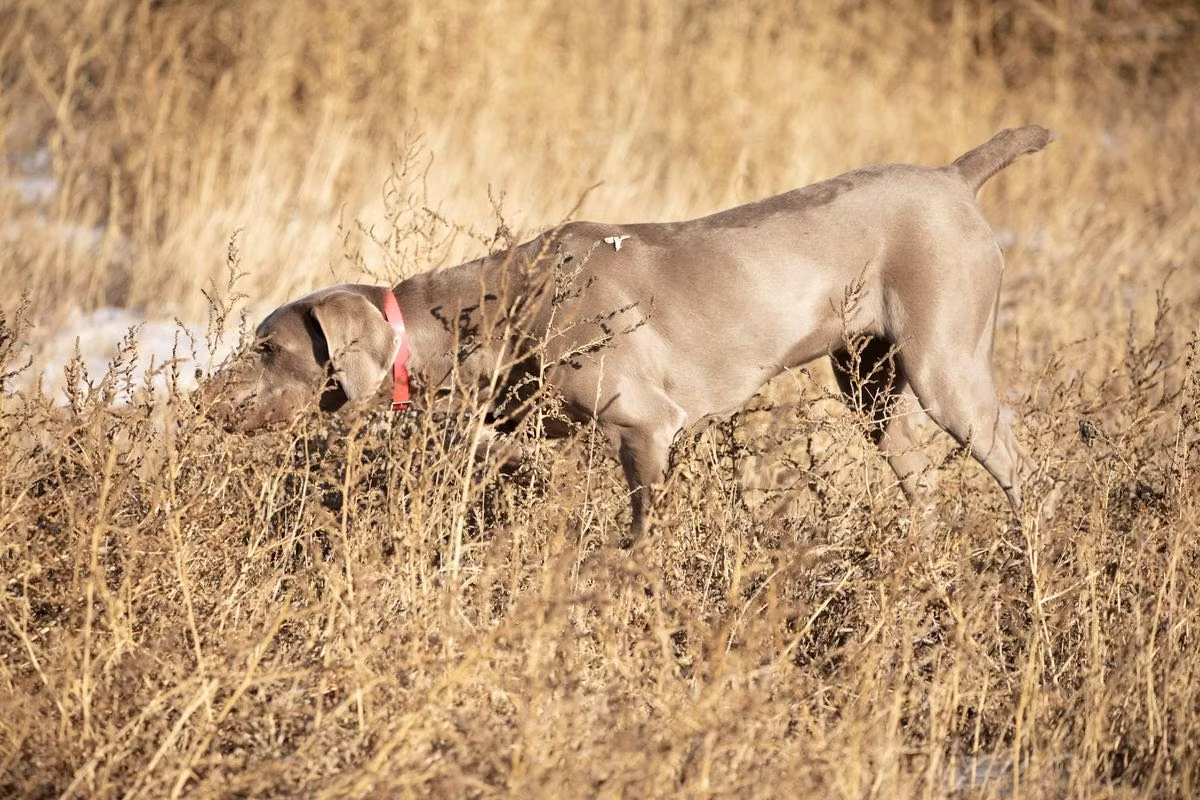
The Weimaraner is a large hunting dog developed in Germany for tracking and retrieving game. It stands out for its short silver-grey coat and pale amber or blue-grey eyes, a combination that earned it the nickname the Gray Ghost.
This is an athletic, fast-moving breed developed to work long hours in the field across varied terrain. Adults typically weigh 25 to 40 kg and need substantial daily exercise to remain settled at home. A Weimaraner that is under-stimulated or under-exercised will quickly become restless and prone to destructive behaviour.
The breed is devoted to its family and forms close bonds, often following one person from room to room. It is intelligent and alert, which makes it trainable but also prone to boredom. It tends to be reserved with strangers and can be protective of its household.
| Attribute | Detail |
|---|---|
| Origin | Germany |
| Size | Large |
| Lifespan | 10 to 13 years |
| Group / role | Sporting / pointing and retrieving gun dog |
| Good with | Active families and experienced owners; requires supervision around small pets |
The Weimaraner is well matched to owners committed to daily vigorous exercise who want a dog that stays engaged with the family. It thrives in an active household where it is seldom left alone for extended periods. It is poorly suited to condominium or apartment living, first-time dog owners, or households that are absent for much of the day.
The Weimaraner was developed in early 19th-century Germany at the court of Weimar as an all-purpose hunting dog for large game and later for birds.
The breed takes its name from the court of Weimar in the Grand Duchy of Saxe-Weimar-Eisenach, in what is now central Germany. Nobles there are credited with shaping the dog in the early 1800s as a hunting companion for their estates.
Early Weimaraners were used on large game such as deer, boar, and bear. As those animals became scarcer across Germany, hunters redirected the breed toward birds and smaller game, developing it into a pointing and retrieving gun dog that worked both upland and water.
The German breed club for the Weimaraner was established in 1897, and breeding was tightly controlled. Ownership was restricted to club members, which kept the population small and the type consistent for decades.
The breed arrived in Canada in the mid-20th century and quickly found favour among hunters on the prairies and in Ontario, where field trials became a popular venue for testing the Weimaraner's versatility. The Canadian Kennel Club (CKC) recognises the Weimaraner within the Sporting Group. Its striking grey coat and trainability brought it wider popularity in Canadian homes in the decades following the Second World War.
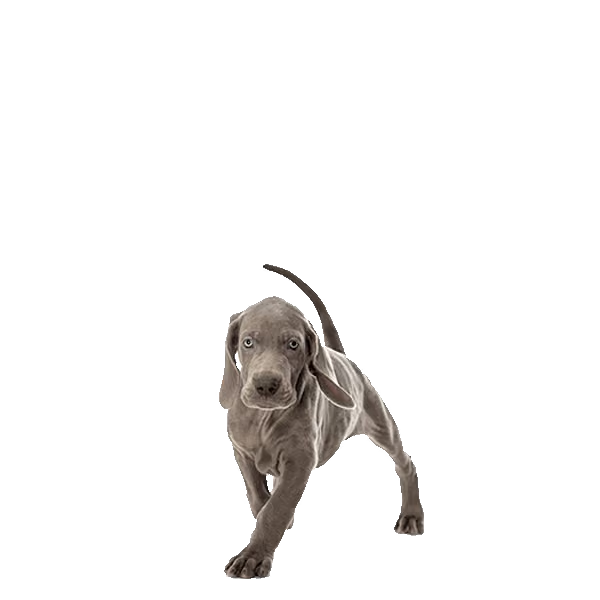
The Weimaraner is a large, athletic dog with a short silver-grey coat, an aristocratic head, and light amber or blue-grey eyes.
The Weimaraner has a streamlined, muscular build made for speed and stamina. The body is moderately long with a deep chest, a level topline, and long limbs that give it an effortless, ground-covering trot.
The head is clean and refined with long, folded ears set high on the skull. The eyes range from light amber to grey or blue-grey and contribute to the breed's distinctive expression. The tail is traditionally docked in some countries, though docking is prohibited in Canada, where the natural tail is left long and tapering.
| Trait | Detail |
|---|---|
| Height | Males 59 to 70 cm, females 57 to 65 cm at the shoulder |
| Weight | Males 30 to 40 kg, females 25 to 35 kg |
| Coat | Short, smooth, and sleek; a rarer long-haired variety also exists |
| Colours | Shades of grey, from silver-grey to mouse-grey |
| Eyes | Light amber, grey, or blue-grey |
The standard coat is short, hard, and close-lying, appearing in shades of grey that can look almost metallic in bright light. A small white mark on the chest is permitted in most standards. A long-haired variety occurs, with a coat of 3 to 5 cm and feathering on the ears, legs, and tail. The short coat sheds steadily year-round despite its brevity.
The Weimaraner is devoted, intelligent, and energetic, deeply attached to its family but reserved with strangers and demanding of attention.
The Weimaraner is intensely people-oriented and wants to be part of everything its family does. This closeness makes it affectionate and responsive, but it also means the breed does not cope well with being left alone. Separation can lead to barking, pacing, and damage to the home.
With family, the breed is playful and highly devoted. It typically gets along well with older children who know how to interact calmly with a powerful, high-energy dog, although its size and boisterousness can easily overwhelm very young children. It is alert and often cautious around strangers, and will reliably bark to signal visitors.
A strong prey drive, inherited from its hunting heritage, means the Weimaraner may give chase to cats, rabbits, birds, and other small animals. It can share a home with other dogs provided introductions are handled carefully. Thorough socialisation from puppyhood helps reduce wariness and keeps the drive manageable.
During harsh Canadian winters, owners need a plan for indoor exercise: nose-work games, indoor fetch in a long hallway, or treadmill conditioning all serve as effective substitutes when conditions outside are unsafe.
| Trait | Rating |
|---|---|
| Affection | 5 |
| Energy | 5 |
| Trainability | 4 |
| Vocalness | 3 |
| Shedding | 3 |
The Weimaraner needs little grooming but a large amount of daily exercise and close human companionship to stay healthy and well behaved.
The short coat is easy to maintain, but the breed's exercise and companionship needs are high and non-negotiable. A Weimaraner that is under-exercised or left alone too often will usually develop problem behaviour.
The Weimaraner is best suited to a home with a securely fenced yard and people who are around for much of the day. It is not an outdoor kennel dog; it needs to live indoors with its family. Fences should be high and solid, as the breed can jump and is a capable escape artist when bored.
The Weimaraner needs a complete, balanced diet suited to a large active dog, divided across the day to lower the risk of bloat.
Feed a complete diet formulated for large, active breeds, with quality protein to support muscle and steady energy. Adjust portions to body condition rather than feeding to a fixed figure, since working and active dogs burn more calories than sedentary ones. Because the breed is deep-chested and prone to bloat, meals should be divided and never given immediately before or after hard exercise.
| Life stage | Amount per day | Meals |
|---|---|---|
| Puppy (2 to 6 months) | Per product guide for growth, divided | 3 to 4 |
| Junior (6 to 12 months) | Roughly 300 to 400 g of quality dry food | 2 to 3 |
| Adult (1 to 7 years) | Roughly 350 to 450 g of quality dry food | 2 |
| Senior (7 years and older) | Reduced calories to match lower activity | 2 |
Keep treats to no more than roughly 10 percent of daily calories so the diet stays balanced. A dog on a complete commercial food usually requires no extra supplements; discuss joint support or other additions with a veterinarian before starting them. Fresh water should be available at all times.
The Weimaraner is generally healthy with a lifespan of 10 to 13 years, but is prone to bloat and a few inherited conditions.
The Weimaraner is a sturdy working breed with a typical lifespan of 10 to 13 years. The deep, narrow chest raises the risk of gastric dilatation-volvulus, commonly called bloat: a rapid, life-threatening emergency that requires immediate veterinary intervention. Sourcing from breeders who health-screen their stock substantially reduces the likelihood of several inherited conditions.
| Condition | Signs | Note |
|---|---|---|
| Gastric dilatation-volvulus (bloat) | Swollen, hard abdomen, retching without vomiting, restlessness | A veterinary emergency; act immediately |
| Hip dysplasia | Stiffness, limping, reluctance to rise or jump | Reduced by hip screening of breeding stock |
| Hypothyroidism | Weight gain, lethargy, coat and skin changes | Managed with daily medication |
| Von Willebrand disease | Excess bleeding after injury or surgery | An inherited clotting disorder; DNA testing available |
| Entropion | Eye irritation, squinting, tearing | Inward-rolling eyelid; may require surgery |
The Weimaraner is intelligent and eager to work, making it highly trainable for owners who are consistent and start early.
The Weimaraner is a fast learner that thrives when given purposeful tasks, but the same intelligence and drive that make it rewarding to train also mean it needs early, structured guidance to stay well behaved. Training is most effective when paired with plentiful physical exercise: a tired dog attends and retains far better than a frustrated one. Keep sessions short and varied, and introduce the breed early to a wide range of people, other animals, and everyday urban and rural situations.
The Canadian Kennel Club sanctions field trials and hunt tests that offer outstanding structured outlets for the Weimaraner's instincts. These events attract active participants across the prairies, in southern Ontario, and in British Columbia, and are open to owners at all skill levels.
The Weimaraner reaches breeding maturity at around two years, carries an average litter of six to eight puppies, and needs health-tested parents.
Responsible breeding waits until both parents are physically and mentally mature, usually around two years of age, even though dogs can reproduce earlier. Breeding stock should be screened for hip dysplasia, eye conditions, and clotting disorders before mating, since several inherited problems are present in the breed.
Gestation lasts about 63 days. Litters are typically six to eight puppies, though they can be larger. The mother and pups need a quiet, warm whelping space and close monitoring during and after birth. Puppies should remain with the dam and littermates until at least eight weeks, with early socialisation and handling beginning while still with the litter to set up well-adjusted adults.
CKC-registered breeders in Canada are encouraged to record health clearances and register litters through the CKC, providing traceability for buyers.
| Metric | Value |
|---|---|
| Breeding maturity | Around 2 years |
| Gestation period | About 63 days |
| Average litter size | 6 to 8 puppies |
| Weaning age | About 6 to 8 weeks |
| Recommended go-home age | 8 weeks or later |
A free lifetime United Pet Club record for your Weimaraner, with the microchip registered at no cost and kept current through every move.
Put your Weimaraner on the registry before the gate is ever left open. The free United Pet Club profile stores the dog's name, birth date, and photo beside your contact details, and it stays free for as long as the dog is with you. Dog registration asks for a few fields, not a fee.
Sixty seconds with a scanner reads the chip; whether your Weimaraner gets home depends on the record behind the number. Microchip registration with United Pet Club is free for life, takes every brand sold in Canada, and keeps the record searchable on both sides of the border. Sign up free and give the number somewhere to point.
Open a free United Pet Club account, fill in your Weimaraner's name, breed details, and a photo, and save. The lifetime plan is free, no chip required, and the chip number can be attached after your vet appointment.
Add the 15-digit number to your account along with your address, postal code, and phone number. Registration and unlimited updates are free for life, and chips from any manufacturer a Canadian vet uses are accepted.
There is no federal requirement, but several cities fold chips into their licensing bylaws, and travel with the dog goes smoother when the chip is registered. The record, not the implant, is what identifies your Weimaraner.
Nothing, ever. United Pet Club's lifetime plan covers the profile, the chip record, and every update without fees or renewals.
Common questions about the Weimaraner's size, temperament, care needs, lifespan, and suitability as a family companion.
It is a large breed. Males stand about 59 to 70 cm at the shoulder and weigh 30 to 40 kg, while females are slightly smaller at 57 to 65 cm and 25 to 35 kg.
It is devoted, intelligent, energetic, alert, and fearless. It bonds closely with its family, tends to be reserved with strangers, and has a strong prey drive.
Grooming is straightforward thanks to the short coat, but the breed is demanding overall. It needs 1.5 to 2 hours of vigorous exercise daily and close human companionship, so it is best suited to experienced, active owners.
The typical lifespan is 10 to 13 years. A good diet, regular exercise, and routine veterinary care help a dog reach the upper end of that range.
It can be an excellent family dog for active households with older children. Its size and energy can overwhelm very young children, and it should be supervised around small pets.
Not for long. The breed is prone to separation anxiety and can become destructive or noisy when left alone too often, so it suits homes where someone is around for most of the day.
The nickname comes from its sleek silver-grey coat combined with light amber or blue-grey eyes, which give it a pale, ghostly appearance.