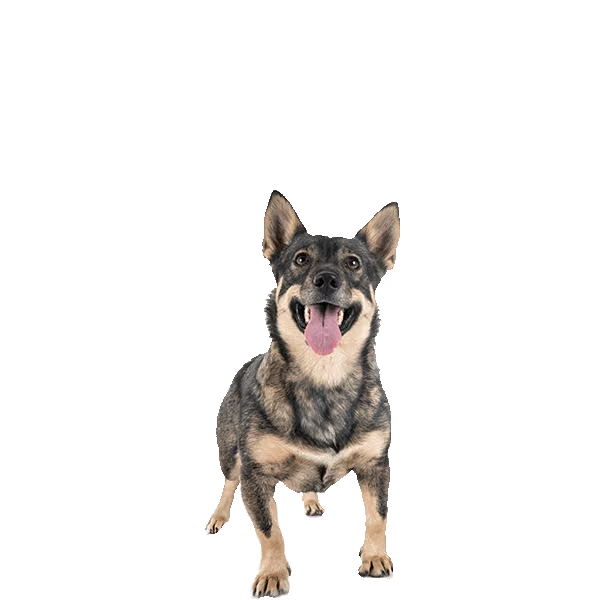
The Swedish Vallhund is a sturdy, spitz-type cattle herder known for its friendly disposition and watchful, energetic nature.
How the Swedish Vallhund coat is built, and what that means when you groom it.
Critical: A Swedish Vallhund should not be shaved.
The undercoat keeps heat out as well as in, and the outer coat shields the skin from sun and insect bites. Clipping the whole coat off removes both. It often grows back patchy, soft or a different colour, and in some animals the guard hairs never return properly. Brush the undercoat out instead of cutting it off.
Information: A Swedish Vallhund drops its undercoat in heavy bursts.
The undercoat comes out in heavy bursts over a few weeks. An undercoat rake, or a bath followed by a proper blow-dry, clears it far faster than daily brushing. Clipping the coat down is not a shortcut for this.
A few of the Swedish Vallhund profiles members have added to United Pet Club.
The Swedish Vallhund is a small, long-bodied spitz-type herding dog from Sweden, valued for its friendly nature and alert, watchful temperament.
The Swedish Vallhund is a small herding dog built long and low to the ground. It carries the upright ears, wedge-shaped head, and dense double coat of the spitz family, combined with a body shape that recalls the corgi. Adults stand roughly 12 to 14 inches at the shoulder and weigh between 20 and 35 pounds, so the breed is compact but solid rather than delicate.
The character of the breed is friendly and people-focused. Swedish Vallhunds bond closely with their families and stay watchful toward anything new. They were bred to move cattle, and that working background shows in their energy, their willingness to bark, and their interest in having a job. They are intelligent and learn quickly, which makes them rewarding to train and prone to boredom when left idle.
This is an active small dog rather than a lap dog. It does well with owners who can offer daily exercise, mental work, and regular companionship. Households that want a quiet, low-maintenance pet may find the breed too vocal and too busy.
| Attribute | Detail |
|---|---|
| Origin | Sweden |
| Size | Small (12 to 14 inches, 20 to 35 pounds) |
| Lifespan | 12 to 15 years |
| Group/role | Herding (cattle drover) |
| Good with | Families, children, and other dogs when socialised |
The Swedish Vallhund fits an active home that wants a small, trainable companion with a guarding streak. It suits people who enjoy dog sports, daily walks, and training games. It is less suited to apartments with strict noise limits or to owners away from home for long stretches, because the breed is vocal and wants company.
The Swedish Vallhund is an old Swedish farm breed that herded cattle for centuries and was brought back from near extinction in the 1940s.
The Swedish Vallhund, known in Sweden as the Vastgotaspets, comes from the Vastergotland region of southern Sweden. It worked on farms for centuries as a cattle drover, nipping at the heels of livestock to move them and barking to warn of intruders. Its low build let it dodge kicks while working close to the legs of cattle.
The origin of the breed is tied to the broader history of short-legged herding dogs in northern Europe. The Swedish Vallhund and the Welsh Corgi share a similar shape, and historians have long discussed whether the two types influenced one another through contact between Scandinavia and Britain. The exact direction of that exchange is not settled, so it is fair to describe the relationship as a shared northern European lineage rather than a proven line of descent.
By the early twentieth century the breed had become uncommon and was close to disappearing. In the 1940s a Swedish breeder named Bjorn von Rosen, together with K. G. Zettersten, worked to locate surviving dogs and rebuild the population. Their effort kept the breed alive.
The breed was recognised by the Swedish Kennel Club in 1943. The Canadian Kennel Club recognises the Swedish Vallhund in the Herding Group. It remains a relatively uncommon breed in Canada, and prospective owners typically contact the breed club directly and expect a waiting period before a puppy becomes available.
The Swedish Vallhund is a small, powerful dog with a long body, short legs, a wedge-shaped head, pricked ears, and a wolf-grey sable double coat.
The Swedish Vallhund has a long, low silhouette set on short, sturdy legs. Despite the compact frame, the body is muscular and the dog gives an impression of strength and stamina rather than fragility. The head is clean and wedge-shaped, the muzzle tapers, and the ears stand upright and pointed in the spitz manner. The overall outline is balanced, with depth of chest and a level topline.
Tail length varies in the breed. Some dogs are born with a full tail, others with a naturally short or bobtail. Both are seen and accepted in the breed standard.
| Trait | Standard |
|---|---|
| Height | 12 to 14 inches (31 to 35 cm) at the shoulder |
| Weight | 20 to 35 pounds (9 to 16 kg) |
| Coat | Medium-length double coat, harsh topcoat over a soft dense undercoat |
| Colours | Wolf-grey sable in shades from grey to red, with lighter markings |
| Eyes | Medium, oval, dark brown |
The coat is a weatherproof double layer. The outer hairs are harsh and close-lying, and the undercoat is soft and dense, which gives the breed good protection in cold conditions typical of a Canadian winter. The accepted colour is a wolf-grey sable, ranging through grey, greyish brown, greyish yellow, and reddish tones. Lighter shading appears on the muzzle, throat, chest, belly, lower legs, and feet, and many dogs show a faint harness-like pattern over the shoulders. The coat sheds seasonally and needs little trimming.
The Swedish Vallhund is friendly, intelligent, and energetic, affectionate with its family while staying alert and watchful toward strangers.
The Swedish Vallhund is an outgoing and affectionate dog that wants to be part of family life. With its own people it is warm, playful, and eager to join whatever is happening. The breed is intelligent and quick to learn, traits that come from its history as a working farm dog.
With strangers the breed is watchful rather than aggressive. It tends to announce visitors and keep an eye on new arrivals before it relaxes, which makes it an effective small watchdog. Early socialisation helps it tell a genuine concern from an ordinary event.
With children the Swedish Vallhund is usually patient and sturdy enough for active play, though its herding instinct can lead it to nudge or chase moving feet, so it benefits from guidance around young kids. With other dogs it is generally sociable when raised together. Its herding drive means it may try to control the movement of other pets, and supervision around small animals is sensible. The breed is naturally vocal and will bark to alert, herd, or express excitement.
| Trait | Rating |
|---|---|
| Affection | 5 |
| Energy | 4 |
| Trainability | 5 |
| Vocalness | 4 |
| Shedding | 4 |
The Swedish Vallhund needs moderate grooming, daily exercise, and mental work, and adapts to most homes that offer activity and company.
The Swedish Vallhund is a fairly low-maintenance breed in terms of coat care, but it has steady needs for exercise and engagement.
The breed adapts to houses with yards and to smaller homes if it gets enough daily exercise. Its dense double coat gives it good tolerance of Canadian cold, and it should have shade and water in summer heat. It prefers to live close to its family and does best when it is not left alone for long periods.
The Swedish Vallhund needs a balanced diet matched to its size and activity, with careful portion control because the breed gains weight easily.
The Swedish Vallhund does well on a complete, balanced dog food suited to its life stage and activity level. As an active small breed it needs quality protein and fat for energy, but its long back makes excess weight a real concern. Extra pounds put strain on the spine and joints, so portions should be measured rather than free-fed. Always provide fresh water.
| Life stage | Amount per day | Meals |
|---|---|---|
| Puppy (2 to 6 months) | 1 to 1.5 cups, adjusted by growth | 3 to 4 |
| Puppy (6 to 12 months) | 1 to 1.5 cups | 2 to 3 |
| Adult | 0.75 to 1.5 cups by size and activity | 2 |
| Senior | 0.75 to 1.25 cups, fewer calories | 2 |
Keep treats to about 10 percent of daily calories and count them against meal portions to prevent weight gain. Most Swedish Vallhunds on a complete diet need no extra supplements. Discuss joint support, fish oil, or other additions with a veterinarian, since needs depend on the individual dog.
The Swedish Vallhund is generally healthy with a 12 to 15 year lifespan, though it can carry an eye disorder and joint and back conditions linked to its long-bodied build.
The Swedish Vallhund is a generally hardy and long-lived breed, with a typical lifespan of 12 to 15 years. Like all breeds it has a few known health concerns, and its long back and short legs add some risk of spinal and joint problems. Buying from breeders who screen their dogs reduces the chance of inherited disease. In Canada, reputable breeders often follow health-testing guidelines recommended by the CKC or the Swedish Vallhund Club of Canada.
| Condition | Signs | Note |
|---|---|---|
| Retinopathy (Swedish Vallhund eye disease) | Gradual vision loss, night blindness | Inherited; a DNA test exists for the breed |
| Hip dysplasia | Stiffness, limping, trouble rising | Screen breeding stock; manage weight |
| Patellar luxation | Skipping gait, intermittent lameness | Ranges from mild to surgical |
| Intervertebral disc disease | Back pain, weakness, reluctance to move | Linked to the long-backed build |
The Swedish Vallhund is highly trainable and eager to work, responding best to consistent, reward-based methods that also channel its energy and barking.
The Swedish Vallhund is intelligent and quick to learn, which makes it one of the more trainable small breeds. It enjoys having tasks and thrives on the back-and-forth of training. The same intelligence means it gets bored with repetition and can become independent if sessions are dull, so short and varied lessons work best. Because the breed is naturally vocal and inclined to herd, early training should address barking and the urge to chase moving people or animals.
Responsible Swedish Vallhund breeding pairs health-tested adults, follows a roughly nine-week pregnancy, and produces small to medium litters that need early socialisation.
Breeding a Swedish Vallhund responsibly starts with health-tested parents. Because the breed carries an inherited eye disorder and is prone to joint and back conditions, breeders should DNA test for retinopathy and screen hips before pairing dogs. Females usually reach maturity around 18 to 24 months, and breeding before full maturity is discouraged.
After a successful mating, pregnancy lasts roughly 63 days, or about nine weeks. Litters tend to be small to medium for the breed. The early weeks of a litter call for warmth, careful feeding of the dam, and veterinary checks for both mother and puppies.
Puppies need gentle handling and broad socialisation from a young age. Exposing them to varied people, sounds, and surfaces during the early weeks helps produce confident adults and tempers the breed's watchful streak. Because the long back is sensitive to injury, young puppies should be kept from repeated jumping during growth.
| Metric | Value |
|---|---|
| Sexual maturity | 6 to 12 months (breeding recommended at 18 to 24 months) |
| Gestation period | About 63 days |
| Average litter size | 4 to 6 puppies |
| Weaning age | 6 to 8 weeks |
| Recommended health tests | Eye DNA test, hip evaluation |
A free lifetime United Pet Club record for your Swedish Vallhund, with the microchip registered at no cost and kept current through every move.
Canadian shelters and vet clinics scan strays at intake as a matter of routine, and the scan helps only when a registry ties your Swedish Vallhund to a phone that still rings. Registering your dog with United Pet Club takes a few minutes, never costs anything, and works whether or not a chip is in place yet. Add the breed, a photo, and your postal code, and the record is live.
The vet implants the chip and leaves the recording part to you. Register the microchip on the free lifetime plan: any brand a Canadian clinic implants is accepted, updates after a change of address are free, and a current record keeps the border paperwork the Canadian Food Inspection Agency asks about from becoming a scramble. Create your free account and finish both in one evening.
Open a free United Pet Club account, fill in your Swedish Vallhund's name, breed details, and a photo, and save. The lifetime plan is free, no chip required, and the chip number can be attached after your vet appointment.
Add the 15-digit number to your account along with your address, postal code, and phone number. Registration and unlimited updates are free for life, and chips from any manufacturer a Canadian vet uses are accepted.
There is no federal requirement, but several cities fold chips into their licensing bylaws, and travel with the dog goes smoother when the chip is registered. The record, not the implant, is what identifies your Swedish Vallhund.
Nothing, ever. United Pet Club's lifetime plan covers the profile, the chip record, and every update without fees or renewals.
Common questions about the Swedish Vallhund cover its size, temperament, care needs, lifespan, suitability for families, and availability.
It is a small breed. Adults stand about 12 to 14 inches at the shoulder and weigh roughly 20 to 35 pounds, with a long body on short legs.
It is friendly and affectionate with its family, intelligent, energetic, and watchful toward strangers. The breed is naturally vocal and has a strong herding instinct.
Coat care is easy, with weekly brushing and heavier shedding twice a year. The bigger commitment is daily exercise and mental work, since a bored Vallhund tends to bark and find its own entertainment.
The typical lifespan is 12 to 15 years. Keeping the dog at a healthy weight and using a breeder who screens for eye and joint conditions supports a long, healthy life.
Yes. It is usually patient and sturdy with children and sociable with other dogs when socialised. Its herding drive can lead it to nudge or chase moving feet, so it benefits from supervision around young kids.
The breed is relatively uncommon in Canada. Finding a puppy typically means contacting the Swedish Vallhund Club of Canada or the CKC breed directory and joining a waiting list rather than buying on short notice.
They can. The breed was bred to bark while herding cattle, so it is vocal by nature. Early training of a quiet cue and enough daily activity help keep barking under control.



