The Spinone Italiano is a gentle, sociable gundog with a wiry coat and a calm, devoted disposition.
How the Spinone Italiano coat is built, and what that means when you groom it.
Caution: A Spinone Italiano coat should be hand-stripped rather than clipped.
A wire coat is meant to be pulled out at the root once the hair is ready to release. Clippers cut it off part way instead, leaving the soft undercoat behind. The result is a coat that grows back limp and faded, and the weatherproof texture only returns after the hair is stripped out again.
A few of the Spinone Italiano profiles members have added to United Pet Club.
The Spinone Italiano is a versatile Italian pointing gundog celebrated for its wiry coat, patient temperament, and methodical hunting style. A devoted family companion as much as a capable sporting dog.
The Spinone Italiano is one of Italy's oldest and most beloved gun dogs, bred across the centuries to hunt on every terrain, from the dense underbrush of the Po Valley to the rocky hillsides of the Apennines. Rugged yet gentle, this breed brings a rare combination of working ability and warm-hearted companionship to every household.
Recognised by the Canadian Kennel Club in the Sporting group, the Spinone earns its keep as a close-working pointer and retriever, all while remaining calm and affectionate at home.
| Attribute | Detail |
|---|---|
| Origin | Italy |
| Group | Sporting / pointing gundog |
| Weight | 28–39 kg |
| Lifespan | 10–12 years |
| Coat | Wiry, rough, dense |
The Spinone Italiano is one of Italy's oldest and most beloved gun dogs, bred across the centuries to hunt on every terrain, from the dense underbrush of the Po Valley to the rocky hillsides of the Apennines. Rugged yet gentle, this breed brings a rare combination of working ability and warm-hearted companionship to every household.
Recognised by the Canadian Kennel Club in the Sporting group, the Spinone earns its keep as a close-working pointer and retriever, all while remaining calm and affectionate at home.
Tracing its lineage to ancient Italy, the Spinone Italiano is among Europe's oldest pointing breeds. Its development spanned centuries of selective hunting in varied Italian terrain.
The roots of the Spinone Italiano stretch back at least to the 15th century, with artwork and written accounts placing wire-coated hunting dogs in northern Italy long before formal breed registries existed. The breed takes its name from the Italian word spino, a thorny shrub, referring both to the dense terrain it hunted through and to the coarse, prickly texture of its coat.
For generations, farmers and nobility alike relied on the Spinone's steady, methodical approach to the hunt. Unlike faster continental breeds that raced ahead, the Spinone worked at a deliberate trot, staying within gun range and thoroughly combing every patch of cover. This style made it invaluable in the steep, wooded countryside of Piedmont, Lombardy, and the Veneto.
The World Wars devastated the breed's population, and dedicated Italian fanciers spent decades rebuilding the Spinone from dwindling stock. Their efforts succeeded: the Spinone Italiano was recognised internationally and gained a devoted following across Europe and North America throughout the latter half of the 20th century.
A substantial, square-built dog dressed in a dense wiry coat, the Spinone's rugged appearance perfectly reflects its heritage as a tough-weather hunting companion.
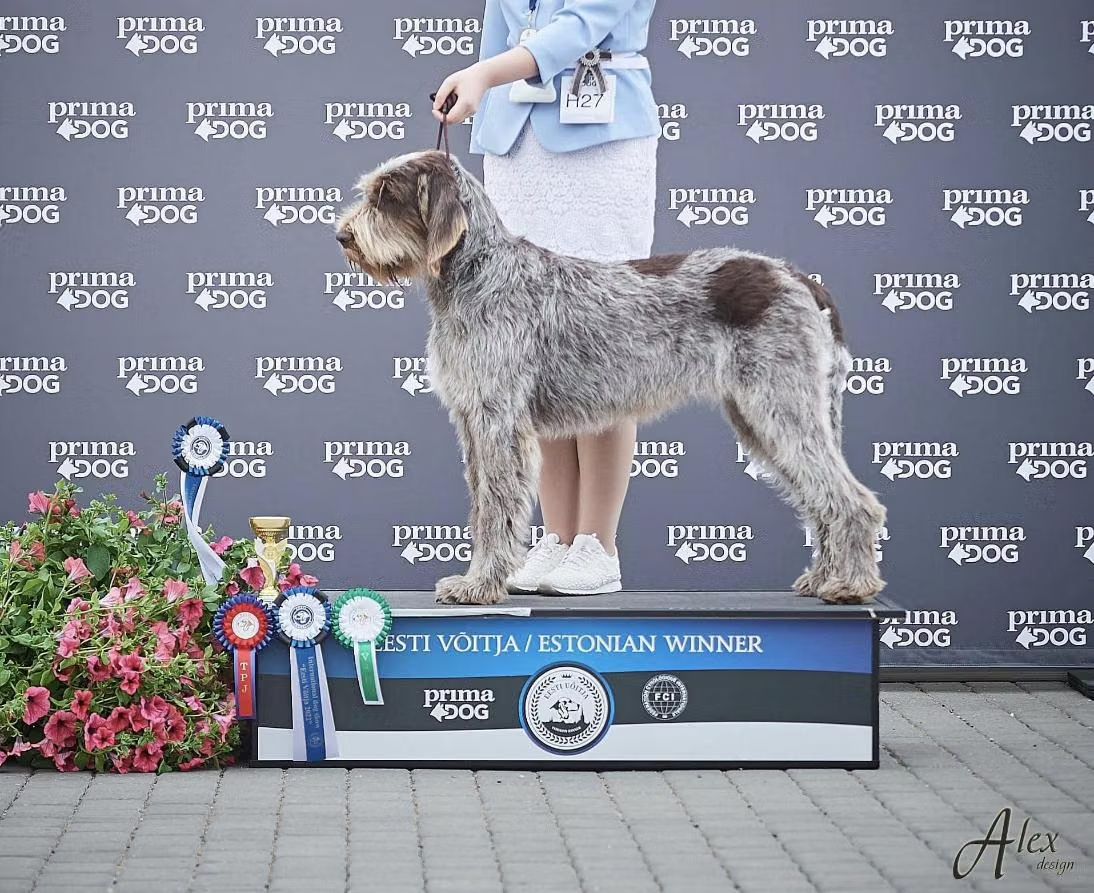
The Spinone Italiano presents a large, well-muscled frame with a nearly square outline. Its most defining feature is the wiry, rough-textured coat, which forms a protective barrier against cold, wet, and thorny brush. The coat lies flat, is 4–6 cm long over the body, and is shorter on the head, ears, and lower legs. A modest beard and moustache add to its distinguished, somewhat world-weary expression.
The head is large and long, with a gentle, human-like gaze that owners often describe as deeply expressive. Eyes range from ochre to dark amber, complementing the coat colour. Ears are triangular, set level with the eye, and hang close to the cheek.
The tail is traditionally docked to half length in countries where the practice remains legal, though many Canadian breeders now prefer to leave it natural.
| Colour | Notes |
|---|---|
| White | Pure white acceptable |
| White & Orange | Most common; orange patches or roan |
| Orange Roan | Fine intermingling of orange and white |
| White & Chestnut Brown | Brown patches or saddle |
| Brown Roan | Chestnut and white intermixed |
The Spinone Italiano presents a large, well-muscled frame with a nearly square outline. Its most defining feature is the wiry, rough-textured coat, which forms a protective barrier against cold, wet, and thorny brush. The coat lies flat, is 4–6 cm long over the body, and is shorter on the head, ears, and lower legs. A modest beard and moustache add to its distinguished, somewhat world-weary expression.
The head is large and long, with a gentle, human-like gaze that owners often describe as deeply expressive. Eyes range from ochre to dark amber, complementing the coat colour. Ears are triangular, set level with the eye, and hang close to the cheek.
The tail is traditionally docked to half length in countries where the practice remains legal, though many Canadian breeders now prefer to leave it natural.
Famously docile, patient, and devoted, the Spinone Italiano bonds deeply with family members of all ages and is known for its tolerant, almost comedic personality.
Few large breeds match the Spinone's reputation for even-tempered gentleness. This is a dog that thrives on human contact, not merely tolerating the family scene but actively seeking out closeness with every member, including small children and seniors. Its patient, unhurried nature makes it forgiving of the rough-and-tumble that comes with kids, and its size rarely translates to aggression or dominance.
The Spinone is not a guard dog by instinct. It may alert to strangers with a bark or two, but its default response to newcomers is curious friendliness rather than suspicion. Socialisation from puppyhood ensures this openness remains well-mannered and confident.
In the field, the breed's personality shifts slightly, it becomes focused and methodical, working at a deliberate pace and consulting its handler frequently. This close-working behaviour at hunt carries over into daily life as a desire to stay near and please.
The Spinone does not respond well to harsh correction. Positive reinforcement methods suit its sensitive nature far better, and training sessions should feel like collaborative activities rather than drilling.
| Trait | Rating |
|---|---|
| Affection | 5 |
| Energy | 3 |
| Trainability | 3 |
| Vocalness | 2 |
| Shedding | 3 |
The Spinone's wiry coat demands regular but straightforward grooming. This breed also requires substantial daily exercise and does best with access to outdoor space.
The rough double coat is naturally dirt-resistant and dries quickly, but it still requires weekly brushing to prevent matting and remove debris. Hand-stripping, plucking out the dead outer coat by hand or with a stripping knife, is the traditional method favoured by breed enthusiasts and show exhibitors. Clipping is acceptable for pets but softens the wiry texture over time.
The beard and moustache collect food and water; wiping these clean daily keeps odour and staining manageable. Ears should be checked weekly, as the pendant shape traps moisture and is prone to infection.
As a sporting breed, the Spinone needs 90–120 minutes of vigorous exercise per day. Long hikes, off-leash runs in a securely fenced yard, swimming, and tracking games all suit the breed well. Mental stimulation through nosework or hunt training is equally important, a bored Spinone may become a creative and destructive problem-solver.
The dense coat provides reasonable insulation through Canadian winters, but paw care during icy conditions, inspecting for ice balls between the toes and using protective balm, is advisable. In summer heat, exercise should be scheduled for cooler parts of the day.
The rough double coat is naturally dirt-resistant and dries quickly, but it still requires weekly brushing to prevent matting and remove debris. Hand-stripping, plucking out the dead outer coat by hand or with a stripping knife, is the traditional method favoured by breed enthusiasts and show exhibitors. Clipping is acceptable for pets but softens the wiry texture over time.
The beard and moustache collect food and water; wiping these clean daily keeps odour and staining manageable. Ears should be checked weekly, as the pendant shape traps moisture and is prone to infection.
As a sporting breed, the Spinone needs 90–120 minutes of vigorous exercise per day. Long hikes, off-leash runs in a securely fenced yard, swimming, and tracking games all suit the breed well. Mental stimulation through nosework or hunt training is equally important, a bored Spinone may become a creative and destructive problem-solver.
The dense coat provides reasonable insulation through Canadian winters, but paw care during icy conditions, inspecting for ice balls between the toes and using protective balm, is advisable. In summer heat, exercise should be scheduled for cooler parts of the day.
The rough double coat is naturally dirt-resistant and dries quickly, but it still requires weekly brushing to prevent matting and remove debris. Hand-stripping, plucking out the dead outer coat by hand or with a stripping knife, is the traditional method favoured by breed enthusiasts and show exhibitors. Clipping is acceptable for pets but softens the wiry texture over time.
The beard and moustache collect food and water; wiping these clean daily keeps odour and staining manageable. Ears should be checked weekly, as the pendant shape traps moisture and is prone to infection.
As a sporting breed, the Spinone needs 90–120 minutes of vigorous exercise per day. Long hikes, off-leash runs in a securely fenced yard, swimming, and tracking games all suit the breed well. Mental stimulation through nosework or hunt training is equally important, a bored Spinone may become a creative and destructive problem-solver.
The dense coat provides reasonable insulation through Canadian winters, but paw care during icy conditions, inspecting for ice balls between the toes and using protective balm, is advisable. In summer heat, exercise should be scheduled for cooler parts of the day.
Feed a large, active breed diet with careful attention to portion control and meal scheduling to support the Spinone's working physique and reduce bloat risk.
The Spinone Italiano is a large, muscular dog with genuine athletic demands. A high-quality commercial kibble or balanced raw diet formulated for large active breeds provides the best nutritional foundation. Look for an animal protein as the first ingredient, moderate fat content, and adequate glucosamine and chondroitin to support large-breed joints.
Daily feeding amounts vary with age, size, and activity level. As a general guide, most adult Spinoni consume 3–4 cups of a premium large-breed kibble per day, divided across two meals. Consult your veterinarian for a personalised feeding plan.
Gastric dilatation-volvulus (bloat) is a life-threatening condition to which large, deep-chested breeds like the Spinone are susceptible. Preventive measures include:
| Stage | Protein Target | Fat Target | |
|---|---|---|---|
| Puppy (< 12 mo) | 28–32% | 14–18% | Large-breed puppy formula; avoid over-supplementation |
| Adult (1–7 yr) | 24–28% | 12–16% | Match calories to activity level |
| Senior (7+ yr) | 22–26% | 10–14% | Joint support; watch for weight gain |
| Senior | Adult amount reduced for lower activity | 2 |
The Spinone Italiano is a large, muscular dog with genuine athletic demands. A high-quality commercial kibble or balanced raw diet formulated for large active breeds provides the best nutritional foundation. Look for an animal protein as the first ingredient, moderate fat content, and adequate glucosamine and chondroitin to support large-breed joints.
Daily feeding amounts vary with age, size, and activity level. As a general guide, most adult Spinoni consume 3–4 cups of a premium large-breed kibble per day, divided across two meals. Consult your veterinarian for a personalised feeding plan.
Gastric dilatation-volvulus (bloat) is a life-threatening condition to which large, deep-chested breeds like the Spinone are susceptible. Preventive measures include:
Generally a robust breed, the Spinone Italiano carries certain hereditary conditions that responsible breeders screen for. Informed ownership and regular veterinary care keep most dogs healthy through their 10–12-year lifespan.
The Spinone Italiano is considered a moderately healthy large breed, benefiting from a relatively gene-diverse background compared with more heavily standardised breeds. Nevertheless, several health concerns warrant attention.
| Condition | Type | Notes |
|---|---|---|
| Hip Dysplasia | Orthopaedic | OFA or PennHIP evaluation recommended for all breeding stock |
| Elbow Dysplasia | Orthopaedic | Screen breeding dogs; manageable with surgery or medication |
| Bloat (GDV) | Digestive | Structural risk in deep-chested dogs; can be fatal without prompt treatment |
| Cerebellar Ataxia | Neurological | DNA test available; recessive gene; affects gait and coordination |
| Ear Infections (Otitis) | ENT | Pendant ear structure traps moisture; preventable with regular cleaning |
The Spinone Italiano is considered a moderately healthy large breed, benefiting from a relatively gene-diverse background compared with more heavily standardised breeds. Nevertheless, several health concerns warrant attention.
The Spinone Italiano is eager to cooperate but responds poorly to pressure. Patience, consistency, and positive reinforcement unlock this breed's considerable intelligence.
Training a Spinone Italiano calls for a different approach than working with a highly driven sporting breed. This is a sensitive, independent thinker, not a dog that blindly defers to commands, but one that genuinely chooses to collaborate when the relationship is built on trust and mutual respect.
Start early. Socialisation and basic obedience should begin during the critical window between 8 and 16 weeks. Expose puppies to a wide variety of people, environments, sounds, and other animals to establish the confident, friendly temperament the breed is known for.
Keep sessions short. Twenty minutes of focused, positive training beats an hour of drilling. The Spinone's attention can drift, but its memory is excellent, skills learned are retained for life.
Use food and play rewards. High-value treats and interactive games motivate this breed far more effectively than repetitive obedience commands. Incorporate nosework, tracking, or simple hunting-pattern games to engage the dog's natural instincts.
Avoid harsh corrections. The Spinone is sensitive and may shut down entirely if scolded harshly or handled roughly. If the dog is not responding, revisit the training steps rather than escalating pressure.
Training a Spinone Italiano calls for a different approach than working with a highly driven sporting breed. This is a sensitive, independent thinker, not a dog that blindly defers to commands, but one that genuinely chooses to collaborate when the relationship is built on trust and mutual respect.
Start early. Socialisation and basic obedience should begin during the critical window between 8 and 16 weeks. Expose puppies to a wide variety of people, environments, sounds, and other animals to establish the confident, friendly temperament the breed is known for.
Keep sessions short. Twenty minutes of focused, positive training beats an hour of drilling. The Spinone's attention can drift, but its memory is excellent, skills learned are retained for life.
Use food and play rewards. High-value treats and interactive games motivate this breed far more effectively than repetitive obedience commands. Incorporate nosework, tracking, or simple hunting-pattern games to engage the dog's natural instincts.
Avoid harsh corrections. The Spinone is sensitive and may shut down entirely if scolded harshly or handled roughly. If the dog is not responding, revisit the training steps rather than escalating pressure.
Responsible Spinone breeding prioritises health testing, temperament evaluation, and preservation of the breed's distinctive working character alongside its physical type.
Breeding the Spinone Italiano in Canada is guided by the Canadian Kennel Club breed standard and the welfare expectations of the Spinone Italiano Club of Canada. Prospective breeders should be deeply familiar with both documents before planning a litter.
All breeding stock should complete the following evaluations prior to mating:
Average litter size is 7–10 puppies. Whelping is generally uncomplicated, though the large size of the breed means a veterinarian should be available if assistance is required. Puppies should remain with the dam until at least 8 weeks of age; many breed specialists recommend holding puppies until 9–10 weeks to allow fuller behavioural development.
The Spinone population recovered from a significant bottleneck following the World Wars. Responsible breeders are encouraged to work with international databases and use coefficient of inbreeding (COI) tools to maintain genetic diversity.
| Metric | Value |
|---|---|
| Sexual maturity | Around 6 to 12 months, but breeding deferred to full maturity |
| Gestation | About 63 days |
| Typical litter size | About 4 to 8 puppies |
| Weaning age | About 6 to 8 weeks |
| Recommended pre-breeding screening | Hips, elbows, and breed DNA tests |
A free lifetime United Pet Club record for your Spinone Italiano, with the microchip registered at no cost and kept current through every move.
Put your Spinone Italiano on the registry before the gate is ever left open. The free United Pet Club profile stores the dog's name, birth date, and photo beside your contact details, and it stays free for as long as the dog is with you. Dog registration asks for a few fields, not a fee.
The vet implants the chip and leaves the recording part to you. Register the microchip on the free lifetime plan: any brand a Canadian clinic implants is accepted, updates after a change of address are free, and a current record keeps the border paperwork the Canadian Food Inspection Agency asks about from becoming a scramble. Create your free account and finish both in one evening.
Open a free United Pet Club account, fill in your Spinone Italiano's name, breed details, and a photo, and save. The lifetime plan is free, no chip required, and the chip number can be attached after your vet appointment.
Add the 15-digit number to your account along with your address, postal code, and phone number. Registration and unlimited updates are free for life, and chips from any manufacturer a Canadian vet uses are accepted.
There is no federal requirement, but several cities fold chips into their licensing bylaws, and travel with the dog goes smoother when the chip is registered. The record, not the implant, is what identifies your Spinone Italiano.
Nothing, ever. United Pet Club's lifetime plan covers the profile, the chip record, and every update without fees or renewals.
Answers to the questions Canadian owners most commonly ask about the Spinone Italiano.
The Spinone's gentle temperament and forgiving nature make it approachable for first-time owners, provided they are committed to daily exercise and consistent positive-reinforcement training. The breed's independent streak can frustrate inexperienced handlers who rely on repetitive commands or corrections.
Shedding is moderate compared with smooth-coated breeds. The wiry outer coat does not release as readily as a soft coat, but regular brushing and hand-stripping manage loose hair effectively.
Plan for at least 90 minutes of vigorous activity daily. A Spinone that does not receive adequate exercise can become restless and develop nuisance behaviours such as digging or excessive vocalisation.
Yes, the dense double coat provides meaningful insulation. Paw care during icy weather (checking for ice balls, using protective balm) and avoiding extended exposure in extreme cold are the primary considerations.
Generally yes. The breed is sociable with other dogs and typically cohabits peacefully with cats when raised alongside them. The pointing instinct may make early introductions with small caged animals or birds advisable under supervision.
Cerebellar ataxia in Spinoni is a progressive neurological disease caused by a recessive gene mutation. Affected dogs develop uncoordinated movement, usually between 4 months and 4 years of age, and the condition worsens over time. A DNA test is available; purchasing from health-tested parents reduces risk to near zero.
Start with the Spinone Italiano Club of Canada's breeder referral list, or search the CKC's breeder directory. Expect reputable breeders to provide DNA test certificates, OFA evaluations, and a written health guarantee. Be cautious of any breeder unable or unwilling to supply health documentation.