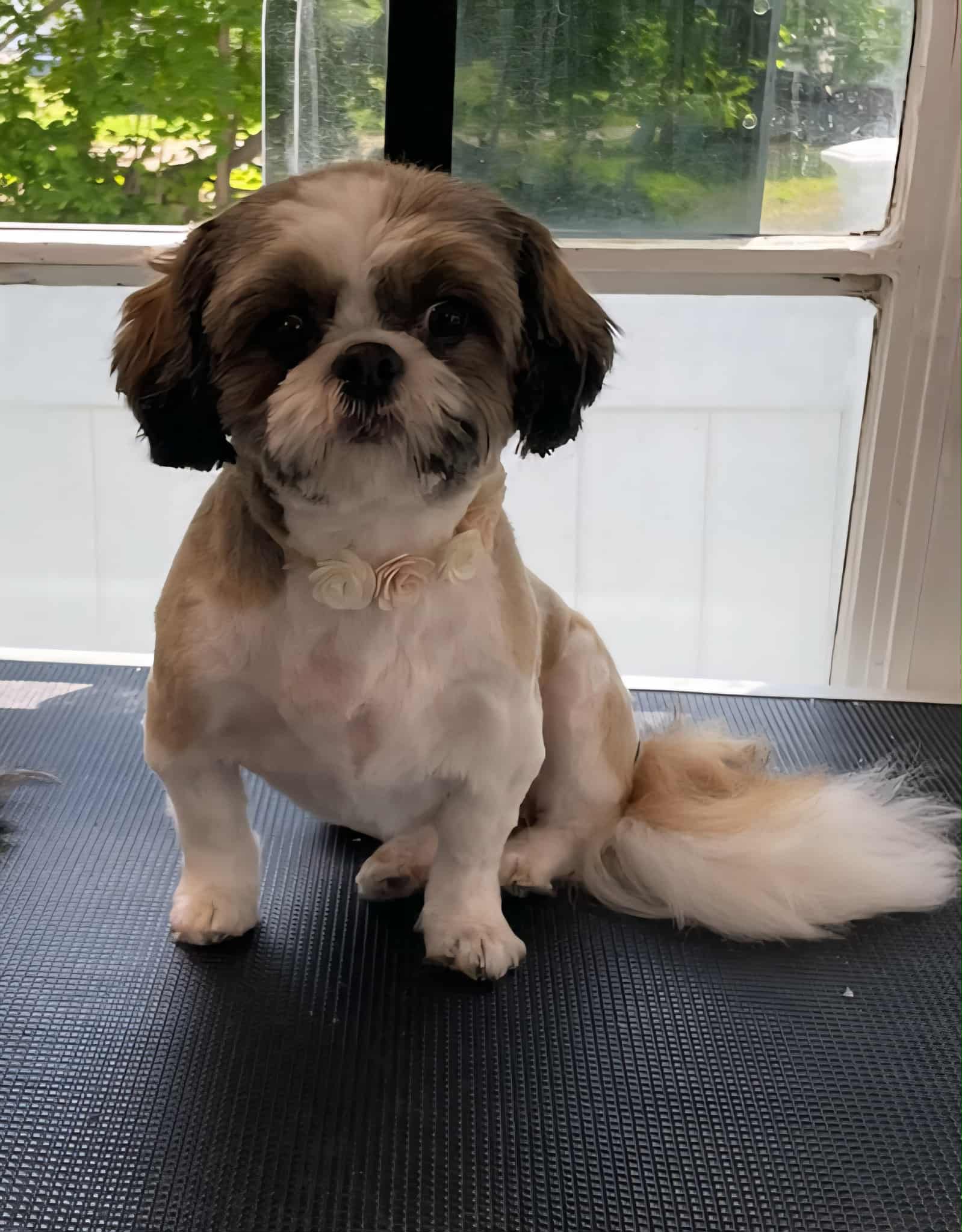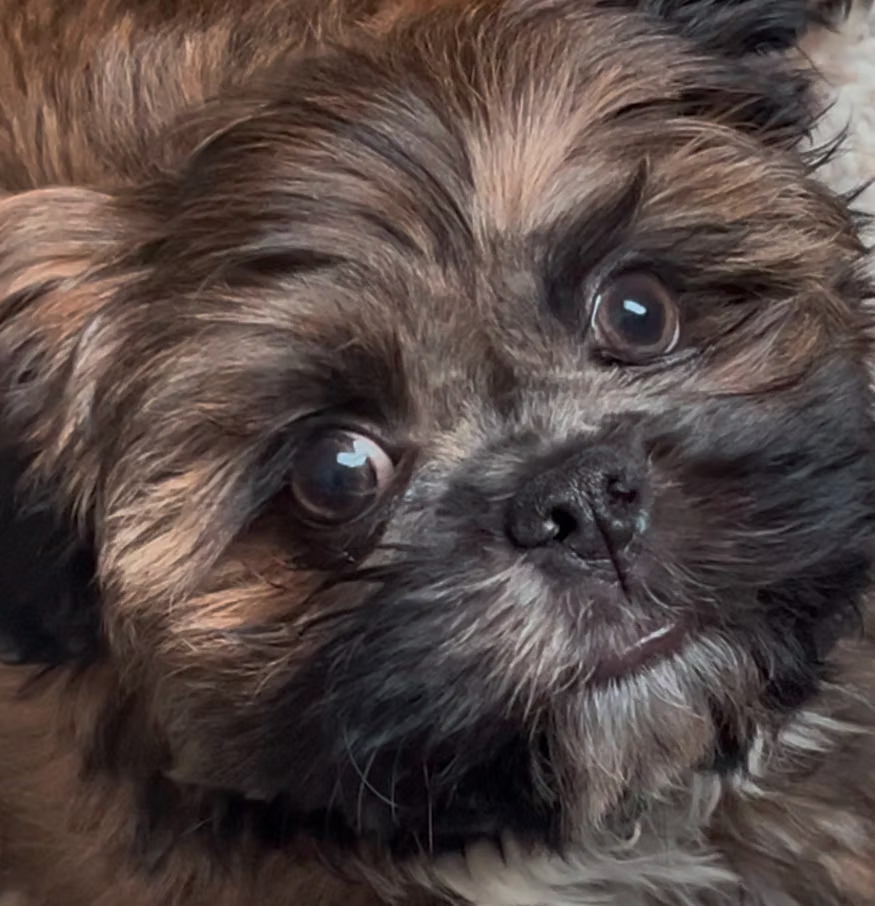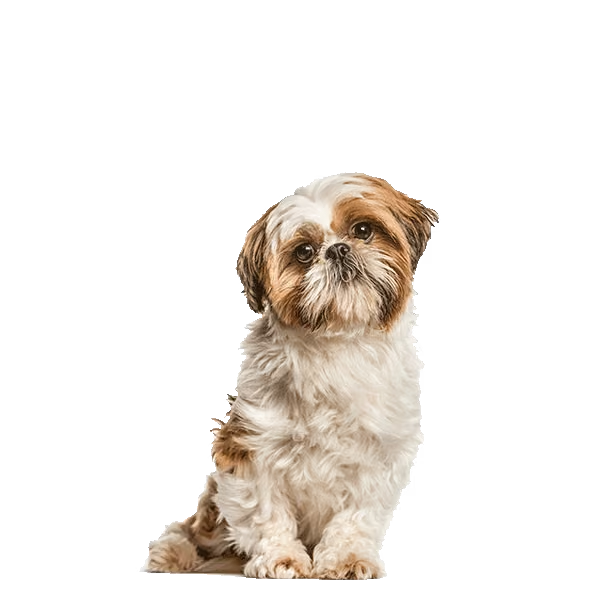
The Shih Tzu is an affectionate lap companion bred to charm, known for its sweet, outgoing, and friendly disposition.
How the Shih Tzu coat is built, and what that means when you groom it.
Caution: A Shih Tzu coat mats easily.
Fine or long hair tangles at the base of the coat, out of sight, where the mats tighten and pull on the skin. Brushing has to reach right down to the roots in sections, not just skim the surface.
Information: A Shih Tzu needs clipping every few weeks.
This coat keeps growing rather than shedding out, so it has to be trimmed every few weeks. Left to grow it mats down against the skin and traps moisture, dirt and heat.
A few of the Shih Tzu profiles members have added to United Pet Club.
The Shih Tzu is a small companion dog from Tibet, valued for its affectionate and sociable nature. It typically lives 10 to 16 years and suits indoor life.
The Shih Tzu is a small toy dog bred specifically as a household companion. Adults typically weigh between 4 and 7.2 kilograms and stand roughly 20 to 27 centimetres at the shoulder, placing the breed squarely in the lap-dog category. The long double coat and rounded face give the breed its recognisable appearance.
Temperament defines the breed. The Shih Tzu is friendly, affectionate, playful, good-natured, and sociable. It bonds closely with the people in its household and generally gets along well with children, visitors, and other pets when socialised from an early age. This is a dog bred to live indoors alongside people, not to work or hunt.
The coat requires regular attention, and the flat face means owners should monitor for breathing and eye concerns. With consistent grooming and moderate daily exercise, the Shih Tzu adapts readily to apartments and houses of any size.
| Attribute | Detail |
|---|---|
| Origin | Tibet |
| Size | Small (about 4 to 7.2 kg) |
| Lifespan | 10 to 16 years |
| Group/role | Toy / companion dog |
| Good with | Families, children, other pets, apartment living |
The Shih Tzu is well matched to owners who want a small indoor companion and can commit to coat care. It works for apartment dwellers, families with children, and those who prefer short daily walks over high-energy outings. Owners who cannot manage regular brushing or professional grooming may find the long coat more work than expected.
The Shih Tzu originated in Tibet and was developed as a palace companion dog in China, reaching the West in the 20th century.
The Shih Tzu traces its origins to Tibet, where small long-coated dogs were kept as companions and occasionally presented as gifts to Chinese rulers. The breed as it is recognised today was developed within China, where it lived primarily as a palace companion rather than a working animal.
The name is generally translated as "lion dog," a reference both to the breed's appearance and to symbolic lion imagery common in the region. For much of its history the Shih Tzu remained within imperial and noble households and was not available to outsiders.
The breed arrived in Europe in the early decades of the 20th century, and breeding programmes in England helped establish the modern type from a small founding group. From Europe the Shih Tzu spread to North America and elsewhere through the middle of that century.
Today the Shih Tzu is kept worldwide as a companion and ranks among the more common toy breeds. Its long history as an indoor palace dog is still evident in its preference for close human contact and life inside the home.
The Shih Tzu is a small, sturdy dog with a long double coat, a short muzzle, and a high-set tail carried over the back. Many colour combinations are accepted.
The Shih Tzu is compact and slightly longer than it is tall, with a solid build beneath the coat. The head is round, with large dark eyes set well apart, a short muzzle, and a defined stop. The tail is set high and carried curving over the back. The hair on the head grows long enough that it is often tied up to keep it clear of the eyes.
| Trait | Standard |
|---|---|
| Height | About 20 to 27 cm at the shoulder |
| Weight | About 4 to 7.2 kg |
| Coat | Long, dense double coat, soft and flowing |
| Colours | Many, including gold, white, black, brindle, and combinations |
| Eyes | Large, round, dark, set well apart |
The coat is double-layered, with a soft undercoat beneath a long outer coat. Texture is generally soft rather than wiry. A wide range of colours and markings is accepted, including gold and white, black and white, brindle, solid black, and liver shades. A white blaze on the forehead and a white tip on the tail are common and are often favoured in show dogs. The long coat can be kept at full length with frequent grooming or trimmed into a shorter puppy clip for easier day-to-day upkeep.
The Shih Tzu is friendly, affectionate, and playful, generally good with children, strangers, and other pets when properly socialised.
The Shih Tzu has a warm and outgoing character. The breed is affectionate and sociable, seeks out human company readily, and is content to settle in a lap for long stretches. It is described as good-natured and playful, with energy that suits short bursts of activity followed by rest.
With family the Shih Tzu is typically devoted and gentle, which makes it a reasonable choice for households with children who know how to handle small dogs calmly. Toward strangers the breed is usually welcoming rather than wary, so it does not function as a watchdog. It generally gets along with other dogs and with cats, particularly when introduced as a puppy.
The Shih Tzu can be stubborn at times, and housetraining often takes patience. Some individuals bark to solicit attention, though the breed is not especially vocal. Because it is bred for companionship, the Shih Tzu does not handle extended periods alone well and may become anxious when left by itself for much of the day.
| Trait | Rating |
|---|---|
| Affection | 5 |
| Energy | 2 |
| Trainability | 3 |
| Vocalness | 2 |
| Shedding | 2 |
The Shih Tzu needs frequent coat care, modest daily exercise, and an indoor home with protection from heat because of its flat face.
The Shih Tzu is an indoor dog and settles well in apartments. It is sensitive to heat because of its short muzzle and should be kept in cool, well-ventilated spaces during warm weather. In Canada's summer months this is worth watching closely; never leave the dog in a hot car or yard. The breed prefers to be near its people for most of the day.
The Shih Tzu needs a measured, balanced small-breed diet split into two daily meals, with care taken to avoid overfeeding and toxic foods.
The Shih Tzu does well on a complete, balanced diet formulated for small or toy breeds. Because the breed is small and not particularly active, portion control matters to prevent weight gain, which can worsen both breathing and joint problems. Small kibble or moistened food can be easier to eat given the short muzzle and crowded teeth. Fresh water should be available at all times.
| Life stage | Amount per day | Meals |
|---|---|---|
| Puppy (2 to 6 months) | About 1/2 to 1 cup, by weight and product | 3 to 4 |
| Puppy (6 to 12 months) | About 1/2 to 1 cup | 2 to 3 |
| Adult | About 1/2 to 1 cup | 2 |
| Senior | Adjusted down for activity | 2 |
Keep treats to about 10 percent of daily calories and account for them in the total. A healthy adult on a complete commercial diet generally needs no additional supplements. Discuss any joint, skin, or coat supplement with a veterinarian before adding it, and adjust portions if the dog starts gaining weight.
The Shih Tzu generally lives 10 to 16 years but is prone to eye and breathing problems linked to its flat face, along with some joint and dental concerns.
The Shih Tzu is a long-lived breed overall, with a typical lifespan of 10 to 16 years. Most health concerns relate to its short muzzle and prominent eyes. Responsible breeding and routine veterinary care reduce both the risk and severity of many of these conditions. In Canada, the Canadian Kennel Club (CKC) encourages breeders to conduct relevant health screening before breeding.
| Condition | Signs | Note |
|---|---|---|
| Brachycephalic airway issues | Noisy breathing, snoring, exercise intolerance | Linked to the short muzzle; avoid heat and overexertion |
| Eye problems | Redness, cloudiness, squinting, excess tearing | Large eyes are prone to injury and dryness |
| Patellar luxation | Skipping steps, intermittent hind-leg lameness | Kneecap slips out of place; common in small breeds |
| Dental disease | Bad breath, tartar, loose teeth | Crowded small jaws need regular dental care |
| Ear infections | Head shaking, odour, scratching | Hairy ear canals trap moisture and debris |
The Shih Tzu is intelligent but can be stubborn, so it responds best to short, consistent, reward-based sessions, with housetraining often the slowest part.
The Shih Tzu is bright and people-oriented, which helps with training, but it also has an independent streak that can present as stubbornness. Short, upbeat sessions work better than long repetitive drills. Housetraining is often the most time-consuming part and may require several extra weeks of patience and a consistent schedule. Early socialisation with people, other dogs, and ordinary household sounds helps the breed remain confident and agreeable.
Shih Tzu litters are small, usually two to four puppies, and the flat-faced build means breeding and whelping often need close veterinary oversight.
Shih Tzu females generally reach physical maturity before they are ready to be bred, and responsible breeders wait until the dog is fully grown and health-tested. Gestation lasts approximately 63 days from conception. Litters are small, usually two to four puppies.
Because the breed is brachycephalic and the puppies can have relatively large heads, whelping difficulties are more likely than in many other small breeds. Some litters are delivered by caesarean section under veterinary supervision. Close monitoring of the dam during late pregnancy and at whelping is important.
Newborn puppies are small and need a warm, clean environment. They are weaned gradually onto solid food from around 3 to 4 weeks of age, and most breeders keep puppies with the dam and littermates until about 8 to 12 weeks to allow proper socialisation. Eye and breathing health should be assessed early. Breeding pairs should be screened for hip, knee, eye, and airway problems before mating. CKC-registered breeders in Canada are expected to follow the breed club's health protocol.
| Metric | Value |
|---|---|
| Sexual maturity | About 6 to 12 months (breed later) |
| Gestation | About 63 days |
| Average litter size | 2 to 4 puppies |
| Weaning | About 3 to 4 weeks |
| Go-home age | About 8 to 12 weeks |
A free lifetime United Pet Club record for your Shih Tzu, with the microchip registered at no cost and kept current through every move.
Canadian shelters and vet clinics scan strays at intake as a matter of routine, and the scan helps only when a registry ties your Shih Tzu to a phone that still rings. Registering your dog with United Pet Club takes a few minutes, never costs anything, and works whether or not a chip is in place yet. Add the breed, a photo, and your postal code, and the record is live.
Sixty seconds with a scanner reads the chip; whether your Shih Tzu gets home depends on the record behind the number. Microchip registration with United Pet Club is free for life, takes every brand sold in Canada, and keeps the record searchable on both sides of the border. Sign up free and give the number somewhere to point.
Open a free United Pet Club account, fill in your Shih Tzu's name, breed details, and a photo, and save. The lifetime plan is free, no chip required, and the chip number can be attached after your vet appointment.
Add the 15-digit number to your account along with your address, postal code, and phone number. Registration and unlimited updates are free for life, and chips from any manufacturer a Canadian vet uses are accepted.
There is no federal requirement, but several cities fold chips into their licensing bylaws, and travel with the dog goes smoother when the chip is registered. The record, not the implant, is what identifies your Shih Tzu.
Nothing, ever. United Pet Club's lifetime plan covers the profile, the chip record, and every update without fees or renewals.
Common questions about the Shih Tzu cover its size, temperament, grooming demands, lifespan, suitability, and availability.
The Shih Tzu is a small toy breed. Adults typically weigh about 4 to 7.2 kilograms and stand around 20 to 27 centimetres at the shoulder.
Generally yes. The breed is friendly, affectionate, and sociable, and it tends to do well with calm children and with other dogs and cats, particularly when socialised early.
Exercise needs are modest, but grooming is demanding. The long coat needs daily brushing and professional grooming every 4 to 6 weeks, or a shorter clip to reduce the workload.
The typical lifespan is 10 to 16 years. Good care and a healthy weight tend to support the longer end of that range.
Yes. It is an indoor companion that adapts well to apartment living, though it needs protection from heat because of its flat face and does not do well when left alone for long stretches.
The Shih Tzu is one of the more common toy breeds and is available from breeders and rescues across Canada. Look for breeders registered with the Canadian Kennel Club who health-test for eye, breathing, and joint conditions.