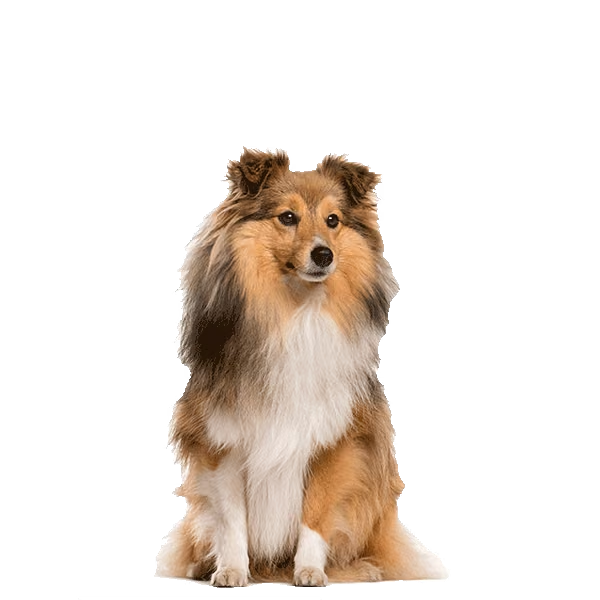
The Shetland Sheepdog is a highly intelligent, affectionate herder famed for its trainability and gentle devotion to family.
How the Shetland Sheepdog coat is built, and what that means when you groom it.
Critical: A Shetland Sheepdog should not be shaved.
The undercoat keeps heat out as well as in, and the outer coat shields the skin from sun and insect bites. Clipping the whole coat off removes both. It often grows back patchy, soft or a different colour, and in some animals the guard hairs never return properly. Brush the undercoat out instead of cutting it off.
Caution: A Shetland Sheepdog coat mats easily.
Fine or long hair tangles at the base of the coat, out of sight, where the mats tighten and pull on the skin. Brushing has to reach right down to the roots in sections, not just skim the surface.
Information: A Shetland Sheepdog drops its undercoat in heavy bursts.
The undercoat comes out in heavy bursts over a few weeks. An undercoat rake, or a bath followed by a proper blow-dry, clears it far faster than daily brushing. Clipping the coat down is not a shortcut for this.
A few of the Shetland Sheepdog profiles members have added to United Pet Club.
The Shetland Sheepdog is a small, highly intelligent herding dog from Scotland, known for its trainability, sensitivity, and devotion to family.
The Shetland Sheepdog, often called the Sheltie, is a small herding breed that originated in the Shetland Islands of Scotland. It resembles a scaled-down Rough Collie, with a long double coat, a wedge-shaped head, and an alert expression. Adults typically stand 13 to 16 inches at the shoulder and weigh roughly 15 to 25 pounds.
Shelties are valued for intelligence and a strong willingness to work alongside people. They learn quickly, respond well to training, and remain closely attached to their owners. The breed is sensitive to tone and mood, so harsh handling tends to undermine progress. Most Shelties are reserved with strangers and quick to bark at anything unfamiliar.
The Sheltie's manageable size, trainable mind, and gentle nature make it a common choice for active families, dog sports enthusiasts, and homes that can provide regular mental engagement.
| Attribute | Detail |
|---|---|
| Origin | Scotland (Shetland Islands) |
| Size | Small (13 to 16 inches, 15 to 25 pounds) |
| Lifespan | 12 to 14 years |
| Group / role | Herding dog |
| Good with | Families, children, other dogs when socialised |
The Sheltie fits owners who want a trainable companion and can provide daily exercise plus mental stimulation. It does well with attentive families and people who enjoy obedience or agility. The breed's tendency to bark and its sensitivity make it less suited to owners who prefer a quiet, independent dog or who are away from home for extended stretches.
The Shetland Sheepdog developed on Scotland's Shetland Islands as a compact farm herder and was recognised as a distinct breed in the early twentieth century.
The breed comes from the Shetland Islands, a remote archipelago off the northern coast of Scotland. The harsh climate and limited grazing land favoured smaller livestock, including the native Shetland sheep and ponies, and farmers needed a compact dog capable of managing these animals and guarding the homestead.
The early island dogs were a mix of small working herders. Later crosses to the Rough Collie and other breeds shaped the modern type. Over time, breeders selected for the Collie-like appearance and the trainable, attentive temperament seen today.
The breed received formal recognition in the United Kingdom in the early 1900s. The name Shetland Sheepdog was adopted to distinguish it from the larger Collie. The American Kennel Club recognised the breed in 1911. The Canadian Kennel Club also recognises the breed within the Herding Group.
From its farm origins, the Sheltie moved toward life as a companion and competition dog. It remains a frequent and successful entrant in obedience and agility trials, reflecting the herding instinct and quick mind that Shetland farmers first valued.
The Shetland Sheepdog is a small, long-coated dog resembling a miniature Rough Collie, with a wedge-shaped head, a dense double coat, and a graceful outline.
The Sheltie has a balanced, slightly long-bodied outline and moves with an easy, ground-covering trot. The head is a long, blunt wedge tapering from ears to nose, and the small ears are mostly erect with tips that fold forward. The expression is alert and gentle, framed by the abundant mane and frill around the neck and chest.
| Trait | Standard |
|---|---|
| Height | 13 to 16 inches at the shoulder |
| Weight | 15 to 25 pounds |
| Coat | Long, straight outer coat over a dense, soft undercoat |
| Colours | Sable, black, and blue merle, each with white and tan markings |
| Eyes | Medium, almond-shaped, dark (blue or merle-flecked eyes occur in blue merles) |
The double coat is the defining feature. The outer coat is long and straight with a harsh texture, while the undercoat is short and dense, providing insulation against cold and wet weather. The mane, frill, and feathering on the legs and tail are heaviest, and males usually carry more coat than females. Recognised colours are sable (ranging from golden to mahogany), tricolour (black with tan and white), and blue merle (a marbled grey-blue with black). White markings commonly appear on the chest, legs, neck, and tail tip. The coat sheds year-round and more heavily during seasonal coat changes.
The Shetland Sheepdog is affectionate and devoted with its family, reserved around strangers, and highly responsive, though it tends to bark and herd.
Shelties form deep attachments to their people and prefer to be near the family rather than left alone. They are gentle and patient with children they know and generally get along with other dogs and pets when raised together. The breed is sensitive and reads household mood closely, which makes it affectionate but also prone to stress in chaotic or tense environments.
With strangers, the Sheltie is typically cautious and may hang back until comfortable. This watchfulness, combined with a strong alarm instinct, means the breed barks readily at visitors, unfamiliar noises, and movement. The herding background also shows up as chasing or circling of fast-moving people, children, or other animals.
The breed thrives on attention and purpose. Without adequate exercise and mental engagement, a Sheltie can become anxious and bark excessively. Early socialisation helps moderate the natural reserve and reduces nuisance barking.
| Trait | Rating |
|---|---|
| Affection | 5 |
| Energy | 4 |
| Trainability | 5 |
| Vocalness | 5 |
| Shedding | 4 |
The Shetland Sheepdog needs regular coat brushing, daily exercise, and mental stimulation, and does best in a home where it spends time with the family.
The Sheltie adapts to houses or apartments as long as it receives daily exercise and company. It tolerates Canadian winters well thanks to the double coat, but needs shade and water during warm weather. The breed's barking can be a concern in close quarters or multi-unit housing, so early training to manage alarm behaviour is worthwhile. Shelties want to be near their people and do not thrive when isolated for long periods.
The Shetland Sheepdog does well on a balanced diet sized to its small frame, fed in measured meals to prevent weight gain.
Feed a complete diet formulated for the dog's life stage and activity level. Because the Sheltie is small and prone to weight gain, portions should be measured rather than free-fed, and treats kept to a modest share of daily calories. Monitor body condition closely under the heavy coat, which can conceal weight changes.
| Life stage | Amount per day | Meals |
|---|---|---|
| Puppy (2 to 6 months) | 1 to 1.5 cups | 3 to 4 |
| Puppy (6 to 12 months) | 1 to 1.5 cups | 2 to 3 |
| Adult | 0.75 to 1.5 cups | 2 |
| Senior | 0.75 to 1.25 cups | 2 |
Use small, low-calorie treats for training and count them toward the daily total. Most Shelties on a complete commercial diet need no additional supplements. Some breeds, including the Sheltie, may carry the MDR1 gene variant that affects sensitivity to certain drugs, so discuss any supplements and medications with a veterinarian before use. Fresh water should be available at all times.
The Shetland Sheepdog is generally healthy and lives 12 to 14 years, with breed risks including eye disorders, hip dysplasia, and drug sensitivity from the MDR1 gene.
The Sheltie is a hardy breed with a typical lifespan of 12 to 14 years. Responsible breeders screen for the heritable conditions most often seen in the breed, and routine veterinary care supports a long, active life. The MDR1 gene variant, which affects how some dogs process certain medications, is common in the breed and warrants testing. Prospective owners sourcing from Canadian breeders should look for CKC-registered stock with documented health clearances.
| Condition | Signs | Note |
|---|---|---|
| Collie eye anomaly | Often none; detected on eye exam | Inherited; screen breeding dogs |
| Progressive retinal atrophy | Night blindness, gradual vision loss | Genetic test available |
| Hip dysplasia | Stiffness, limping, reluctance to jump | Screen breeding stock |
| MDR1 drug sensitivity | Reactions to certain drugs | DNA test guides safe dosing |
| Hypothyroidism | Weight gain, lethargy, coat changes | Managed with daily medication |
The Shetland Sheepdog is one of the most trainable breeds, learning quickly with consistent, reward-based methods and early socialisation.
Shelties learn fast and are eager to work with their handlers, which makes them straightforward to train and frequent top performers in obedience and agility competitions. The breed's sensitivity means it responds well to praise and rewards and loses confidence under harsh corrections. Two common training priorities are managing barking and redirecting the instinct to chase and herd moving people or animals. Early, broad socialisation helps reduce the breed's natural wariness of strangers.
Shetland Sheepdogs reach maturity around one to two years, carry litters of about four to six puppies, and benefit from health screening of both parents.
Shelties reach physical and social maturity between one and two years of age. Responsible breeding pairs dogs that have passed health screening for inherited eye conditions, hips, and the MDR1 gene. In Canada, CKC-registered breeders are expected to follow the Canadian Shetland Sheepdog Association's code of ethics, which includes documented health testing before breeding. Gestation runs about 63 days, and litters average four to six puppies, though size varies with the individual female.
Early weeks play a significant role in shaping temperament in this sensitive breed. Puppies should be raised in the home with gentle handling and regular exposure to everyday sights and sounds before going to new homes, typically at around eight weeks. Given the breed's natural reserve around strangers, early socialisation during the litter stage is important groundwork for a confident adult.
| Metric | Value |
|---|---|
| Sexual maturity | About 6 to 12 months |
| Recommended breeding age | After 1 to 2 years, once health-tested |
| Gestation | About 63 days |
| Average litter size | 4 to 6 puppies |
| Weaning age | About 6 to 8 weeks |
| Go-home age | Around 8 weeks |
A free lifetime United Pet Club record for your Shetland Sheepdog, with the microchip registered at no cost and kept current through every move.
A Shetland Sheepdog with a current record gets home; one without waits out a stray hold. That is the whole argument for registering your dog with United Pet Club: a free lifetime profile carrying your name, your postal code, and a photo, ready for whichever clinic or shelter runs the scan.
Sixty seconds with a scanner reads the chip; whether your Shetland Sheepdog gets home depends on the record behind the number. Microchip registration with United Pet Club is free for life, takes every brand sold in Canada, and keeps the record searchable on both sides of the border. Sign up free and give the number somewhere to point.
Open a free United Pet Club account, fill in your Shetland Sheepdog's name, breed details, and a photo, and save. The lifetime plan is free, no chip required, and the chip number can be attached after your vet appointment.
Add the 15-digit number to your account along with your address, postal code, and phone number. Registration and unlimited updates are free for life, and chips from any manufacturer a Canadian vet uses are accepted.
There is no federal requirement, but several cities fold chips into their licensing bylaws, and travel with the dog goes smoother when the chip is registered. The record, not the implant, is what identifies your Shetland Sheepdog.
Nothing, ever. United Pet Club's lifetime plan covers the profile, the chip record, and every update without fees or renewals.
Common questions about the Shetland Sheepdog's size, temperament, care needs, lifespan, and suitability as a family dog.
The Sheltie is a small breed, standing 13 to 16 inches at the shoulder and weighing about 15 to 25 pounds. It resembles a scaled-down version of the Rough Collie.
Yes. Shelties are affectionate and devoted, and they are gentle with children they know well. They bond closely to the family and prefer to be part of daily life rather than left alone.
They do. The breed is alert and quick to bark at visitors, unfamiliar noises, and movement. Early training of a quiet cue and sufficient daily exercise help keep barking manageable.
Care is moderate. The double coat needs brushing two to three times a week, and the dog needs daily exercise and mental engagement. High trainability makes day-to-day handling straightforward.
The typical lifespan is 12 to 14 years. Regular veterinary care, a healthy weight, and screening for inherited conditions support a long, active life.
Very. The breed is among the most trainable and excels in obedience and agility. It responds best to reward-based methods and calm, consistent handling.
Yes, the double coat sheds year-round and more heavily during seasonal coat changes. Regular brushing manages loose hair and prevents matting.

