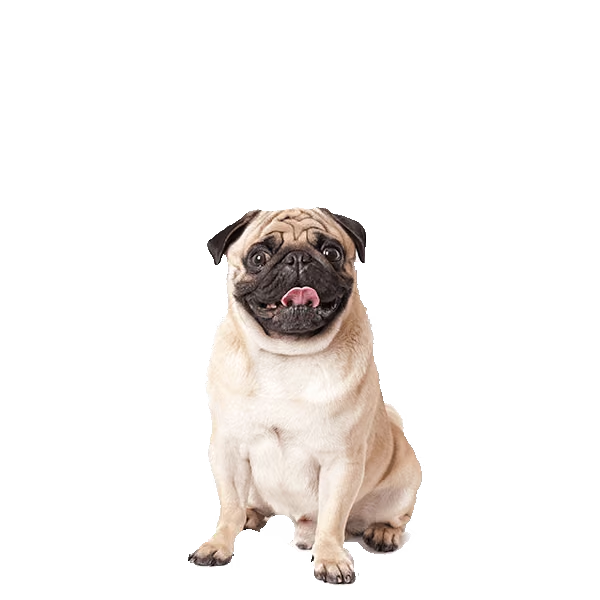
The Pug is a good-natured, charming companion famous for its comical personality and loving devotion to family.
How the Pug coat is built, and what that means when you groom it.
Critical: A Pug should not be shaved.
The undercoat keeps heat out as well as in, and the outer coat shields the skin from sun and insect bites. Clipping the whole coat off removes both. It often grows back patchy, soft or a different colour, and in some animals the guard hairs never return properly. Brush the undercoat out instead of cutting it off.
A few of the Pug profiles members have added to United Pet Club.
The Pug is a small, good-natured companion dog from China, recognised for its comical personality and strong attachment to family.
The Pug is a small companion breed that originated in China. It is built on a compact, square frame with a deeply wrinkled face, a short muzzle, and a tightly curled tail. Adults generally weigh between 14 and 18 pounds and stand about 10 to 13 inches at the shoulder.
Pugs were developed for a single purpose: companionship. They want to be near people and follow their owners from room to room. The temperament is even and sociable, with a clownish quality that has made the breed a favourite for families and older owners alike. The breed motto often quoted by enthusiasts, "multum in parvo" (a lot in a little), captures this large character in a small body.
The short coat and modest exercise needs keep daily care straightforward, but the flat face brings specific health responsibilities, including sensitivity to heat and careful attention to breathing. The Pug suits an owner who wants a close indoor companion rather than a working or sporting dog.
| Attribute | Detail |
|---|---|
| Origin | China |
| Size | Small (14 to 18 lb) |
| Lifespan | 13 to 15 years |
| Group/role | Toy / companion |
| Good with | Families, children, seniors, other pets |
The Pug fits owners who spend a lot of time at home and want a dog that prefers company over long solo stretches. It adapts to apartments and small houses, asks for only light to moderate exercise, and is patient with children. Those in very hot climates, or anyone who cannot manage the heat and breathing needs of a flat-faced breed, should weigh those factors carefully before choosing a Pug.
The Pug developed in ancient China as a lapdog for the imperial court and reached Europe through Dutch traders in the 16th and 17th centuries.
The Pug traces back to ancient China, where small flat-faced dogs were kept as companions for emperors and the ruling class. Written and pictorial records of short-muzzled lapdogs in China go back roughly two thousand years. These dogs lived in palaces and were highly prized.
Dutch traders brought Pugs from China to Europe during the 16th and 17th centuries. The breed became associated with the House of Orange in the Netherlands and gained a lasting piece of lore in that connection: a Pug is said to have alerted William, Prince of Orange, to approaching danger, and the breed kept a place at court thereafter.
From the Netherlands, the Pug spread across Europe and became a fashionable companion among the nobility. By the 18th and 19th centuries Pugs appeared in paintings and were kept in royal and aristocratic households throughout several countries, including Britain, where the breed grew in popularity through the Victorian era.
The Pug was recognised by major kennel organisations in the late 19th century and has remained a consistent favourite as a household companion. In Canada, the breed falls under the Canadian Kennel Club's Toy Group. Modern breeding has focused on the Pug as a pet rather than any working role, and its history as a court dog explains the close, people-centred temperament seen today.
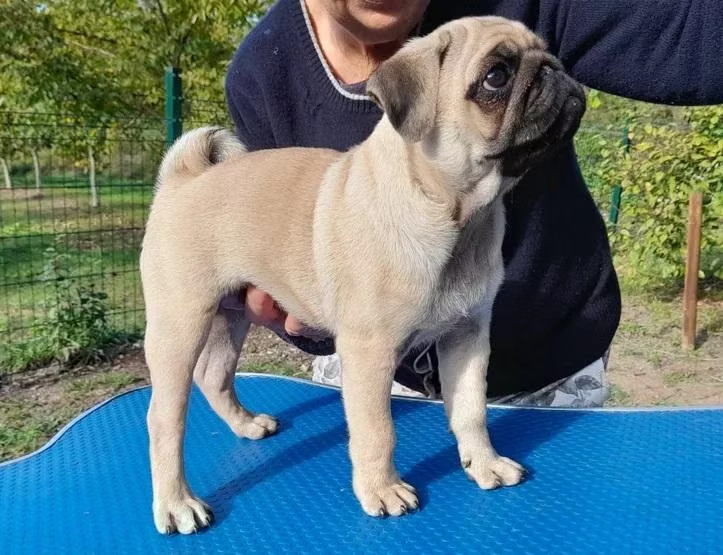
The Pug is a small, square, thickset dog with a wrinkled flat face, large dark eyes, and a tightly curled tail.
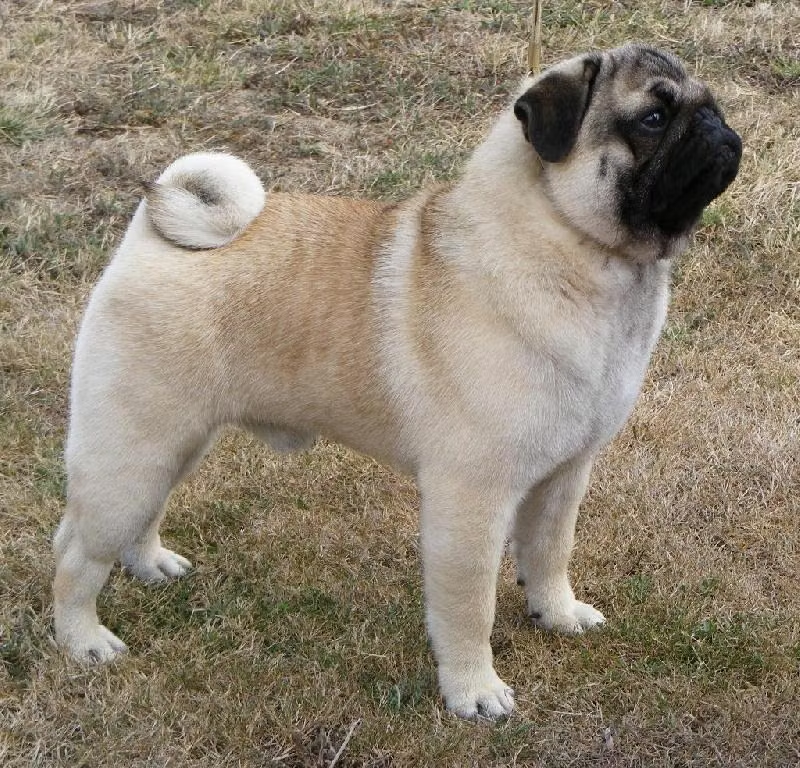
The Pug has a compact, square, thickset body that looks solid for its size. The head is large and round with deep facial wrinkles, a short blunt muzzle, and large, dark, expressive eyes set wide apart. The ears are small and soft, carried in either a "rose" or a "button" shape. The tail curls tightly over the hip, and a double curl is prized in the show ring. The overall impression is one of balance and substance within a small frame.
| Feature | Standard |
|---|---|
| Height | 10 to 13 in (25 to 33 cm) |
| Weight | 14 to 18 lb (6 to 8 kg) |
| Coat | Short, smooth, fine, glossy |
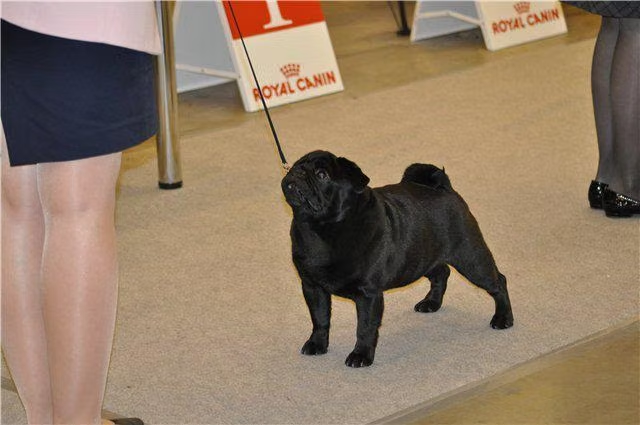
| Colours | Fawn, apricot, silver fawn, black |
| Eyes | Large, round, dark, set wide apart |
The coat is short, smooth, and fine, lying close to the body. Despite its brevity, the coat sheds steadily, and fawn-coated Pugs carry a double coat that sheds more than the single-coated blacks. Recognised colours are fawn, apricot, silver fawn, and black. Fawn Pugs generally show a dark mask on the face along with darker ears and a trace line down the back. Features such as the mask, ear colour, and a small thumb-shaped mark on the forehead are part of the traditional look.
The Pug is affectionate, playful, and even-tempered, friendly with strangers and other pets and strongly bonded to its family.
The Pug is an affectionate and sociable companion that wants to be part of everything its family does. The breed is even-tempered and good-natured, rarely aggressive, and known for a comical, attention-seeking quality that many owners find entertaining. Pugs are happy to play and equally happy to settle on a lap, which suits a calm household well.
With children, the Pug is patient and gentle, though its small size means play with very young kids should be supervised. Toward strangers the breed is generally friendly and welcoming rather than guarded, so it makes a poor watchdog beyond a bark at the door. Pugs tend to get along well with other dogs and with cats, particularly when raised alongside them.
The flip side of this devotion is a dislike of being left alone. A Pug left for long stretches can become unhappy and may bark or act out. The breed does best with company for much of the day. Pugs are food-motivated and a little stubborn, which shapes both their training and their tendency to put on weight.
| Trait | Rating |
|---|---|
| Affection | 5 |
| Energy | 2 |
| Trainability | 3 |
| Vocalness | 2 |
| Shedding | 4 |
The Pug needs routine wrinkle cleaning, regular brushing for its shedding coat, light exercise, and careful protection from heat.
The Pug is an indoor dog and is not suited to living outside. It adapts well to apartments and small homes. Keep the living space cool and provide shade and water at all times. Because the flat face limits the dog's ability to cool itself, the Pug is sensitive to heat and high humidity, and air conditioning is often necessary in warm Canadian summers.
Pugs need measured portions of a complete dog food because the breed gains weight easily, and food intake should be controlled across all life stages.
The Pug should eat a complete, balanced dog food suited to its life stage and small size. Weight control is the central concern: Pugs love food and put on pounds quickly, and excess weight worsens the breed's breathing and joint problems. Measure each meal rather than free-feeding, and adjust the amount to keep the dog at a lean body condition where the ribs can be felt under a light layer of fat. Always provide fresh water, especially in warm weather.
| Life stage | Amount per day | Meals |
|---|---|---|
| Puppy (2 to 6 months) | Per product guide for weight | 3 to 4 |
| Puppy (6 to 12 months) | Per product guide for weight | 2 to 3 |
| Adult | About 1/2 to 1 cup | 2 |
| Senior | Adjusted lower for activity | 2 |
Keep treats to roughly 10 percent or less of daily calories and count them toward the daily total. Low-calorie options such as small pieces of plain vegetables work well for a food-driven Pug. Most Pugs on a complete diet do not need supplements; discuss joint or skin supplements with a veterinarian before adding them.
Pugs typically live 13 to 15 years but are prone to breathing problems, eye injuries, and obesity tied to the flat face and compact build.
The Pug usually lives 13 to 15 years. Most health concerns trace back to the breed's flat face and stocky build. The short muzzle causes brachycephalic obstructive airway syndrome in many Pugs, producing noisy breathing, snoring, and poor heat tolerance. The prominent eyes are easily injured and prone to conditions affecting the cornea. Careful weight management and heat avoidance reduce the impact of several of these problems.
Prospective owners in Canada should seek breeders registered with the Canadian Kennel Club (CKC) who follow health-testing protocols recommended for the breed. The CKC's breeder referral can help locate reputable sources.
| Condition | Signs | Note |
|---|---|---|
| Brachycephalic airway syndrome | Noisy breathing, snoring, low heat tolerance | Linked to the short muzzle; surgery helps some cases |
| Eye injuries and corneal ulcers | Squinting, redness, discharge | Prominent eyes are easily scratched |
| Obesity | Weight gain, low stamina | Worsens breathing and joints; control portions |
| Skin fold dermatitis | Redness or odour in wrinkles | Prevent by keeping folds clean and dry |
| Hip dysplasia | Stiffness, reluctance to move | Screening of breeding stock helps |
Pugs are intelligent and eager to please but a little stubborn, so short, reward-based sessions using food work best.
The Pug is intelligent and wants to please, but it also carries a stubborn streak that can slow progress. The breed responds best to short, upbeat sessions with clear rewards. Pugs are strongly food-motivated, which makes treats an effective tool, though portions must be tracked to avoid weight gain. Harsh methods do not suit the sensitive, people-focused temperament and tend to produce resistance. House-training can take patience and consistency. Early socialisation with people, other animals, and everyday situations helps the Pug develop into a confident, easygoing adult.
Pug litters average four to six puppies, and the breed's large heads often require careful or surgical whelping under veterinary guidance.
Pugs reach sexual maturity at roughly 6 to 12 months, but responsible breeders wait until a dog is physically mature and health-tested before breeding, usually around two years of age. Gestation runs about 63 days, similar to other breeds. The breed's large, round head can make natural birth difficult, and many Pug litters are delivered by caesarean section, so a planned breeding should involve a veterinarian from the outset.
Litters average four to six puppies. Newborn Pugs are small and need warmth and close monitoring. The dam usually raises the litter with attentive care, and puppies should stay with the mother and littermates until about eight weeks for proper weaning and early socialisation. Because of the breed's known health issues, ethical breeding includes screening parents for breathing, eye, and joint problems, and selecting for clearer airways and sounder structure. In Canada, breeders registered with the CKC are bound by the club's code of ethics, which supports responsible health practices.
| Metric | Value |
|---|---|
| Sexual maturity | 6 to 12 months |
| Recommended breeding age | About 2 years |
| Gestation | About 63 days |
| Average litter size | 4 to 6 puppies |
| Weaning age | About 6 to 8 weeks |
| Delivery | Often by caesarean section |
A free lifetime United Pet Club record for your Pug, with the microchip registered at no cost and kept current through every move.
Put your Pug on the registry before the gate is ever left open. The free United Pet Club profile stores the dog's name, birth date, and photo beside your contact details, and it stays free for as long as the dog is with you. Dog registration asks for a few fields, not a fee.
The vet implants the chip and leaves the recording part to you. Register the microchip on the free lifetime plan: any brand a Canadian clinic implants is accepted, updates after a change of address are free, and a current record keeps the border paperwork the Canadian Food Inspection Agency asks about from becoming a scramble. Create your free account and finish both in one evening.
Open a free United Pet Club account, fill in your Pug's name, breed details, and a photo, and save. The lifetime plan is free, no chip required, and the chip number can be attached after your vet appointment.
Add the 15-digit number to your account along with your address, postal code, and phone number. Registration and unlimited updates are free for life, and chips from any manufacturer a Canadian vet uses are accepted.
There is no federal requirement, but several cities fold chips into their licensing bylaws, and travel with the dog goes smoother when the chip is registered. The record, not the implant, is what identifies your Pug.
Nothing, ever. United Pet Club's lifetime plan covers the profile, the chip record, and every update without fees or renewals.
Common questions about the Pug cover its size, temperament, care needs, lifespan, suitability, and availability.
A Pug is a small dog. Adults stand about 10 to 13 inches tall and weigh roughly 14 to 18 pounds.
Pugs are affectionate, playful, and even-tempered. They are sociable with people and other pets and bond closely with their families, though they dislike being left alone for long.
Daily grooming and exercise are straightforward, but the flat face brings extra responsibilities. Owners must keep the wrinkles clean, watch the dog's weight, and protect it from heat and heavy exertion.
Pugs typically live 13 to 15 years with good care, a healthy weight, and regular veterinary attention.
Yes. The Pug suits apartments, families, and seniors, and its modest exercise needs make it manageable for new owners who can be home often and handle the breed's health care.
Yes. Despite the short coat, Pugs shed steadily year round, and fawn Pugs with a double coat shed more than black Pugs. Weekly brushing helps manage it.
Pugs are available from responsible breeders listed through the Canadian Kennel Club (CKC), and Pugs and Pug mixes also turn up in breed-specific rescues and shelters across the country.