
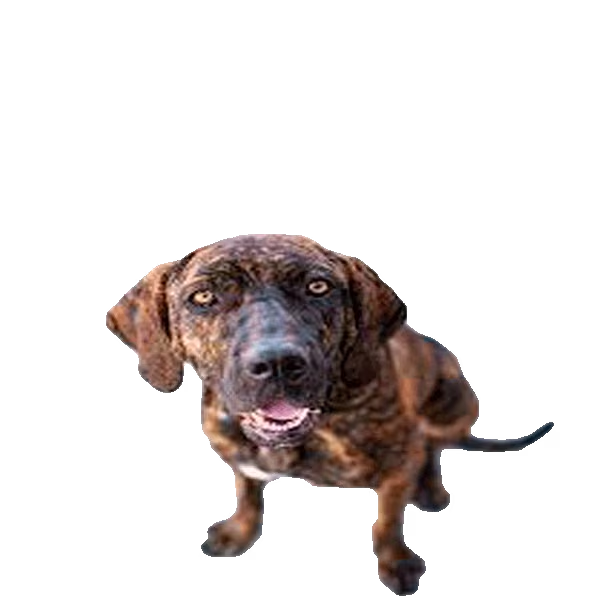
Plott Hound
The Plott Hound is a determined, courageous scenthound known for its tenacity on the trail and devotion to its family.
- Size
- Medium
- Lifespan
- 12–14 years
- Origin
- United States
- Temperament
- Loyal
- Standard colors
- Black, White and Grey and 7 more
Characteristics
Coat and grooming
How the Plott Hound coat is built, and what that means when you groom it.
- Coat layers
- Single coat
- Coat texture
- Smooth
- Coat length
- Short
- Shedding
- Moderate shedding
Plott Hound colors and patterns
What each club's breed standard says about every Plott Hound color and pattern. Point at a ruling to see the club's own wording.
Breed standards describe the Plott Hound in Black, White, Grey, Blue, Brown, Tan, Red, Orange, Yellow and Fawn. Standard patterns: Solid, Brindle and Reverse brindle.
| Color or pattern | AKC | UKC |
|---|---|---|
| Black | Standard (“Black”) | Standard (“solid black”) |
| White | Standard (“White Chest & Feet”) | Standard (“Some white on chest and feet is permissible”) |
| Grey | Standard (“Gray Brindle”) | Standard (“Any shade of brindle”) |
| Blue | Standard (“Blue Brindle”) | Standard (“Any shade of brindle”) |
| Brown | Standard (“Brown Brindle”) | Standard (“Any shade of brindle”) |
| Tan | Standard (“Tan Brindle”) | Standard (“Any shade of brindle”) |
| Red | Standard (“Red Brindle”) | Standard (“Any shade of brindle”) |
| Orange | Standard (“Orange Brindle”) | Standard (“Any shade of brindle”) |
| Yellow | Standard (“Yellow Brindle”) | Standard (“Any shade of brindle”) |
| Fawn | Standard (“Buckskin”) | Standard (“solid buckskin”) |
| Albino | No ruling | Disqualifying (“Albinism”) |
| Patterns | ||
| Solid | Standard (“solid black”) | Standard (“solid buckskin and solid black”) |
| Brindle | Standard (“Any shade of brindle”) | Standard (“Any shade of brindle”) |
| Reverse brindle | Standard (“Any shade of brindle”) | Standard (“Any shade of brindle”) |


| Color or pattern | AKC | UKC |
|---|---|---|
| Brown | Standard (“Brown or hazel”) | Standard (“brown or hazel in color”) |
| Hazel | Standard (“Brown or hazel”) | Standard (“brown or hazel in color”) |
| Color or pattern | AKC | UKC |
|---|---|---|
| Black | Standard (“Eye rims, lips and nose are black”) | Standard (“Fully pigmented, black in color”) |
What the rulings mean
- Standard
- Described by the club's breed standard.
- Disqualifying
- The club's breed standard disqualifies an animal of this colour or pattern.
Color changes
How a Plott Hound's colors can change over its life.
Blackchanges toRust
Coat · With body condition · can change back
Blackchanges toGrey
Coat · Progressive
Blackchanges toBrown
Coat · In the sun · can change back
Whitechanges toRoan
Coat · With age · from 2 weeks
Blackchanges toSnow nose
Nose · With the season · can change back
Blackchanges toPink
Nose · With the season · can change back


Sources
Each ruling comes from the club's published breed standard or color list.
Meet some of our Plott Hound
A few of the Plott Hound profiles members have added to United Pet Club.

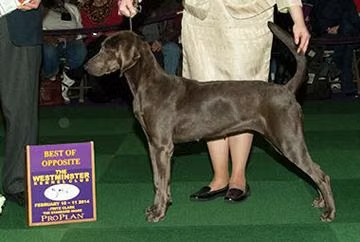


About the Plott Hound
The Plott Hound is a medium-sized American scenthound bred for big-game trailing, known for its determination on the track and close attachment to its family.
The Plott Hound is a medium-sized scenthound developed in the United States for trailing and treeing large game, particularly bear and wild boar. It is the only American coonhound type that does not trace back to foxhound stock, descending instead from German hunting dogs brought to North Carolina in the mid-1700s.
The breed has a smooth, brindled coat, a muscular build, and a deep, ringing voice that hunters use to follow the dog over rough country. On the trail it is persistent and bold, able to hold large quarry at bay until the handler arrives. At home it tends to bond strongly with its people and is alert to activity around the property.
Plott Hounds carry working drive into daily life. They need a job, regular exercise, and an owner who understands hound independence. Without enough activity they can become restless and vocal.
| Attribute | Detail |
|---|---|
| Origin | United States (North Carolina) |
| Size | Medium |
| Lifespan | 12 to 14 years |
| Group / role | Scenthound, big-game trailing and treeing |
| Good with | Family members and children when raised together; supervise around small pets |
Who it suits
The Plott Hound fits an active household that can give it daily exercise and mental work. It suits hunters, rural owners, and people who enjoy long walks, tracking sports, or trailing trials. The strong prey drive and carrying voice make it a poor match for apartments or homes with small free-roaming animals. First-time owners should be ready for an independent dog that responds best to patient, consistent handling.
History of the Plott Hound
The Plott Hound descends from German hunting dogs brought to North Carolina in the 1750s and was bred by the Plott family for generations to trail bear and boar.
The breed traces to Johannes Plott, a German immigrant who arrived in North Carolina around 1750 with several hunting dogs from his homeland. These dogs were bred to trail and hold large game in the mountains of the southern Appalachians.
The Plott family kept and refined the line over generations, selecting for nose, stamina, courage, and the ability to bay and tree dangerous quarry such as black bear and wild boar. For much of its history the breed was maintained within the family and among local hunters rather than as a show dog, which kept its working traits intact.
Unlike other American coonhounds, the Plott Hound does not descend from English foxhounds. Its German hunting-dog ancestry sets it apart and gives it a distinct brindle coat and tenacious temperament.
The United Kennel Club recognized the breed in 1946. The American Kennel Club granted full recognition in 2006, placing it in the Hound Group. North Carolina named the Plott Hound its official state dog in 1989.
Appearance of the Plott Hound
The Plott Hound is a medium-sized, muscular scenthound with a short brindle coat, a deep chest, and an alert expression.
The Plott Hound is built for endurance over rough terrain. It has a moderately long, muscular frame, a deep chest, and clean, powerful legs. The head is carried high with a moderate stop, medium-length ears set high, and round, expressive eyes that give an alert, confident look. The tail is carried up in a sabre curve and is often long and tapering.
The coat is the breed's most recognizable feature. It is short to medium, smooth, and fine to medium in texture, lying flat against the body.
| Trait | Standard |
|---|---|
| Height | Males 20 to 25 in (51 to 64 cm); females 20 to 23 in (51 to 58 cm) |
| Weight | Males 50 to 60 lb (23 to 27 kg); females 40 to 55 lb (18 to 25 kg) |
| Coat | Short to medium, smooth, fine to medium texture; a rare double coat occurs |
| Colours | Brindle in many shades (yellow, buckskin, tan, brown, chocolate, liver, orange, red, grey, blue, black); also solid black, often with brindle trim or a white chest mark |
| Eyes | Brown or hazel, round, set well apart |
Coat and colours
Brindle is the signature pattern, with dark streaks over a lighter base in a wide range of shades. Some dogs are solid black, and small white markings on the chest and feet are acceptable. The short coat is easy to maintain and gives the dog protection without heavy grooming. A small number of Plotts carry a smooth double coat, which sheds a little more during seasonal changes.
Temperament of the Plott Hound
The Plott Hound is loyal, courageous, and alert, devoted to its family but independent and strongly driven by scent on the trail.
The Plott Hound is bold and confident, qualities that come from generations of work against large, dangerous game. With its family it is affectionate and loyal, often forming a close bond with one or two people while remaining warm toward the whole household. It is generally good with children it has grown up with, though its energy means play should be supervised with very young kids.
With strangers the breed tends to be alert and watchful rather than aggressive, and its loud voice makes it a capable watchdog. Around other dogs it usually does well, especially when socialized early, reflecting its history of hunting in packs. Small pets are a different matter: the strong prey drive can make cats, rabbits, and similar animals a target unless the dog is raised with them and carefully managed.
This is an independent thinker. On a scent it can become single-minded and may ignore recall, so secure fencing and leashed walks are important. The same drive that makes it relentless on the trail can lead to boredom and excess barking at home if the dog is under-exercised.
| Trait | Rating |
|---|---|
| Affection | 4 |
| Energy | 5 |
| Trainability | 3 |
| Vocalness | 5 |
| Shedding | 2 |
Caring for a Plott Hound
The Plott Hound needs daily vigorous exercise and secure space; its short coat is low-maintenance and grooming demands are modest.
The Plott Hound is a low-maintenance breed for coat care but a high-demand breed for exercise and engagement. Routine attention to the basics keeps it healthy and comfortable.
Grooming
- Brush the short coat weekly with a rubber curry or hound mitt to remove loose hair
- Bathe only when needed, roughly every one to two months or after muddy outings
- Check and clean the ears regularly, since the drop ears can trap moisture and debris
- Trim nails every two to three weeks
- Brush teeth several times a week
Exercise
- Provide at least 60 to 90 minutes of vigorous activity each day
- Offer long walks, hikes, or runs on leash in unfenced areas
- Use scent games and tracking work to satisfy the nose and mind
- Give safe off-leash running only in fully fenced spaces
Environment
The Plott Hound does best in a home with a securely fenced yard and room to move. It is not suited to apartment living because of its energy and carrying voice. A fence should be tall and solid, as a motivated dog on a scent will try to follow it. The breed tolerates a range of climates but should have shade and water in heat and shelter in cold.
Feeding a Plott Hound
Feed a Plott Hound a complete diet matched to its life stage and high activity level, split into two daily meals to support a working build.
The Plott Hound is an athletic, working-type dog that benefits from a complete and balanced diet formulated for active or medium-to-large breeds. Protein and fat levels should support muscle and stamina, with portions adjusted to the individual dog's workload, age, and body condition. Feed two meals a day rather than one large meal to keep energy steady and reduce the chance of bloat in a deep-chested breed.
| Life stage | Amount per day | Meals |
|---|---|---|
| Puppy (2 to 6 months) | Per puppy-food label, divided | 3 to 4 |
| Puppy (6 to 12 months) | Per label, growth formula | 2 to 3 |
| Adult (working / active) | About 2.5 to 3.5 cups dry food | 2 |
| Adult (moderate activity) | About 2 to 3 cups dry food | 2 |
| Senior (7+ years) | Reduced slightly to maintain weight | 2 |
Treats and supplements
Keep treats to about 10 per cent of daily calories so they do not unbalance the diet. Use small, low-fat treats for training, which the breed responds to well. Most Plott Hounds on a complete commercial diet need no supplements, but ask a veterinarian about joint support for very active or aging dogs. Always provide fresh water, especially after exercise.
Health of the Plott Hound
The Plott Hound is a generally hardy breed with a 12 to 14 year lifespan, though it can be prone to hip dysplasia, bloat, and ear infections.
The Plott Hound is considered one of the healthier purebred dogs, a result of its long history as a working line bred for function. With good care most live 12 to 14 years. As with any breed, certain conditions appear more often and are worth watching for, particularly issues common to deep-chested and drop-eared dogs.
| Condition | Signs | Note |
|---|---|---|
| Hip dysplasia | Stiffness, limping, trouble rising | Choose breeders who screen hips; keep dogs lean |
| Gastric dilatation-volvulus (bloat) | Swollen belly, retching, restlessness, distress | Medical emergency; feed two smaller meals and avoid exercise right after eating |
| Ear infections | Head shaking, odour, redness, scratching | Drop ears trap moisture; clean and dry ears regularly |
| Demodectic mange | Patchy hair loss, mild skin irritation | Most common in young dogs; usually treatable |
Preventive care
- Keep core and lifestyle vaccinations up to date
- Maintain year-round parasite control for fleas, ticks, and heartworm
- Schedule annual veterinary exams, and twice yearly for seniors
- Keep the dog at a healthy weight to protect the joints
- Clean ears and check skin after time outdoors
- Ask the breeder about hip and elbow screening of the parents
Training a Plott Hound
The Plott Hound is intelligent but independent; it trains best with early socialization, consistency, and reward-based methods that work with its strong nose.
The Plott Hound is smart and capable but has the independent streak common to scenthounds. It was bred to make decisions on the trail away from its handler, so it does not always wait for instruction. Training works best when it starts early, stays consistent, and gives the dog a reason to cooperate. Harsh corrections tend to backfire and can make a sensitive hound shut down. Once on a scent, even a well-trained Plott may tune out commands, so leashes and fences remain essential rather than relying on recall alone.
Basics
- Begin socialization in puppyhood with people, dogs, places, and handling
- Teach name recognition and a reliable sit before moving to harder skills
- Build recall in low-distraction settings, then add distance and distractions gradually
- Use a long line for recall practice so the dog can never fully self-reward by running off
- Keep sessions short and varied to hold the dog's interest
- Introduce scent games and tracking early to give the nose a sanctioned outlet
Breeding the Plott Hound
Plott Hounds reach breeding maturity around two years, carry litters for about 63 days, and typically produce litters of five to nine puppies.
Responsible breeding of the Plott Hound focuses on health, temperament, and working ability. Females usually reach physical and mental maturity around 18 to 24 months, and reputable breeders wait until this age before a first litter so the dam is fully developed. Before breeding, both parents should be evaluated for hip soundness and general health, and screened for temperament suited to the breed's purpose.
Gestation runs about 63 days from conception. Litters commonly number five to nine puppies, though size varies with the dam. The dam typically manages whelping with minimal intervention, but a quiet, warm whelping area and veterinary support on call are important.
Puppies are born blind and deaf and depend fully on the dam for the first weeks. Eyes and ears open at around 10 to 14 days. Weaning begins near three to four weeks and is usually complete by six to eight weeks. Early handling, gentle exposure to sounds and surfaces, and contact with people during this window shape a confident adult. Puppies should stay with the litter until at least eight weeks to learn bite inhibition and social skills from the dam and siblings.
| Metric | Value |
|---|---|
| Breeding maturity | About 18 to 24 months |
| Heat cycle | Roughly every 6 to 8 months |
| Gestation | About 63 days |
| Average litter size | 5 to 9 puppies |
| Eyes and ears open | 10 to 14 days |
| Weaning | 6 to 8 weeks |
| Earliest rehoming | 8 weeks |
Registering a Plott Hound in Canada: profile and microchip
A free lifetime United Pet Club record for your Plott Hound, with the microchip registered at no cost and kept current through every move.
Plott Hound registration and microchip registration in Canada
Put your Plott Hound on the registry before the gate is ever left open. The free United Pet Club profile stores the dog's name, birth date, and photo beside your contact details, and it stays free for as long as the dog is with you. Dog registration asks for a few fields, not a fee.
The vet implants the chip and leaves the recording part to you. Register the microchip on the free lifetime plan: any brand a Canadian clinic implants is accepted, updates after a change of address are free, and a current record keeps the border paperwork the Canadian Food Inspection Agency asks about from becoming a scramble. Create your free account and finish both in one evening.
How do I register my Plott Hound in Canada?
Open a free United Pet Club account, fill in your Plott Hound's name, breed details, and a photo, and save. The lifetime plan is free, no chip required, and the chip number can be attached after your vet appointment.
How do I register my Plott Hound's microchip?
Add the 15-digit number to your account along with your address, postal code, and phone number. Registration and unlimited updates are free for life, and chips from any manufacturer a Canadian vet uses are accepted.
Is a microchip required for a Plott Hound in Canada?
There is no federal requirement, but several cities fold chips into their licensing bylaws, and travel with the dog goes smoother when the chip is registered. The record, not the implant, is what identifies your Plott Hound.
What does Plott Hound registration cost in Canada?
Nothing, ever. United Pet Club's lifetime plan covers the profile, the chip record, and every update without fees or renewals.
Plott Hound frequently asked questions
Common questions about the Plott Hound's size, temperament, care needs, lifespan, suitability, and availability.
How big does a Plott Hound get?
The Plott Hound is a medium-sized dog. Males stand about 20 to 25 inches (51 to 64 cm) and weigh 50 to 60 pounds (23 to 27 kg); females stand about 20 to 23 inches (51 to 58 cm) and weigh 40 to 55 pounds (18 to 25 kg).
Is the Plott Hound a good family dog?
Yes, with the right home. It is loyal and affectionate with its family and generally good with children it has grown up with. It does best in an active household and needs supervision around small pets because of its strong prey drive.
Are Plott Hounds hard to care for?
Grooming is easy thanks to the short coat, but exercise and engagement are demanding. The breed needs 60 to 90 minutes of vigorous activity a day and a job to keep it from becoming bored and loud. It is a moderate to challenging breed overall.
How long do Plott Hounds live?
They typically live 12 to 14 years. Regular veterinary care, a healthy weight, and good nutrition help most dogs reach the upper end of that range.
Do Plott Hounds bark a lot?
Yes. They have a loud, ringing voice bred for trailing and treeing game, and they tend to use it. Adequate exercise and mental work reduce nuisance barking, but this is a vocal breed not suited to noise-sensitive settings.
Are Plott Hounds easy to train?
They are intelligent but independent. Early socialization, consistency, and reward-based methods get the best results. Recall can be unreliable once the dog catches a scent, so leashes and secure fencing are necessary.
Are Plott Hounds common?
They are relatively uncommon outside of hunting and working circles, especially compared with popular companion breeds. Availability is best through breeders who work with hunting lines, and the breed sometimes appears in rescue.
From the community
Ask about the Plott HoundNo questions about the Plott Hound yet. Be the first to ask.
Browse Dog breeds