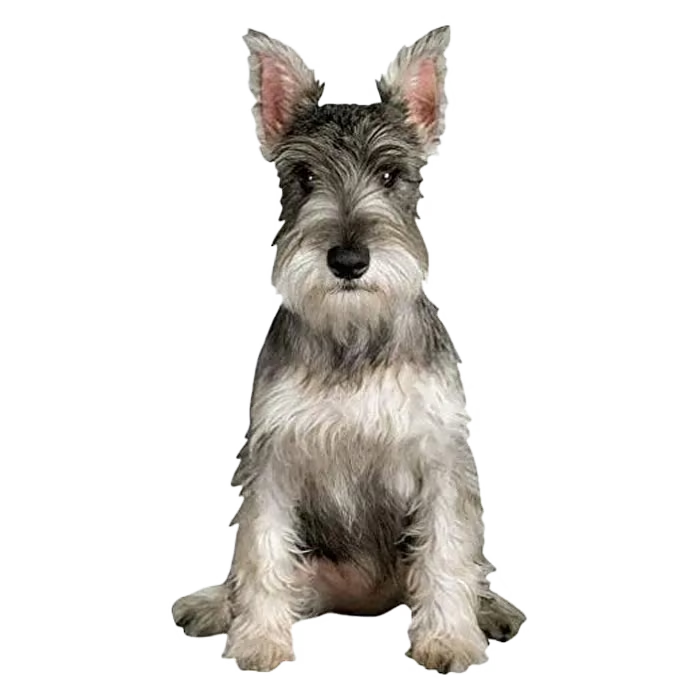
The Miniature Schnauzer is a spirited, intelligent German breed beloved for its bristly beard, friendly nature, and alert watchdog instincts.
How the Miniature Schnauzer coat is built, and what that means when you groom it.
Caution: A Miniature Schnauzer coat should be hand-stripped rather than clipped.
A wire coat is meant to be pulled out at the root once the hair is ready to release. Clippers cut it off part way instead, leaving the soft undercoat behind. The result is a coat that grows back limp and faded, and the weatherproof texture only returns after the hair is stripped out again.
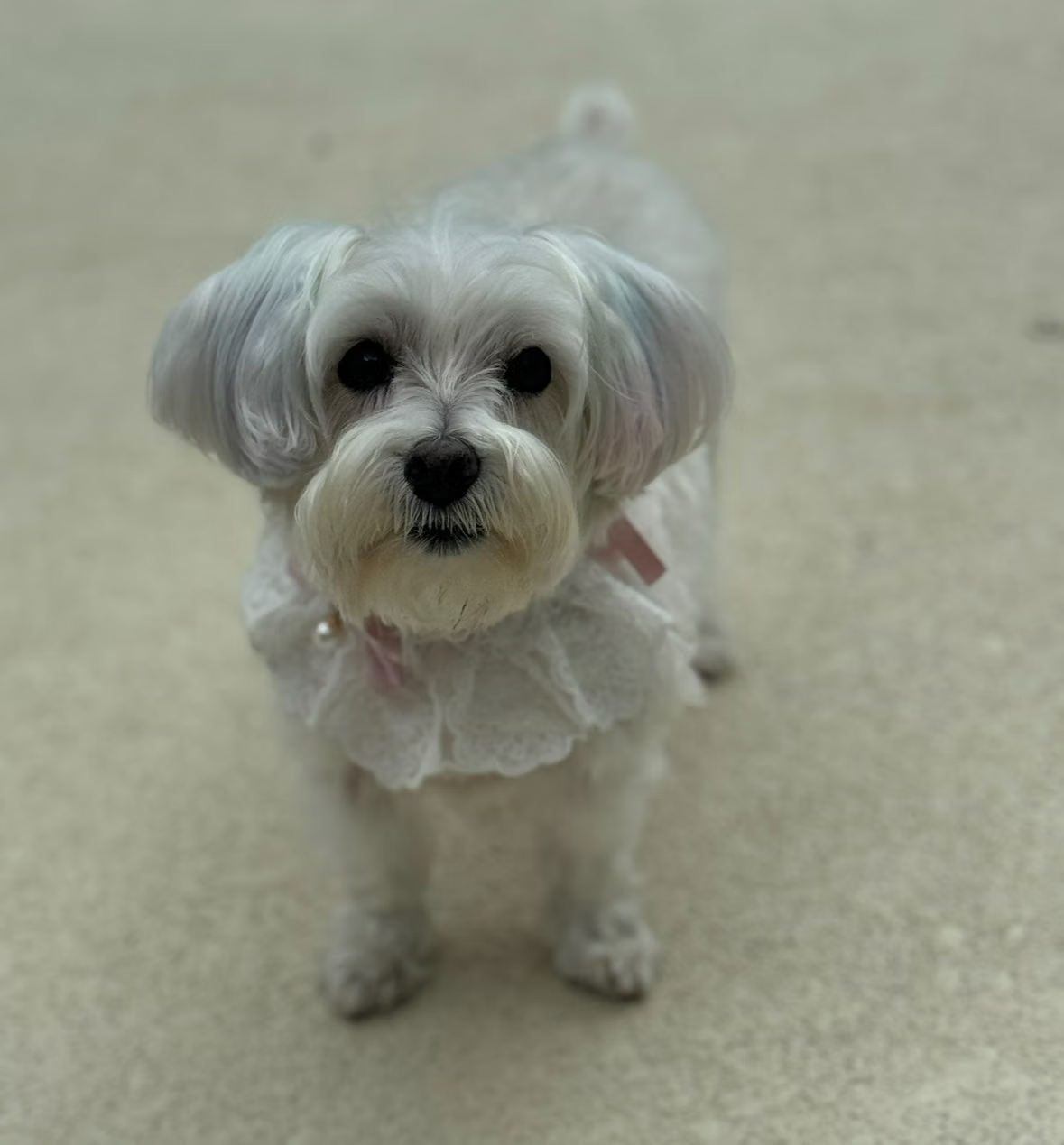
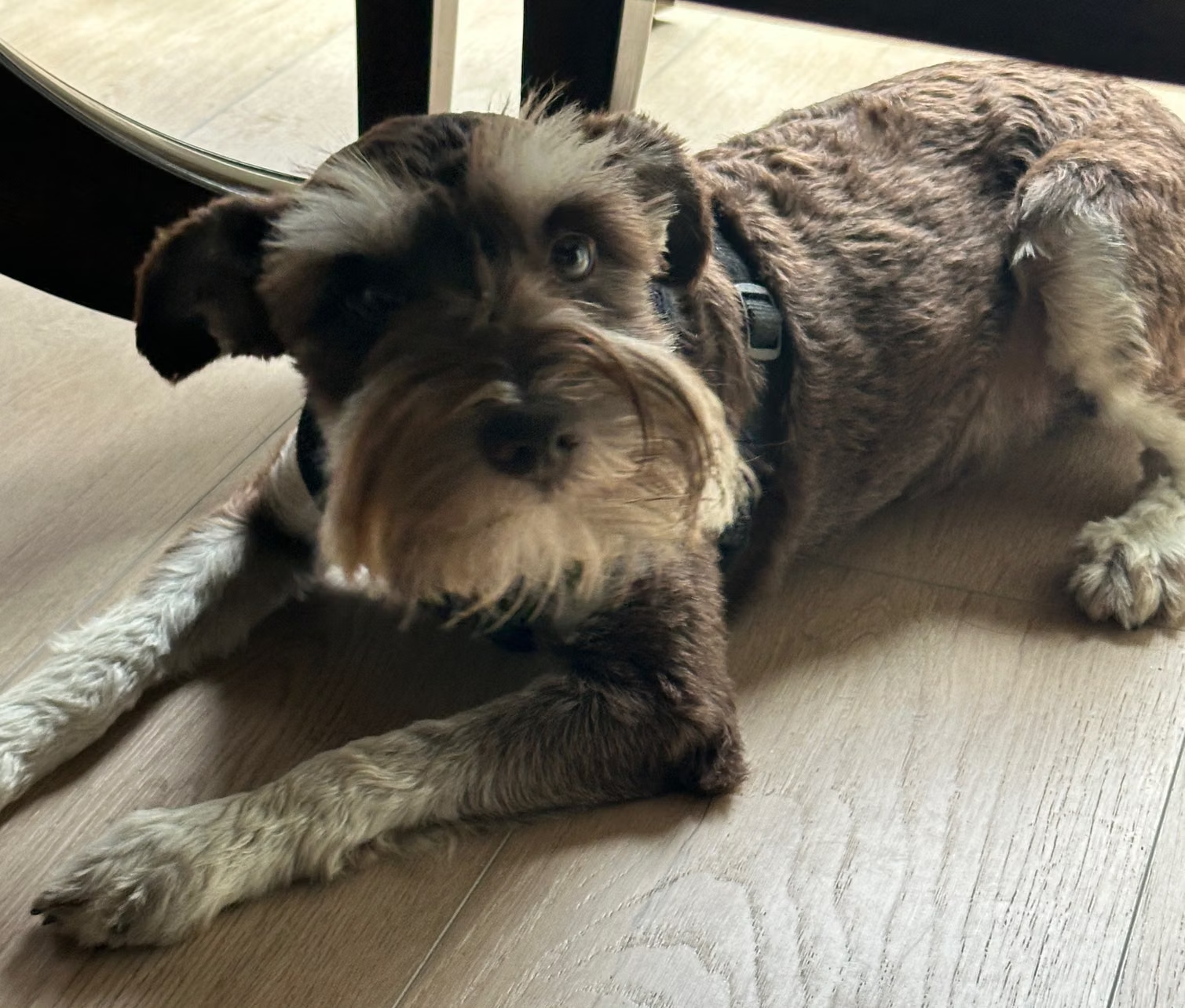
A few of the Miniature Schnauzer profiles members have added to United Pet Club.
The Miniature Schnauzer is a small, spirited German breed known for its wiry coat, bushy beard and eyebrows, and alert, friendly temperament.
The Miniature Schnauzer is a small dog developed in Germany as a smaller version of the Standard Schnauzer. It stands out for its harsh wiry coat, distinctive beard, and arched eyebrows, which give it a recognizable face. Adults usually weigh between 5 and 9 kg and stand about 30 to 36 cm at the shoulder, placing the breed firmly in the small category while keeping the sturdy build of a working terrier.
The breed is intelligent and alert, with strong watchdog instincts inherited from its origins as a farm ratter. Miniature Schnauzers tend to be friendly with their families and form close bonds with the people they live with. They are quick to bark at unfamiliar sounds, which makes them effective alarm dogs in a small package.
Many owners value the breed for its low-shedding coat and its adaptability to apartments or houses. The combination of a manageable size, a willingness to learn, and a lively personality has kept the Miniature Schnauzer among the more popular small breeds worldwide.
| Attribute | Detail |
|---|---|
| Origin | Germany |
| Size | Small (5 to 9 kg) |
| Lifespan | 12 to 15 years |
| Group/role | Farm ratter and companion; classed in the Terrier group by some registries and the Utility/Working group by others |
| Good with | Families, children, and other dogs when socialized; small pets need supervision due to prey drive |
The Miniature Schnauzer suits owners who want a small, trainable dog with personality and an alert nature. It fits apartment and house living provided it gets daily exercise and mental work. People who prefer a breed that sheds little may find the coat appealing, though it does require regular grooming. The breed is less suited to homes that need a quiet dog, since it tends to bark at activity outside.
The Miniature Schnauzer was bred in Germany in the late 1800s by crossing the Standard Schnauzer with smaller breeds to create a compact farm ratter.
The Schnauzer type has deep roots in southern Germany, where medium-sized wiry dogs worked on farms as ratters, guards, and drovers. The breed name comes from the German word for muzzle or snout, a reference to the dog's bearded face. The Standard Schnauzer is the oldest of the three Schnauzer sizes and served as the foundation for the smaller variety.
During the late nineteenth century, German breeders set out to produce a smaller Schnauzer that could keep barns and stables clear of rats while living closely with the household. To reduce size, the Standard Schnauzer was crossed with smaller dogs, with the Affenpinscher and likely the Miniature Pinscher among the breeds used. The goal was a dog that kept the Schnauzer look and working drive in a more compact frame.
The Miniature Schnauzer was shown as a distinct variety in Germany by the 1890s, and the Pinscher-Schnauzer Club of Germany recorded the breed in its early stud records. The breed reached the United States in the early twentieth century and was recognized by the American Kennel Club in 1926, where it was placed in the Terrier group despite not descending from British terrier lines.
Through the twentieth century the Miniature Schnauzer shifted from a working ratter to a widely kept companion. Its size, trainability, and low-shedding coat made it popular in cities, and it has remained one of the more numerous small breeds in many countries since the mid-1900s.
The Miniature Schnauzer is a small, square-built dog with a harsh double coat, a prominent beard and eyebrows, and a sturdy, balanced frame.
The Miniature Schnauzer has a compact, nearly square outline, meaning its body length roughly equals its height at the withers. The build is sturdy rather than fine-boned, reflecting the breed's working background. The head is rectangular, with a strong muzzle framed by the characteristic beard, and the eyebrows arch over dark, oval eyes. Ears may be naturally folded or, in some countries, cropped to stand erect, though cropping is banned in many regions.
| Trait | Standard |
|---|---|
| Height | 30 to 36 cm at the withers |
| Weight | 5 to 9 kg |
| Coat | Double coat with a harsh wiry outer coat and soft undercoat |
| Colours | Salt and pepper, black and silver, solid black, and white |
| Eyes | Small, oval, dark brown, deep-set |
The outer coat is hard and wiry, which helps shed dirt and gives the breed its weather resistance. The undercoat is softer and denser. Salt and pepper is the most common colour, a banded grey produced by hairs that are banded light and dark. Black and silver shows a black body with silver markings on the eyebrows, muzzle, chest, and legs. Solid black and solid white are also recognized, though white is not accepted by every registry. The beard and leg furnishings are usually kept longer than the body coat. Show dogs are traditionally hand-stripped to keep the wiry texture, while pet dogs are more often clipped, which softens the coat over time.
The Miniature Schnauzer is friendly, spirited, and intelligent, bonding closely with its family while staying alert and quick to bark at strangers.
The Miniature Schnauzer is an outgoing, lively dog that stays closely involved with its household. It tends to be affectionate with family members and enjoys being part of daily activity rather than left alone for long stretches. The breed is intelligent and curious, and it responds well to people who give it tasks and attention.
With strangers the breed is alert and watchful. Miniature Schnauzers bark readily at visitors and unusual sounds, which makes them reliable alarm dogs, though it also means barking needs to be managed through training. Once introduced, most are sociable rather than aggressive.
With other dogs the breed is generally friendly when socialized from a young age. Its terrier-style prey drive means small pets such as rodents, birds, and sometimes cats can trigger chasing, so introductions to small animals should be careful and supervised. Around children the Miniature Schnauzer is usually playful and tolerant, and its sturdy build holds up to household activity better than some toy breeds.
| Trait | Rating |
|---|---|
| Affection | 4 |
| Energy | 4 |
| Trainability | 4 |
| Vocalness | 4 |
| Shedding | 1 |
The Miniature Schnauzer needs regular coat grooming, daily exercise, and mental stimulation, and it adapts to both apartments and houses.
The Miniature Schnauzer adapts to apartments and houses alike, provided exercise needs are met. It prefers to be near its family and can become bored or noisy if isolated for long periods. A secure garden suits the breed, but fences should be solid, since the dog will investigate and dig. Daily mental work, through training or puzzle feeders, helps prevent nuisance barking and destructive habits.
The Miniature Schnauzer does well on a balanced diet portioned to its small size, with care taken to avoid high-fat foods linked to pancreatitis.
The Miniature Schnauzer should eat a complete and balanced diet matched to its life stage and activity level. The breed is prone to weight gain, so portions need to be measured rather than free-fed, and treats counted toward daily calories. The breed also has a known tendency toward high blood fat levels, so many owners and vets favour lower-fat foods and avoid fatty table scraps.
| Life stage | Amount per day | Meals |
|---|---|---|
| Puppy (2 to 6 months) | Per product guide, by weight | 3 to 4 |
| Junior (6 to 12 months) | Per product guide, by weight | 2 to 3 |
| Adult | Roughly 70 to 130 g of dry food | 2 |
| Senior | Reduced calories, adjusted to activity | 2 |
Keep treats to no more than about 10 percent of daily calories, and choose low-fat options for this breed. Fresh water should always be available. Most dogs on a complete commercial diet need no supplements, but a vet may recommend additions for joint health or, in dogs with high blood fat, a prescription diet. Discuss any supplement with a veterinarian before adding it.
The Miniature Schnauzer typically lives 12 to 15 years and is generally healthy, though it is predisposed to pancreatitis, high blood fat, and certain eye and urinary conditions.
The Miniature Schnauzer is a generally hardy small breed with a typical lifespan of 12 to 15 years. Like all breeds it has some inherited and acquired conditions worth watching for. Buying from breeders who screen their stock and keeping the dog at a healthy weight reduce the risk of several common problems.
| Condition | Signs | Note |
|---|---|---|
| Pancreatitis | Vomiting, abdominal pain, loss of appetite, lethargy | Linked to high-fat meals; can be serious and needs prompt vet care |
| Hyperlipidaemia (high blood fat) | Often none; found on blood tests | Common in the breed; managed with low-fat diet |
| Bladder and kidney stones | Straining to urinate, blood in urine, frequent urination | Breed has raised risk; diet and hydration help |
| Eye disease (cataracts, progressive retinal atrophy) | Cloudy eyes, night vision loss, bumping into objects | Screening of breeding dogs lowers risk |
| Portosystemic shunt | Stunted growth, confusion after meals, poor weight gain | Congenital liver vessel defect; seen in some lines |
The Miniature Schnauzer is intelligent and eager to learn, responding best to consistent, reward-based training that also manages its tendency to bark.
The Miniature Schnauzer is quick to learn and enjoys working with its handler, which makes it one of the more trainable small breeds. It picks up obedience, tricks, and dog sports such as agility and scent work readily. The same intelligence means a bored dog will find its own entertainment, so regular training keeps the mind occupied. The breed can show an independent streak from its ratter background, so consistency matters more than force. Managing barking is a common training goal, since the breed alerts often.
Miniature Schnauzers reach maturity by about 18 months, carry litters for roughly 63 days, and produce litters that average three to six puppies.
Miniature Schnauzers reach sexual maturity by around six to twelve months, but responsible breeders wait until full physical and behavioural maturity, usually around 18 to 24 months, before breeding. Health screening of both parents, including eye testing, is standard practice in the breed to reduce inherited disease.
Gestation lasts about 63 days from conception. Litters commonly contain three to six puppies, though smaller and larger litters occur. The dam normally whelps without intervention, but a vet should be on call in case of difficulty.
Puppies are born deaf and blind, with eyes opening at around 10 to 14 days. Weaning begins near four weeks and is usually complete by seven to eight weeks. Early handling and socialization during the first weeks shape the adult temperament, so well-run breeders expose puppies to gentle handling, household sounds, and new experiences before they go to homes, typically at eight weeks or later.
| Metric | Value |
|---|---|
| Sexual maturity | 6 to 12 months |
| Recommended breeding age | 18 to 24 months |
| Gestation | About 63 days |
| Average litter size | 3 to 6 puppies |
| Eyes open | 10 to 14 days |
| Weaning | About 7 to 8 weeks |
| Typical rehoming age | 8 weeks or later |
A free lifetime United Pet Club record for your Miniature Schnauzer, with the microchip registered at no cost and kept current through every move.
Canadian shelters and vet clinics scan strays at intake as a matter of routine, and the scan helps only when a registry ties your Miniature Schnauzer to a phone that still rings. Registering your dog with United Pet Club takes a few minutes, never costs anything, and works whether or not a chip is in place yet. Add the breed, a photo, and your postal code, and the record is live.
Sixty seconds with a scanner reads the chip; whether your Miniature Schnauzer gets home depends on the record behind the number. Microchip registration with United Pet Club is free for life, takes every brand sold in Canada, and keeps the record searchable on both sides of the border. Sign up free and give the number somewhere to point.
Open a free United Pet Club account, fill in your Miniature Schnauzer's name, breed details, and a photo, and save. The lifetime plan is free, no chip required, and the chip number can be attached after your vet appointment.
Add the 15-digit number to your account along with your address, postal code, and phone number. Registration and unlimited updates are free for life, and chips from any manufacturer a Canadian vet uses are accepted.
There is no federal requirement, but several cities fold chips into their licensing bylaws, and travel with the dog goes smoother when the chip is registered. The record, not the implant, is what identifies your Miniature Schnauzer.
Nothing, ever. United Pet Club's lifetime plan covers the profile, the chip record, and every update without fees or renewals.
Common questions about the Miniature Schnauzer cover its size, temperament, grooming needs, lifespan, suitability, and availability.
It is a small breed, standing about 30 to 36 cm at the shoulder and weighing roughly 5 to 9 kg when fully grown.
Yes. They are friendly and affectionate with their families and usually playful and tolerant with children. They are alert and tend to bark at strangers, which makes them good watchdogs, and their prey drive means small pets need supervision.
Care is moderate. The main demand is the coat, which needs brushing several times a week and clipping or hand-stripping every six to eight weeks. They also need daily exercise and mental stimulation, but they shed very little.
Most live 12 to 15 years. Keeping the dog at a healthy weight, feeding a low-fat diet, and regular vet care support a long life.
They are vocal by nature and alert quickly to sounds and visitors. Early training, including a quiet cue, helps keep barking manageable.
Yes, provided their exercise and mental needs are met. They adapt well to apartment living, though their alert barking may need management in close quarters.
Yes. The breed is popular and widely available across Canada, but buyers should still seek breeders who health-test their dogs or consider breed-specific rescue organisations.