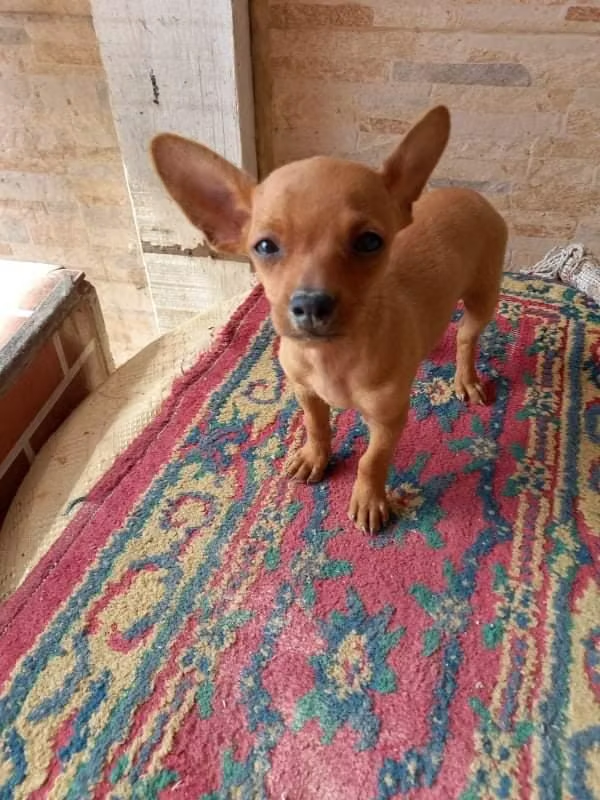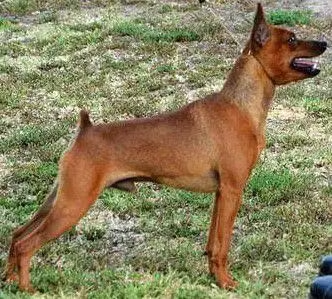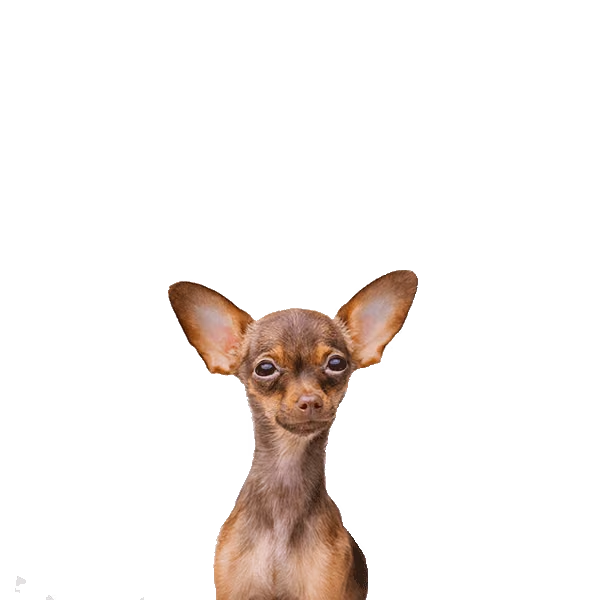
The Miniature Pinscher is a spirited little dog known for its fearless, fiery personality and proud, high-stepping gait.
How the Miniature Pinscher coat is built, and what that means when you groom it.
A few of the Miniature Pinscher profiles members have added to United Pet Club.
The Miniature Pinscher is a small German breed standing 8 to 12.5 inches and weighing 8 to 10 pounds, known for a fearless temperament and a distinctive high-stepping hackney gait.
The Miniature Pinscher is a small, compact dog that originated in Germany. Despite a body that rarely exceeds 12.5 inches at the shoulder, it carries itself with the bearing of a much larger animal. The breed is sometimes nicknamed the King of Toys for its bold, self-assured manner.
The most recognisable trait is the hackney gait, a high-stepping front-leg action that resembles a trotting horse. Combined with an alert head carriage and a smooth, short coat, this gives the breed a precise, animated look when moving.
Min Pins are spirited and curious. They form strong bonds with their household, stay watchful around strangers, and need consistent boundaries. Their natural confidence can tip into stubbornness without structure.
| Attribute | Detail |
|---|---|
| Origin | Germany |
| Size | Small (8 to 12.5 in, 8 to 10 lb) |
| Lifespan | 12 to 16 years |
| Group/role | Toy group, companion and watchdog |
| Good with | Older children and respectful adults; supervise with toddlers |
The Miniature Pinscher fits an owner who is home often and willing to provide daily activity and firm, patient training. It does well in apartments and houses alike, provided it gets exercise and company. The breed is less suited to households where a dog is left alone for long stretches, since boredom can lead to barking and escape attempts.
The Miniature Pinscher developed in Germany over several centuries as a small farm and stable ratter, and was standardised as a distinct breed in the late 1800s.
The Miniature Pinscher comes from Germany, where small ratting dogs worked in stables, homes, and farms for centuries. Early specimens are believed to descend from a mix that included the German Pinscher along with Dachshund and small Italian Greyhound stock, which would account for the breed's lean build and lively gait.
The breed was developed primarily to control rats and other vermin. Its small size let it pursue rodents into tight spaces, while its quickness and tenacity suited the task. This working background shaped the alert, driven temperament still seen today.
German breeders began to formalise the type in the late nineteenth century. The Pinscher Klub, later the Pinscher-Schnauzer Klub, was founded in Germany in 1895 and helped set early breed standards. The name Pinscher refers to a type of terrier-like working dog rather than a single breed.
The Miniature Pinscher arrived in Canada and the United States in the early twentieth century. The American Kennel Club recognised the breed in 1925, and the Canadian Kennel Club (CKC) includes it in the Toy Group. A common misconception is that the breed is a scaled-down Doberman Pinscher; in fact the Min Pin is the older of the two and developed independently.
The Miniature Pinscher is a small, sturdy, square-built dog with a smooth short coat, standing 8 to 12.5 inches tall and weighing 8 to 10 pounds.
The Miniature Pinscher has a compact, square outline, meaning its body length roughly equals its height at the withers. The build is sturdy rather than delicate, with clean lines and a level topline. The head is tapered and in proportion to the body, with dark, slightly oval eyes and a confident expression. The breed is best known for its hackney-like front gait, lifting each forefoot well off the ground.
| Trait | Standard |
|---|---|
| Height | 8 to 12.5 in (20 to 32 cm) at the shoulder |
| Weight | 8 to 10 lb (3.6 to 4.5 kg) |
| Coat | Short, smooth, hard, close-lying |
| Colours | Solid red, stag red, black and rust, chocolate and rust |
| Eyes | Dark, oval, set moderately wide |
The coat is short, straight, and lustrous, lying flat against the body. It needs little grooming and offers limited insulation, so the breed feels the cold. Accepted colours include solid red, stag red (red with black hairs intermixed), black with rust markings, and chocolate with rust markings. Rust points appear on the muzzle, throat, chest, lower legs, and below the tail. Ears may be naturally erect or cropped depending on regional custom and local law. In Canada, ear cropping is regulated provincially; owners should confirm what is permitted in their province. Tails are sometimes docked, though Canadian regulations on this practice also vary by province.
The Miniature Pinscher is spirited, fearless, and alert, deeply attached to its family while reserved and watchful toward strangers.
The Miniature Pinscher is bold and energetic, with a personality far larger than its frame. It bonds closely with its household and likes to be involved in daily activity. With strangers it tends to be reserved and quick to sound the alarm, which makes it an effective small watchdog.
Around children the breed does best with older kids who handle it gently, since its small size makes it vulnerable to rough play. With other pets, early socialisation matters: a Min Pin may try to assert itself over larger dogs and may chase smaller animals because of its ratting instinct.
The breed is intelligent and curious but also independent and strong-willed. It can be stubborn and will test limits, so consistent rules and early training help channel its drive. Min Pins are escape artists and explorers, so secure fencing and supervision are necessary.
| Trait | Rating |
|---|---|
| Affection | 4 |
| Energy | 5 |
| Trainability | 3 |
| Vocalness | 4 |
| Shedding | 2 |
The Miniature Pinscher needs minimal grooming but daily exercise, mental stimulation, and protection from cold weather.
The Miniature Pinscher is low-maintenance on the grooming front but demanding on activity and attention. Its short coat is easy to keep clean, while its high energy and intelligence call for a structured routine of exercise and engagement.
The Miniature Pinscher adapts well to apartments and houses as long as it gets daily exercise. Canadian winters pose a real challenge for this breed. The short coat provides little insulation, so a well-fitted dog coat is practical for outdoor time below about -5 C, and walks should be kept brief during cold snaps. Indoors, the breed climbs and jumps, so blocking access to high ledges and gaps it could slip through is worth attention.
The Miniature Pinscher needs a measured diet of quality small-breed food, fed in two meals a day, with care taken to prevent the obesity that small dogs are prone to.
The Miniature Pinscher does well on a complete, balanced diet formulated for small or toy breeds. Because the breed is active and compact, portions should match its energy level and body condition. Small dogs gain weight easily, and excess weight adds strain on joints and the heart, so measured feeding matters more than free access to food.
| Life stage | Amount per day | Meals |
|---|---|---|
| Puppy (2 to 6 months) | About 1/4 to 1/2 cup | 3 to 4 |
| Adult (1 to 7 years) | About 1/4 to 1/2 cup | 2 |
| Senior (7+ years) | About 1/4 to 1/2 cup, adjusted lower | 2 |
Keep treats to no more than about 10 percent of daily calories to avoid weight gain. Small, low-calorie training treats suit the breed's size. Most Min Pins on a complete commercial diet need no supplements; discuss any joint, skin, or dental supplement with a veterinarian before adding it. Fresh water should be available at all times.
The Miniature Pinscher is generally healthy with a 12 to 16 year lifespan, though it is prone to certain joint, eye, and dental conditions.
The Miniature Pinscher is a hardy breed and typically lives 12 to 16 years. Like many small dogs, it is predisposed to a handful of inherited and structural conditions. Buying from breeders who screen their stock and keeping up with routine veterinary care reduce the risk and severity of most problems. The CKC recommends sourcing puppies from breeders who follow health-testing guidelines relevant to the breed.
| Condition | Signs | Note |
|---|---|---|
| Patellar luxation | Skipping, intermittent lameness, hopping on a hind leg | Common in small breeds; ranges from mild to surgical |
| Legg-Calve-Perthes disease | Hind-limb lameness, pain, muscle loss in the thigh | Affects the hip joint in young small dogs |
| Progressive retinal atrophy | Night blindness, gradual vision loss | Inherited; DNA testing available in breeding lines |
| Dental disease | Bad breath, tartar, loose teeth, reluctance to eat | Frequent in toy breeds; home and professional care helps |
The Miniature Pinscher is intelligent and capable but independent and willful, so it responds best to early, consistent, reward-based training.
The Miniature Pinscher learns quickly when motivated, but its independent streak means it will ignore commands it sees no reason to follow. Short, varied sessions hold its attention better than long drills. Consistency is essential, since the breed is quick to notice and exploit inconsistent rules. Early socialisation with people, other dogs, and everyday situations helps temper the breed's wariness and reduce nuisance barking.
The Miniature Pinscher reaches breeding maturity at around 18 to 24 months, with a roughly 63-day gestation and typical litters of two to four puppies.
Responsible breeding of the Miniature Pinscher starts with health-tested parents and a focus on sound temperament and structure. Although a female may come into season earlier, breeders generally wait until full physical and mental maturity, around 18 to 24 months, before a first mating. Health screening for patellar luxation, eye conditions such as progressive retinal atrophy, and hip-related disease helps reduce inherited problems. CKC-registered breeders are encouraged to follow breed club health protocols.
Gestation lasts about 63 days. Litters are usually small, commonly two to four puppies. Because the breed is small, whelping should be monitored and a veterinarian kept on call. Newborn puppies are tiny and need a warm, draft-free area, since they cannot regulate their own temperature well in the first weeks.
Puppies should stay with the dam and littermates until at least eight weeks of age. This period is important for early socialisation, bite inhibition, and learning normal dog behaviour. Gentle handling and exposure to household sights and sounds during this time support a well-adjusted adult.
| Metric | Value |
|---|---|
| Sexual maturity | About 6 to 12 months |
| Recommended breeding age | 18 to 24 months |
| Gestation | About 63 days |
| Average litter size | 2 to 4 puppies |
| Weaning age | About 6 to 8 weeks |
| Leave dam | 8 weeks or later |
A free lifetime United Pet Club record for your Miniature Pinscher, with the microchip registered at no cost and kept current through every move.
Canadian shelters and vet clinics scan strays at intake as a matter of routine, and the scan helps only when a registry ties your Miniature Pinscher to a phone that still rings. Registering your dog with United Pet Club takes a few minutes, never costs anything, and works whether or not a chip is in place yet. Add the breed, a photo, and your postal code, and the record is live.
Sixty seconds with a scanner reads the chip; whether your Miniature Pinscher gets home depends on the record behind the number. Microchip registration with United Pet Club is free for life, takes every brand sold in Canada, and keeps the record searchable on both sides of the border. Sign up free and give the number somewhere to point.
Open a free United Pet Club account, fill in your Miniature Pinscher's name, breed details, and a photo, and save. The lifetime plan is free, no chip required, and the chip number can be attached after your vet appointment.
Add the 15-digit number to your account along with your address, postal code, and phone number. Registration and unlimited updates are free for life, and chips from any manufacturer a Canadian vet uses are accepted.
There is no federal requirement, but several cities fold chips into their licensing bylaws, and travel with the dog goes smoother when the chip is registered. The record, not the implant, is what identifies your Miniature Pinscher.
Nothing, ever. United Pet Club's lifetime plan covers the profile, the chip record, and every update without fees or renewals.
Common questions about the Miniature Pinscher cover its size, temperament, care needs, lifespan, suitability, and availability.
It is a small breed, standing about 8 to 12.5 inches at the shoulder and weighing roughly 8 to 10 pounds when full grown.
It can be, especially in homes with older children who handle it gently. The breed is affectionate with its family but reserved with strangers, and its small size makes it less suited to households with very young, boisterous toddlers.
Grooming is easy thanks to the short coat, but the breed needs daily exercise, mental stimulation, and consistent training. Its independent, energetic nature makes it a moderate-effort dog overall.
They are long-lived for a dog, typically reaching 12 to 16 years with good care, a healthy weight, and routine veterinary attention.
They are alert and vocal, and will sound off at strangers and unfamiliar noises. Early training and socialisation help keep barking under control.
No. Despite the similar look, the Min Pin is an older, separate German breed developed as a ratter, not a miniaturised Doberman Pinscher.
They are a well-established breed recognised by the Canadian Kennel Club and available through reputable CKC-registered breeders and breed-specific rescues. Availability varies by region and waiting lists are common for quality litters.