
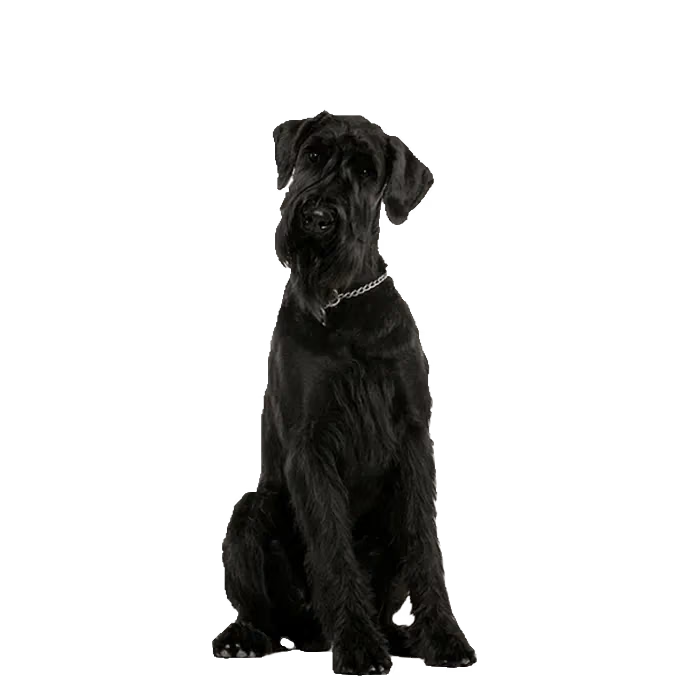
German Wirehaired Pointer
The German Wirehaired Pointer is a devoted, all-purpose hunting companion known for its rugged coat and tireless work ethic.
- Size
- Large
- Lifespan
- 12–14 years
- Origin
- Germany
- Temperament
- Devoted
- Standard colors
- Black, White and Liver
Characteristics
Coat and grooming
How the German Wirehaired Pointer coat is built, and what that means when you groom it.
- Coat layers
- Double coat
- Coat texture
- Wire
- Coat length
- Medium
- Shedding
- Moderate shedding
Grooming guidance
Critical: A German Wirehaired Pointer should not be shaved.
The undercoat keeps heat out as well as in, and the outer coat shields the skin from sun and insect bites. Clipping the whole coat off removes both. It often grows back patchy, soft or a different colour, and in some animals the guard hairs never return properly. Brush the undercoat out instead of cutting it off.
Caution: A German Wirehaired Pointer coat should be hand-stripped rather than clipped.
A wire coat is meant to be pulled out at the root once the hair is ready to release. Clippers cut it off part way instead, leaving the soft undercoat behind. The result is a coat that grows back limp and faded, and the weatherproof texture only returns after the hair is stripped out again.
German Wirehaired Pointer colors and patterns
What each club's breed standard says about every German Wirehaired Pointer color and pattern. Point at a ruling to see the club's own wording.
Breed standards describe the German Wirehaired Pointer in Black, White and Liver. Standard patterns: Solid, Bicolour, Roan and Spotted.
| Color or pattern | FCI | AKC | UKC | KC | KUSA |
|---|---|---|---|---|---|
| Black | Standard (“Black roan, with or without patches”) | Fault (“Black & White”) | Standard (“Solid black”) | Standard (“black and white”) | Standard (“Black roan, with or without patches”) |
| White | Standard (“Light roan”) | Standard (“Liver & White”) | Standard (“liver and white ticked”) | Standard (“Liver and white”) | Standard (“Light roan”) |
| Liver | Standard (“Brown with or without white chest patch”) | Standard (“Liver”) | Standard (“Solid liver”) | Standard (“solid liver”) | Standard (“Brown with or without white chest patch”) |
| Albino | Not recognised | No ruling | Disqualifying (“Albinism”) | Not recognised | Not recognised |
| Patterns | |||||
| Solid | Standard (“Brown with or without white chest patch”) | Standard (“solid liver”) | Standard (“Solid liver”) | Standard (“solid liver”) | Standard (“Brown with or without white chest patch”) |
| Bicolour | No ruling | Standard (“The coat is liver and white”) | Standard (“liver and white”) | Standard (“Liver and white”) | No ruling |
| Roan | Standard (“Brown roan with or without patches”) | Standard (“Roan”) | Standard (“liver and white ticked”) | Standard (“Liver & White Ticked”) | Standard (“Brown roan with or without patches”) |
| Spotted | Standard (“Brown roan with or without patches”) | Standard (“Spotted”) | Standard (“liver and white spotted”) | Not recognised | Standard (“Brown roan with or without patches”) |
| Tricolour | No ruling | No ruling | No ruling | Fault (“Solid black and tricoloured highly undesirable”) | No ruling |

%22%3E%3Cpath%20d%3D%22M0%2023L9.5%2020.4L14%2025.4L19%2029.6Q21%2035%2023.5%2035.5Q36%2033%2050%2036L56%2040V64H0Z%22%20fill%3D%22%23F5F5F0%22%2F%3E%3C%2Fg%3E%3Cuse%20href%3D%22%23s%22%20fill%3D%22none%22%20stroke%3D%22%233B2A20%22%20stroke-opacity%3D%220.6%22%20stroke-width%3D%221%22%20stroke-linejoin%3D%22round%22%2F%3E%3Cellipse%20cx%3D%223.2%22%20cy%3D%2221.7%22%20rx%3D%221.3%22%20ry%3D%221.2%22%20fill%3D%22%231C1C1C%22%2F%3E%3Ccircle%20cx%3D%2210.8%22%20cy%3D%2219.3%22%20r%3D%221.1%22%20fill%3D%22%231C1C1C%22%2F%3E%3C%2Fsvg%3E)
%22%3E%3Cg%20fill%3D%22none%22%20stroke%3D%22%23F5F5F0%22%20stroke-width%3D%221.15%22%20stroke-linecap%3D%22round%22%20stroke-linejoin%3D%22round%22%3E%3Cpath%20d%3D%22M28.6%2025h.1M51.3%2028.8h.1M34.7%2024.3h.1M34.2%2041.6h.1M51%2044.2h.1M55.9%2024.7h.1M27.5%2026.3h.1M18.5%2028.6h.1M25.2%2028.9h.1M24.2%2019.3h.1M20.6%2017.6h.1M34.1%2030.6h.1M57.3%2023.3h.1M23.5%2030.7h.1M26.5%2023.1h.1M40%2031.5h.1M51.7%2038.6h.1M20.2%2022.1h.1M40.4%2037.8h.1M35%2043.1h.1M20.6%2031.7h.1M27.8%2031.9h.1M17.2%2021.1h.1M38.1%2037.7h.1M25.3%2040.5h.1M32%2029.3h.1M41.6%2039.5h.1M23.6%2024h.1M26.4%2018.6h.1M30.3%2031.9h.1M31.2%2035.2h.1M36.5%2043.7h.1M35.2%2026.3h.1M55.6%2019.1h.1M22.4%2036.8h.1M39.2%2020h.1M49.5%2039.1h.1M33.6%2033.5h.1M36.4%2032.4h.1M56.3%2042.4h.1M54.8%2031.2h.1M36.9%2023.2h.1M52.7%2019.1h.1M21.5%2033.8h.1M48.6%2028h.1M36.6%2017.5h.1M45.6%2031.3h.1M37.9%2030.5h.1M17%2031.8h.1M21.1%2043.1h.1M55.7%2021.1h.1M30.8%2041.9h.1M57.4%2038.4h.1M54.8%2026.9h.1M29.1%2017.5h.1M24.3%2037.7h.1M26%2032h.1M39.3%2022.8h.1M53.5%2029h.1M53.3%2023.3h.1M20%2038.4h.1M28.3%2044.7h.1M28.6%2039.8h.1M51.9%2041.1h.1M52.3%2033.7h.1M19.6%2042.2h.1M19%2033h.1M47.8%2021.7h.1M45.7%2024.8h.1M24.6%2035.5h.1M29.8%2036.8h.1M50.7%2032h.1M29.5%2043.5h.1M28.2%2041.5h.1M47.4%2034.8h.1M25.4%2033.7h.1M50.2%2041.2h.1M27.7%2029.5h.1M21.5%2024.8h.1M55.5%2017.5h.1M41.2%2044.3h.1M39.2%2018.4h.1M41.1%2042.5h.1M54.7%2035.3h.1M42.8%2034.5h.1M30.1%2023h.1M42.6%2025.1h.1M32.9%2024.4h.1M42.4%2032.4h.1M49.7%2022.2h.1M49.1%2043.1h.1M38%2035.2h.1M47.7%2043.8h.1M43.1%2022.4h.1M22.4%2040.4h.1M44.4%2019.8h.1M53.3%2040.1h.1M20.7%2029.3h.1M55.6%2043.9h.1M17.6%2039.2h.1M41.7%2028.9h.1M44.1%2036.3h.1M24.3%2043.6h.1M26.4%2038.1h.1M30.3%2029.2h.1M31.5%2030.8h.1M32.1%2023h.1M18.3%2040.9h.1M48%2033.4h.1M36.4%2038.7h.1M31.9%2020.8h.1M32.6%2026.2h.1M22%2031.2h.1M53.4%2021.7h.1M41.9%2017.7h.1M53.3%2037.3h.1M47.7%2040.3h.1M54.4%2033.7h.1M33.6%2037.5h.1M25.3%2017.2h.1M37.6%2019.7h.1M31.6%2019h.1M29.2%2019.6h.1M50.7%2027.3h.1M22%2022.1h.1M31%2037.8h.1M56.5%2026.6h.1M34.7%2039.5h.1M56.5%2040.8h.1M47.6%2038h.1M48.6%2026.1h.1M49.7%2034.2h.1M45.4%2027.4h.1M22.6%2038.9h.1M56.5%2035.3h.1M35.1%2021h.1M41.9%2020.1h.1M37.6%2040h.1M32.6%2044.4h.1M37.9%2025.2h.1M26.6%2043h.1M18.9%2036.7h.1M47.2%2028.9h.1M30.5%2026.2h.1M17.4%2027.3h.1M47.1%2017.2h.1M22.3%2044.3h.1M32.5%2042.4h.1M23.6%2025.7h.1M31.4%2024.9h.1%22%2F%3E%3Cpath%20d%3D%22M26%2020.9h.1M41.2%2023.8h.1M39.9%2026.4h.1M28.5%2033.4h.1M42.8%2043.8h.1M17.6%2034.3h.1M34%2017.1h.1M31.2%2017.2h.1M46.5%2036.1h.1M25.1%2022.1h.1M50.3%2023.7h.1M20.2%2026.6h.1M20.8%2020.4h.1M50.9%2017.3h.1M49.5%2020.2h.1M52.9%2044.1h.1M23.9%2017.8h.1M43.2%2028.1h.1M57.6%2030h.1M52%2025.6h.1M19.2%2019.1h.1M19.5%2024.4h.1M32.8%2040.1h.1M36.1%2027.7h.1M39.6%2029.5h.1M38.4%2041.5h.1M47.9%2019.4h.1M49.1%2031.7h.1M55.9%2036.9h.1M29.2%2027.2h.1M46%2043.5h.1M44.6%2028.8h.1M47.5%2031.5h.1M22.8%2020h.1M27.6%2017.1h.1M43.1%2018.6h.1M54.3%2020h.1M57.2%2033.8h.1M44.5%2043.8h.1M27.1%2035.5h.1M45.3%2041.8h.1M56.7%2028.8h.1M36.7%2021.4h.1M43.3%2042.3h.1M17.3%2022.9h.1M32.7%2035.5h.1M30.5%2039.8h.1M29.1%2021.2h.1M34.5%2018.8h.1M25.8%2027h.1%22%2F%3E%3C%2Fg%3E%3Cpath%20d%3D%22M56.3%2038.4l0%201.2M40%2027.2l-0.3%201.3M32.6%2043.6l-0.4%201.5M29%2023.3l0.8%201.5M55.1%2044l0.4%201.1M47.5%2022.5l-0.2%201.6M42.9%2038.6l0.7%201.2M35.2%2041.8l-0.5%201.7M26.9%2040l-0.1%201.2M41%2042.8l-0.1%201.6M18.4%2021.2l0.7%201.3M49.4%2019.3l-0.5%201.4M50.1%2041.7l0%201.8M28.2%2041.8l-0.6%201.2M55.5%2027.1l0.2%201.2M44.7%2019.3l0.5%201.7M48.6%2020.5l-0.8%201.4M43.7%2039.6l0.3%201.1M22.1%2033.8l-0.6%201.6M50.1%2038.1l-0.5%201.3M51.8%2044.1l-0.1%201.8M39%2017.5l0%201.4M30.2%2026.7l0.2%201.4M25.8%2031.2l0.2%201.6M29.6%2043.5l0.1%201M43.7%2018.3l0.1%201.5M29.6%2018.2l0.3%201.6M24.4%2017.6l0.3%201.1M22%2028.2l-0.6%201.6M25.9%2043.3l-0.3%201.4M22.2%2024.3l0.3%201.3M47.3%2029.2l-0.2%201.4M21.8%2033.2l0.5%200.9M32.9%2037l0.4%201M40%2029.9l0.8%201.4M17.4%2038.3l0.2%201.3M31%2039.2l0%201.2M37.3%2033.7l0.3%201.5M48.1%2040.5l0%201.6M33.9%2031.2l0.1%201.2M29.8%2035.2l-0.4%201M25.1%2037.3l-0.2%201.5M30.2%2039.8l0.5%201M44.6%2034.8l0.4%200.9M55.3%2034.2l0%201.7M50.6%2017.9l0.4%201M30.2%2034.9l-0.4%201.4M19.5%2035.7l-0.5%201.7M40.7%2028.7l0.8%201.4M23.3%2029l-0.4%201.4M17%2040.5l-0.2%201M48.4%2023.2l-0.3%201M37.3%2025.1l-0.4%201.3M23%2021.4l-0.4%201.3M20.4%2017.2l-0.1%201.3M42.3%2020.4l0.6%201.4M41%2031.8l0.6%201.2M45.4%2034.3l-0.1%201.2M32.5%2018l0%201.3M46.2%2021.6l0.1%201.4M30.5%2022.3l0.5%201.1M58%2044.6l0.3%201.5M57.1%2033.9l0.8%201.4M18.3%2042.6l0.3%201M40.5%2035.1l-0.6%201.4M38.8%2044.3l-0.3%201.1%22%20fill%3D%22none%22%20stroke%3D%22%23F5F5F0%22%20stroke-width%3D%220.8%22%20stroke-linecap%3D%22round%22%20stroke-linejoin%3D%22round%22%2F%3E%3C%2Fg%3E%3Cuse%20href%3D%22%23s%22%20fill%3D%22none%22%20stroke%3D%22%233B2A20%22%20stroke-opacity%3D%220.6%22%20stroke-width%3D%221%22%20stroke-linejoin%3D%22round%22%2F%3E%3Crect%20x%3D%2220%22%20y%3D%2258%22%20width%3D%223.6%22%20height%3D%222%22%20fill%3D%22%234A4038%22%2F%3E%3Crect%20x%3D%2226%22%20y%3D%2258%22%20width%3D%223.6%22%20height%3D%222%22%20fill%3D%22%234A4038%22%2F%3E%3Crect%20x%3D%2244%22%20y%3D%2258%22%20width%3D%223.6%22%20height%3D%222%22%20fill%3D%22%234A4038%22%2F%3E%3Crect%20x%3D%2250%22%20y%3D%2258%22%20width%3D%223.6%22%20height%3D%222%22%20fill%3D%22%234A4038%22%2F%3E%3Ccircle%20cx%3D%229.5%22%20cy%3D%2211.5%22%20r%3D%221.1%22%20fill%3D%22%231C1C1C%22%2F%3E%3C%2Fsvg%3E)
%22%3E%3Cpath%20d%3D%22M51.6%2041h.1M30.7%2035.3h.1M34.9%2031.1h.1M20.4%2027h.1M24.3%2023.8h.1M13.7%2024.5h.1M48.1%2027.8h.1M22.6%2055.1h.1M26.3%2044.6h.1M46.2%2044.7h.1M32.1%2051.9h.1M40.9%2027.7h.1M52.9%2034.5h.1M57.9%2012.4h.1M49.9%2048.7h.1M44.5%2024.7h.1M45.7%2033.8h.1M31.4%2025h.1M15.2%2015.8h.1M52.2%2055.6h.1M37%2023.9h.1M54.6%2045.7h.1M22.9%2041.7h.1M25.2%2028.6h.1%22%20fill%3D%22none%22%20stroke%3D%22%231C1C1C%22%20stroke-width%3D%223.6%22%20stroke-linecap%3D%22round%22%20stroke-linejoin%3D%22round%22%2F%3E%3Cpath%20d%3D%22M20.5%2032.5h.1M17.8%2021.7h.1M39.4%2032.8h.1M50.4%2023h.1M5.4%2023.9h.1M24.5%2034.2h.1M55.2%2023.5h.1M47.5%2039.1h.1M41.7%2037.8h.1M27.2%2038.4h.1M31.9%2040.9h.1M14.6%207.5h.1M20.7%2018.3h.1M29.1%2055.7h.1M45.2%2051.3h.1M57.6%2017.4h.1M24%2048.9h.1M31.5%2047.4h.1M30.3%2030.9h.1M54%2050.8h.1M11.2%2017.8h.1M52.6%2028.7h.1M36.7%2036.9h.1%22%20fill%3D%22none%22%20stroke%3D%22%231C1C1C%22%20stroke-width%3D%222.4%22%20stroke-linecap%3D%22round%22%20stroke-linejoin%3D%22round%22%2F%3E%3C%2Fg%3E%3Cuse%20href%3D%22%23s%22%20fill%3D%22none%22%20stroke%3D%22%233B2A20%22%20stroke-opacity%3D%220.6%22%20stroke-width%3D%221%22%20stroke-linejoin%3D%22round%22%2F%3E%3Cellipse%20cx%3D%223.2%22%20cy%3D%2221.7%22%20rx%3D%221.3%22%20ry%3D%221.2%22%20fill%3D%22%231C1C1C%22%2F%3E%3Ccircle%20cx%3D%2210.8%22%20cy%3D%2219.3%22%20r%3D%221.1%22%20fill%3D%22%231C1C1C%22%2F%3E%3C%2Fsvg%3E)
%22%3E%3Cellipse%20cx%3D%2212.6%22%20cy%3D%2222.6%22%20rx%3D%223.2%22%20ry%3D%222.8%22%20fill%3D%22%23847865%22%2F%3E%3Ccircle%20cx%3D%2212%22%20cy%3D%2217.2%22%20r%3D%221.25%22%20fill%3D%22%23847865%22%2F%3E%3Crect%20x%3D%220%22%20y%3D%2247%22%20width%3D%2264%22%20height%3D%2217%22%20fill%3D%22%23847865%22%2F%3E%3Cpath%20d%3D%22M8.6%2018L12%2015.8L5.8%2021.8L3.2%2021.4Z%22%20fill%3D%22%23F5F5F0%22%2F%3E%3Cpath%20d%3D%22M1.5%2021.2L9%2018.6L12.6%2021L12.2%2026.2L3.5%2024.4Z%22%20fill%3D%22%23F5F5F0%22%2F%3E%3Cpath%20d%3D%22M14%2024.5L18.5%2026Q19.5%2033%2023%2039L18%2040Q17%2033%2014%2028Z%22%20fill%3D%22%23F5F5F0%22%2F%3E%3Cpath%20d%3D%22M21%2035.5Q35%2033.5%2048%2036.5V42H21Z%22%20fill%3D%22%23F5F5F0%22%2F%3E%3Crect%20x%3D%220%22%20y%3D%2252.5%22%20width%3D%2264%22%20height%3D%2212%22%20fill%3D%22%23F5F5F0%22%2F%3E%3Ccircle%20cx%3D%2258.4%22%20cy%3D%2212.8%22%20r%3D%222.6%22%20fill%3D%22%23F5F5F0%22%2F%3E%3C%2Fg%3E%3Cuse%20href%3D%22%23s%22%20fill%3D%22none%22%20stroke%3D%22%233B2A20%22%20stroke-opacity%3D%220.6%22%20stroke-width%3D%221%22%20stroke-linejoin%3D%22round%22%2F%3E%3Cellipse%20cx%3D%223.2%22%20cy%3D%2221.7%22%20rx%3D%221.3%22%20ry%3D%221.2%22%20fill%3D%22%231C1C1C%22%2F%3E%3Ccircle%20cx%3D%2210.8%22%20cy%3D%2219.3%22%20r%3D%221.1%22%20fill%3D%22%231C1C1C%22%2F%3E%3C%2Fsvg%3E)
| Color or pattern | FCI | AKC | UKC | KC | KUSA |
|---|---|---|---|---|---|
| Brown | No ruling | Standard (“Eyes are brown”) | No ruling | Standard (“hazel or darker”) | No ruling |
| Dark brown | Standard (“As dark as possible”) | No ruling | Standard (“as dark as possible”) | Standard (“hazel or darker”) | Standard (“As dark as possible”) |
| Hazel | No ruling | No ruling | No ruling | Standard (“hazel or darker”) | No ruling |
| Yellow | No ruling | Fault (“Yellow eyes are not desirable”) | No ruling | No ruling | No ruling |
| Patterns | |||||
| Odd-eyed | Disqualifying (“differently coloured eyes”) | No ruling | No ruling | No ruling | Disqualifying (“differently coloured eyes”) |
%22%3E%3Ccircle%20cx%3D%2216%22%20cy%3D%2232%22%20r%3D%228%22%20fill%3D%22%23D9C3A0%22%2F%3E%3Ccircle%20cx%3D%2216%22%20cy%3D%2232%22%20r%3D%223.4%22%20fill%3D%22%231C1C1C%22%2F%3E%3Ccircle%20cx%3D%2213.6%22%20cy%3D%2229.6%22%20r%3D%221.3%22%20fill%3D%22%23F5F5F0%22%2F%3E%3C%2Fg%3E%3Cpath%20d%3D%22M3%2032Q16%2017%2029%2032Q16%2047%203%2032Z%22%20fill%3D%22none%22%20stroke%3D%22%233B2A20%22%20stroke-opacity%3D%220.75%22%20stroke-width%3D%221.4%22%20stroke-linejoin%3D%22round%22%2F%3E%3Cpath%20d%3D%22M35%2032Q48%2017%2061%2032Q48%2047%2035%2032Z%22%20fill%3D%22%23F5F5F0%22%2F%3E%3Cg%20clip-path%3D%22url(%23e1)%22%3E%3Ccircle%20cx%3D%2248%22%20cy%3D%2232%22%20r%3D%228%22%20fill%3D%22%23847865%22%2F%3E%3Ccircle%20cx%3D%2248%22%20cy%3D%2232%22%20r%3D%223.4%22%20fill%3D%22%231C1C1C%22%2F%3E%3Ccircle%20cx%3D%2245.6%22%20cy%3D%2229.6%22%20r%3D%221.3%22%20fill%3D%22%23F5F5F0%22%2F%3E%3C%2Fg%3E%3Cpath%20d%3D%22M35%2032Q48%2017%2061%2032Q48%2047%2035%2032Z%22%20fill%3D%22none%22%20stroke%3D%22%233B2A20%22%20stroke-opacity%3D%220.75%22%20stroke-width%3D%221.4%22%20stroke-linejoin%3D%22round%22%2F%3E%3C%2Fsvg%3E)
| Color or pattern | FCI | AKC | UKC | KC | KUSA |
|---|---|---|---|---|---|
| Black | Standard (“Strongly pigmented corresponding to the colour of the coat”) | No ruling | Standard (“black in black dogs”) | Standard (“Nose liver or black”) | Standard (“Strongly pigmented corresponding to the colour of the coat”) |
| Liver | Standard (“Strongly pigmented corresponding to the colour of the coat”) | Standard (“The nose is dark brown”) | Standard (“Dark brown in liver dogs”) | Standard (“Nose liver or black”) | Standard (“Strongly pigmented corresponding to the colour of the coat”) |
| Pink | No ruling | Fault (“A spotted or flesh colored nose is to be penalized”) | No ruling | No ruling | No ruling |
| Patterns | |||||
| Butterfly nose | No ruling | Fault (“A spotted or flesh colored nose is to be penalized”) | No ruling | No ruling | No ruling |
%22%3E%3Cpath%20d%3D%22M28.4%2019.1C29.9%2017.7%2032.2%2016.4%2034%2016C35.8%2015.6%2037.4%2016%2039.2%2016.6C41.1%2017.2%2044.4%2018.5%2045.1%2019.5C45.8%2020.6%2044.3%2021.9%2043.3%2023.1C42.2%2024.3%2040.9%2025.9%2039%2026.6C37.1%2027.2%2034.3%2027.3%2032%2026.9C29.6%2026.4%2025.6%2025.3%2025%2024C24.4%2022.7%2026.9%2020.4%2028.4%2019.1Z%22%20fill%3D%22%23E8A0B4%22%2F%3E%3Cpath%20d%3D%22M23.8%2037.7C24.6%2037.5%2026.2%2037.9%2027.4%2038.1C28.5%2038.2%2030.2%2037.9%2030.8%2038.4C31.4%2039%2031.2%2040.7%2030.9%2041.5C30.7%2042.3%2029.9%2042.9%2029.1%2043.3C28.4%2043.8%2027.4%2044.6%2026.4%2044.4C25.4%2044.2%2023.8%2042.9%2023.1%2042.1C22.4%2041.3%2022.2%2040.2%2022.3%2039.5C22.4%2038.8%2022.9%2038%2023.8%2037.7Z%22%20fill%3D%22%23E8A0B4%22%2F%3E%3Cpath%20d%3D%22M10.5%2027.2C10.4%2026.7%2010.4%2025.4%2011%2025C11.5%2024.6%2013%2024.6%2013.9%2024.6C14.8%2024.6%2015.6%2024.5%2016.1%2024.9C16.6%2025.3%2017%2026.2%2017%2026.9C17.1%2027.7%2016.8%2028.8%2016.4%2029.4C15.9%2029.9%2014.9%2030.4%2014.2%2030.3C13.4%2030.1%2012.3%2028.8%2011.7%2028.3C11.1%2027.8%2010.6%2027.8%2010.5%2027.2Z%22%20fill%3D%22%23E8A0B4%22%2F%3E%3C%2Fg%3E%3Cuse%20href%3D%22%23s%22%20fill%3D%22none%22%20stroke%3D%22%233B2A20%22%20stroke-opacity%3D%220.6%22%20stroke-width%3D%221%22%20stroke-linejoin%3D%22round%22%2F%3E%3Cpath%20d%3D%22M12.5%2037Q13%2032%2018.5%2032Q23.5%2032.5%2023.5%2036.5Q20.5%2035.5%2018.8%2037Q17.4%2038.6%2018%2041.5Q13.6%2040.4%2012.5%2037Z%22%20fill%3D%22%231C1C1C%22%20fill-opacity%3D%220.8%22%20stroke%3D%22%23F5F5F0%22%20stroke-opacity%3D%220.4%22%20stroke-width%3D%220.9%22%2F%3E%3Cpath%20d%3D%22M51.5%2037Q51%2032%2045.5%2032Q40.5%2032.5%2040.5%2036.5Q43.5%2035.5%2045.2%2037Q46.6%2038.6%2046%2041.5Q50.4%2040.4%2051.5%2037Z%22%20fill%3D%22%231C1C1C%22%20fill-opacity%3D%220.8%22%20stroke%3D%22%23F5F5F0%22%20stroke-opacity%3D%220.4%22%20stroke-width%3D%220.9%22%2F%3E%3Cpath%20d%3D%22M32%2040V50%22%20fill%3D%22none%22%20stroke%3D%22%231C1C1C%22%20stroke-width%3D%221.3%22%20stroke-opacity%3D%220.5%22%20stroke-linecap%3D%22round%22%20stroke-linejoin%3D%22round%22%2F%3E%3Cellipse%20cx%3D%2232%22%20cy%3D%2221%22%20rx%3D%2212%22%20ry%3D%223.5%22%20fill%3D%22%23F5F5F0%22%20fill-opacity%3D%220.18%22%2F%3E%3C%2Fsvg%3E)
What the rulings mean
- Standard
- Described by the club's breed standard.
- Fault
- Named by the club's breed standard as a fault: the animal can be shown but is penalised.
- Disqualifying
- The club's breed standard disqualifies an animal of this colour or pattern.
- Not recognised
- The club does not accept this colour or pattern for the breed.
Color changes
How a German Wirehaired Pointer's colors can change over its life.
Blackchanges toRust
Coat · With body condition · can change back
Blackchanges toGrey
Coat · Progressive
Blackchanges toBrown
Coat · In the sun · can change back
Whitechanges toRoan
Coat · With age · from 2 weeks
Blackchanges toSnow nose
Nose · With the season · can change back
Blackchanges toPink
Nose · With the season · can change back
%22%3E%3Crect%20x%3D%2217%22%20y%3D%2210%22%20width%3D%2230%22%20height%3D%2242%22%20fill%3D%22url(%23g)%22%2F%3E%3C%2Fg%3E%3Cuse%20href%3D%22%23s%22%20fill%3D%22none%22%20stroke%3D%22%233B2A20%22%20stroke-opacity%3D%220.6%22%20stroke-width%3D%221%22%20stroke-linejoin%3D%22round%22%2F%3E%3Cpath%20d%3D%22M12.5%2037Q13%2032%2018.5%2032Q23.5%2032.5%2023.5%2036.5Q20.5%2035.5%2018.8%2037Q17.4%2038.6%2018%2041.5Q13.6%2040.4%2012.5%2037Z%22%20fill%3D%22%231C1C1C%22%20fill-opacity%3D%220.8%22%20stroke%3D%22%23F5F5F0%22%20stroke-opacity%3D%220.4%22%20stroke-width%3D%220.9%22%2F%3E%3Cpath%20d%3D%22M51.5%2037Q51%2032%2045.5%2032Q40.5%2032.5%2040.5%2036.5Q43.5%2035.5%2045.2%2037Q46.6%2038.6%2046%2041.5Q50.4%2040.4%2051.5%2037Z%22%20fill%3D%22%231C1C1C%22%20fill-opacity%3D%220.8%22%20stroke%3D%22%23F5F5F0%22%20stroke-opacity%3D%220.4%22%20stroke-width%3D%220.9%22%2F%3E%3Cpath%20d%3D%22M32%2040V50%22%20fill%3D%22none%22%20stroke%3D%22%231C1C1C%22%20stroke-width%3D%221.3%22%20stroke-opacity%3D%220.5%22%20stroke-linecap%3D%22round%22%20stroke-linejoin%3D%22round%22%2F%3E%3Cellipse%20cx%3D%2232%22%20cy%3D%2221%22%20rx%3D%2212%22%20ry%3D%223.5%22%20fill%3D%22%23F5F5F0%22%20fill-opacity%3D%220.18%22%2F%3E%3C%2Fsvg%3E)
Sources
Each ruling comes from the club's published breed standard or color list.
Meet some of our German Wirehaired Pointer
A few of the German Wirehaired Pointer profiles members have added to United Pet Club.
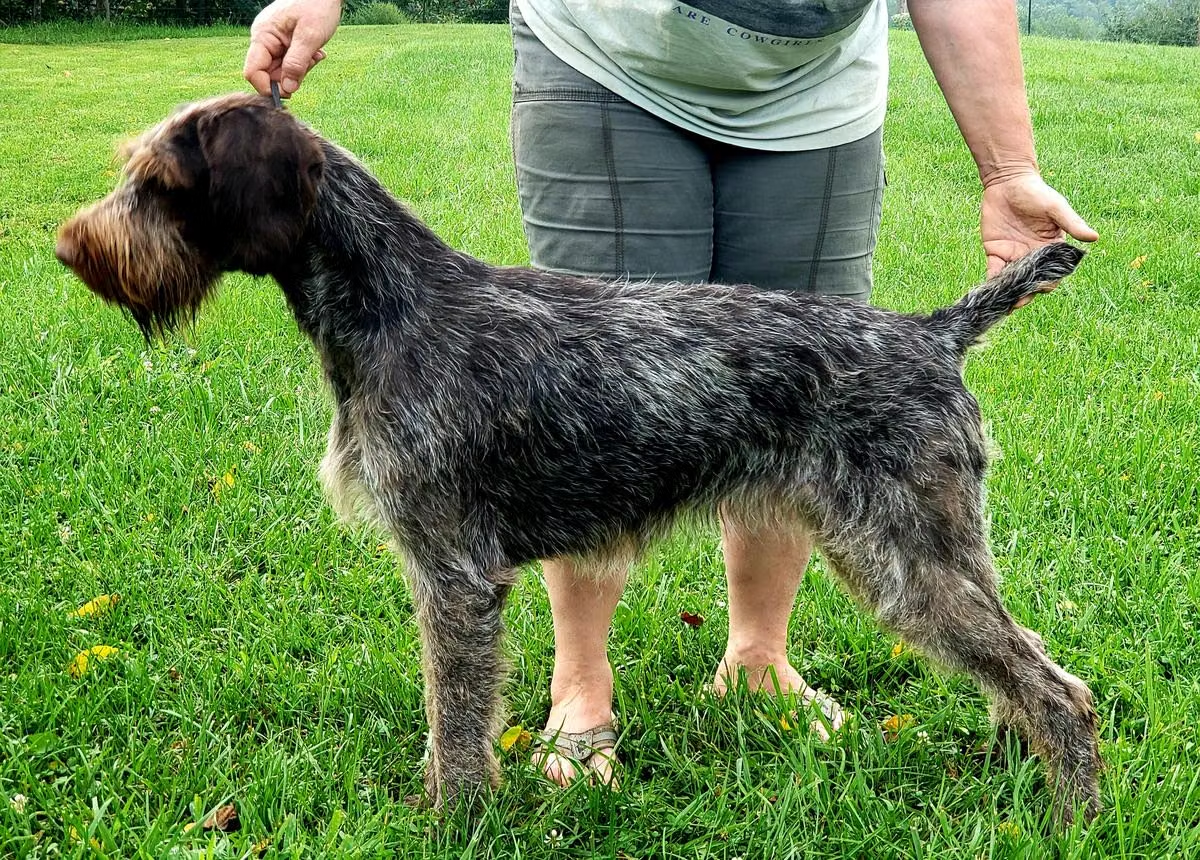
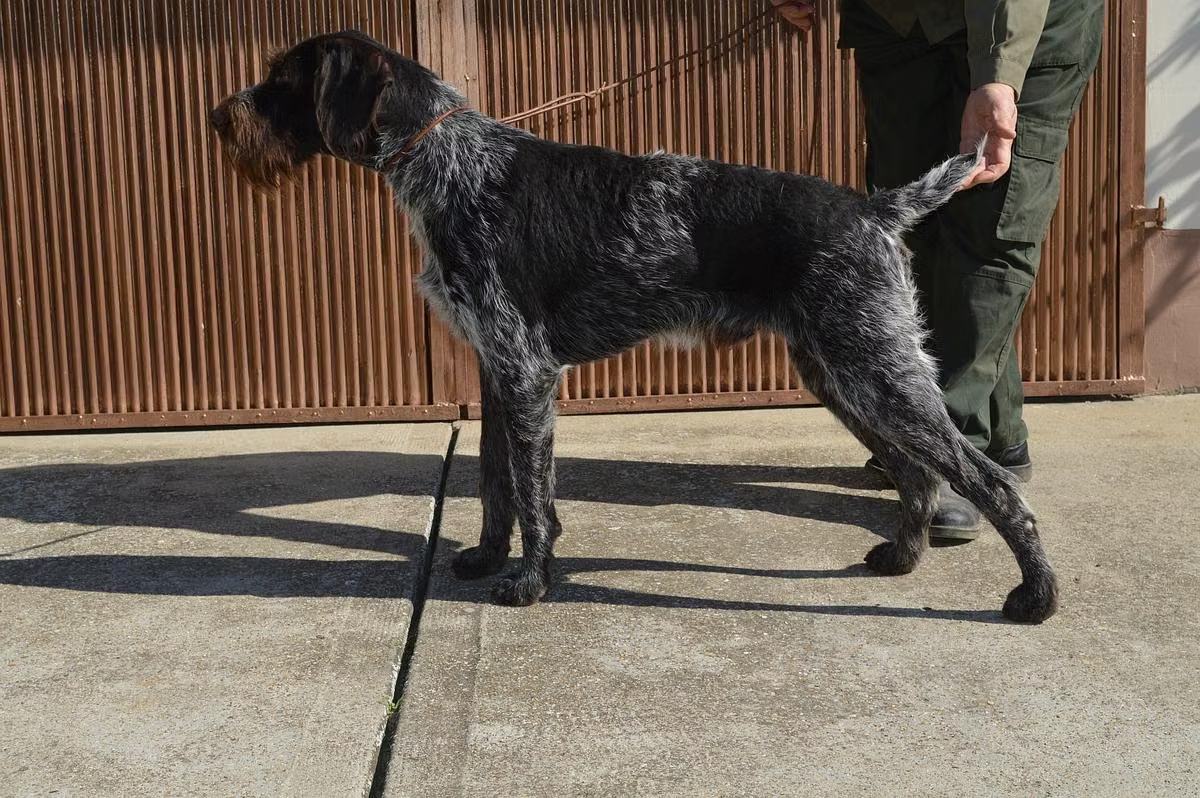

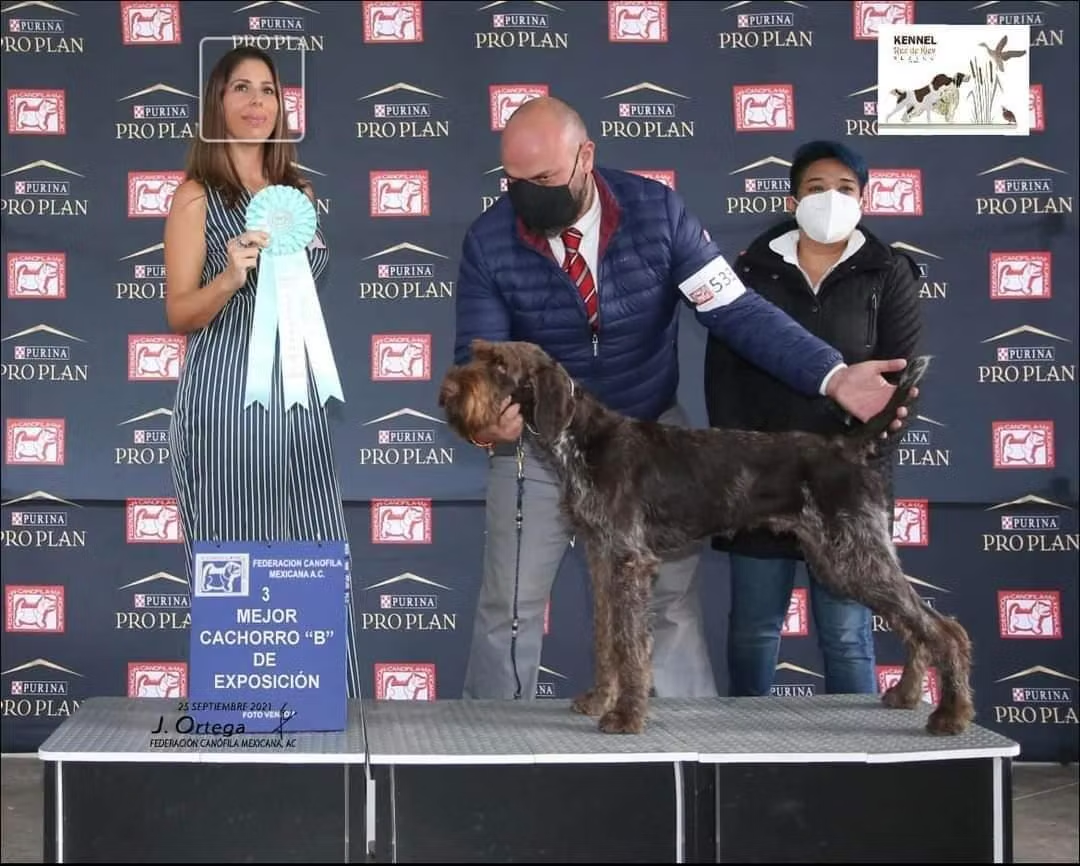
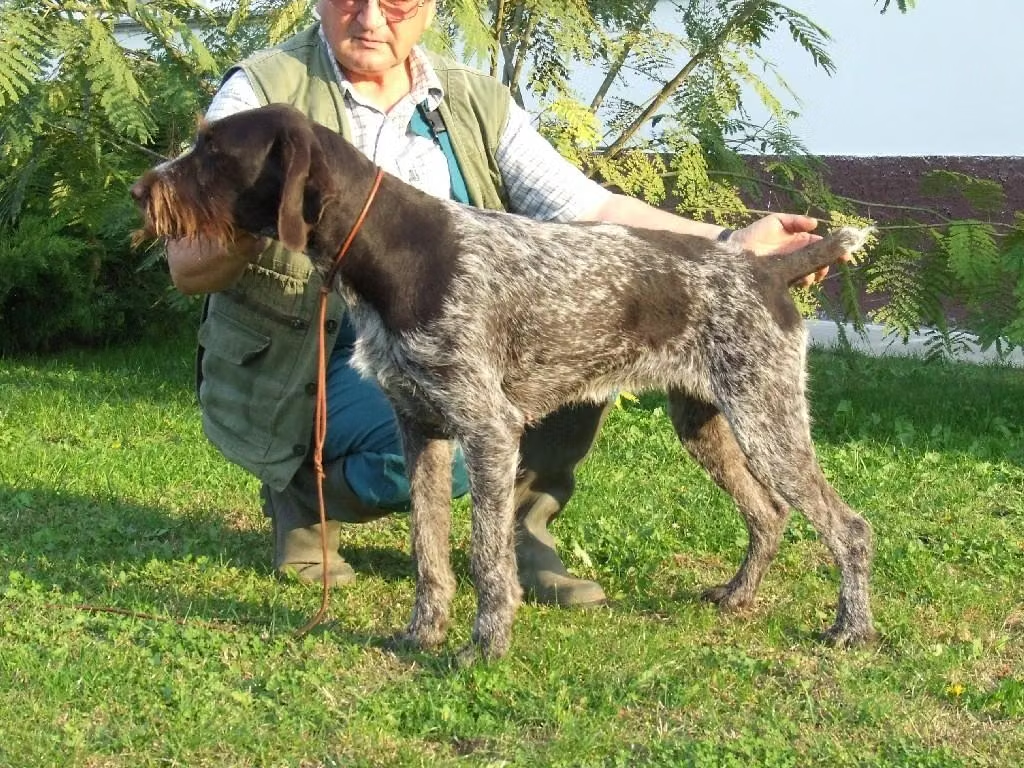
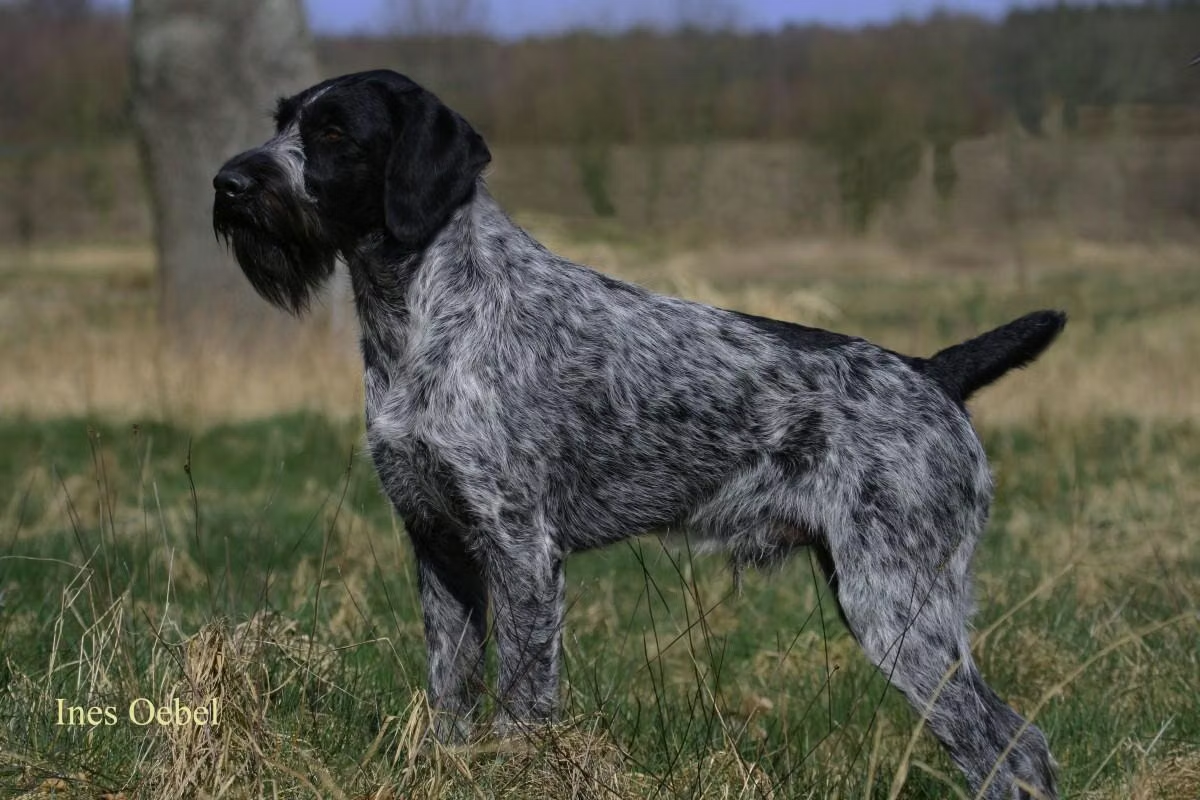
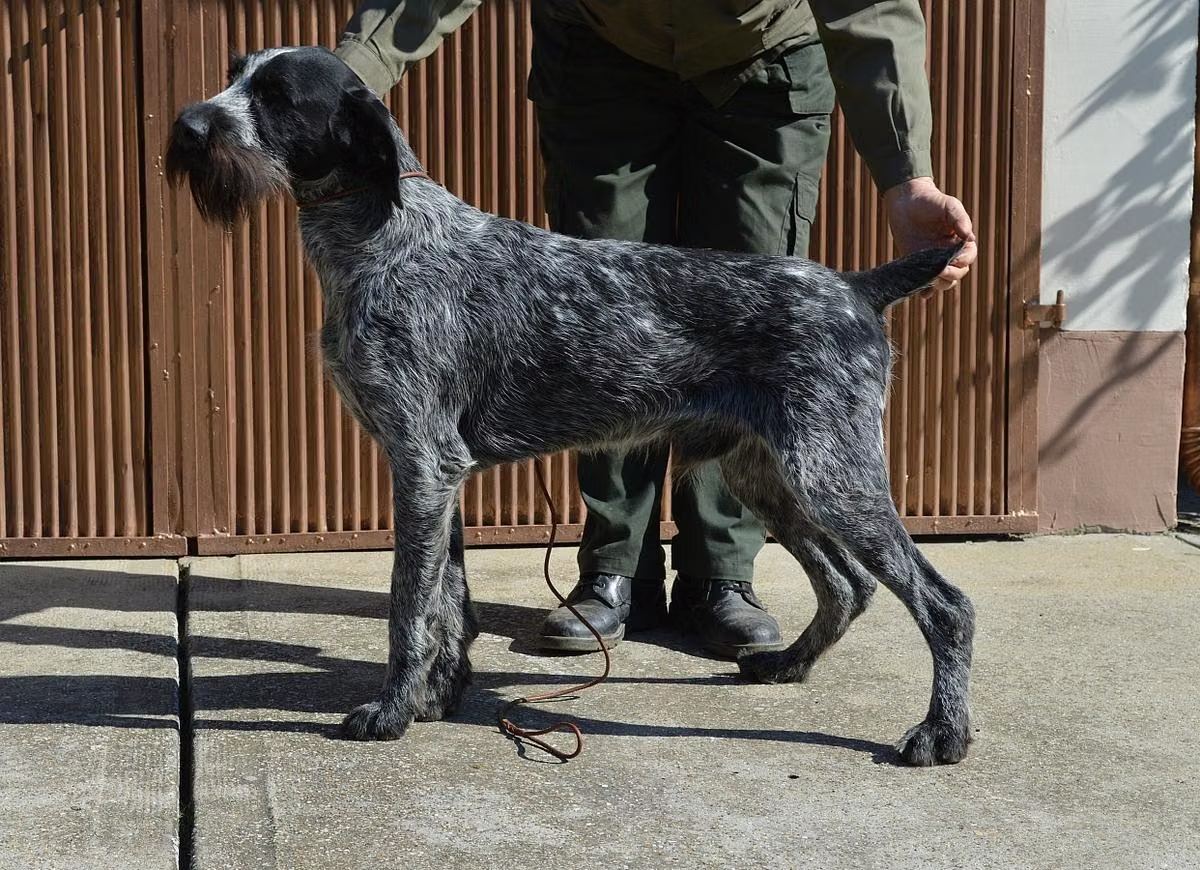
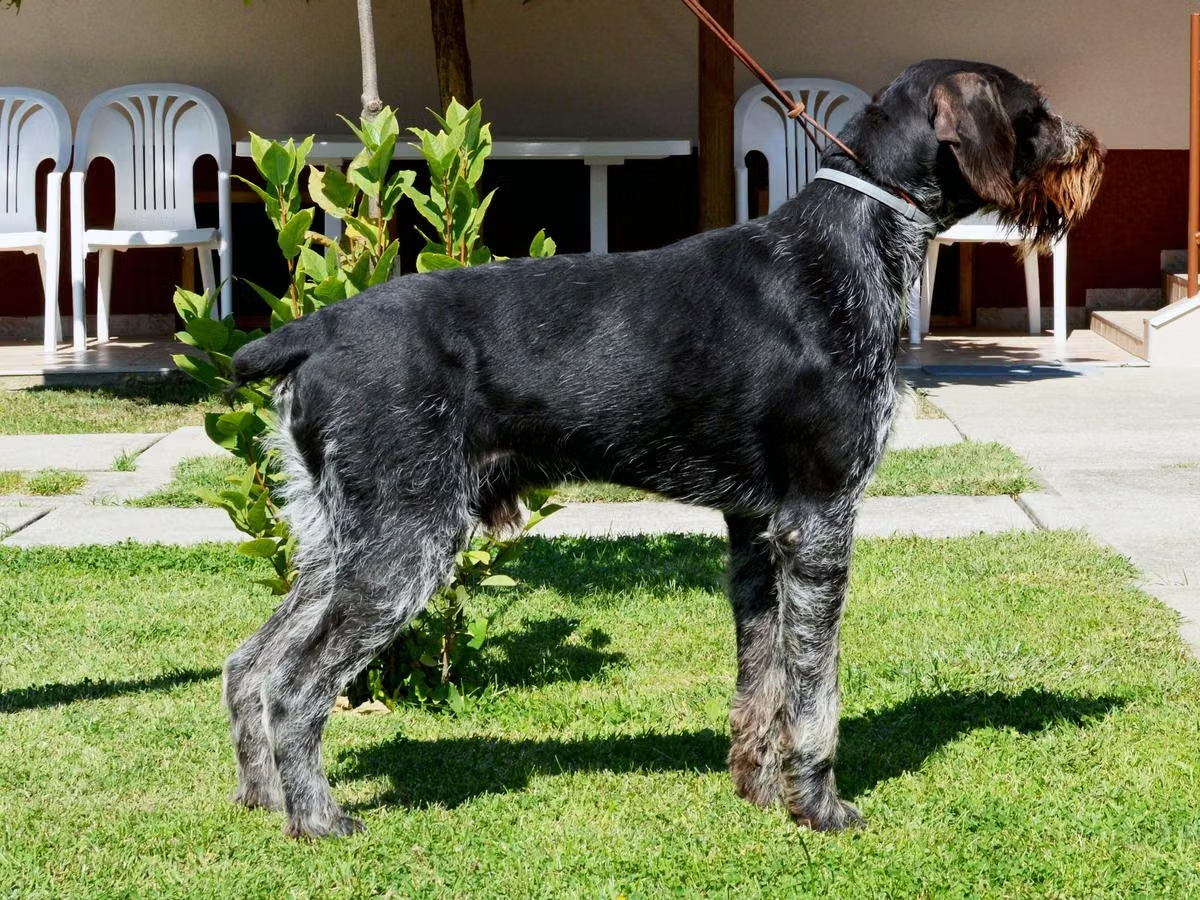
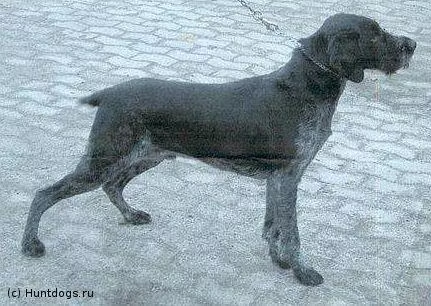
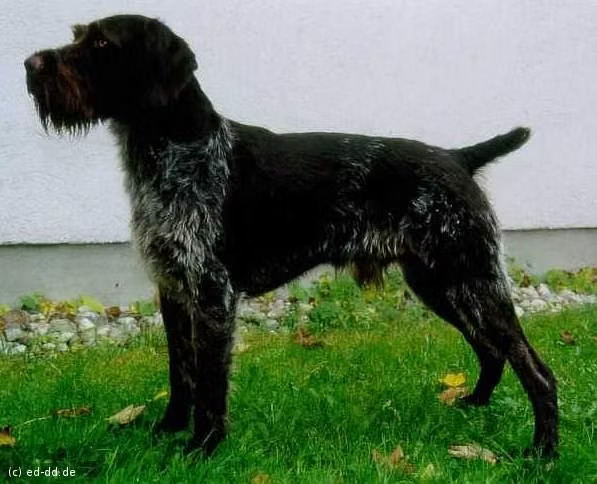
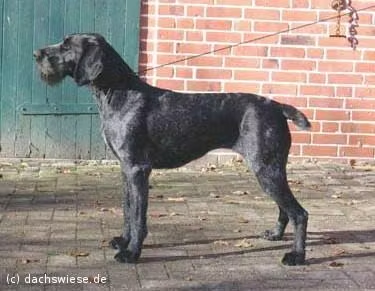
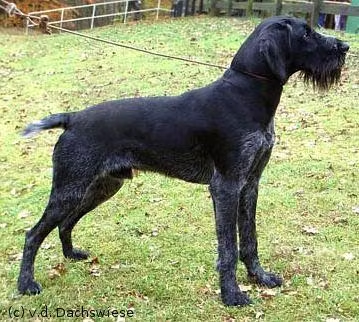
German Wirehaired Pointer breed overview
A large, athletic versatile hunting breed from Germany, the German Wirehaired Pointer brings a tough wire coat, deep loyalty to its household, and an intense working drive that demands consistent daily outlets.
The German Wirehaired Pointer, known in Germany as the Deutsch Drahthaar, is a large versatile gun dog developed to hunt, point, and retrieve across varied terrain and water. Canadian hunters and active families prize the breed for its work ethic and adaptability to the country's wide range of habitats, from boreal forest edges and prairie uplands to Maritime wetlands.
Perceptive and deeply loyal, the dog forms a close attachment to its household and tends to focus that loyalty on one family. It remains guarded around unfamiliar people, a characteristic rooted in its working heritage rather than aggression. Bred to put in a full day afield, it carries substantial energy and needs a clear purpose or structured daily activity to stay settled indoors.
Lifespan typically runs 12 to 14 years. Owners who commit to vigorous daily exercise, ongoing training, and plenty of companionship will find this breed a tireless and rewarding partner.
| Item | Detail |
|---|---|
| Origin | Germany |
| Size | Large |
| Lifespan | 12 to 14 years |
| Group/role | Sporting gun dog (hunt, point, retrieve) |
| Good with | Familiar family members; older, calm children; other dogs when socialised from puppyhood |
Who suits this breed
The German Wirehaired Pointer fits hunters, hikers, trail runners, and dog-sport enthusiasts who want an engaged partner for outdoor pursuits. It thrives when owners are home frequently or bring the dog along. With commitment to daily exercise and steady obedience work, first-time owners can manage the breed. It is a poor match for condo living without very high activity, for households where the dog is left alone for many hours, or for anyone seeking a calm and undemanding companion.
Origins and breed development
Developed in Germany during the second half of the nineteenth century, the German Wirehaired Pointer was purpose-built as an all-around gun dog and received formal recognition in the early 1900s.
German hunters in the latter half of the 1800s sought a single dog capable of the full range of field tasks: locating and pointing upland birds, tracking and retrieving downed game, pushing through heavy cover, and swimming cold water. Rather than keeping several specialist breeds, breeders aimed to consolidate these abilities into one animal.
The Deutsch Drahthaar emerged from crosses involving the Pudelpointer, the German Shorthaired Pointer, and rough-coated types including the Griffon and the Stichelhaar. Breeders prioritised the wire coat for its protective properties in brush and cold water, alongside scenting ability, drive, and trainability. The Deutsch Drahthaar Club was founded in Germany in 1902, tying registration to demonstrated hunting performance rather than conformation alone.
The breed came to Canada through sporting hunters during the early to mid twentieth century. The Canadian Kennel Club recognises it within the Sporting Group. A separate North American registry, the Deutsch Drahthaar Group of North America, maintains German-style working test requirements, preserving the breed's identity as a performance dog across Canadian upland and waterfowl hunting communities.
Size and physical description
The German Wirehaired Pointer is a large, well-proportioned gun dog standing roughly 56 to 66 cm at the withers, recognised immediately by its coarse wire coat, pronounced brow, and bearded muzzle.
Built for sustained work across rough ground rather than burst speed, the German Wirehaired Pointer presents a slightly rectangular profile: body a touch longer than its height at the withers, with a well-developed chest, sound bone, and a tail customarily docked where that practice remains legal. The wire coat and the expressive face -- heavy brow ridges and a full beard -- are the most recognisable features.
| Trait | Detail |
|---|---|
| Height | Males roughly 61 to 66 cm; females smaller, generally 56 cm and up at the withers |
| Weight | Approximately 23 to 32 kg; males toward the heavier end |
| Coat | Harsh, flat, wiry outer coat 2.5 to 5 cm long over a dense seasonal undercoat; bushy eyebrows and full beard |
| Colours | Liver and white in ticked, spotted, or roan patterns; solid liver also seen; head typically solid liver, occasionally with a white blaze |
| Eyes | Oval, medium brown, framed by heavy brow ridges, alert in expression |
Coat and colour detail
The wiry outer coat lies flat and provides genuine field protection: it sheds burrs and debris more readily than softer coats and resists water penetration. The dense undercoat insulates through cold Canadian winters and thins naturally through summer. Coat colour combines liver and white; ticked or roan patterning is most common; a predominantly liver head is standard; a white blaze appears in some individuals. Black-based colouring falls outside the CKC standard.
Temperament and behaviour
Steady and devoted within its family, the German Wirehaired Pointer is watchful toward strangers and carries considerable energy that benefits from structured daily outlets and broad early socialisation.
The German Wirehaired Pointer bonds closely with its household and typically shadows a favourite person. Around family it is warm and reliable. Around unfamiliar people it defaults to watchfulness and caution, a trait that makes it an effective natural watchdog, but one that requires deliberate early socialisation to prevent caution from hardening into reactivity.
Drive and stamina define this breed. It was selected to work without flagging across long field days, and in a domestic setting it actively looks for ways to spend that energy. Insufficient exercise and mental engagement lead to barking, destructive chewing, or restless pacing. The breed responds well to clear and fair handling, though its independent streak calls for patience and variety in training rather than repetitive drills.
With children it knows and grows up with, the breed is generally patient, though its size and enthusiasm suit older children better than toddlers. It usually manages well with other dogs when introduced early. Its prey drive is strong and extends readily to small animals, so homes with cats or rabbits require careful, supervised introductions.
| Trait | Rating |
|---|---|
| Affection toward family | 5 |
| Energy level | 5 |
| Trainability | 4 |
| Tendency to vocalise | 3 |
| Shedding | 3 |
Grooming, exercise, and living requirements
The German Wirehaired Pointer needs moderate coat maintenance and considerable daily exercise. It settles best in a property with outdoor space and an owner able to provide consistent activity and company.
Grooming
The wire coat needs regular attention but is less demanding than many long-coated breeds.
- Brush once or twice weekly to clear loose hair, field debris, and matting around the beard.
- Hand-strip or have the coat professionally stripped twice yearly to preserve the wiry texture; repeated clipping permanently softens the coat.
- Clean and dry the beard after meals and water work to prevent odour and skin irritation.
- Bathe only when genuinely dirty; over-bathing removes the protective oils that give the coat its water resistance.
- Trim nails every three to four weeks, brush teeth several times a week, and inspect ear canals routinely after swimming.
Exercise
This breed is built for endurance and expects real exertion.
- Plan for at least one to two hours of vigorous activity each day.
- Upland hunting, swimming, structured retrieving, trail running, and extended hiking all suit the breed.
- Supplement physical work with scent exercises, obedience drills, or competitive events such as field trials and tracking tests to engage the mind.
- Contain the dog reliably when off-leash in open terrain -- prey drive regularly overrides recall.
Living environment
A securely fenced property with outdoor space suits this breed. Its double coat handles Canadian winters effectively, making it a practical year-round outdoor companion. Extended periods alone or confined produce problem behaviours. Heat tolerance is lower than cold tolerance; shade and constant access to fresh water are necessities during warm-weather work.
Feeding and nutrition
Provide the German Wirehaired Pointer a nutritionally complete diet formulated for large, active dogs, split across two daily meals, with quantities adjusted to activity and body condition.
A high-quality complete food designed for active or sporting breeds suits this dog well. Adequate protein and fat sustain muscle mass and the energy demands of a working dog; dogs hunting or competing at peak season may need meaningfully more calories during that active period. Calibrate portions to the individual dog's age, weight, and exercise load, ensuring constant access to clean water, especially following exertion. The breed's deep chest creates susceptibility to bloat; dividing daily food into two separate meals and avoiding vigorous activity in the hour before and after eating reduces that risk.
| Life stage | Daily amount | Meals per day |
|---|---|---|
| Puppy (2 to 6 months) | Per label for projected adult weight, split across meals | 3 to 4 |
| Junior (6 to 12 months) | Per label, reducing toward adult quantity | 2 to 3 |
| Adult (1 to 7 years) | Roughly 2.5 to 3.5 cups dry food; more for working dogs | 2 |
| Senior (7+ years) | Moderate calorie reduction if activity decreases; monitor weight | 2 |
Treats and supplementation
Limit treats to roughly 10 percent of total daily calories. Choose small, lower-calorie rewards for training sessions. A complete food rarely needs supplementation; consult a veterinarian before adding joint support, omega-3, or other products, as individual needs vary and over-supplementing carries its own risks.
Health and common conditions
Generally robust with a 12 to 14 year lifespan, the German Wirehaired Pointer has several heritable conditions worth monitoring, including hip and elbow dysplasia, eye disease, ear infections, and bloat.
The German Wirehaired Pointer is a resilient working breed with a reasonable health record; most individuals reach 12 to 14 years with proper care. Selecting a breeder who screens parent dogs under OFA or PennHIP protocols and holds current eye certifications lowers the probability of heritable health problems in offspring. The conditions below are observed in the breed; no individual dog will necessarily develop any of them.
| Condition | Signs | Note |
|---|---|---|
| Hip dysplasia | Stiffness, hindquarter lameness, reluctance to jump | Heritable; OFA or PennHIP screening recommended for breeding stock |
| Elbow dysplasia | Front-leg lameness, worsening after exercise | OFA elbow evaluation available for breeding dogs |
| Eye conditions (cataracts, retinal disease) | Cloudy lens, night-vision difficulty, collisions with objects | Annual CAER eye exams help detect problems early |
| Ear infections | Head shaking, pawing at ear, discharge, odour | Pendulous ears plus frequent swimming increase moisture retention; dry ears after water |
| Bloat (gastric dilatation-volvulus) | Distended rigid abdomen, unproductive retching, agitation | Life-threatening within hours; deep-chested breeds carry elevated risk |
Preventive health practices
- Keep vaccinations current per your veterinarian's schedule.
- Apply year-round parasite prevention for fleas, ticks, and heartworm, especially for dogs working fields and water.
- Schedule annual wellness exams; increase to twice yearly for dogs over seven.
- Maintain lean body weight to protect joint health.
- Brush teeth regularly and arrange professional dental cleanings as recommended.
- Dry ear canals thoroughly after every swim.
Trainability and training fundamentals
Quick to learn and genuinely motivated to work with a handler, the German Wirehaired Pointer responds well to reward-based methods, though its independence and energy demand early commitment and consistent follow-through.
The German Wirehaired Pointer picks up new behaviours quickly and takes satisfaction in working cooperatively with its handler. That makes it genuinely trainable provided the owner delivers clear, consistent instruction. A bored or under-exercised dog will generate its own activities, rarely to the owner's satisfaction. Brief sessions of 5 to 15 minutes held several times daily outperform single long repetitive drills. Force-based corrections backfire with a sensitive dog of this type; reward-based methods grounded in good timing and consistency produce lasting results. Broad early socialisation is especially valuable given the breed's natural wariness of strangers and its strong predatory instinct.
Foundation training steps
- Begin socialisation during puppyhood: routine, positive exposure to people, dogs, surfaces, sounds, and varied environments.
- Establish core cues early: name response, sit, down, stay, and recall.
- Build and maintain a reliable recall under progressive distraction -- prey drive can easily override a weak response in the field.
- Keep sessions short and varied; end every session on a successful repetition.
- Introduce impulse-control exercises such as leave it and wait to support behaviour around small animals and doorways.
- As the dog matures, direct its working drive toward structured retrieving, field training, nose work, or competitive dog sports.
- Proof each behaviour in new environments before depending on it away from familiar ground.
Reproduction and puppy development
German Wirehaired Pointers reach sexual maturity before 12 months, but ethical breeders wait for full physical and mental maturity plus health clearances before mating, with litters typically numbering 7 to 9 pups after a 63-day gestation.
Females typically reach sexual maturity between 6 and 12 months, but responsible breeders delay breeding until the bitch has fully matured physically and mentally -- usually near two years -- and has completed required health evaluations. Gestation is approximately 63 days from conception. Litters most commonly contain 7 to 9 puppies, though smaller and larger litters occur.
Newborn pups are entirely dependent on the dam; eyes and ear canals are sealed at birth. Eyes open between 10 and 14 days. Transition to solid food begins around three to four weeks and finishes by seven to eight weeks. Systematic early handling and calm exposure to normal household sights and sounds during the first eight weeks lay the foundation for stable adult temperament. Puppies go to new homes at eight weeks or after. Reputable breeders prioritise sound structure, healthy eyes, and stable temperament, completing OFA hip and elbow evaluations on both parents before mating.
| Parameter | Value |
|---|---|
| Sexual maturity | 6 to 12 months (breeding recommended around 2 years) |
| Gestation length | Approximately 63 days |
| Typical litter size | 7 to 9 puppies |
| Eyes open | Approximately 10 to 14 days |
| Weaning complete | Approximately 7 to 8 weeks |
| Puppy go-home age | 8 weeks or later |
Registering a German Wirehaired Pointer in Canada: profile and microchip
A free lifetime United Pet Club record for your German Wirehaired Pointer, with the microchip registered at no cost and kept current through every move.
German Wirehaired Pointer registration and microchip registration in Canada
Canadian shelters and vet clinics scan strays at intake as a matter of routine, and the scan helps only when a registry ties your German Wirehaired Pointer to a phone that still rings. Registering your dog with United Pet Club takes a few minutes, never costs anything, and works whether or not a chip is in place yet. Add the breed, a photo, and your postal code, and the record is live.
Sixty seconds with a scanner reads the chip; whether your German Wirehaired Pointer gets home depends on the record behind the number. Microchip registration with United Pet Club is free for life, takes every brand sold in Canada, and keeps the record searchable on both sides of the border. Sign up free and give the number somewhere to point.
How do I register my German Wirehaired Pointer in Canada?
Open a free United Pet Club account, fill in your German Wirehaired Pointer's name, breed details, and a photo, and save. The lifetime plan is free, no chip required, and the chip number can be attached after your vet appointment.
How do I register my German Wirehaired Pointer's microchip?
Add the 15-digit number to your account along with your address, postal code, and phone number. Registration and unlimited updates are free for life, and chips from any manufacturer a Canadian vet uses are accepted.
Is a microchip required for a German Wirehaired Pointer in Canada?
There is no federal requirement, but several cities fold chips into their licensing bylaws, and travel with the dog goes smoother when the chip is registered. The record, not the implant, is what identifies your German Wirehaired Pointer.
What does German Wirehaired Pointer registration cost in Canada?
Nothing, ever. United Pet Club's lifetime plan covers the profile, the chip record, and every update without fees or renewals.
Frequently asked questions
Common questions from Canadian owners and prospective buyers cover size, family suitability, daily exercise demands, longevity, compatibility with other pets, and where to find the breed.
How large does a German Wirehaired Pointer grow?
Males typically stand 61 to 66 cm at the withers and weigh 25 to 32 kg. Females are noticeably smaller, generally 56 cm or above and proportionally lighter.
Does this breed suit Canadian families?
It suits active families with outdoor lifestyles well. The breed is devoted to the people it lives with and patient with older children. Its size and energy are not ideal around toddlers. Early and ongoing socialisation is important because the breed is naturally reserved with strangers.
How much exercise does it actually need?
At least one to two hours of genuine physical exertion daily -- not leisurely leash walks. Hunting, swimming, long trail runs, fetch, and structured field work serve the breed's needs. Mental engagement through training or nose work is equally important.
What is the typical lifespan?
Most German Wirehaired Pointers live 12 to 14 years when maintained at a healthy weight, exercised regularly, and given routine veterinary care.
Can they share a home with cats or small pets?
Potentially, with deliberate introductions and ongoing supervision. The breed's prey drive makes chasing likely, particularly outdoors. Cats raised alongside the dog from puppyhood are generally tolerated better than unfamiliar animals introduced later.
How much do they shed?
Shedding is moderate year-round and increases at seasonal coat changes. Weekly brushing and twice-yearly stripping keep loose hair manageable.
Where can I find a reputable breeder in Canada?
Start with Canadian Kennel Club breeder referral listings. Contact the Deutsch Drahthaar Group of North America if you want a dog registered to working-test standards. Breed-specific rescue groups are also worth exploring. Waiting lists with established breeders are common; plan several months ahead.
From the community
Ask about the German Wirehaired PointerNo questions about the German Wirehaired Pointer yet. Be the first to ask.
Browse Dog breeds