
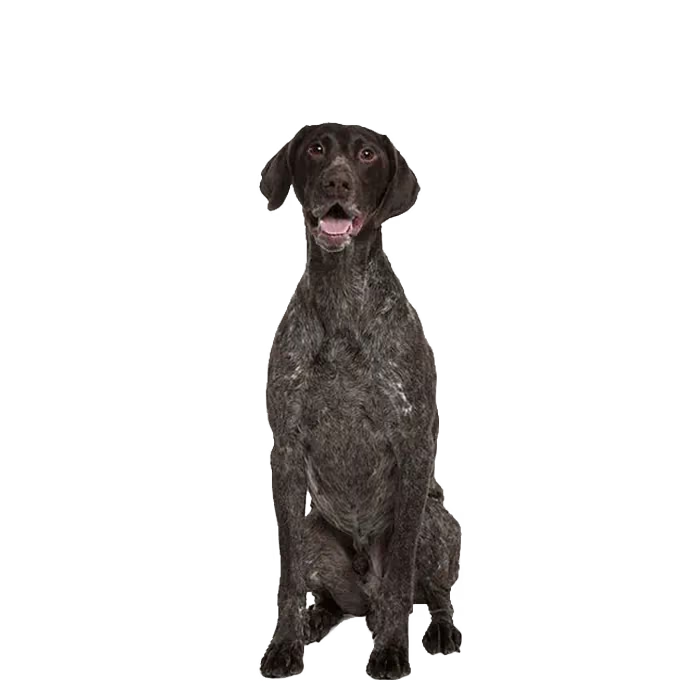
German Longhaired Pointer
The German Longhaired Pointer is a friendly, versatile gundog combining elegant looks with reliable all-around hunting ability.
- Size
- Large
- Lifespan
- 12–14 years
- Origin
- Germany
- Temperament
- Friendly
- Standard colors
- White, Brown and Tan
Characteristics
Coat and grooming
How the German Longhaired Pointer coat is built, and what that means when you groom it.
- Coat layers
- Single coat
- Coat texture
- Silky
- Coat length
- Medium
- Shedding
- Moderate shedding
Grooming guidance
Caution: A German Longhaired Pointer coat mats easily.
Fine or long hair tangles at the base of the coat, out of sight, where the mats tighten and pull on the skin. Brushing has to reach right down to the roots in sections, not just skim the surface.
German Longhaired Pointer colors and patterns
What each club's breed standard says about every German Longhaired Pointer color and pattern. Point at a ruling to see the club's own wording.
Breed standards describe the German Longhaired Pointer in White, Brown and Tan. Standard patterns: Solid, Bicolour, Roan and Tan point.
| Color or pattern | FCI | AKC | KC |
|---|---|---|---|
| White | Standard (“Brown with white or speckled markings”) | Standard (“Brown & White”) | Standard (“Brown with white or speckled markings”) |
| Brown | Standard (“Self coloured brown”) | Standard (“Brown & White”) | Standard (“Solid brown”) |
| Tan | Standard (“Occasionally fawn markings may occur as a very old throw-back to the Hounds”) | Standard (“Occasionally fawn markings may occur as a very old throw-back to the Hounds”) | Not recognised |
| Patterns | |||
| Solid | Standard (“Self coloured brown”) | Standard (“Self coloured brown”) | Standard (“Solid brown”) |
| Bicolour | Standard (“Brown and white”) | Standard (“Brown & White”) | Standard (“Brown and white”) |
| Roan | Standard (“Dark roan”) | Standard (“Roan”) | Standard (“Dark roan”) |
| Tan point | Standard (“Occasionally fawn markings may occur”) | Standard (“Occasionally fawn markings may occur”) | Not recognised |

%22%3E%3Cpath%20d%3D%22M0%2023L9.5%2020.4L14%2025.4L19%2029.6Q21%2035%2023.5%2035.5Q36%2033%2050%2036L56%2040V64H0Z%22%20fill%3D%22%23F5F5F0%22%2F%3E%3C%2Fg%3E%3Cuse%20href%3D%22%23s%22%20fill%3D%22none%22%20stroke%3D%22%233B2A20%22%20stroke-opacity%3D%220.6%22%20stroke-width%3D%221%22%20stroke-linejoin%3D%22round%22%2F%3E%3Cellipse%20cx%3D%223.2%22%20cy%3D%2221.7%22%20rx%3D%221.3%22%20ry%3D%221.2%22%20fill%3D%22%231C1C1C%22%2F%3E%3Ccircle%20cx%3D%2210.8%22%20cy%3D%2219.3%22%20r%3D%221.1%22%20fill%3D%22%231C1C1C%22%2F%3E%3C%2Fsvg%3E)
%22%3E%3Cg%20fill%3D%22none%22%20stroke%3D%22%23F5F5F0%22%20stroke-width%3D%221.15%22%20stroke-linecap%3D%22round%22%20stroke-linejoin%3D%22round%22%3E%3Cpath%20d%3D%22M28.6%2025h.1M51.3%2028.8h.1M34.7%2024.3h.1M34.2%2041.6h.1M51%2044.2h.1M55.9%2024.7h.1M27.5%2026.3h.1M18.5%2028.6h.1M25.2%2028.9h.1M24.2%2019.3h.1M20.6%2017.6h.1M34.1%2030.6h.1M57.3%2023.3h.1M23.5%2030.7h.1M26.5%2023.1h.1M40%2031.5h.1M51.7%2038.6h.1M20.2%2022.1h.1M40.4%2037.8h.1M35%2043.1h.1M20.6%2031.7h.1M27.8%2031.9h.1M17.2%2021.1h.1M38.1%2037.7h.1M25.3%2040.5h.1M32%2029.3h.1M41.6%2039.5h.1M23.6%2024h.1M26.4%2018.6h.1M30.3%2031.9h.1M31.2%2035.2h.1M36.5%2043.7h.1M35.2%2026.3h.1M55.6%2019.1h.1M22.4%2036.8h.1M39.2%2020h.1M49.5%2039.1h.1M33.6%2033.5h.1M36.4%2032.4h.1M56.3%2042.4h.1M54.8%2031.2h.1M36.9%2023.2h.1M52.7%2019.1h.1M21.5%2033.8h.1M48.6%2028h.1M36.6%2017.5h.1M45.6%2031.3h.1M37.9%2030.5h.1M17%2031.8h.1M21.1%2043.1h.1M55.7%2021.1h.1M30.8%2041.9h.1M57.4%2038.4h.1M54.8%2026.9h.1M29.1%2017.5h.1M24.3%2037.7h.1M26%2032h.1M39.3%2022.8h.1M53.5%2029h.1M53.3%2023.3h.1M20%2038.4h.1M28.3%2044.7h.1M28.6%2039.8h.1M51.9%2041.1h.1M52.3%2033.7h.1M19.6%2042.2h.1M19%2033h.1M47.8%2021.7h.1M45.7%2024.8h.1M24.6%2035.5h.1M29.8%2036.8h.1M50.7%2032h.1M29.5%2043.5h.1M28.2%2041.5h.1M47.4%2034.8h.1M25.4%2033.7h.1M50.2%2041.2h.1M27.7%2029.5h.1M21.5%2024.8h.1M55.5%2017.5h.1M41.2%2044.3h.1M39.2%2018.4h.1M41.1%2042.5h.1M54.7%2035.3h.1M42.8%2034.5h.1M30.1%2023h.1M42.6%2025.1h.1M32.9%2024.4h.1M42.4%2032.4h.1M49.7%2022.2h.1M49.1%2043.1h.1M38%2035.2h.1M47.7%2043.8h.1M43.1%2022.4h.1M22.4%2040.4h.1M44.4%2019.8h.1M53.3%2040.1h.1M20.7%2029.3h.1M55.6%2043.9h.1M17.6%2039.2h.1M41.7%2028.9h.1M44.1%2036.3h.1M24.3%2043.6h.1M26.4%2038.1h.1M30.3%2029.2h.1M31.5%2030.8h.1M32.1%2023h.1M18.3%2040.9h.1M48%2033.4h.1M36.4%2038.7h.1M31.9%2020.8h.1M32.6%2026.2h.1M22%2031.2h.1M53.4%2021.7h.1M41.9%2017.7h.1M53.3%2037.3h.1M47.7%2040.3h.1M54.4%2033.7h.1M33.6%2037.5h.1M25.3%2017.2h.1M37.6%2019.7h.1M31.6%2019h.1M29.2%2019.6h.1M50.7%2027.3h.1M22%2022.1h.1M31%2037.8h.1M56.5%2026.6h.1M34.7%2039.5h.1M56.5%2040.8h.1M47.6%2038h.1M48.6%2026.1h.1M49.7%2034.2h.1M45.4%2027.4h.1M22.6%2038.9h.1M56.5%2035.3h.1M35.1%2021h.1M41.9%2020.1h.1M37.6%2040h.1M32.6%2044.4h.1M37.9%2025.2h.1M26.6%2043h.1M18.9%2036.7h.1M47.2%2028.9h.1M30.5%2026.2h.1M17.4%2027.3h.1M47.1%2017.2h.1M22.3%2044.3h.1M32.5%2042.4h.1M23.6%2025.7h.1M31.4%2024.9h.1%22%2F%3E%3Cpath%20d%3D%22M26%2020.9h.1M41.2%2023.8h.1M39.9%2026.4h.1M28.5%2033.4h.1M42.8%2043.8h.1M17.6%2034.3h.1M34%2017.1h.1M31.2%2017.2h.1M46.5%2036.1h.1M25.1%2022.1h.1M50.3%2023.7h.1M20.2%2026.6h.1M20.8%2020.4h.1M50.9%2017.3h.1M49.5%2020.2h.1M52.9%2044.1h.1M23.9%2017.8h.1M43.2%2028.1h.1M57.6%2030h.1M52%2025.6h.1M19.2%2019.1h.1M19.5%2024.4h.1M32.8%2040.1h.1M36.1%2027.7h.1M39.6%2029.5h.1M38.4%2041.5h.1M47.9%2019.4h.1M49.1%2031.7h.1M55.9%2036.9h.1M29.2%2027.2h.1M46%2043.5h.1M44.6%2028.8h.1M47.5%2031.5h.1M22.8%2020h.1M27.6%2017.1h.1M43.1%2018.6h.1M54.3%2020h.1M57.2%2033.8h.1M44.5%2043.8h.1M27.1%2035.5h.1M45.3%2041.8h.1M56.7%2028.8h.1M36.7%2021.4h.1M43.3%2042.3h.1M17.3%2022.9h.1M32.7%2035.5h.1M30.5%2039.8h.1M29.1%2021.2h.1M34.5%2018.8h.1M25.8%2027h.1%22%2F%3E%3C%2Fg%3E%3Cpath%20d%3D%22M56.3%2038.4l0%201.2M40%2027.2l-0.3%201.3M32.6%2043.6l-0.4%201.5M29%2023.3l0.8%201.5M55.1%2044l0.4%201.1M47.5%2022.5l-0.2%201.6M42.9%2038.6l0.7%201.2M35.2%2041.8l-0.5%201.7M26.9%2040l-0.1%201.2M41%2042.8l-0.1%201.6M18.4%2021.2l0.7%201.3M49.4%2019.3l-0.5%201.4M50.1%2041.7l0%201.8M28.2%2041.8l-0.6%201.2M55.5%2027.1l0.2%201.2M44.7%2019.3l0.5%201.7M48.6%2020.5l-0.8%201.4M43.7%2039.6l0.3%201.1M22.1%2033.8l-0.6%201.6M50.1%2038.1l-0.5%201.3M51.8%2044.1l-0.1%201.8M39%2017.5l0%201.4M30.2%2026.7l0.2%201.4M25.8%2031.2l0.2%201.6M29.6%2043.5l0.1%201M43.7%2018.3l0.1%201.5M29.6%2018.2l0.3%201.6M24.4%2017.6l0.3%201.1M22%2028.2l-0.6%201.6M25.9%2043.3l-0.3%201.4M22.2%2024.3l0.3%201.3M47.3%2029.2l-0.2%201.4M21.8%2033.2l0.5%200.9M32.9%2037l0.4%201M40%2029.9l0.8%201.4M17.4%2038.3l0.2%201.3M31%2039.2l0%201.2M37.3%2033.7l0.3%201.5M48.1%2040.5l0%201.6M33.9%2031.2l0.1%201.2M29.8%2035.2l-0.4%201M25.1%2037.3l-0.2%201.5M30.2%2039.8l0.5%201M44.6%2034.8l0.4%200.9M55.3%2034.2l0%201.7M50.6%2017.9l0.4%201M30.2%2034.9l-0.4%201.4M19.5%2035.7l-0.5%201.7M40.7%2028.7l0.8%201.4M23.3%2029l-0.4%201.4M17%2040.5l-0.2%201M48.4%2023.2l-0.3%201M37.3%2025.1l-0.4%201.3M23%2021.4l-0.4%201.3M20.4%2017.2l-0.1%201.3M42.3%2020.4l0.6%201.4M41%2031.8l0.6%201.2M45.4%2034.3l-0.1%201.2M32.5%2018l0%201.3M46.2%2021.6l0.1%201.4M30.5%2022.3l0.5%201.1M58%2044.6l0.3%201.5M57.1%2033.9l0.8%201.4M18.3%2042.6l0.3%201M40.5%2035.1l-0.6%201.4M38.8%2044.3l-0.3%201.1%22%20fill%3D%22none%22%20stroke%3D%22%23F5F5F0%22%20stroke-width%3D%220.8%22%20stroke-linecap%3D%22round%22%20stroke-linejoin%3D%22round%22%2F%3E%3C%2Fg%3E%3Cuse%20href%3D%22%23s%22%20fill%3D%22none%22%20stroke%3D%22%233B2A20%22%20stroke-opacity%3D%220.6%22%20stroke-width%3D%221%22%20stroke-linejoin%3D%22round%22%2F%3E%3Crect%20x%3D%2220%22%20y%3D%2258%22%20width%3D%223.6%22%20height%3D%222%22%20fill%3D%22%234A4038%22%2F%3E%3Crect%20x%3D%2226%22%20y%3D%2258%22%20width%3D%223.6%22%20height%3D%222%22%20fill%3D%22%234A4038%22%2F%3E%3Crect%20x%3D%2244%22%20y%3D%2258%22%20width%3D%223.6%22%20height%3D%222%22%20fill%3D%22%234A4038%22%2F%3E%3Crect%20x%3D%2250%22%20y%3D%2258%22%20width%3D%223.6%22%20height%3D%222%22%20fill%3D%22%234A4038%22%2F%3E%3Ccircle%20cx%3D%229.5%22%20cy%3D%2211.5%22%20r%3D%221.1%22%20fill%3D%22%231C1C1C%22%2F%3E%3C%2Fsvg%3E)
%22%3E%3Ccircle%20cx%3D%2212%22%20cy%3D%2217.2%22%20r%3D%221.25%22%20fill%3D%22%23C4996A%22%2F%3E%3Cpath%20d%3D%22M1.5%2021.2L9%2018.6L12.6%2021L12.2%2026.2L3.5%2024.4Z%22%20fill%3D%22%23C4996A%22%2F%3E%3Cpath%20d%3D%22M10%2026L14.5%2026.4L18.2%2029.2L13.5%2029.8Z%22%20fill%3D%22%23C4996A%22%2F%3E%3Cellipse%20cx%3D%2221.2%22%20cy%3D%2230.6%22%20rx%3D%221.6%22%20ry%3D%222.3%22%20fill%3D%22%23C4996A%22%2F%3E%3Crect%20x%3D%220%22%20y%3D%2247%22%20width%3D%2264%22%20height%3D%2217%22%20fill%3D%22%23C4996A%22%2F%3E%3Cpath%20d%3D%22M51.5%2024.5L55%2027L54.2%2032L50.5%2028.5Z%22%20fill%3D%22%23C4996A%22%2F%3E%3Cpath%20d%3D%22M45%2038.5L48%2039L48.5%2047L45.5%2047Z%22%20fill%3D%22%23C4996A%22%2F%3E%3C%2Fg%3E%3Cuse%20href%3D%22%23s%22%20fill%3D%22none%22%20stroke%3D%22%233B2A20%22%20stroke-opacity%3D%220.6%22%20stroke-width%3D%221%22%20stroke-linejoin%3D%22round%22%2F%3E%3Cellipse%20cx%3D%223.2%22%20cy%3D%2221.7%22%20rx%3D%221.3%22%20ry%3D%221.2%22%20fill%3D%22%231C1C1C%22%2F%3E%3Ccircle%20cx%3D%2210.8%22%20cy%3D%2219.3%22%20r%3D%221.1%22%20fill%3D%22%231C1C1C%22%2F%3E%3C%2Fsvg%3E)
| Color or pattern | FCI | AKC | KC |
|---|---|---|---|
| Dark brown | Standard (“Brown colour, as dark as possible”) | Standard (“Brown colour, as dark as possible”) | Standard (“Brown, as dark as possible”) |
| Yellow | Fault (“Pale hawk-eyes”) | Fault (“Pale hawk-eyes”) | No ruling |
| Color or pattern | FCI | AKC | KC |
|---|---|---|---|
| Liver | Standard (“Brown”) | Standard (“Brown”) | Standard (“Nose brown”) |
| Patterns | |||
| Butterfly nose | Standard (“slightly lighter spots permitted”) | Standard (“slightly lighter spots permitted”) | Standard (“slightly flecked markings permissible”) |
%22%3E%3Cpath%20d%3D%22M28.4%2019.1C29.9%2017.7%2032.2%2016.4%2034%2016C35.8%2015.6%2037.4%2016%2039.2%2016.6C41.1%2017.2%2044.4%2018.5%2045.1%2019.5C45.8%2020.6%2044.3%2021.9%2043.3%2023.1C42.2%2024.3%2040.9%2025.9%2039%2026.6C37.1%2027.2%2034.3%2027.3%2032%2026.9C29.6%2026.4%2025.6%2025.3%2025%2024C24.4%2022.7%2026.9%2020.4%2028.4%2019.1Z%22%20fill%3D%22%23E8A0B4%22%2F%3E%3Cpath%20d%3D%22M23.8%2037.7C24.6%2037.5%2026.2%2037.9%2027.4%2038.1C28.5%2038.2%2030.2%2037.9%2030.8%2038.4C31.4%2039%2031.2%2040.7%2030.9%2041.5C30.7%2042.3%2029.9%2042.9%2029.1%2043.3C28.4%2043.8%2027.4%2044.6%2026.4%2044.4C25.4%2044.2%2023.8%2042.9%2023.1%2042.1C22.4%2041.3%2022.2%2040.2%2022.3%2039.5C22.4%2038.8%2022.9%2038%2023.8%2037.7Z%22%20fill%3D%22%23E8A0B4%22%2F%3E%3Cpath%20d%3D%22M10.5%2027.2C10.4%2026.7%2010.4%2025.4%2011%2025C11.5%2024.6%2013%2024.6%2013.9%2024.6C14.8%2024.6%2015.6%2024.5%2016.1%2024.9C16.6%2025.3%2017%2026.2%2017%2026.9C17.1%2027.7%2016.8%2028.8%2016.4%2029.4C15.9%2029.9%2014.9%2030.4%2014.2%2030.3C13.4%2030.1%2012.3%2028.8%2011.7%2028.3C11.1%2027.8%2010.6%2027.8%2010.5%2027.2Z%22%20fill%3D%22%23E8A0B4%22%2F%3E%3C%2Fg%3E%3Cuse%20href%3D%22%23s%22%20fill%3D%22none%22%20stroke%3D%22%233B2A20%22%20stroke-opacity%3D%220.6%22%20stroke-width%3D%221%22%20stroke-linejoin%3D%22round%22%2F%3E%3Cpath%20d%3D%22M12.5%2037Q13%2032%2018.5%2032Q23.5%2032.5%2023.5%2036.5Q20.5%2035.5%2018.8%2037Q17.4%2038.6%2018%2041.5Q13.6%2040.4%2012.5%2037Z%22%20fill%3D%22%231C1C1C%22%20fill-opacity%3D%220.8%22%20stroke%3D%22%23F5F5F0%22%20stroke-opacity%3D%220.4%22%20stroke-width%3D%220.9%22%2F%3E%3Cpath%20d%3D%22M51.5%2037Q51%2032%2045.5%2032Q40.5%2032.5%2040.5%2036.5Q43.5%2035.5%2045.2%2037Q46.6%2038.6%2046%2041.5Q50.4%2040.4%2051.5%2037Z%22%20fill%3D%22%231C1C1C%22%20fill-opacity%3D%220.8%22%20stroke%3D%22%23F5F5F0%22%20stroke-opacity%3D%220.4%22%20stroke-width%3D%220.9%22%2F%3E%3Cpath%20d%3D%22M32%2040V50%22%20fill%3D%22none%22%20stroke%3D%22%231C1C1C%22%20stroke-width%3D%221.3%22%20stroke-opacity%3D%220.5%22%20stroke-linecap%3D%22round%22%20stroke-linejoin%3D%22round%22%2F%3E%3Cellipse%20cx%3D%2232%22%20cy%3D%2221%22%20rx%3D%2212%22%20ry%3D%223.5%22%20fill%3D%22%23F5F5F0%22%20fill-opacity%3D%220.18%22%2F%3E%3C%2Fsvg%3E)
What the rulings mean
- Standard
- Described by the club's breed standard.
- Fault
- Named by the club's breed standard as a fault: the animal can be shown but is penalised.
- Not recognised
- The club does not accept this colour or pattern for the breed.
Color changes
How a German Longhaired Pointer's colors can change over its life.
Whitechanges toRoan
Coat · With age · from 2 weeks
Tan pointchanges toSaddle
Coat · With age · from 6 to 156 weeks
%22%3E%3Cpath%20d%3D%22M22.5%2018.5Q24%2021%2025%2021.5L47%2022.5Q50%2022.5%2051.5%2023.5L54%2026Q55%2032%2053%2034Q46%2031.5%2038%2033Q30%2034.5%2025.5%2032Q22.5%2026%2022.5%2018.5Z%22%20fill%3D%22%231C1C1C%22%2F%3E%3Cpath%20d%3D%22M51%2024L56%209L63%209L61%2019L54.5%2028Z%22%20fill%3D%22%231C1C1C%22%2F%3E%3Cpath%20d%3D%22M2%2021.2L7.5%2019.2L8.5%2023.6L3.5%2024.2Z%22%20fill%3D%22%231C1C1C%22%20fill-opacity%3D%220.85%22%2F%3E%3C%2Fg%3E%3Cuse%20href%3D%22%23s%22%20fill%3D%22none%22%20stroke%3D%22%233B2A20%22%20stroke-opacity%3D%220.6%22%20stroke-width%3D%221%22%20stroke-linejoin%3D%22round%22%2F%3E%3Cellipse%20cx%3D%223.2%22%20cy%3D%2221.7%22%20rx%3D%221.3%22%20ry%3D%221.2%22%20fill%3D%22%231C1C1C%22%2F%3E%3Ccircle%20cx%3D%2210.8%22%20cy%3D%2219.3%22%20r%3D%221.1%22%20fill%3D%22%231C1C1C%22%2F%3E%3C%2Fsvg%3E)
Sources
Each ruling comes from the club's published breed standard or color list.
About the German Longhaired Pointer
The German Longhaired Pointer is a large, friendly gundog from Germany that combines an elegant feathered coat with reliable all-around hunting ability and a calm, people-oriented temperament.
The German Longhaired Pointer (Deutsch Langhaar) is a large versatile gundog developed in Germany to point, retrieve, and track game on land and in water. It belongs to the broad family of continental pointing breeds and is built for stamina in the field rather than speed alone. An adult dog stands roughly 60 to 70 cm at the shoulder and weighs around 27 to 32 kg.
The breed is friendly and even-tempered. It forms close bonds with its household and tends to stay near its people both indoors and while working. The medium-length coat lies flat with feathering on the ears, legs, and tail, giving the dog an elegant outline that still handles rough cover and cold water.
As a working hunting breed, the German Longhaired Pointer needs a job and daily activity. It is eager to please and responds well to consistent training, which makes it suitable for owners who want an active, trainable companion as well as a field partner.
| Attribute | Detail |
|---|---|
| Origin | Germany |
| Size | Large (about 27 to 32 kg) |
| Lifespan | 12 to 14 years |
| Group/role | Versatile gundog (pointing and retrieving) |
| Good with | Families, active owners, other dogs with early socialisation |
Who it suits
This breed fits an active household that can give it one to two hours of exercise a day and ongoing mental work. Hunters, hikers, and people who train for dog sports tend to do well with it. It is less suited to apartment life with little daily activity or to owners who are away for long hours, because an under-exercised dog of this size can become restless.
History and origin
The German Longhaired Pointer was developed in Germany during the 19th century from older longhaired bird dogs and setter-type crosses, and was formalised as a versatile hunting breed with its own standard and registry late in that century.
The breed traces to longhaired bird dogs used across the German lands well before formal breeding records. These early dogs worked for falconers and net hunters, pointing game birds so they could be trapped, and they varied widely in type from region to region.
During the 19th century German hunters and early breeders worked to standardise a versatile gundog that could point, track, and retrieve. The longhaired stock was refined, with some crossing to setter-type dogs to improve nose and field style. The goal was a calm, biddable dog that could work woodland, field, and water.
A breed standard and dedicated club organisation were established in Germany in the late 1800s, which set the type and working requirements that define the Deutsch Langhaar today. From the start the breed was selected for hunting performance, and many German clubs continued to test working ability alongside conformation.
The German Longhaired Pointer remained primarily a hunter's dog and never became as numerous as some of its short-haired relatives. It is recognised internationally and is kept both as a field dog and as an active family companion, with breeding still placing weight on versatile hunting traits. In Canada the breed is recognised by the Canadian Kennel Club (CKC) within the Sporting group.
Appearance and breed standard
The German Longhaired Pointer is a large, balanced gundog with a flat medium-length coat, feathering on the ears, legs, and tail, and a brown or brown-and-white colour.
The German Longhaired Pointer has an athletic, balanced build that is slightly longer than it is tall. The body is muscular without being heavy, the chest is deep for endurance, and the overall outline is elegant and functional. The head is in proportion to the body with long, well-set ears that lie close to the cheeks. The tail is carried roughly level with the back and is well feathered.
| Trait | Standard |
|---|---|
| Height | Males about 63 to 70 cm; females about 60 to 66 cm at the shoulder |
| Weight | About 27 to 32 kg |
| Coat | Medium length, flat to slightly wavy, with feathering on ears, legs, and tail |
| Colours | Brown, or brown with white markings and roan/ticked patterns |
| Eyes | Dark brown, oval, with an alert, friendly expression |
Coat and colours
The coat is firm and weather resistant, lying flat along the body with longer feathering on the backs of the legs, the underside of the tail, and the ears. The base colour is brown, ranging from dark to lighter shades. Many dogs carry white markings, brown-and-white roan, or ticking on the legs and chest. Solid white areas are limited under the standard. The coat sheds seasonally and needs regular brushing to keep the feathering free of tangles and debris from field work.
Temperament and personality
The German Longhaired Pointer is friendly, calm, and eager to please, bonding closely with its family while staying trainable and gentle with people and, when socialised, with other dogs.
The German Longhaired Pointer is known for an even, friendly temperament. It is people-oriented and prefers to be near its household, which makes it a good family dog for an active home. With children it is generally gentle and patient, though any large dog should be supervised around very young children.
With strangers the breed is typically calm and accepting rather than aggressive, and it makes a poor guard dog because of its sociable nature. Around other dogs it usually gets along well, and early socialisation helps it settle with household cats and other pets. As a pointing and retrieving breed it has a strong prey drive toward birds and small animals, so recall and management matter outdoors.
This is an intelligent, biddable dog that wants to work with its handler. It learns quickly and responds to clear, consistent guidance. Without enough physical and mental activity it can grow bored and find its own outlets, such as chewing or roaming, so a structured routine suits it best.
| Trait | Rating |
|---|---|
| Affection | 5 |
| Energy | 4 |
| Trainability | 5 |
| Vocalness | 2 |
| Shedding | 3 |
Care and grooming
The German Longhaired Pointer needs regular brushing of its feathered coat, one to two hours of daily exercise, and space to move, along with steady companionship.
Grooming
- Brush the coat once or twice a week, and more often during seasonal shedding, to keep the feathering free of mats.
- Check and clean the long ears regularly, since the drop ears can trap moisture and debris after water work.
- Trim nails every few weeks and check the feet for grass seeds or cuts after time in the field.
- Bathe only when needed, as too-frequent washing strips the weather-resistant coat.
Exercise
- Provide one to two hours of activity daily, including off-lead running where it is safe.
- Mix physical work with mental tasks such as retrieving drills, scent games, or obedience.
- Swimming suits this water-capable breed and is good low-impact exercise.
- A securely fenced area is important, because the breed will follow scent and may roam.
Environment
The German Longhaired Pointer does best in a home with a yard and an active family that includes it in daily life. Canada's cold winters present no difficulty for this breed; its dense, weather-resistant coat handles low temperatures well, though dogs should not be left outdoors for extended periods in extreme cold. It is not well suited to a sedentary or long-absence household regardless of climate.
Nutrition and feeding
An active large breed, the German Longhaired Pointer needs a complete diet matched to its life stage and workload, fed in measured meals to keep a lean, athletic body.
Feed a complete, balanced diet formulated for large active dogs. Working and sporting dogs burn more energy than pets and may need more food during hunting season, while a less active dog needs less to avoid weight gain. Adjust the amount to keep the dog lean, with ribs easily felt but not seen and a visible waist from above. Always provide fresh water, especially around exercise.
| Life stage | Amount per day | Meals |
|---|---|---|
| Puppy (2 to 6 months) | Per label for expected adult weight | 3 to 4 |
| Junior (6 to 12 months) | Growth formula, adjusted to body condition | 2 to 3 |
| Adult (1 to 7 years) | About 300 to 450 g of quality dry food, by activity | 2 |
| Senior (7+ years) | Slightly reduced, lower-calorie formula | 2 |
Treats and supplements
Keep treats to about 10 percent of daily calories, and use small pieces of the regular ration or plain training treats during work. Most dogs on a complete diet need no supplements; discuss joint support or omega-3 fatty acids with a veterinarian for working or older dogs. As a deep-chested large breed, this dog should rest before and after eating rather than exercising hard right around meals.
Health and lifespan
The German Longhaired Pointer is generally healthy with a lifespan of 12 to 14 years, though as a large deep-chested breed it can face hip dysplasia, ear infections, and bloat.
The German Longhaired Pointer is a generally robust working breed with a typical lifespan of 12 to 14 years. Responsible breeders screen for inherited conditions, and an active lifestyle with good nutrition supports long-term health. As with most large breeds, joint and digestive issues are the main concerns to watch for.
| Condition | Signs | Note |
|---|---|---|
| Hip dysplasia | Stiffness, limping, trouble rising | Choose parents with hip screening results |
| Ear infections | Head shaking, odour, scratching at ears | Linked to drop ears and water work; dry ears after swims |
| Gastric dilatation-volvulus (bloat) | Swollen abdomen, retching, restlessness | A medical emergency; rest around meals lowers risk |
| Elbow dysplasia | Front-leg lameness, especially when young | Screened in breeding stock |
Preventive care
- Keep core vaccinations and parasite control (fleas, ticks, worms) up to date.
- Schedule annual veterinary checkups, moving to twice yearly for senior dogs.
- Maintain dental care with regular tooth brushing or veterinary cleaning.
- Keep the dog at a healthy weight to protect the joints.
- Check the coat, ears, and feet after every field outing.
Training
The German Longhaired Pointer is intelligent and eager to please, which makes it highly trainable when handled with consistency, early socialisation, and reward-based methods.
The German Longhaired Pointer is one of the more trainable gundogs. It wants to work with its handler and picks up new tasks quickly, from basic obedience to advanced field work. It responds poorly to harsh corrections, which can make a sensitive dog shut down, and far better to calm, clear, and consistent guidance. Because the breed has a strong prey drive, a reliable recall and impulse control are priorities from an early age.
Basics
- Start socialisation in puppyhood, exposing the dog to people, other animals, and varied places.
- Teach name response and a solid recall before any off-lead work.
- Build core cues (sit, stay, down, leave it) in short daily sessions.
- Add lead manners and settle training so the dog is calm indoors.
- Introduce retrieving and scent games to channel the breed's working drive.
- Progress to field or sport training once the foundations are reliable.
Breeding
German Longhaired Pointers reach breeding maturity at one to two years, carry litters for about nine weeks, and typically produce medium to large litters that need careful socialisation.
Responsible breeding of the German Longhaired Pointer focuses on health, temperament, and working ability. Breeders usually wait until dogs are physically and mentally mature, generally past their first year and often closer to two, and screen the parents for hip and elbow status before mating. Pairings aim to preserve the breed's friendly nature and versatile field traits.
Gestation lasts roughly 63 days from conception. As a large breed, females typically deliver medium to large litters. The dam raises the puppies through the early weeks, and the breeder begins gentle handling and socialisation so the litter is well adjusted before going to new homes at around eight weeks of age. Early exposure to sounds, surfaces, and people sets up the calm, biddable temperament the breed is known for. In Canada, CKC-registered breeders are expected to follow the club's code of ethics, which includes health testing and responsible placement practices.
| Metric | Value |
|---|---|
| Breeding maturity | About 1 to 2 years |
| Gestation | About 63 days |
| Average litter size | About 6 to 10 puppies |
| Weaning age | About 6 to 8 weeks |
| Recommended health screening | Hip and elbow evaluation of both parents |
Registering a German Longhaired Pointer in Canada: profile and microchip
A free lifetime United Pet Club record for your German Longhaired Pointer, with the microchip registered at no cost and kept current through every move.
German Longhaired Pointer registration and microchip registration in Canada
A German Longhaired Pointer with a current record gets home; one without waits out a stray hold. That is the whole argument for registering your dog with United Pet Club: a free lifetime profile carrying your name, your postal code, and a photo, ready for whichever clinic or shelter runs the scan.
The vet implants the chip and leaves the recording part to you. Register the microchip on the free lifetime plan: any brand a Canadian clinic implants is accepted, updates after a change of address are free, and a current record keeps the border paperwork the Canadian Food Inspection Agency asks about from becoming a scramble. Create your free account and finish both in one evening.
How do I register my German Longhaired Pointer in Canada?
Open a free United Pet Club account, fill in your German Longhaired Pointer's name, breed details, and a photo, and save. The lifetime plan is free, no chip required, and the chip number can be attached after your vet appointment.
How do I register my German Longhaired Pointer's microchip?
Add the 15-digit number to your account along with your address, postal code, and phone number. Registration and unlimited updates are free for life, and chips from any manufacturer a Canadian vet uses are accepted.
Is a microchip required for a German Longhaired Pointer in Canada?
There is no federal requirement, but several cities fold chips into their licensing bylaws, and travel with the dog goes smoother when the chip is registered. The record, not the implant, is what identifies your German Longhaired Pointer.
What does German Longhaired Pointer registration cost in Canada?
Nothing, ever. United Pet Club's lifetime plan covers the profile, the chip record, and every update without fees or renewals.
Frequently asked questions
Common questions about the German Longhaired Pointer cover its size, temperament, care needs, lifespan, suitability for families, and how available the breed is.
How big does a German Longhaired Pointer get?
It is a large breed. Males stand about 63 to 70 cm at the shoulder and females about 60 to 66 cm, with most dogs weighing between 27 and 32 kg.
What is the German Longhaired Pointer's temperament like?
Friendly, calm, and eager to please. The breed bonds closely with its family, is usually gentle with children, and gets along with other dogs when socialised, but it is too sociable to make a good guard dog.
Is the German Longhaired Pointer hard to care for?
Care is moderate. The feathered coat needs brushing once or twice a week, and the dog needs one to two hours of daily exercise plus mental work. The main commitment is time and activity rather than complex grooming.
How long do German Longhaired Pointers live?
Typically 12 to 14 years, with good nutrition, regular veterinary care, and a healthy weight supporting the upper end of that range.
Is the breed good for families?
Yes, for active families. It is gentle and people-oriented and enjoys being part of daily life, though it suits homes that can meet its exercise needs better than sedentary households.
Are German Longhaired Pointers easy to find in Canada?
They are uncommon in Canada. Finding a puppy typically means contacting the CKC or specialist breeders directly, and waiting lists are common given how rarely litters are available outside hunting circles.
Do they need a lot of exercise?
Yes. As a versatile gundog, the breed needs daily vigorous activity such as running, retrieving, or swimming, along with training games to keep it mentally satisfied.
From the community
Ask about the German Longhaired PointerNo questions about the German Longhaired Pointer yet. Be the first to ask.
Browse Dog breeds