

Dutch Shepherd
The Dutch Shepherd is an intelligent, versatile herding dog from the Netherlands, highly trainable and loyal with boundless working drive.
- Size
- Medium
- Lifespan
- 11–14 years
- Origin
- Netherlands
- Temperament
- Intelligent
- Standard colors
- Black, Silver, Brown and Gold
Characteristics
Coat and grooming
How the Dutch Shepherd coat is built, and what that means when you groom it.
- Coat layers
- Double coat
- Coat texture
- Smooth
- Coat length
- Short
- Shedding
- Seasonal shedding
Grooming guidance
Critical: A Dutch Shepherd should not be shaved.
The undercoat keeps heat out as well as in, and the outer coat shields the skin from sun and insect bites. Clipping the whole coat off removes both. It often grows back patchy, soft or a different colour, and in some animals the guard hairs never return properly. Brush the undercoat out instead of cutting it off.
Information: A Dutch Shepherd drops its undercoat in heavy bursts.
The undercoat comes out in heavy bursts over a few weeks. An undercoat rake, or a bath followed by a proper blow-dry, clears it far faster than daily brushing. Clipping the coat down is not a shortcut for this.
Dutch Shepherd colors and patterns
What each club's breed standard says about every Dutch Shepherd color and pattern. Point at a ruling to see the club's own wording.
Breed standards describe the Dutch Shepherd in Black, Silver, Brown and Gold. Standard patterns: Brindle and Reverse brindle.
| Color or pattern | FCI | AKC | UKC | KUSA |
|---|---|---|---|---|
| Black | Fault (“Too much black is undesirable”) | Standard (“The brindle may be black or a dark brown”) | Standard (“a black or very dark streaked or striped effect”) | Fault (“Too much black is undesirable”) |
| Silver | Standard (“silver”) | Standard (“Silver Brindle”) | Standard (“Brindle, on either brown or gray ground”) | Standard (“silver”) |
| Brown | Not recognised | Standard (“The brindle may be black or a dark brown”) | Fault | Not recognised |
| Gold | Standard (“golden”) | Standard (“Gold Brindle”) | Standard (“Brindle, on either brown or gray ground”) | Standard (“golden”) |
| Yellow | Not recognised | Alternate (“Yellow”) | Fault | Not recognised |
| Albino | Not recognised | Not recognised | Disqualifying (“Albinism”) | Not recognised |
| Patterns | ||||
| Brindle | Standard (“Brindle”) | Standard (“Gold Brindle”) | Standard (“Must be brindle”) | Standard (“Brindle”) |
| Reverse brindle | Standard (“Brindle”) | Standard (“Gold Brindle”) | Standard (“Must be brindle”) | Standard (“Brindle”) |
| Solid | Not recognised | Alternate (“Yellow”) | Fault (“Wrong colors”) | Not recognised |


| Color or pattern | FCI | AKC | UKC | KUSA |
|---|---|---|---|---|
| Dark brown | Standard (“Dark coloured”) | Standard (“dark colored”) | Standard (“The dark, medium-sized, almond-shaped eyes”) | Standard (“Dark-coloured”) |
| Blue | No ruling | Disqualifying (“distinctly yellow or blue eyes”) | No ruling | No ruling |
| Yellow | No ruling | Disqualifying (“distinctly yellow or blue eyes”) | No ruling | No ruling |
| Color or pattern | FCI | AKC | UKC | KUSA |
|---|---|---|---|---|
| Black | Standard (“Black”) | Standard (“black without spots or discolored areas”) | Standard (“The nose is black”) | Standard (“Black”) |
What the rulings mean
- Standard
- Described by the club's breed standard.
- Alternate
- Registrable with the club but not described by its breed standard, such as an AKC alternate colour.
- Fault
- Named by the club's breed standard as a fault: the animal can be shown but is penalised.
- Disqualifying
- The club's breed standard disqualifies an animal of this colour or pattern.
- Not recognised
- The club does not accept this colour or pattern for the breed.
Color changes
How a Dutch Shepherd's colors can change over its life.
Blackchanges toRust
Coat · With body condition · can change back
Blackchanges toGrey
Coat · Progressive
Blackchanges toBrown
Coat · In the sun · can change back
Blackchanges toSnow nose
Nose · With the season · can change back
Blackchanges toPink
Nose · With the season · can change back

Sources
Each ruling comes from the club's published breed standard or color list.
Meet some of our Dutch Shepherd
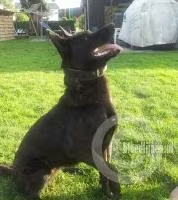
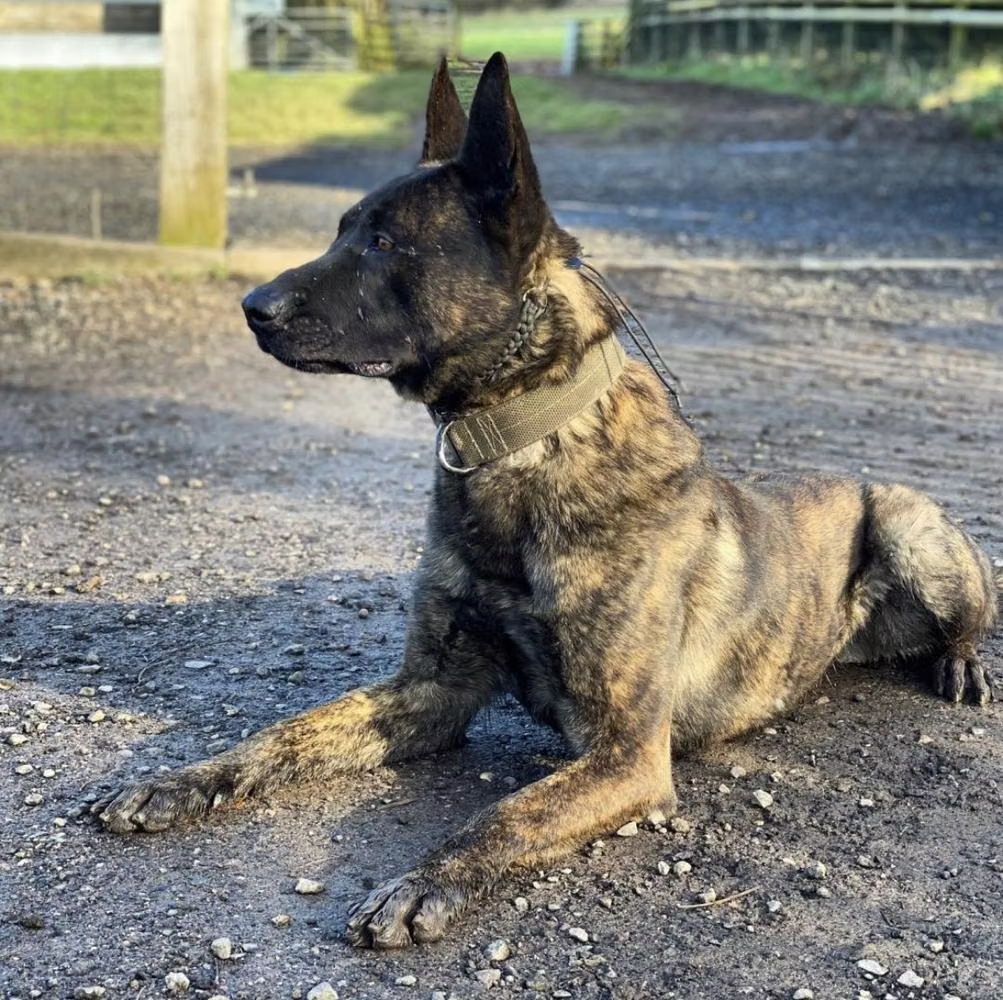
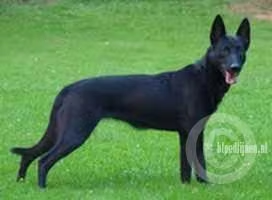
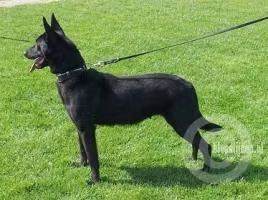
A few of the Dutch Shepherd profiles members have added to United Pet Club.





About the Dutch Shepherd
The Dutch Shepherd is a medium-sized herding dog from the Netherlands, valued for its intelligence, athleticism, and strong working drive that suits active, experienced owners.
The Dutch Shepherd is a medium-sized working dog that originated on the farms of the southern Netherlands. It was bred to be an all-purpose shepherd's dog: herding flocks, guarding property, and pulling carts. That versatility still defines the breed today. Dutch Shepherds are quick learners with a steady temperament and a high level of energy that needs daily outlets.
Three coat varieties exist (short-haired, long-haired, and rough-haired), but the brindle pattern is shared across all of them and is the breed's most recognisable feature. Adults typically stand 55 to 62 centimetres at the shoulder and weigh between 23 and 32 kilograms, placing them squarely in the medium range.
The breed is loyal and people-oriented, forming close bonds with its family. It is alert without being needlessly aggressive, which makes it a capable watchdog. Dutch Shepherds are common in police, military, search-and-rescue, and dog-sport roles because they are biddable and physically durable.
| Attribute | Detail |
|---|---|
| Origin | Netherlands |
| Size | Medium (55-62 cm, 23-32 kg) |
| Lifespan | 11-14 years |
| Group/role | Herding and general-purpose working dog |
| Good with | Families, older children, and other dogs when socialised early |
Who it suits
The Dutch Shepherd fits owners who can provide consistent training and real physical and mental work every day. It does well with active individuals and families, dog-sport competitors, and handlers in working roles. It is a poor match for sedentary households or people who are away for long stretches, because an under-exercised Dutch Shepherd can become restless and develop nuisance behaviours.
Dutch Shepherd history and origin
The Dutch Shepherd developed in the rural southern Netherlands during the 1800s as a flexible farm and herding dog, with its first breed standard recorded in 1898.
The Dutch Shepherd traces back to the rural southern provinces of the Netherlands, where farmers needed a single dog that could handle many jobs. In the 1800s these dogs kept sheep within unfenced fields, guarded the farm and its livestock, pulled small carts, and watched over children. They were working tools rather than show animals, selected for ability instead of appearance.
The breed shares early roots with the Belgian Shepherd and the German Shepherd, since all three drew from the same regional landrace of herding dogs found across the Low Countries and neighbouring areas. As national breed clubs formed in the late nineteenth century, breeders began to define the Dutch type separately. The first breed standard was drawn up in 1898, and at that point a range of coat colours was permitted.
The standard was later revised to make brindle the defining colour, which set the Dutch Shepherd apart from its Belgian and German relatives. The three coat varieties (short, long, and rough) were recognised to reflect the natural variation already present in the working population.
The spread of mechanised farming and fenced pasture reduced the need for herding dogs across Europe, and the Dutch Shepherd grew rare during the twentieth century. The breed survived in part because of its value in police and military work, where its trainability and stamina kept it in demand. It remains relatively uncommon compared with the German Shepherd but maintains a dedicated following among working-dog handlers.
Dutch Shepherd appearance and coat varieties
The Dutch Shepherd is a medium-sized, muscular dog with a wedge-shaped head and a brindle coat that comes in short, long, or rough varieties.
The Dutch Shepherd is a balanced, athletic dog built for endurance rather than bulk. The body is slightly longer than it is tall, with a deep chest, level back, and well-angulated hindquarters that produce an efficient, tireless trot. The head is wedge-shaped with a flat skull, medium-sized erect ears, and dark almond eyes that give an alert expression.
| Trait | Standard |
|---|---|
| Height | Males 57-62 cm, females 55-60 cm at the shoulder |
| Weight | 23-32 kg depending on sex and build |
| Coat | Three varieties: short-haired, long-haired, rough-haired |
| Colours | Brindle in gold or silver tones over a black base |
| Eyes | Dark, almond-shaped, set slightly oblique |
Coat and colours
All three varieties carry the brindle pattern: dark striping over a base of gold or silver. Gold brindle ranges from light sandy tones to deep red, while silver brindle has a cooler, greyer ground colour. The short-haired variety has a dense, hard outer coat with a woolly undercoat. The long-haired variety has straight, harsh guard hairs lying flat against the body. The rough-haired variety has a dense, tousled coat with a beard and eyebrows. A small amount of white on the chest or feet is generally tolerated, but heavy white markings are not typical of the breed.
Dutch Shepherd temperament and personality
Dutch Shepherds are loyal, intelligent, and alert, bonding closely with their families while staying reserved with strangers and highly trainable across many tasks.
The Dutch Shepherd is even-tempered, loyal, and strongly attached to its people. With family it is affectionate and attentive, often staying close and reading its handler's moods. It tends to be reserved rather than hostile toward strangers, watching new people carefully before warming up, which makes it a reliable watchdog without an unprovoked edge.
With children the breed is patient and protective when raised alongside them, though its size and energy mean play with very young children should be supervised. With other dogs it is generally sociable when introduced early, and many Dutch Shepherds live well in multi-dog homes. Its herding background can show as a tendency to chase or nip at fast movement, so early guidance helps shape that instinct.
Mental stimulation matters as much as physical exercise. A bored Dutch Shepherd will invent its own jobs, which often means digging, chewing, or barking. Given structure and work, it settles into a calm and steady companion indoors.
| Trait | Rating |
|---|---|
| Affection | 4 |
| Energy | 5 |
| Trainability | 5 |
| Vocalness | 3 |
| Shedding | 3 |
Dutch Shepherd care and grooming
The Dutch Shepherd needs daily vigorous exercise, regular mental work, and grooming that varies by coat type, from quick weekly brushing to occasional hand-stripping.
Grooming
Grooming depends on the coat variety:
- Short-haired: brush once a week, with more frequent brushing during the two annual heavy sheds.
- Long-haired: brush once or twice a week to prevent the flat coat from matting.
- Rough-haired: brush weekly and hand-strip roughly twice a year; this variety should not be clipped, as clipping damages coat texture.
- Bathe only when needed, since over-bathing strips natural oils.
- Check ears weekly, trim nails every few weeks, and brush teeth several times a week.
Exercise
This is a high-drive breed that needs substantial daily activity.
- Aim for at least 1 to 2 hours of exercise per day.
- Combine walks or runs with off-leash play in a secure area.
- Add a structured outlet such as obedience, agility, tracking, herding, or protection sport.
- Use puzzle feeders and scent games on lower-activity days to tire the mind.
Environment
The Dutch Shepherd adapts to most climates thanks to its weatherproof coat. It does best in a home with a securely fenced yard, but it can live in smaller spaces provided its exercise needs are met. It is not suited to being left alone for long periods and should live indoors as part of the household rather than kennelled away from people.
Dutch Shepherd nutrition and feeding
Dutch Shepherds do well on a complete diet matched to their high activity level, fed in measured portions to keep them lean and protect their joints.
The Dutch Shepherd is an active, muscular dog and needs a complete, balanced diet with adequate protein and fat to fuel its workload. Choose a food formulated for medium to large active breeds, and match the portion to the individual dog's age, weight, and daily output. Working dogs in heavy training need more calories than companion dogs of the same size. Keep the dog lean: a visible waist and easily felt ribs are good targets, since excess weight strains the joints.
| Life stage | Amount per day | Meals |
|---|---|---|
| Puppy (2-6 months) | Per product label, divided | 3-4 |
| Puppy (6-12 months) | Per product label, divided | 2-3 |
| Adult (working/active) | Roughly 2.5-4 cups of dry food | 2 |
| Adult (companion) | Roughly 2-3 cups of dry food | 2 |
| Senior (7+ years) | Slightly reduced to match lower activity | 2 |
Treats and supplements
Keep treats to about 10 percent of daily calories, and lean on the dog's own kibble or small bits of plain cooked meat for training rewards. Most Dutch Shepherds on a complete diet need no supplements. Discuss joint support such as glucosamine or omega-3 fatty acids with a veterinarian, especially for hard-working dogs or older individuals. Provide fresh water at all times, particularly around exercise.
Dutch Shepherd health and lifespan
The Dutch Shepherd is a generally hardy breed that lives 11 to 14 years, with a few inherited conditions worth monitoring through responsible breeding and routine veterinary care.
The Dutch Shepherd is one of the healthier working breeds, in part because it was selected for function and has not been heavily over-bred. Most dogs live 11 to 14 years. The breed still carries a handful of inherited and structural conditions, so buying from a breeder who screens their stock is the best safeguard. Routine veterinary care, a lean body weight, and sensible exercise during growth all support a long, sound life.
| Condition | Signs | Note |
|---|---|---|
| Hip dysplasia | Stiffness, limping, reluctance to jump | Reduced by screening breeding dogs |
| Elbow dysplasia | Front-leg lameness, especially after exercise | Inherited joint malformation |
| Inflammatory myopathy | Muscle weakness, difficulty swallowing | Seen mainly in the rough-haired variety |
| Goniodysgenesis | Cloudy eye, redness, vision loss (glaucoma risk) | Detected by eye exam |
| Pannus (chronic eye condition) | Pigment or film over the cornea | More common in active outdoor dogs |
Preventive care
- Keep core vaccinations and parasite prevention up to date.
- Schedule an annual veterinary check, moving to twice yearly for seniors.
- Maintain a lean weight to protect the hips and elbows.
- Avoid forced, repetitive exercise on hard surfaces while puppies are still growing.
- Buy from breeders who provide hip, elbow, and eye screening results. In Canada, the Canadian Kennel Club (CKC) can help identify registered breeders who follow health-testing guidelines.
Dutch Shepherd training and obedience
The Dutch Shepherd is among the most trainable dog breeds, learning quickly with consistent, reward-based methods and plenty of mental challenge.
The Dutch Shepherd is highly intelligent and eager to work with its handler, which puts it near the top of trainable breeds. It picks up new commands fast and retains them well, and it thrives on having a job to do. That same intelligence means it gets bored with repetition and notices any inconsistency, so training should be varied, clear, and positive. Start socialisation and basic obedience in puppyhood to channel the breed's drive before habits set. Harsh handling tends to backfire with this sensitive, willing breed.
Basics
- Begin socialisation early, exposing the puppy to people, dogs, surfaces, and sounds in calm, positive settings.
- Teach a reliable name response and recall before anything else.
- Build the core cues: sit, down, stay, and loose-leash walking.
- Keep sessions short (5 to 10 minutes) and frequent rather than long.
- Add a structured outlet such as obedience, agility, tracking, or herding once the basics are solid.
- Proof each cue gradually in busier and more distracting environments.
Dutch Shepherd breeding and puppy information
Dutch Shepherds reach breeding maturity at around two years, carry litters for about nine weeks, and typically produce six to ten puppies that need early socialisation.
Responsible Dutch Shepherd breeding centres on health, temperament, and working ability rather than appearance alone. Both parents should be physically mature and cleared on hip, elbow, and eye screening before mating, which usually means waiting until about two years of age even though dogs become fertile earlier. Females cycle roughly twice a year, and mating is timed to the fertile window of the heat cycle.
Gestation lasts about 63 days. Litters commonly run from six to ten puppies. The dam raises the litter for the first weeks, and the breeder's role is to provide a clean, warm whelping area and to begin gentle handling and socialisation once the puppies are a few weeks old. Early exposure to household sounds, surfaces, and careful human contact shapes the confident, stable adult the breed is known for. Puppies normally go to new homes at eight to nine weeks, after weaning and a first veterinary check.
| Metric | Value |
|---|---|
| Breeding maturity | About 2 years |
| Heat cycle frequency | Roughly twice per year |
| Gestation | About 63 days |
| Average litter size | 6-10 puppies |
| Weaning age | 6-8 weeks |
| Typical homing age | 8-9 weeks |
Registering a Dutch Shepherd in Canada: profile and microchip
A free lifetime United Pet Club record for your Dutch Shepherd, with the microchip registered at no cost and kept current through every move.
Dutch Shepherd registration and microchip registration in Canada
A Dutch Shepherd with a current record gets home; one without waits out a stray hold. That is the whole argument for registering your dog with United Pet Club: a free lifetime profile carrying your name, your postal code, and a photo, ready for whichever clinic or shelter runs the scan.
Sixty seconds with a scanner reads the chip; whether your Dutch Shepherd gets home depends on the record behind the number. Microchip registration with United Pet Club is free for life, takes every brand sold in Canada, and keeps the record searchable on both sides of the border. Sign up free and give the number somewhere to point.
How do I register my Dutch Shepherd in Canada?
Open a free United Pet Club account, fill in your Dutch Shepherd's name, breed details, and a photo, and save. The lifetime plan is free, no chip required, and the chip number can be attached after your vet appointment.
How do I register my Dutch Shepherd's microchip?
Add the 15-digit number to your account along with your address, postal code, and phone number. Registration and unlimited updates are free for life, and chips from any manufacturer a Canadian vet uses are accepted.
Is a microchip required for a Dutch Shepherd in Canada?
There is no federal requirement, but several cities fold chips into their licensing bylaws, and travel with the dog goes smoother when the chip is registered. The record, not the implant, is what identifies your Dutch Shepherd.
What does Dutch Shepherd registration cost in Canada?
Nothing, ever. United Pet Club's lifetime plan covers the profile, the chip record, and every update without fees or renewals.
Dutch Shepherd frequently asked questions
Common questions about the Dutch Shepherd's size, temperament, care needs, lifespan, suitability, and availability in Canada.
How big does a Dutch Shepherd get?
It is a medium-sized breed. Males stand about 57 to 62 centimetres at the shoulder and females about 55 to 60 centimetres, with most dogs weighing between 23 and 32 kilograms.
What is the Dutch Shepherd's temperament like?
Loyal, intelligent, alert, and athletic. It bonds closely with its family, stays reserved with strangers, and has a strong drive to work that needs daily physical and mental outlets.
Is the Dutch Shepherd hard to care for?
Care is moderate to demanding. Grooming is straightforward for the short-haired variety, but the breed's high exercise and training needs make it a commitment best suited to active, experienced owners.
How long do Dutch Shepherds live?
Most live 11 to 14 years. It is a generally hardy breed, and a lean weight plus regular veterinary care supports a long life.
Is a Dutch Shepherd a good family dog?
Yes, for active families. It is affectionate and protective with its people and patient with children it is raised alongside, though its energy means play with very young children should be supervised.
Are Dutch Shepherds rare in Canada?
They are less common than the German Shepherd and can take time to find through a reputable breeder. The Canadian Kennel Club (CKC) can be a useful starting point for locating registered breeders. The breed remains popular in police, military, and dog-sport circles, where well-bred working lines are in demand.
Do Dutch Shepherds shed a lot?
They shed moderately year-round, with two heavier seasonal sheds. Weekly brushing, increased during the shedding periods, keeps loose hair under control for all three coat varieties.
From the community
Ask about the Dutch ShepherdNo questions about the Dutch Shepherd yet. Be the first to ask.
Browse Dog breeds