

Doberman Pinscher
The Doberman Pinscher is a loyal, intelligent breed renowned for its alertness, elegance, and fearless devotion as a guardian.
- Size
- Large
- Lifespan
- 10–13 years
- Origin
- Germany
- Temperament
- Loyal
- Standard colors
- Black, Blue and Brown and 2 more
Characteristics
Coat and grooming
How the Doberman Pinscher coat is built, and what that means when you groom it.
- Coat layers
- Single coat
- Coat texture
- Smooth
- Coat length
- Short
- Shedding
- Moderate shedding
Doberman Pinscher colors and patterns
What each club's breed standard says about every Doberman Pinscher color and pattern. Point at a ruling to see the club's own wording.
Breed standards describe the Doberman Pinscher in Black, Blue, Brown, Rust and Isabella. Standard patterns: Tan point.
| Color or pattern | FCI | AKC | UKC | KC | KUSA |
|---|---|---|---|---|---|
| Black | Standard (“black”) | Standard (“Black & Rust”) | Standard (“black”) | Standard (“black”) | Standard (“black”) |
| Blue | Not recognised | Standard (“Blue & Rust”) | Standard (“blue”) | Standard (“blue”) | Not recognised |
| Brown | Standard (“brown”) | Standard (“Red & Rust”) | Standard (“red”) | Standard (“brown”) | Standard (“brown”) |
| Rust | Standard (“rust red”) | Standard (“rust”) | Standard (“rust colored”) | Standard (“rust red”) | Standard (“rust red”) |
| Isabella | Not recognised | Standard (“Fawn (Isabella) & Rust”) | Standard (“fawn (Isabella)”) | Standard (“fawn (Isabella)”) | Not recognised |
| White | Not recognised | Disqualifying (“White”) | Disqualifying | Not recognised (“White (white ancestry)”) | Not recognised |
| Albino | Not recognised | Disqualifying | Disqualifying (“albinism”) | Not recognised | Not recognised |
| Cream | Not recognised | Disqualifying | Disqualifying | Not recognised (“Cream (white ancestry)”) | Not recognised |
| Patterns | |||||
| Tan point | Standard (“rust red, clearly defined and clear markings (tan markings)”) | Standard (“Markings-Rust, sharply defined”) | Standard (“markings are rust colored”) | Standard (“rust red markings”) | Standard (“rust red, clearly defined, clear markings”) |
| Solid | No ruling | No ruling | Fault (“absence of markings”) | No ruling | No ruling |
%22%3E%3Ccircle%20cx%3D%2212%22%20cy%3D%2217.2%22%20r%3D%221.25%22%20fill%3D%22%23C4996A%22%2F%3E%3Cpath%20d%3D%22M1.5%2021.2L9%2018.6L12.6%2021L12.2%2026.2L3.5%2024.4Z%22%20fill%3D%22%23C4996A%22%2F%3E%3Cpath%20d%3D%22M10%2026L14.5%2026.4L18.2%2029.2L13.5%2029.8Z%22%20fill%3D%22%23C4996A%22%2F%3E%3Cellipse%20cx%3D%2221.2%22%20cy%3D%2230.6%22%20rx%3D%221.6%22%20ry%3D%222.3%22%20fill%3D%22%23C4996A%22%2F%3E%3Crect%20x%3D%220%22%20y%3D%2247%22%20width%3D%2264%22%20height%3D%2217%22%20fill%3D%22%23C4996A%22%2F%3E%3Cpath%20d%3D%22M51.5%2024.5L55%2027L54.2%2032L50.5%2028.5Z%22%20fill%3D%22%23C4996A%22%2F%3E%3Cpath%20d%3D%22M45%2038.5L48%2039L48.5%2047L45.5%2047Z%22%20fill%3D%22%23C4996A%22%2F%3E%3C%2Fg%3E%3Cuse%20href%3D%22%23s%22%20fill%3D%22none%22%20stroke%3D%22%233B2A20%22%20stroke-opacity%3D%220.6%22%20stroke-width%3D%221%22%20stroke-linejoin%3D%22round%22%2F%3E%3Cellipse%20cx%3D%223.2%22%20cy%3D%2221.7%22%20rx%3D%221.3%22%20ry%3D%221.2%22%20fill%3D%22%231C1C1C%22%2F%3E%3Ccircle%20cx%3D%2210.8%22%20cy%3D%2219.3%22%20r%3D%221.1%22%20fill%3D%22%231C1C1C%22%2F%3E%3C%2Fsvg%3E)

| Color or pattern | FCI | AKC | UKC | KC | KUSA |
|---|---|---|---|---|---|
| Brown | Standard (“lighter shades are permitted for brown dogs”) | Standard (“medium to darkest brown in black dogs”) | Standard (“medium to dark brown in black dogs”) | Standard (“medium to darkest brown in black dogs”) | Standard (“lighter shades are permitted for brown dogs”) |
| Dark brown | Standard (“dark in colour”) | Standard (“darkest brown”) | Standard (“dark brown”) | Standard (“darkest brown”) | Standard (“dark in colour”) |
| Light brown | No ruling | No ruling | No ruling | Fault (“light eyes in black dogs undesirable”) | No ruling |
| Yellow | Disqualifying (“yellow eyes (bird of prey eye)”) | No ruling | No ruling | No ruling | Disqualifying (“yellow eyes (bird of prey eye)”) |
| Patterns | |||||
| Odd-eyed | Disqualifying (“different coloured eyes”) | No ruling | No ruling | No ruling | Disqualifying (“different-coloured eyes”) |
%22%3E%3Ccircle%20cx%3D%2216%22%20cy%3D%2232%22%20r%3D%228%22%20fill%3D%22%23D9C3A0%22%2F%3E%3Ccircle%20cx%3D%2216%22%20cy%3D%2232%22%20r%3D%223.4%22%20fill%3D%22%231C1C1C%22%2F%3E%3Ccircle%20cx%3D%2213.6%22%20cy%3D%2229.6%22%20r%3D%221.3%22%20fill%3D%22%23F5F5F0%22%2F%3E%3C%2Fg%3E%3Cpath%20d%3D%22M3%2032Q16%2017%2029%2032Q16%2047%203%2032Z%22%20fill%3D%22none%22%20stroke%3D%22%233B2A20%22%20stroke-opacity%3D%220.75%22%20stroke-width%3D%221.4%22%20stroke-linejoin%3D%22round%22%2F%3E%3Cpath%20d%3D%22M35%2032Q48%2017%2061%2032Q48%2047%2035%2032Z%22%20fill%3D%22%23F5F5F0%22%2F%3E%3Cg%20clip-path%3D%22url(%23e1)%22%3E%3Ccircle%20cx%3D%2248%22%20cy%3D%2232%22%20r%3D%228%22%20fill%3D%22%23847865%22%2F%3E%3Ccircle%20cx%3D%2248%22%20cy%3D%2232%22%20r%3D%223.4%22%20fill%3D%22%231C1C1C%22%2F%3E%3Ccircle%20cx%3D%2245.6%22%20cy%3D%2229.6%22%20r%3D%221.3%22%20fill%3D%22%23F5F5F0%22%2F%3E%3C%2Fg%3E%3Cpath%20d%3D%22M35%2032Q48%2017%2061%2032Q48%2047%2035%2032Z%22%20fill%3D%22none%22%20stroke%3D%22%233B2A20%22%20stroke-opacity%3D%220.75%22%20stroke-width%3D%221.4%22%20stroke-linejoin%3D%22round%22%2F%3E%3C%2Fsvg%3E)
| Color or pattern | FCI | AKC | UKC | KC | KUSA |
|---|---|---|---|---|---|
| Black | Standard (“black - in black dogs”) | Standard (“solid black on black dogs”) | Standard (“black in black dogs”) | Standard (“solid black in black dogs”) | Standard (“black in black dogs”) |
| Slate | No ruling | Standard (“dark gray on blue ones”) | Standard (“dark gray in blue dogs”) | Standard (“solid dark grey in blue dogs”) | No ruling |
| Liver | Standard (“in brown dogs, corresponding lighter shades”) | Standard (“dark brown on red ones”) | Standard (“dark brown in red dogs”) | Standard (“solid dark brown in brown dogs”) | Standard (“in brown dogs, corresponding lighter shades”) |
| Isabella | No ruling | Standard (“dark tan on fawns”) | Standard (“dark tan in fawn dogs”) | Standard (“light brown in fawn dogs”) | No ruling |
What the rulings mean
- Standard
- Described by the club's breed standard.
- Fault
- Named by the club's breed standard as a fault: the animal can be shown but is penalised.
- Disqualifying
- The club's breed standard disqualifies an animal of this colour or pattern.
- Not recognised
- The club does not accept this colour or pattern for the breed.
Color changes
How a Doberman Pinscher's colors can change over its life.
Blackchanges toRust
Coat · With body condition · can change back
Blackchanges toGrey
Coat · Progressive
Blackchanges toBrown
Coat · In the sun · can change back
Tan pointchanges toSaddle
Coat · With age · from 6 to 156 weeks
Blackchanges toSnow nose
Nose · With the season · can change back
Blackchanges toPink
Nose · With the season · can change back
%22%3E%3Cpath%20d%3D%22M22.5%2018.5Q24%2021%2025%2021.5L47%2022.5Q50%2022.5%2051.5%2023.5L54%2026Q55%2032%2053%2034Q46%2031.5%2038%2033Q30%2034.5%2025.5%2032Q22.5%2026%2022.5%2018.5Z%22%20fill%3D%22%231C1C1C%22%2F%3E%3Cpath%20d%3D%22M51%2024L56%209L63%209L61%2019L54.5%2028Z%22%20fill%3D%22%231C1C1C%22%2F%3E%3Cpath%20d%3D%22M2%2021.2L7.5%2019.2L8.5%2023.6L3.5%2024.2Z%22%20fill%3D%22%231C1C1C%22%20fill-opacity%3D%220.85%22%2F%3E%3C%2Fg%3E%3Cuse%20href%3D%22%23s%22%20fill%3D%22none%22%20stroke%3D%22%233B2A20%22%20stroke-opacity%3D%220.6%22%20stroke-width%3D%221%22%20stroke-linejoin%3D%22round%22%2F%3E%3Cellipse%20cx%3D%223.2%22%20cy%3D%2221.7%22%20rx%3D%221.3%22%20ry%3D%221.2%22%20fill%3D%22%231C1C1C%22%2F%3E%3Ccircle%20cx%3D%2210.8%22%20cy%3D%2219.3%22%20r%3D%221.1%22%20fill%3D%22%231C1C1C%22%2F%3E%3C%2Fsvg%3E)
%22%3E%3Crect%20x%3D%2217%22%20y%3D%2210%22%20width%3D%2230%22%20height%3D%2242%22%20fill%3D%22url(%23g)%22%2F%3E%3C%2Fg%3E%3Cuse%20href%3D%22%23s%22%20fill%3D%22none%22%20stroke%3D%22%233B2A20%22%20stroke-opacity%3D%220.6%22%20stroke-width%3D%221%22%20stroke-linejoin%3D%22round%22%2F%3E%3Cpath%20d%3D%22M12.5%2037Q13%2032%2018.5%2032Q23.5%2032.5%2023.5%2036.5Q20.5%2035.5%2018.8%2037Q17.4%2038.6%2018%2041.5Q13.6%2040.4%2012.5%2037Z%22%20fill%3D%22%231C1C1C%22%20fill-opacity%3D%220.8%22%20stroke%3D%22%23F5F5F0%22%20stroke-opacity%3D%220.4%22%20stroke-width%3D%220.9%22%2F%3E%3Cpath%20d%3D%22M51.5%2037Q51%2032%2045.5%2032Q40.5%2032.5%2040.5%2036.5Q43.5%2035.5%2045.2%2037Q46.6%2038.6%2046%2041.5Q50.4%2040.4%2051.5%2037Z%22%20fill%3D%22%231C1C1C%22%20fill-opacity%3D%220.8%22%20stroke%3D%22%23F5F5F0%22%20stroke-opacity%3D%220.4%22%20stroke-width%3D%220.9%22%2F%3E%3Cpath%20d%3D%22M32%2040V50%22%20fill%3D%22none%22%20stroke%3D%22%231C1C1C%22%20stroke-width%3D%221.3%22%20stroke-opacity%3D%220.5%22%20stroke-linecap%3D%22round%22%20stroke-linejoin%3D%22round%22%2F%3E%3Cellipse%20cx%3D%2232%22%20cy%3D%2221%22%20rx%3D%2212%22%20ry%3D%223.5%22%20fill%3D%22%23F5F5F0%22%20fill-opacity%3D%220.18%22%2F%3E%3C%2Fsvg%3E)
Sources
Each ruling comes from the club's published breed standard or color list.
Health
Conditions recorded as more common in the Doberman Pinscher than in its species as a whole. A higher risk is not a diagnosis: many never develop any of them, and your vet can say which screening tests are worth doing.
High risk
- Cardiovascular system
Dilated cardiomyopathy
Strong evidenceHereditaryInheritance: Autosomal dominantGene: PDK4 - Haematological & lymphatic system
Von Willebrand disease
Strong evidenceHereditaryInheritance: Autosomal recessiveGene: VWFOMIA entry
This content is for educational purposes and is not a substitute for professional veterinary advice. If you are worried about your pet, contact your veterinarian.
All health conditionsMeet some of our Doberman Pinscher
A few of the Doberman Pinscher profiles members have added to United Pet Club.
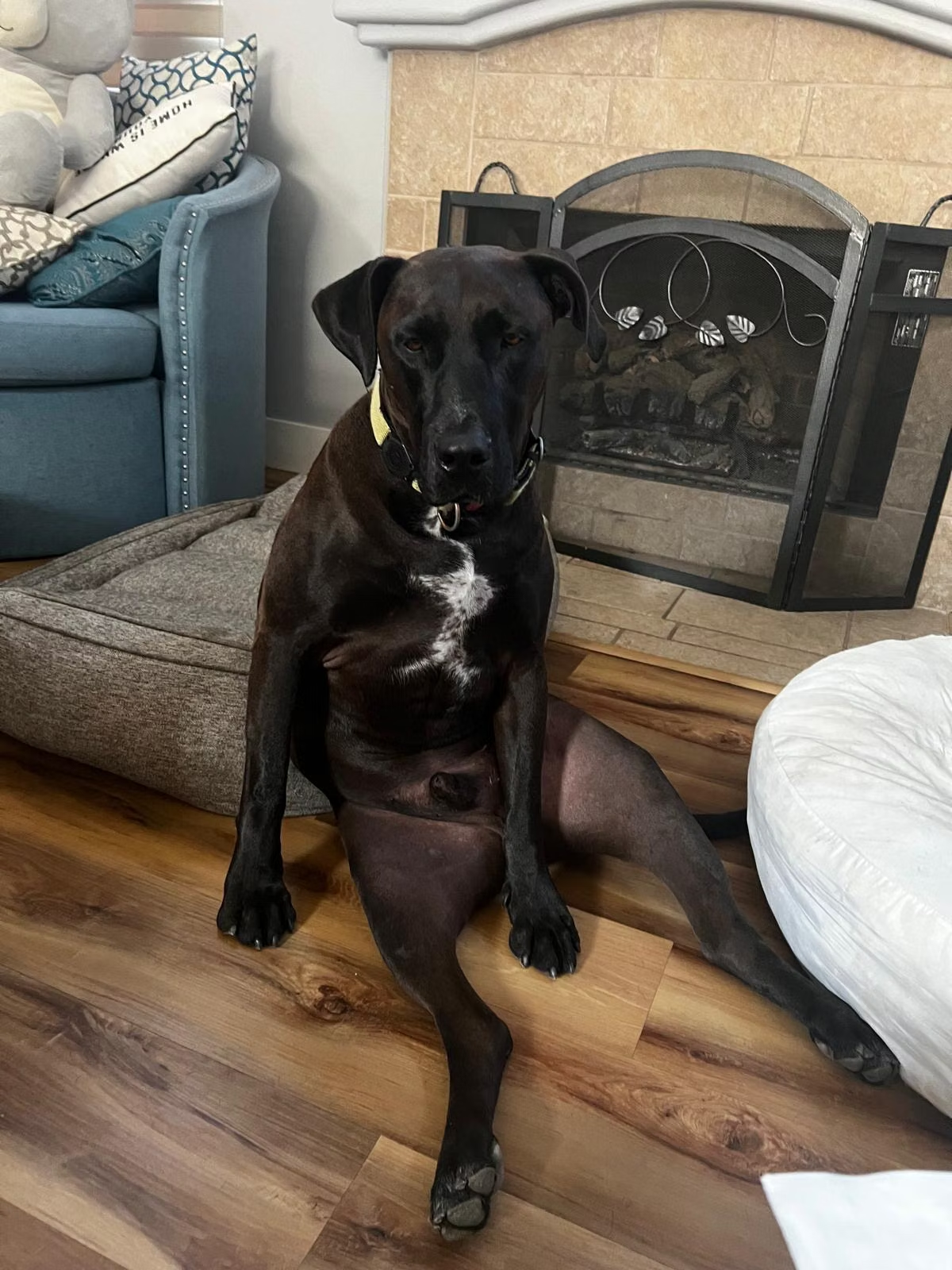
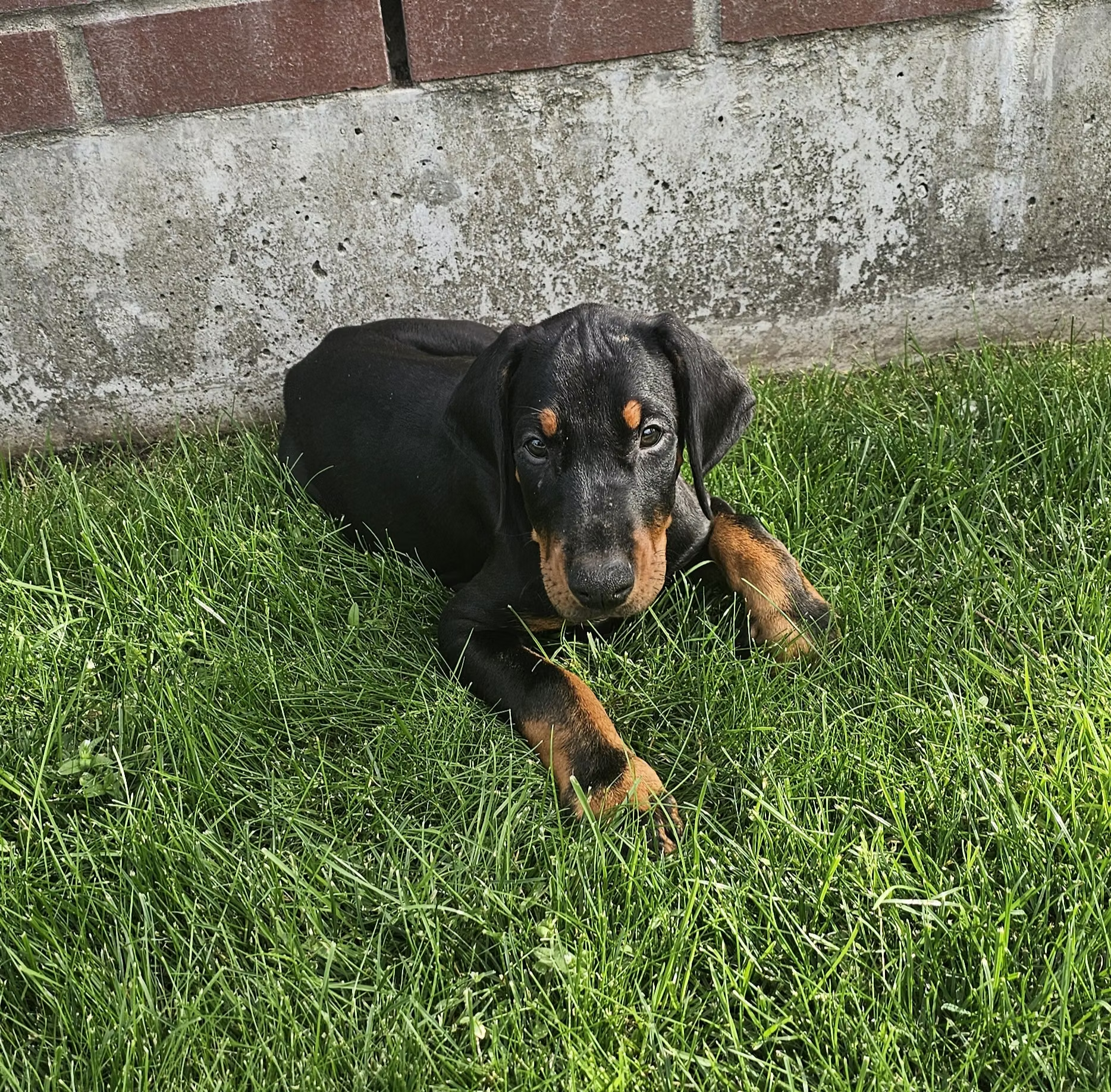
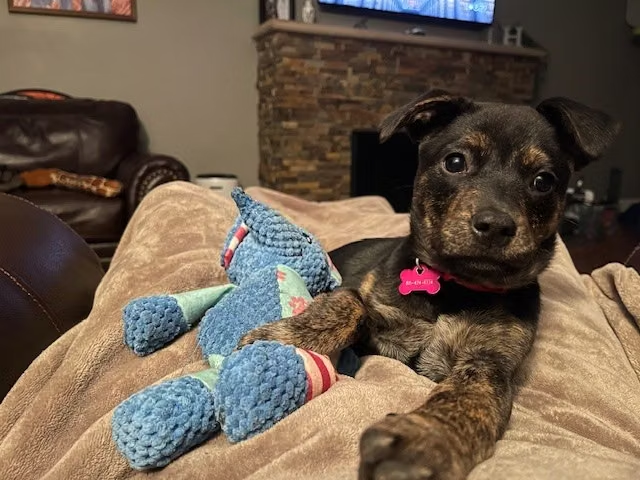
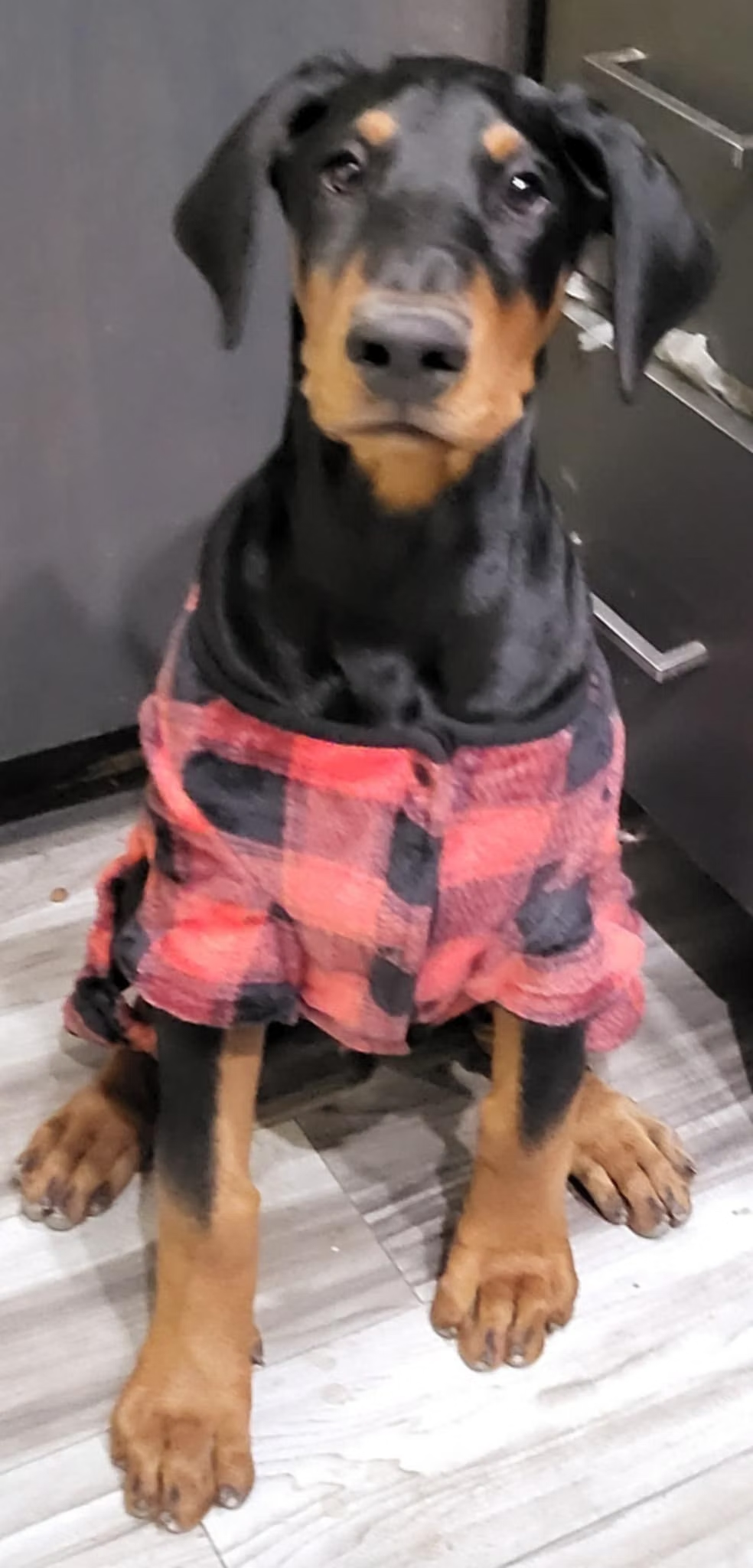
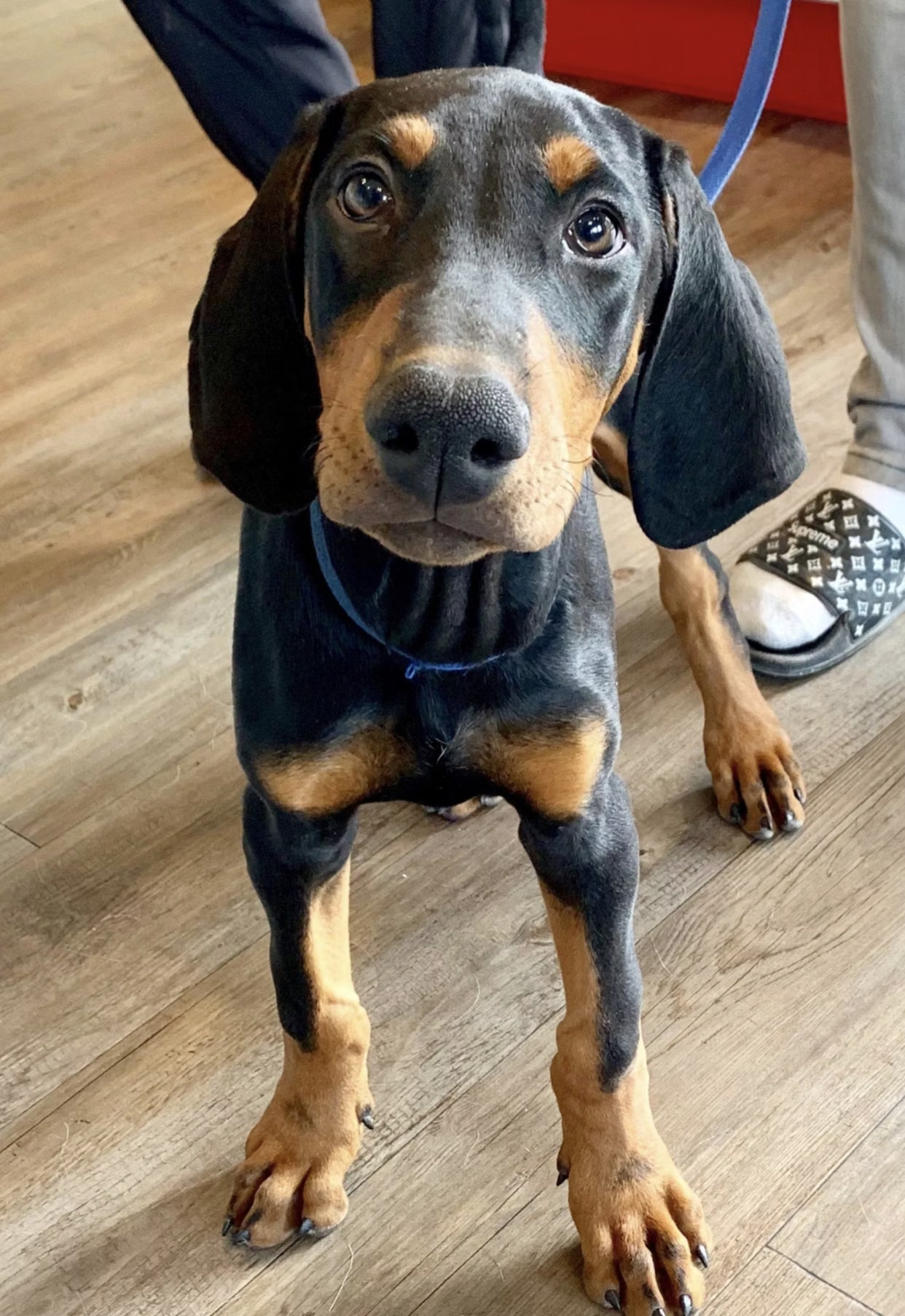
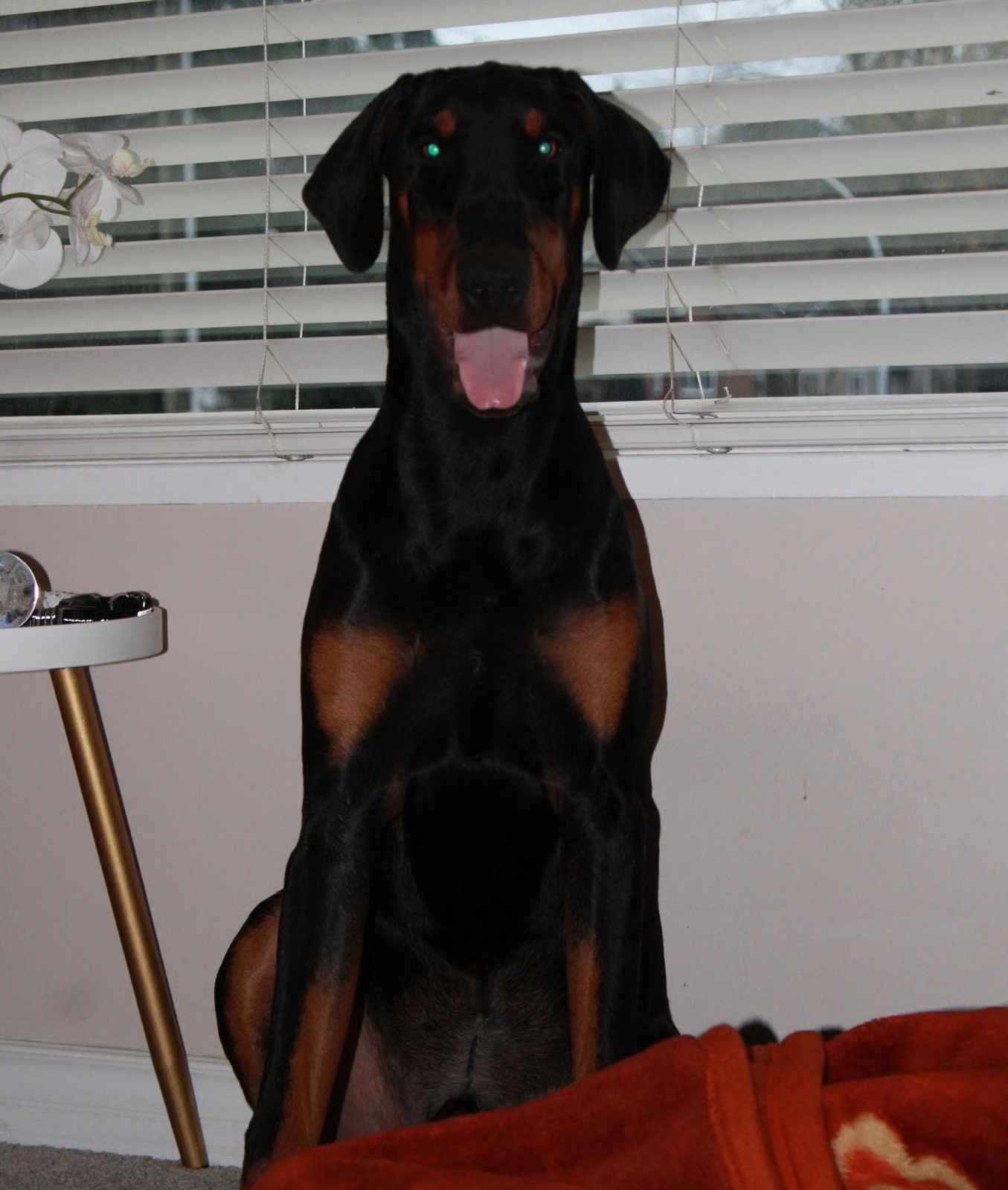


About the Doberman Pinscher
The Doberman Pinscher is a large German working breed known for loyalty, intelligence, and a protective nature, best suited to active owners who provide structure and close companionship.
The Doberman Pinscher is a large, athletic dog developed in Germany as a personal protection and working breed. Its body is compact and muscular, the outline nearly square, and its bearing is self-assured. Adults typically stand between 24 and 28 inches at the shoulder and weigh roughly 60 to 100 pounds, males larger than females.
The breed is quick to learn and ranks among the most trainable working dogs. A Doberman forms a close bond with its household and tends to remain near the people it lives with. That same alertness making it a capable guardian also makes it sensitive to its surroundings and responsive to the way it is handled.
Dobermans need daily physical and mental work. A dog that lacks an outlet for its energy and focus can become restless or develop unwanted behaviour at home.
| Attribute | Detail |
|---|---|
| Origin | Germany |
| Size | Large (60 to 100 lb) |
| Lifespan | 10 to 13 years |
| Group / role | Working breed; guardian and companion |
| Good with | Committed families, experienced owners, other pets when socialised early |
Who it suits
A Doberman fits an owner who is home often, enjoys training, and can provide regular exercise. It does well in active households and in protection or obedience sport. It is less suited to people who are away for long stretches or want a low-maintenance pet, because the breed requires close contact and steady direction.
History and origin
The Doberman Pinscher was created in 1880s Germany by tax collector Karl Friedrich Louis Dobermann, who wanted a capable guard dog to accompany him on his rounds.
The breed traces to Apolda, in the German state of Thuringia, during the 1880s. Karl Friedrich Louis Dobermann worked as a tax collector and also ran the local dog pound, giving him access to a wide variety of dogs. He wanted a medium-to-large dog that was alert, able to defend him, and willing to travel while he carried money on his rounds.
Dobermann kept no detailed breeding records, so the exact crosses are not fully documented. Breed historians generally point to a combination that may have included the old German Pinscher, the Rottweiler, the Black and Tan Terrier, and regional herding dogs. The aim was a sharp, sturdy, working temperament rather than a fixed appearance.
After Dobermann's death in 1894, other breeders continued the work. Otto Goeller is credited with refining the early dogs and helping establish a consistent breed type. Recognition in Germany followed before the end of the century, and the breed spread to other countries in the early 1900s.
The Doberman served in both World Wars, most notably as a messenger, sentry, and scout dog. That military and police history shaped the breed's reputation as a working guardian and drove selection toward trainability and steady nerves.
Appearance
The Doberman Pinscher is a square, muscular dog with a short, smooth coat and a sleek outline, most often seen in black, red, blue, or fawn with rust markings.
The Doberman has a clean, athletic build with a deep chest, a level topline, and well-defined musculature. The head is long and wedge-shaped, the neck arched, and the overall outline is close to square. The body appears balanced and powerful without being heavy.
| Trait | Description |
|---|---|
| Height | Males 26 to 28 in; females 24 to 26 in |
| Weight | Roughly 60 to 100 lb |
| Coat | Short, smooth, hard, lying close to the body |
| Colours | Black, red, blue, or fawn, each with rust markings |
| Eyes | Almond-shaped, dark in black and red dogs |
Coat and colours
The short coat lies close to the body and makes the dog's musculature clearly visible. The four recognised colours each carry sharply defined rust-coloured markings above the eyes, on the muzzle, throat, chest, legs, and feet. Some dogs are born with natural floppy ears and a long tail. Ear cropping and tail docking have historically been practised in some regions but are restricted or prohibited in many countries, including Canada under provincial animal protection legislation, and a growing number of Dobermans are kept in their natural form. The Canadian Kennel Club (CKC) standard describes both cropped and natural presentations.
Temperament
The Doberman Pinscher is loyal, alert, and protective, deeply attached to its family while reserved with strangers, and needs early socialisation to settle well around other pets.
The Doberman is devoted to its household and likes to stay close to its people, sometimes following them from room to room. It is alert and notices changes quickly, which makes it a natural watchdog. With strangers it tends to be reserved and watchful rather than openly friendly, and it usually relaxes once it takes a cue from its owner.
The breed is confident and fearless, but a well-bred and properly raised Doberman is steady rather than aggressive. Early and ongoing socialisation matters considerably. Results with other dogs and pets depend on the individual dog and on how it was raised. Many live well with other animals when introduced young, while some same-sex pairings need careful management. The breed is generally calm with children in its own family when raised alongside them, though its size makes supervision sensible around small children.
| Trait | Rating |
|---|---|
| Affection | 5 |
| Energy | 5 |
| Trainability | 5 |
| Vocalness | 3 |
| Shedding | 2 |
Care and grooming
The Doberman is low-maintenance to groom but demanding in exercise needs, and it does best living indoors with its family in a climate that is not extreme.
Grooming
- Brush the short coat weekly with a rubber curry or hound mitt to remove loose hair.
- Bathe occasionally, only when the dog is dirty, since the coat needs little upkeep.
- Trim nails every few weeks and check that they do not click on hard floors.
- Brush the teeth several times a week and check the ears for wax or odour.
Exercise
- Provide at least 1 to 2 hours of activity per day, split into sessions.
- Combine walks or running with off-leash play in a securely fenced area.
- Add mental work such as obedience drills, scent games, or dog sports.
- Avoid hard, repetitive exercise on young dogs until their joints mature.
Environment and Canadian climate
The Doberman has a short coat and little body fat, so it is not suited to living outdoors in cold weather. Canadian winters require particular attention. In regions with extended cold seasons such as the Prairies or Northern Ontario, the dog needs a coat or insulated jacket for outdoor exercise below roughly -5 degrees Celsius, and outdoor sessions should be kept short during severe cold snaps. The breed should live inside as part of the household year-round. A securely fenced yard helps, but the Doberman needs human contact and structured activity far more than open space alone.
Nutrition and feeding
A Doberman needs a complete diet formulated for large, active dogs, fed in measured meals to support muscle and protect against bloat.
Feed a complete and balanced food suited to a large, active breed, with quality protein to support muscle. Portions depend on age, weight, and activity level, so use the food label as a starting point and adjust to keep the dog lean. Because the Doberman is a deep-chested breed at risk of bloat, split the daily ration into two or more meals and avoid heavy exercise immediately before and after eating. Fresh water should always be available.
| Life stage | Amount per day | Meals |
|---|---|---|
| Puppy (2 to 6 months) | Per label, growth formula | 3 to 4 |
| Adolescent (6 to 12 months) | Per label, adjust to body condition | 2 to 3 |
| Adult | Roughly 3 to 5 cups, by size and activity | 2 |
| Senior | Reduced calories to prevent weight gain | 2 |
Treats and supplements
Keep treats to about 10 percent of daily calories so they do not unbalance the diet. Most Dobermans eating a complete food do not require supplements, but a veterinarian may suggest joint support for older or working dogs. Introduce any new food gradually to avoid stomach upset.
Health
The Doberman Pinscher lives about 10 to 13 years and is prone to several serious inherited conditions, especially dilated cardiomyopathy, so health-tested parents and regular veterinary care are essential.
The Doberman is an active breed with a typical lifespan of 10 to 13 years. It is generally robust, but carries an above-average risk of several inherited conditions, the most significant being dilated cardiomyopathy, a heart-muscle disease affecting a notable proportion of the breed. Purchasing from breeders who screen their stock reduces, though does not eliminate, these risks. Prospective owners in Canada should seek breeders registered with the Canadian Kennel Club and affiliated with the Doberman Pinscher Club of Canada, both of which promote health testing.
| Condition | Signs | Note |
|---|---|---|
| Dilated cardiomyopathy | Weakness, fainting, coughing, sudden collapse | Leading cause of death in the breed; screen with cardiac exams |
| Von Willebrand disease | Excess bleeding, slow clotting | Inherited clotting disorder; DNA test available |
| Hip dysplasia | Stiffness, limping, trouble rising | Choose hip-tested parents |
| Hypothyroidism | Weight gain, coat changes, low energy | Managed with daily medication |
| Gastric dilatation-volvulus (bloat) | Swollen belly, retching, distress | Emergency; deep-chested breeds are at risk |
Preventive care
- Keep vaccinations and parasite prevention current.
- Schedule regular cardiac screening, including echocardiogram and Holter monitoring as advised.
- Maintain a lean body weight to protect joints and the heart.
- Brush teeth and book routine dental checks.
- See the veterinarian at least once a year, more often for older dogs.
Training
The Doberman is highly intelligent and eager to work, making it very trainable, but it needs consistent, fair handling and early socialisation to reach its potential.
The Doberman is one of the most trainable dog breeds. It learns quickly, retains what it learns, and wants to work with its handler. That intelligence cuts both ways: a bored or poorly directed Doberman will find its own occupations. Begin training early, keep sessions short and engaging, and stay consistent so the dog understands the rules. The breed is sensitive and responds best to a confident, calm handler rather than harsh correction. Socialisation with people, different environments, and other animals from puppyhood is important for a steady adult temperament. Many Canadian owners pursue CKC-sanctioned obedience and rally trials, where the Doberman consistently performs well.
Basics
- Begin socialisation and house manners as soon as the puppy comes home.
- Teach name response, sit, down, and recall in short daily sessions.
- Add loose-leash walking and impulse control such as wait and leave it.
- Practise commands in new places with distractions before relying on them.
- Channel the breed's drive into obedience, tracking, agility, or protection sport.
Breeding
Responsible Doberman breeding relies on health-tested parents, typical litters of six to eight puppies, and a roughly nine-week gestation, with heart and clotting screening central to the process.
Dobermans reach sexual maturity around 6 to 12 months, but responsible breeders wait until a dog is physically and mentally mature, generally around 2 years, before breeding. By that point the dog can complete the health screening the breed requires, including cardiac evaluation for dilated cardiomyopathy and testing for von Willebrand disease and hip status.
Females cycle roughly twice a year. After a successful mating, gestation runs about 63 days. Litters commonly contain six to eight puppies, though smaller and larger litters do occur. The dam usually whelps without assistance, but a breeder should be present and prepared to contact a veterinarian if labour stalls.
Newborn puppies are nursed by the dam during the first weeks. Early handling, gradual weaning from around 3 to 4 weeks onward, and careful socialisation in the first two months lay the groundwork for a confident adult. Puppies should remain with the litter until at least 8 weeks so they benefit from time with the dam and littermates. In Canada, breeders operating under the CKC code of ethics are expected to follow these timelines and provide health documentation with each puppy.
| Metric | Value |
|---|---|
| Sexual maturity | 6 to 12 months |
| Recommended breeding age | About 2 years |
| Gestation | About 63 days |
| Average litter size | 6 to 8 puppies |
| Weaning | Around 3 to 7 weeks |
| Leave for new home | 8 weeks or later |
Registering a Doberman Pinscher in Canada: profile and microchip
A free lifetime United Pet Club record for your Doberman Pinscher, with the microchip registered at no cost and kept current through every move.
Doberman Pinscher registration and microchip registration in Canada
A Doberman Pinscher with a current record gets home; one without waits out a stray hold. That is the whole argument for registering your dog with United Pet Club: a free lifetime profile carrying your name, your postal code, and a photo, ready for whichever clinic or shelter runs the scan.
The vet implants the chip and leaves the recording part to you. Register the microchip on the free lifetime plan: any brand a Canadian clinic implants is accepted, updates after a change of address are free, and a current record keeps the border paperwork the Canadian Food Inspection Agency asks about from becoming a scramble. Create your free account and finish both in one evening.
How do I register my Doberman Pinscher in Canada?
Open a free United Pet Club account, fill in your Doberman Pinscher's name, breed details, and a photo, and save. The lifetime plan is free, no chip required, and the chip number can be attached after your vet appointment.
How do I register my Doberman Pinscher's microchip?
Add the 15-digit number to your account along with your address, postal code, and phone number. Registration and unlimited updates are free for life, and chips from any manufacturer a Canadian vet uses are accepted.
Is a microchip required for a Doberman Pinscher in Canada?
There is no federal requirement, but several cities fold chips into their licensing bylaws, and travel with the dog goes smoother when the chip is registered. The record, not the implant, is what identifies your Doberman Pinscher.
What does Doberman Pinscher registration cost in Canada?
Nothing, ever. United Pet Club's lifetime plan covers the profile, the chip record, and every update without fees or renewals.
Frequently asked questions
Common questions about the Doberman Pinscher cover its size, temperament, care needs, lifespan, suitability, and availability.
How big does a Doberman Pinscher get?
It is a large breed. Males usually stand 26 to 28 inches at the shoulder and females 24 to 26 inches, with weight ranging from about 60 to 100 pounds depending on sex and build.
Are Dobermans good family dogs?
Yes, when well bred, socialised, and trained. The breed is loyal and bonds closely with its household, and is generally good with children it is raised alongside. Its size means young children should be supervised around it.
Is a Doberman hard to care for?
Grooming is straightforward given the short coat, but the breed is demanding in exercise and companionship. It needs one to two hours of activity a day plus mental work and regular human contact, so it suits an active, engaged owner.
How long do Dobermans live?
The typical lifespan is 10 to 13 years. Heart disease, particularly dilated cardiomyopathy, is the main factor that shortens it, which is why cardiac screening matters when choosing a breeder.
Are Dobermans aggressive?
A well-bred and well-raised Doberman is alert and protective rather than aggressive. It is reserved with strangers and steady with its family. Temperament depends heavily on breeding, socialisation, and how the dog is handled.
Do Dobermans need a lot of space?
They need exercise and engagement more than square footage. A secure yard helps, but a committed owner who provides daily activity can keep one well even without a large property. The breed should live indoors with its people, especially given Canada's cold winters.
How easy is it to find a Doberman puppy in Canada?
The breed is established and available through dedicated breeders and breed-specific rescues. Look for breeders registered with the Canadian Kennel Club who health-test parents for heart disease, von Willebrand disease, and hips rather than purchasing on impulse. The Doberman Pinscher Club of Canada can help connect prospective owners with reputable breeders.
From the community
Ask about the Doberman PinscherNo questions about the Doberman Pinscher yet. Be the first to ask.
Browse Dog breeds