
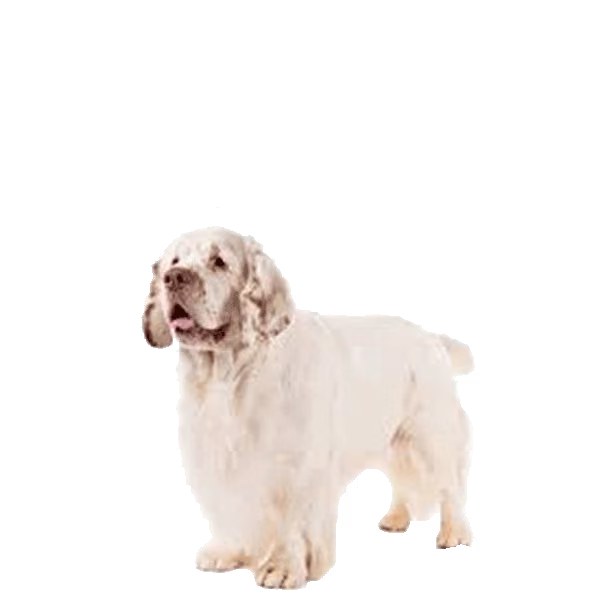
Clumber Spaniel
The Clumber Spaniel is a dignified, heavy-boned English gun dog, known for its mellow, gentle nature and devoted companionship.
- Size
- Medium
- Lifespan
- 10–12 years
- Origin
- England
- Temperament
- Gentle
- Standard colors
- White, Orange and Lemon
Characteristics
Coat and grooming
How the Clumber Spaniel coat is built, and what that means when you groom it.
- Coat layers
- Double coat
- Coat texture
- Silky
- Coat length
- Medium
- Shedding
- Heavy shedding
Grooming guidance
Critical: A Clumber Spaniel should not be shaved.
The undercoat keeps heat out as well as in, and the outer coat shields the skin from sun and insect bites. Clipping the whole coat off removes both. It often grows back patchy, soft or a different colour, and in some animals the guard hairs never return properly. Brush the undercoat out instead of cutting it off.
Caution: A Clumber Spaniel coat mats easily.
Fine or long hair tangles at the base of the coat, out of sight, where the mats tighten and pull on the skin. Brushing has to reach right down to the roots in sections, not just skim the surface.
Clumber Spaniel colors and patterns
What each club's breed standard says about every Clumber Spaniel color and pattern. Point at a ruling to see the club's own wording.
Breed standards describe the Clumber Spaniel in White, Orange and Lemon. Standard patterns: Solid and Bicolour.
| Color or pattern | FCI | AKC | UKC | KC | KUSA |
|---|---|---|---|---|---|
| White | Standard (“Plain white body preferred”) | Standard (“White”) | Standard (“The primary body color is white”) | Standard (“Plain white body”) | Standard (“Plain white body preferred”) |
| Orange | Standard (“orange permissible”) | Standard (“Orange Markings”) | Standard (“lemon or orange markings”) | Standard (“Orange markings permissible”) | Standard (“orange permissible”) |
| Lemon | Standard (“with lemon markings”) | Standard (“Lemon Markings”) | Standard (“lemon or orange markings”) | Standard (“with or without lemon markings”) | Standard (“with lemon markings”) |
| Patterns | |||||
| Solid | No ruling | Standard (“White”) | No ruling | Standard (“Plain white body with or without lemon markings”) | No ruling |
| Bicolour | Standard (“Plain white body preferred, with lemon markings”) | Standard (“primarily a white dog with lemon color or orange color markings”) | Standard (“The primary body color is white, accompanied by lemon or orange markings”) | Standard (“Lemon & White”) | Standard (“Plain white body preferred, with lemon markings”) |

%22%3E%3Cpath%20d%3D%22M0%2023L9.5%2020.4L14%2025.4L19%2029.6Q21%2035%2023.5%2035.5Q36%2033%2050%2036L56%2040V64H0Z%22%20fill%3D%22%23F5F5F0%22%2F%3E%3C%2Fg%3E%3Cuse%20href%3D%22%23s%22%20fill%3D%22none%22%20stroke%3D%22%233B2A20%22%20stroke-opacity%3D%220.6%22%20stroke-width%3D%221%22%20stroke-linejoin%3D%22round%22%2F%3E%3Cellipse%20cx%3D%223.2%22%20cy%3D%2221.7%22%20rx%3D%221.3%22%20ry%3D%221.2%22%20fill%3D%22%231C1C1C%22%2F%3E%3Ccircle%20cx%3D%2210.8%22%20cy%3D%2219.3%22%20r%3D%221.1%22%20fill%3D%22%231C1C1C%22%2F%3E%3C%2Fsvg%3E)
| Color or pattern | FCI | AKC | UKC | KC | KUSA |
|---|---|---|---|---|---|
| Amber | Standard (“dark amber”) | Standard (“dark amber in color”) | Standard (“dark amber in color”) | Standard (“Clean, dark, amber”) | Standard (“dark amber”) |
| Light brown | Fault (“Full light eyes highly undesirable”) | No ruling | No ruling | Fault (“Full light eyes highly undesirable”) | Fault (“Full light eyes highly undesirable”) |
| Color or pattern | AKC | UKC |
|---|---|---|
| Liver | Standard (“colored shades of brown, which include beige, rose and cherry”) | Standard (“Acceptable colors are shades of brown, to include beige, rose and cherry”) |
What the rulings mean
- Standard
- Described by the club's breed standard.
- Fault
- Named by the club's breed standard as a fault: the animal can be shown but is penalised.
Color changes
How a Clumber Spaniel's colors can change over its life.
Whitechanges toRoan
Coat · With age · from 2 weeks
%22%3E%3Cg%20fill%3D%22none%22%20stroke%3D%22%23F5F5F0%22%20stroke-width%3D%221.15%22%20stroke-linecap%3D%22round%22%20stroke-linejoin%3D%22round%22%3E%3Cpath%20d%3D%22M28.6%2025h.1M51.3%2028.8h.1M34.7%2024.3h.1M34.2%2041.6h.1M51%2044.2h.1M55.9%2024.7h.1M27.5%2026.3h.1M18.5%2028.6h.1M25.2%2028.9h.1M24.2%2019.3h.1M20.6%2017.6h.1M34.1%2030.6h.1M57.3%2023.3h.1M23.5%2030.7h.1M26.5%2023.1h.1M40%2031.5h.1M51.7%2038.6h.1M20.2%2022.1h.1M40.4%2037.8h.1M35%2043.1h.1M20.6%2031.7h.1M27.8%2031.9h.1M17.2%2021.1h.1M38.1%2037.7h.1M25.3%2040.5h.1M32%2029.3h.1M41.6%2039.5h.1M23.6%2024h.1M26.4%2018.6h.1M30.3%2031.9h.1M31.2%2035.2h.1M36.5%2043.7h.1M35.2%2026.3h.1M55.6%2019.1h.1M22.4%2036.8h.1M39.2%2020h.1M49.5%2039.1h.1M33.6%2033.5h.1M36.4%2032.4h.1M56.3%2042.4h.1M54.8%2031.2h.1M36.9%2023.2h.1M52.7%2019.1h.1M21.5%2033.8h.1M48.6%2028h.1M36.6%2017.5h.1M45.6%2031.3h.1M37.9%2030.5h.1M17%2031.8h.1M21.1%2043.1h.1M55.7%2021.1h.1M30.8%2041.9h.1M57.4%2038.4h.1M54.8%2026.9h.1M29.1%2017.5h.1M24.3%2037.7h.1M26%2032h.1M39.3%2022.8h.1M53.5%2029h.1M53.3%2023.3h.1M20%2038.4h.1M28.3%2044.7h.1M28.6%2039.8h.1M51.9%2041.1h.1M52.3%2033.7h.1M19.6%2042.2h.1M19%2033h.1M47.8%2021.7h.1M45.7%2024.8h.1M24.6%2035.5h.1M29.8%2036.8h.1M50.7%2032h.1M29.5%2043.5h.1M28.2%2041.5h.1M47.4%2034.8h.1M25.4%2033.7h.1M50.2%2041.2h.1M27.7%2029.5h.1M21.5%2024.8h.1M55.5%2017.5h.1M41.2%2044.3h.1M39.2%2018.4h.1M41.1%2042.5h.1M54.7%2035.3h.1M42.8%2034.5h.1M30.1%2023h.1M42.6%2025.1h.1M32.9%2024.4h.1M42.4%2032.4h.1M49.7%2022.2h.1M49.1%2043.1h.1M38%2035.2h.1M47.7%2043.8h.1M43.1%2022.4h.1M22.4%2040.4h.1M44.4%2019.8h.1M53.3%2040.1h.1M20.7%2029.3h.1M55.6%2043.9h.1M17.6%2039.2h.1M41.7%2028.9h.1M44.1%2036.3h.1M24.3%2043.6h.1M26.4%2038.1h.1M30.3%2029.2h.1M31.5%2030.8h.1M32.1%2023h.1M18.3%2040.9h.1M48%2033.4h.1M36.4%2038.7h.1M31.9%2020.8h.1M32.6%2026.2h.1M22%2031.2h.1M53.4%2021.7h.1M41.9%2017.7h.1M53.3%2037.3h.1M47.7%2040.3h.1M54.4%2033.7h.1M33.6%2037.5h.1M25.3%2017.2h.1M37.6%2019.7h.1M31.6%2019h.1M29.2%2019.6h.1M50.7%2027.3h.1M22%2022.1h.1M31%2037.8h.1M56.5%2026.6h.1M34.7%2039.5h.1M56.5%2040.8h.1M47.6%2038h.1M48.6%2026.1h.1M49.7%2034.2h.1M45.4%2027.4h.1M22.6%2038.9h.1M56.5%2035.3h.1M35.1%2021h.1M41.9%2020.1h.1M37.6%2040h.1M32.6%2044.4h.1M37.9%2025.2h.1M26.6%2043h.1M18.9%2036.7h.1M47.2%2028.9h.1M30.5%2026.2h.1M17.4%2027.3h.1M47.1%2017.2h.1M22.3%2044.3h.1M32.5%2042.4h.1M23.6%2025.7h.1M31.4%2024.9h.1%22%2F%3E%3Cpath%20d%3D%22M26%2020.9h.1M41.2%2023.8h.1M39.9%2026.4h.1M28.5%2033.4h.1M42.8%2043.8h.1M17.6%2034.3h.1M34%2017.1h.1M31.2%2017.2h.1M46.5%2036.1h.1M25.1%2022.1h.1M50.3%2023.7h.1M20.2%2026.6h.1M20.8%2020.4h.1M50.9%2017.3h.1M49.5%2020.2h.1M52.9%2044.1h.1M23.9%2017.8h.1M43.2%2028.1h.1M57.6%2030h.1M52%2025.6h.1M19.2%2019.1h.1M19.5%2024.4h.1M32.8%2040.1h.1M36.1%2027.7h.1M39.6%2029.5h.1M38.4%2041.5h.1M47.9%2019.4h.1M49.1%2031.7h.1M55.9%2036.9h.1M29.2%2027.2h.1M46%2043.5h.1M44.6%2028.8h.1M47.5%2031.5h.1M22.8%2020h.1M27.6%2017.1h.1M43.1%2018.6h.1M54.3%2020h.1M57.2%2033.8h.1M44.5%2043.8h.1M27.1%2035.5h.1M45.3%2041.8h.1M56.7%2028.8h.1M36.7%2021.4h.1M43.3%2042.3h.1M17.3%2022.9h.1M32.7%2035.5h.1M30.5%2039.8h.1M29.1%2021.2h.1M34.5%2018.8h.1M25.8%2027h.1%22%2F%3E%3C%2Fg%3E%3Cpath%20d%3D%22M56.3%2038.4l0%201.2M40%2027.2l-0.3%201.3M32.6%2043.6l-0.4%201.5M29%2023.3l0.8%201.5M55.1%2044l0.4%201.1M47.5%2022.5l-0.2%201.6M42.9%2038.6l0.7%201.2M35.2%2041.8l-0.5%201.7M26.9%2040l-0.1%201.2M41%2042.8l-0.1%201.6M18.4%2021.2l0.7%201.3M49.4%2019.3l-0.5%201.4M50.1%2041.7l0%201.8M28.2%2041.8l-0.6%201.2M55.5%2027.1l0.2%201.2M44.7%2019.3l0.5%201.7M48.6%2020.5l-0.8%201.4M43.7%2039.6l0.3%201.1M22.1%2033.8l-0.6%201.6M50.1%2038.1l-0.5%201.3M51.8%2044.1l-0.1%201.8M39%2017.5l0%201.4M30.2%2026.7l0.2%201.4M25.8%2031.2l0.2%201.6M29.6%2043.5l0.1%201M43.7%2018.3l0.1%201.5M29.6%2018.2l0.3%201.6M24.4%2017.6l0.3%201.1M22%2028.2l-0.6%201.6M25.9%2043.3l-0.3%201.4M22.2%2024.3l0.3%201.3M47.3%2029.2l-0.2%201.4M21.8%2033.2l0.5%200.9M32.9%2037l0.4%201M40%2029.9l0.8%201.4M17.4%2038.3l0.2%201.3M31%2039.2l0%201.2M37.3%2033.7l0.3%201.5M48.1%2040.5l0%201.6M33.9%2031.2l0.1%201.2M29.8%2035.2l-0.4%201M25.1%2037.3l-0.2%201.5M30.2%2039.8l0.5%201M44.6%2034.8l0.4%200.9M55.3%2034.2l0%201.7M50.6%2017.9l0.4%201M30.2%2034.9l-0.4%201.4M19.5%2035.7l-0.5%201.7M40.7%2028.7l0.8%201.4M23.3%2029l-0.4%201.4M17%2040.5l-0.2%201M48.4%2023.2l-0.3%201M37.3%2025.1l-0.4%201.3M23%2021.4l-0.4%201.3M20.4%2017.2l-0.1%201.3M42.3%2020.4l0.6%201.4M41%2031.8l0.6%201.2M45.4%2034.3l-0.1%201.2M32.5%2018l0%201.3M46.2%2021.6l0.1%201.4M30.5%2022.3l0.5%201.1M58%2044.6l0.3%201.5M57.1%2033.9l0.8%201.4M18.3%2042.6l0.3%201M40.5%2035.1l-0.6%201.4M38.8%2044.3l-0.3%201.1%22%20fill%3D%22none%22%20stroke%3D%22%23F5F5F0%22%20stroke-width%3D%220.8%22%20stroke-linecap%3D%22round%22%20stroke-linejoin%3D%22round%22%2F%3E%3C%2Fg%3E%3Cuse%20href%3D%22%23s%22%20fill%3D%22none%22%20stroke%3D%22%233B2A20%22%20stroke-opacity%3D%220.6%22%20stroke-width%3D%221%22%20stroke-linejoin%3D%22round%22%2F%3E%3Crect%20x%3D%2220%22%20y%3D%2258%22%20width%3D%223.6%22%20height%3D%222%22%20fill%3D%22%234A4038%22%2F%3E%3Crect%20x%3D%2226%22%20y%3D%2258%22%20width%3D%223.6%22%20height%3D%222%22%20fill%3D%22%234A4038%22%2F%3E%3Crect%20x%3D%2244%22%20y%3D%2258%22%20width%3D%223.6%22%20height%3D%222%22%20fill%3D%22%234A4038%22%2F%3E%3Crect%20x%3D%2250%22%20y%3D%2258%22%20width%3D%223.6%22%20height%3D%222%22%20fill%3D%22%234A4038%22%2F%3E%3Ccircle%20cx%3D%229.5%22%20cy%3D%2211.5%22%20r%3D%221.1%22%20fill%3D%22%231C1C1C%22%2F%3E%3C%2Fsvg%3E)
Sources
Each ruling comes from the club's published breed standard or color list.
Meet some of our Clumber Spaniel
A few of the Clumber Spaniel profiles members have added to United Pet Club.


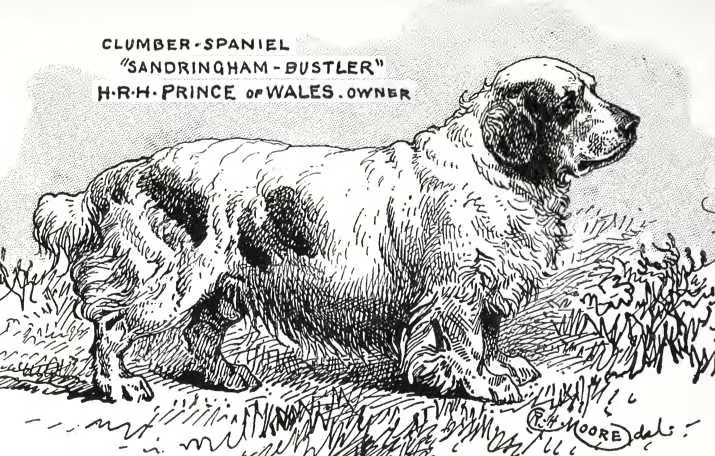

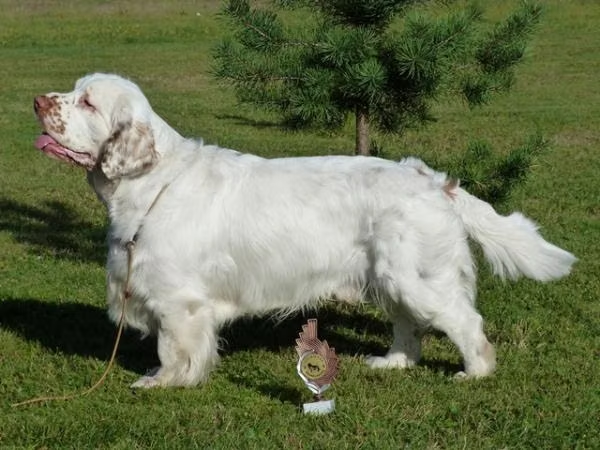

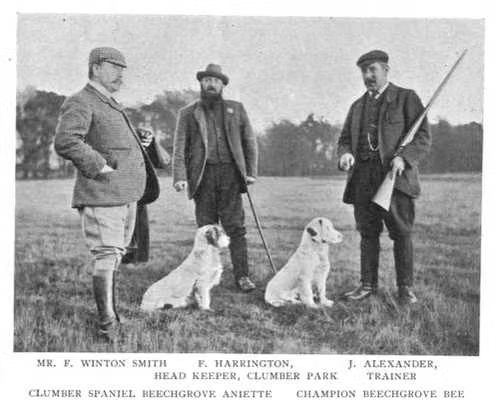

About the Clumber Spaniel
A heavy-boned English gun dog of medium size, the Clumber Spaniel pairs an affectionate, unruffled nature with a typical lifespan of 10 to 12 years.
Built long and low with substantial bone, the Clumber Spaniel came out of England as a gun dog. By sheer build it is the heaviest of the spaniels, yet it carries itself closer to the ground than the field or springer varieties. What sets the breed apart is an even, deliberate way of going about things, whether flushing birds or lounging by the hearth.
Closeness to the gun was the whole point of the Clumber's original job. Bred to shoulder through thick cover at a measured, plodding pace, the dog that resulted works methodically rather than quickly, and a moderate amount of activity keeps it perfectly happy.
Around the house you will find a hushed, people-oriented dog. Attachments to its household run deep, and as a rule the Clumber is gentle with youngsters and with other animals. Shedding and drooling come with the package, and that dense coat asks for steady upkeep, which matters through a long Canadian winter when dogs spend more time indoors.
| Attribute | Detail |
|---|---|
| Origin | England |
| Size | Medium (heavy-boned, low to the ground) |
| Lifespan | 10 to 12 years |
| Group/role | Sporting group, gun dog (flushing spaniel) |
| Good with | Children, other dogs, and household pets when socialised |
Who the breed suits
Anyone after a placid, loving housemate who can live with routine grooming, shedding, and a bit of slobber will get on well with a Clumber Spaniel. Homes built around unhurried daily walks, rather than flat-out exercise, are the right fit. If you have the time for coat care and for keeping the dog's weight in check, and you want a quiet companion underfoot, this breed rewards that arrangement.
History and origin
Named for Clumber Park in Nottinghamshire, England, the breed was shaped as a gun dog on aristocratic English estates across the 18th and 19th centuries.
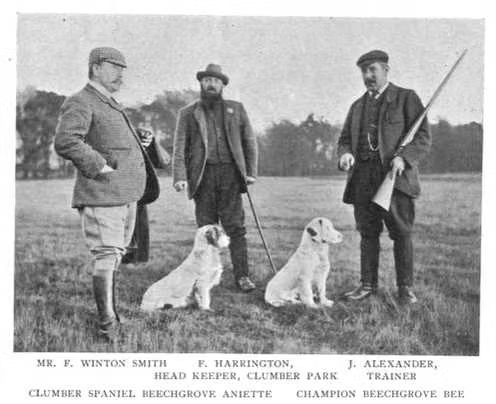
Clumber Park, the Nottinghamshire seat of the Dukes of Newcastle, lent the breed its name. Documentation of the earliest dogs is thin, but the type came together in England during the late 18th and early 19th centuries on the great country estates that kept dogs for shooting game.
Credit for developing and polishing the breed at Clumber Park is often given to William Mansell, gamekeeper to the Duke of Newcastle. His dogs pushed game out of heavy cover and worked near the gun in the slow, quiet fashion that suited driven shoots and rough ground.
When organised dog showing began in Britain, the Clumber was among the breeds tied to that founding moment. The Kennel Club in England recognised it during the 19th century, and it turned up at the early conformation shows. On this side of the Atlantic it counted among the first breeds entered once formal records were set up in North America, and the Canadian Kennel Club lists it in the Sporting group today.
Uncommon then and uncommon now, the Clumber never became a numerous breed. Its registrations stayed modest right through the 20th century, and against the better-known spaniels it remains a rarity. Devoted breed clubs in Canada, England, and elsewhere hold the standard steady and keep breeding programmes going.
Appearance and breed standard
Long, low, and heavily made, the Clumber carries a large head, a coat that is mostly white with lemon or orange markings, and a rolling, deliberate stride.
Rectangular and solid describes the Clumber's silhouette well. A long back sits atop short, thick legs, so the dog's centre of gravity rides low. Topping it off is a large, weighty head with a broad muzzle, a marked brow, and loose skin about the face. Set deep, the eyes look out from under large triangular ears that hang low and lie close against the head.
Strength and mass, not swiftness, are what the breed conveys at a glance. Its long frame and short legs produce a steady, rolling movement that is unmistakable.
| Trait | Detail |
|---|---|
| Height | Roughly 17 to 20 inches (43 to 51 cm) at the shoulder |
| Weight | About 55 to 85 pounds (25 to 39 kg), males heavier than females |
| Coat | Dense, straight, flat coat with feathering on the legs, chest, and ears |
| Colours | Predominantly white with lemon or orange markings |
| Eyes | Deep set, amber to dark, with some visible haw |
Coat and colours
White dominates the coat, a practical colour that kept the dog visible while it worked deep in cover. Only lemon (a pale tan) or orange breaks up the white, usually across the head and near the base of the tail, and freckling may dot the muzzle and legs. Because the coat resists weather, it stands up to cold and damp, but it still needs regular brushing to keep shedding in hand and to stop the feathered areas from matting.
Temperament and personality
Gentle, loving, and composed, the Clumber devotes itself to its family, stays reserved around strangers, and usually rubs along easily with other pets.
Good-natured and quiet, the Clumber Spaniel ties itself tightly to its household. Affection runs strong, and the dog likes to keep close, trailing family members from room to room. Indoors it stays calm, showing little of the fidgeting or over-activity seen in busier breeds.
Newcomers tend to meet reserve rather than nerves or aggression. A Clumber often takes its time warming up, content to observe strangers before it decides to approach. As a watchdog it is unremarkable, and it is not much given to barking.
With children the breed is usually gentle, and it tolerates other dogs and household pets well, all the more so when it has grown up alongside them. That easygoing streak makes the Clumber a natural fit for a settled home. A stubborn moment is not unusual, and patient, consistent handling gets the best from the dog. Given how bonded it becomes, long stretches of solitude do not suit it at all.
| Trait | Rating |
|---|---|
| Affection | 5 |
| Energy | 2 |
| Trainability | 3 |
| Vocalness | 2 |
| Shedding | 4 |
Care and grooming
Regular brushing, moderate daily walks, and careful weight control keep the Clumber well, and it does best living indoors, close to its family.
Grooming
- Run a brush through the coat two or three times weekly to lift loose hair and head off mats in the feathering.
- Inspect and clean those long, low-set ears on a regular basis to hold down the risk of ear infections.
- Since the breed slobbers, wipe the facial folds and the area around the mouth.
- Tidy up the feathering on legs and feet whenever it needs it, and keep the nails short.
- An occasional bath handles a dirty coat; on white fur, dirt turns up quickly, and road salt in winter is worth rinsing off.
Exercise
- One or two moderate walks a day will do; among the spaniels this is one of the lower-energy sorts.
- Build in time to sniff and nose about, which plays to the dog's working instincts.
- Hold off on hard exercise with young puppies so that growing joints are spared.
- Ease back on strenuous effort in hot weather, because a heavy build leaves the breed liable to overheat.
Environment
An indoor dog through and through, the Clumber wants to be wherever its family is. Houses and apartments both work provided the daily walks happen, but leaving the dog on its own for long stretches is a mistake. Cooler conditions sit well with the breed, which is handy across a Canadian winter, though shade and water become essentials once the weather warms. Given the short legs and long back, staircases and slick floors deserve some management to spare the spine and joints strain.
Nutrition and feeding
Serve the Clumber a complete, balanced food in measured portions, mind the amounts closely given its tendency to gain weight, and steer clear of foods toxic to dogs.
A complete and balanced commercial food, matched to the dog's age and how active it is, keeps the Clumber Spaniel in good order. With a breed this prone to putting on weight, portions want measuring and meals want a set schedule, not a bowl left out for grazing. Since daily quantities hinge on weight, age, and activity, treat the numbers below as a rough guide rather than a rule. Fresh water should sit within reach at all times.
| Life stage | Amount per day | Meals per day |
|---|---|---|
| Puppy (2 to 6 months) | Per food label for growth, divided across meals | 3 to 4 |
| Adolescent (6 to 12 months) | About 2 to 3 cups, adjusted to growth | 2 to 3 |
| Adult | About 2 to 3 cups, based on weight and activity | 2 |
| Senior | Adjusted slightly lower to prevent weight gain | 2 |
Treats and supplements
Hold treats to roughly 10 percent of the day's calories at most, and take that amount back out of the meal portions so the dog is not overfed. For a healthy dog, a balanced complete diet generally covers the nutritional bases without anything added. Reach for joint supplements or other extras only when a veterinarian recommends them, all the more so given this breed's heavy frame and touchy joints.
Health and common conditions
Living 10 to 12 years as a rule, the Clumber is prone to hip and joint trouble, eye and ear complaints, and weight gain, so a lean body and preventive care count for a lot.
Ten to twelve years is the usual span for a Clumber Spaniel. A long back and heavy bone tilt the breed toward joint and spinal trouble more than lighter dogs face, and that same build is why keeping weight down matters so much. Conscientious breeders test for inherited conditions, and anyone buying a puppy ought to ask to see the health results on both parents.
| Condition | Signs | Note |
|---|---|---|
| Hip dysplasia | Stiffness, limping, reluctance to rise or climb stairs | Joint malformation; managed with weight control and veterinary care |
| Elbow dysplasia | Front-leg lameness, especially after exercise | Screened by breeders through joint evaluation |
| Ear infections | Head shaking, odour, scratching at the ears | The long, low ears trap moisture; regular cleaning helps |
| Eye problems | Redness, discharge, cloudiness, rubbing at the eyes | Includes entropion and ectropion linked to loose lids |
| Obesity | Excess weight, low stamina, difficulty feeling the ribs | Adds strain to the back and joints; manage diet and exercise |
Preventive care
- Book the yearly veterinary exam and stay on top of the recommended vaccinations.
- Hold the dog at a lean weight so the back and joints are protected.
- Check and clean the ears on a regular basis to fend off infections.
- Look after the teeth with brushing and scheduled dental care to keep gum disease at bay.
- Keep flea, tick, and worm prevention current, and mind that tick season stretches long in many parts of Canada.
Training and socialization
Bright but capable of stubbornness, the Clumber comes along best with patient, consistent, reward-based training and early socialisation.
Behind that steady face is a dog that thinks, one that picks things up readily but can turn independent and drag its heels when it sees no point in the exercise. Heavy-handed methods get you nowhere. What works far better than drilling or pressure is a run of short, consistent sessions built around clear rewards. Strong food motivation can carry a session along nicely, provided you keep an eye on the calorie count so the dog does not tip into overfeeding.
Basics
- Begin socialising early, letting the puppy meet people, other dogs, and unfamiliar places in a calm and upbeat way.
- Lay down the core cues, among them sit, stay, come, and walking without pulling on the lead.
- Hold each session to five or ten minutes and finish on something the dog got right.
- Mark correct behaviour the instant it appears with a small treat or a word of praise.
- Run the same cues in a variety of settings so the dog learns to generalise them.
- Ride out the stubborn streak with patience, and see that everyone in the household stays consistent.
Breeding and raising young
Reaching sexual maturity near 12 months, Clumber Spaniels carry their litters roughly 63 days and tend to whelp somewhere between three and seven puppies.
Somewhere between about 6 and 12 months a female Clumber Spaniel reaches sexual maturity, yet careful breeders hold off, often until around two years, until she is physically grown and has cleared her health screening. Timing of the mating follows her heat cycle, and gestation runs to roughly 63 days from conception.
How many puppies arrive varies, with three to seven a fair average. Born blind and deaf, the puppies lean entirely on their mother through the first weeks. Weaning tends to get underway at about three to four weeks, and the litter stays with the dam and littermates to at least eight weeks so that healthy social development has time to happen. Given how scarce the breed is, a planned litter out of health-tested parents may come with a waiting list.
Breeding is a job for experienced, responsible breeders, the ones who screen for hip, elbow, and eye conditions and who hold to the breed standard.
| Metric | Value |
|---|---|
| Sexual maturity | About 6 to 12 months |
| Recommended first breeding | Around 2 years, after health testing |
| Gestation | About 63 days |
| Average litter size | Roughly 3 to 7 puppies |
| Weaning age | About 3 to 4 weeks, begins gradually |
| Leave for new home | 8 weeks or later |
Registering a Clumber Spaniel in Canada: profile and microchip
A free lifetime United Pet Club record for your Clumber Spaniel, with the microchip registered at no cost and kept current through every move.
Clumber Spaniel registration and microchip registration in Canada
Canadian shelters and vet clinics scan strays at intake as a matter of routine, and the scan helps only when a registry ties your Clumber Spaniel to a phone that still rings. Registering your dog with United Pet Club takes a few minutes, never costs anything, and works whether or not a chip is in place yet. Add the breed, a photo, and your postal code, and the record is live.
The vet implants the chip and leaves the recording part to you. Register the microchip on the free lifetime plan: any brand a Canadian clinic implants is accepted, updates after a change of address are free, and a current record keeps the border paperwork the Canadian Food Inspection Agency asks about from becoming a scramble. Create your free account and finish both in one evening.
How do I register my Clumber Spaniel in Canada?
Open a free United Pet Club account, fill in your Clumber Spaniel's name, breed details, and a photo, and save. The lifetime plan is free, no chip required, and the chip number can be attached after your vet appointment.
How do I register my Clumber Spaniel's microchip?
Add the 15-digit number to your account along with your address, postal code, and phone number. Registration and unlimited updates are free for life, and chips from any manufacturer a Canadian vet uses are accepted.
Is a microchip required for a Clumber Spaniel in Canada?
There is no federal requirement, but several cities fold chips into their licensing bylaws, and travel with the dog goes smoother when the chip is registered. The record, not the implant, is what identifies your Clumber Spaniel.
What does Clumber Spaniel registration cost in Canada?
Nothing, ever. United Pet Club's lifetime plan covers the profile, the chip record, and every update without fees or renewals.
Frequently asked questions
Owners tend to ask about the Clumber's size, temperament, grooming, lifespan, family suitability, and how tough the breed is to track down.
What size can I expect a full-grown Clumber Spaniel to be?
Think medium in stature but heavy in the bone. The majority stand around 17 to 20 inches at the shoulder and tip the scale at roughly 55 to 85 pounds, males outsizing females. Thanks to the long body over short legs, the dog weighs more than its height would suggest.
Does the Clumber Spaniel make a good dog for a family?
It does. Loving, gentle, and composed by nature, the breed generally does well with children and other pets once socialised. It bonds hard with its people and would rather have company, so it fits best where someone is around the house for a good part of the day.
Is a Clumber Spaniel a lot of work to look after?
Not especially hard, though the grooming is a standing commitment. Plan on brushing the coat a few times a week, cleaning the long ears regularly, keeping up with shedding, and wiping away drool. Holding the dog at a lean weight matters too, since the pounds come on easily.
What sort of lifespan does a Clumber Spaniel have?
Somewhere in the 10 to 12 year range is typical. Steady veterinary care, a sensible weight, and an eye on the breed's joints and ears all help the dog see out a full life.
Should I expect a Clumber Spaniel to shed and drool heavily?
On both counts, yes. That thick coat sheds the year round and heavier at certain times, and the breed drools, meal times most of all. Anyone set on a tidy, low-shedding, dry-mouthed dog may find the Clumber a stretch.
How much exercise will a Clumber Spaniel actually need?
A moderate amount suits it well. One or two walks daily, with room to sniff and explore, generally covers it. Calmer than most spaniels and quick to overheat, the Clumber is better kept off hard exercise when the weather is hot.
Is it hard to find a Clumber Spaniel in Canada?
Frankly, yes. This is an uncommon breed, and litters from health-tested parents do not come along often. More often than not, buyers put their name on a waiting list through a breed club or a registered breeder rather than finding puppies ready to go.
From the community
Ask about the Clumber SpanielNo questions about the Clumber Spaniel yet. Be the first to ask.
Browse Dog breeds