

Border Collie
The Border Collie is widely regarded as the most intelligent dog breed, prized for its intense focus and unmatched herding drive.
- Size
- Medium
- Lifespan
- 12–15 years
- Origin
- United Kingdom
- Temperament
- Intelligent
- Standard colors
- Black, White and Grey and 10 more
Characteristics
Coat and grooming
How the Border Collie coat is built, and what that means when you groom it.
- Coat layers
- Double coat
- Coat texture
- Rough
- Coat length
- Medium
- Shedding
- Seasonal shedding
Grooming guidance
Critical: A Border Collie should not be shaved.
The undercoat keeps heat out as well as in, and the outer coat shields the skin from sun and insect bites. Clipping the whole coat off removes both. It often grows back patchy, soft or a different colour, and in some animals the guard hairs never return properly. Brush the undercoat out instead of cutting it off.
Information: A Border Collie drops its undercoat in heavy bursts.
The undercoat comes out in heavy bursts over a few weeks. An undercoat rake, or a bath followed by a proper blow-dry, clears it far faster than daily brushing. Clipping the coat down is not a shortcut for this.
Border Collie colors and patterns
What each club's breed standard says about every Border Collie color and pattern. Point at a ruling to see the club's own wording.
Breed standards describe the Border Collie in Black, White, Grey, Blue, Lilac, Slate, Brown, Seal, Tan, Red, Gold, Lemon and Cream. Standard patterns: Solid, Bicolour, Tricolour, Brindle, Merle, Roan, Sable, Tan point and Reverse brindle.
| Color or pattern | FCI | AKC | UKC | KC | KUSA |
|---|---|---|---|---|---|
| Black | Standard (“variety of colours permissible”) | Standard (“Black”) | Standard (“black”) | Standard (“Black & White”) | Standard (“variety of colours permissible”) |
| White | Standard (“white should never predominate”) | Standard (“White & Black”) | Standard (“may have white trim”) | Standard (“white should never predominate”) | Standard (“white should never predominate”) |
| Grey | Standard (“variety of colours permissible”) | Standard (“all colors or combination of colors and/or markings”) | Standard (“gray”) | Standard (“variety of colours permissible”) | Standard (“variety of colours permissible”) |
| Blue | Standard (“variety of colours permissible”) | Standard (“Blue”) | Standard (“blue merle”) | Standard (“Blue & White”) | Standard (“variety of colours permissible”) |
| Lilac | Standard (“variety of colours permissible”) | Standard (“Lilac”) | Standard (“all colors or combination of colors and/or markings permissible”) | Standard (“Lilac”) | Standard (“variety of colours permissible”) |
| Slate | Standard (“variety of colours permissible”) | Standard (“all colors or combination of colors and/or markings”) | Standard (“all colors or combination of colors and/or markings permissible”) | Standard (“Slate”) | Standard (“variety of colours permissible”) |
| Brown | Standard (“brown or chocolate colour”) | Standard (“all colors or combination of colors and/or markings”) | Standard (“brown dogs”) | Standard (“Brown & White”) | Standard (“brown or chocolate colour”) |
| Seal | Standard (“variety of colours permissible”) | Standard (“Seal”) | Standard (“all colors or combination of colors and/or markings permissible”) | Standard (“Seal”) | Standard (“variety of colours permissible”) |
| Tan | Standard (“variety of colours permissible”) | Standard (“all colors or combination of colors and/or markings”) | Standard (“tan points”) | Standard (“Black White & Tan”) | Standard (“variety of colours permissible”) |
| Red | Standard (“variety of colours permissible”) | Standard (“Red”) | Standard (“red”) | Standard (“Red & White”) | Standard (“variety of colours permissible”) |
| Gold | Standard (“variety of colours permissible”) | Standard (“Gold”) | Standard (“all colors or combination of colors and/or markings permissible”) | Standard (“Gold”) | Standard (“variety of colours permissible”) |
| Lemon | Standard (“variety of colours permissible”) | Standard (“all colors or combination of colors and/or markings”) | Standard (“lemon”) | Standard (“variety of colours permissible”) | Standard (“variety of colours permissible”) |
| Cream | Standard (“variety of colours permissible”) | Standard (“all colors or combination of colors and/or markings”) | Standard (“all colors or combination of colors and/or markings permissible”) | Standard (“Cream”) | Standard (“variety of colours permissible”) |
| Albino | No ruling | No ruling | Disqualifying (“albinism”) | No ruling | No ruling |
| Patterns | |||||
| Solid | Standard (“variety of colours permissible”) | Standard (“all colors or combination of colors and/or markings”) | Standard (“solid color”) | Standard (“variety of colours permissible”) | Standard (“variety of colours permissible”) |
| Bicolour | Standard (“variety of colours permissible”) | Standard (“White & Black”) | Standard (“bi-color”) | Standard (“Black & White”) | Standard (“variety of colours permissible”) |
| Tricolour | Standard (“variety of colours permissible”) | Standard (“White Markings, Tan Points”) | Standard (“tri-color”) | Standard (“Black Tricolour”) | Standard (“variety of colours permissible”) |
| Brindle | Standard (“variety of colours permissible”) | Standard (“Brindle”) | Standard (“all colors or combination of colors and/or markings permissible”) | Standard (“variety of colours permissible”) | Standard (“variety of colours permissible”) |
| Merle | Standard (“variety of colours permissible”) | Standard (“Blue Merle”) | Standard (“merle”) | Standard (“Blue Merle”) | Standard (“variety of colours permissible”) |
| Roan | Standard (“variety of colours permissible”) | Standard (“White Ticked”) | Standard (“white markings may be clear white or ticked to any degree”) | Standard (“variety of colours permissible”) | Standard (“variety of colours permissible”) |
| Sable | Standard (“variety of colours permissible”) | Standard (“Sable”) | Standard (“sable”) | Standard (“Sable”) | Standard (“variety of colours permissible”) |
| Tan point | Standard (“variety of colours permissible”) | Standard (“Tan Points”) | Standard (“may be accompanied by tan points”) | Standard (“Black White & Tan”) | Standard (“variety of colours permissible”) |
| Reverse brindle | Standard (“variety of colours permissible”) | Standard (“Brindle”) | Standard (“all colors or combination of colors and/or markings permissible”) | Standard (“variety of colours permissible”) | Standard (“variety of colours permissible”) |
| Double merle | No ruling | No ruling | No ruling | No ruling | No ruling |


| Color or pattern | FCI | AKC | UKC | KC | KUSA |
|---|---|---|---|---|---|
| Blue | Standard (“except in merles where one or both or part of one or both may be blue”) | Standard (“blue eyes in dogs other than merle are not preferred”) | Standard (“except in merles where one, or both, or a part of one, may be blue”) | Standard (“except in merles where one or both or part of one or both may be blue”) | Standard (“except in merles where one or both or part of one or both may be blue”) |
| Brown | Standard (“brown in colour”) | Standard (“any eye color is acceptable”) | Standard (“brown in color”) | Standard (“brown in colour”) | Standard (“brown in colour”) |
| Patterns | |||||
| Odd-eyed | Standard (“one or both ... may be blue”) | Standard (“any eye color is acceptable”) | Standard (“one, or both ... may be blue”) | Standard (“one or both ... may be blue”) | Standard (“one or both ... may be blue”) |
| Sectoral | Standard (“part of one or both may be blue”) | Standard (“any eye color is acceptable”) | Standard (“a part of one, may be blue”) | Standard (“part of one or both may be blue”) | Standard (“part of one or both may be blue”) |


| Color or pattern | FCI | UKC | KC | KUSA |
|---|---|---|---|---|
| Black | Standard (“black”) | Standard (“black”) | Standard (“nose black”) | Standard (“nose black”) |
| Slate | Standard (“in blues nose should be slate colour”) | Standard (“in blue dogs, where it should be slate”) | Standard (“in blues nose should be slate colour”) | Standard (“in blues, nose should be slate colour”) |
| Liver | Standard (“except in brown or chocolate colour when it may be brown”) | Standard (“in brown dogs where it may be brown”) | Standard (“except in brown or chocolate colour when it may be brown”) | Standard (“except in brown or chocolate colour, when it may be brown”) |
What the rulings mean
- Standard
- Described by the club's breed standard.
- Disqualifying
- The club's breed standard disqualifies an animal of this colour or pattern.
Color changes
How a Border Collie's colors can change over its life.
Blackchanges toRust
Coat · With body condition · can change back
Blackchanges toGrey
Coat · Progressive
Blackchanges toBrown
Coat · In the sun · can change back
Whitechanges toRoan
Coat · With age · from 2 weeks
Tan pointchanges toSaddle
Coat · With age · from 6 to 156 weeks
Bluechanges toDark brown
Eyes · With age · from 2 weeks
Bluechanges toBrown
Eyes · With age · from 2 weeks
Bluechanges toLight brown
Eyes · With age · from 2 weeks
Bluechanges toAmber
Eyes · With age · from 2 weeks
Bluechanges toHazel
Eyes · With age · from 2 weeks
Bluechanges toYellow
Eyes · With age · from 2 weeks
Blackchanges toSnow nose
Nose · With the season · can change back
Blackchanges toPink
Nose · With the season · can change back


Sources
Each ruling comes from the club's published breed standard or color list.
Health
Conditions recorded as more common in the Border Collie than in its species as a whole. A higher risk is not a diagnosis: many never develop any of them, and your vet can say which screening tests are worth doing.
Moderate risk
- Eyes & vision
Collie eye anomaly
Strong evidenceHereditaryInheritance: Autosomal recessive
This content is for educational purposes and is not a substitute for professional veterinary advice. If you are worried about your pet, contact your veterinarian.
All health conditionsMeet some of our Border Collie
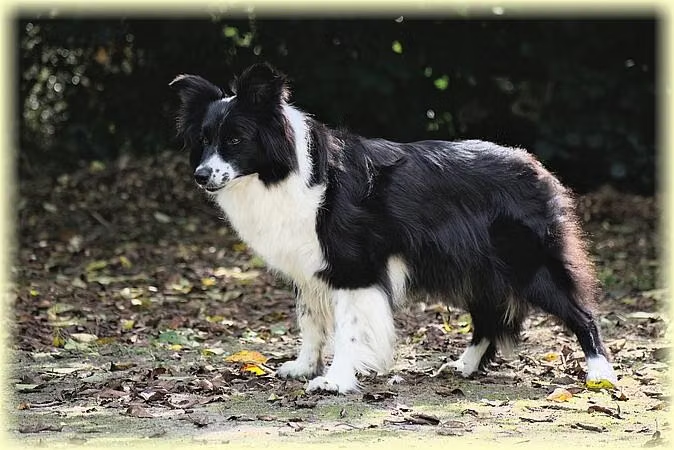
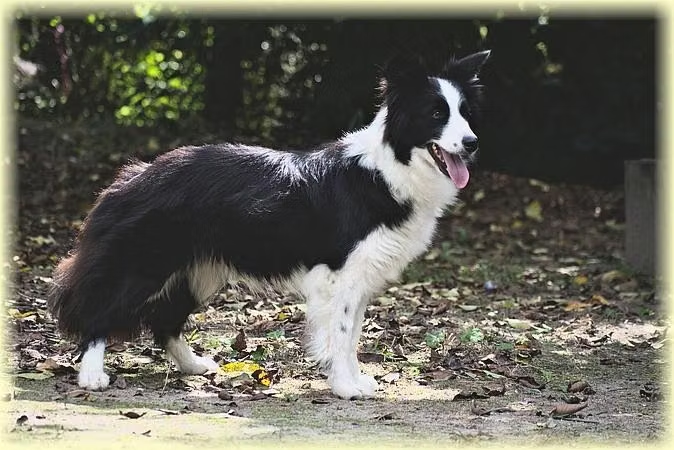
A few of the Border Collie profiles members have added to United Pet Club.






About the Border Collie
The Border Collie is a medium-sized herding dog from the United Kingdom, widely considered the most intelligent dog breed, known for intense focus and a strong work drive.
The Border Collie is a medium-sized working dog developed along the border country between Scotland and England to herd sheep. It is built for stamina and quick direction changes rather than bulk, with a low, crouching gait and a fixed stare known as the eye that it uses to move livestock.
The breed is commonly regarded as the most trainable and problem-solving dog kept as a companion. Adults typically weigh 12 to 20 kg and stand 46 to 56 cm at the shoulder, with a working life that pairs high energy with close attention to a handler. Most live 12 to 15 years.
A Border Collie needs a job. Without daily physical exercise and mental work, the same drive that makes it excel at herding and dog sports turns into pacing, barking, and habits such as chasing cars, bikes, or children.
| Attribute | Detail |
|---|---|
| Origin | United Kingdom (Scottish and English border) |
| Size | Medium (12 to 20 kg) |
| Lifespan | 12 to 15 years |
| Group / role | Herding dog |
| Good with | Active families, older children, experienced owners; supervise around small pets |
Who it suits
This breed fits owners who want an active partner and can commit time every day to exercise and training. It does well in homes that take part in herding, agility, obedience, or flyball, or that hike and run regularly. It is a poor match for people who are away long hours, want a low-key pet, or live without a safe outlet for its energy. First-time owners can succeed with the breed, but only with steady structure and a willingness to keep the dog occupied.
History and origin
The Border Collie descends from herding dogs of the Scottish and English border region and was shaped through the 19th and early 20th centuries by sheepdog trials that selected for working ability over appearance.
Herding dogs have worked sheep in Britain for centuries, and the Border Collie traces to the collie-type dogs of the hill country along the Scotland and England border. The word collie is an old term for the local working sheepdogs of that region. Early breeders selected dogs for their ability to gather and move flocks across open ground rather than for a set look.
Organised sheepdog trials, which began in Wales in 1873, gave breeders a shared way to test and compare working ability. Dogs that placed well were widely used at stud, and this competition steadily refined the gathering style, the crouching approach, and the controlling eye that mark the breed today.
A dog named Old Hemp, born in 1893 in Northumberland, is generally recognised as a key foundation sire. He worked stock quietly and effectively, and a large share of modern Border Collies trace back to him. His influence helped fix the calm, intense working method now associated with the breed.
The name Border Collie came into common use in the early 20th century to separate these working dogs from other collie types. The International Sheep Dog Society, formed in 1906, kept working records that supported the breed. Kennel club recognition for the show ring came much later, and many working lines are still bred primarily for ability on stock. In Canada, the Canadian Kennel Club (CKC) recognises the Border Collie in the Herding Group.
Appearance and breed standard
The Border Collie is a medium, athletic dog of moderate build with a double coat in two main lengths, most often seen in black and white but available in many colour patterns.
The Border Collie is balanced and athletic, slightly longer than tall, with a build made for speed, endurance, and sudden turns. The head is moderate with a defined stop, the ears are medium and may be erect or semi-erect, and the expression is alert and intent. The tail is moderately long, set low, and carried with an upward swirl at the tip when the dog is excited. Movement is smooth and tireless, often dropping into a low, stealthy crouch when the dog is working or focused.
| Trait | Standard |
|---|---|
| Height | Males 48 to 56 cm; females 46 to 53 cm at the shoulder |
| Weight | Males 14 to 20 kg; females 12 to 19 kg |
| Coat | Double coat in two types: rough (medium to long) and smooth (short) |
| Colours | Black and white, red and white, tricolour, blue merle, red merle, sable, and solid colours |
| Eyes | Oval, usually brown; merles may have blue or partly blue eyes |
Coat and colours
Both coat types have a weather-resistant outer layer and a soft undercoat that handles cold and wet field conditions well. The rough coat carries feathering on the legs, chest, and tail, while the smooth coat is short and coarser all over. Black and white is the most familiar pattern, but the breed appears in red and white, tricolour, sable, and merle patterns. Working lines value coat function and colour far less than herding ability, so a wide range of marking patterns is normal and acceptable.
Temperament and personality
The Border Collie is intelligent, intensely focused, and energetic, deeply bonded to its handler and eager to work, but it can become reactive or destructive without enough mental and physical outlet.
The Border Collie is alert, sensitive, and tightly bonded to the people it works with. It reads body language and routine quickly and often anticipates what comes next, which is why it learns commands in very few repetitions. The flip side is that it also learns unwanted habits just as fast.
With family the breed is affectionate and devoted, usually attaching strongly to one or two people. It tends to be reserved rather than openly friendly with strangers, and early socialisation helps prevent shyness or wariness. The strong herding instinct can show up as nipping at heels or circling people, especially children, so households with young kids need supervision and training to redirect that drive.
Around other dogs the Border Collie is generally sociable, though its staring and stalking can be misread by dogs that do not herd. With cats and small pets the chase and herd instinct can be strong, so introductions should be careful and managed. A bored Border Collie is a problem dog: under-stimulation leads to obsessive behaviours such as shadow chasing, spinning, fence running, and constant barking.
| Trait | Rating |
|---|---|
| Affection | 4 |
| Energy | 5 |
| Trainability | 5 |
| Vocalness | 4 |
| Shedding | 3 |
Care and daily needs
The Border Collie needs moderate coat care and, above all, heavy daily exercise paired with mental work; it is a demanding breed that does poorly when left idle.
Grooming
- Brush the rough coat two to three times a week, and more during the twice-yearly heavy shed.
- Brush the smooth coat about once a week.
- Bathe only when needed, roughly every two to three months, to preserve the coat's natural oils.
- Check and clean ears, trim nails every few weeks, and brush teeth several times a week.
- Inspect the coat and feet for burrs, grass seeds, and mats after time in fields or brush.
Exercise
- Provide at least 1 to 2 hours of vigorous activity per day, split into sessions.
- Combine running, fetch, and off-lead exercise in a safe area with structured work.
- Add a job or sport such as herding, agility, obedience, flyball, or scent work.
- Use puzzle feeders, trick training, and find-it games to tire the mind, not just the body.
- Avoid relying on repetitive ball throwing alone, which can build obsessive chasing.
Canada's climate calls for extra planning. Winter temperatures across much of the country can drop well below freezing, and while the Border Collie's double coat provides good insulation, icy conditions and road salt can irritate paw pads. Rinsing feet after walks on salted roads and reducing outdoor session length in extreme cold are sensible precautions. In summer, the hottest part of the day is best avoided; early morning or evening exercise keeps the dog comfortable when temperatures climb.
Environment
The Border Collie suits a home with a securely fenced yard and access to open space for running, though it can live in smaller homes if exercise needs are fully met. It tolerates cold and wet weather well thanks to the double coat but needs shade and water in heat. The breed is not suited to long hours alone or to apartment life without a serious daily exercise plan.
Nutrition and feeding
The Border Collie does well on a complete diet matched to its high activity level, fed in measured meals to support energy needs without overfeeding.
Feed a complete, balanced dog food suited to the dog's age, size, and activity level. Active and working Border Collies burn a lot of energy and may need more calories or a performance formula, while less active pets need careful portions to avoid weight gain. Always provide fresh water, and increase intake on heavy work days. Adjust amounts to keep the dog lean, with ribs easy to feel but not visible.
| Life stage | Amount per day | Meals |
|---|---|---|
| Puppy (2 to 6 months) | Per product guide for growth, divided through the day | 3 to 4 |
| Junior (6 to 12 months) | Roughly 200 to 320 g of dry food | 2 to 3 |
| Adult (1 to 7 years) | Roughly 150 to 300 g of dry food by weight and activity | 2 |
| Senior (7 years and older) | Slightly reduced calories, adjust to weight | 2 |
Treats and supplements
Keep treats to about 10 percent of daily calories and use small, low-calorie rewards for the heavy training this breed needs. Healthy options include small pieces of plain cooked meat or commercial training treats. Most Border Collies on a complete diet need no supplements; discuss joint support or omega-3 oils with a veterinarian for active or older dogs rather than adding them by default.
Health and common conditions
The Border Collie is generally healthy with a lifespan of 12 to 15 years, but the breed carries several inherited eye, hip, and neurological conditions that responsible breeders screen for.
The Border Collie is a hardy, long-lived breed, with most dogs reaching 12 to 15 years. As a population it has fewer exaggerated physical features than many breeds, but it does carry a number of inherited disorders. Buying from breeders who health-test their stock greatly lowers the risk of the most serious conditions. Keeping the dog at a healthy weight protects the joints over a long working life.
| Condition | Signs | Note |
|---|---|---|
| Collie Eye Anomaly (CEA) | Often none; vision problems in severe cases | Inherited; detectable by DNA test and eye exam |
| Hip dysplasia | Stiffness, limping, trouble rising | Reduce risk with hip scoring of parents and lean weight |
| Epilepsy | Seizures, often starting in young adults | Manageable with veterinary care; avoid breeding affected lines |
| MDR1 drug sensitivity | Adverse reactions to certain common drugs | DNA test guides safe medication choices |
| Progressive retinal atrophy | Night blindness progressing to vision loss | DNA test available; not painful |
Preventive care
- Keep core and recommended vaccinations up to date.
- Use year-round parasite control for fleas, ticks, and worms. In many parts of Canada, tick activity extends well into autumn; year-round prevention is the norm in milder regions such as southern British Columbia and Ontario.
- Schedule annual veterinary checks, moving to twice yearly for seniors.
- Maintain dental care with regular brushing and professional cleaning as advised.
- Choose puppies from parents with eye, hip, and relevant DNA test results. The CKC recommends health testing consistent with breed-club guidelines.
Training and intelligence
The Border Collie is the most trainable dog breed and learns very fast, which makes positive, consistent, and mentally engaging training both easy to start and important to get right.
Few breeds learn as quickly as the Border Collie, which often picks up new commands in five repetitions or fewer and obeys reliably on the first cue. That speed is an advantage and a responsibility, because the dog learns bad habits as readily as good ones and will invent its own activities when left without direction. Training should be short, varied, and rewarding, and it should continue throughout the dog's life to keep the mind occupied. The breed is sensitive, so harsh corrections tend to cause anxiety or shutdown rather than better behaviour.
Basics
- Start socialisation and gentle handling early, exposing the puppy to people, dogs, and everyday sights and sounds.
- Teach core cues such as name response, sit, down, recall, and a settle or place command.
- Add an impulse-control cue like wait or leave it to manage the strong chase drive.
- Redirect herding behaviour such as nipping onto toys and tasks rather than punishing it.
- Progress to a sport or job (agility, obedience, herding, scent work) to channel the energy productively.
Breeding and raising puppies
The Border Collie reaches breeding maturity at around two years, carries an average litter of six to eight puppies after a gestation near 63 days, and benefits from careful health testing of both parents.
Responsible breeding of the Border Collie focuses on temperament, working ability, and health rather than appearance alone. Breeders should wait until both parents are physically and mentally mature, generally around two years of age, and screen them for the eye, hip, and DNA-tested conditions known in the breed before mating. Females are usually bred on a later season rather than their first.
Gestation lasts about 63 days. Litters average six to eight puppies, though smaller and larger litters occur. Puppies are born blind and deaf, with eyes opening near two weeks and weaning beginning around four weeks. The mother handles most early care, while the breeder provides a warm, clean whelping area and monitors weight gain.
Early weeks shape adult behaviour in this sensitive, intelligent breed. Gentle handling, gradual exposure to household sights and sounds, and early problem-solving play build confident, stable adults. Puppies usually go to new homes at around eight weeks, by which point socialisation should be well underway.
In Canada, breeders registered with the CKC follow the club's code of ethics, which includes health testing requirements and discourages early placement. Prospective owners can search the CKC breeder directory and should ask for documentation of health clearances on both parents before committing to a puppy.
| Metric | Value |
|---|---|
| Breeding maturity | About 2 years |
| Gestation | Around 63 days |
| Average litter size | 6 to 8 puppies |
| Eyes open | About 2 weeks |
| Weaning | Around 4 to 7 weeks |
| Ready for new home | About 8 weeks |
Registering a Border Collie in Canada: profile and microchip
A free lifetime United Pet Club record for your Border Collie, with the microchip registered at no cost and kept current through every move.
Border Collie registration and microchip registration in Canada
A Border Collie with a current record gets home; one without waits out a stray hold. That is the whole argument for registering your dog with United Pet Club: a free lifetime profile carrying your name, your postal code, and a photo, ready for whichever clinic or shelter runs the scan.
Sixty seconds with a scanner reads the chip; whether your Border Collie gets home depends on the record behind the number. Microchip registration with United Pet Club is free for life, takes every brand sold in Canada, and keeps the record searchable on both sides of the border. Sign up free and give the number somewhere to point.
How do I register my Border Collie in Canada?
Open a free United Pet Club account, fill in your Border Collie's name, breed details, and a photo, and save. The lifetime plan is free, no chip required, and the chip number can be attached after your vet appointment.
How do I register my Border Collie's microchip?
Add the 15-digit number to your account along with your address, postal code, and phone number. Registration and unlimited updates are free for life, and chips from any manufacturer a Canadian vet uses are accepted.
Is a microchip required for a Border Collie in Canada?
There is no federal requirement, but several cities fold chips into their licensing bylaws, and travel with the dog goes smoother when the chip is registered. The record, not the implant, is what identifies your Border Collie.
What does Border Collie registration cost in Canada?
Nothing, ever. United Pet Club's lifetime plan covers the profile, the chip record, and every update without fees or renewals.
Frequently asked questions
Common questions about Border Collie size, temperament, care difficulty, lifespan, suitability, and availability.
How big does a Border Collie get?
It is a medium breed. Adults stand 46 to 56 cm at the shoulder and usually weigh 12 to 20 kg, with males slightly larger than females.
What is the Border Collie's temperament like?
It is intelligent, focused, energetic, and devoted to its handler. It is affectionate with family, often reserved with strangers, and carries a strong herding drive that needs an outlet.
Is the Border Collie hard to care for?
It is demanding. Grooming is moderate, but the breed needs one to two hours of exercise daily plus mental work. It is not a low-maintenance pet and does poorly when left idle or alone for long periods.
How long do Border Collies live?
Most live 12 to 15 years. Health testing of parents, a healthy weight, and routine veterinary care support a long life.
Is the Border Collie a good family dog?
It suits active families, ideally with older children, who can meet its exercise and training needs. Supervision is wise around young children and small pets because of its herding and chase instinct.
Are Border Collies easy to train?
Yes. The breed is widely considered the most trainable dog and learns very fast with positive, consistent methods. That same intelligence means it needs ongoing mental work to stay well behaved.
How available is the breed in Canada?
Border Collies are common and widely available from working and show breeders registered with the CKC, and they also appear in rescue organisations across the country. Choose breeders who health-test for eye, hip, and DNA-tested conditions and who follow CKC guidelines.
From the community
Ask about the Border CollieNo questions about the Border Collie yet. Be the first to ask.
Browse Dog breeds