

American Foxhound
The American Foxhound is a good-natured, easygoing pack hound known for its stamina and sweet, musical voice.
- Size
- Large
- Lifespan
- 11–13 years
- Origin
- United States
- Temperament
- Good-natured
- Standard colors
- Black, White and Blue and 4 more
Characteristics
Coat and grooming
How the American Foxhound coat is built, and what that means when you groom it.
- Coat layers
- Single coat
- Coat texture
- Smooth
- Coat length
- Short
- Shedding
- Moderate shedding
American Foxhound colors and patterns
What each club's breed standard says about every American Foxhound color and pattern. Point at a ruling to see the club's own wording.
Breed standards describe the American Foxhound in Black, White, Blue, Brown, Tan, Red and Cream. Standard patterns: Solid, Bicolour, Tricolour and Tan point.
| Color or pattern | FCI | AKC | UKC |
|---|---|---|---|
| Black | Standard (“Any colour”) | Standard (“Black White & Tan”) | Standard (“Any color is acceptable”) |
| White | Standard (“Any colour”) | Standard (“Black White & Tan”) | Standard (“Any color is acceptable”) |
| Blue | Standard (“Any colour”) | Standard (“Blue”) | Standard (“Any color is acceptable”) |
| Brown | Standard (“Any colour”) | Standard (“Black Brown & White”) | Standard (“Any color is acceptable”) |
| Tan | Standard (“Any colour”) | Standard (“Black White & Tan”) | Standard (“Any color is acceptable”) |
| Red | Standard (“Any colour”) | Standard (“Red”) | Standard (“Any color is acceptable”) |
| Cream | Standard (“Any colour”) | Standard (“White & Cream”) | Standard (“Any color is acceptable”) |
| Albino | No ruling | No ruling | Disqualifying (“Albinism”) |
| Patterns | |||
| Solid | Standard (“Any colour”) | Standard (“White”) | Standard (“Any color is acceptable”) |
| Bicolour | Standard (“Any colour”) | Standard (“White & Red”) | Standard (“Any color is acceptable”) |
| Tricolour | Standard (“Any colour”) | Standard (“Black White & Tan”) | Standard (“Any color is acceptable”) |
| Tan point | Standard (“Any colour”) | Standard (“Black White & Tan”) | Standard (“Any color is acceptable”) |

%22%3E%3Cpath%20d%3D%22M0%2023L9.5%2020.4L14%2025.4L19%2029.6Q21%2035%2023.5%2035.5Q36%2033%2050%2036L56%2040V64H0Z%22%20fill%3D%22%23F5F5F0%22%2F%3E%3C%2Fg%3E%3Cuse%20href%3D%22%23s%22%20fill%3D%22none%22%20stroke%3D%22%233B2A20%22%20stroke-opacity%3D%220.6%22%20stroke-width%3D%221%22%20stroke-linejoin%3D%22round%22%2F%3E%3Cellipse%20cx%3D%223.2%22%20cy%3D%2221.7%22%20rx%3D%221.3%22%20ry%3D%221.2%22%20fill%3D%22%231C1C1C%22%2F%3E%3Ccircle%20cx%3D%2210.8%22%20cy%3D%2219.3%22%20r%3D%221.1%22%20fill%3D%22%231C1C1C%22%2F%3E%3C%2Fsvg%3E)
%22%3E%3Cellipse%20cx%3D%2212.6%22%20cy%3D%2222.6%22%20rx%3D%223.2%22%20ry%3D%222.8%22%20fill%3D%22%23847865%22%2F%3E%3Ccircle%20cx%3D%2212%22%20cy%3D%2217.2%22%20r%3D%221.25%22%20fill%3D%22%23847865%22%2F%3E%3Crect%20x%3D%220%22%20y%3D%2247%22%20width%3D%2264%22%20height%3D%2217%22%20fill%3D%22%23847865%22%2F%3E%3Cpath%20d%3D%22M8.6%2018L12%2015.8L5.8%2021.8L3.2%2021.4Z%22%20fill%3D%22%23F5F5F0%22%2F%3E%3Cpath%20d%3D%22M1.5%2021.2L9%2018.6L12.6%2021L12.2%2026.2L3.5%2024.4Z%22%20fill%3D%22%23F5F5F0%22%2F%3E%3Cpath%20d%3D%22M14%2024.5L18.5%2026Q19.5%2033%2023%2039L18%2040Q17%2033%2014%2028Z%22%20fill%3D%22%23F5F5F0%22%2F%3E%3Cpath%20d%3D%22M21%2035.5Q35%2033.5%2048%2036.5V42H21Z%22%20fill%3D%22%23F5F5F0%22%2F%3E%3Crect%20x%3D%220%22%20y%3D%2252.5%22%20width%3D%2264%22%20height%3D%2212%22%20fill%3D%22%23F5F5F0%22%2F%3E%3Ccircle%20cx%3D%2258.4%22%20cy%3D%2212.8%22%20r%3D%222.6%22%20fill%3D%22%23F5F5F0%22%2F%3E%3C%2Fg%3E%3Cuse%20href%3D%22%23s%22%20fill%3D%22none%22%20stroke%3D%22%233B2A20%22%20stroke-opacity%3D%220.6%22%20stroke-width%3D%221%22%20stroke-linejoin%3D%22round%22%2F%3E%3Cellipse%20cx%3D%223.2%22%20cy%3D%2221.7%22%20rx%3D%221.3%22%20ry%3D%221.2%22%20fill%3D%22%231C1C1C%22%2F%3E%3Ccircle%20cx%3D%2210.8%22%20cy%3D%2219.3%22%20r%3D%221.1%22%20fill%3D%22%231C1C1C%22%2F%3E%3C%2Fsvg%3E)
%22%3E%3Ccircle%20cx%3D%2212%22%20cy%3D%2217.2%22%20r%3D%221.25%22%20fill%3D%22%23C4996A%22%2F%3E%3Cpath%20d%3D%22M1.5%2021.2L9%2018.6L12.6%2021L12.2%2026.2L3.5%2024.4Z%22%20fill%3D%22%23C4996A%22%2F%3E%3Cpath%20d%3D%22M10%2026L14.5%2026.4L18.2%2029.2L13.5%2029.8Z%22%20fill%3D%22%23C4996A%22%2F%3E%3Cellipse%20cx%3D%2221.2%22%20cy%3D%2230.6%22%20rx%3D%221.6%22%20ry%3D%222.3%22%20fill%3D%22%23C4996A%22%2F%3E%3Crect%20x%3D%220%22%20y%3D%2247%22%20width%3D%2264%22%20height%3D%2217%22%20fill%3D%22%23C4996A%22%2F%3E%3Cpath%20d%3D%22M51.5%2024.5L55%2027L54.2%2032L50.5%2028.5Z%22%20fill%3D%22%23C4996A%22%2F%3E%3Cpath%20d%3D%22M45%2038.5L48%2039L48.5%2047L45.5%2047Z%22%20fill%3D%22%23C4996A%22%2F%3E%3C%2Fg%3E%3Cuse%20href%3D%22%23s%22%20fill%3D%22none%22%20stroke%3D%22%233B2A20%22%20stroke-opacity%3D%220.6%22%20stroke-width%3D%221%22%20stroke-linejoin%3D%22round%22%2F%3E%3Cellipse%20cx%3D%223.2%22%20cy%3D%2221.7%22%20rx%3D%221.3%22%20ry%3D%221.2%22%20fill%3D%22%231C1C1C%22%2F%3E%3Ccircle%20cx%3D%2210.8%22%20cy%3D%2219.3%22%20r%3D%221.1%22%20fill%3D%22%231C1C1C%22%2F%3E%3C%2Fsvg%3E)
What the rulings mean
- Standard
- Described by the club's breed standard.
- Disqualifying
- The club's breed standard disqualifies an animal of this colour or pattern.
Color changes
How a American Foxhound's colors can change over its life.
Blackchanges toRust
Coat · With body condition · can change back
Blackchanges toGrey
Coat · Progressive
Blackchanges toBrown
Coat · In the sun · can change back
Whitechanges toRoan
Coat · With age · from 2 weeks
Tan pointchanges toSaddle
Coat · With age · from 6 to 156 weeks
%22%3E%3Cg%20fill%3D%22none%22%20stroke%3D%22%23F5F5F0%22%20stroke-width%3D%221.15%22%20stroke-linecap%3D%22round%22%20stroke-linejoin%3D%22round%22%3E%3Cpath%20d%3D%22M28.6%2025h.1M51.3%2028.8h.1M34.7%2024.3h.1M34.2%2041.6h.1M51%2044.2h.1M55.9%2024.7h.1M27.5%2026.3h.1M18.5%2028.6h.1M25.2%2028.9h.1M24.2%2019.3h.1M20.6%2017.6h.1M34.1%2030.6h.1M57.3%2023.3h.1M23.5%2030.7h.1M26.5%2023.1h.1M40%2031.5h.1M51.7%2038.6h.1M20.2%2022.1h.1M40.4%2037.8h.1M35%2043.1h.1M20.6%2031.7h.1M27.8%2031.9h.1M17.2%2021.1h.1M38.1%2037.7h.1M25.3%2040.5h.1M32%2029.3h.1M41.6%2039.5h.1M23.6%2024h.1M26.4%2018.6h.1M30.3%2031.9h.1M31.2%2035.2h.1M36.5%2043.7h.1M35.2%2026.3h.1M55.6%2019.1h.1M22.4%2036.8h.1M39.2%2020h.1M49.5%2039.1h.1M33.6%2033.5h.1M36.4%2032.4h.1M56.3%2042.4h.1M54.8%2031.2h.1M36.9%2023.2h.1M52.7%2019.1h.1M21.5%2033.8h.1M48.6%2028h.1M36.6%2017.5h.1M45.6%2031.3h.1M37.9%2030.5h.1M17%2031.8h.1M21.1%2043.1h.1M55.7%2021.1h.1M30.8%2041.9h.1M57.4%2038.4h.1M54.8%2026.9h.1M29.1%2017.5h.1M24.3%2037.7h.1M26%2032h.1M39.3%2022.8h.1M53.5%2029h.1M53.3%2023.3h.1M20%2038.4h.1M28.3%2044.7h.1M28.6%2039.8h.1M51.9%2041.1h.1M52.3%2033.7h.1M19.6%2042.2h.1M19%2033h.1M47.8%2021.7h.1M45.7%2024.8h.1M24.6%2035.5h.1M29.8%2036.8h.1M50.7%2032h.1M29.5%2043.5h.1M28.2%2041.5h.1M47.4%2034.8h.1M25.4%2033.7h.1M50.2%2041.2h.1M27.7%2029.5h.1M21.5%2024.8h.1M55.5%2017.5h.1M41.2%2044.3h.1M39.2%2018.4h.1M41.1%2042.5h.1M54.7%2035.3h.1M42.8%2034.5h.1M30.1%2023h.1M42.6%2025.1h.1M32.9%2024.4h.1M42.4%2032.4h.1M49.7%2022.2h.1M49.1%2043.1h.1M38%2035.2h.1M47.7%2043.8h.1M43.1%2022.4h.1M22.4%2040.4h.1M44.4%2019.8h.1M53.3%2040.1h.1M20.7%2029.3h.1M55.6%2043.9h.1M17.6%2039.2h.1M41.7%2028.9h.1M44.1%2036.3h.1M24.3%2043.6h.1M26.4%2038.1h.1M30.3%2029.2h.1M31.5%2030.8h.1M32.1%2023h.1M18.3%2040.9h.1M48%2033.4h.1M36.4%2038.7h.1M31.9%2020.8h.1M32.6%2026.2h.1M22%2031.2h.1M53.4%2021.7h.1M41.9%2017.7h.1M53.3%2037.3h.1M47.7%2040.3h.1M54.4%2033.7h.1M33.6%2037.5h.1M25.3%2017.2h.1M37.6%2019.7h.1M31.6%2019h.1M29.2%2019.6h.1M50.7%2027.3h.1M22%2022.1h.1M31%2037.8h.1M56.5%2026.6h.1M34.7%2039.5h.1M56.5%2040.8h.1M47.6%2038h.1M48.6%2026.1h.1M49.7%2034.2h.1M45.4%2027.4h.1M22.6%2038.9h.1M56.5%2035.3h.1M35.1%2021h.1M41.9%2020.1h.1M37.6%2040h.1M32.6%2044.4h.1M37.9%2025.2h.1M26.6%2043h.1M18.9%2036.7h.1M47.2%2028.9h.1M30.5%2026.2h.1M17.4%2027.3h.1M47.1%2017.2h.1M22.3%2044.3h.1M32.5%2042.4h.1M23.6%2025.7h.1M31.4%2024.9h.1%22%2F%3E%3Cpath%20d%3D%22M26%2020.9h.1M41.2%2023.8h.1M39.9%2026.4h.1M28.5%2033.4h.1M42.8%2043.8h.1M17.6%2034.3h.1M34%2017.1h.1M31.2%2017.2h.1M46.5%2036.1h.1M25.1%2022.1h.1M50.3%2023.7h.1M20.2%2026.6h.1M20.8%2020.4h.1M50.9%2017.3h.1M49.5%2020.2h.1M52.9%2044.1h.1M23.9%2017.8h.1M43.2%2028.1h.1M57.6%2030h.1M52%2025.6h.1M19.2%2019.1h.1M19.5%2024.4h.1M32.8%2040.1h.1M36.1%2027.7h.1M39.6%2029.5h.1M38.4%2041.5h.1M47.9%2019.4h.1M49.1%2031.7h.1M55.9%2036.9h.1M29.2%2027.2h.1M46%2043.5h.1M44.6%2028.8h.1M47.5%2031.5h.1M22.8%2020h.1M27.6%2017.1h.1M43.1%2018.6h.1M54.3%2020h.1M57.2%2033.8h.1M44.5%2043.8h.1M27.1%2035.5h.1M45.3%2041.8h.1M56.7%2028.8h.1M36.7%2021.4h.1M43.3%2042.3h.1M17.3%2022.9h.1M32.7%2035.5h.1M30.5%2039.8h.1M29.1%2021.2h.1M34.5%2018.8h.1M25.8%2027h.1%22%2F%3E%3C%2Fg%3E%3Cpath%20d%3D%22M56.3%2038.4l0%201.2M40%2027.2l-0.3%201.3M32.6%2043.6l-0.4%201.5M29%2023.3l0.8%201.5M55.1%2044l0.4%201.1M47.5%2022.5l-0.2%201.6M42.9%2038.6l0.7%201.2M35.2%2041.8l-0.5%201.7M26.9%2040l-0.1%201.2M41%2042.8l-0.1%201.6M18.4%2021.2l0.7%201.3M49.4%2019.3l-0.5%201.4M50.1%2041.7l0%201.8M28.2%2041.8l-0.6%201.2M55.5%2027.1l0.2%201.2M44.7%2019.3l0.5%201.7M48.6%2020.5l-0.8%201.4M43.7%2039.6l0.3%201.1M22.1%2033.8l-0.6%201.6M50.1%2038.1l-0.5%201.3M51.8%2044.1l-0.1%201.8M39%2017.5l0%201.4M30.2%2026.7l0.2%201.4M25.8%2031.2l0.2%201.6M29.6%2043.5l0.1%201M43.7%2018.3l0.1%201.5M29.6%2018.2l0.3%201.6M24.4%2017.6l0.3%201.1M22%2028.2l-0.6%201.6M25.9%2043.3l-0.3%201.4M22.2%2024.3l0.3%201.3M47.3%2029.2l-0.2%201.4M21.8%2033.2l0.5%200.9M32.9%2037l0.4%201M40%2029.9l0.8%201.4M17.4%2038.3l0.2%201.3M31%2039.2l0%201.2M37.3%2033.7l0.3%201.5M48.1%2040.5l0%201.6M33.9%2031.2l0.1%201.2M29.8%2035.2l-0.4%201M25.1%2037.3l-0.2%201.5M30.2%2039.8l0.5%201M44.6%2034.8l0.4%200.9M55.3%2034.2l0%201.7M50.6%2017.9l0.4%201M30.2%2034.9l-0.4%201.4M19.5%2035.7l-0.5%201.7M40.7%2028.7l0.8%201.4M23.3%2029l-0.4%201.4M17%2040.5l-0.2%201M48.4%2023.2l-0.3%201M37.3%2025.1l-0.4%201.3M23%2021.4l-0.4%201.3M20.4%2017.2l-0.1%201.3M42.3%2020.4l0.6%201.4M41%2031.8l0.6%201.2M45.4%2034.3l-0.1%201.2M32.5%2018l0%201.3M46.2%2021.6l0.1%201.4M30.5%2022.3l0.5%201.1M58%2044.6l0.3%201.5M57.1%2033.9l0.8%201.4M18.3%2042.6l0.3%201M40.5%2035.1l-0.6%201.4M38.8%2044.3l-0.3%201.1%22%20fill%3D%22none%22%20stroke%3D%22%23F5F5F0%22%20stroke-width%3D%220.8%22%20stroke-linecap%3D%22round%22%20stroke-linejoin%3D%22round%22%2F%3E%3C%2Fg%3E%3Cuse%20href%3D%22%23s%22%20fill%3D%22none%22%20stroke%3D%22%233B2A20%22%20stroke-opacity%3D%220.6%22%20stroke-width%3D%221%22%20stroke-linejoin%3D%22round%22%2F%3E%3Crect%20x%3D%2220%22%20y%3D%2258%22%20width%3D%223.6%22%20height%3D%222%22%20fill%3D%22%234A4038%22%2F%3E%3Crect%20x%3D%2226%22%20y%3D%2258%22%20width%3D%223.6%22%20height%3D%222%22%20fill%3D%22%234A4038%22%2F%3E%3Crect%20x%3D%2244%22%20y%3D%2258%22%20width%3D%223.6%22%20height%3D%222%22%20fill%3D%22%234A4038%22%2F%3E%3Crect%20x%3D%2250%22%20y%3D%2258%22%20width%3D%223.6%22%20height%3D%222%22%20fill%3D%22%234A4038%22%2F%3E%3Ccircle%20cx%3D%229.5%22%20cy%3D%2211.5%22%20r%3D%221.1%22%20fill%3D%22%231C1C1C%22%2F%3E%3C%2Fsvg%3E)
%22%3E%3Cpath%20d%3D%22M22.5%2018.5Q24%2021%2025%2021.5L47%2022.5Q50%2022.5%2051.5%2023.5L54%2026Q55%2032%2053%2034Q46%2031.5%2038%2033Q30%2034.5%2025.5%2032Q22.5%2026%2022.5%2018.5Z%22%20fill%3D%22%231C1C1C%22%2F%3E%3Cpath%20d%3D%22M51%2024L56%209L63%209L61%2019L54.5%2028Z%22%20fill%3D%22%231C1C1C%22%2F%3E%3Cpath%20d%3D%22M2%2021.2L7.5%2019.2L8.5%2023.6L3.5%2024.2Z%22%20fill%3D%22%231C1C1C%22%20fill-opacity%3D%220.85%22%2F%3E%3C%2Fg%3E%3Cuse%20href%3D%22%23s%22%20fill%3D%22none%22%20stroke%3D%22%233B2A20%22%20stroke-opacity%3D%220.6%22%20stroke-width%3D%221%22%20stroke-linejoin%3D%22round%22%2F%3E%3Cellipse%20cx%3D%223.2%22%20cy%3D%2221.7%22%20rx%3D%221.3%22%20ry%3D%221.2%22%20fill%3D%22%231C1C1C%22%2F%3E%3Ccircle%20cx%3D%2210.8%22%20cy%3D%2219.3%22%20r%3D%221.1%22%20fill%3D%22%231C1C1C%22%2F%3E%3C%2Fsvg%3E)
Sources
Each ruling comes from the club's published breed standard or color list.
Meet some of our American Foxhound
A few of the American Foxhound profiles members have added to United Pet Club.

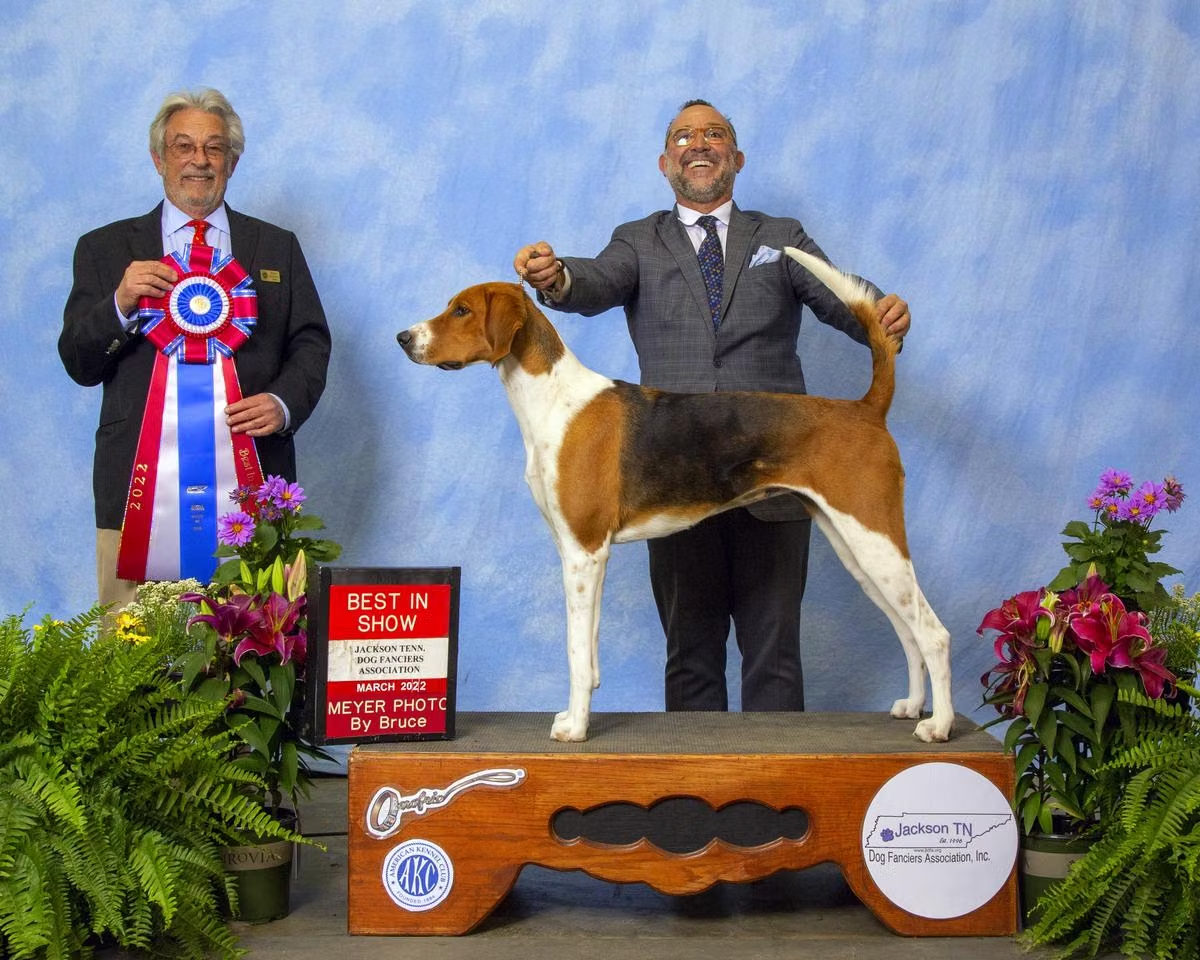


About the American Foxhound
The American Foxhound is a large, good-natured pack hound from the United States, valued for its stamina, easygoing nature and clear, musical voice.
The American Foxhound is a large scenthound developed in the United States to hunt fox over long distances. It is tall and lean, built for hours of work at a steady pace across open country. The breed is calmer and more reserved in the home than many people expect from a working hound, but it carries a deep need for exercise that shapes everything about its care.
Temperament is the breed's defining quality. American Foxhounds are good-natured, sociable and tolerant, traits formed by generations of living and hunting in packs. They get along well with other dogs and usually with other pets, and they tend to be gentle with kids. The same pack background makes them independent thinkers who follow a scent with single-minded focus, which can read as stubbornness during training.
The voice is part of the breed's identity. American Foxhounds have a loud, far-carrying bay that hunters once prized for tracking the pack across distance. In a residential setting that same voice can become a noise issue, so the breed suits homes with space rather than close neighbours.
| Attribute | Detail |
|---|---|
| Origin | United States |
| Size | Large |
| Lifespan | 11 to 13 years |
| Group/role | Hound, scent hunting |
| Good with | Other dogs, pets and kids |
Who it suits
The American Foxhound suits active owners with room to move, ideally a house with a secure yard or access to open land. It is a strong match for people who run, hike or cycle and want a steady companion for those activities. It is a poor fit for apartments, for households that cannot tolerate baying, and for owners who want quick, precise obedience. A reliably fenced area is important, because a foxhound that catches a scent will follow it and ignore recall.
History and origin
The American Foxhound descends from English hounds brought to the American colonies in the 1600s, refined over later centuries into a leaner, faster fox-hunting dog.
The breed traces back to English foxhounds imported into the American colonies. Robert Brooke is recorded as bringing a pack of hunting hounds to the colony of Maryland in 1650, and those dogs formed an early foundation for hound breeding in the region. Over the following decades colonists used these hounds to pursue fox across the large, open landscapes of the eastern seaboard.
George Washington kept and bred foxhounds at Mount Vernon and worked to improve his pack through careful selection. In 1785 he received French hounds sent by the Marquis de Lafayette, and crosses of this kind added to the developing American type. Breeders of the period favoured a dog with more speed and stamina than its English ancestors, suited to covering wide distances at a working pace.
Through the 1700s and 1800s regional strains developed in Virginia, Maryland and other states, shaped by the terrain and the quarry each pack hunted. Selection emphasized nose, endurance and a strong pack drive rather than uniform appearance, which is why working lines still vary in build and style.
The American Kennel Club recognized the American Foxhound in 1886. The breed remains closely tied to its hunting roots and is far more common in working and field packs than as a household companion.
Appearance and breed standard
The American Foxhound is a tall, lean scenthound with long legs, a short hard coat and the large drop ears typical of hunting hounds.
The American Foxhound is built for distance running. It is taller and lighter in bone than the English Foxhound, with long straight legs, a deep but not heavy chest and a slightly arched loin that allows a long, ground-covering stride. The overall impression is of an athletic, balanced dog with no exaggeration. The head is fairly long with a wide, slightly domed skull and a straight muzzle. The ears are long, set moderately low and hang close to the head. The tail is carried up with a slight curve and a light brush of longer hair on the underside.
| Trait | Standard |
|---|---|
| Height | 21 to 25 inches (53 to 64 cm) at the shoulder |
| Weight | 60 to 70 lb (27 to 32 kg) |
| Coat | Short, hard, close-lying |
| Colours | Any colour; tricolour and tan and white are common |
| Eyes | Large, wide-set, brown or hazel |
Coat and colours
The coat is short, hard and dense enough to give protection in the field while staying easy to maintain. The breed standard places no restriction on colour, so any hound colour is acceptable. The most familiar patterns are the classic tricolour of black, white and tan, and combinations of tan or red with white. The hard texture sheds dirt well and needs little more than routine brushing.
Temperament and personality
American Foxhounds are good-natured, sociable and independent, friendly with people and other animals but driven by scent and prone to a loud, carrying voice.
The American Foxhound is even-tempered and easygoing at home, with a gentle, affectionate side toward its family. Generations of pack life produced a dog that is comfortable in company and rarely aggressive. With children the breed is usually patient and tolerant, though its size and energy mean play with small kids should be supervised.
With strangers the breed tends to be friendly rather than protective, so it makes a poor guard dog despite its loud voice. With other dogs it is highly sociable, a direct result of being bred to live and work in packs, and it generally accepts other household pets when raised alongside them. Some individuals keep a strong prey drive toward small running animals outdoors.
Independence is the trait owners notice most. A foxhound on a scent follows its nose and tunes out commands, which can look like stubbornness. The breed is intelligent but motivated by its own interests as much as by its handler. Without enough exercise and company it can become bored, restless and vocal, and the bay carries a long way.
| Trait | Rating |
|---|---|
| Affection | 4 |
| Energy | 5 |
| Trainability | 2 |
| Vocalness | 5 |
| Shedding | 3 |
Care and grooming
The American Foxhound has low grooming needs but very high exercise needs, and it does best with secure outdoor space and steady daily activity.
Grooming
- Brush the short coat once a week with a rubber curry or hound mitt to remove loose hair
- Bathe only when the dog is dirty, since the hard coat stays clean with little effort
- Check the long drop ears weekly and clean them to reduce the risk of infection
- Trim nails every few weeks and brush teeth several times a week
Exercise
- Provide at least one to two hours of vigorous activity every day
- Offer steady aerobic work such as running, long hikes or cycling alongside the dog
- Keep the dog leashed or in a securely fenced area, because a scent will override recall
- Add scent games and tracking work to occupy the nose and the mind
Environment
The American Foxhound suits a house with a large, well-fenced yard and is not a good match for apartment living. The fence should be solid and high, since the breed will follow a trail under or over a weak barrier. The carrying voice means the breed fits rural or spacious settings better than dense neighbourhoods. As a pack animal it does best with regular company and may struggle with long stretches alone.
Nutrition and feeding
American Foxhounds need a complete diet that supports a large, very active body, with portions matched to their high workload to keep them lean.
The American Foxhound does well on a complete, balanced diet formulated for large, active dogs. Because it is an athletic working breed, a hard-working or field hound burns considerable energy and may need more food than a less active pet of the same size. Adjust portions to keep the dog lean, with a visible waist and ribs that are easy to feel under a light layer of muscle. Fresh water should be available at all times, especially after exercise.
| Life stage | Amount per day | Meals |
|---|---|---|
| Puppy (2 to 6 months) | Per label, divided small | 3 to 4 |
| Adolescent (6 to 12 months) | 2.5 to 3.5 cups | 2 to 3 |
| Adult | 2.5 to 3.5 cups | 2 |
| Senior | Adjust down for lower activity | 2 |
Treats and supplements
Keep treats to about ten percent of daily calories to guard against weight gain, a real risk in a food-motivated hound. Use small, low-calorie treats for training and scent games. A dog on a complete commercial diet usually needs no extra supplements, but ask a veterinarian before adding joint support or other products, particularly for older or hard-working dogs.
Health and lifespan
The American Foxhound is a generally healthy, long-lived breed with a lifespan of 11 to 13 years and a small number of conditions worth watching.
The American Foxhound is one of the more robust purebred dogs, with relatively few inherited problems compared with many breeds. Its typical lifespan is 11 to 13 years. The most useful health measures are keeping the dog at a lean weight, providing regular exercise and maintaining routine veterinary care. The long ears and the breed's appetite are the two areas that most often need attention.
| Condition | Signs | Note |
|---|---|---|
| Hip dysplasia | Stiffness, limping, trouble rising | Less common than in many large breeds but possible |
| Ear infections | Head shaking, odour, scratching at ears | Linked to long drop ears that hold moisture |
| Thrombocytopathy | Easy bruising, prolonged bleeding | A platelet disorder reported in the breed |
| Obesity | Excess weight, loss of waistline | Driven by a strong food drive; manage portions |
Preventive care
- Keep core vaccinations and parasite prevention up to date
- Weigh the dog regularly and adjust food to hold a lean body condition
- Clean and dry the ears after swimming or wet outings
- Provide dental care through brushing and veterinary checks
- Schedule an annual exam, with more frequent visits for senior dogs
Training
American Foxhounds are intelligent but independent, so training takes patience, consistency and reward-based methods that compete with a powerful nose.
Training an American Foxhound calls for realistic expectations. The breed is smart and capable, but it was developed to work at a distance and make its own decisions on a trail, so it does not offer the eager, handler-focused obedience of many companion breeds. Once a scent takes over, recall and commands often lose out to the nose. Short, varied sessions hold attention better than long drills, and a securely fenced area is essential for any off-leash work. Early socialization with people, dogs and other animals builds on the breed's naturally sociable nature.
Basics
- Start socialization and gentle handling in puppyhood
- Teach name response and focus before adding harder commands
- Build a strong recall on a long line, away from strong scents at first
- Practise loose-leash walking, since a foxhound pulls hard toward interesting smells
- Channel the nose into scent games and tracking to give the drive an outlet
Breeding
American Foxhounds reach breeding maturity at around one to two years, with an average gestation of about 63 days and typical litters of five to seven puppies.
Responsible breeding of American Foxhounds centres on temperament, working ability and health. Both parents should be physically mature before breeding, generally not before females have reached about 18 to 24 months, even though they may cycle earlier. Pre-breeding health screening, including hip evaluation, helps reduce the risk of passing on problems. Females usually come into season about twice a year.
Gestation runs about 63 days on average. Litters are commonly five to seven puppies, though larger litters occur, in line with the breed's history of producing working pack dogs. The dam should have a quiet, clean whelping area and close monitoring through delivery and the early days afterward.
Raising the litter benefits from the breed's strong social nature. Early handling and exposure to household sounds, people and other animals support the friendly, even temperament that defines the breed. Puppies typically stay with the dam and littermates until at least eight weeks, which helps them learn normal dog behaviour before going to new homes.
| Metric | Value |
|---|---|
| Breeding maturity | About 1 to 2 years |
| Cycle frequency | Roughly twice a year |
| Gestation | About 63 days |
| Average litter size | 5 to 7 puppies |
| Weaning age | Around 6 to 8 weeks |
Registering an American Foxhound in Canada: profile and microchip
A free lifetime United Pet Club record for your American Foxhound, with the microchip registered at no cost and kept current through every move.
American Foxhound registration and microchip registration in Canada
Put your American Foxhound on the registry before the gate is ever left open. The free United Pet Club profile stores the dog's name, birth date, and photo beside your contact details, and it stays free for as long as the dog is with you. Dog registration asks for a few fields, not a fee.
Sixty seconds with a scanner reads the chip; whether your American Foxhound gets home depends on the record behind the number. Microchip registration with United Pet Club is free for life, takes every brand sold in Canada, and keeps the record searchable on both sides of the border. Sign up free and give the number somewhere to point.
How do I register my American Foxhound in Canada?
Open a free United Pet Club account, fill in your American Foxhound's name, breed details, and a photo, and save. The lifetime plan is free, no chip required, and the chip number can be attached after your vet appointment.
How do I register my American Foxhound's microchip?
Add the 15-digit number to your account along with your address, postal code, and phone number. Registration and unlimited updates are free for life, and chips from any manufacturer a Canadian vet uses are accepted.
Is a microchip required for an American Foxhound in Canada?
There is no federal requirement, but several cities fold chips into their licensing bylaws, and travel with the dog goes smoother when the chip is registered. The record, not the implant, is what identifies your American Foxhound.
What does American Foxhound registration cost in Canada?
Nothing, ever. United Pet Club's lifetime plan covers the profile, the chip record, and every update without fees or renewals.
Frequently asked questions
Common questions about the American Foxhound cover its size, temperament, care demands, lifespan, suitability and availability.
How big does an American Foxhound get?
It is a large breed. Adults stand about 21 to 25 inches (53 to 64 cm) at the shoulder and usually weigh 60 to 70 lb (27 to 32 kg), with a tall, lean, athletic build.
Are American Foxhounds good family dogs?
Yes, in the right home. They are good-natured, sociable and gentle with kids, and they get along well with other dogs and pets. They need a great deal of exercise and tolerate dense, quiet neighbourhoods poorly because of their loud voice.
Are they hard to care for?
Grooming is easy thanks to the short coat, but exercise needs are high. The breed requires one to two hours of hard activity a day and a securely fenced space, so the main demand is time and energy rather than coat care.
How long do American Foxhounds live?
The typical lifespan is 11 to 13 years. The breed is generally healthy, and keeping the dog lean and well exercised supports a long life.
Are American Foxhounds easy to train?
They are smart but independent, bred to follow a scent on their own. Training takes patience and reward-based methods, and recall is unreliable once the dog picks up an interesting trail, so secure fencing matters.
Do they bark or howl a lot?
They have a loud, carrying bay that was prized for hunting. They can be vocal, especially when bored or under-exercised, which makes them better suited to homes with space than to close quarters.
Are American Foxhounds easy to find?
They are relatively uncommon as household pets and are far more often kept in working and field packs. Finding one may take patience, and many come from hunting lines rather than show or companion breeders.
From the community
Ask about the American FoxhoundNo questions about the American Foxhound yet. Be the first to ask.
Browse Dog breeds