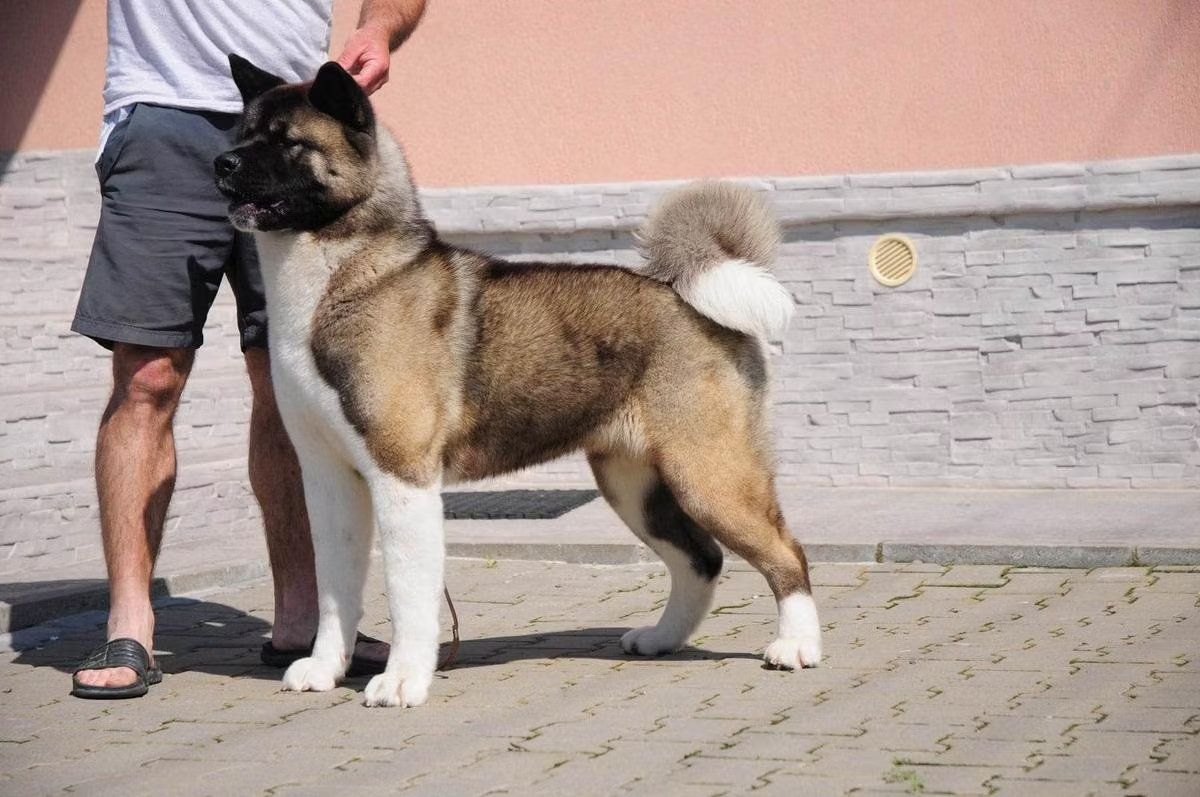
The Akita is a dignified, profoundly loyal Japanese breed celebrated for its courage and devotion to its family.
How the Akita coat is built, and what that means when you groom it.
Critical: A Akita should not be shaved.
The undercoat keeps heat out as well as in, and the outer coat shields the skin from sun and insect bites. Clipping the whole coat off removes both. It often grows back patchy, soft or a different colour, and in some animals the guard hairs never return properly. Brush the undercoat out instead of cutting it off.
Information: A Akita drops its undercoat in heavy bursts.
The undercoat comes out in heavy bursts over a few weeks. An undercoat rake, or a bath followed by a proper blow-dry, clears it far faster than daily brushing. Clipping the coat down is not a shortcut for this.
A few of the Akita profiles members have added to United Pet Club.
The Akita is a large, dignified spitz-type dog from Japan, renowned for deep loyalty to its family and a calm, watchful manner with strangers. The Japanese Akita Inu is the predominant type found in Canada.
The Akita is a large working breed that originated in the mountainous Akita Prefecture in northern Japan. It belongs to the spitz family, with a thick double coat, erect triangular ears, and a curled tail carried over the back. Adults stand between 24 and 28 inches at the shoulder and weigh roughly 70 to 130 pounds, with males noticeably larger than females.
The breed is calm and reserved rather than busy or excitable. An Akita tends to bond intensely with its own household and remain reserved or indifferent toward people outside it. This combination of devotion and natural wariness is the trait most often associated with the breed. The story of Hachiko, a dog who continued to wait at a Tokyo railway station for years after his owner's death, is widely cited as the definitive example of Akita loyalty.
Two recognised strains exist. The Akita Inu, or Japanese Akita, is smaller and limited to a defined set of colours: red fawn with white markings (urajiro), brindle, and pure white, and never carries a black mask. The American Akita is larger and accepts a far wider colour range, including the black mask not seen in the Japanese type. In Canada, the Japanese Akita Inu is the more commonly encountered type, and the Canadian Kennel Club classifies both under the Working Group.
| Attribute | Detail |
|---|---|
| Origin | Japan (Akita Prefecture) |
| Size | Large |
| Lifespan | 10 to 13 years |
| Group / role | CKC Working Group; guardian, companion |
| Good with | Committed, experienced owners; supervision needed around strangers and other dogs |
The Akita fits an experienced owner who can provide firm, consistent leadership and early socialisation. It does best in a home where one or a few people are its clear focus. The breed can be territorial and is often intolerant of other dogs of the same sex, so households with existing pets need careful introductions. First-time owners and homes with frequent unfamiliar visitors usually find the breed demanding. Its dense double coat makes it well suited to Canada's cold winters, though hot and humid summers require careful management to prevent overheating.
The Akita developed in northern Japan from regional hunting and guarding dogs, was designated a national natural monument in 1931, and reached Canada after the Second World War, largely through American military connections.
The Akita takes its name from Akita Prefecture in the north of Honshu, Japan's main island. Dogs of this region were used for centuries to hunt large game such as wild boar, deer, and bear, and to guard homes in a cold, snowy climate. The thick coat and sturdy build reflect that working background.
During the late nineteenth century the breed's purity declined as dogs were crossed with imported European breeds, partly for use in dog fighting. By the early twentieth century, efforts began in Japan to restore the original type. In 1931 the Akita was designated a national natural monument in Japan, a mark of cultural significance it still carries today.
The Second World War sharply reduced the population. After the war, two distinct directions emerged: a Japanese type bred toward the older standard and a larger type favoured by American servicemen who brought dogs back home. From the United States, Akitas gradually reached Canada.
The Canadian Kennel Club recognises both the Japanese Akita Inu and the American Akita, though it registers them under a single Working Group designation. The Japanese type enjoys somewhat stronger representation among Canadian breeders and enthusiasts, reflecting the country's historical appreciation for the breed's original Japanese form.
The Akita is a powerful, heavy-boned dog with a broad head, small erect ears, a dense double coat, and a large curled tail carried over the back.
The Akita has a substantial, balanced build that conveys strength without bulkiness. The head is broad and flat between the ears and tapers to a deep muzzle, giving a blunt, bear-like outline. The eyes are small, dark, and triangular, and the ears are small relative to the head, erect, and angled slightly forward. The tail is large, well furred, and curled over or against the back. Movement is brisk and powerful with a moderate, effortless stride.
| Trait | Detail |
|---|---|
| Height | Males 26 to 28 in; females 24 to 26 in |
| Weight | Males 100 to 130 lb; females 70 to 100 lb |
| Coat | Double coat: dense soft undercoat, straight harsh outer coat |
| Colours | Japanese type: red fawn, brindle, white (urajiro markings; no black mask). American type: most colours, including black mask |
| Eyes | Small, dark brown, triangular |
The outer coat is straight and harsh, standing slightly off the body, while the undercoat is soft and dense. The Japanese Akita Inu is limited to red fawn with white urajiro markings, brindle, and pure white. A black mask is not accepted. The American Akita allows a much wider range, including pinto and any colour combination, and permits a black mask. A long-coated variety occurs in both types but is considered a fault in the show ring.
The Akita is loyal, dignified, and courageous with its family, and naturally aloof and protective toward strangers and unfamiliar dogs.
The Akita is calm, steady, and deeply bonded to its own household. At home it is affectionate and tends to shadow its people through the house, though it generally communicates devotion through quiet companionship rather than persistent bids for attention. The breed seldom barks without reason.
With unfamiliar people the Akita holds back and sizes up the situation before deciding whether to accept someone. This guarding instinct makes early, thorough socialisation a priority for any Canadian owner, given the diverse environments and visitors a dog may encounter. Around other dogs the breed requires care: many Akitas will not accept dogs of the same sex, and smaller animals can trigger a prey response. Careful introductions and consistent supervision are therefore essential.
The Akita is self-reliant and purposeful. It forms its own judgements and will not comply out of eagerness to please, a trait that newcomers to the breed sometimes read as stubbornness. Toward children it has grown up with the Akita is often patient and watchful, though any interaction with unfamiliar children warrants oversight given the breed's size and protective nature.
| Trait | Rating |
|---|---|
| Affection (with family) | 4 |
| Energy | 3 |
| Trainability | 2 |
| Vocalness | 2 |
| Shedding | 5 |
The Akita needs regular brushing for its heavy double coat, moderate daily exercise, and a securely fenced home with a committed, experienced owner. Canada's cold winters suit the breed well, but summer heat requires caution.
The Akita is a clean breed that grooms itself somewhat like a cat, but the dense double coat still demands routine care, particularly during the two heavy seasonal sheds each year.
The Akita suits a house with a securely fenced yard rather than a small apartment, though it can live indoors with enough daily exercise. Its dense double coat makes it well suited to Canada's cold winters and it can tolerate outdoor time even in harsh conditions. Summer heat and humidity, however, require careful management. Fencing should be solid and tall, as the breed is strong and territorial. The Akita is an indoor family member and should not be left isolated outside for long periods.
The Akita needs a balanced large-breed diet measured to maintain lean condition, fed in two meals a day to reduce the risk of bloat.
The Akita does well on a complete, balanced diet formulated for large breeds at the appropriate life stage. Portion control matters because the breed is prone to weight gain, and excess weight strains the joints. Feed measured amounts rather than leaving food out, and adjust to the individual dog's age, activity, and body condition. Fresh water should always be available.
| Life stage | Amount per day | Meals |
|---|---|---|
| Puppy (2 to 6 months) | Per large-breed puppy food label | 3 to 4 |
| Junior (6 to 12 months) | Per label, watch growth rate | 2 to 3 |
| Adult | About 3 to 5 cups dry food | 2 |
| Senior | Reduced to maintain lean weight | 2 |
Treats should account for no more than roughly ten per cent of daily calorie intake; trim meal portions accordingly. Premium large-breed formulas sold across Canada commonly include glucosamine and chondroitin for joint support, so extra supplements are rarely needed unless a veterinarian advises otherwise. Large, deep-chested dogs carry a higher risk of gastric dilatation-volvulus, so avoid vigorous activity for at least an hour before and after meals, and use a slow-feeder bowl if the dog bolts its food.
The Akita is a generally robust large breed with a lifespan of 10 to 13 years, but it is prone to hip dysplasia, autoimmune conditions, bloat, and certain eye disorders. The breed also has a known sensitivity to some anaesthetics.
The Akita is a hardy breed with a typical lifespan of 10 to 13 years. Responsible breeding and routine veterinary care reduce the impact of the conditions the breed is predisposed to. The breed has a known sensitivity to some anaesthetics and is more affected by certain autoimmune diseases than many other breeds, so owners should work with a veterinarian familiar with the type.
| Condition | Signs | Note |
|---|---|---|
| Hip dysplasia | Stiffness, limping, trouble rising | Screen breeding stock; manage weight |
| Gastric dilatation-volvulus (bloat) | Swollen abdomen, retching, distress | Emergency; act immediately |
| Hypothyroidism | Weight gain, coat changes, lethargy | Managed with daily medication |
| Progressive retinal atrophy | Night blindness, vision loss | Inherited; DNA and eye testing available |
| Autoimmune disorders (e.g. VKH, pemphigus) | Skin or eye changes, depigmentation | Akitas are over-represented |
The Akita is intelligent but independent and strong-willed, so it needs early socialisation and patient, consistent, reward-based training from an experienced handler.
Training an Akita calls for a different approach than working with biddable breeds. The dog is perceptive and learns quickly, but it weighs up each request against its own assessment of the situation. A handler who is calm, consistent, and unhurried will earn genuine co-operation; one who resorts to pressure or repetition will typically meet resistance. Many Canadian trainers and breed clubs emphasise that patience and relationship-building pay far greater dividends than rigid drill work.
Akitas reach breeding maturity at around two years, carry litters of about three to twelve puppies after a roughly nine-week gestation, and require health-tested parents and careful early socialisation of the young.
Responsible Akita breeding centres on health and temperament. Both parents should be screened for hip dysplasia, eye disease, and thyroid function before mating, and only dogs with sound, stable temperaments should be bred given the breed's guarding nature. Females are usually bred only after they reach full physical and mental maturity, generally around two years of age, not on their first season.
Gestation lasts about 63 days from conception. Litter size varies, with an average of roughly seven to eight puppies, though litters can range from about three to twelve. Whelping a large breed can carry complications, so a veterinarian should be involved in planning and on call for the birth.
Raising the young well shapes adult behaviour. Puppies need gentle handling, exposure to varied sights and sounds, and early socialisation with people from the first weeks. Akita puppies are typically not placed in new homes until about eight weeks of age so they learn early social skills from the dam and littermates.
| Metric | Value |
|---|---|
| Breeding maturity | About 2 years |
| Gestation | About 63 days (roughly 9 weeks) |
| Average litter size | About 7 to 8 puppies (range 3 to 12) |
| Weaning age | About 6 to 8 weeks |
| Recommended pre-breeding tests | Hips, eyes, thyroid |
A free lifetime United Pet Club record for your Akita, with the microchip registered at no cost and kept current through every move.
Canadian shelters and vet clinics scan strays at intake as a matter of routine, and the scan helps only when a registry ties your Akita to a phone that still rings. Registering your dog with United Pet Club takes a few minutes, never costs anything, and works whether or not a chip is in place yet. Add the breed, a photo, and your postal code, and the record is live.
The vet implants the chip and leaves the recording part to you. Register the microchip on the free lifetime plan: any brand a Canadian clinic implants is accepted, updates after a change of address are free, and a current record keeps the border paperwork the Canadian Food Inspection Agency asks about from becoming a scramble. Create your free account and finish both in one evening.
Open a free United Pet Club account, fill in your Akita's name, breed details, and a photo, and save. The lifetime plan is free, no chip required, and the chip number can be attached after your vet appointment.
Add the 15-digit number to your account along with your address, postal code, and phone number. Registration and unlimited updates are free for life, and chips from any manufacturer a Canadian vet uses are accepted.
There is no federal requirement, but several cities fold chips into their licensing bylaws, and travel with the dog goes smoother when the chip is registered. The record, not the implant, is what identifies your Akita.
Nothing, ever. United Pet Club's lifetime plan covers the profile, the chip record, and every update without fees or renewals.
Common questions about the Akita's size, temperament, care needs, lifespan, suitability, and availability in Canada.
The Akita is a large breed. Males stand about 26 to 28 inches at the shoulder and weigh roughly 100 to 130 pounds; females are smaller at about 24 to 26 inches and 70 to 100 pounds.
Akitas are loyal, dignified, and courageous with their family and naturally aloof and protective toward strangers. They are calm and quiet at home but can be intolerant of other dogs, especially of the same sex.
It is a demanding breed. The heavy double coat needs regular brushing and sheds heavily twice a year, and the independent, guarding temperament calls for early socialisation and an experienced owner. Exercise needs are moderate.
The typical lifespan is 10 to 13 years. Maintaining a lean weight, screening for inherited conditions, and routine veterinary care support a healthy life.
It can be a devoted family companion in the right home, often gentle with its own children. Because of its size, guarding instinct, and wariness of strangers and other animals, it suits experienced owners and households that can supervise interactions.
The Japanese Akita Inu is the more commonly encountered type in Canada. Both types are recognised by the Canadian Kennel Club under the Working Group.
Akitas are available from reputable breeders who health-test their stock, and through breed-specific rescue organisations. Expect a waiting list from responsible breeders and a screening process from rescues.