
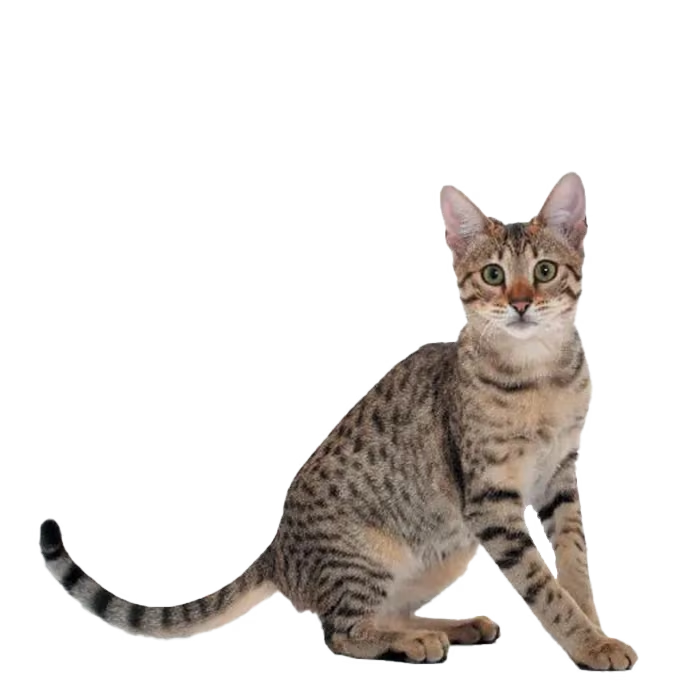
Savannah
The Savannah is a tall, athletic hybrid cat with a wild appearance and an energetic, intelligent, and dog-like loyal personality.
- Size
- Large
- Lifespan
- 12–20 years
- Origin
- United States
- Temperament
- Energetic
- Standard colors
- Black, Silver and Brown
Characteristics
Coat and grooming
How the Savannah coat is built, and what that means when you groom it.
- Coat layers
- Single coat
- Coat texture
- Smooth
- Coat length
- Short
- Shedding
- Moderate shedding
Savannah colors and patterns
What each club's breed standard says about every Savannah color and pattern. Point at a ruling to see the club's own wording.
Breed standards describe the Savannah in Black, Silver and Brown. Standard patterns: Solid, Spotted tabby and Smoke.
| Color or pattern | TICA |
|---|---|
| Black | Standard (“Black”) |
| Silver | Standard (“Black Silver Spotted Tabby”) |
| Brown | Standard (“Brown (Black) Spotted Tabby”) |
| Patterns | |
| Solid | Standard (“Solid”) |
| Spotted tabby | Standard (“SPOTTED PATTERN ONLY”) |
| Smoke | Standard (“Black Smoke”) |
| Mackerel tabby | Fault (“mackerel tabby type stripes”) |
| Rosetted | Fault (“Rosettes”) |

%22%3E%3Cpath%20d%3D%22M20%2021Q34%2018.8%2048%2022%22%20fill%3D%22none%22%20stroke%3D%22%231C1C1C%22%20stroke-width%3D%222.2%22%20stroke-linecap%3D%22round%22%20stroke-linejoin%3D%22round%22%2F%3E%3Cellipse%20cx%3D%2223.8%22%20cy%3D%2226%22%20rx%3D%221.8%22%20ry%3D%221.2%22%20fill%3D%22%231C1C1C%22%2F%3E%3Cellipse%20cx%3D%2229%22%20cy%3D%2226%22%20rx%3D%221.8%22%20ry%3D%221.2%22%20fill%3D%22%231C1C1C%22%2F%3E%3Cellipse%20cx%3D%2233.8%22%20cy%3D%2226%22%20rx%3D%221.8%22%20ry%3D%221.2%22%20fill%3D%22%231C1C1C%22%2F%3E%3Cellipse%20cx%3D%2239%22%20cy%3D%2226%22%20rx%3D%221.8%22%20ry%3D%221.2%22%20fill%3D%22%231C1C1C%22%2F%3E%3Cellipse%20cx%3D%2243.6%22%20cy%3D%2226%22%20rx%3D%221.8%22%20ry%3D%221.2%22%20fill%3D%22%231C1C1C%22%2F%3E%3Cellipse%20cx%3D%2225.8%22%20cy%3D%2231.5%22%20rx%3D%221.8%22%20ry%3D%221.2%22%20fill%3D%22%231C1C1C%22%2F%3E%3Cellipse%20cx%3D%2231%22%20cy%3D%2231.5%22%20rx%3D%221.8%22%20ry%3D%221.2%22%20fill%3D%22%231C1C1C%22%2F%3E%3Cellipse%20cx%3D%2235.6%22%20cy%3D%2231.5%22%20rx%3D%221.8%22%20ry%3D%221.2%22%20fill%3D%22%231C1C1C%22%2F%3E%3Cellipse%20cx%3D%2240.7%22%20cy%3D%2231.5%22%20rx%3D%221.8%22%20ry%3D%221.2%22%20fill%3D%22%231C1C1C%22%2F%3E%3Cellipse%20cx%3D%2246.3%22%20cy%3D%2231.5%22%20rx%3D%221.8%22%20ry%3D%221.2%22%20fill%3D%22%231C1C1C%22%2F%3E%3Cellipse%20cx%3D%2222.1%22%20cy%3D%2236%22%20rx%3D%221.8%22%20ry%3D%221.2%22%20fill%3D%22%231C1C1C%22%2F%3E%3Cellipse%20cx%3D%2228.6%22%20cy%3D%2236%22%20rx%3D%221.8%22%20ry%3D%221.2%22%20fill%3D%22%231C1C1C%22%2F%3E%3Cellipse%20cx%3D%2233.7%22%20cy%3D%2236%22%20rx%3D%221.8%22%20ry%3D%221.2%22%20fill%3D%22%231C1C1C%22%2F%3E%3Cellipse%20cx%3D%2239.5%22%20cy%3D%2236%22%20rx%3D%221.8%22%20ry%3D%221.2%22%20fill%3D%22%231C1C1C%22%2F%3E%3Cpath%20d%3D%22M15%2044H50M15%2048H50%22%20fill%3D%22none%22%20stroke%3D%22%231C1C1C%22%20stroke-width%3D%221.8%22%20stroke-linecap%3D%22round%22%20stroke-linejoin%3D%22round%22%2F%3E%3Cpath%20d%3D%22M50%2022H62M51%2017H62M52%2012H63%22%20fill%3D%22none%22%20stroke%3D%22%231C1C1C%22%20stroke-width%3D%221.8%22%20stroke-linecap%3D%22round%22%20stroke-linejoin%3D%22round%22%2F%3E%3Ccircle%20cx%3D%2259.8%22%20cy%3D%227.8%22%20r%3D%222%22%20fill%3D%22%231C1C1C%22%2F%3E%3Cpath%20d%3D%22M12.6%2015.5l.6%204.2M15%2015.5l-.2%204.2M9%2025.2l4.6%201M9.6%2027.4l4%20.2%22%20fill%3D%22none%22%20stroke%3D%22%231C1C1C%22%20stroke-width%3D%221.1%22%20stroke-linecap%3D%22round%22%20stroke-linejoin%3D%22round%22%2F%3E%3C%2Fg%3E%3Cuse%20href%3D%22%23s%22%20fill%3D%22none%22%20stroke%3D%22%233B2A20%22%20stroke-opacity%3D%220.6%22%20stroke-width%3D%221%22%20stroke-linejoin%3D%22round%22%2F%3E%3Cpath%20d%3D%22M3.4%2022.3L5.4%2022.5L4.3%2024Z%22%20fill%3D%22%23E8A0B4%22%2F%3E%3Ccircle%20cx%3D%229.6%22%20cy%3D%2221.2%22%20r%3D%221.1%22%20fill%3D%22%231C1C1C%22%2F%3E%3C%2Fsvg%3E)
%22%3E%3Crect%20x%3D%220%22%20y%3D%220%22%20width%3D%2264%22%20height%3D%2264%22%20fill%3D%22%231C1C1C%22%2F%3E%3Crect%20x%3D%220%22%20y%3D%220%22%20width%3D%2264%22%20height%3D%2264%22%20fill%3D%22url(%23g)%22%2F%3E%3Cpath%20d%3D%22M17.5%2030.4l0.2%203.7M48.5%2036.2l-0.3%203.1M40.1%2038.4l0.7%202.8M21.3%2029.4l0.3%202.9M38.5%2024l-0.7%202.7M19.4%2041l0.9%203.8M47.2%2026.3l0.3%203M28.1%2031.1l-0.4%202.6M21%2027l-0.7%203.4M20.1%2035l0.7%202.8M27.4%2035.9l1.2%203.6M31.5%2032.2l0.5%202.5M43.7%2038.4l0.2%202.9M15.5%2027.6l0.2%203M33.5%2029.7l0%203.8M50%2028l0.5%203.8M50.1%2029.5l-0.2%203.3M39.4%2037.1l0.8%203M31.1%2025l1%203.1M19.5%2028.3l0.3%203.1M29.5%2034.2l-0.3%203.8M50.4%2033.8l-0.5%202.6M39.3%2028.8l1.2%203.8M36.6%2037.2l-0.3%202.8M41.6%2026.3l-0.7%202.7M24.2%2038.3l-0.2%203.3M20.5%2033.1l0.7%203M24%2032.2l-0.7%203.3M42.7%2038.5l-0.6%203.8M20.4%2038.2l0.2%203.3M37.5%2036.9l-0.8%202.4M36%2035.3l-0.7%202.9M46.2%2033.2l-0.8%203.8M38.1%2030.5l-0.6%203.6M29%2038.9l-0.7%203.7M42.8%2031.3l0.1%203.1M22.5%2025.1l0.4%202.9M47.4%2025l0.2%203M24.7%2032l-0.8%203.2M14.8%2024.5l1.1%203.3%22%20fill%3D%22none%22%20stroke%3D%22%23F5F5F0%22%20stroke-width%3D%221%22%20stroke-opacity%3D%220.85%22%20stroke-linecap%3D%22round%22%20stroke-linejoin%3D%22round%22%2F%3E%3C%2Fg%3E%3Cuse%20href%3D%22%23s%22%20fill%3D%22none%22%20stroke%3D%22%233B2A20%22%20stroke-opacity%3D%220.6%22%20stroke-width%3D%221%22%20stroke-linejoin%3D%22round%22%2F%3E%3Cpath%20d%3D%22M3.4%2022.3L5.4%2022.5L4.3%2024Z%22%20fill%3D%22%23E8A0B4%22%2F%3E%3Ccircle%20cx%3D%229.6%22%20cy%3D%2221.2%22%20r%3D%221.1%22%20fill%3D%22%231C1C1C%22%2F%3E%3C%2Fsvg%3E)
%22%3E%3Cpath%20d%3D%22M20%2021Q34%2018.8%2048%2022%22%20fill%3D%22none%22%20stroke%3D%22%231C1C1C%22%20stroke-width%3D%222.2%22%20stroke-linecap%3D%22round%22%20stroke-linejoin%3D%22round%22%2F%3E%3Cpath%20d%3D%22M24.5%2021.5q-1.2%208%20.4%2016M28.6%2021q-1.2%208%20.4%2016.6M32.7%2020.7q-1.2%208%20.4%2016.8M36.8%2020.7q-1.2%208%20.4%2016.8M40.9%2021q-1.2%208%20.4%2016.6M45%2021.8q-1%207%20.4%2014%22%20fill%3D%22none%22%20stroke%3D%22%231C1C1C%22%20stroke-width%3D%221.6%22%20stroke-linecap%3D%22round%22%20stroke-linejoin%3D%22round%22%2F%3E%3Cpath%20d%3D%22M15%2044H50M15%2048H50%22%20fill%3D%22none%22%20stroke%3D%22%231C1C1C%22%20stroke-width%3D%221.8%22%20stroke-linecap%3D%22round%22%20stroke-linejoin%3D%22round%22%2F%3E%3Cpath%20d%3D%22M50%2022H62M51%2017H62M52%2012H63%22%20fill%3D%22none%22%20stroke%3D%22%231C1C1C%22%20stroke-width%3D%221.8%22%20stroke-linecap%3D%22round%22%20stroke-linejoin%3D%22round%22%2F%3E%3Ccircle%20cx%3D%2259.8%22%20cy%3D%227.8%22%20r%3D%222%22%20fill%3D%22%231C1C1C%22%2F%3E%3Cpath%20d%3D%22M12.6%2015.5l.6%204.2M15%2015.5l-.2%204.2M9%2025.2l4.6%201M9.6%2027.4l4%20.2%22%20fill%3D%22none%22%20stroke%3D%22%231C1C1C%22%20stroke-width%3D%221.1%22%20stroke-linecap%3D%22round%22%20stroke-linejoin%3D%22round%22%2F%3E%3C%2Fg%3E%3Cuse%20href%3D%22%23s%22%20fill%3D%22none%22%20stroke%3D%22%233B2A20%22%20stroke-opacity%3D%220.6%22%20stroke-width%3D%221%22%20stroke-linejoin%3D%22round%22%2F%3E%3Cpath%20d%3D%22M3.4%2022.3L5.4%2022.5L4.3%2024Z%22%20fill%3D%22%23E8A0B4%22%2F%3E%3Ccircle%20cx%3D%229.6%22%20cy%3D%2221.2%22%20r%3D%221.1%22%20fill%3D%22%231C1C1C%22%2F%3E%3C%2Fsvg%3E)
%22%3E%3Cellipse%20cx%3D%2247%22%20cy%3D%2225.7%22%20rx%3D%222.9%22%20ry%3D%222.3%22%20fill%3D%22%231C1C1C%22%20fill-opacity%3D%220.35%22%20stroke%3D%22%231C1C1C%22%20stroke-width%3D%221.5%22%20stroke-dasharray%3D%223.5%201.4%22%2F%3E%3Cellipse%20cx%3D%2235.8%22%20cy%3D%2238.8%22%20rx%3D%223%22%20ry%3D%222.5%22%20fill%3D%22%231C1C1C%22%20fill-opacity%3D%220.35%22%20stroke%3D%22%231C1C1C%22%20stroke-width%3D%221.5%22%20stroke-dasharray%3D%223.5%201.4%22%2F%3E%3Cellipse%20cx%3D%2258.3%22%20cy%3D%228.2%22%20rx%3D%223.3%22%20ry%3D%222.2%22%20fill%3D%22%231C1C1C%22%20fill-opacity%3D%220.35%22%20stroke%3D%22%231C1C1C%22%20stroke-width%3D%221.5%22%20stroke-dasharray%3D%223.5%201.4%22%2F%3E%3Cellipse%20cx%3D%2219.9%22%20cy%3D%2233.6%22%20rx%3D%223.3%22%20ry%3D%222.4%22%20fill%3D%22%231C1C1C%22%20fill-opacity%3D%220.35%22%20stroke%3D%22%231C1C1C%22%20stroke-width%3D%221.5%22%20stroke-dasharray%3D%223.5%201.4%22%2F%3E%3Cellipse%20cx%3D%2216.5%22%20cy%3D%2217.8%22%20rx%3D%223.4%22%20ry%3D%222.2%22%20fill%3D%22%231C1C1C%22%20fill-opacity%3D%220.35%22%20stroke%3D%22%231C1C1C%22%20stroke-width%3D%221.5%22%20stroke-dasharray%3D%223.5%201.4%22%2F%3E%3Cellipse%20cx%3D%226.3%22%20cy%3D%2220.2%22%20rx%3D%223.3%22%20ry%3D%222.4%22%20fill%3D%22%231C1C1C%22%20fill-opacity%3D%220.35%22%20stroke%3D%22%231C1C1C%22%20stroke-width%3D%221.5%22%20stroke-dasharray%3D%223.5%201.4%22%2F%3E%3Cellipse%20cx%3D%2232.3%22%20cy%3D%2221.3%22%20rx%3D%223.1%22%20ry%3D%222.4%22%20fill%3D%22%231C1C1C%22%20fill-opacity%3D%220.35%22%20stroke%3D%22%231C1C1C%22%20stroke-width%3D%221.5%22%20stroke-dasharray%3D%223.5%201.4%22%2F%3E%3Cellipse%20cx%3D%2256%22%20cy%3D%2220.7%22%20rx%3D%223.2%22%20ry%3D%222.4%22%20fill%3D%22%231C1C1C%22%20fill-opacity%3D%220.35%22%20stroke%3D%22%231C1C1C%22%20stroke-width%3D%221.5%22%20stroke-dasharray%3D%223.5%201.4%22%2F%3E%3Cellipse%20cx%3D%2217.6%22%20cy%3D%2252.3%22%20rx%3D%222.9%22%20ry%3D%222.4%22%20fill%3D%22%231C1C1C%22%20fill-opacity%3D%220.35%22%20stroke%3D%22%231C1C1C%22%20stroke-width%3D%221.5%22%20stroke-dasharray%3D%223.5%201.4%22%2F%3E%3Cellipse%20cx%3D%2211.2%22%20cy%3D%2227.1%22%20rx%3D%223.3%22%20ry%3D%222.3%22%20fill%3D%22%231C1C1C%22%20fill-opacity%3D%220.35%22%20stroke%3D%22%231C1C1C%22%20stroke-width%3D%221.5%22%20stroke-dasharray%3D%223.5%201.4%22%2F%3E%3Cellipse%20cx%3D%2219.5%22%20cy%3D%2243%22%20rx%3D%223%22%20ry%3D%222.4%22%20fill%3D%22%231C1C1C%22%20fill-opacity%3D%220.35%22%20stroke%3D%22%231C1C1C%22%20stroke-width%3D%221.5%22%20stroke-dasharray%3D%223.5%201.4%22%2F%3E%3Cellipse%20cx%3D%2247.4%22%20cy%3D%2235.3%22%20rx%3D%223.4%22%20ry%3D%222.1%22%20fill%3D%22%231C1C1C%22%20fill-opacity%3D%220.35%22%20stroke%3D%22%231C1C1C%22%20stroke-width%3D%221.5%22%20stroke-dasharray%3D%223.5%201.4%22%2F%3E%3Cellipse%20cx%3D%2228.2%22%20cy%3D%2232.4%22%20rx%3D%223.4%22%20ry%3D%222.3%22%20fill%3D%22%231C1C1C%22%20fill-opacity%3D%220.35%22%20stroke%3D%22%231C1C1C%22%20stroke-width%3D%221.5%22%20stroke-dasharray%3D%223.5%201.4%22%2F%3E%3Cellipse%20cx%3D%2224.3%22%20cy%3D%2223.3%22%20rx%3D%222.8%22%20ry%3D%222.4%22%20fill%3D%22%231C1C1C%22%20fill-opacity%3D%220.35%22%20stroke%3D%22%231C1C1C%22%20stroke-width%3D%221.5%22%20stroke-dasharray%3D%223.5%201.4%22%2F%3E%3C%2Fg%3E%3Cuse%20href%3D%22%23s%22%20fill%3D%22none%22%20stroke%3D%22%233B2A20%22%20stroke-opacity%3D%220.6%22%20stroke-width%3D%221%22%20stroke-linejoin%3D%22round%22%2F%3E%3Cpath%20d%3D%22M3.4%2022.3L5.4%2022.5L4.3%2024Z%22%20fill%3D%22%23E8A0B4%22%2F%3E%3Ccircle%20cx%3D%229.6%22%20cy%3D%2221.2%22%20r%3D%221.1%22%20fill%3D%22%231C1C1C%22%2F%3E%3C%2Fsvg%3E)
| Color or pattern | TICA |
|---|---|
| Blue | Standard |
| Hazel | Standard |
| Orange | Standard |
| Copper | Standard |
| Amber | Standard |
| Yellow | Standard |
| Gold | Standard |
| Green | Standard |
| Patterns | |
| Odd-eyed | Standard |
%22%3E%3Ccircle%20cx%3D%2216%22%20cy%3D%2232%22%20r%3D%228%22%20fill%3D%22%236E7B8B%22%2F%3E%3Ccircle%20cx%3D%2216%22%20cy%3D%2232%22%20r%3D%223.4%22%20fill%3D%22%231C1C1C%22%2F%3E%3Ccircle%20cx%3D%2213.6%22%20cy%3D%2229.6%22%20r%3D%221.3%22%20fill%3D%22%23F5F5F0%22%2F%3E%3C%2Fg%3E%3Cpath%20d%3D%22M3%2032Q16%2017%2029%2032Q16%2047%203%2032Z%22%20fill%3D%22none%22%20stroke%3D%22%233B2A20%22%20stroke-opacity%3D%220.75%22%20stroke-width%3D%221.4%22%20stroke-linejoin%3D%22round%22%2F%3E%3Cpath%20d%3D%22M35%2032Q48%2017%2061%2032Q48%2047%2035%2032Z%22%20fill%3D%22%23F5F5F0%22%2F%3E%3Cg%20clip-path%3D%22url(%23e1)%22%3E%3Ccircle%20cx%3D%2248%22%20cy%3D%2232%22%20r%3D%228%22%20fill%3D%22%23495059%22%2F%3E%3Ccircle%20cx%3D%2248%22%20cy%3D%2232%22%20r%3D%223.4%22%20fill%3D%22%231C1C1C%22%2F%3E%3Ccircle%20cx%3D%2245.6%22%20cy%3D%2229.6%22%20r%3D%221.3%22%20fill%3D%22%23F5F5F0%22%2F%3E%3C%2Fg%3E%3Cpath%20d%3D%22M35%2032Q48%2017%2061%2032Q48%2047%2035%2032Z%22%20fill%3D%22none%22%20stroke%3D%22%233B2A20%22%20stroke-opacity%3D%220.75%22%20stroke-width%3D%221.4%22%20stroke-linejoin%3D%22round%22%2F%3E%3C%2Fsvg%3E)
| Color or pattern | TICA |
|---|---|
| Black | Standard (“solid black”) |
| Brick red | Standard (“brick red”) |
| Pink | Standard (“pink”) |
| Color or pattern | TICA |
|---|---|
| Black | Standard (“brownish black”) |
What the rulings mean
- Standard
- Described by the club's breed standard.
- Fault
- Named by the club's breed standard as a fault: the animal can be shown but is penalised.
Color changes
How a Savannah's colors can change over its life.
Brownchanges toCopal
Coat · With age · from 0 to 52 weeks
Blackchanges toRusset
Coat · Progressive
Blackchanges toBrown
Coat · With body condition · can change back
Blackchanges toBrown
Coat · In the sun · can change back
Blackchanges toBrown
Coat · Progressive
Solidchanges toSmoke
Coat · With age · from 3 to 104 weeks
Bluechanges toGreen
Eyes · With age · from 4 to 17 weeks
Bluechanges toYellow
Eyes · With age · from 4 to 17 weeks
Bluechanges toGold
Eyes · With age · from 4 to 17 weeks
Bluechanges toCopper
Eyes · With age · from 4 to 17 weeks
Bluechanges toOrange
Eyes · With age · from 4 to 17 weeks
Bluechanges toHazel
Eyes · With age · from 4 to 17 weeks
Bluechanges toAmber
Eyes · With age · from 4 to 17 weeks
Pinkchanges toSeal
Nose · With age · from 1 to 52 weeks
Pinkchanges toBlue
Nose · With age · from 1 to 52 weeks
Pinkchanges toChocolate
Nose · With age · from 1 to 52 weeks
Pinkchanges toLilac
Nose · With age · from 1 to 52 weeks
Sources
Each ruling comes from the club's published breed standard or color list.
About the Savannah cat
The Savannah is a tall, athletic hybrid cat developed in the United States from crosses between domestic cats and the African serval, known for its wild appearance and energetic, intelligent personality.
The Savannah is a domestic cat breed created by crossing a domestic cat with the serval, a medium-sized wild cat native to Africa. The result is a tall, lean animal with long legs, large ears, and a spotted coat that echoes its wild ancestor. Among domestic cats, the Savannah is one of the largest, and early generations closest to the serval can stand considerably higher at the shoulder than an ordinary house cat.
Generations are described by filial numbers. An F1 has a serval parent, an F2 has a serval grandparent, and so on. Cats further from the serval (F4 and later) are generally smaller, calmer, and more widely kept as pets. Earlier generations carry more of the serval's size and energy and face ownership restrictions in some jurisdictions, including several Canadian provinces.
Owners often describe the breed as dog-like. Savannahs tend to follow their people from room to room, learn to walk on a harness, and stay active well into adulthood. They are curious and athletic, and they need space, stimulation, and attention to stay content.
| Attribute | Detail |
|---|---|
| Origin | United States |
| Size | Large |
| Lifespan | 12 to 20 years |
| Group/role | Hybrid companion cat |
| Good with | Active households, families with older children, cat-experienced owners |
Who it suits
The Savannah fits an active household that can provide daily play and climbing space. It does well with people who are home often or who keep a second pet for company, and it tends to bond closely with its family. It is less suited to owners who want a calm lap cat or who are away for long hours. Prospective owners should also check local laws, since some regions restrict early-generation hybrids.
History and origin of the Savannah cat
The Savannah began in the United States in the 1980s when a domestic cat was bred with an African serval, and it gained formal recognition as a breed over the following decades.
The breed traces to 1986, when a serval bred with a domestic cat produced a kitten named Savannah. The kitten's striking appearance drew interest from breeders who wanted to combine the look of a wild cat with the temperament of a house pet.
Through the early 1990s, a small group of breeders worked to establish a consistent type by crossing serval hybrids with domestic cats and with each other. The aim was to keep the serval's height, ears, and coat pattern while producing animals that lived comfortably in a home.
The Savannah was accepted for registration by The International Cat Association in 2001 and reached championship status with that association in 2012. Different cat registries vary in how they treat the breed and its generations, and recognition is not universal across all organisations.
Because the founding crosses involve a wild species, the Savannah remains a comparatively recent and closely managed breed. Early-generation cats are produced by relatively few breeders, while later generations are more common in pet homes. Laws on owning hybrid cats differ by country, province, and municipality, and some jurisdictions limit or ban early generations.
Savannah cat appearance and physical traits
The Savannah is a tall, slim cat with long legs, large upright ears, and a short spotted coat, giving it a distinctly wild profile.
The Savannah has a long, lean body set on tall legs, which gives it a taller stance than most domestic cats. The head is small relative to the body, with very large, upright ears placed high on the head. Many cats show pale markings on the back of the ears and dark tear-line markings running from the inner eyes down the sides of the nose.
Size varies considerably by generation. Early generations close to the serval are the largest, while later generations approach the size of an ordinary domestic cat. Because of this range, weight and height figures cover a wide band.
| Trait | Detail |
|---|---|
| Height | Roughly 30 to 43 cm at the shoulder, taller in early generations |
| Weight | About 5 to 11 kg, with early generations at the higher end |
| Coat | Short, dense, slightly coarse |
| Colours | Brown spotted tabby, silver spotted tabby, black, and black smoke |
| Eyes | Variable, often green, gold, or brown |
Coat and colours
The coat is short and patterned with solid dark spots over a warmer ground colour, a pattern inherited from the serval. Recognised colours include brown spotted tabby, silver spotted tabby, black, and black smoke, depending on the registry. The tail is shorter than the body and usually carries dark rings with a solid dark tip.
Savannah cat temperament and personality
Savannahs are loyal, curious, and highly active cats that bond closely with their people and remain energetic throughout life.
The Savannah is an alert, energetic cat that stays busy. It investigates new objects, opens cupboards, and climbs to the highest point in a room. Owners often compare its behaviour to a dog because it greets people at the door, follows them around, and can learn to play fetch and walk on a harness.
With its own family the Savannah is affectionate and loyal, often choosing one or two people to stay close to. With strangers it can be reserved at first and may take time to warm up. Early socialisation helps it stay confident around visitors.
The breed generally accepts other cats and cat-friendly dogs, especially when raised with them, though its strong prey drive means small pets such as birds, rodents, and fish are not a safe match. Households with very young children should supervise play, since the Savannah is large and fast.
| Trait | Rating |
|---|---|
| Affection | 4 |
| Energy | 5 |
| Trainability | 5 |
| Vocalness | 3 |
| Shedding | 2 |
Savannah cat care and grooming
The Savannah is low-maintenance to groom but needs daily exercise, vertical space, and mental stimulation to stay healthy and content.
The Savannah's short coat is easy to keep clean and does not mat. The bigger care demand is activity. This is a cat that needs room to run, climb, and play every day, and it can become destructive or frustrated without enough outlet.
Grooming
- Brush once a week to remove loose hair
- Trim nails every two to three weeks
- Check the large ears regularly and clean gently if needed
- Brush teeth on a routine schedule to support dental health
Exercise
- Provide at least one long active play session each day
- Offer wand toys and puzzle feeders for chasing and problem solving
- Train fetch or harness walks to burn energy
- Rotate toys to keep the cat interested
Environment
The Savannah does best in a home with vertical space such as tall cat trees, shelves, and secure perches. A tall, escape-proof enclosure or catio gives safe outdoor access. Because the breed is intelligent and curious, secure latches on cabinets and windows help prevent it from getting into trouble.
Savannah cat nutrition and feeding
Savannahs need a high-protein diet suited to an active, muscular cat, with amounts and feeding frequency adjusted for age and generation.
The Savannah is a lean, muscular, and active cat, so it benefits from a complete diet built around high-quality animal protein. A balanced commercial cat food formulated to recognised nutritional standards meets the needs of most cats. Some owners of early-generation cats feed raw or fresh diets, which should be planned with a veterinarian to ensure they are complete and safe.
Feeding amounts depend on the cat's weight, age, and activity level. Because adult Savannahs span a wide size range, portions vary more than for many breeds. Fresh water should always be available, and the breed's attraction to water makes a fountain a practical option.
| Life stage | Amount per day | Meals |
|---|---|---|
| Kitten (under 1 year) | Feed to appetite per label guidance | 3 to 4 |
| Adult | Portion to maintain lean weight per label | 2 |
| Senior | Adjust to activity and body condition | 2 |
Treats and supplements
Treats should stay under about 10 percent of daily calories. Lean cooked meat in small amounts makes a suitable reward. A healthy cat on a complete diet generally needs no supplements, but a veterinarian may suggest specific additions for particular life stages or conditions.
Savannah cat health and lifespan
Savannahs are generally healthy and typically live 12 to 20 years, though they can carry some conditions seen in their domestic ancestry.
The Savannah is generally a sturdy breed with a typical lifespan of 12 to 20 years. As a relatively new breed drawn from a serval and several domestic breeds, it can inherit conditions found in its domestic background. Responsible breeders screen breeding cats and work to reduce known risks.
One practical health point concerns anaesthesia and care: some veterinarians take extra precautions with hybrid cats, and early-generation owners benefit from a vet who has experience with the breed.
| Condition | Signs | Note |
|---|---|---|
| Hypertrophic cardiomyopathy | Lethargy, fast breathing, weakness | A heart muscle disease seen in many cat breeds; periodic screening helps |
| Pyruvate kinase deficiency | Weakness, pale gums, low energy | An inherited anaemia; DNA tests are available for breeders |
| Progressive retinal atrophy | Night vision loss, bumping into objects | An inherited eye condition that can lead to blindness |
| Dental disease | Bad breath, drooling, reduced eating | Common across cats; routine dental care reduces risk |
Preventive care
- Annual veterinary checkups, more often for senior cats
- Core vaccinations and parasite control on a vet-set schedule
- Routine dental care at home and professional cleanings as advised
- Weight monitoring to keep the cat lean
- Breeding-cat screening for heart and inherited conditions
Training a Savannah cat
Savannahs are highly intelligent and trainable, learning tricks, harness walking, and household routines quickly with reward-based methods.
The Savannah is one of the more trainable cat breeds. Its intelligence and food motivation allow it to learn quickly, and many cats pick up fetch, harness walking, and simple cues. Training also gives this active breed a useful outlet for its energy and curiosity, which reduces problem behaviour.
Basics
- Start with short sessions of a few minutes and end while the cat is still interested
- Use a clicker or a consistent marker word paired with a treat
- Reward small steps toward the goal rather than waiting for the full behaviour
- Teach name recognition and a recall cue first, then build to tricks
- Introduce a harness indoors before any outdoor walks
- Redirect unwanted behaviour to a toy or scratching post instead of punishing
Savannah cat breeding
Savannah breeding is complex because it begins with serval crosses, and early-generation males are often infertile, which shapes how the breed is produced.
Breeding Savannahs is more involved than breeding most domestic cats because the foundation cross is between a domestic cat and a serval, two different species. These pairings can be difficult to achieve and do not always succeed.
A well-known feature of the breed is that males in the early generations are usually sterile, while females are fertile and can be bred back to domestic studs or to later-generation Savannah males. Fertile males generally appear only in later generations, which limits the pool of breeding animals and keeps early generations comparatively rare.
Female cats reach sexual maturity within their first year, though responsible breeders wait until a queen is fully mature before breeding. Gestation in domestic cats runs about 63 to 67 days, and serval-influenced pregnancies can run longer, which calls for careful monitoring.
Kittens are raised by the queen and benefit from early, gentle handling to build the confident, people-oriented temperament the breed is known for. Because of the hybrid origin, ownership laws, and the care involved, breeding should be left to experienced, licenced breeders.
| Metric | Value |
|---|---|
| Sexual maturity | Within the first year |
| Gestation | About 63 to 67 days, sometimes longer |
| Average litter size | Around 2 to 4 kittens |
| Weaning age | About 8 to 10 weeks |
| Early-generation male fertility | Usually sterile until later generations |
Your Savannah on the registry, microchip included
Free lifetime registration for your Savannah, plus a microchip record that satisfies bylaws like Montreal's and never costs a cent.
Registering a Savannah and its microchip in Canada
An open balcony door is all it takes for a Savannah to become a shelter intake. The free United Pet Club profile answers that scan with your name, your postal code, and the cat's photo. Register your cat once; it holds for her whole life.
Where a bylaw like Montreal's requires the chip, the record behind it still falls to you. United Pet Club keeps that record free for life: any manufacturer, unlimited updates, searchable from any clinic in the country. Microchip registration plus a free account covers cat and chip in one sitting.
How do I register my Savannah in Canada?
Sign up free with United Pet Club, add your Savannah's name, colouring, and a photo, and the record is live. Indoor and outdoor cats alike stay covered for life at no charge.
How do I register my Savannah's microchip?
Type the 15-digit number from your vet paperwork into your free account and confirm your contact details. The plan accepts every chip brand and never charges for updates.
Do cats like the Savannah have to be microchipped in Canada?
In some cities, yes. Montreal's bylaw requires pet cats to be chipped and licensed, and other municipalities are moving the same way. The registration behind the chip is yours to keep current, and with United Pet Club that part is free.
What does it cost to register a Savannah in Canada?
Zero. The lifetime plan includes the profile, microchip registration, and every future update, with no renewal fees.
Frequently asked questions about the Savannah cat
Common questions about the Savannah cat cover its size, temperament, care needs, lifespan, suitability, and availability in Canada and elsewhere.
How big do Savannah cats get?
Savannahs are among the largest domestic cats. Adults generally weigh about 5 to 11 kg and stand taller than an ordinary house cat. Early generations closest to the serval are the largest, while later generations are closer to typical domestic cat size.
What is the Savannah cat's temperament like?
Savannahs are loyal, curious, intelligent, and very active. They bond closely with their family, often behave like dogs by following people around and learning tricks, and can be reserved with strangers until they warm up.
Are Savannah cats hard to care for?
Grooming is straightforward thanks to the short coat, but the breed needs daily exercise, climbing space, and mental stimulation. They suit active, attentive owners more than people who want a calm, low-energy cat.
How long do Savannah cats live?
A Savannah typically lives 12 to 20 years. Routine veterinary care, a complete diet, and a lean body weight support a long, healthy life.
Are Savannahs good family pets?
They do well in active homes and can live with older children and cat-friendly pets, especially when raised together. Their size, speed, and strong prey drive mean small pets are not a safe match and young children should be supervised during play.
Are Savannah cats legal to own in Canada?
It depends on the province, territory, and municipality, as well as the generation. Some Canadian jurisdictions restrict or ban early-generation hybrids, while later generations are more widely permitted. Check with your local authority before acquiring one.
Where can I get a Savannah cat in Canada?
Savannahs come from specialised breeders, and early generations are produced by relatively few of them, so availability is limited and waiting lists are common. Hybrid cats also turn up in rescue, so checking breed-specific rescues is worthwhile. The Canadian Kennel Club (CKC) does not register cats, but The International Cat Association (TICA) can be a useful starting point for finding reputable breeders.