
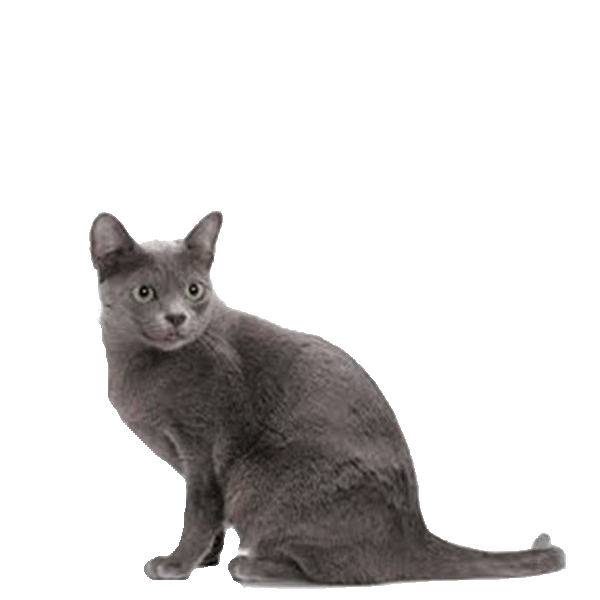
Sam Sawet
The Sam Sawet is a friendly Thai natural breed, valued for its affectionate, intelligent, and sociable nature.
- Size
- Medium
- Lifespan
- 12–16 years
- Origin
- Thailand
- Temperament
- Affectionate
Characteristics
Coat and grooming
How the Sam Sawet coat is built, and what that means when you groom it.
- Coat layers
- Single coat
- Coat texture
- Smooth
- Coat length
- Short
- Shedding
- Moderate shedding
About the Sam Sawet cat breed
The Sam Sawet is a medium-sized natural cat breed from Thailand, known for its affectionate, intelligent, and sociable temperament.
The Sam Sawet is a domestic cat that developed in Thailand. The name translates roughly as "good colour" or "beautiful coat" in Thai, and the breed is grouped with the country's other native cats such as the Korat and the Siamese. Unlike those better-known relatives, the Sam Sawet has remained a regional cat with a small population outside Thailand.
This is a people-oriented cat. It forms close attachments to its household, follows family members from room to room, and stays interested in whatever is happening nearby. Owners describe it as talkative without being demanding, and it tends to greet visitors rather than hide from them.
In build the Sam Sawet is a medium-sized, moderately muscular cat with a short coat that needs little upkeep. It suits homes that can give it attention and company through the day, and it generally lives 12 to 16 years.
| Attribute | Detail |
|---|---|
| Origin | Thailand |
| Size | Medium |
| Lifespan | 12 to 16 years |
| Role | Companion cat |
| Good with | Families, children, other cats, and people who want an interactive pet |
Who it suits
The Sam Sawet fits active households that want a cat involved in daily life. It does well with children who handle it gently and with other pets when introductions are gradual. People who are out of the house for long stretches should plan for company or a second pet, because this breed dislikes being left alone for extended periods.
History and origin of the Sam Sawet
The Sam Sawet is a natural Thai breed that arose from the country's free-breeding domestic cats and remains closely tied to its homeland.
The Sam Sawet comes from Thailand, where domestic cats have lived alongside people for centuries. It belongs to the same broad population of Thai cats that produced the Siamese, the Korat, and the Khao Manee, all of which are documented in Thai cultural and artistic records.
The breed developed naturally rather than through a planned breeding programme in its early history. Cats with its general type appeared among Thailand's village and household cats, and the name Sam Sawet came to describe animals of pleasing colour and coat. Because the type emerged from a working domestic population, exact founding dates are not recorded.
The Sam Sawet has stayed mainly a Thai breed and is far less widespread internationally than the Siamese or Korat. Interest from cat fanciers has grown alongside attention to Thailand's other native cats, but breeding numbers outside the region remain limited.
Because records for the breed are sparse compared with internationally established breeds, anyone seeking a Sam Sawet should expect a small pool of breeders and should confirm a cat's background carefully.
Sam Sawet appearance and physical traits
The Sam Sawet is a medium-sized, moderately muscular cat with a short, close-lying coat and an alert, balanced head.
The Sam Sawet is a medium-sized cat of moderate, balanced proportions. It is neither extremely slender like the modern Siamese nor heavy and cobby. The body is muscular but not bulky, carried on legs of medium length, with a tail in proportion to the body. The head is rounded to slightly wedge-shaped with alert, expressive eyes.
| Feature | Description |
|---|---|
| Height | Roughly 23 to 28 cm at the shoulder |
| Weight | About 3.5 to 5.5 kg |
| Coat | Short, fine, close-lying, low maintenance |
| Colours | Solid and mixed shades; the name refers to attractive coat colour |
| Eyes | Medium to large, alert, colour varies with coat |
Coat and colours
The coat is short and lies flat against the body, so it sheds modestly and needs little grooming. Colour is part of the breed's identity, since the name itself points to coat colour, and a range of solid and combined shades occurs. Eye colour varies with coat and is generally clear and bright. Reported height and weight figures are approximate, as the breed lacks a single widely published international standard.
Sam Sawet temperament and personality
The Sam Sawet is affectionate, playful, curious, and sociable, bonding closely with its family and staying engaged with people and other pets.
The Sam Sawet is an affectionate and sociable cat that wants to be part of household activity. It bonds strongly with its people, often following them around the home and settling near them. The breed is curious and playful, keeping its kitten-like interest in games and exploration well into adulthood.
With family it is warm and interactive, and it usually does well with gentle children. With strangers it tends to be confident and curious rather than fearful, often coming to investigate visitors. With other pets it is generally tolerant, and it can share a home with other cats or a calm dog when introductions are handled gradually.
It is moderately vocal. The breed communicates with its people but is not as loud or persistent as the Siamese. Because it is so people-focused, it is happiest when it has company and can become bored or lonely if left alone for long stretches.
| Trait | Rating |
|---|---|
| Affection | 5 |
| Energy | 4 |
| Trainability | 4 |
| Vocalness | 3 |
| Shedding | 2 |
Sam Sawet care needs and grooming
The Sam Sawet needs only light grooming for its short coat, daily play and interaction, and an indoor home with company and enrichment.
Grooming
- Brush once a week to remove loose hair and keep the short coat smooth
- Check ears weekly and clean gently if needed
- Trim claws every two to three weeks
- Introduce tooth brushing for dental health
Exercise
- Provide daily interactive play with wand toys or chase toys
- Offer climbing space such as a cat tree or shelves
- Rotate puzzle feeders and toys to keep the curious mind busy
- Aim for two or more short, active play sessions each day
Environment
The Sam Sawet does best as an indoor cat with plenty of vertical space, hiding spots, and access to windows for watching outdoors. Because it is so attached to its people, it suits a home where someone is around for much of the day or where a second compatible pet can provide company. A consistent routine helps it feel secure.
Sam Sawet nutrition and feeding guide
The Sam Sawet needs a complete, protein-rich cat diet portioned to its weight and activity, with fresh water and careful avoidance of toxic foods.
As an obligate carnivore, the Sam Sawet needs a complete and balanced diet built around animal protein. A good-quality commercial food formulated for the cat's life stage covers its core needs. Wet food helps with hydration, while dry food can support dental wear and convenient measuring. Fresh water should always be available.
| Life stage | Amount per day | Meals |
|---|---|---|
| Kitten (2 to 12 months) | Per package guidance, fed to appetite | 3 to 4 |
| Adult (1 to 7 years) | About 50 to 70 g dry or equivalent wet | 2 |
| Senior (7+ years) | Adjusted to weight and activity | 2 |
Treats and supplements
Keep treats to no more than about ten percent of daily calories to prevent weight gain. A balanced commercial diet usually provides all required nutrients, so supplements should only be given on a veterinarian's advice. Monitor body condition and adjust portions if the cat gains or loses weight.
Sam Sawet health and lifespan
The Sam Sawet is generally a hardy natural breed with a 12 to 16 year lifespan, benefiting from routine veterinary care and weight management.
As a natural breed with a broad genetic base, the Sam Sawet is generally healthy and hardy, with a typical lifespan of 12 to 16 years. It is not tied to a single narrow gene pool, which tends to reduce the inherited problems seen in some highly refined breeds. Even so, it is subject to the common health issues that affect domestic cats, and regular veterinary care supports a long life.
| Condition | Signs | Note |
|---|---|---|
| Dental disease | Bad breath, drooling, reduced eating | Common in cats; prevent with dental care |
| Obesity | Weight gain, low activity | Manage with portion control and play |
| Upper respiratory infection | Sneezing, nasal discharge, watery eyes | Vaccination lowers risk |
| Kidney disease (older cats) | Increased thirst, weight loss | Screen in senior cats |
Preventive care
- Annual veterinary check-ups, more often for senior cats
- Keep core vaccinations and parasite control current
- Maintain dental hygiene with brushing and check-ups
- Monitor weight and body condition
- Provide fresh water and watch litter box habits
Training the Sam Sawet
The intelligent, food-motivated Sam Sawet learns commands, tricks, and household routines quickly through reward-based training.
The Sam Sawet is intelligent and curious, which makes it more trainable than many cats. It can learn to come when called, use a scratching post, walk on a harness, and perform simple tricks. Its strong bond with people makes it eager to engage in training sessions, especially when food and play are part of the reward.
Basics
- Start with litter training, which most kittens learn quickly with a clean, accessible box
- Reward use of the scratching post to protect furniture
- Teach the cat to come to a sound cue, such as a clicker or a word, paired with a treat
- Build up to simple tricks like sit or high-five in short sessions
- Keep sessions to a few minutes and end on a success
Sam Sawet breeding and reproduction
The Sam Sawet reaches sexual maturity by around six to ten months, carries litters for roughly 63 to 67 days, and typically produces three to five kittens.
Sam Sawet cats reach sexual maturity at roughly six to ten months of age, though responsible breeders wait until a cat is physically mature before breeding. Queens carry a litter for about 63 to 67 days. Litters usually contain three to five kittens.
Newborn kittens are born blind and deaf and depend fully on the mother for warmth and feeding in the first weeks. Eyes open at around one to two weeks, and kittens begin to explore and play by three to four weeks. Weaning is typically complete by about eight weeks, and kittens should stay with the mother and littermates until at least twelve weeks for proper social development.
Because the Sam Sawet is uncommon outside Thailand, breeding stock is limited. Anyone breeding the cat should prioritise health screening, temperament, and the welfare of queen and kittens over rapid expansion of numbers.
| Metric | Value |
|---|---|
| Sexual maturity | 6 to 10 months |
| Gestation | 63 to 67 days |
| Litter size | 3 to 5 kittens |
| Eyes open | 1 to 2 weeks |
| Weaning | About 8 weeks |
| Rehoming age | 12 weeks or older |
Your Sam Sawet on the registry, microchip included
Free lifetime registration for your Sam Sawet, plus a microchip record that satisfies bylaws like Montreal's and never costs a cent.
Registering a Sam Sawet and its microchip in Canada
Montreal already requires pet cats to be chipped and licensed under its animal bylaw, and shelters across the country see escaped indoor cats daily. Wherever you live, a free United Pet Club profile puts a live phone number behind your Sam Sawet. Registering your cat takes minutes and carries no fee, ever.
Where a bylaw like Montreal's requires the chip, the record behind it still falls to you. United Pet Club keeps that record free for life: any manufacturer, unlimited updates, searchable from any clinic in the country. Microchip registration plus a free account covers cat and chip in one sitting.
How do I register my Sam Sawet in Canada?
Sign up free with United Pet Club, add your Sam Sawet's name, colouring, and a photo, and the record is live. Indoor and outdoor cats alike stay covered for life at no charge.
How do I register my Sam Sawet's microchip?
Type the 15-digit number from your vet paperwork into your free account and confirm your contact details. The plan accepts every chip brand and never charges for updates.
Do cats like the Sam Sawet have to be microchipped in Canada?
In some cities, yes. Montreal's bylaw requires pet cats to be chipped and licensed, and other municipalities are moving the same way. The registration behind the chip is yours to keep current, and with United Pet Club that part is free.
What does it cost to register a Sam Sawet in Canada?
Zero. The lifetime plan includes the profile, microchip registration, and every future update, with no renewal fees.
Frequently asked questions about the Sam Sawet
Common questions about the Sam Sawet cover its size, temperament, care needs, lifespan, suitability, and availability.
How big does a Sam Sawet cat get?
It is a medium-sized cat, typically weighing about 3.5 to 5.5 kg, with a moderately muscular, balanced build.
What is the Sam Sawet's temperament like?
It is affectionate, playful, curious, intelligent, and sociable. It bonds closely with its family and stays interested in people and activity around the home.
Is the Sam Sawet easy to care for?
Yes. Its short coat needs only weekly brushing, and routine care is straightforward. Its main need is company and daily interaction, since it dislikes being left alone for long.
How long do Sam Sawet cats live?
They typically live 12 to 16 years with good nutrition, routine veterinary care, and an indoor home.
Is the Sam Sawet good with children and other pets?
Generally yes. It does well with gentle children and can live alongside other cats or a calm dog when introductions are made gradually.
Are Sam Sawet cats easy to find in Canada?
No. The breed is uncommon outside Thailand and has a small breeding population globally, so prospective owners in Canada may need to search extensively and confirm a cat's background carefully before purchase.