
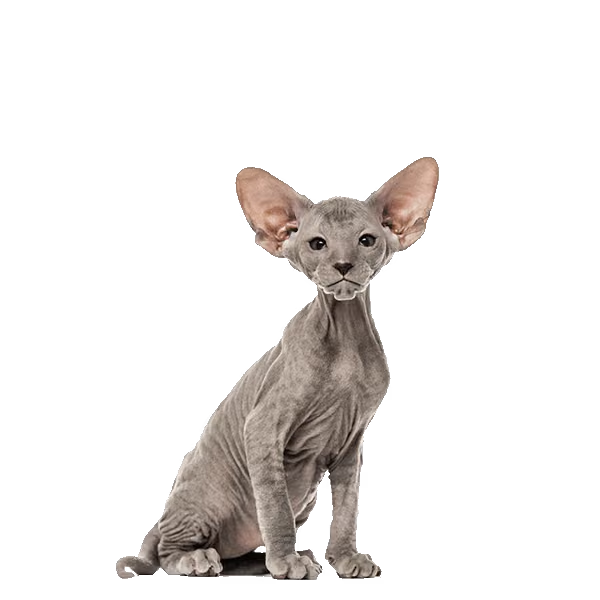
Lykoi
The Lykoi is a striking partially-hairless 'werewolf cat' that is affectionate, intelligent, and loyally devoted to its family.
- Size
- Small
- Lifespan
- 12–15 years
- Origin
- United States
- Temperament
- Affectionate
- Standard colors
- Black, White and Blue and 13 more
Characteristics
Coat and grooming
How the Lykoi coat is built, and what that means when you groom it.
- Coat layers
- Single coat
- Coat length
- Short
- Shedding
- Low shedding
Grooming guidance
Caution: A Lykoi needs protection from the sun.
Bare skin burns quickly and offers no insulation against cold either. Time outdoors needs shade, a coat in cool weather, or a sunscreen a vet has approved for animals.
Lykoi colors and patterns
What each club's breed standard says about every Lykoi color and pattern. Point at a ruling to see the club's own wording.
Breed standards describe the Lykoi in Black, White, Blue, Lilac, Silver, Platinum, Brown, Chocolate, Seal, Sable, Cinnamon, Red, Gold, Cream, Fawn and Champagne. Standard patterns: Solid, Bicolour, Harlequin, Roan, Pointed, Tabby, Mackerel tabby, Classic tabby, Spotted tabby, Ticked tabby, Tortoiseshell, Calico, Torbie, Mink, Sepia, Van, Smoke, Shaded, Chinchilla and Caliby.
| Color or pattern | TICA | CFA | FIFE | GCCF |
|---|---|---|---|---|
| Black | Standard (“Black roan”) | Standard | Standard (“black”) | Standard |
| White | No ruling | Standard | Standard (“white”) | Not recognised (“white self”) |
| Blue | No ruling | Standard | Standard (“blue”) | Standard |
| Lilac | No ruling | Standard | Standard (“lilac”) | Standard |
| Silver | No ruling | No ruling | Standard (“silver”) | No ruling |
| Platinum | No ruling | No ruling | Standard (“lilac”) | No ruling |
| Brown | No ruling | No ruling | Standard (“black tabby”) | No ruling |
| Chocolate | No ruling | Standard | Standard (“chocolate”) | Standard |
| Seal | No ruling | No ruling | Standard (“seal”) | No ruling |
| Sable | No ruling | No ruling | Standard (“brown”) | No ruling |
| Cinnamon | No ruling | Standard | Standard (“cinnamon”) | Standard |
| Red | No ruling | Standard | Standard (“red”) | Standard |
| Gold | No ruling | No ruling | Standard (“golden”) | No ruling |
| Cream | No ruling | Standard | Standard (“cream”) | Standard |
| Fawn | No ruling | Standard | Standard (“fawn”) | Standard |
| Champagne | No ruling | No ruling | Standard (“chocolate”) | No ruling |
| Patterns | ||||
| Solid | Standard (“Solid”) | Standard (“solid-colored”) | Standard (“solid”) | No ruling |
| Bicolour | No ruling | Standard (“bicolor”) | Standard (“bicolour”) | Not recognised (“bicolours”) |
| Harlequin | No ruling | No ruling | Standard (“harlequin”) | No ruling |
| Roan | Standard (“roan”) | Standard (“Roaning”) | Standard (“roan”) | Standard (“roaning”) |
| Pointed | No ruling | No ruling | Standard (“Siamese pointed”) | No ruling |
| Tabby | No ruling | No ruling | Standard (“tabby”) | No ruling |
| Mackerel tabby | No ruling | No ruling | Standard (“mackerel”) | No ruling |
| Classic tabby | No ruling | No ruling | Standard (“blotched”) | No ruling |
| Spotted tabby | No ruling | No ruling | Standard (“spotted”) | No ruling |
| Ticked tabby | No ruling | No ruling | Standard (“ticked”) | No ruling |
| Tortoiseshell | No ruling | No ruling | Standard (“tortie”) | No ruling |
| Calico | No ruling | No ruling | Standard (“tortie with white”) | No ruling |
| Torbie | No ruling | No ruling | Standard (“tortie tabby”) | No ruling |
| Mink | No ruling | No ruling | Standard (“Tonkinese pointed”) | No ruling |
| Sepia | No ruling | No ruling | Standard (“Burmese pointed”) | No ruling |
| Van | No ruling | No ruling | Standard (“van”) | No ruling |
| Smoke | No ruling | No ruling | Standard (“smoke”) | No ruling |
| Shaded | No ruling | No ruling | Standard (“shaded”) | No ruling |
| Chinchilla | No ruling | No ruling | Standard (“shell”) | No ruling |
| Caliby | No ruling | No ruling | Standard (“tortie with white”) | No ruling |


| Color or pattern | TICA | FIFE | GCCF |
|---|---|---|---|
| Blue | No ruling | Standard (“deep blue”) | No ruling |
| Orange | No ruling | Standard (“copper or deep orange”) | No ruling |
| Copper | No ruling | Standard (“copper or deep orange”) | No ruling |
| Amber | No ruling | No ruling | Standard (“amber”) |
| Yellow | No ruling | Standard (“golden yellow”) | No ruling |
| Gold | Standard (“Gold”) | Standard (“golden yellow”) | Standard (“Gold”) |
| Green | No ruling | Standard (“green”) | No ruling |
| Aqua | No ruling | Standard (“aquamarine”) | No ruling |
| Patterns | |||
| Odd-eyed | No ruling | Standard (“odd eyed”) | No ruling |

What the rulings mean
- Standard
- Described by the club's breed standard.
- Not recognised
- The club does not accept this colour or pattern for the breed.
Color changes
How a Lykoi's colors can change over its life.
Brownchanges toCopal
Coat · With age · from 0 to 52 weeks
Blackchanges toRusset
Coat · Progressive
Tabbychanges toSolid
Coat · With age · from 0 to 39 weeks
Whitechanges toShaded
Coat · With age
Whitechanges toChinchilla
Coat · With age
Tabbychanges toShaded
Coat · With age · from 0 to 6 weeks
Tabbychanges toChinchilla
Coat · With age · from 0 to 6 weeks
Bluechanges toTortoiseshell
Coat · With age
Blackchanges toBrown
Coat · With body condition · can change back
Blackchanges toBrown
Coat · In the sun · can change back
Blackchanges toBrown
Coat · Progressive
Whitechanges toPointed
Coat · With age · from 1 to 52 weeks
Solidchanges toSmoke
Coat · With age · from 3 to 104 weeks
Bluechanges toGreen
Eyes · With age · from 4 to 17 weeks
Bluechanges toYellow
Eyes · With age · from 4 to 17 weeks
Bluechanges toGold
Eyes · With age · from 4 to 17 weeks
Bluechanges toCopper
Eyes · With age · from 4 to 17 weeks
Bluechanges toOrange
Eyes · With age · from 4 to 17 weeks
Bluechanges toHazel
Eyes · With age · from 4 to 17 weeks
Bluechanges toAmber
Eyes · With age · from 4 to 17 weeks
Sources
Each ruling comes from the club's published breed standard or color list.
About the Lykoi cat
The Lykoi is a small, partially hairless cat known as the 'werewolf cat' for its patchy roan coat. It is affectionate, intelligent, and closely bonded to its family.
The Lykoi is a small domestic cat that developed in the United States from natural mutations found in feral and domestic shorthair populations. Its common nickname, the werewolf cat, comes from the partial hairlessness around the eyes, muzzle, chin, and feet, combined with a roan coat that mixes black and white hairs across the body. The name Lykoi derives from a Greek word meaning wolf.
Despite its unusual appearance, the Lykoi is a typical cat in temperament. It is affectionate with people it knows, playful well into adulthood, and curious about its surroundings. The breed tends to attach closely to its household and often follows family members from room to room.
The coat is variable. Some hairs are missing entirely in patches, and the amount of coat can change with the seasons. A Lykoi may shed heavily at times and regrow coat at others, giving the breed a shifting, weathered look throughout the year.
| Attribute | Detail |
|---|---|
| Origin | United States |
| Size | Small |
| Lifespan | 12 to 15 years |
| Group/role | Companion cat |
| Good with | Families, attentive owners, other pets when introduced gradually |
Who it suits
The Lykoi fits households that want an active, people-oriented cat and do not mind an uncommon appearance. Its devotion and energy suit homes where someone is present often and willing to play. The partial coat requires some skin care, so owners who can keep up a light grooming routine will do best with the breed.
History of the Lykoi cat
The Lykoi emerged in the United States from natural coat mutations in domestic shorthair cats, with focused breeding beginning in Tennessee in the early 2010s.
The Lykoi is a recent breed. Cats with its distinctive partial-hairlessness mutation had appeared sporadically in feral and domestic shorthair populations, but deliberate breeding did not begin until the 2010s.
The breed's development is associated with breeders in Tennessee who examined two unrelated litters of kittens showing the same roan, partly hairless coat. Veterinary checks ruled out disease and skin disorders as the cause, and DNA testing confirmed the cats were domestic shorthairs rather than relatives of other hairless breeds such as the Sphynx.
To confirm the trait was a recessive natural mutation, breeders paired unrelated cats carrying it. The resulting kittens showed the same coat, establishing that the look could be reproduced reliably. Outcrossing to black domestic shorthairs has remained part of the breeding programme to keep the gene pool healthy.
Cat registries have recognised the Lykoi for competition in stages over the years following its development. It remains an uncommon breed, and breeding programmes are limited in number compared with long-established cats.
Appearance of the Lykoi cat
The Lykoi is a small to medium cat with a partial roan coat, hairless areas on the face and feet, and large eyes that give it a wolf-like look.
The Lykoi has a lean, athletic body of small to medium build. The defining feature is its coat, which is partly absent. Hair is sparse or missing around the eyes, nose, muzzle, chin, and the backs of the feet, while the rest of the body carries a thin roan coat. The mix of pigmented and unpigmented hairs produces the silvery, grizzled look that gives the breed its werewolf nickname.
The head is a modified wedge with large, upright ears and wide, expressive eyes. The legs are slender and the tail is shorter than the body. Because the coat varies, the same cat can look fuller or more bare depending on the season and its molt cycle.
| Trait | Standard |
|---|---|
| Height | Roughly 20 to 25 cm at the shoulder |
| Weight | About 1.8 to 3.6 kg (4 to 8 lb) |
| Coat | Partial roan; hairless on face and feet |
| Colours | Black roan (black and white hairs mixed) |
| Eyes | Large, rounded, often yellow to gold |
Coat and colours
The recognised coat is a black roan, where black hairs are interspersed with white or colourless hairs across the body. The face mask and feet are typically bare. The amount of coat is not fixed: a Lykoi can moult much of its hair and later regrow it, so density shifts through the year. The exposed skin shows the underlying pigment and can range from pink to dark grey.
Lykoi cat temperament
The Lykoi is affectionate, playful, and intelligent, with strong loyalty to its family and a moderate, alert manner around strangers and other pets.
The Lykoi is an engaged, people-focused cat. It forms a close bond with its household and tends to seek out company, often following owners around the home and settling near them. Affection is offered readily once trust is established.
With strangers, the breed is alert and somewhat reserved at first, a behaviour owners sometimes describe as dog-like watchfulness. It warms up after a short period. The Lykoi is intelligent and curious, and it enjoys problem-solving toys and interactive play.
With children and other pets the Lykoi generally does well when introductions are gradual. Its hunting drive is strong, a holdover from the feral origins of the founding cats, so it benefits from outlets such as wand toys and chase games. Energy levels are high through adulthood, and a bored Lykoi may become restless.
| Trait | Rating |
|---|---|
| Affection | 4 |
| Energy | 4 |
| Trainability | 4 |
| Vocalness | 2 |
| Shedding | 3 |
Caring for the Lykoi
The Lykoi needs regular skin care because of its partial coat, plus daily play and a warm indoor environment to stay comfortable and healthy.
The Lykoi's partial coat changes its grooming needs compared with a fully coated cat. Exposed skin can accumulate oils, so the breed benefits from routine cleaning rather than heavy brushing.
Grooming
- Wipe or bathe the skin periodically to remove oil buildup on bare areas
- Clean the ears gently, since exposed ear skin collects debris
- Check the eye and muzzle areas, which are often hairless
- Trim claws every few weeks
- Brush the coated areas lightly during moult to remove loose hair
Exercise
- Provide daily interactive play with wand or chase toys to satisfy the hunting drive
- Offer climbing space such as a cat tree or shelves
- Rotate puzzle feeders and toys to keep the mind occupied
- Allow time for active play in two or more short sessions per day
Environment
The Lykoi is best kept as an indoor cat. Its sparse coat offers limited insulation, so it can lose heat in cold rooms and is sensitive to sunburn on bare skin. Keep the home comfortably warm, provide warm resting spots, and limit direct sun exposure through windows. In Canada's colder climates, maintaining a consistently warm indoor environment is especially important during autumn and winter months.
Feeding the Lykoi
The Lykoi needs a balanced, protein-forward cat diet sized to its small frame and active habits, with fresh water always available.
The Lykoi is an obligate carnivore like all cats and does best on a complete, balanced diet with animal protein as the main ingredient. Because the breed is small but active, portion control matters: it needs enough energy for its high activity without overfeeding. Some owners find a slightly higher calorie intake helps support the bare-skinned body during cold spells, but weight should still be monitored.
| Life stage | Amount per day | Meals |
|---|---|---|
| Kitten (to 12 months) | Free-fed or measured per package, growth formula | 3 to 4 |
| Adult (1 to 7 years) | About 45 to 70 g dry or equivalent wet, to body condition | 2 |
| Senior (7+ years) | Adjusted to activity and body condition | 2 |
Treats and supplements
Treats should stay under about ten percent of daily calories. Plain cooked meat in small amounts works well as a reward. A diet labelled complete and balanced supplies the needed nutrients, so supplements are not usually required. Discuss any supplement, such as a skin or coat product, with a veterinarian before adding it.
Lykoi cat health
The Lykoi is generally healthy with a lifespan of 12 to 15 years, though its bare skin needs attention and the breed is still young enough that long-term data is limited.
The Lykoi is considered a generally healthy breed, with a typical lifespan of 12 to 15 years. Its founding cats came from outbred domestic shorthair stock, and ongoing outcrossing helps maintain genetic diversity. Because the breed is recent, long-term health records are still being gathered, and no breed-defining hereditary disease has been firmly established. The main day-to-day concerns relate to the exposed skin.
| Condition | Signs | Note |
|---|---|---|
| Skin oil buildup | Greasy or dirty bare areas, odour | Manage with routine skin cleaning |
| Sunburn | Reddened or sore exposed skin | Limit direct sun on bare areas |
| Cold sensitivity | Seeking heat, shivering | Keep the home warm; provide warm beds |
| Dental disease | Bad breath, drooling, gum redness | Common in cats generally; brush teeth and have checkups |
Preventive care
- Schedule annual veterinary exams, more often for senior cats
- Keep core vaccinations and parasite prevention up to date
- Maintain a dental care routine
- Inspect the skin regularly for irritation, parasites, or sores
- Monitor body condition to prevent weight gain
Training the Lykoi
The Lykoi is intelligent and responsive, well suited to play-based training, trick learning, and harness work using positive rewards.
The Lykoi is one of the more trainable cats. Its intelligence and bond with people mean it pays attention to its owners and learns quickly when sessions are short and rewarding. The breed responds well to clicker training and food rewards, and many individuals enjoy learning tricks, fetch, or harness walking. The strong prey drive can be channelled into trained games rather than left to find its own outlets.
Basics
- Start with litter habits, which most kittens learn readily, and keep boxes clean
- Introduce a marker such as a clicker, pairing it with a small treat
- Teach simple cues like come and sit using lure-and-reward
- Build up to tricks or harness training in short daily sessions
- Redirect rough play or hunting directed at people onto toys, never hands
Breeding the Lykoi
The Lykoi coat comes from a recessive gene, so planned breeding and outcrossing to black domestic shorthairs are used to produce kittens and keep the line healthy.
The Lykoi coat is caused by a recessive mutation, which means a kitten shows the look only when it inherits the gene from both parents. Breeders pair two Lykoi to produce fully coated Lykoi kittens, and they also outcross to black domestic shorthairs to widen the gene pool. Cats from an outcross carry the gene without showing it and can be bred back into the programme.
Females reach sexual maturity within their first year, though responsible breeders wait until a cat is mature and health-checked before breeding. Gestation runs about 63 to 67 days, similar to other cats. Litters are usually small. Kittens are born with more coat than they keep and develop the characteristic partial-hairless pattern as they grow.
Queens raise their kittens for several weeks, with weaning around four to six weeks and homing usually after twelve weeks once kittens are socialised and vaccinated. Because the breed is uncommon, waiting lists for kittens from established breeders are normal. Buyers in Canada can look for breeders recognised by the Canadian Cat Association (CCA) or affiliated international registries.
| Metric | Value |
|---|---|
| Sexual maturity | Within the first year |
| Gestation | About 63 to 67 days |
| Typical litter size | 2 to 5 kittens |
| Weaning age | 4 to 6 weeks |
| Earliest homing | About 12 weeks |
| Inheritance | Recessive coat gene; outcross to black domestic shorthair |
Your Lykoi on the registry, microchip included
Free lifetime registration for your Lykoi, plus a microchip record that satisfies bylaws like Montreal's and never costs a cent.
Registering a Lykoi and its microchip in Canada
Registering a Lykoi is a smaller job than most people expect: name, colouring, photo, contact details, save. The record costs nothing for the life of the cat and works chip or no chip. Cat registration is where to start.
A chip the vet implanted but nobody registered reads as a dead end on the scanner. Register the microchip free on the lifetime plan: every brand a Canadian clinic implants is accepted, updates after each move are free, and the record answers the lookup tools shelters lean on. Create your free account and close both gaps tonight.
How do I register my Lykoi in Canada?
Sign up free with United Pet Club, add your Lykoi's name, colouring, and a photo, and the record is live. Indoor and outdoor cats alike stay covered for life at no charge.
How do I register my Lykoi's microchip?
Type the 15-digit number from your vet paperwork into your free account and confirm your contact details. The plan accepts every chip brand and never charges for updates.
Do cats like the Lykoi have to be microchipped in Canada?
In some cities, yes. Montreal's bylaw requires pet cats to be chipped and licensed, and other municipalities are moving the same way. The registration behind the chip is yours to keep current, and with United Pet Club that part is free.
What does it cost to register a Lykoi in Canada?
Zero. The lifetime plan includes the profile, microchip registration, and every future update, with no renewal fees.
Lykoi cat frequently asked questions
Common questions about the Lykoi cover its size, temperament, care needs, lifespan, suitability, and how hard it is to find in Canada.
How big does a Lykoi get?
The Lykoi is a small to medium cat, usually weighing about 1.8 to 3.6 kg (4 to 8 lb) with a lean, athletic build.
What is the Lykoi's temperament like?
It is affectionate, playful, and intelligent, with strong loyalty to its family. It can be reserved with strangers at first but warms up quickly, and it keeps a high prey drive into adulthood.
Is the Lykoi hard to care for?
Care is moderate. The partial coat needs routine skin cleaning, the cat should be kept warm indoors, and it needs daily play. None of these tasks is difficult, but they are ongoing.
How long do Lykoi cats live?
A Lykoi typically lives 12 to 15 years with good veterinary care, proper nutrition, and an indoor home.
Is the Lykoi a good family pet?
Yes. It bonds closely with its household and generally does well with children and other pets when introductions are gradual. It suits homes where someone is present often to give it attention and play.
Is the Lykoi hypoallergenic?
No. The partial coat still produces dander and the allergen found in cat saliva, so the breed is not hypoallergenic. People with allergies should spend time with the breed before committing.
Are Lykoi cats easy to find in Canada?
No. The Lykoi is a recent and uncommon breed with a limited number of breeding programmes, so kittens are scarce and waiting lists are common. Prospective owners may need to contact breeders in the United States as well.
From the community
Ask about the LykoiNo questions about the Lykoi yet. Be the first to ask.
Browse Cat breeds