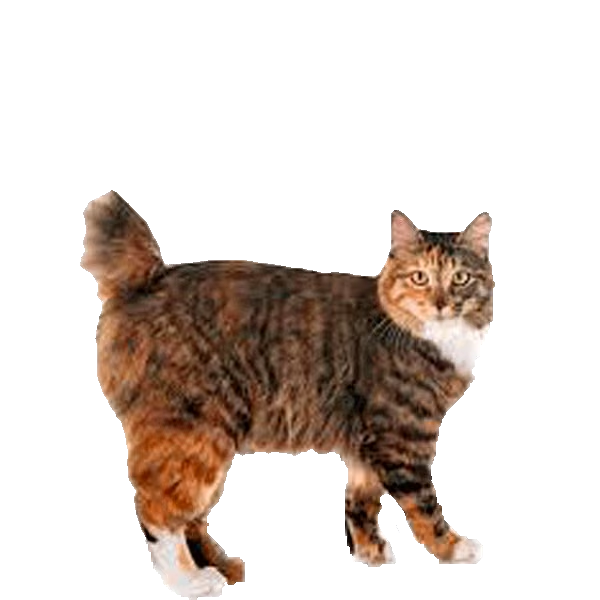
The Kurilian Bobtail is a good-natured, playful breed from the Kuril Islands famed for its fluffy bobbed tail and hardy, athletic build.
How the Kurilian Bobtail coat is built, and what that means when you groom it.
Critical: A Kurilian Bobtail should not be shaved.
The undercoat keeps heat out as well as in, and the outer coat shields the skin from sun and insect bites. Clipping the whole coat off removes both. It often grows back patchy, soft or a different colour, and in some animals the guard hairs never return properly. Brush the undercoat out instead of cutting it off.
Information: A Kurilian Bobtail drops its undercoat in heavy bursts.
The undercoat comes out in heavy bursts over a few weeks. An undercoat rake, or a bath followed by a proper blow-dry, clears it far faster than daily brushing. Clipping the coat down is not a shortcut for this.
The Kurilian Bobtail is a medium-sized cat from Russia's Kuril Islands, known for its short pom-pom tail, athletic build, and friendly, playful character.
The Kurilian Bobtail is a medium-sized cat that developed naturally on the Kuril Islands, an archipelago situated between Russia and Japan. Its most distinctive feature is a short, kinked tail that forms a soft pom-pom rather than a full-length tail. No two tails are alike, and the bobbed shape comes from a natural genetic trait rather than deliberate human selection.
This is a sturdy, well-muscled cat built for an active outdoor climate. It is a strong jumper and climber, and many individuals show a fondness for water. The breed has a calm, good-natured disposition and tends to bond closely with the people it lives with.
The Kurilian Bobtail suits households that want an interactive, intelligent companion. It gets along with children and other pets, stays playful well into adulthood, and adapts to apartment or house living as long as it has room to climb and explore.
| Attribute | Detail |
|---|---|
| Origin | Russia (Kuril Islands) |
| Size | Medium |
| Lifespan | 15 to 20 years |
| Group/role | Natural companion cat |
| Good with | Children, other cats, and dogs |
This breed fits active families, single owners who spend time at home, and households that already have pets. It enjoys company and interactive play, so it does best where someone is around for part of the day. Those looking for a quiet, aloof cat may prefer a different breed, since the Kurilian Bobtail is sociable and likes to take part in daily activity.
The Kurilian Bobtail developed naturally over centuries on the Kuril Islands and was brought to mainland Russia in the mid-1900s, gaining formal breed recognition in the 1990s.
The Kurilian Bobtail comes from the Kuril Islands, a chain of volcanic islands stretching between the Russian region of Kamchatka and the Japanese island of Hokkaido. Cats with short, bobbed tails have lived on these islands for centuries, shaped by the local climate rather than by planned breeding.
During the mid-twentieth century, Russian scientists and military personnel stationed on the islands brought some of these cats back to the mainland. Their hardy build, hunting ability, and friendly temperament made them popular companions, and small populations became established in Russia.
Organised breeding began in Russia in the late twentieth century. Breed standards were drawn up in the 1990s, and Russian cat associations recognised the Kurilian Bobtail as a distinct breed during that decade. European registries followed, and the breed was later accepted by international organisations.
The Kurilian Bobtail remains uncommon outside Russia and parts of Europe. It is sometimes confused with the Japanese Bobtail, but the two breeds developed separately and differ in body type and tail structure.
The Kurilian Bobtail is a medium, semi-cobby cat with a muscular body, a short pom-pom tail, and either a short or semi-long coat available in many colours and patterns.
The Kurilian Bobtail has a compact, semi-cobby body with strong bones and well-developed muscle. The back rises slightly toward the rear, and the hind legs are a little longer than the front legs, giving the cat a sloped, athletic outline. The head is a modified wedge with rounded contours and medium ears set fairly wide apart.
The defining feature is the tail. It is short and kinked, made up of one or more curves and angles, and covered in fuller fur that forms a pom-pom. Each tail is unique in shape and length, and a normal full-length tail is not permitted in the breed.
| Trait | Standard |
|---|---|
| Height | About 23 to 30 cm at the shoulder |
| Weight | 3 to 7 kg |
| Coat | Short or semi-long, dense double coat |
| Colours | Most colours and patterns, including tabby, solid, and bicolour |
| Eyes | Rounded, walnut shaped, in colours that complement the coat |
The breed comes in two coat lengths. The shorthair has a dense, plush coat with a firm topcoat and soft undercoat. The semi-longhair has longer fur with a fuller ruff, tail, and britches. Both versions carry a weather-resistant double coat suited to a cold, damp climate. A wide range of colours and patterns is accepted, with brown tabby among the more common.
The Kurilian Bobtail is playful, intelligent, and sociable, bonding closely with its family and getting along well with children and other animals.
The Kurilian Bobtail has a calm, good-natured temperament paired with an active, curious mind. It stays playful throughout its life and enjoys games, puzzle toys, and interactive activity with its people. Many individuals learn to fetch and show a strong interest in running water.
With family, the breed is affectionate and tends to follow household members from room to room. It bonds closely but is not usually demanding or loud. With strangers it is generally confident rather than shy, though it may take a short time to warm to new visitors.
The breed is sociable with other animals. It typically lives well with other cats and with dogs that accept cats, and its gentle manner makes it suitable for homes with children. Its hunting background means it keeps a strong play drive, so it benefits from outlets that let it chase and pounce.
| Trait | Rating |
|---|---|
| Affection | 4 |
| Energy | 4 |
| Trainability | 4 |
| Vocalness | 2 |
| Shedding | 3 |
The Kurilian Bobtail needs weekly brushing, daily active play, and a stable home environment, with more frequent grooming for the semi-longhair coat.
The Kurilian Bobtail adapts to apartments or houses as long as it has vertical space and enrichment. It tolerates cold well thanks to its double coat. Because it is sociable, it does best in homes where it gets regular company and is not left alone for long stretches every day.
The Kurilian Bobtail does well on a complete, protein-rich cat food fed in measured meals, adjusted for age, weight, and activity level.
The Kurilian Bobtail is an active, muscular cat that does best on a complete and balanced diet built around animal protein. Choose a quality commercial food formulated for the cat's life stage, or feed a balanced diet under veterinary guidance. Fresh water should always be available, and many individuals prefer a flowing water source.
Portion size depends on age, weight, and activity. Measure food rather than free-feeding to avoid weight gain, and monitor body condition over time. Kittens need more frequent meals to support growth, while adults usually do well on two meals a day.
| Life stage | Amount per day | Meals |
|---|---|---|
| Kitten (2 to 6 months) | Per product guidance for growth | 3 to 4 |
| Junior (6 to 12 months) | Per product guidance, adjust to growth | 2 to 3 |
| Adult | About 40 to 60 g dry or equivalent wet | 2 |
| Senior | Adjust to weight and activity | 2 |
Keep treats to no more than about ten percent of daily calories. Small pieces of cooked plain meat work well as rewards during play and training. A cat on a complete commercial diet usually needs no extra supplements. Discuss joint, skin, or coat supplements with a veterinarian before adding them, particularly for older cats.
The Kurilian Bobtail is a hardy natural breed with a typical lifespan of 15 to 20 years and few breed-specific health problems.
The Kurilian Bobtail is regarded as a robust, healthy breed because it developed naturally without heavy human intervention. It typically lives 15 to 20 years with good care. The bobbed tail comes from a dominant gene and is not associated with the spinal problems seen in some other tailless breeds.
Like all cats, it can develop general feline health issues, so routine veterinary care and a healthy weight matter throughout its life. Responsible breeders screen breeding cats to keep the population sound.
| Condition | Signs | Note |
|---|---|---|
| Dental disease | Bad breath, drooling, trouble eating | Common in all cats; regular brushing helps |
| Obesity | Weight gain, low activity | Manage with measured meals and play |
| Digestive upset | Vomiting, loose stools | Often diet related; review food if persistent |
| Parasites | Scratching, poor coat | Keep up flea, tick, and worm control |
The Kurilian Bobtail is intelligent and trainable, learning tricks such as fetch and responding well to short, reward-based sessions.
The Kurilian Bobtail is one of the more trainable cat breeds. It is intelligent, attentive, and motivated by play and food, which makes it receptive to basic training and simple tricks. Many learn to fetch, come when called, and walk on a harness. Keep sessions short and end on a success to hold the cat's interest.
The Kurilian Bobtail reaches maturity around 12 months, carries a dominant bobtail gene, and produces small to average litters raised by attentive mothers.
The Kurilian Bobtail reaches sexual maturity at roughly nine to twelve months, though breeders usually wait until the cat is fully grown and health screened before mating. The bobtail trait is controlled by a dominant gene, so kittens reliably inherit the short tail, and tail shape varies from kitten to kitten.
Pregnancy lasts about 63 to 67 days. Litters are typically small to average in size. Queens are attentive mothers, and kittens are weaned at around eight weeks. Responsible breeders keep kittens with the mother and litter until they are socialised, vaccinated, and ready for new homes, usually at twelve to fourteen weeks. Because the breed is uncommon outside Russia and Europe, prospective owners may face waiting lists. Canadians interested in the breed should contact specialist breeders and confirm whether the Canadian Kennel Club (CKC) or relevant cat registries in Canada recognise the breed before importing a kitten.
| Metric | Value |
|---|---|
| Sexual maturity | About 9 to 12 months |
| Gestation | About 63 to 67 days |
| Average litter size | 2 to 5 kittens |
| Weaning age | About 8 weeks |
| Tail inheritance | Dominant bobtail gene |
Free lifetime registration for your Kurilian Bobtail, plus a microchip record that satisfies bylaws like Montreal's and never costs a cent.
Registering a Kurilian Bobtail is a smaller job than most people expect: name, colouring, photo, contact details, save. The record costs nothing for the life of the cat and works chip or no chip. Cat registration is where to start.
Where a bylaw like Montreal's requires the chip, the record behind it still falls to you. United Pet Club keeps that record free for life: any manufacturer, unlimited updates, searchable from any clinic in the country. Microchip registration plus a free account covers cat and chip in one sitting.
Sign up free with United Pet Club, add your Kurilian Bobtail's name, colouring, and a photo, and the record is live. Indoor and outdoor cats alike stay covered for life at no charge.
Type the 15-digit number from your vet paperwork into your free account and confirm your contact details. The plan accepts every chip brand and never charges for updates.
In some cities, yes. Montreal's bylaw requires pet cats to be chipped and licensed, and other municipalities are moving the same way. The registration behind the chip is yours to keep current, and with United Pet Club that part is free.
Zero. The lifetime plan includes the profile, microchip registration, and every future update, with no renewal fees.
Common questions about the Kurilian Bobtail's size, temperament, care needs, lifespan, suitability for families, and availability in Canada.
It is a medium-sized cat, usually weighing 3 to 7 kg with a strong, muscular body. Males tend to be heavier than females.
It is playful, good-natured, intelligent, and sociable. The breed bonds closely with its family and gets along with children, other cats, and cat-friendly dogs.
No. It needs weekly brushing (more for the semi-longhair coat), daily play, and routine veterinary care. The double coat and hardy build make it relatively straightforward to maintain.
With good care it typically lives 15 to 20 years. It is considered a healthy natural breed with few inherited problems.
Yes. Its gentle, sociable nature suits homes with children and other pets, particularly active households that can provide play and company.
The breed is uncommon outside Russia and parts of Europe. Canadian buyers may need to contact specialist breeders abroad and join a waiting list to find a kitten.
It is athletic and enjoys daily interactive play and climbing. Cat trees, wand toys, and puzzle feeders help meet its energy and mental needs.
