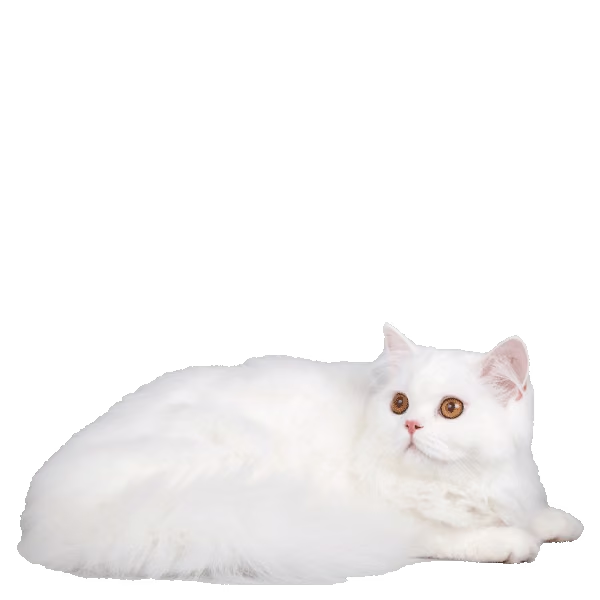
The Highlander is a playful, affectionate breed distinguished by its curled ears, bobbed tail, and outgoing, dog-like personality.
How the Highlander coat is built, and what that means when you groom it.
Critical: A Highlander should not be shaved.
The undercoat keeps heat out as well as in, and the outer coat shields the skin from sun and insect bites. Clipping the whole coat off removes both. It often grows back patchy, soft or a different colour, and in some animals the guard hairs never return properly. Brush the undercoat out instead of cutting it off.
The Highlander is a large, affectionate cat from the United States, easy to recognise by its curled ears, short bobbed tail, and outgoing, dog-like personality.
The Highlander is a large domestic cat developed in the United States in the mid-2000s. Two features set it apart: ears that curl loosely backward at the tips and a naturally short, bobbed tail. The body is muscular and substantial, and the breed often keeps a kitten-like willingness to play well into adulthood.
Most Highlanders fall into the large range for domestic cats, with toms heavier than queens. The coat comes in short and long versions, and the face has a broad muzzle and a strong chin that give it an alert, open expression. For many owners, personality is the main draw. The breed is curious, people-oriented, and active, and it tends to follow household members from room to room.
The Highlander is often described as dog-like because many individuals enjoy fetch, learn simple cues, and greet visitors rather than hiding. It is a relatively young breed, so registry recognition and breeding populations are still smaller than those of long-established cats.
| Attribute | Detail |
|---|---|
| Origin | United States |
| Size | Large |
| Lifespan | 10 to 15 years |
| Role | Companion and family cat |
| Good with | Children, dogs, and other cats when introduced properly |
The Highlander fits active households that want an involved, interactive cat rather than an independent one. It does well with families, including homes with children and other pets, because it is sociable and tolerant. People who are away for long stretches every day should plan for company or a second pet, as this cat seeks attention and play.
The Highlander is a recent American breed created in the mid-2000s by crossing curl-eared and bobtailed cats, with the goal of producing a large, friendly companion.
The Highlander is a modern breed that took shape in the United States. Breeding work to establish it began around 2004, which makes it one of the younger pedigree cats. The aim was a large, sturdy cat with curled ears, a short tail, and a sociable temperament.
The breed was built from crosses involving curl-eared cats and bobtailed cats. The curled ear and the short tail both come from the founding stock, and breeders selected for these traits along with size and a friendly disposition. Early in development the breed was sometimes recorded under a different working name before the name Highlander came into use.
The International Cat Association tracked the breed through its development programme, which is the path new breeds follow as they move toward full recognition. Numbers grew slowly, and the Highlander remains less common than established breeds.
Because the breed is recent, its written record is short and centred on the work of the founding breeders. Pedigrees, registry classes, and the standard continue to be refined as the population grows.
The Highlander is a large, muscular cat with loosely curled ears, a short bobbed tail, a broad muzzle, and a coat that comes in short and long lengths across many colours.
The Highlander is a large, powerfully built cat. The body is long and muscular with a deep chest, and the hind legs are slightly longer than the front legs. The two signature features are the ears, which curl gently backward, and the tail, which is naturally short and can be carried high.
The head is broad with a flat-to-gentle forehead, prominent whisker pads, and a strong, deep chin. The eyes are large and set wide, giving an open, alert look.
| Trait | Standard |
|---|---|
| Height | Roughly 25 to 30 cm at the shoulder |
| Weight | About 4.5 to 9 kg, toms heavier than queens |
| Coat | Short or long, dense and soft |
| Colours | Many colours and patterns, with tabby patterns common |
| Eyes | Large, wide-set, colour in proportion to coat |
The coat occurs in two lengths. The shorthair version is dense and close-lying, while the longhair version is longer and softer with feathering on the tail and legs. A wide range of colours and patterns is accepted, and tabby markings appear often. Whatever the length, the coat is fairly low-maintenance for a cat of this size.
The Highlander is outgoing, affectionate, and playful, often described as dog-like for its sociability with people, children, and other pets.
The Highlander is friendly and people-focused. It tends to stay close to household members, joins in daily activity, and greets visitors instead of retreating. The breed keeps a playful streak through adulthood and enjoys games, climbing, and interactive toys.
With family, the Highlander is affectionate and often seeks laps and attention. With strangers, most individuals are confident and curious rather than shy. With children, the breed is usually patient and tolerant, though young kids should be shown how to handle a cat gently. With other pets, including dogs and cats, the Highlander generally adjusts well when introductions are gradual.
The dog-like label comes from behaviours such as fetching toys, following owners, and responding to simple cues. This is a social cat that prefers company to long stretches alone.
| Trait | Rating |
|---|---|
| Affection | 5 |
| Energy | 4 |
| Trainability | 4 |
| Vocalness | 3 |
| Shedding | 3 |
The Highlander needs routine brushing, daily active play, and a stimulating indoor space, with grooming demands varying by short or long coat.
The Highlander suits an indoor home with vertical space to climb and perches near windows. Because it is social, it does best where someone is around for part of the day or where it has an animal companion. Quiet hiding spots should also be available so the cat can rest undisturbed.
The Highlander needs a complete, protein-forward cat diet portioned to its large frame and activity level, with fresh water always available.
The Highlander does well on a complete and balanced cat food with animal protein as the main ingredient. As a large, active cat it may eat more than an average-sized breed, but portions should still match age, weight, and activity to avoid weight gain. Both wet and dry foods work, and many owners combine them. Fresh water should always be available.
| Life stage | Amount per day | Meals |
|---|---|---|
| Kitten (to 12 months) | Per label, fed to appetite while growing | 3 to 4 |
| Adult (1 to 7 years) | About 60 to 90 g dry or equivalent wet | 2 |
| Senior (7 years and older) | Adjusted to weight and activity | 2 |
Keep treats to about 10 percent of daily calories and reduce meal portions to match. A cat on a complete diet usually needs no extra supplements, but a veterinarian may suggest joint support for a large, ageing cat or a coat supplement in specific cases. Introduce any new food gradually over several days.
The Highlander generally lives 10 to 15 years; routine veterinary care, weight control, and attention to the ears support a healthy life.
The Highlander is generally a healthy breed with a typical lifespan of 10 to 15 years. As a young breed its long-term health picture is still being documented, and responsible breeders screen breeding cats and avoid pairings that could exaggerate the ear curl or tail to the point of discomfort. Routine veterinary care, vaccinations, parasite control, and a healthy weight are the foundations of good health.
| Condition | Signs | Note |
|---|---|---|
| Ear infections | Scratching, odour, discharge, head shaking | The curled ear can trap debris, so keep ears clean and dry |
| Obesity | Weight gain, low activity, trouble grooming | Common in large indoor cats; control portions and play daily |
| Dental disease | Bad breath, drooling, reluctance to eat | Regular brushing and dental checks help prevent it |
| Hypertrophic cardiomyopathy | Lethargy, fast breathing, weakness | A heart condition seen across many cat breeds; vet screening helps |
The Highlander is intelligent and people-oriented, making it one of the more trainable cats for cues, fetch, and harness walking using reward-based methods.
The Highlander's curiosity and bond with people make it receptive to training. Many individuals learn to fetch, come when called, and respond to simple cues. Short, positive sessions work best, and the breed's playful nature can be used to keep training enjoyable. Litter training is usually straightforward with a clean box in a quiet spot.
Highlander breeding focuses on health and temperament alongside the curled ear and bobbed tail, with care taken not to exaggerate either trait.
Cats reach sexual maturity at several months of age, though responsible breeders wait until a cat is physically mature and health-screened before breeding. Pregnancy in cats lasts roughly 63 to 67 days, and litters commonly number three to five kittens.
With the Highlander, breeding aims to keep the ear curl and the short tail within a healthy range while protecting overall structure, temperament, and vigour. Because both signature traits come from specific genetics, careful pairing matters so that the curl and tail stay moderate and do not affect the cat's comfort.
Kittens are born with straight ears that begin to curl in the first weeks. They should stay with the mother and litter until around 12 weeks so they are weaned, socialised, and started on vaccinations before going to new homes. Early handling helps support the breed's sociable nature.
| Metric | Value |
|---|---|
| Sexual maturity | Around 5 to 10 months |
| Gestation | About 63 to 67 days |
| Average litter size | 3 to 5 kittens |
| Weaning age | About 8 weeks |
| Recommended rehoming age | About 12 weeks |
Free lifetime registration for your Highlander, plus a microchip record that satisfies bylaws like Montreal's and never costs a cent.
Montreal already requires pet cats to be chipped and licensed under its animal bylaw, and shelters across the country see escaped indoor cats daily. Wherever you live, a free United Pet Club profile puts a live phone number behind your Highlander. Registering your cat takes minutes and carries no fee, ever.
A chip the vet implanted but nobody registered reads as a dead end on the scanner. Register the microchip free on the lifetime plan: every brand a Canadian clinic implants is accepted, updates after each move are free, and the record answers the lookup tools shelters lean on. Create your free account and close both gaps tonight.
Sign up free with United Pet Club, add your Highlander's name, colouring, and a photo, and the record is live. Indoor and outdoor cats alike stay covered for life at no charge.
Type the 15-digit number from your vet paperwork into your free account and confirm your contact details. The plan accepts every chip brand and never charges for updates.
In some cities, yes. Montreal's bylaw requires pet cats to be chipped and licensed, and other municipalities are moving the same way. The registration behind the chip is yours to keep current, and with United Pet Club that part is free.
Zero. The lifetime plan includes the profile, microchip registration, and every future update, with no renewal fees.
Common questions about the Highlander cat cover its size, temperament, care needs, lifespan, suitability for families, and availability in Canada.
The Highlander is a large breed. Many adults weigh between about 4.5 and 9 kg, with males larger than females, on a muscular, substantial frame.
It is outgoing, affectionate, and playful, and is often called dog-like because it follows people, greets visitors, and can learn fetch and simple cues.
Care is moderate. The shorthair needs weekly brushing and the longhair a few times a week, the curled ears need regular gentle checks, and the cat needs daily active play.
The typical lifespan is 10 to 15 years with routine veterinary care, a healthy weight, and good dental and ear hygiene.
Yes. It is generally sociable and tolerant with children, dogs, and other cats when introductions are made gradually.
They are relatively uncommon because the breed is recent and bred in smaller numbers, so finding a kitten from a reputable breeder may take time and a waitlist. The Canadian Kennel Club does not register cats; check the International Cat Association or a reputable Highlander breeder directory for Canadian breeders.
Both traits come from the breed's founding genetics and are selected for in breeding. Kittens are born with straight ears that begin to curl in the first weeks.
