

Labrador Retriever
The Labrador Retriever is a friendly, outgoing breed beloved as a family companion and devoted working dog.
- Size
- Large
- Lifespan
- 11–13 years
- Origin
- Canada
- Temperament
- Friendly
- Standard colors
- Black, Chocolate, Fox red and Yellow
Characteristics
Coat and grooming
How the Labrador Retriever coat is built, and what that means when you groom it.
- Coat layers
- Double coat
- Coat texture
- Smooth
- Coat length
- Short
- Shedding
- Seasonal shedding
Grooming guidance
Critical: A Labrador Retriever should not be shaved.
The undercoat keeps heat out as well as in, and the outer coat shields the skin from sun and insect bites. Clipping the whole coat off removes both. It often grows back patchy, soft or a different colour, and in some animals the guard hairs never return properly. Brush the undercoat out instead of cutting it off.
Information: A Labrador Retriever drops its undercoat in heavy bursts.
The undercoat comes out in heavy bursts over a few weeks. An undercoat rake, or a bath followed by a proper blow-dry, clears it far faster than daily brushing. Clipping the coat down is not a shortcut for this.
Labrador Retriever colors and patterns
What each club's breed standard says about every Labrador Retriever color and pattern. Point at a ruling to see the club's own wording.
Breed standards describe the Labrador Retriever in Black, Chocolate, Fox red and Yellow. Standard patterns: Solid.
| Color or pattern | FCI | AKC | UKC | KC | KUSA |
|---|---|---|---|---|---|
| Black | Standard (“wholly black”) | Standard (“Black”) | Standard (“solid black”) | Standard (“wholly black”) | Standard (“whole black”) |
| Chocolate | Standard (“liver/chocolate”) | Standard (“Chocolate”) | Standard (“any solid shade of chocolate”) | Standard (“liver/chocolate”) | Standard (“liver/chocolate”) |
| Fox red | Standard (“Yellows range from light cream to red fox”) | Standard (“Yellows may range in color from fox-red to light cream”) | Standard (“any solid shade of yellow from red to pale cream”) | No ruling | No ruling |
| Yellow | Standard (“yellow”) | Standard (“Yellow”) | Standard (“any solid shade of yellow from red to pale cream”) | Standard (“yellow”) | Standard (“yellow”) |
| Albino | Disqualifying | Disqualifying | Disqualifying (“albinism”) | Not recognised | Not recognised |
| Silver | Disqualifying | Disqualifying | Disqualifying | Not recognised (“Silver”) | Not recognised |
| Charcoal | Disqualifying | Disqualifying | Disqualifying | Not recognised (“Charcoal”) | Not recognised |
| Champagne | Disqualifying | Disqualifying | Disqualifying | Not recognised (“Champagne”) | Not recognised |
| Patterns | |||||
| Solid | Standard (“wholly”) | Standard (“blacks are all black”) | Standard (“solid”) | Standard (“wholly”) | Standard (“whole”) |
| Brindle | Disqualifying | Disqualifying (“brindle markings”) | Disqualifying | Not recognised | Not recognised |
| Tan point | Disqualifying | Disqualifying (“tan markings”) | Disqualifying | Not recognised | Not recognised |
| Reverse brindle | Disqualifying | Disqualifying (“brindle markings”) | Disqualifying | Not recognised | Not recognised |

%22%3E%3Cg%20fill%3D%22%231C1C1C%22%3E%3Cpath%20d%3D%22M-3.7%20-4L-4.5%200.5L-5.6%205L-5.7%209.5L-6.7%2014L-8.2%2018.5L-8.6%2023L-9.1%2027.5L-10.7%2032L-10.5%2036.5L-10.7%2041L-11%2045.5L-11%2050L-11.4%2054.5L-11.4%2059L-12.6%2063.5L-13.3%2068L-11.5%2068L-10.1%2063.5L-9.9%2059L-9.2%2054.5L-9%2050L-9.6%2045.5L-9%2041L-8.8%2036.5L-9.1%2032L-6.9%2027.5L-7%2023L-6.2%2018.5L-4.6%2014L-3.1%209.5L-3%205L-3.3%200.5L-1.3%20-4ZM1.6%20-4L0.1%200.5L0.6%205L-1.5%209.5L-2.6%2014L-4%2018.5L-4.3%2023L-5.6%2027.5L-4.7%2032L-4.2%2036.5L-4.7%2041L-4.9%2045.5L-5%2050L-6.1%2054.5L-6.5%2059L-7.8%2063.5L-8.5%2068L-6.9%2068L-5.7%2063.5L-4.8%2059L-3.3%2054.5L-2.1%2050L-2.9%2045.5L-3.1%2041L-3.1%2036.5L-2.3%2032L-2.5%2027.5L-1.6%2023L-1.9%2018.5L-0.6%2014L1%209.5L1.7%205L2.6%200.5L3%20-4ZM7.6%20-4L6.6%200.5L5.6%205L5.2%209.5L3.7%2014L3.4%2018.5L3.5%2023L2.5%2027.5L3%2032L3%2036.5L1.9%2041L2.7%2045.5L1.8%2050L0.3%2054.5L-1.7%2059L-1%2063.5L-3.7%2068L-1.6%2068L0.3%2063.5L0.8%2059L2.7%2054.5L3.2%2050L4.2%2045.5L4.2%2041L4.4%2036.5L4.7%2032L3.8%2027.5L4.8%2023L5.3%2018.5L4.9%2014L6.6%209.5L7.9%205L7.6%200.5L9.7%20-4ZM11.3%20-4L10.8%200.5L11.7%205L11.3%209.5L11.2%2014L10.3%2018.5L10%2023L10.6%2027.5L9.2%2032L8.2%2036.5L7.6%2041L6%2045.5L4.7%2050L5.1%2054.5L3.6%2059L3.8%2063.5L3.7%2068L6.2%2068L5.8%2063.5L5.6%2059L7.4%2054.5L7.3%2050L8.3%2045.5L10%2041L11.1%2036.5L10.8%2032L12.8%2027.5L12.6%2023L13.1%2018.5L12.7%2014L13%209.5L13.6%205L13%200.5L12.9%20-4ZM19.6%20-4L19.4%200.5L18.1%205L18.4%209.5L17.8%2014L16.7%2018.5L15%2023L13.8%2027.5L13.2%2032L13.3%2036.5L11.7%2041L10.9%2045.5L11.9%2050L12.2%2054.5L12.5%2059L11.6%2063.5L11%2068L12.8%2068L13.4%2063.5L14.2%2059L14.8%2054.5L13.3%2050L13.7%2045.5L14.5%2041L14.8%2036.5L14.8%2032L16%2027.5L16.6%2023L18.5%2018.5L19.2%2014L19.3%209.5L20.7%205L21.3%200.5L22.1%20-4ZM23.6%20-4L24.4%200.5L23.9%205L22.2%209.5L21.1%2014L20.3%2018.5L19.2%2023L17.6%2027.5L17.9%2032L18.3%2036.5L17.7%2041L18.3%2045.5L17.9%2050L17.9%2054.5L16.4%2059L15.3%2063.5L14.5%2068L16.5%2068L18.3%2063.5L19.5%2059L19.5%2054.5L20%2050L19.9%2045.5L19.8%2041L19.6%2036.5L21.1%2032L19.9%2027.5L20.6%2023L21.8%2018.5L22.9%2014L24.2%209.5L25.5%205L26.4%200.5L26.7%20-4Z%22%2F%3E%3Cpath%20d%3D%22M28%20-4L27.5%200.5L26.9%205L28.2%209.5L27.2%2014L26.3%2018.5L26.3%2023L25.6%2027.5L25.5%2032L23.2%2036.5L22.1%2041L22.2%2045.5L20.1%2050L20.8%2054.5L19.2%2059L20.6%2063.5L20.3%2068L21.2%2068L22.7%2063.5L22%2059L22.4%2054.5L22.7%2050L23.4%2045.5L25.1%2041L25.7%2036.5L26.9%2032L27.8%2027.5L28.9%2023L29.1%2018.5L28.5%2014L29.9%209.5L29.8%205L29.3%200.5L30.5%20-4ZM36.6%20-4L35.8%20-1.1L35.9%201.7L35.2%204.6L34.6%207.5L33.8%2010.3L32.3%2013.2L33%2016.1L31.7%2018.9L32.1%2018.9L33.8%2016.1L35.3%2013.2L35%2010.3L36.6%207.5L36.6%204.6L37%201.7L37.9%20-1.1L36.8%20-4ZM32.2%2025.4L30.7%2030.7L29.8%2036.1L29.6%2041.4L28.4%2046.7L28.6%2052L28.3%2057.4L29.5%2062.7L28.3%2068L29.2%2068L30.3%2062.7L30.8%2057.4L29.9%2052L30.1%2046.7L30.7%2041.4L31.5%2036.1L32.3%2030.7L32.8%2025.4ZM39%20-4L39.4%200.5L39.3%205L39.2%209.5L40.1%2014L38.4%2018.5L38.6%2023L37.8%2027.5L35.7%2032L35.6%2036.5L34.1%2041L33.6%2045.5L32.8%2050L31.9%2054.5L32.5%2059L32.7%2063.5L32.1%2068L34.9%2068L34.1%2063.5L34.7%2059L35%2054.5L34.9%2050L35%2045.5L37%2041L38.1%2036.5L38.7%2032L39.8%2027.5L39.6%2023L40.8%2018.5L41.2%2014L41.7%209.5L42.1%205L40.6%200.5L42.3%20-4ZM45.7%20-4L43.6%200.1L42.2%204.1L42.7%208.2L40.7%2012.3L41%2016.4L39.5%2020.4L39.9%2024.5L41.2%2028.6L42.1%2028.6L42.7%2024.5L42.5%2020.4L42.8%2016.4L42.6%2012.3L43.4%208.2L45.5%204.1L45.2%200.1L45.8%20-4ZM41.4%2033.9L39%2038.1L39.6%2042.4L37.5%2046.7L37.2%2050.9L36.1%2055.2L35.8%2059.5L35.7%2063.7L36.6%2068L37.1%2068L37.8%2063.7L38.1%2059.5L38.4%2055.2L39%2050.9L39.2%2046.7L40.8%2042.4L41.7%2038.1L42.1%2033.9ZM48.6%20-4L48.4%200.5L48.1%205L47.5%209.5L48%2014L47.5%2018.5L47%2023L47.1%2027.5L47%2032L46.1%2036.5L44.4%2041L43.8%2045.5L42.8%2050L41.1%2054.5L41.2%2059L41.1%2063.5L40.5%2068L41.5%2068L42.4%2063.5L42.8%2059L42.7%2054.5L45%2050L46.3%2045.5L46.2%2041L47.4%2036.5L49%2032L49.8%2027.5L48.9%2023L48.7%2018.5L49.6%2014L49.6%209.5L50%205L49.9%200.5L49.8%20-4ZM57.8%20-4L56.6%200.5L56.8%205.1L55%209.6L53.2%2014.1L52.3%2018.6L51.2%2023.2L51.5%2027.7L52.6%2032.2L53%2032.2L53.7%2027.7L54.3%2023.2L54.7%2018.6L55.7%2014.1L56.4%209.6L58.1%205.1L58.9%200.5L58.7%20-4ZM53.1%2035.2L52.1%2039.3L51.5%2043.4L52%2047.5L51.3%2051.6L50.8%2055.7L50%2059.8L48.8%2063.9L49.2%2068L49.6%2068L50.6%2063.9L51.8%2059.8L52.8%2055.7L53.4%2051.6L53.2%2047.5L53.7%2043.4L54.3%2039.3L53.1%2035.2Z%22%2F%3E%3Cpath%20d%3D%22M61.6%20-4L61.1%200.5L60.4%205L59.9%209.5L58.6%2014L58.3%2018.5L56.8%2023L55.6%2027.5L55.6%2032L54%2036.5L54.7%2041L54.9%2045.5L54.2%2050L54.7%2054.5L54%2059L52.9%2063.5L52.2%2068L55.2%2068L54.9%2063.5L56.9%2059L56.8%2054.5L56.5%2050L56.9%2045.5L57.6%2041L56.9%2036.5L57.3%2032L57.3%2027.5L58.9%2023L59.8%2018.5L60.3%2014L62.3%209.5L62.7%205L63.8%200.5L63.9%20-4ZM67.3%20-4L66.1%201.5L66.8%207L66.3%2012.5L64.8%2018L64%2023.5L62.7%2029L62.2%2034.4L61.4%2039.9L61.8%2039.9L63.8%2034.4L64.9%2029L66.7%2023.5L67.2%2018L67.6%2012.5L68.6%207L68%201.5L67.4%20-4ZM60.6%2044.4L59%2047.3L57.4%2050.3L57.4%2053.2L58%2056.2L57.2%2059.1L57.5%2062.1L57.8%2065L58.1%2068L58.3%2068L59.6%2065L58.8%2062.1L59.5%2059.1L59.8%2056.2L60.2%2053.2L60.3%2050.3L61.6%2047.3L61.2%2044.4Z%22%2F%3E%3C%2Fg%3E%3C%2Fg%3E%3Cuse%20href%3D%22%23s%22%20fill%3D%22none%22%20stroke%3D%22%233B2A20%22%20stroke-opacity%3D%220.6%22%20stroke-width%3D%221%22%20stroke-linejoin%3D%22round%22%2F%3E%3Cellipse%20cx%3D%223.2%22%20cy%3D%2221.7%22%20rx%3D%221.3%22%20ry%3D%221.2%22%20fill%3D%22%231C1C1C%22%2F%3E%3Ccircle%20cx%3D%2210.8%22%20cy%3D%2219.3%22%20r%3D%221.1%22%20fill%3D%22%231C1C1C%22%2F%3E%3C%2Fsvg%3E)
%22%3E%3Ccircle%20cx%3D%2212%22%20cy%3D%2217.2%22%20r%3D%221.25%22%20fill%3D%22%23C4996A%22%2F%3E%3Cpath%20d%3D%22M1.5%2021.2L9%2018.6L12.6%2021L12.2%2026.2L3.5%2024.4Z%22%20fill%3D%22%23C4996A%22%2F%3E%3Cpath%20d%3D%22M10%2026L14.5%2026.4L18.2%2029.2L13.5%2029.8Z%22%20fill%3D%22%23C4996A%22%2F%3E%3Cellipse%20cx%3D%2221.2%22%20cy%3D%2230.6%22%20rx%3D%221.6%22%20ry%3D%222.3%22%20fill%3D%22%23C4996A%22%2F%3E%3Crect%20x%3D%220%22%20y%3D%2247%22%20width%3D%2264%22%20height%3D%2217%22%20fill%3D%22%23C4996A%22%2F%3E%3Cpath%20d%3D%22M51.5%2024.5L55%2027L54.2%2032L50.5%2028.5Z%22%20fill%3D%22%23C4996A%22%2F%3E%3Cpath%20d%3D%22M45%2038.5L48%2039L48.5%2047L45.5%2047Z%22%20fill%3D%22%23C4996A%22%2F%3E%3C%2Fg%3E%3Cuse%20href%3D%22%23s%22%20fill%3D%22none%22%20stroke%3D%22%233B2A20%22%20stroke-opacity%3D%220.6%22%20stroke-width%3D%221%22%20stroke-linejoin%3D%22round%22%2F%3E%3Cellipse%20cx%3D%223.2%22%20cy%3D%2221.7%22%20rx%3D%221.3%22%20ry%3D%221.2%22%20fill%3D%22%231C1C1C%22%2F%3E%3Ccircle%20cx%3D%2210.8%22%20cy%3D%2219.3%22%20r%3D%221.1%22%20fill%3D%22%231C1C1C%22%2F%3E%3C%2Fsvg%3E)
%22%3E%3Crect%20x%3D%220%22%20y%3D%220%22%20width%3D%2264%22%20height%3D%2264%22%20fill%3D%22%231C1C1C%22%2F%3E%3Cg%20fill%3D%22%23D9C3A0%22%3E%3Cpath%20d%3D%22M-3.5%20-4L-5.3%200.5L-5.4%205L-7.4%209.5L-8.2%2014L-8.2%2018.5L-8.6%2023L-9.2%2027.5L-8.4%2032L-8.7%2036.5L-8.3%2041L-9.6%2045.5L-10.2%2050L-10.4%2054.5L-12.6%2059L-13.2%2063.5L-14.8%2068L-13.3%2068L-12.2%2063.5L-11.7%2059L-9.2%2054.5L-9%2050L-8.1%2045.5L-7.6%2041L-8%2036.5L-7.4%2032L-8.6%2027.5L-7.3%2023L-6.9%2018.5L-6.8%2014L-6.1%209.5L-3.9%205L-3.8%200.5L-1.9%20-4ZM2.9%20-4L1.1%20-0.7L0.7%202.5L0%205.8L-0.3%209.1L-0.8%2012.4L-1.6%2015.6L-1.6%2018.9L-0.9%2022.2L-0.7%2022.2L-0.6%2018.9L-0.4%2015.6L0.2%2012.4L0.3%209.1L0.8%205.8L1.6%202.5L2.1%20-0.7L3.2%20-4ZM-2%2025.6L-3.4%2030.9L-3%2036.2L-2.9%2041.5L-3.8%2046.8L-5.3%2052.1L-5.8%2057.4L-7.5%2062.7L-8.1%2068L-8%2068L-6.4%2062.7L-4.8%2057.4L-4.4%2052.1L-2.4%2046.8L-1.3%2041.5L-1.3%2036.2L-2%2030.9L-2.2%2025.6ZM5.6%20-4L4.9%201.6L4.1%207.2L5%2012.8L3.9%2018.4L2.6%2024L1.2%2029.6L-0.9%2035.1L-0.8%2040.7L-0.1%2040.7L0.5%2035.1L2.3%2029.6L3.9%2024L5.1%2018.4L6.2%2012.8L6%207.2L5.6%201.6L6.2%20-4ZM1.8%2045.7L0.8%2048.5L0.6%2051.3L0.9%2054.1L0.1%2056.9L-1.2%2059.7L-1.5%2062.4L-1.7%2065.2L-2.9%2068L-2.5%2068L-0.9%2065.2L0%2062.4L0.2%2059.7L0.6%2056.9L1.6%2054.1L1.3%2051.3L1.8%2048.5L1.8%2045.7ZM9%20-4L7.6%201L7.1%206L6.9%2011L7.7%2016L6.7%2021L6.9%2026L6.3%2031L5.2%2036L5.4%2036L8.7%2031L8.5%2026L8.9%2021L9%2016L8.1%2011L8%206L9.2%201L9.5%20-4ZM2.8%2039.3L2%2042.9L1.7%2046.5L1%2050L2.2%2053.6L1.7%2057.2L2.3%2060.8L0.5%2064.4L1.9%2068L2.3%2068L2.5%2064.4L3%2060.8L2.8%2057.2L3.3%2053.6L2.8%2050L3.7%2046.5L3.2%2042.9L2.7%2039.3ZM17.8%20-4L16%20-1.4L16.1%201.2L16.3%203.8L15.7%206.4L16.3%209L14.8%2011.6L14.2%2014.2L14.4%2016.7L14.8%2016.7L15.5%2014.2L16.4%2011.6L16.7%209L16.4%206.4L16.9%203.8L17.4%201.2L17.2%20-1.4L18%20-4ZM12%2021.8L11.4%2027.6L10.7%2033.4L11%2039.1L10.9%2044.9L10.8%2050.7L10.4%2056.5L8.2%2062.2L7.1%2068L7.3%2068L9.1%2062.2L11.3%2056.5L12.7%2050.7L12.3%2044.9L12.5%2039.1L12.3%2033.4L12.5%2027.6L12%2021.8ZM19.6%20-4L18.6%200.1L18.3%204.3L18.5%208.4L18%2012.6L18.9%2016.7L17.8%2020.8L18%2025L17.9%2029.1L17.9%2029.1L19%2025L19%2020.8L20.2%2016.7L20%2012.6L19.5%208.4L20.2%204.3L19.5%200.1L19.9%20-4ZM14.1%2035.3L13.3%2039.4L13.2%2043.5L12.2%2047.5L11.6%2051.6L12.4%2055.7L12.2%2059.8L11.4%2063.9L11.9%2068L12.1%2068L13.3%2063.9L14.5%2059.8L13.4%2055.7L13.3%2051.6L13%2047.5L13.8%2043.5L14.6%2039.4L14.1%2035.3Z%22%2F%3E%3Cpath%20d%3D%22M23%20-4L24.5%200.5L23.9%205L23.2%209.5L23.4%2014L23.2%2018.5L23.8%2023L22.4%2027.5L21.3%2032L19.2%2036.5L19.5%2041L17.4%2045.5L17.9%2050L17.6%2054.5L17.3%2059L17.2%2063.5L16.7%2068L17.8%2068L18%2063.5L18.6%2059L18.8%2054.5L18.5%2050L19.1%2045.5L20.6%2041L21%2036.5L22.8%2032L23.1%2027.5L24.7%2023L24.4%2018.5L24.3%2014L24.6%209.5L24.5%205L25.5%200.5L24.9%20-4ZM29.3%20-4L29.2%200.5L28.4%205L28%209.5L26.6%2014L25%2018.5L25.1%2023L23.9%2027.5L23.4%2032L22.7%2036.5L22.4%2041L23.8%2045.5L23.4%2050L22.3%2054.5L22.2%2059L21.7%2063.5L20.1%2068L21.3%2068L23%2063.5L23.6%2059L23.9%2054.5L24.8%2050L24.3%2045.5L24.1%2041L24.5%2036.5L24.3%2032L25%2027.5L25.7%2023L26.6%2018.5L28.2%2014L30%209.5L29.6%205L30.8%200.5L30.8%20-4ZM35%20-4L34.2%200.5L32.7%205L32.6%209.5L31.8%2014L31.8%2018.5L31.3%2023L29.9%2027.5L31%2032L30.1%2036.5L30.7%2041L29.2%2045.5L29.4%2050L27.7%2054.5L26.9%2059L24.7%2063.5L24.5%2068L25.2%2068L26.6%2063.5L28%2059L28.9%2054.5L30.1%2050L30.8%2045.5L31.9%2041L31.5%2036.5L32.5%2032L31.6%2027.5L32.7%2023L32.4%2018.5L32.4%2014L33.9%209.5L33.8%205L35.8%200.5L36%20-4ZM40%20-4L39.1%200.5L38.4%205L36.2%209.5L35.7%2014L34.7%2018.5L34.1%2023L33.8%2027.5L33.6%2032L34%2036.5L34.4%2041L33.8%2045.5L32.9%2050L31.9%2054.5L31.9%2059L30.8%2063.5L29.2%2068L30.5%2068L32.2%2063.5L33.2%2059L33.7%2054.5L34.5%2050L35%2045.5L35.3%2041L35.6%2036.5L35.6%2032L35%2027.5L35.2%2023L36.2%2018.5L36.6%2014L38.2%209.5L39.3%205L40.7%200.5L41.8%20-4ZM44.8%20-4L44.7%200.5L44.1%205L43.7%209.5L41.6%2014L41.4%2018.5L39.1%2023L39.8%2027.5L38.4%2032L37.8%2036.5L37.7%2041L38.1%2045.5L37.3%2050L37.7%2054.5L37.2%2059L37.2%2063.5L36.5%2068L37.1%2068L38.4%2063.5L39%2059L38.2%2054.5L39%2050L38.5%2045.5L39.1%2041L39.4%2036.5L40.6%2032L40.6%2027.5L41.3%2023L43%2018.5L43.3%2014L44.9%209.5L44.8%205L46.4%200.5L46.6%20-4ZM48.8%20-4L48.9%200.5L48.5%205L48%209.5L47.9%2014L47.3%2018.5L46.7%2023L45.8%2027.5L43.6%2032L43.1%2036.5L41.7%2041L41.4%2045.5L40.8%2050L41.1%2054.5L40.6%2059L40.7%2063.5L41.1%2068L43%2068L42.1%2063.5L42.2%2059L42.8%2054.5L42.3%2050L42.5%2045.5L43.3%2041L44.4%2036.5L45.4%2032L47.1%2027.5L47.6%2023L48.7%2018.5L49.3%2014L49%209.5L49.9%205L50%200.5L49.5%20-4Z%22%2F%3E%3Cpath%20d%3D%22M51%20-4L51.2%200.5L50.7%205L50.6%209.5L51.6%2014L50.7%2018.5L49.9%2023L49.3%2027.5L47.4%2032L46.8%2036.5L46.1%2041L45.3%2045.5L44.8%2050L44.6%2054.5L44%2059L44.8%2063.5L44.4%2068L45.6%2068L46.5%2063.5L45.3%2059L45.4%2054.5L45.8%2050L46.6%2045.5L46.9%2041L48%2036.5L48.9%2032L50.5%2027.5L50.8%2023L51.4%2018.5L52.9%2014L52.4%209.5L52.8%205L51.9%200.5L52.4%20-4ZM60.5%20-4L58.8%20-0.6L58.7%202.8L57.3%206.3L56.5%209.7L55%2013.1L55.4%2016.5L53.9%2019.9L54.6%2023.3L54.9%2023.3L55.5%2019.9L56.3%2016.5L56.5%2013.1L57.3%209.7L57.5%206.3L59.1%202.8L60.3%20-0.6L60.9%20-4ZM54.6%2028.7L54.1%2033.6L54%2038.5L53.9%2043.4L52.3%2048.3L52.3%2053.3L50.9%2058.2L49.6%2063.1L49.3%2068L49.8%2068L50.6%2063.1L51.9%2058.2L53.4%2053.3L53.9%2048.3L55.7%2043.4L55.2%2038.5L56.2%2033.6L54.7%2028.7ZM64.2%20-4L63.8%200.5L62.1%205L60.6%209.5L60.1%2014L59.6%2018.5L58.6%2023L57.7%2027.5L57.2%2032L56.8%2036.5L57.4%2041L57.3%2045.5L57.8%2050L56.6%2054.5L55.7%2059L54.9%2063.5L53.3%2068L54.3%2068L56.7%2063.5L57.3%2059L58.2%2054.5L59.2%2050L58.4%2045.5L58%2041L58.4%2036.5L59.3%2032L59.4%2027.5L59.9%2023L60.5%2018.5L60.4%2014L62.3%209.5L63.5%205L65.4%200.5L65.6%20-4ZM65.5%20-4L65.6%200.5L65.1%205L65.1%209.5L65%2014L65.4%2018.5L64.5%2023L64.2%2027.5L63.2%2032L62.1%2036.5L60.8%2041L60%2045.5L58.2%2050L58%2054.5L58%2059L57.9%2063.5L58.5%2068L59.8%2068L58.6%2063.5L58.8%2059L59.4%2054.5L59.8%2050L61.1%2045.5L62.6%2041L63.5%2036.5L63.9%2032L65.6%2027.5L65.2%2023L66.5%2018.5L66.2%2014L66.6%209.5L66%205L66.3%200.5L66.1%20-4Z%22%2F%3E%3C%2Fg%3E%3C%2Fg%3E%3Cuse%20href%3D%22%23s%22%20fill%3D%22none%22%20stroke%3D%22%233B2A20%22%20stroke-opacity%3D%220.6%22%20stroke-width%3D%221%22%20stroke-linejoin%3D%22round%22%2F%3E%3Cellipse%20cx%3D%223.2%22%20cy%3D%2221.7%22%20rx%3D%221.3%22%20ry%3D%221.2%22%20fill%3D%22%231C1C1C%22%2F%3E%3Ccircle%20cx%3D%2210.8%22%20cy%3D%2219.3%22%20r%3D%221.1%22%20fill%3D%22%231C1C1C%22%2F%3E%3C%2Fsvg%3E)
| Color or pattern | FCI | AKC | UKC | KC | KUSA |
|---|---|---|---|---|---|
| Brown | Standard (“brown”) | Standard (“brown”) | Standard (“brown”) | Standard (“brown”) | Standard (“brown”) |
| Hazel | Standard (“hazel”) | Standard (“brown or hazel in chocolates”) | Standard (“brown or hazel in chocolates”) | Standard (“hazel”) | Standard (“hazel”) |
| Black | No ruling | Fault (“Black, or yellow eyes give a harsh expression and are undesirable”) | Fault (“eyes too dark”) | No ruling | No ruling |
| Yellow | No ruling | Fault (“yellow eyes”) | Fault (“yellow eyes”) | No ruling | No ruling |
| Color or pattern | AKC | UKC |
|---|---|---|
| Black | Standard (“black on black or yellow dogs”) | Standard (“black on black and yellow dogs”) |
| Liver | Standard (“brown on chocolates”) | Standard (“liver on chocolate dogs”) |
| Pink | Disqualifying (“a thoroughly pink nose or one lacking in any pigment”) | Disqualifying (“nose completely unpigmented”) |
| Patterns | ||
| Snow nose | Standard (“nose color fading to a lighter shade is not a fault”) | Standard (“a slight fading of nose pigment is not a fault”) |
%22%3E%3Crect%20x%3D%2217%22%20y%3D%2210%22%20width%3D%2230%22%20height%3D%2242%22%20fill%3D%22url(%23g)%22%2F%3E%3C%2Fg%3E%3Cuse%20href%3D%22%23s%22%20fill%3D%22none%22%20stroke%3D%22%233B2A20%22%20stroke-opacity%3D%220.6%22%20stroke-width%3D%221%22%20stroke-linejoin%3D%22round%22%2F%3E%3Cpath%20d%3D%22M12.5%2037Q13%2032%2018.5%2032Q23.5%2032.5%2023.5%2036.5Q20.5%2035.5%2018.8%2037Q17.4%2038.6%2018%2041.5Q13.6%2040.4%2012.5%2037Z%22%20fill%3D%22%231C1C1C%22%20fill-opacity%3D%220.8%22%20stroke%3D%22%23F5F5F0%22%20stroke-opacity%3D%220.4%22%20stroke-width%3D%220.9%22%2F%3E%3Cpath%20d%3D%22M51.5%2037Q51%2032%2045.5%2032Q40.5%2032.5%2040.5%2036.5Q43.5%2035.5%2045.2%2037Q46.6%2038.6%2046%2041.5Q50.4%2040.4%2051.5%2037Z%22%20fill%3D%22%231C1C1C%22%20fill-opacity%3D%220.8%22%20stroke%3D%22%23F5F5F0%22%20stroke-opacity%3D%220.4%22%20stroke-width%3D%220.9%22%2F%3E%3Cpath%20d%3D%22M32%2040V50%22%20fill%3D%22none%22%20stroke%3D%22%231C1C1C%22%20stroke-width%3D%221.3%22%20stroke-opacity%3D%220.5%22%20stroke-linecap%3D%22round%22%20stroke-linejoin%3D%22round%22%2F%3E%3Cellipse%20cx%3D%2232%22%20cy%3D%2221%22%20rx%3D%2212%22%20ry%3D%223.5%22%20fill%3D%22%23F5F5F0%22%20fill-opacity%3D%220.18%22%2F%3E%3C%2Fsvg%3E)
What the rulings mean
- Standard
- Described by the club's breed standard.
- Fault
- Named by the club's breed standard as a fault: the animal can be shown but is penalised.
- Disqualifying
- The club's breed standard disqualifies an animal of this colour or pattern.
- Not recognised
- The club does not accept this colour or pattern for the breed.
Color changes
How a Labrador Retriever's colors can change over its life.
Blackchanges toRust
Coat · With body condition · can change back
Blackchanges toGrey
Coat · Progressive
Blackchanges toBrown
Coat · In the sun · can change back
Blackchanges toSnow nose
Nose · With the season · can change back
Blackchanges toPink
Nose · With the season · can change back
Blackchanges toSnow nose
Nose · With the season · can change back
Sources
Each ruling comes from the club's published breed standard or color list.
Meet some of our Labrador Retriever
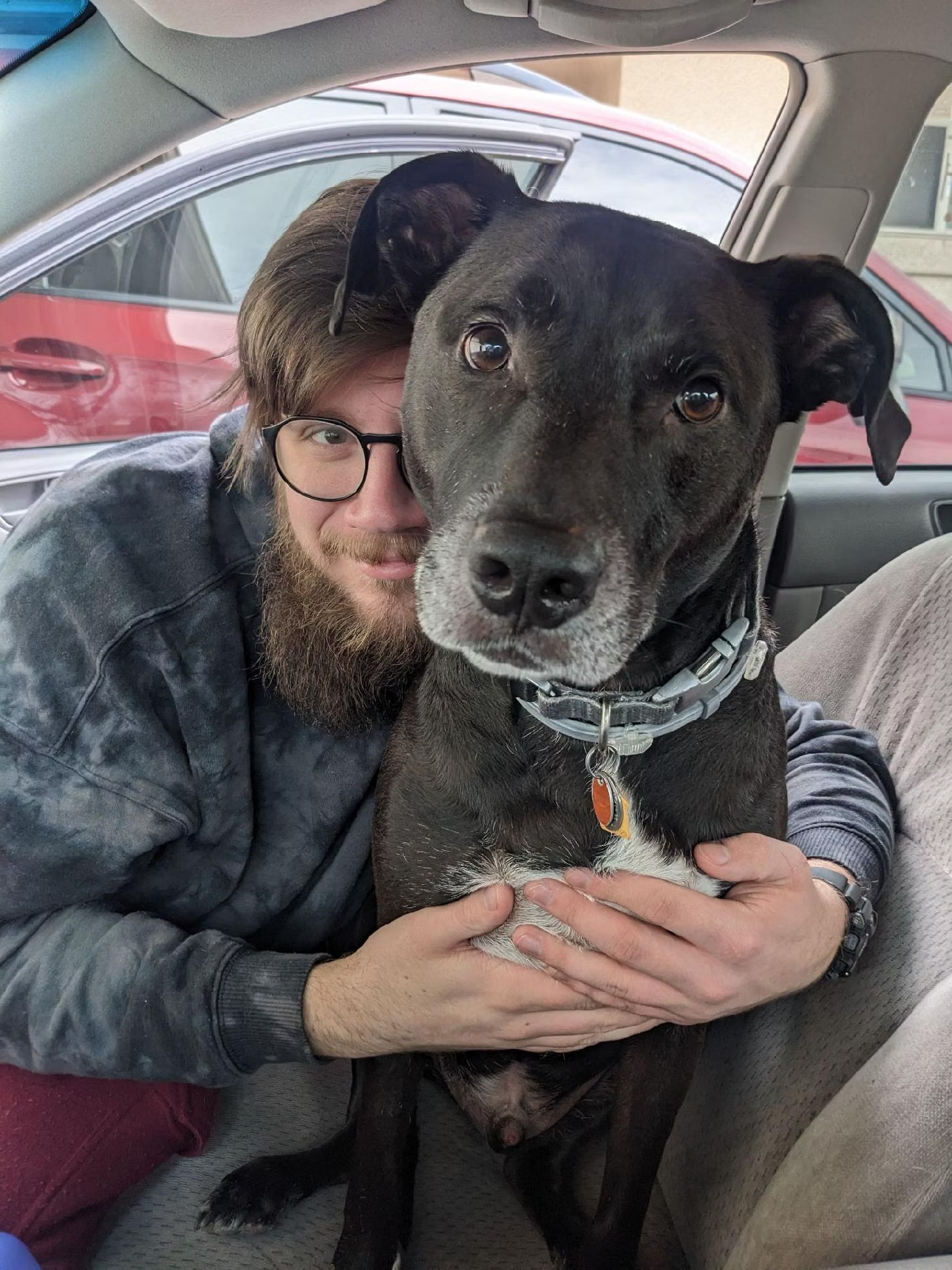
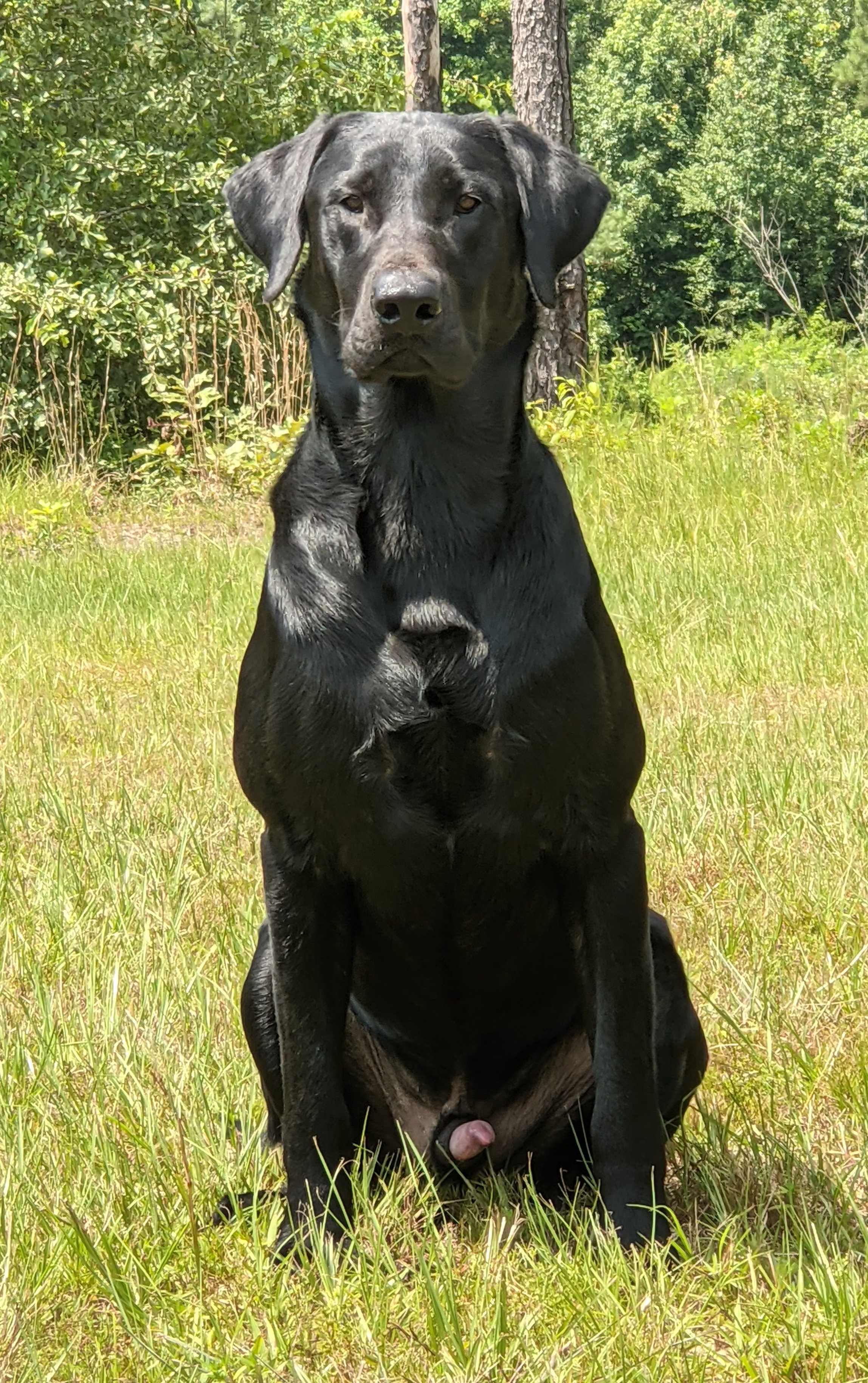
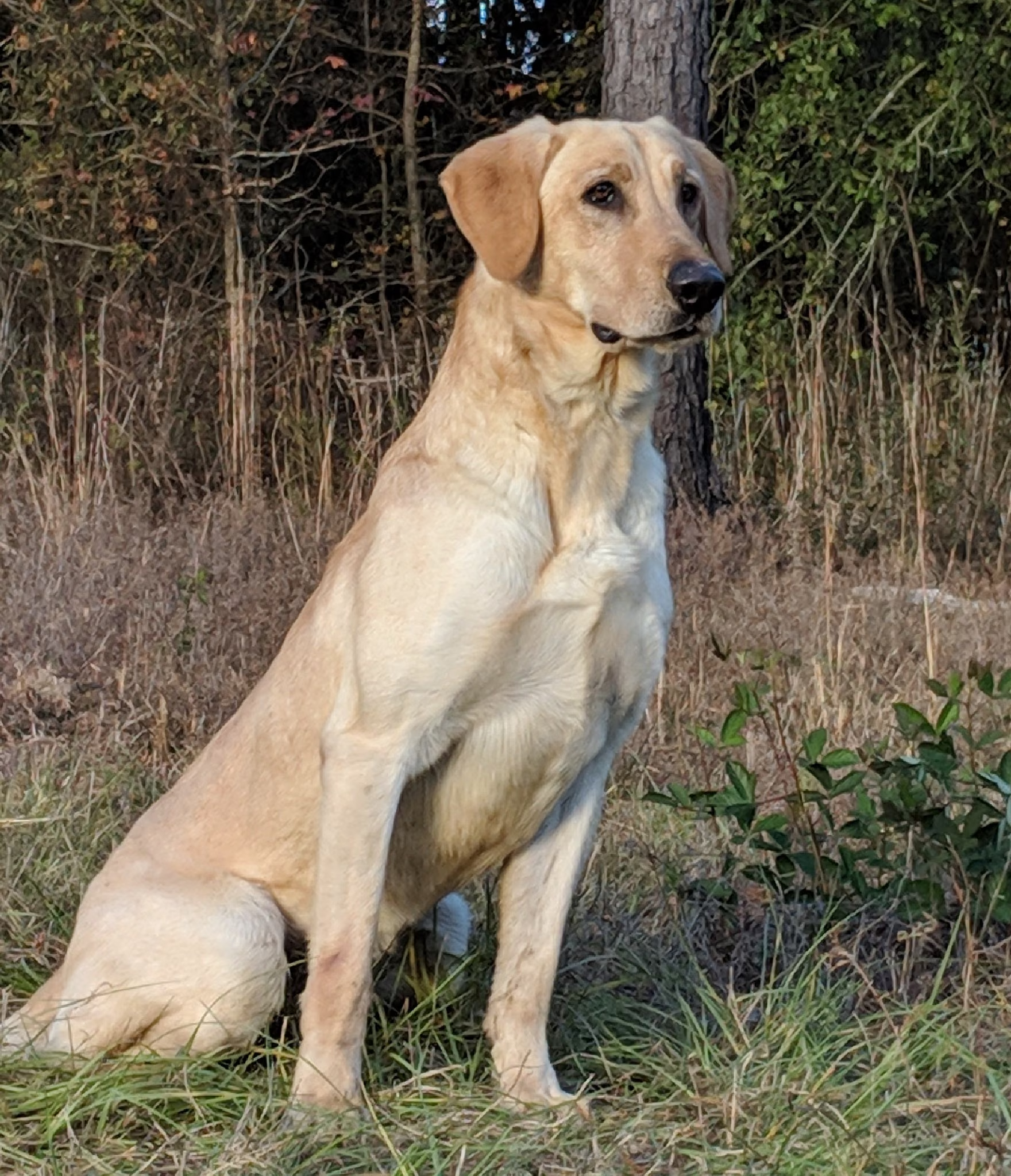
A few of the Labrador Retriever profiles members have added to United Pet Club.






About the Labrador Retriever
The Labrador Retriever is a medium-to-large sporting dog with deep roots in Newfoundland, Canada, celebrated for its sociable nature, ease of training, and a short water-resistant coat. Adults stand around 21.5 to 24.5 inches tall and have a lifespan of roughly 11 to 13 years.
The Labrador Retriever is a medium-to-large dog whose origins trace directly to Newfoundland, where its ancestor, the St. John's water dog, worked alongside local fishermen hauling nets and retrieving fish from the cold Atlantic. British estates later standardized the type into the breed Canadians and the world recognize today.
Labradors are prized for an even temperament, a strong work ethic, and a willingness to cooperate with people of all ages. These traits have made them the most registered breed across Canada for many consecutive years, and they are equally sought after as family companions, assistance dogs, search-and-rescue partners, and detection dogs.
The breed carries a short, dense double coat that sheds throughout the year and more heavily in spring and fall. Three colours are accepted under most standards: black, yellow, and chocolate.
| Attribute | Detail |
|---|---|
| Origin | Newfoundland, Canada; further developed in the United Kingdom |
| Size | Medium to large; 55 to 80 lb (25 to 36 kg) |
| Lifespan | About 11 to 13 years |
| Group/role | Sporting/gun dog; retriever, assistance and detection work |
| Good with | Children, families, other dogs; generally social with strangers |
Who the breed suits
Labradors are an excellent fit for active Canadian households that commit to daily outings and consistent training year-round, including through cold winters. They suit first-time owners who are ready to invest time, as well as families raising children. The breed is a poor match for those seeking a sedentary companion or one that sheds minimally, and it does not fare well when left alone for extended periods since Labradors are social by nature and will gain weight quickly without adequate exercise.
History and origin
The Labrador Retriever descends from the St. John's water dog of Newfoundland, Canada, was refined by British sporting estates through the 1800s, and was recognized by The Kennel Club in 1903 and the American Kennel Club in 1917. The Canadian Kennel Club also recognizes the breed.
The breed's story begins on the island of Newfoundland, where a sturdy water dog known as the St. John's dog (sometimes called the lesser Newfoundland) earned its keep alongside fishermen in the 1700s and early 1800s. These dogs retrieved lines, hauled nets, and fetched fish from the icy waters of the North Atlantic. They were, in every sense, a product of what is today Canadian soil.
British visitors and merchants who observed the dogs at work began bringing them back to England in the early nineteenth century. The Earl of Malmesbury and the Duke of Buccleuch were among those who kept and developed these dogs on their shooting estates, selecting for retrieving talent and the even temperament that define the modern Labrador. The name "Labrador" gained currency during this period, even though the breed's true homeland was Newfoundland, not the Labrador coast.
Breeding programs in Britain gradually fixed the type. A Newfoundland tax on female dogs and tighter quarantine measures reduced the flow of fresh imports, leaving the British lines as the foundation stock from which the worldwide population descends.
The Kennel Club (UK) granted formal recognition in 1903, and the American Kennel Club followed in 1917. The Canadian Kennel Club (CKC) also recognizes the Labrador Retriever, and the breed holds a place of particular significance in Canada given that its working ancestor developed on Canadian soil. Black was the predominant colour in early registered stock, with yellow and chocolate appearing alongside it from the outset of formal record-keeping.
Appearance and breed standard
Labradors are solidly built dogs featuring a wide skull, a distinctive otter tail, and a short dense double coat in black, yellow, or chocolate. Males typically stand between 22.5 and 24.5 inches, and females between 21.5 and 23.5 inches.
The Labrador Retriever presents a balanced, powerful frame with a deep chest, a level topline, and well-sprung ribs. The skull is broad and the stop moderate; the ears lie flat against the head. The breed's most recognized trait is its otter-like tail: round, thick at the root, and thickly coated, it acts as a powerful rudder when swimming. The outer coat is short and straight, shedding water quickly, and lies over a soft, dense undercoat that provides insulation in cold water.
| Trait | Detail |
|---|---|
| Height | Males 22.5 to 24.5 in (57 to 62 cm); females 21.5 to 23.5 in (55 to 60 cm) |
| Weight | Males 65 to 80 lb (29 to 36 kg); females 55 to 70 lb (25 to 32 kg) |
| Coat | Short, dense, straight double coat; water-resistant |
| Colours | Black, yellow, chocolate |
| Eyes | Brown or hazel; kind, alert expression |
Coat and colours
Black, yellow, and chocolate are the three standard colours. Yellow spans a wide range from pale cream through gold to deep fox-red. Small white patches on the chest are permitted under most standards but are not considered desirable. Heavy seasonal shedding typically occurs twice per year, with moderate shedding in between; routine brushing keeps the coat manageable. So-called "silver" Labradors are a dilute expression of the chocolate gene and are not accepted as a distinct colour by the CKC or other major registries.
Temperament and behaviour
Labradors are warm, sociable, and eager to please, which makes them agreeable with household members, strangers, and other animals alike. High energy levels mean they need a productive outlet to stay out of trouble.
Labrador Retrievers consistently rank among the most good-natured breeds available to Canadian families. They bond closely with their owners, seek out human company, and rarely show aggression toward people or other dogs. Around children they are typically patient and affectionate, though supervision is advisable when young children play with a large, boisterous dog.
Because most Labradors treat unfamiliar visitors as potential friends, they make poor guard dogs. Their sociability is, however, a considerable asset in households with multiple people, other pets, or frequent visitors. They tend to settle well with cats when introduced appropriately.
The breed has a pronounced retrieving instinct and a persistent desire to carry objects. When these outlets go unmet through exercise and play, a Labrador may resort to chewing furniture, digging up gardens, or other destructive behaviour. Regular structured activity and mental challenges keep the breed at its best.
| Trait | Rating |
|---|---|
| Affection | 5 |
| Energy | 5 |
| Trainability | 5 |
| Vocalness | 3 |
| Shedding | 4 |
Care and grooming
Labradors need weekly brushing, a minimum of one hour of daily activity, and consistent human companionship. The dense double coat sheds heavily on a seasonal basis, so regular grooming is a practical necessity.
Grooming
- Brush once a week under normal conditions; increase frequency during spring and fall sheds to manage the undercoat.
- Bathe every two to three months or after particularly muddy outings; excessive bathing strips the coat of its natural protective oils.
- Inspect and clean the ears weekly, since floppy ears trap moisture and are prone to bacterial and yeast infections.
- Trim nails every three to four weeks and clean teeth several times per week to prevent tartar buildup.
Exercise
- Plan for at least 60 minutes of meaningful activity each day, spread across walks, jogs, off-leash play, or fetch.
- Labradors are natural swimmers; lake, river, or pool sessions provide excellent low-impact exercise and tap into the breed's working heritage.
- Incorporate short obedience sessions and puzzle feeders to provide mental stimulation alongside physical activity.
- Puppies should follow a gradual programme that protects growing growth plates; avoid forced long runs or jumping until the dog is at least twelve months old.
Environment
A Labrador can adapt to apartment living if given sufficient daily outdoor time, but the breed flourishes with access to a yard or a nearby park. A securely fenced enclosure is strongly recommended because these dogs follow their noses enthusiastically. Leaving a Labrador alone for a full workday on a regular basis risks boredom-driven behaviour problems; arrangements such as a dog walker or doggy daycare are worth considering for busy owners.
Nutrition and feeding
Labradors do well on a complete, life-stage-appropriate diet served in measured portions to avoid the weight gain to which the breed is especially prone. Most adults thrive on two measured meals per day totalling roughly 2.5 to 3 cups of a quality dry food.
Choose a complete and balanced commercial dog food or a carefully formulated home-prepared diet that matches the dog's age, size, and activity level. Because Labradors are hard-wired to eat beyond satiety, weigh or measure every meal rather than free-feeding. The right daily amount depends on the food's calorie density, the individual dog's metabolism, and its exercise load; use the manufacturer's guideline as a starting point and adjust upward or downward based on the dog's body condition score. Fresh water should be available around the clock.
| Life stage | Amount per day | Meals per day |
|---|---|---|
| Puppy (2 to 6 months) | About 2 to 3 cups | 3 to 4 |
| Puppy (6 to 12 months) | About 2.5 to 3.5 cups | 2 to 3 |
| Adult | About 2.5 to 3 cups | 2 |
| Senior/less active | About 2 to 2.5 cups | 2 |
Treats and supplements
Treat calories should account for no more than ten percent of the daily total; deduct them from the main meals to keep the overall intake on target. Many owners find it convenient to set aside a portion of the dog's measured kibble for use as training rewards throughout the day. Joint-support supplements and omega-3 fatty acids such as fish oil are sometimes added to the diet, particularly for older or heavily active dogs, but a complete commercial food generally renders supplementation unnecessary. Always consult a veterinarian before introducing a new supplement.
Health and common conditions
With a typical lifespan of 11 to 13 years, Labradors are a generally robust breed, though they carry a well-documented predisposition to hip and elbow dysplasia, obesity, and several heritable eye and neurological conditions. Purchasing from health-tested parents meaningfully reduces risk.
Labradors enjoy above-average longevity among large breeds and are seldom afflicted by the heart and respiratory problems that trouble some other popular dogs. The breed's most significant vulnerability is its tendency to become obese, which in turn accelerates joint deterioration and can shorten life by several years. Reputable breeders registered with the Canadian Kennel Club conduct formal health evaluations on breeding stock and share the results openly.
| Condition | Signs | Note |
|---|---|---|
| Hip dysplasia | Limping, stiffness, trouble rising | Screened by hip scoring/evaluation in breeding dogs |
| Elbow dysplasia | Front-leg lameness, reluctance to exercise | Inherited; screening recommended |
| Obesity | Excess weight, low stamina | Largely preventable with diet and exercise |
| Progressive retinal atrophy | Night blindness, declining vision | Inherited; DNA tests available |
| Exercise-induced collapse | Weakness or collapse after intense activity | Linked to a known gene; DNA test available |
| Ear infections | Head shaking, odour, scratching | Drop ears trap moisture; routine cleaning helps |
Preventive care
- Keep vaccinations and parasite treatments current; consult your veterinarian about products appropriate for Canadian seasonal conditions.
- Maintain a lean body weight through portion control and daily exercise.
- Book annual wellness examinations, with semi-annual visits once the dog reaches senior age.
- Inspect and clean ears regularly, especially after swimming or wet weather.
- Select puppies from breeders who provide documented clearances for hips, elbows, eyes, and relevant genetic conditions.
Training
Few breeds match the Labrador's combination of intelligence, food motivation, and desire to please, making it one of the most rewarding dogs to train. Early socialization and positive-reinforcement methods consistently yield the best results.
A Labrador's eagerness to work with its handler underpins its widespread use as a guide dog, avalanche search dog, drug and explosive detector, and service dog for individuals with physical or cognitive disabilities. Training sessions should be short, frequent, and built around rewards that the dog finds genuinely motivating; for most Labradors, small pieces of food or a brief game of fetch work extremely well. The primary training challenges are managing the breed's exuberant energy and its tendency to mouth and grab objects.
Basics
- Begin socialization from the first week in the new home, introducing the puppy gradually to a variety of people, environments, sounds, and other animals.
- Teach the foundational cues: sit, stay, come, down, and leave it, rewarding each correct response promptly with a small treat.
- Start leash manners as early as possible; an untrained adult Labrador can easily overpower an average-sized person.
- Channel mouthing onto appropriate chew toys and calmly redirect attention when the puppy nips.
- Introduce retrieve games, scent exercises, or basic agility work to satisfy the breed's working instinct.
- Generalize trained behaviours by practising in parks, trails, and busy urban environments so responses remain reliable under distraction.
Breeding and raising puppies
Labradors typically reach puberty between six and twelve months, but responsible breeders delay mating until the dog is fully mature and all required health evaluations are complete. Gestation runs approximately 63 days and average litters contain six to eight puppies.
Female Labradors generally experience their first season between six and twelve months of age, but responsible breeders registered with the Canadian Kennel Club do not mate females until they have reached physical and mental maturity and have passed the applicable health screenings for hips, elbows, eyes, and genetic markers. Females cycle roughly twice yearly.
Pregnancy lasts approximately 63 days from the time of conception. Litters of six to eight puppies are typical, though larger litters of ten or more are not uncommon in this breed. Newborn puppies arrive blind and deaf and rely entirely on their mother for warmth and nutrition during the first two weeks.
Weaning onto softened puppy food begins around three to four weeks. The weeks between four and eight are critical for socialization: puppies that receive positive handling, exposure to household sounds, and safe interactions with people and other animals during this window develop into more confident, adaptable adults. CKC breeders are expected to ensure puppies leave for new homes with at least one veterinary examination and a vaccination record, typically around eight weeks of age.
| Metric | Value |
|---|---|
| Sexual maturity | About 6 to 12 months |
| Heat cycles | Roughly twice per year |
| Gestation | About 63 days |
| Average litter size | 6 to 8 puppies |
| Weaning age | About 6 to 8 weeks |
| Age to new home | About 8 weeks |
Registering a Labrador Retriever in Canada: profile and microchip
A free lifetime United Pet Club record for your Labrador Retriever, with the microchip registered at no cost and kept current through every move.
Labrador Retriever registration and microchip registration in Canada
Canadian shelters and vet clinics scan strays at intake as a matter of routine, and the scan helps only when a registry ties your Labrador Retriever to a phone that still rings. Registering your dog with United Pet Club takes a few minutes, never costs anything, and works whether or not a chip is in place yet. Add the breed, a photo, and your postal code, and the record is live.
Sixty seconds with a scanner reads the chip; whether your Labrador Retriever gets home depends on the record behind the number. Microchip registration with United Pet Club is free for life, takes every brand sold in Canada, and keeps the record searchable on both sides of the border. Sign up free and give the number somewhere to point.
How do I register my Labrador Retriever in Canada?
Open a free United Pet Club account, fill in your Labrador Retriever's name, breed details, and a photo, and save. The lifetime plan is free, no chip required, and the chip number can be attached after your vet appointment.
How do I register my Labrador Retriever's microchip?
Add the 15-digit number to your account along with your address, postal code, and phone number. Registration and unlimited updates are free for life, and chips from any manufacturer a Canadian vet uses are accepted.
Is a microchip required for a Labrador Retriever in Canada?
There is no federal requirement, but several cities fold chips into their licensing bylaws, and travel with the dog goes smoother when the chip is registered. The record, not the implant, is what identifies your Labrador Retriever.
What does Labrador Retriever registration cost in Canada?
Nothing, ever. United Pet Club's lifetime plan covers the profile, the chip record, and every update without fees or renewals.
Frequently asked questions
Common questions from Canadian buyers about the Labrador Retriever, addressing size, shedding, child-friendliness, lifespan, cost, and the breed's Canadian heritage.
How big does a Labrador get?
A full-grown Labrador typically stands between 21.5 and 24.5 inches at the shoulder and weighs roughly 55 to 80 pounds. Males are generally taller and heavier than females.
Do Labradors shed a lot?
Yes, significantly. Their dense double coat sheds year-round with a pronounced increase in spring and autumn. Brushing at least once a week, and daily during peak shed periods, keeps loose hair manageable in the home.
Are Labradors good with children?
Labradors are widely regarded as one of the most child-friendly breeds. They are patient, gentle, and playful, though their size and enthusiasm mean that interactions with toddlers should always be supervised.
How long do Labradors live?
The typical lifespan is 11 to 13 years. Keeping the dog lean, exercising it consistently, and maintaining regular veterinary care gives the best chance of reaching the upper end of that range.
How much does a Labrador puppy cost?
From a CKC-registered breeder with documented health clearances, puppies generally range from around $1,500 to over $3,000 in most parts of Canada. Adopting through a Labrador rescue organization costs considerably less and gives an older dog a second chance.
Are Labradors easy to care for?
Grooming is straightforward and training is rewarding, but the breed demands meaningful daily exercise and close human companionship. Weight management requires ongoing attention, as Labradors are among the breeds most prone to obesity.
Does the Labrador have Canadian roots?
Yes, and it is a point of genuine national pride. The breed's direct ancestor, the St. John's water dog, developed in Newfoundland and is recognized as a foundation of one of the world's most beloved breeds. The Canadian Kennel Club officially recognizes the Labrador Retriever, and the breed consistently ranks among the most popular registered in Canada.
From the community
Ask about the Labrador RetrieverNo questions about the Labrador Retriever yet. Be the first to ask.
Browse Dog breeds