
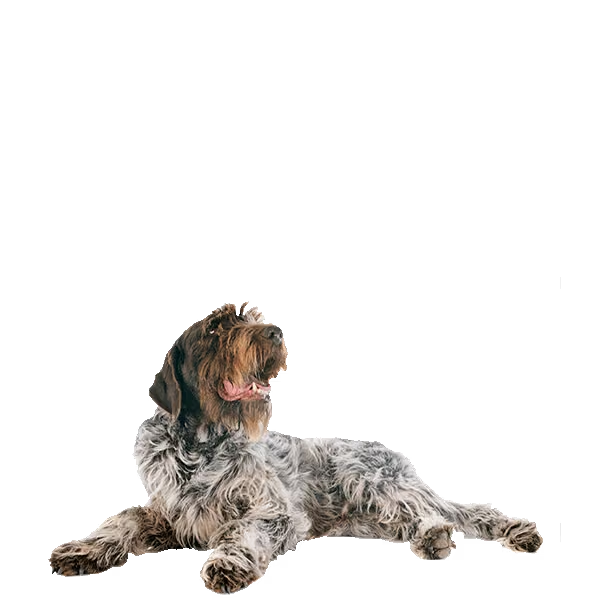
Wirehaired Pointing Griffon
The Wirehaired Pointing Griffon is a devoted, versatile gundog prized for its harsh weatherproof coat and willing temperament.
- Size
- Medium
- Lifespan
- 12–15 years
- Origin
- Netherlands
- Temperament
- Devoted
- Standard colors
- White, Grey, Brown and Orange
Characteristics
Coat and grooming
How the Wirehaired Pointing Griffon coat is built, and what that means when you groom it.
- Coat layers
- Double coat
- Coat texture
- Wire
- Coat length
- Medium
- Shedding
- Low shedding
Grooming guidance
Caution: A Wirehaired Pointing Griffon coat should be hand-stripped rather than clipped.
A wire coat is meant to be pulled out at the root once the hair is ready to release. Clippers cut it off part way instead, leaving the soft undercoat behind. The result is a coat that grows back limp and faded, and the weatherproof texture only returns after the hair is stripped out again.
Wirehaired Pointing Griffon colors and patterns
What each club's breed standard says about every Wirehaired Pointing Griffon color and pattern. Point at a ruling to see the club's own wording.
Breed standards describe the Wirehaired Pointing Griffon in White, Grey, Brown and Orange. Standard patterns: Solid, Bicolour and Roan.
| Color or pattern | AKC | UKC | KC | FCI |
|---|---|---|---|---|
| White | Standard (“White & Brown”) | Standard (“liver and white”) | Standard (“White and brown”) | Standard (“Equally permissible white and brown and white and orange coats”) |
| Grey | Standard (“Brown & Gray”) | Standard (“Steel gray with liver patches”) | Standard (“Steel grey with liver brown patches”) | Standard (“Preferably steel grey shade with brown (liver) patches”) |
| Brown | Standard (“Brown & Gray”) | Standard (“solid liver”) | Standard (“Solid liver brown”) | Standard (“self-coloured brown (liver) coat”) |
| Orange | Standard (“White & Orange”) | Standard (“orange and white”) | Not recognised | Standard (“white and orange coats”) |
| Black | Disqualifying (“A black coat disqualifies”) | Disqualifying (“Black coat or nose color”) | Not recognised | No ruling |
| Patterns | ||||
| Solid | Standard (“A uniformly brown coat, all white coat, or white and orange are less desirable”) | Standard (“solid liver”) | Standard (“Solid liver brown”) | Standard (“self-coloured brown (liver) coat”) |
| Bicolour | Standard (“Brown & Gray”) | Standard (“liver and white, orange and white”) | Standard (“White and brown”) | Standard (“Equally permissible white and brown and white and orange coats”) |
| Roan | Standard (“Roan”) | Standard (“liver roan”) | Standard (“Liver roan”) | Standard (“Frequently liver-roan”) |

%22%3E%3Cpath%20d%3D%22M0%2023L9.5%2020.4L14%2025.4L19%2029.6Q21%2035%2023.5%2035.5Q36%2033%2050%2036L56%2040V64H0Z%22%20fill%3D%22%23F5F5F0%22%2F%3E%3C%2Fg%3E%3Cuse%20href%3D%22%23s%22%20fill%3D%22none%22%20stroke%3D%22%233B2A20%22%20stroke-opacity%3D%220.6%22%20stroke-width%3D%221%22%20stroke-linejoin%3D%22round%22%2F%3E%3Cellipse%20cx%3D%223.2%22%20cy%3D%2221.7%22%20rx%3D%221.3%22%20ry%3D%221.2%22%20fill%3D%22%231C1C1C%22%2F%3E%3Ccircle%20cx%3D%2210.8%22%20cy%3D%2219.3%22%20r%3D%221.1%22%20fill%3D%22%231C1C1C%22%2F%3E%3C%2Fsvg%3E)
%22%3E%3Cg%20fill%3D%22none%22%20stroke%3D%22%23F5F5F0%22%20stroke-width%3D%221.15%22%20stroke-linecap%3D%22round%22%20stroke-linejoin%3D%22round%22%3E%3Cpath%20d%3D%22M28.6%2025h.1M51.3%2028.8h.1M34.7%2024.3h.1M34.2%2041.6h.1M51%2044.2h.1M55.9%2024.7h.1M27.5%2026.3h.1M18.5%2028.6h.1M25.2%2028.9h.1M24.2%2019.3h.1M20.6%2017.6h.1M34.1%2030.6h.1M57.3%2023.3h.1M23.5%2030.7h.1M26.5%2023.1h.1M40%2031.5h.1M51.7%2038.6h.1M20.2%2022.1h.1M40.4%2037.8h.1M35%2043.1h.1M20.6%2031.7h.1M27.8%2031.9h.1M17.2%2021.1h.1M38.1%2037.7h.1M25.3%2040.5h.1M32%2029.3h.1M41.6%2039.5h.1M23.6%2024h.1M26.4%2018.6h.1M30.3%2031.9h.1M31.2%2035.2h.1M36.5%2043.7h.1M35.2%2026.3h.1M55.6%2019.1h.1M22.4%2036.8h.1M39.2%2020h.1M49.5%2039.1h.1M33.6%2033.5h.1M36.4%2032.4h.1M56.3%2042.4h.1M54.8%2031.2h.1M36.9%2023.2h.1M52.7%2019.1h.1M21.5%2033.8h.1M48.6%2028h.1M36.6%2017.5h.1M45.6%2031.3h.1M37.9%2030.5h.1M17%2031.8h.1M21.1%2043.1h.1M55.7%2021.1h.1M30.8%2041.9h.1M57.4%2038.4h.1M54.8%2026.9h.1M29.1%2017.5h.1M24.3%2037.7h.1M26%2032h.1M39.3%2022.8h.1M53.5%2029h.1M53.3%2023.3h.1M20%2038.4h.1M28.3%2044.7h.1M28.6%2039.8h.1M51.9%2041.1h.1M52.3%2033.7h.1M19.6%2042.2h.1M19%2033h.1M47.8%2021.7h.1M45.7%2024.8h.1M24.6%2035.5h.1M29.8%2036.8h.1M50.7%2032h.1M29.5%2043.5h.1M28.2%2041.5h.1M47.4%2034.8h.1M25.4%2033.7h.1M50.2%2041.2h.1M27.7%2029.5h.1M21.5%2024.8h.1M55.5%2017.5h.1M41.2%2044.3h.1M39.2%2018.4h.1M41.1%2042.5h.1M54.7%2035.3h.1M42.8%2034.5h.1M30.1%2023h.1M42.6%2025.1h.1M32.9%2024.4h.1M42.4%2032.4h.1M49.7%2022.2h.1M49.1%2043.1h.1M38%2035.2h.1M47.7%2043.8h.1M43.1%2022.4h.1M22.4%2040.4h.1M44.4%2019.8h.1M53.3%2040.1h.1M20.7%2029.3h.1M55.6%2043.9h.1M17.6%2039.2h.1M41.7%2028.9h.1M44.1%2036.3h.1M24.3%2043.6h.1M26.4%2038.1h.1M30.3%2029.2h.1M31.5%2030.8h.1M32.1%2023h.1M18.3%2040.9h.1M48%2033.4h.1M36.4%2038.7h.1M31.9%2020.8h.1M32.6%2026.2h.1M22%2031.2h.1M53.4%2021.7h.1M41.9%2017.7h.1M53.3%2037.3h.1M47.7%2040.3h.1M54.4%2033.7h.1M33.6%2037.5h.1M25.3%2017.2h.1M37.6%2019.7h.1M31.6%2019h.1M29.2%2019.6h.1M50.7%2027.3h.1M22%2022.1h.1M31%2037.8h.1M56.5%2026.6h.1M34.7%2039.5h.1M56.5%2040.8h.1M47.6%2038h.1M48.6%2026.1h.1M49.7%2034.2h.1M45.4%2027.4h.1M22.6%2038.9h.1M56.5%2035.3h.1M35.1%2021h.1M41.9%2020.1h.1M37.6%2040h.1M32.6%2044.4h.1M37.9%2025.2h.1M26.6%2043h.1M18.9%2036.7h.1M47.2%2028.9h.1M30.5%2026.2h.1M17.4%2027.3h.1M47.1%2017.2h.1M22.3%2044.3h.1M32.5%2042.4h.1M23.6%2025.7h.1M31.4%2024.9h.1%22%2F%3E%3Cpath%20d%3D%22M26%2020.9h.1M41.2%2023.8h.1M39.9%2026.4h.1M28.5%2033.4h.1M42.8%2043.8h.1M17.6%2034.3h.1M34%2017.1h.1M31.2%2017.2h.1M46.5%2036.1h.1M25.1%2022.1h.1M50.3%2023.7h.1M20.2%2026.6h.1M20.8%2020.4h.1M50.9%2017.3h.1M49.5%2020.2h.1M52.9%2044.1h.1M23.9%2017.8h.1M43.2%2028.1h.1M57.6%2030h.1M52%2025.6h.1M19.2%2019.1h.1M19.5%2024.4h.1M32.8%2040.1h.1M36.1%2027.7h.1M39.6%2029.5h.1M38.4%2041.5h.1M47.9%2019.4h.1M49.1%2031.7h.1M55.9%2036.9h.1M29.2%2027.2h.1M46%2043.5h.1M44.6%2028.8h.1M47.5%2031.5h.1M22.8%2020h.1M27.6%2017.1h.1M43.1%2018.6h.1M54.3%2020h.1M57.2%2033.8h.1M44.5%2043.8h.1M27.1%2035.5h.1M45.3%2041.8h.1M56.7%2028.8h.1M36.7%2021.4h.1M43.3%2042.3h.1M17.3%2022.9h.1M32.7%2035.5h.1M30.5%2039.8h.1M29.1%2021.2h.1M34.5%2018.8h.1M25.8%2027h.1%22%2F%3E%3C%2Fg%3E%3Cpath%20d%3D%22M56.3%2038.4l0%201.2M40%2027.2l-0.3%201.3M32.6%2043.6l-0.4%201.5M29%2023.3l0.8%201.5M55.1%2044l0.4%201.1M47.5%2022.5l-0.2%201.6M42.9%2038.6l0.7%201.2M35.2%2041.8l-0.5%201.7M26.9%2040l-0.1%201.2M41%2042.8l-0.1%201.6M18.4%2021.2l0.7%201.3M49.4%2019.3l-0.5%201.4M50.1%2041.7l0%201.8M28.2%2041.8l-0.6%201.2M55.5%2027.1l0.2%201.2M44.7%2019.3l0.5%201.7M48.6%2020.5l-0.8%201.4M43.7%2039.6l0.3%201.1M22.1%2033.8l-0.6%201.6M50.1%2038.1l-0.5%201.3M51.8%2044.1l-0.1%201.8M39%2017.5l0%201.4M30.2%2026.7l0.2%201.4M25.8%2031.2l0.2%201.6M29.6%2043.5l0.1%201M43.7%2018.3l0.1%201.5M29.6%2018.2l0.3%201.6M24.4%2017.6l0.3%201.1M22%2028.2l-0.6%201.6M25.9%2043.3l-0.3%201.4M22.2%2024.3l0.3%201.3M47.3%2029.2l-0.2%201.4M21.8%2033.2l0.5%200.9M32.9%2037l0.4%201M40%2029.9l0.8%201.4M17.4%2038.3l0.2%201.3M31%2039.2l0%201.2M37.3%2033.7l0.3%201.5M48.1%2040.5l0%201.6M33.9%2031.2l0.1%201.2M29.8%2035.2l-0.4%201M25.1%2037.3l-0.2%201.5M30.2%2039.8l0.5%201M44.6%2034.8l0.4%200.9M55.3%2034.2l0%201.7M50.6%2017.9l0.4%201M30.2%2034.9l-0.4%201.4M19.5%2035.7l-0.5%201.7M40.7%2028.7l0.8%201.4M23.3%2029l-0.4%201.4M17%2040.5l-0.2%201M48.4%2023.2l-0.3%201M37.3%2025.1l-0.4%201.3M23%2021.4l-0.4%201.3M20.4%2017.2l-0.1%201.3M42.3%2020.4l0.6%201.4M41%2031.8l0.6%201.2M45.4%2034.3l-0.1%201.2M32.5%2018l0%201.3M46.2%2021.6l0.1%201.4M30.5%2022.3l0.5%201.1M58%2044.6l0.3%201.5M57.1%2033.9l0.8%201.4M18.3%2042.6l0.3%201M40.5%2035.1l-0.6%201.4M38.8%2044.3l-0.3%201.1%22%20fill%3D%22none%22%20stroke%3D%22%23F5F5F0%22%20stroke-width%3D%220.8%22%20stroke-linecap%3D%22round%22%20stroke-linejoin%3D%22round%22%2F%3E%3C%2Fg%3E%3Cuse%20href%3D%22%23s%22%20fill%3D%22none%22%20stroke%3D%22%233B2A20%22%20stroke-opacity%3D%220.6%22%20stroke-width%3D%221%22%20stroke-linejoin%3D%22round%22%2F%3E%3Crect%20x%3D%2220%22%20y%3D%2258%22%20width%3D%223.6%22%20height%3D%222%22%20fill%3D%22%234A4038%22%2F%3E%3Crect%20x%3D%2226%22%20y%3D%2258%22%20width%3D%223.6%22%20height%3D%222%22%20fill%3D%22%234A4038%22%2F%3E%3Crect%20x%3D%2244%22%20y%3D%2258%22%20width%3D%223.6%22%20height%3D%222%22%20fill%3D%22%234A4038%22%2F%3E%3Crect%20x%3D%2250%22%20y%3D%2258%22%20width%3D%223.6%22%20height%3D%222%22%20fill%3D%22%234A4038%22%2F%3E%3Ccircle%20cx%3D%229.5%22%20cy%3D%2211.5%22%20r%3D%221.1%22%20fill%3D%22%231C1C1C%22%2F%3E%3C%2Fsvg%3E)
| Color or pattern | AKC | UKC | KC | FCI |
|---|---|---|---|---|
| Brown | Standard (“Eye color ranges in all shades of yellow and brown”) | Standard (“Dark yellow or brown in color”) | Standard (“Dark yellow or brown”) | Standard (“Dark yellow or brown”) |
| Yellow | Standard (“Eye color ranges in all shades of yellow and brown”) | Standard (“Dark yellow or brown in color”) | Standard (“Dark yellow or brown”) | Standard (“Dark yellow or brown”) |
What the rulings mean
- Standard
- Described by the club's breed standard.
- Disqualifying
- The club's breed standard disqualifies an animal of this colour or pattern.
- Not recognised
- The club does not accept this colour or pattern for the breed.
Color changes
How a Wirehaired Pointing Griffon's colors can change over its life.
Whitechanges toRoan
Coat · With age · from 2 weeks
Sources
Each ruling comes from the club's published breed standard or color list.
Meet some of our Wirehaired Pointing Griffon
A few of the Wirehaired Pointing Griffon profiles members have added to United Pet Club.


About the Wirehaired Pointing Griffon
The Wirehaired Pointing Griffon is a medium versatile gundog from the Netherlands, known for its harsh weatherproof coat and a friendly, devoted, trainable nature.
The Wirehaired Pointing Griffon is a medium-sized hunting dog bred to work close to the gun across varied country. It points game birds and retrieves on land and out of water, which puts it among the versatile gundog breeds rather than the specialist pointers or retrievers. The breed is built for stamina and deliberate, methodical work rather than raw speed.
The most recognisable feature is the harsh, wiry outer coat over a soft insulating undercoat. This double coat shrugs off thorns, cold, and wet, and the breed carries pronounced eyebrows, a moustache, and a beard on the face. The overall impression is a sturdy, square dog that looks rugged but moves with an easy, balanced gait.
As a companion, the Wirehaired Pointing Griffon is people-oriented and forms close ties to its household. It tends to be steady with kids and family members and responds well to consistent training. Because it was bred to work hand in glove with a handler, it does best when it is part of daily life and given a job to do.
| Attribute | Detail |
|---|---|
| Origin | Netherlands |
| Size | Medium |
| Lifespan | 12 to 15 years |
| Group/role | Versatile gundog (pointing and retrieving) |
| Good with | Families, children, active owners |
Who it suits
The breed fits active households that can provide daily physical exercise and mental work. It suits hunters who want one dog for upland birds and waterfowl, as well as non-hunting owners willing to swap in structured activity such as scent work, long walks, or dog sports. It is a poor match for people who are away for long hours or who want a low-energy housemate, since an under-exercised Griffon can get restless.
History and origin
The breed was developed in the late 1800s largely through the work of Eduard Karel Korthals, a Dutch breeder, which is why it is also called the Korthals Griffon.
The Wirehaired Pointing Griffon traces to the work of Eduard Karel Korthals, a Dutch sportsman who began a deliberate breeding program in the 1870s. His goal was a single versatile gundog that could hunt a range of game, point, and retrieve from both land and water while working calmly under the gun.
Korthals kept careful breeding records and drew on a mix of rough-coated and pointing-type dogs to fix the harsh coat and the close-working hunting style. Because his program was so central to the breed, the dog is widely known as the Korthals Griffon in much of continental Europe.
Although Korthals was Dutch and the breed is generally credited to the Netherlands as its country of origin, much of the development work and early promotion took place across the Netherlands, Germany, and France. This shared European history shows in the breed's continued recognition under more than one national name.
The breed reached North America before the turn of the twentieth century and has stayed a comparatively uncommon but steadily maintained hunting and companion breed. It is recognised today by major kennel organisations as a pointing breed.
Appearance and breed standard
The Wirehaired Pointing Griffon is a medium, squarely built dog with a harsh wiry double coat, prominent facial furnishings, and steel grey to chestnut colouring.
The Wirehaired Pointing Griffon presents as a medium, roughly square dog of moderate bone and substance. The build is muscular without being heavy, suited to a full day of fieldwork. The head carries heavy eyebrows, a moustache, and a beard, and the eyes are large and rounded with an alert, friendly expression.
The defining feature is the coat: a harsh, straight outer layer that feels coarse to the touch, lying over a fine, dense undercoat. The texture is functional, shedding water and resisting brush and bramble.
| Trait | Standard |
|---|---|
| Height | 51 to 61 cm (20 to 24 in) at the shoulder |
| Weight | 16 to 32 kg (35 to 70 lb) |
| Coat | Harsh, wiry double coat with soft undercoat |
| Colours | Steel grey with chestnut markings; chestnut; roan; brown and grey |
| Eyes | Large, round, yellow to brown |
Coat and colours
The outer coat should feel hard and bristly rather than soft or curly. Common colourings are steel grey with brown markings, solid chestnut, and various roan patterns. The harsh texture and double layer are what give the breed its weatherproof working ability, so a coat that is too soft is faulted against the standard.
Temperament and personality
The Wirehaired Pointing Griffon is friendly, devoted, and intelligent, generally good with family and children while staying alert and trainable.
The Wirehaired Pointing Griffon is known for an even, willing temperament. It bonds closely with its family and tends to stay near its people, a trait that comes straight from its breeding as a close-working gundog. With children it is usually patient and gentle, and it commonly gets along with other dogs.
Toward strangers the breed is typically reserved rather than aggressive, often watchful at first and friendly once introduced. This alertness makes it a reasonable watchdog, though it is not a guarding breed. With other pets it generally coexists well, although its hunting background means small animals may set off a chase or point.
The breed is intelligent and keen to cooperate, which makes it responsive to training but also means it needs mental engagement. A bored Griffon may dig, chew, or get vocal. Daily interaction and a clear routine keep the temperament at its best.
| Trait | Rating |
|---|---|
| Affection | 5 |
| Energy | 4 |
| Trainability | 5 |
| Vocalness | 2 |
| Shedding | 2 |
Care and grooming
The harsh coat needs regular brushing and occasional hand-stripping, and the breed requires substantial daily exercise and a job to stay content.
Grooming
- Brush the coat once or twice a week to lift dead hair and prevent matting in the furnishings.
- Hand-strip or have the coat professionally tidied a few times a year to keep the correct harsh texture; avoid heavy clipping, which softens the coat.
- Clean the beard and moustache after meals and water, since food and debris collect there.
- Check ears weekly and dry them after a swim to cut the risk of infection.
- Trim nails monthly and brush teeth several times a week.
Exercise
- Provide at least 60 minutes of solid activity daily, split across walks, runs, or fieldwork.
- Include retrieving games and swimming, which suit the breed's natural drives.
- Add scent work or training sessions to meet mental needs alongside physical ones.
- Use a secure area for off-lead work, since the hunting instinct can pull the dog after birds or game.
Environment
The Wirehaired Pointing Griffon adapts to most homes provided it gets daily exercise, but it is happiest with access to a yard and regular outdoor work. The weatherproof coat lets it handle cold and wet conditions well. It prefers to be near its family and does not do well left alone for long stretches.
Nutrition and feeding
Feed a complete diet suited to an active medium breed, adjusting portions for working level, with two meals a day for adults.
The Wirehaired Pointing Griffon does well on a complete, balanced diet formulated for active medium-sized dogs. Working and hunting dogs burn more energy and may need a higher-calorie food or larger portions during the season, while less active pets need careful portion control to avoid weight gain. Always match the amount to body condition rather than feeding a fixed amount year-round.
| Life stage | Amount per day | Meals |
|---|---|---|
| Puppy (2 to 6 months) | Per product guidelines for growth | 3 to 4 |
| Puppy (6 to 12 months) | Per product guidelines for growth | 2 to 3 |
| Adult | About 2 to 3 cups of quality dry food | 2 |
| Senior/less active | Reduced portions to maintain weight | 2 |
Treats and supplements
Keep treats to roughly 10 percent of daily kilojoules and use small training treats during sessions. Most healthy dogs on a complete diet do not need supplements. Discuss joint support or fish-oil additions with a vet, especially for older or hard-working dogs.
Health and common conditions
The breed is generally healthy with a typical lifespan of 12 to 15 years, with hip dysplasia and ear infections among the conditions to watch.
The Wirehaired Pointing Griffon is generally a hardy breed with a typical lifespan of 12 to 15 years. Responsible breeders screen breeding stock for inherited conditions, and routine preventive care keeps most dogs sound and active well into older age. As with any active sporting dog, joints and ears deserve regular attention.
| Condition | Signs | Note |
|---|---|---|
| Hip dysplasia | Stiffness, limping, reluctance to jump | Screen breeding stock; manage weight |
| Ear infections | Head shaking, odour, scratching ears | Dry ears after a swim; check weekly |
| Eye conditions | Cloudiness, redness, vision changes | Vet eye checks help early detection |
| Bloat (gastric torsion) | Distended abdomen, retching, distress | Medical emergency; avoid heavy exercise after meals |
Preventive care
- Keep core vaccinations and parasite prevention current.
- Book annual vet exams, moving to twice yearly for seniors.
- Maintain a healthy weight to protect joints.
- Brush teeth regularly and check ears weekly.
- Ask breeders for hip and eye screening results before buying a puppy.
Training
The Wirehaired Pointing Griffon is intelligent and eager to please, making it highly trainable with consistent, reward-based methods.
The Wirehaired Pointing Griffon is one of the more trainable gundog breeds because it was bred to work hand in glove with a handler. It learns quickly, wants to work with its person, and responds poorly to harsh handling. Short, consistent sessions hold its attention and build reliable behaviour. Early socialisation with people, places, and other animals sets the foundation for a confident adult.
Basics
- Start socialisation and gentle handling in puppyhood.
- Teach name recognition and a reliable recall early, since the hunting drive can pull the dog away.
- Build core obedience: sit, stay, drop, and lead manners.
- Introduce retrieving and water work to channel natural instincts.
- Add advanced or field training once the basics are solid.
Breeding
Breeding should follow health screening of both parents, with a typical canine gestation of about 63 days and an average litter of several puppies.
Responsible breeding of the Wirehaired Pointing Griffon begins with health-screened parents that match the breed standard in coat texture, structure, and temperament. Dogs generally reach physical maturity before being bred, and reputable breeders wait until both parents have completed recommended hip and eye evaluations.
After a successful mating, gestation runs about nine weeks. The dam should have a quiet whelping area and close monitoring as the due date approaches. Puppies are born blind and dependent and rely entirely on the mother for the first weeks.
Raising the litter involves keeping puppies warm, making sure each nurses, and beginning gentle socialisation once their eyes and ears open. Early handling and exposure to normal household sights and sounds help produce confident, people-oriented adults. Puppies typically go to new homes after weaning and an initial round of vet care.
| Metric | Value |
|---|---|
| Sexual maturity | Around 6 to 12 months (breed later) |
| Gestation | Approximately 63 days |
| Average litter | About 6 to 8 puppies |
| Weaning age | Around 7 to 8 weeks |
| Eyes open | Around 10 to 14 days |
Getting your Wirehaired Pointing Griffon registered, chip and all
A free lifetime United Pet Club record for your Wirehaired Pointing Griffon, with the microchip registered at no charge and nothing falling due each year.
How to register a Wirehaired Pointing Griffon in Australia
Rangers and shelters can only call the number the scan hands them. Give your Wirehaired Pointing Griffon a free United Pet Club profile and that number is yours: dog registration takes a few minutes, costs nothing for his lifetime, and works with or without a chip in place.
The vet does the implant and not one thing more; the register entry is yours. Register the microchip free on the lifetime plan: every brand an Aussie vet reaches for qualifies, moving house costs nothing to record, and the number stays searchable round the clock. Create your free account and sort the lot in one go.
How do I register my Wirehaired Pointing Griffon in Australia?
Sign up free with United Pet Club, add his name, breed, and a photo, and you're done. The lifetime plan keeps the profile live at no cost, and the chip number can go in whenever the vet's done his bit.
How do I register my Wirehaired Pointing Griffon's microchip?
Add the 15-digit number to your free account with your address and mobile. Registration and every update after it are free, and chips from any manufacturer an Australian vet implants are accepted.
Does my Wirehaired Pointing Griffon have to be microchipped in Australia?
In most states and territories, yes, chipping is required and the register entry comes with it. The state register and your United Pet Club record do different jobs: one satisfies the council, the other keeps a current phone number one scan away, free.
What does it cost to register a Wirehaired Pointing Griffon?
Nothing with United Pet Club. Profile, chip registration, and unlimited updates are covered for his whole life, no annual fee in sight.
Frequently asked questions
Common questions about the Wirehaired Pointing Griffon, covering size, temperament, care needs, lifespan, suitability, and availability.
How big does a Wirehaired Pointing Griffon get?
It is a medium breed, standing about 51 to 61 cm at the shoulder and weighing roughly 16 to 32 kg depending on sex and build.
What is the breed's temperament like?
The breed is friendly, devoted, and intelligent. It bonds closely with its family, is generally good with children and other dogs, and tends to be reserved but not aggressive with strangers.
Is the Wirehaired Pointing Griffon hard to care for?
Care is moderate. The harsh coat needs regular brushing and occasional hand-stripping rather than clipping, and the dog needs at least an hour of daily exercise plus mental work. Grooming and exercise are the main commitments.
How long do they live?
The typical lifespan is 12 to 15 years with good care, regular vet checks, and a healthy weight.
Is this breed a good family dog?
Yes, for active families. It is affectionate and patient with children and enjoys being part of daily life, but it needs enough exercise and is not suited to households that are away for long hours.
Are Wirehaired Pointing Griffons easy to find?
They are a comparatively uncommon breed. Finding a puppy often means contacting a reputable breeder and joining a waiting list rather than buying on demand.
Do they shed a lot?
Shedding is relatively low. The harsh double coat sheds modestly, but regular brushing and periodic hand-stripping are needed to keep the coat in good nick.
From the community
Ask about the Wirehaired Pointing GriffonNo questions about the Wirehaired Pointing Griffon yet. Be the first to ask.
Browse Dog breeds