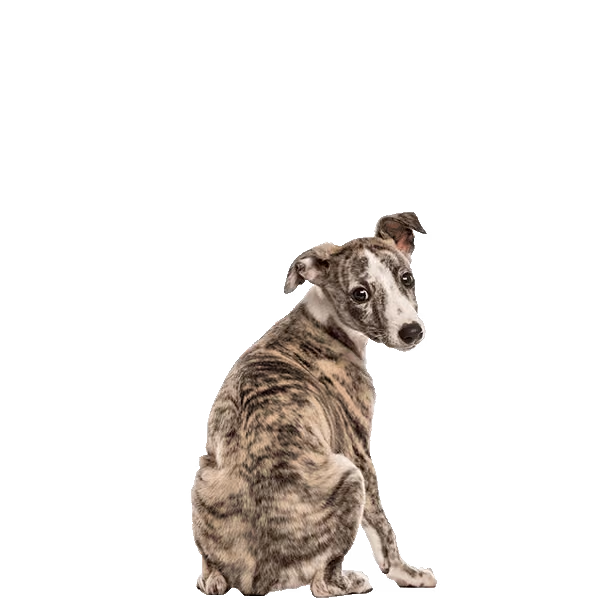
The Whippet is a sweet, affectionate sighthound known for its blazing sprint speed paired with a calm, cuddly home life.
How the Whippet coat is built, and what that means when you groom it.
A few of the Whippet profiles members have added to United Pet Club.
The Whippet is a medium-sized English sighthound: affectionate and easygoing at home, yet able to sprint at speeds near 35 miles per hour.
The Whippet is a medium-sized sighthound that started out in the north of England. It manages a rare trick: on a straight track or a coursing field it's among the fastest breeds around for its size, capable of short bursts near 35 miles per hour, yet at home it's perfectly happy dozing on the couch for most of the day.
Build-wise, the dog is smooth and streamlined: a deep chest, a tucked-up waist, long legs, and a fine coat that sits close to the skin. Adults generally stand 18 to 22 inches at the shoulder and weigh somewhere between 25 and 40 pounds. There's little spare flesh on the frame, which is normal for the breed rather than a sign the dog isn't being fed properly.
Whippets attach closely to their owners and don't respond well to harsh handling. They're gentle with kids and usually easy-going around other dogs. The chase instinct runs strong though, so a small, fast-moving animal can set a Whippet off after it in an instant. Secure fencing at home and keeping the dog on lead in open spaces both matter.
| Attribute | Detail |
|---|---|
| Origin | England |
| Size | Medium (25 to 40 lb) |
| Lifespan | 12 to 15 years |
| Group / role | Sighthound, sprint runner and companion |
| Good with | Children, other dogs, calm households |
The Whippet suits people after an affectionate, low-fuss companion that's settled indoors but needs a proper hard run outdoors most days. It copes just as well in a house as in an apartment, provided it gets daily exercise and a warm, soft spot to crash. The thin coat and low body fat mean the breed feels the cold quickly, so a coat for cooler weather is often worth having. Homes with small caged pets, or without a secure space to let the dog stretch out at full speed, are a poorer match.
The Whippet was bred in northern England in the 1800s as a compact, fast coursing and racing dog for working-class households.
The Whippet took its present form in the north of England during the nineteenth century, bred down from Greyhounds and crossed with smaller terrier-type dogs to produce a sighthound that could hunt rabbits and race on the flat without eating a family out of house and home.
The breed became closely bound up with working-class life in the mill and mining towns of northern England. Owners raced their dogs down straight tracks for prize money, a pastime that earned the Whippet the nickname 'the poor man's racehorse'. Rag racing, where a dog sprinted toward a cloth waved by its owner at the far end of the track, was a regular weekend fixture.
Formal recognition came as organised showing took hold. The Kennel Club in England registered the breed in 1891, and the American Kennel Club had already recognised it in 1888. Standardisation settled the size, outline, and temperament that still define the Whippet today. In Australia the breed is registered through Dogs Australia (formerly the ANKC), the body that oversees pedigree recording and showing nationally.
Through the twentieth century the Whippet moved well beyond its industrial roots, turning up as a show dog, family companion, and competitor in lure coursing and amateur racing across Europe, North America, and Australia.
The Whippet is a sleek, fine-coated sighthound with a deep chest, arched loin, and tucked waist, standing 18 to 22 inches tall.
The Whippet looks like a Greyhound scaled down, built purely for speed and balance. The outline runs in smooth curves: a long head, an arched neck flowing into the back, a deep chest reaching to the elbow, a defined waist, and a strongly arched loin. The legs are long and lean, the feet neat and well padded. Left to its own devices the dog will usually curl into a tight ball to sleep.
The coat is short, fine, and lies close to the body, offering next to no insulation. Skin shows through easily over the ribs and hips, and that's correct for the breed rather than a fault.
| Trait | Standard |
|---|---|
| Height | Males 19 to 22 in, females 18 to 21 in |
| Weight | About 25 to 40 lb |
| Coat | Short, fine, smooth, close-lying |
| Colours | Any colour or mix, including fawn, brindle, blue, black, white, and parti-colour |
| Eyes | Oval, dark, alert expression |
The Whippet standard doesn't restrict colour, so the breed turns up in a huge range of solids and combinations. Common shades include fawn, cream, blue-grey, black, red, and brindle, often broken up with white on the chest, feet, or face. The short coat asks for very little grooming but gives almost no protection against cold or rough going underfoot, so plenty of owners fit a coat in winter and check the thin skin for scrapes after a hard play session.
Whippets are affectionate and calm indoors, friendly with people and other dogs, with a strong but manageable chase instinct.
The Whippet has a quiet, gentle nature. Indoors it's settled and undemanding, the sort of dog that will happily sleep away most of the day on the couch. It forms tight bonds with its household and likes to stay close to its people, sometimes leaning or curling right up against them. The breed is sensitive and doesn't take well to shouting or a heavy hand.
With family, including kids, Whippets are patient and affectionate, though very young children need supervision since the dog is slight and can be knocked about or hurt by rough handling. Most Whippets are a bit reserved with strangers at first rather than nervous, and warm up fast once they've been introduced properly. They're not natural guard dogs and rarely bark much.
Around other dogs the breed is generally sociable and does well in multi-dog households. The main thing to watch is the sighthound chase drive: sudden movement from a cat, rabbit, possum, or small dog can trigger an instant full-speed pursuit, so a reliable recall, secure fencing, and lead walks in open areas all matter.
| Trait | Rating |
|---|---|
| Affection | 5 |
| Energy | 3 |
| Trainability | 3 |
| Vocalisation | 1 |
| Shedding | 2 |
Whippets need minimal grooming but daily hard exercise, warmth, and soft bedding to stay healthy and comfortable.
Day-to-day care of a Whippet is fairly simple. The coat looks after itself, but the breed's thin build and chase drive shape what it actually needs: regular bursts of fast running, protection from the cold, and a warm, padded spot to rest.
Whippets suit houses and apartments alike, since they're quiet and settled indoors. They feel the cold fast and go looking for warm spots, so a soft bed away from draughts and a coat for winter both help. A secure backyard, or safe space to run nearby, matters far more than the size of the home.
Whippets do well on a complete diet fed in measured meals, with care taken to keep them lean and avoid overfeeding their light frame.
The Whippet does well on a complete, balanced dog food matched to its life stage and activity level. The breed is naturally lean, so visible ribs and a clear waist are normal and not a reason to top up the bowl. A dog doing serious racing or coursing work may need more fuel, while a couch-bound pet needs less. Split the daily amount across two meals and adjust by body condition rather than sticking rigidly to a set measure.
| Life stage | Amount per day | Meals |
|---|---|---|
| Puppy (2 to 6 months) | Per product guide, divided | 3 to 4 |
| Junior (6 to 12 months) | About 1.5 to 2 cups | 2 to 3 |
| Adult (1 year and older) | About 1.5 to 2.5 cups | 2 |
| Senior / less active | Reduced to hold lean weight | 2 |
Keep treats to roughly 10 percent of daily calories so the dog stays lean. Most Whippets on a good complete diet don't need supplements on top. Keep fresh water available at all times, especially around hard exercise. Deep-chested breeds can be prone to bloat, so avoid a heavy meal right before or after intense exercise and let the dog settle down around active periods.
Whippets are generally healthy and live 12 to 15 years, with a few breed concerns including heart conditions and anaesthesia sensitivity.
The Whippet is one of the healthier purebred dogs and typically lives 12 to 15 years. It carries fewer inherited problems than many breeds of similar size, though a handful of concerns are worth knowing about. The lean build and short coat also mean the breed handles cold poorly and bruises or cuts more easily than a heavier-set dog. Across much of Australia, hot dry summers bring their own risk: in tick-prone regions, paralysis ticks can affect dogs seriously, so owners should check coats after time outdoors and ask a vet about prevention.
| Condition | Signs | Note |
|---|---|---|
| Heart disease (including murmurs) | Reduced stamina, cough, fainting | Screen with regular vet heart checks |
| Anaesthesia sensitivity | Slow recovery from sedation | Low body fat affects drug clearance; tell the vet the breed |
| Eye conditions | Cloudiness, vision changes | Periodic eye exams help catch early signs |
| Skin cuts and tears | Wounds after rough play | Thin skin injures easily; check after running |
| Cold sensitivity | Shivering, seeking warmth | Use a coat in winter and provide warm bedding |
Whippets are intelligent and willing but sensitive, so short, gentle, reward-based sessions work best, with recall the main challenge.
Whippets are intelligent and keen to please, but they're also sensitive and can switch off during repetitive drills. They pick things up fast when sessions are short, positive, and varied. A harsh correction damages the bond and tends to shut the dog down rather than fix the behaviour. Recall is the hardest thing to train, because the chase instinct can override a learned command the moment the dog hits full stride. For that reason plenty of owners keep their Whippet on lead in unfenced areas no matter how solid the recall looks at home.
Whippet breeding follows standard canine reproduction, with litters of around four to eight puppies after a gestation of about 63 days.
Whippets reach sexual maturity in roughly the same window as other medium-sized dogs, with females typically having their first season between six and twelve months of age. Responsible breeders wait until the dog is physically and mentally mature, usually around two years old, and screen both parents for heart and eye conditions before mating. Pregnancy runs about 63 days from conception, and litters average four to eight puppies, though smaller and larger litters both happen.
Puppies are born helpless with their eyes closed and rely entirely on the dam for the first few weeks. Weaning starts around three to four weeks, and structured socialisation from this early stage shapes the calm, confident adult temperament the breed is known for. Because Whippets are lean and fine-boned, whelping and raising the litter should happen in a warm, draught-free space. Breeding decisions are best left to experienced breeders who can provide veterinary support and take lifelong responsibility for placing the puppies.
| Metric | Value |
|---|---|
| Female first season | 6 to 12 months |
| Recommended breeding age | About 2 years |
| Gestation | About 63 days |
| Average litter size | 4 to 8 puppies |
| Weaning age | 3 to 4 weeks |
A free lifetime United Pet Club record for your Whippet, with the microchip registered at no charge and nothing falling due each year.
Rangers and shelters can only call the number the scan hands them. Give your Whippet a free United Pet Club profile and that number is yours: dog registration takes a few minutes, costs nothing for his lifetime, and works with or without a chip in place.
A chipped Whippet without a registration is carrying a number nobody can use. File it with United Pet Club and the number works for him: free for life, open to every chip brand sold here, searchable from any clinic or pound in the country. Microchip registration now, free account while you're at it.
Sign up free with United Pet Club, add his name, breed, and a photo, and you're done. The lifetime plan keeps the profile live at no cost, and the chip number can go in whenever the vet's done his bit.
Add the 15-digit number to your free account with your address and mobile. Registration and every update after it are free, and chips from any manufacturer an Australian vet implants are accepted.
In most states and territories, yes, chipping is required and the register entry comes with it. The state register and your United Pet Club record do different jobs: one satisfies the council, the other keeps a current phone number one scan away, free.
Nothing with United Pet Club. Profile, chip registration, and unlimited updates are covered for his whole life, no annual fee in sight.
Common questions about Whippet size, temperament, care difficulty, lifespan, suitability, and availability.
Whippets are a medium-sized breed. Most adults stand 18 to 22 inches at the shoulder and weigh about 25 to 40 pounds, with males a little larger than females.
Yes. They're affectionate, gentle, and calm indoors, and they're patient with kids and friendly toward other dogs. Very young children should be supervised, since the dog is slight and can be hurt by rough handling.
The coat is low-maintenance and the breed is quiet at home, so day-to-day care is simple. The main demands are giving the dog a proper chance to sprint regularly and keeping it warm, since it feels the cold easily.
Whippets typically live 12 to 15 years and are among the healthier purebred dogs of their size.
Yes. Whippets are calm and rarely bark, so they adapt well to apartment living as long as they get daily walks and a safe place to run at full speed.
They need short bursts of intense running rather than long endurance work. A couple of daily walks plus a chance to sprint in a secure area usually keeps a Whippet content, after which it's happy to settle down.
Some caution is needed. The breed has a strong chase instinct, so a small, fast-moving animal can trigger a pursuit. Careful introductions and management help, but secure fencing and lead walks remain important.



