

Welsh Terrier
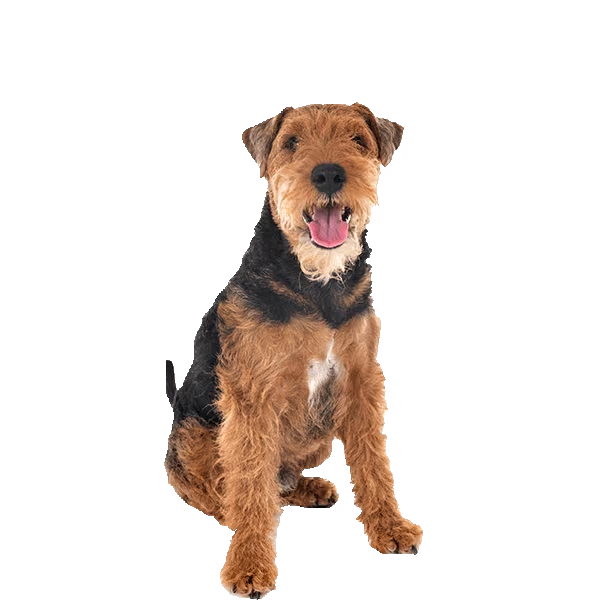
The Welsh Terrier is a spirited, friendly Welsh breed with a wiry black-and-tan coat, known for its cheerful energy and intelligence.
- Size
- Small
- Lifespan
- 12–15 years
- Origin
- Wales
- Temperament
- Spirited
- Standard colours
- Black and Tan
Characteristics
Coat and grooming
How the Welsh Terrier coat is built, and what that means when you groom it.
- Coat layers
- Double coat
- Coat texture
- Wire
- Coat length
- Medium
- Shedding
- Low shedding
Grooming guidance
Caution: A Welsh Terrier coat should be hand-stripped rather than clipped.
A wire coat is meant to be pulled out at the root once the hair is ready to release. Clippers cut it off part way instead, leaving the soft undercoat behind. The result is a coat that grows back limp and faded, and the weatherproof texture only returns after the hair is stripped out again.
Welsh Terrier colours and patterns
What each club's breed standard says about every Welsh Terrier colour and pattern. Point at a ruling to see the club's own wording.
Breed standards describe the Welsh Terrier in Black and Tan. Standard patterns: Grizzle and Tan point.
| Colour or pattern | FCI | AKC | UKC | KC | KUSA |
|---|---|---|---|---|---|
| Black | Standard (“black and tan for preference”) | Standard (“Black & Tan”) | Standard (“the black jacket”) | Standard (“black and tan for preference”) | Standard (“black and tan for preference”) |
| Tan | Standard (“black and tan for preference”) | Standard (“Black & Tan”) | Standard (“a clear tan”) | Standard (“black and tan for preference”) | Standard (“black and tan for preference”) |
| Albino | No ruling | No ruling | Disqualifying (“albinism”) | Not recognised | No ruling |
| Patterns | |||||
| Grizzle | Standard (“black grizzle and tan”) | Standard (“Grizzle & Tan”) | Standard (“a black grizzle jacket is also acceptable”) | Standard (“black grizzle and tan”) | Standard (“black grizzle and tan”) |
| Tan point | Standard (“black and tan”) | Standard (“Black & Tan”) | Standard (“the legs, quarters and head are a clear tan”) | Standard (“black and tan”) | Standard (“black and tan”) |


| Colour or pattern | FCI | AKC | UKC | KC | KUSA |
|---|---|---|---|---|---|
| Dark brown | Standard (“dark”) | Standard (“dark brown”) | Standard (“dark”) | Standard (“dark”) | Standard (“dark”) |
| Colour or pattern | FCI | AKC | UKC | KC | KUSA |
|---|---|---|---|---|---|
| Black | Standard (“black”) | Standard (“black”) | Standard (“black in color”) | Standard (“nose black”) | Standard (“black”) |
What the rulings mean
- Standard
- Described by the club's breed standard.
- Disqualifying
- The club's breed standard disqualifies an animal of this colour or pattern.
- Not recognised
- The club does not accept this colour or pattern for the breed.
Colour changes
How a Welsh Terrier's colours can change over its life.
Blackchanges toRust
Coat · With body condition · can change back
Blackchanges toGrey
Coat · Progressive
Blackchanges toBrown
Coat · In the sun · can change back
Tan pointchanges toSaddle
Coat · With age · from 6 to 156 weeks
Blackchanges toSnow nose
Nose · With the season · can change back
Blackchanges toPink
Nose · With the season · can change back


Sources
Each ruling comes from the club's published breed standard or colour list.
Welsh Terrier breed standard
What each club's standard asks of the Welsh Terrier: size, build and forms. A club speaks only for itself, and a figure no club published is left out.
Measurements


Conformation
Bite
Scissors bite
“perfect, regular scissor bite”
Eye shape
RoundFault
“A round, full eye undesirable”
Ear carriage
Button
“V-shaped, small ... carried forward and close to cheek”
Ear set
High
“set on fairly high”
Neck length
Medium
“Moderate length and thickness”
Hocks
Well let down
“Hocks well bent, well let down”
Feet
Cat foot
“Small, round and cat-like”
Tail carriage
Raised (gay)
“Carried erect but not too gaily”


Markings


Cropping, docking and other procedures
- Tail docking: Alternate “Previously customarily docked. Docked ... Undocked”
Parts of the body


Meet some of our Welsh Terrier
A few of the Welsh Terrier profiles members have added to United Pet Club.


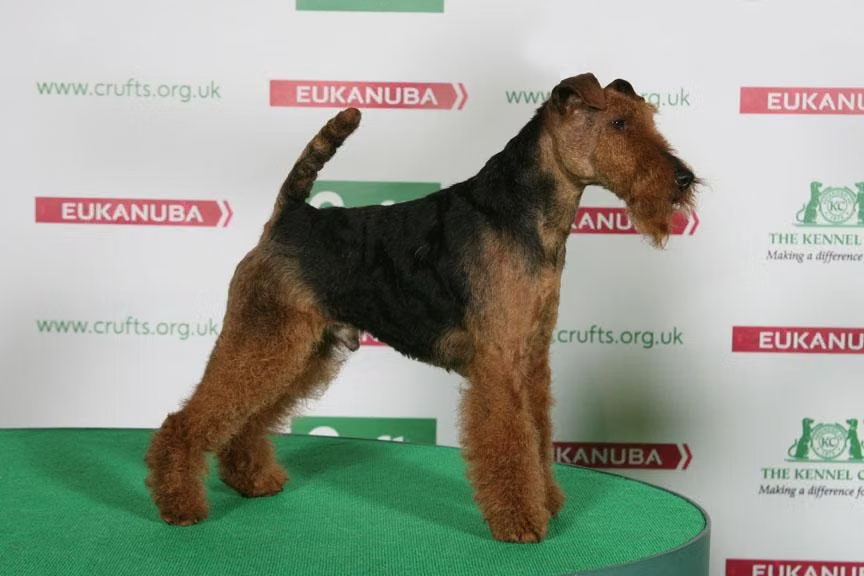


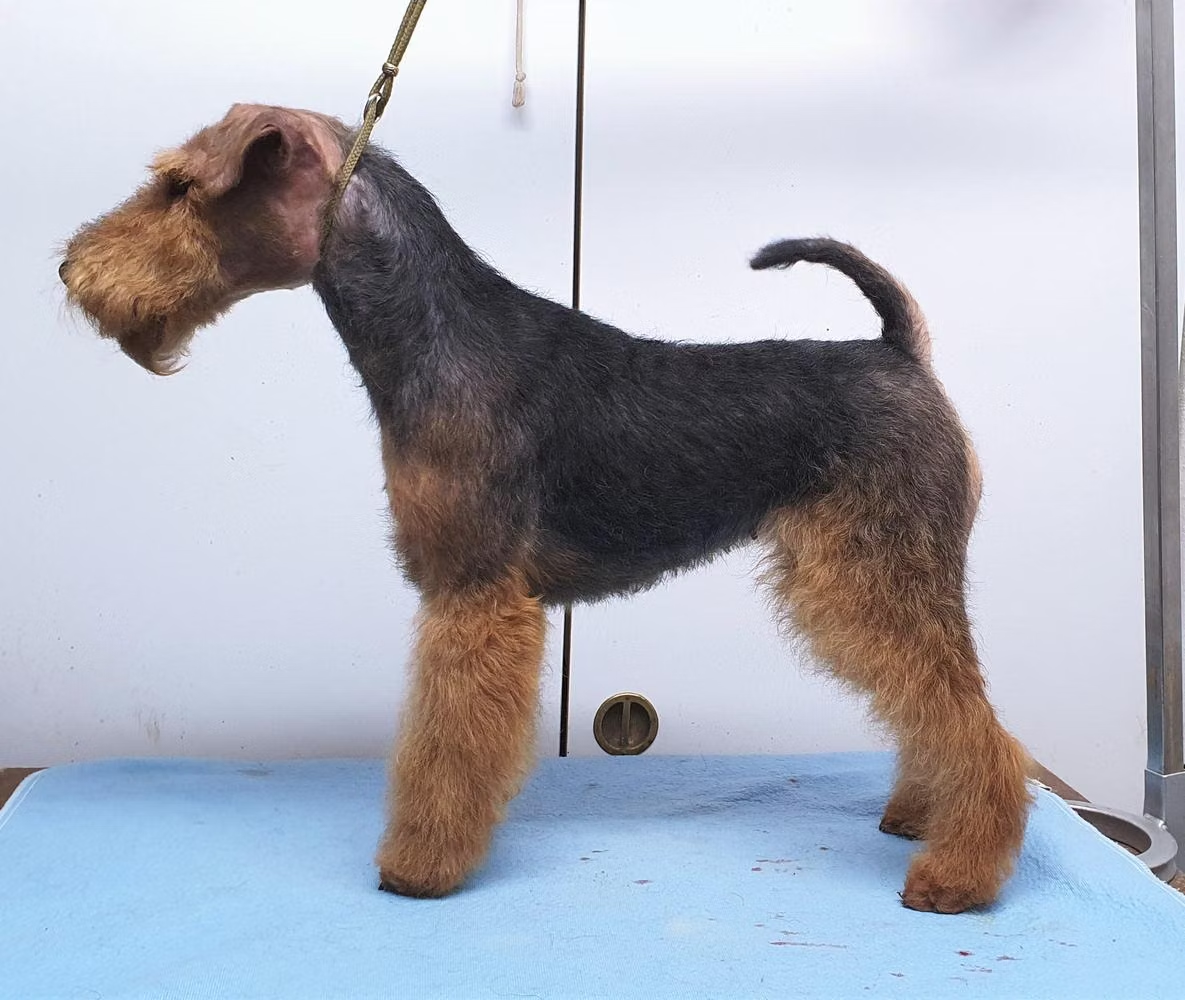
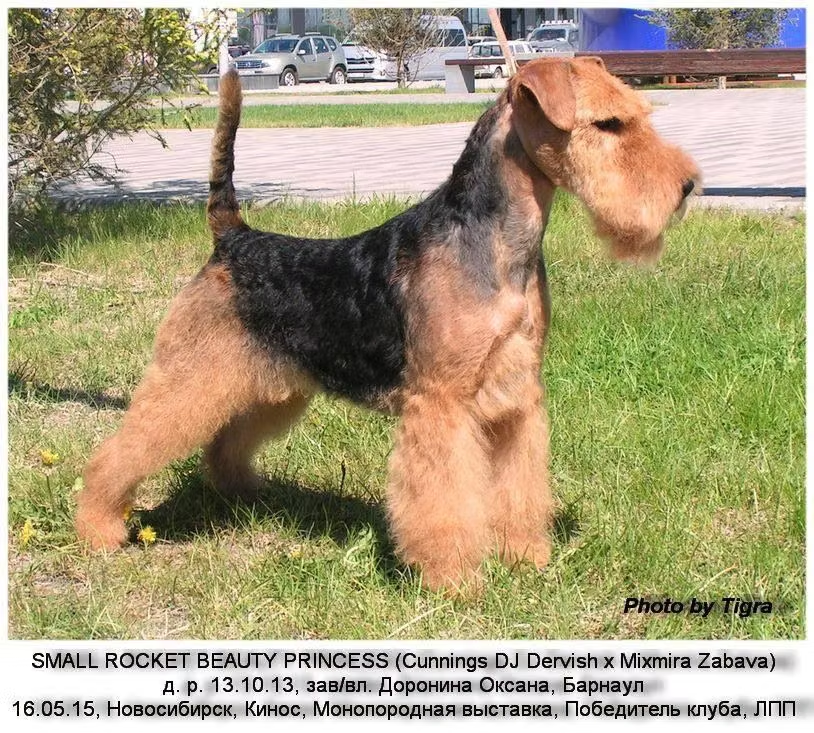

About the Welsh Terrier
A small, wiry-coated terrier from Wales, built solid and full of go, known for its cheeky, friendly nature and a sharp mind.
The Welsh Terrier is a compact working terrier that started out in the hill country of Wales. It stands about knee height, with a square, solid frame and the black-and-tan wiry jacket typical of the tougher end of the terrier world. Breeders built the dog to go to ground after foxes, badgers and rats, so everything about the shape is built for work rather than looks.
Personality-wise, the Welsh Terrier is outgoing and good natured, without the highly strung streak some terriers carry. It is alert, nosy in the best sense, and self-assured, and it holds onto its puppyish streak well past puppyhood. Owners tend to call it a cheerful, game little dog that is always up for something.
The coat is one of its calling cards. The wiry top layer barely sheds, so the breed suits people after a dog that will not leave hair over the couch, though the coat still needs proper upkeep to hold its texture, particularly through an Australian summer when regular grooming keeps the double coat from trapping heat.
| Attribute | Detail |
|---|---|
| Origin | Wales |
| Size | Small (around 9 to 9.5 kg) |
| Lifespan | 12 to 15 years |
| Group / role | Terrier; originally bred to hunt and control vermin |
| Good with | Families and active owners; keep an eye on it around small pets |
Who it suits
The Welsh Terrier suits active people and families who can commit to a daily walk and steady, patient training. It works well in households with older kids who know how to handle a livewire dog. If you keep rabbits, guinea pigs or other small pets in the backyard, take care, this terrier still has a strong prey drive. Anyone after a quiet lap dog happy to snooze all day should look elsewhere.
History and origin
Bred in Wales to hunt foxes, badgers and vermin, the Welsh Terrier is one of the older terrier breeds still recognised today.
The Welsh Terrier's story starts in Wales, where farmers and huntsmen kept small working terriers to go after fox, badger and otter, and to keep rats and other vermin off the farm. These dogs had to be small enough to follow quarry underground yet game enough to stand their ground once they got there. The black-and-tan, wire-coated terriers found across Wales became the base stock for the modern breed.
Through the 1800s the type was tightened up as breeders worked towards a consistent look and working ability. The Welsh Terrier shares its roots and general appearance with the old black-and-tan terriers of Britain, and next to an Airedale Terrier it reads as a smaller version in coat colour and pattern.
As dog showing took off in Britain, the Welsh Terrier moved from paddock and farm to the show ring and the family home. It was among the terrier breeds recognised in the late 1800s and built a loyal following among people who liked its manageable size and level head.
The breed later spread beyond Wales to the rest of Britain and overseas, Australia included. These days it is kept mainly as a companion and show dog, recognised here through Dogs Australia, though it still carries the build and instincts of its working past.
Appearance and breed standard
A small, square-built dog with a wiry black-and-tan coat, a long rectangular head and a compact, well-balanced frame.
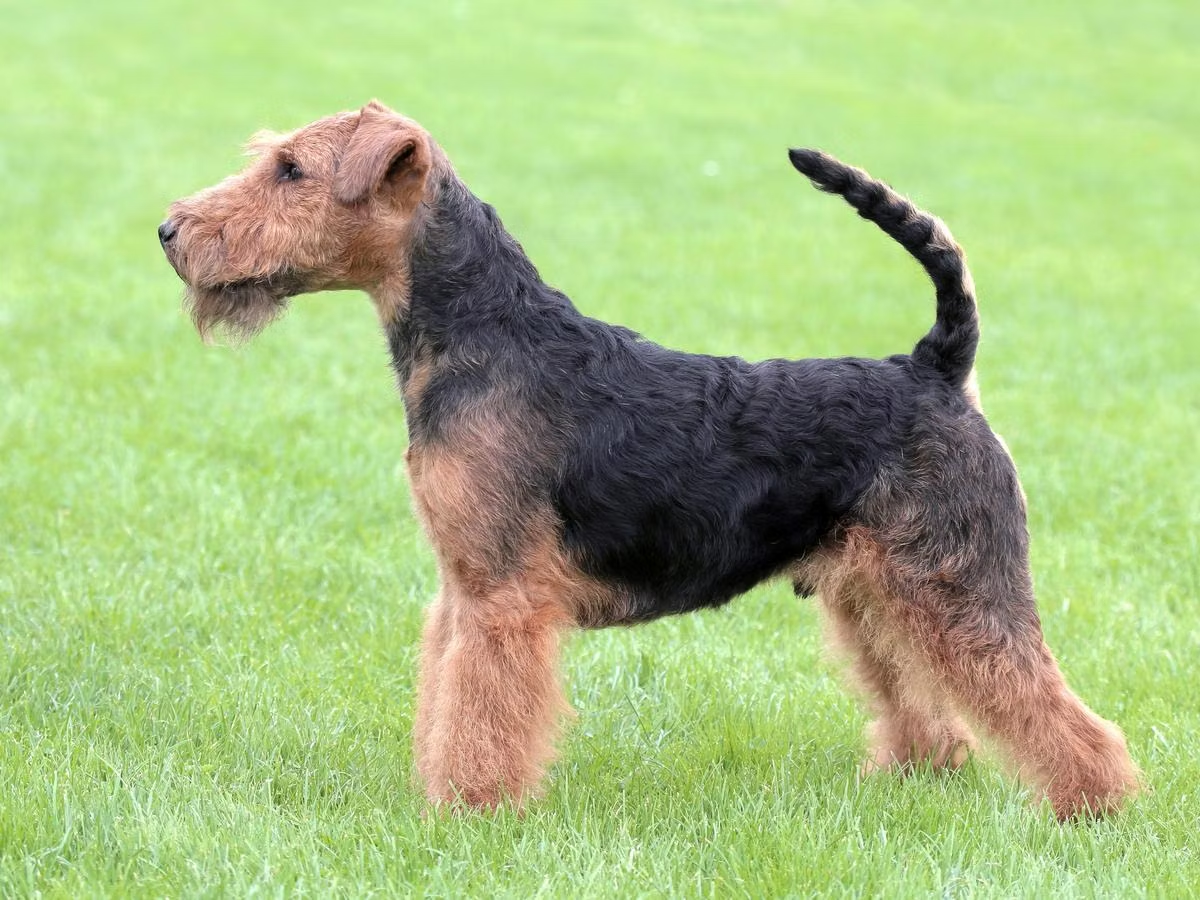
The Welsh Terrier is a small dog with a square, balanced outline, so its height at the shoulder roughly matches the length of its body. The head is long and rectangular with a flat skull, small folded ears that drop forward, and dark eyes that give it an alert, ready look. The build is sturdy and workmanlike, with straight legs and a level back.
| Trait | Standard |
|---|---|
| Height | Up to about 39 cm (15.5 in) at the shoulder |
| Weight | About 9 to 9.5 kg (20 to 21 lb) |
| Coat | Wiry, dense double coat with a hard outer layer |
| Colours | Black and tan, or grizzle and tan |
| Eyes | Small, dark, set well into the head |
Coat and colours
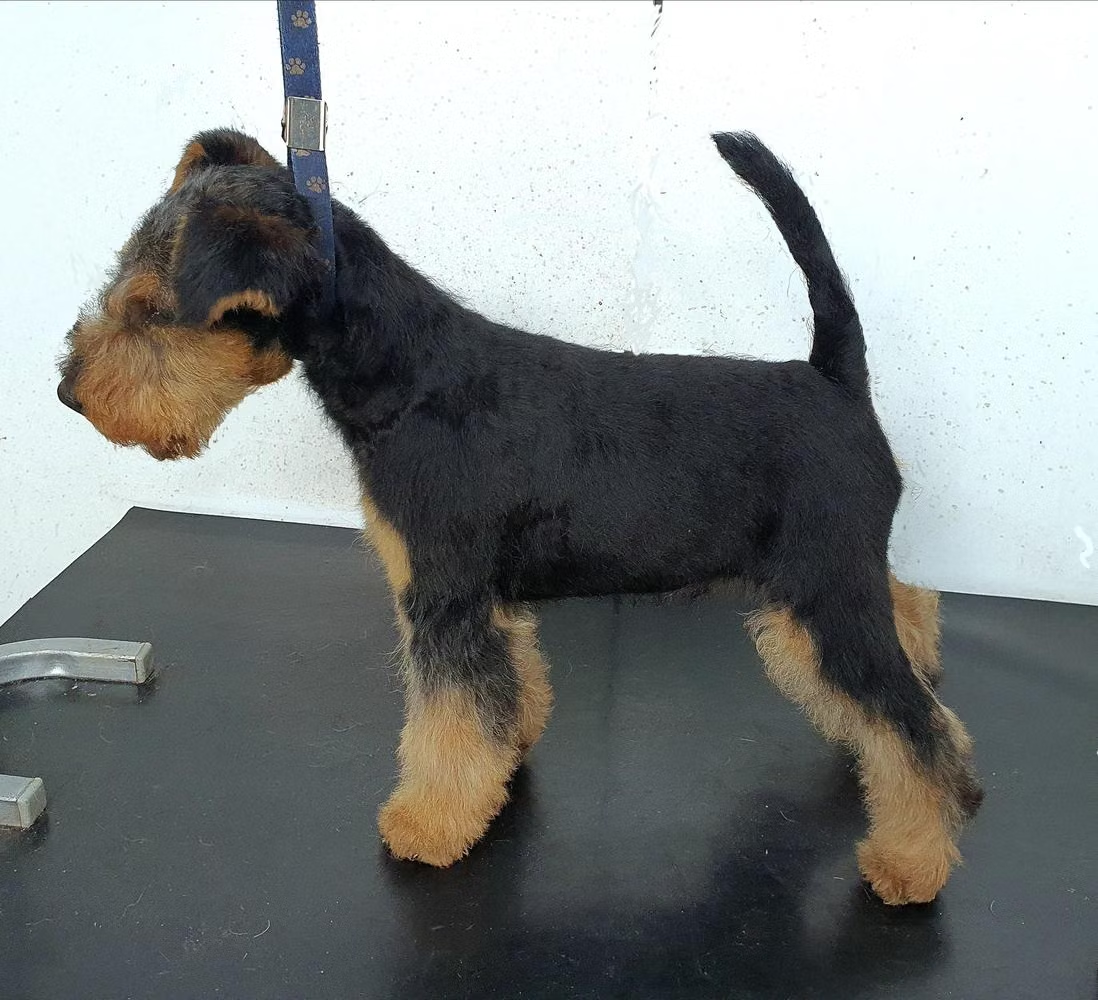
The Welsh Terrier's calling card is its harsh, wiry double coat. The undercoat is soft, while the top coat is dense and hard to the touch, built to shrug off weather and rough ground, handy under the Australian sun too. The standard colour is black and tan, with a black or dark grizzle saddle over the back and tan on the head, legs and underside. Pups are often born mostly black and pick up their adult tan markings as they grow. To keep the coat's proper texture and colour, it is traditionally hand stripped rather than clipped.
What the Welsh Terrier standard says, club by club
Height at the withers for the Welsh Terrier: AKC 38.1-39.4 cm; CKC 38 cm; UKC 38.1-39.4 cm.
Each club words the Welsh Terrier standard its own way, so the figures below are listed per club: AKC, CKC, FCI, KC, UKC.
Size
- Height at the withers, male: AKC 38.1-39.4 cm; CKC 38 cm; UKC 38.1-39.4 cm
- Height at the withers: FCI under 39 cm; KC under 39 cm
- Weight: AKC 9.1 kg; CKC 8.5-9.5 kg; FCI 9-9.5 kg; KC 9-9.5 kg; UKC 9.1 kg
- Height to length: AKC 1; UKC 1
- Skull to muzzle: AKC 1; UKC 1
Build and forms
At least one club accepts each of these:
- Stop: Slight
- Muzzle shape: Square
- Bite: Scissors bite, Level bite
- Dentition: Full dentition
- Eye shape: Almond
- Ear carriage: Button
- Ear set: High
- Neck length: Medium
- Dewlap: None (clean throat)
- Body type: Square
Forms the clubs penalise
A fault or a disqualification is a judgment under a show standard. It can affect placings and, at some clubs, registration.
- Disqualifying: Bite: Undershot (CKC); Ear carriage: Erect (prick) (CKC); Ear carriage: Rose (CKC)
- Fault: Muzzle shape: Snipy (AKC); Eye shape: Round (FCI, KC)
Cropping, docking and other procedures
- Tail docking: Standard (AKC); Alternate (FCI, KC, UKC)
- Dewclaw removal: Standard (AKC)
This is each club's stance in the show ring, not the law. The law on these procedures differs by country.
Markings
Each club's ruling on the breed's named marks:
- Pencil marks: Fault (FCI, KC)
See every point side by side: compare the clubs.
Rulings come from each club's published breed standard, and clubs revise their standards. Before a show or a registration, check the current text with the club.
What does each club give for Height at the withers in the Welsh Terrier?
Height at the withers, male: AKC 38.1-39.4 cm; CKC 38 cm; UKC 38.1-39.4 cm; Height at the withers: FCI under 39 cm; KC under 39 cm.
Which forms do clubs penalise in the Welsh Terrier?
Disqualifying: Bite: Undershot (CKC); Ear carriage: Erect (prick) (CKC); Ear carriage: Rose (CKC). Fault: Muzzle shape: Snipy (AKC); Eye shape: Round (FCI, KC).
Which Welsh Terrier colours the clubs accept
Every club we track accepts Black, Tan for the Welsh Terrier.
Clubs compared for the Welsh Terrier: AKC, FCI, KC, KUSA, UKC. All of them accept Black, Tan.
Patterns listed as standard for the Welsh Terrier: Grizzle, Tan point.
Colours penalised in the show ring
A fault or a disqualification is a judgment under a show standard. It can affect placings and, at some clubs, registration.
- Disqualifying: Albino (UKC)
Beyond the main colour
Standards rule on more than the main colour. These are listed as standard:
- Eyes: Dark brown
- Nose: Black
Rulings come from each club's published breed standard, and clubs revise their standards. Before a show or a registration, check the current text with the club.
Which Welsh Terrier colours do all the clubs accept?
All of these clubs accept Black, Tan: AKC, FCI, KC, KUSA, UKC.
Which Welsh Terrier colours are faults or disqualifications?
Disqualifying: Albino (UKC).
Temperament and personality
Friendly, spirited and sharp, the Welsh Terrier is generally good with families but keeps a strong terrier prey drive around small animals.
The Welsh Terrier is known for a cheerful, easygoing nature paired with classic terrier grit. It is confident and full of energy, often staying playful and puppyish for years. The breed is bright and curious, good company to have around, though it needs something to occupy its mind or it will find its own entertainment.
With family it is affectionate and likes to be part of things. It usually gets on well with kids, especially older ones who can match its pace and handle it gently. Around strangers it tends to be watchful and will let you know someone is at the door, though it is not typically nervy or aggressive.
With other dogs the breed can be sociable but a bit pushy, and some individuals will not back down from a stoush. Its hunting background gives it a strong prey drive, so small pets such as rats, rabbits and sometimes cats can set off a chase. Early socialising helps it learn to behave itself around other animals.
| Trait | Rating |
|---|---|
| Affection | 4 |
| Energy | 4 |
| Trainability | 4 |
| Vocalness | 3 |
| Shedding | 1 |
Care and grooming
The Welsh Terrier needs regular coat care, daily exercise and a household that can keep pace with a busy, clever dog.
Grooming
- Brush the wiry coat once or twice a week to clear loose hair and stop matting.
- Hand strip the coat a few times a year to keep its proper hard texture and colour; clipping softens the coat over time.
- Trim around the eyes, ears and feet for a tidy outline.
- Check and clean the folded ears regularly, and trim nails every few weeks.
Exercise
- Aim for at least 45 to 60 minutes of activity a day through walks and play.
- Only let it off lead in a securely fenced area, since the strong prey drive can send the dog bolting after small animals.
- Use scent games, fetch and digging-friendly play to satisfy terrier instincts.
- Add training sessions and puzzle toys for mental work alongside the physical stuff.
- In the warmer months, walk it early morning or evening and keep it off hot pavement or sand; the dark wiry coat holds heat and paws can burn on hot surfaces.
Environment
The Welsh Terrier settles into houses or units as long as it gets enough daily activity. A securely fenced yard is a real plus, since the breed likes to explore and dig. It prefers to be near its people and can turn bored or noisy if left alone too long. Over an Australian summer, give it shade, fresh water and a cool spot to retreat to during the heat of the day.
Grooming a Welsh Terrier
The Welsh Terrier coat: Double coat, Wire, Medium, Low shedding.
Grooming a Welsh Terrier comes down to its coat, so start there.
- Coat layers: Double coat
- Coat texture: Wire
- Coat length: Medium
- Shedding: Low shedding
What this coat asks of you
- A double coat has a soft undercoat beneath longer guard hairs. Brush right down to the undercoat, because that is the layer that packs down and traps loose hair.
- A wire coat is harsh to the touch and keeps its texture best when dead hair is plucked out rather than cut.
- Medium-length hair starts to tangle wherever it rubs, so pay attention to those spots.
- Low shedding does not mean low upkeep. Hair that stays in the coat can still tangle unless it is brushed out.
What to tell a groomer
Mention these when you book. The coat notes on this page explain each one.
- Hand-strip rather than clip
A groomer who knows the breed can adapt all of this to the individual animal. Sore skin, mats pressed against the skin or a sudden change in the coat are worth showing to a vet.
What kind of coat does a Welsh Terrier have?
On our records: Coat layers: Double coat; Coat texture: Wire; Coat length: Medium; Shedding: Low shedding.
How much does a Welsh Terrier shed?
Low shedding does not mean low upkeep. Hair that stays in the coat can still tangle unless it is brushed out.
What should a groomer know about a Welsh Terrier?
These grooming rules apply: Hand-strip rather than clip.
Nutrition and feeding
The Welsh Terrier does well on a complete diet portioned for its small, active build, with treats kept in check to avoid weight gain.
The Welsh Terrier needs a complete and balanced diet suited to a small, active dog. A quality food with enough protein backs up its muscle and energy needs. Because the breed is energetic but compact, portions should match its size and activity level so it stays lean. Measure meals rather than leaving food out all day, and adjust amounts based on body condition.
| Life stage | Amount per day | Meals |
|---|---|---|
| Puppy (2 to 6 months) | Per product guide for growth | 3 to 4 |
| Adult | About 3/4 to 1 cup of dry food | 2 |
| Senior / less active | Slightly reduced to maintain weight | 2 |
Treats and supplements
Keep treats to roughly ten per cent of daily calories, since this breed piles on weight easily if overfed. Small, low-calorie treats work well for training rewards. Most Welsh Terriers on a complete diet do not need supplements; check with a vet before adding anything, including joint or skin supplements.
Health and common conditions
Generally a hardy breed with a lifespan of 12 to 15 years, the Welsh Terrier has a handful of inherited and skin-related conditions worth watching.
The Welsh Terrier is a generally healthy, hardy breed with a typical lifespan of 12 to 15 years. Like all breeds it has a few conditions that crop up more often than in dogs generally, including eye problems, skin allergies and some inherited issues. Buying from a breeder who screens their stock, and keeping up with routine vet care, cuts the risk of trouble.
| Condition | Signs | Note |
|---|---|---|
| Skin allergies | Itching, redness, recurrent ear or skin infections | Common in the breed; managed with diet and veterinary care |
| Glaucoma / lens luxation | Cloudy or painful eye, redness, vision changes | Eye screening helps with early detection |
| Hypothyroidism | Weight gain, low energy, coat changes | Diagnosed by blood test, treated with medication |
| Patellar luxation | Skipping or intermittent hind-leg lameness | Severity varies; some cases need surgery |
Preventive care
- Keep vaccinations and parasite prevention up to date.
- Book annual vet check-ups, with twice-yearly visits for older dogs.
- Keep on top of dental care through brushing and professional cleans.
- Watch body weight and adjust food to keep the dog lean.
- Check skin, ears and eyes regularly between visits.
Training
Bright and keen, the Welsh Terrier picks things up fast but has an independent streak, so it does best with consistent, reward-based training started young.
The Welsh Terrier is smart and willing to work, which means it can pick up a wide range of commands and tricks. At the same time it has the independent, sometimes stubborn streak typical of terriers, so training takes consistency and patience. Short, varied sessions hold its attention better than long, repetitive drills. Early socialising with people, other dogs and everyday situations helps it grow into a steady adult, and managing its prey drive around small animals should be part of training from day one.
Basics
- Start socialising and gentle handling as a pup.
- Teach name recognition and a solid recall early, since the prey drive is strong.
- Work on the core cues: sit, stay, down and leave it.
- Practise loose-lead walking to manage pulling towards distractions.
- Add structured games and trick training to channel its energy and smarts.
Breeding
Welsh Terrier breeding follows standard small-dog practice, with health screening of both parents and litters of around three to six pups.
Welsh Terriers reach sexual maturity in their first year, but responsible breeders wait until a dog is physically and mentally mature, usually around two years old, before breeding. Before any mating, both parents should be screened for known breed concerns such as eye conditions and have a sound temperament, since both health and disposition get passed on.
Gestation in dogs runs about 63 days. The Welsh Terrier typically has a litter of roughly three to six pups. Pups are usually born mostly black and pick up their tan markings as they grow.
Raising the litter means keeping the dam well fed, providing a warm, clean whelping area, and starting gentle socialising once the pups are a few weeks old. Pups are normally weaned by around seven to eight weeks and should stay with the litter long enough to pick up social skills before heading to new homes.
| Metric | Value |
|---|---|
| Sexual maturity | Around 6 to 12 months |
| Recommended breeding age | About 2 years |
| Gestation | About 63 days |
| Average litter size | 3 to 6 pups |
| Weaning age | 7 to 8 weeks |
Getting your Welsh Terrier registered, chip and all
A free lifetime United Pet Club record for your Welsh Terrier, with the microchip registered at no charge and nothing falling due each year.
How to register a Welsh Terrier in Australia
Every state and territory keeps its own Companion Animal Register, and council rangers scan as a matter of course, so a Welsh Terrier with a current record is home before dinner. Register your dog free with United Pet Club: the profile carries your details beside his photo for his whole life, and no renewal ever turns up.
A chipped Welsh Terrier without a registration is carrying a number nobody can use. File it with United Pet Club and the number works for him: free for life, open to every chip brand sold here, searchable from any clinic or pound in the country. Microchip registration now, free account while you're at it.
How do I register my Welsh Terrier in Australia?
Sign up free with United Pet Club, add his name, breed, and a photo, and you're done. The lifetime plan keeps the profile live at no cost, and the chip number can go in whenever the vet's done his bit.
How do I register my Welsh Terrier's microchip?
Add the 15-digit number to your free account with your address and mobile. Registration and every update after it are free, and chips from any manufacturer an Australian vet implants are accepted.
Does my Welsh Terrier have to be microchipped in Australia?
In most states and territories, yes, chipping is required and the register entry comes with it. The state register and your United Pet Club record do different jobs: one satisfies the council, the other keeps a current phone number one scan away, free.
What does it cost to register a Welsh Terrier?
Nothing with United Pet Club. Profile, chip registration, and unlimited updates are covered for his whole life, no annual fee in sight.
Frequently asked questions
Common questions about the Welsh Terrier's size, temperament, care needs, lifespan and suitability as a pet.
How big does a Welsh Terrier get?
The Welsh Terrier is a small dog standing up to about 39 cm (15.5 in) at the shoulder and weighing roughly 9 to 9.5 kg (20 to 21 lb).
What is the Welsh Terrier's temperament like?
It is friendly, spirited, clever and full of energy. The breed is affectionate with its family and watchful around strangers, while keeping a strong terrier prey drive towards small animals.
Is the Welsh Terrier hard work to look after?
Care is moderate. The dog needs daily exercise, mental stimulation and regular coat upkeep, including hand stripping a few times a year to keep the wiry coat in proper condition.
How long do Welsh Terriers live?
The typical lifespan is 12 to 15 years, and the breed is generally hardy when given routine vet care and kept at a healthy weight.
Are Welsh Terriers good with kids and other pets?
They usually do well with older kids who can handle an active dog. They can live with other dogs but may be a bit pushy, and their prey drive means small pets such as rats and rabbits need supervision.
Do Welsh Terriers shed much?
No. The wiry coat sheds very little, which suits people after a low-shedding dog, but it still needs regular brushing and hand stripping to keep its texture.
Are Welsh Terriers easy to train?
They are clever and pick things up fast but have an independent streak. Consistent, reward-based training started early gets the best results.
From the community
Ask about the Welsh TerrierNo questions about the Welsh Terrier yet. Be the first to ask.
Browse Dog breeds