The Tosa is a massive, dignified Japanese breed known for its calm composure and steadfast loyalty to family.
How the Tosa coat is built, and what that means when you groom it.
A few of the Tosa profiles members have added to United Pet Club.
The Tosa is a giant Japanese breed built for the fighting ring, now kept in Australia as a calm, watchful guardian that bonds tightly with its own family.
The Tosa is a giant working dog out of Japan, regularly named among the biggest of the country's native breeds. Adult dogs carry heavy bone, a broad skull, and a deep chest, and plenty of males top 60 kg. Breeders developed the Tosa for organised dog fighting, a tradition still practised in parts of Japan under formal rules, and that background produced a dog bred to stay silent and controlled under pressure.
At home the Tosa is typically quiet and reserved. It attaches itself to its own household and sizes up strangers with caution rather than enthusiasm. The breed reacts slowly but holds firm once it decides something matters, part of why owners rate it as a steady guardian.
This is not a dog for a first-time owner. The Tosa's size, strength, and guarding instinct call for someone who can offer consistent structure, early socialisation, and a secure yard. Several countries restrict or ban the breed under dangerous-dog laws, so check local rules before bringing one home. In Australia, restricted-breed rules vary by state and territory, so confirm with your local council before committing.
| Attribute | Detail |
|---|---|
| Origin | Japan |
| Size | Giant |
| Lifespan | 10 to 12 years |
| Group/role | Working, guardian (historically a fighting breed) |
| Good with | Experienced owners; family it knows; wary of strangers and unfamiliar dogs |
The Tosa suits an experienced, confident owner with room to move, time to invest, and a securely fenced block. It's a good match for people who want a calm, low-fuss companion and who can commit to training and supervision for the dog's whole life. It's a poor fit for first-time owners, units or small yards without secure outdoor access, or households that can't manage a powerful dog around visitors and other pets.
Bred in Japan's old Tosa region during the 1800s by crossing native fighting dogs with imported Western breeds to build a bigger, tougher fighting dog.
The breed takes its name from the old Tosa Province, now Kochi Prefecture, on the island of Shikoku. Dog fighting had deep local roots there, originally between the smaller native Shikoku-type dogs.
Through the second half of the 19th century, as Japan opened up to foreign trade, breeders started crossing those native dogs with bigger Western imports to add size, weight, and power. Breeds recorded in the mix include the Mastiff, the Bulldog, the Great Dane, the St Bernard, and the German Pointer, among others. The goal was a heavier, tougher fighting dog that kept the quiet temperament valued in the ring.
Japanese fighting tradition expected a dog to compete in silence and without backing off, and handling customs borrowed elements from sumo, including ranking systems for the top dogs. That cultural link is why the breed also goes by Tosa Inu or Tosa Ken.
Numbers dropped sharply during and after the Second World War, and dedicated breeders worked to rebuild the population once it ended. Today the Tosa is kept both for traditional purposes in Japan and as a guardian and companion elsewhere, though legal restrictions in a number of countries, Australia included, limit where it can be kept.
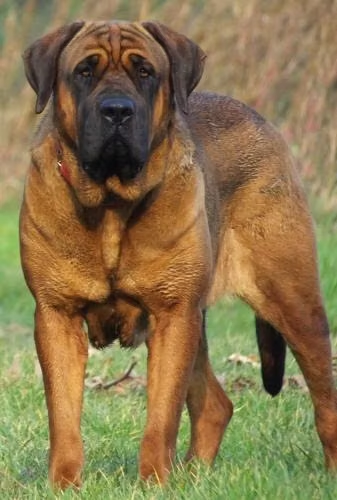
The Tosa is a giant, heavily built dog with a broad head, deep chest, and a short, dense coat, usually red or fawn, that offers little protection from heat or cold.
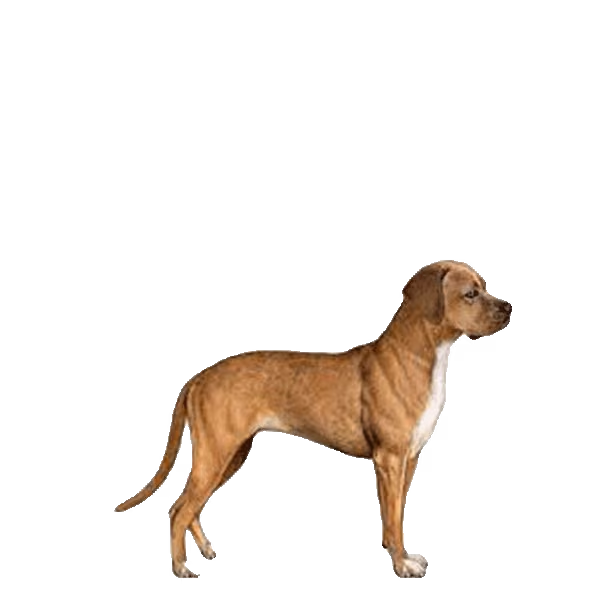
The Tosa is a big, muscular dog with solid bone and a dignified, imposing outline. The head is broad with a clear stop, a strong muzzle, and pendant ears set high and sitting close to the cheeks. The neck is thick, with loose skin and a slight dewlap. The body is deep through the chest with a level back, and the tail is thick at the base, tapering toward the tip. Size varies a fair bit, and there's a clear difference between dogs raised to Japanese standards and the larger Western-bred lines.
| Trait | Description |
|---|---|
| Height | Roughly 60 to 65 cm at the shoulder; Western lines often stand taller |
| Weight | About 40 to 60 kg or more, with big males going well past this |
| Coat | Short, dense, and smooth, lying flat against the body |
| Colours | Red, fawn, apricot, black, and brindle; small white markings on chest and feet are permitted |
| Eyes | Small, dark brown, set fairly deep, giving a steady expression |
The coat is short and firm to the touch, which keeps grooming simple. Red and fawn are the most common colours, and a black mask often shows up on lighter dogs. Black, brindle, and apricot also occur. A bit of white on the chest and feet is generally accepted. The dense single coat gives little protection from the cold, so the breed isn't suited to living outdoors through a southern winter, and it needs shade and water on hand once the mercury climbs in a hot, dry Australian summer.
The Tosa is calm and deeply loyal to its own family, but stays reserved with strangers and is often intolerant of dogs it doesn't know.
The Tosa is known for a settled, even temperament at home. It's typically quiet, patient, and undemonstrative, and it forms a strong bond with its household. With people it knows well it's gentle and steady, and it usually gets on with children in the family when raised alongside them, though given its size, time with young kids always needs supervision.
With strangers the Tosa is reserved and watchful rather than friendly, which makes it a natural guardian. It tends to weigh up situations slowly and then act decisively, so an owner needs to be able to read the dog and keep control of it in public. Given the breed's fighting background, many Tosas have little patience for unfamiliar dogs, particularly of the same sex, and dogs sharing a household need careful management.
Early and ongoing socialisation is essential. A well-raised Tosa is confident and stable, not nervy or quick to react. Without that groundwork, the breed's strength and guarding drive can get hard to manage.
| Trait | Rating |
|---|---|
| Affection | 4 |
| Energy | 2 |
| Trainability | 3 |
| Vocalness | 1 |
| Shedding | 2 |
Grooming the Tosa is easy, but it needs daily exercise, secure fencing, and shelter from Australia's summer heat to stay comfortable and safe.
The Tosa does best living indoors with its family and access to a safe outdoor area. Its thin single coat copes poorly with both heat and cold, so it shouldn't be left outside permanently, and it needs to come indoors or into shade during the peak of a hot, dry Australian summer. Fencing needs to be tall and solid, and given the breed's strength, gates and latches have to be secure. A calm, predictable home suits the Tosa's temperament.
The Tosa needs a balanced large-breed diet fed in measured meals, with slow, controlled growth as a puppy to protect its developing joints.
The Tosa does well on a complete, balanced diet formulated for large or giant breeds. Given the breed's deep chest and bulk, meals should be measured out and split into two feeds a day rather than one big meal, which helps cut the risk of bloat. Adjust amounts to the individual dog's weight, age, and activity level, and keep the dog lean enough that you can feel the ribs without seeing them. Large-breed puppies should grow slowly on a diet with controlled calcium and energy to protect their developing joints.
| Life stage | Amount per day | Meals |
|---|---|---|
| Puppy (2 to 6 months) | Per large-breed puppy food label, split across feeds | 3 to 4 |
| Junior (6 to 18 months) | Roughly 4 to 6 cups of large-breed food | 2 to 3 |
| Adult | Roughly 4 to 8 cups depending on size and activity | 2 |
| Senior | Reduced calories to prevent weight gain | 2 |
Keep treats to around 10 percent of daily calories to avoid weight gain, which is tough on a giant frame. Joint supplements with glucosamine and chondroitin are sometimes used for large breeds, and omega-3 fatty acids may help coat and joint health. Run any supplement past a vet before starting it, and always keep fresh water on hand.
The Tosa is generally hardy but, like many giant breeds, is prone to hip dysplasia, bloat, and heart disease, with a typical lifespan of 10 to 12 years.
The Tosa is a fairly robust breed, but its giant size brings the health issues common to large dogs. Typical lifespan is 10 to 12 years. Responsible breeders screen for joint and heart problems, and buyers should ask to see health-test results for both parents. Keeping the dog lean, feeding measured meals, and steering clear of hard exercise during growth all help protect long-term health.
| Condition | Signs | Note |
|---|---|---|
| Hip and elbow dysplasia | Stiffness, limping, reluctance to get up | Common in giant breeds; screen breeding stock |
| Gastric dilatation-volvulus (bloat) | Swollen abdomen, retching, restlessness | Life-threatening emergency; feed split meals |
| Dilated cardiomyopathy | Tiredness, coughing, fainting | A heart-muscle disease seen in large breeds |
| Hypothyroidism | Weight gain, lethargy, coat changes | Manageable with daily medication |
The Tosa is smart and capable but independent and strong-willed, so it needs early, consistent, reward-based training from a confident handler.
The Tosa is an intelligent breed that picks things up well, but it's also independent and can be stubborn. It responds to a calm, consistent handler who sets clear, fair rules and sticks to them every day. Harsh or confrontational methods tend to backfire with this breed and can damage trust. Given the dog's eventual size and strength, training isn't optional: basic control needs to be solid before the dog reaches full adult weight. Socialisation with people, places, and sounds should start in puppyhood and continue for life, with careful, controlled exposure to other dogs.
Breeding Tosas calls for health-tested parents and experienced management, with large litters that need close, hands-on socialisation from birth.
Breeding a giant breed like the Tosa is a serious undertaking best left to experienced breeders. Both parents should be health-tested for hip and elbow status and screened for heart disease before mating, and dogs should be physically mature, generally not bred before around two years of age. Females come into season roughly twice a year. Gestation runs about 63 days. Litters tend to be large for a giant breed, and the dam needs extra nutrition during late pregnancy and while feeding pups.
Whelping in giant breeds can carry higher risk, so veterinary support should be arranged ahead of time in case a caesarean is needed. Puppies grow fast and need careful feeding to control their growth rate and protect developing joints. Early handling and socialisation matter especially in this breed, so the temperament settles into the calm, stable type the Tosa is meant to have. Prospective breeders should also confirm that owning the breed is legal where the buyer lives, given the restricted-breed rules that apply in parts of Australia and overseas.
| Metric | Value |
|---|---|
| Sexual maturity | Around 12 to 18 months; breed from about 2 years |
| Heat cycle | Roughly twice a year |
| Gestation | About 63 days |
| Average litter size | Commonly large; often 6 to 12 puppies |
| Weaning age | About 6 to 8 weeks |
A free lifetime United Pet Club record for your Tosa, with the microchip registered at no charge and nothing falling due each year.
Rangers and shelters can only call the number the scan hands them. Give your Tosa a free United Pet Club profile and that number is yours: dog registration takes a few minutes, costs nothing for his lifetime, and works with or without a chip in place.
A chipped Tosa without a registration is carrying a number nobody can use. File it with United Pet Club and the number works for him: free for life, open to every chip brand sold here, searchable from any clinic or pound in the country. Microchip registration now, free account while you're at it.
Sign up free with United Pet Club, add his name, breed, and a photo, and you're done. The lifetime plan keeps the profile live at no cost, and the chip number can go in whenever the vet's done his bit.
Add the 15-digit number to your free account with your address and mobile. Registration and every update after it are free, and chips from any manufacturer an Australian vet implants are accepted.
In most states and territories, yes, chipping is required and the register entry comes with it. The state register and your United Pet Club record do different jobs: one satisfies the council, the other keeps a current phone number one scan away, free.
Nothing with United Pet Club. Profile, chip registration, and unlimited updates are covered for his whole life, no annual fee in sight.
Common questions about the Tosa cover its size, temperament, care needs, lifespan, family suitability, and whether it's legal to own in Australia.
The Tosa is a giant breed. It typically stands around 60 to 65 cm at the shoulder and weighs roughly 40 to 60 kg, with big males, especially Western-bred lines, often going past that.
At home the Tosa is calm, quiet, and loyal to its family. It's reserved and watchful with strangers and often has little patience for unfamiliar dogs, which reflects its history as a fighting breed.
Grooming is easy thanks to the short coat, but the breed is demanding in other ways. It needs experienced handling, early and ongoing socialisation, secure fencing, and consistent training, so it's not a low-effort dog overall.
Typical lifespan is 10 to 12 years, which sits in the usual range for a giant breed.
It can be a devoted family guardian for experienced owners and is usually gentle with family it knows. Its size and guarding instinct mean time with young children and visitors needs supervision, and it's not recommended for first-time dog owners.
It depends on where you live. Some Australian states and territories restrict or ban the Tosa under dangerous-dog or restricted-breed legislation, so check with your state government and local council before bringing one home.
Its needs are moderate. One to two walks a day plus access to a secure yard is usually enough, and hard exercise should wait until the dog is fully grown.