
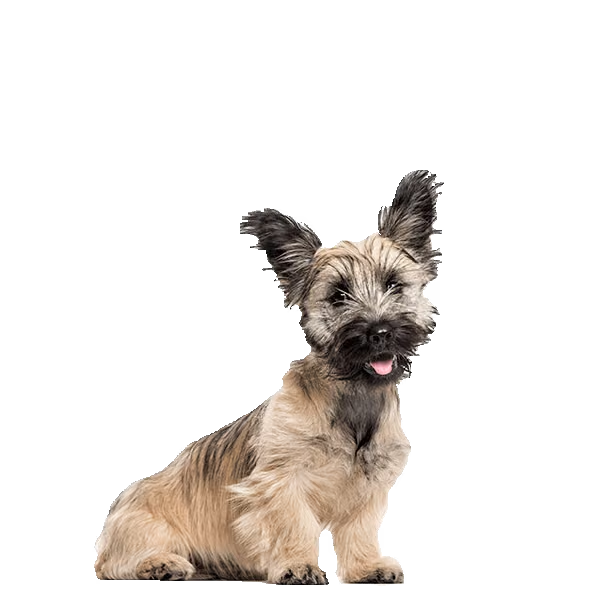
Skye Terrier
The Skye Terrier is a dignified, devoted Scottish breed with a long flowing coat, famed for its loyalty and reserved elegance.
- Size
- Small
- Lifespan
- 12–14 years
- Origin
- Scotland
- Temperament
- Dignified
- Standard colors
- Black, Grey and Blue and 3 more
Characteristics
Coat and grooming
How the Skye Terrier coat is built, and what that means when you groom it.
- Coat layers
- Double coat
- Coat texture
- Silky
- Coat length
- Long
- Shedding
- Low shedding
Grooming guidance
Caution: A Skye Terrier coat mats easily.
Fine or long hair tangles at the base of the coat, out of sight, where the mats tighten and pull on the skin. Brushing has to reach right down to the roots in sections, not just skim the surface.
Skye Terrier colors and patterns
What each club's breed standard says about every Skye Terrier color and pattern. Point at a ruling to see the club's own wording.
Breed standards describe the Skye Terrier in Black, Grey, Blue, Silver, Cream and Fawn. Standard patterns: Solid.
| Color or pattern | FCI | AKC | UKC | KC | KUSA |
|---|---|---|---|---|---|
| Black | Standard (“Black”) | Standard (“Black”) | Standard (“black”) | Standard (“Black”) | Standard (“Black”) |
| Grey | Standard (“dark or light grey”) | Standard (“Gray”) | Standard (“dark or light gray”) | Standard (“dark or light grey”) | Standard (“dark or light grey”) |
| Blue | Not recognised | Standard (“Blue”) | Standard (“blue”) | Not recognised | Not recognised |
| Silver | Not recognised | Standard (“Silver”) | Standard (“silver platinum”) | Standard (“Silver”) | Not recognised |
| Cream | Standard (“cream”) | Standard (“Cream”) | Standard (“cream”) | Standard (“cream”) | Standard (“cream”) |
| Fawn | Standard (“fawn”) | Standard (“Fawn”) | Standard (“fawn”) | Standard (“fawn”) | Standard (“fawn”) |
| Albino | Not recognised | Not recognised | Disqualifying (“Albinism”) | Not recognised | Not recognised |
| Patterns | |||||
| Solid | Standard (“Any self colour allowing shading of same colour”) | Standard (“of one over-all color at the skin”) | Standard (“Any of these solid colors may have shades of the same color”) | Standard (“Any whole colour allowing shading of same colour”) | Standard (“Any self-colour allowing shading of same colour”) |

| Color or pattern | FCI | AKC | UKC | KC | KUSA |
|---|---|---|---|---|---|
| Brown | Standard (“Brown”) | Standard (“Eyes brown”) | Standard (“brown”) | Standard (“Brown”) | Standard (“Brown”) |
| Dark brown | Standard (“preferably dark brown”) | Standard (“preferably dark brown”) | Standard (“preferably dark brown”) | Standard (“preferably dark brown”) | Standard (“preferably dark brown”) |
| Color or pattern | FCI | AKC | UKC | KC | KUSA |
|---|---|---|---|---|---|
| Black | Standard (“Black”) | Standard (“The nose is always black”) | Standard (“The nose is black”) | Standard (“Nose black”) | Standard (“Black”) |
| Liver | No ruling | Disqualifying (“A ... brown nose shall disqualify”) | No ruling | No ruling | No ruling |
| Pink | No ruling | Disqualifying (“A ... flesh-colored ... nose shall disqualify”) | No ruling | No ruling | No ruling |
| Dudley | No ruling | Disqualifying (“A Dudley ... nose shall disqualify”) | No ruling | No ruling | No ruling |
What the rulings mean
- Standard
- Described by the club's breed standard.
- Disqualifying
- The club's breed standard disqualifies an animal of this colour or pattern.
- Not recognised
- The club does not accept this colour or pattern for the breed.
Color changes
How a Skye Terrier's colors can change over its life.
Blackchanges toRust
Coat · With body condition · can change back
Blackchanges toGrey
Coat · Progressive
Blackchanges toBrown
Coat · In the sun · can change back
Blackchanges toSnow nose
Nose · With the season · can change back
Blackchanges toPink
Nose · With the season · can change back

Sources
Each ruling comes from the club's published breed standard or color list.
Meet some of our Skye Terrier
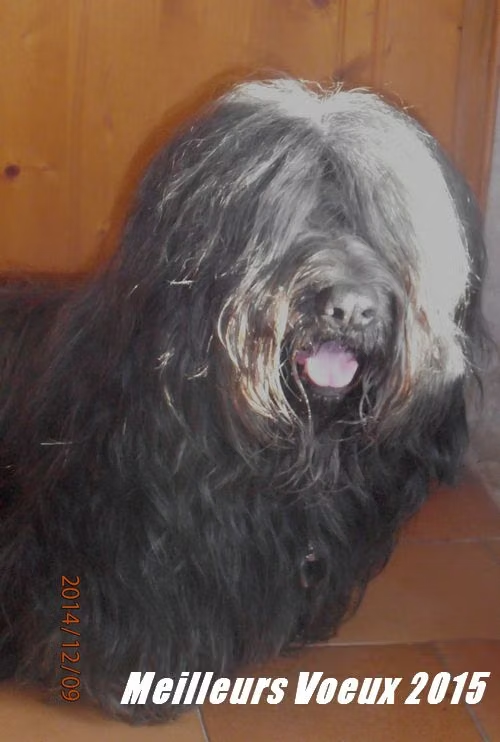
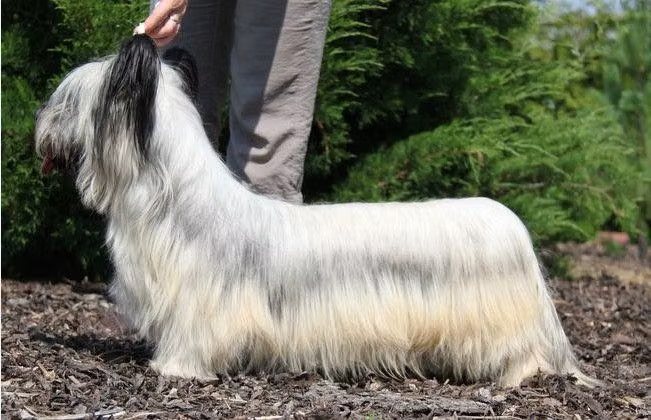
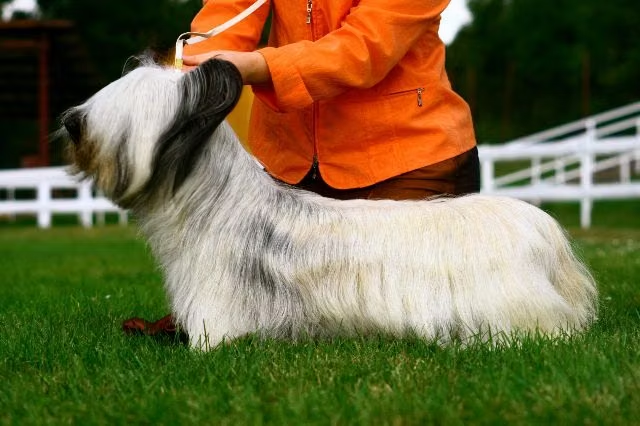
A few of the Skye Terrier profiles members have added to United Pet Club.





About the Skye Terrier
The Skye Terrier is a small, long, low-set Scottish terrier with a flowing coat, fiercely loyal to its own person and standoffish with strangers.
The Skye Terrier is a small dog, built long and low, with a heavy coat that falls in a parted curtain down each side of its body. The breed comes from the Isle of Skye and the Western Isles off the west coast of Scotland, where it was worked to dig fox, badger and otter out of rocky dens and burrows. Its body runs roughly twice its height at the shoulder, a shape that let it push into tight spaces after quarry.
The temperament is devoted to its own household and reserved, at times aloof, with anyone it doesn't know. A Skye usually settles on one person as its favourite and sizes up new situations before it relaxes. The traits owners mention most are devotion, loyalty, reserve, a dignified bearing and sharp alertness.
The long coat gives it a show-ring look, but underneath it is still a working terrier: independent, game for its size, and not one to back down. Owners find a dog that is settled around the house yet quick to clock anything out of place.
| Attribute | Detail |
|---|---|
| Origin | Scotland (Isle of Skye) |
| Size | Small |
| Lifespan | 12 to 14 years |
| Group / role | Terrier; den-hunting dog of fox, badger and otter |
| Good with | One devoted owner or a quiet household; better suited to considerate older kids than toddlers |
Who it suits
The Skye Terrier suits someone who wants a steady, attached companion and won't mind a dog that keeps strangers at arm's length. It settles well in a house or a unit, since its exercise needs sit in the moderate range, but it needs an owner who will keep on top of coat care and socialise it with patience. Gentle, early exposure to people, other dogs and everyday noise helps the pup grow into its natural wariness rather than being overwhelmed by it.
History and origin
The Skye Terrier developed on the Isle of Skye and nearby Scottish islands as a working den terrier, then became a fashionable companion in Victorian Britain.
The breed takes its name from the Isle of Skye in the Inner Hebrides, off Scotland's west coast. Terriers of this general build worked right across the Western Isles for centuries, sent down rock cairns and earth dens to bolt or hold fox, badger and otter. The long, low body and dense, weatherproof coat suited that work, letting the dog push through narrow underground passages and shrug off bites and rough going.
Written accounts of small Scottish terriers date back several hundred years, and by the 1800s the Skye was recognised as its own distinct type, one of the oldest of the Scottish terrier breeds.
The breed's popularity took off in the nineteenth century when Queen Victoria kept and favoured Skye Terriers. Royal interest made the dog fashionable across British society, and it shifted from a purely working animal to a prized companion and show dog.
The Skye Terrier is also bound up with the story of Greyfriars Bobby in Edinburgh, a dog said to have kept vigil at its owner's grave for years. Retold widely from the late 1800s onward, the tale cemented the breed's reputation for loyalty. These days the Skye is far less common than it once was, and sits among the more vulnerable native breeds in Britain. Numbers in Australia are small too, so intending owners typically go through Dogs Australia or the breed club to track down a litter.
Appearance and breed standard
The Skye Terrier is a small, long, low dog with a hard outer coat falling straight down each side and a feathered head, carrying ears that may be prick or drop.
The Skye Terrier's outline is long and close to the ground, with body length running at roughly twice its height at the shoulder. The head is long and strong for the dog's size, carried under a heavy fringe of hair over the eyes and forehead. Ears can stand erect (prick) or hang flat against the head (drop); both are accepted, though prick ears turn up more often in the show ring.
The coat is what defines the breed: a long, hard, straight outer coat over a short, soft, woolly undercoat. The outer hair parts down the spine and falls to either side, with a fringe across the brow that often covers the eyes entirely.
| Feature | Standard |
|---|---|
| Height | About 25 to 26 cm (10 inches) at the shoulder |
| Weight | About 16 to 18 kg (35 to 40 lb) |
| Coat | Long, hard, straight outer coat over a short, soft undercoat; parted along the back |
| Colours | Black, blue, dark or light grey, fawn and cream, usually with black points (ears, muzzle, tip of tail) |
| Eyes | Brown, set close, medium size; dark hazel preferred |
Coat and colours
Acceptable colours run from black through the various greys and blues to fawn and cream. Whatever the body colour, the ears, muzzle and tip of the tail should carry black, giving the dog its dark points. Puppies often shift shade as they grow, and a single litter can turn up several colours. The coat needs time to reach the length that shows off the breed's signature curtain, so the full adult look doesn't arrive overnight.
Temperament and personality
The Skye Terrier is devoted and loyal to its own people, reserved and watchful with strangers, and carries a calm, dignified independence.
The Skye Terrier forms a tight bond with its household, often settling on one person in particular. Around its own family it is affectionate, steady and good company, happy to stay close by. With strangers it holds back and takes its time to trust, weighing up a new person before it accepts them. That wariness makes it a sharp house dog, quick to notice and announce visitors.
With kids, the breed does best around older, considerate ones who know how to handle a dog calmly; it's a poorer match for households with very young children who might tug at the long coat or crowd the dog. Around other pets, a Skye can live happily alongside dogs and cats it grew up with, but its terrier background means it may chase small animals and can push back against unfamiliar dogs.
The overall character is dignified and independent rather than bouncy or desperate to please. A Skye is game for its size and holds its ground. Ongoing socialisation from puppyhood is the main way to stop natural reserve tipping over into shyness or suspicion.
| Trait | Rating |
|---|---|
| Affection (with own people) | 5 |
| Energy | 3 |
| Trainability | 3 |
| Vocalness | 3 |
| Shedding | 2 |
Care and grooming
The Skye Terrier's long coat needs regular brushing to stay free of mats, and the dog needs moderate daily exercise plus careful handling of its long back.
Grooming
- Brush the long outer coat thoroughly at least two to three times a week, working from the skin outward, to head off mats and tangles.
- Give extra attention to the fringe over the eyes and the hair around the ears and feet, where knots start first.
- Bathe now and then when the coat gets dirty, then dry and brush it straight as it dries.
- Trim the hair between the pads and around the eyes for comfort, and keep the nails short.
- Check the ears regularly, especially on drop-eared dogs, and keep them clean and dry.
Exercise
- Give the dog moderate daily exercise: one or two walks plus some play or sniffing about.
- Allow secure off-lead time where you can, since the breed likes a good investigate, but stick to a fenced area because the terrier urge to chase runs strong.
- In the warmer months, walk in the early morning or evening rather than the heat of the day, and keep the dog off hot bitumen and pavers, which can burn paw pads fast.
- Skip forced jumping, repeated stair work and rough leaps on and off furniture to protect the long back, especially in puppies.
Environment
The Skye Terrier adapts to a house or a unit as long as it gets its walks and time with its person. It's happiest indoors with the family rather than left on its own for long stretches, which can bring on barking or stress in such an attached breed. Set up ramps or steps to favourite furniture to take the strain off the spine. In summer, make sure there's always shade and fresh water on hand if the dog spends any time in the backyard.
Nutrition and feeding
The Skye Terrier does well on a complete diet suited to its size and life stage, fed in measured meals to avoid the weight gain that strains its long back.
Feed a complete, balanced dog food suited to the Skye Terrier's age, size and activity level. Because the breed is long-bodied and prone to carrying extra weight if overfed, portion control matters more here than with many breeds: surplus weight puts added load on the back and joints. Use the feeding guide on the pack as a starting point and adjust to keep the dog in lean condition, where you can feel the ribs easily under the coat.
Split the daily amount into two meals rather than one to help digestion tick along steadily. Fresh water should be on hand at all times, particularly through a hot Australian summer.
| Life stage | Amount per day | Meals |
|---|---|---|
| Puppy (2 to 6 months) | Per puppy food label, split across meals | 3 to 4 |
| Junior (6 to 12 months) | Per label, moving to adult food | 2 to 3 |
| Adult | About 150 to 250 g of quality dry food | 2 |
| Senior | Adjusted down for lower activity | 2 |
Treats and supplements
Keep treats to a small slice of the daily calorie count and factor them into the total ration to stop weight creeping up. Most healthy Skye Terriers on a complete diet don't need extra supplements; only add one on veterinary advice, since a vet can judge whether a particular dog actually needs it.
Health and lifespan
The Skye Terrier typically lives 12 to 14 years and is generally hardy, though its long back and breed-linked conditions call for watchful, preventive care.
The Skye Terrier is generally a sturdy breed with a typical lifespan of 12 to 14 years. Its distinctive long, low build is also behind some of its main health concerns, since the long spine carries more risk of disc problems than a compact dog's does. Responsible breeders screen their breeding stock and steer clear of pairings that would worsen conditions already known in the breed.
| Condition | Signs | Note |
|---|---|---|
| Intervertebral disc disease | Back pain, reluctance to move or jump, weakness in the hind legs | Linked to the long-backed build; avoid high-impact jumping |
| Mammary and other cancers | Lumps, swelling, changes in appetite or energy | Reported in the breed; get any lump checked by a vet early |
| Hip and joint problems | Stiffness, lameness, difficulty rising | Keeping the dog lean eases the load on the joints |
| Eye conditions | Cloudiness, vision changes, rubbing at the eyes | Periodic eye checks help catch problems early |
Preventive care
- Stay on top of routine vaccinations, parasite control and dental care.
- Hold the dog at a lean weight to spare the back and joints.
- Protect the spine by limiting jumping and adding ramps or steps.
- Book regular veterinary check-ups and flag any new lump or change promptly.
- Choose a puppy from a breeder who health-tests their stock.
Training
The Skye Terrier is intelligent but independent and proud, so it responds best to short, consistent, reward-based training that respects its dignity.
The Skye Terrier is sharp and capable of learning fast, but it carries the independent, self-assured streak common to terriers. It isn't a dog that lives to obey; it weighs up whether a request is worth its while. Harsh or repetitive drilling tends to make it shut down or dig its heels in. Training goes best when it's patient, consistent and set up as something the dog gets something out of. The breed's reserve with strangers also means socialisation should run alongside obedience work from puppyhood, so the dog grows up confident rather than wary.
Basics
- Start socialisation early, introducing the puppy gently to a wide range of people, dogs, places and sounds.
- Teach name recognition and a solid recall first, using high-value rewards.
- Keep sessions short and finish on a win to hold the dog's interest.
- Build the core cues (sit, down, stay, leave it) with steady, calm repetition.
- Practise walking politely on the lead, since the breed can pull and push on it.
- Reward calm, accepting behaviour around new people to help manage its natural reserve.
Breeding
Skye Terriers usually have small litters and need careful, health-screened breeding given the long-backed build and the breed's small population.
Breeding Skye Terriers takes care, because the breed is uncommon and its long, low build carries health considerations that shouldn't be made worse through careless pairing. Bitches reach physical maturity at one to two years, and responsible breeders wait until a dam is fully grown and health-screened before a first litter, rather than breeding on the first season. Mating, pregnancy and whelping follow the usual pattern for small to medium dogs.
Gestation runs about 63 days. Litters tend to be small, commonly around three to five puppies. Newborn coat colour often differs from the adult shade and shifts as the puppy grows.
Raising young Skyes calls for gentle, early handling and socialisation, since the breed's adult reserve is shaped in part by what the puppies meet in their first weeks and months. Take care to protect young, still-developing backs from heavy jumping. Because the breed's numbers are small, breeding decisions should weigh genetic diversity and health alongside type, ideally guided by breed-club advice and screening of both parents through Dogs Australia or the relevant state body.
| Metric | Value |
|---|---|
| Breeding maturity | About 1 to 2 years |
| Gestation | About 63 days |
| Typical litter size | Around 3 to 5 puppies |
| Weaning | About 6 to 8 weeks |
| Adult coat colour | Often differs from puppy colour and develops with age |
Getting your Skye Terrier registered, chip and all
A free lifetime United Pet Club record for your Skye Terrier, with the microchip registered at no charge and nothing falling due each year.
How to register a Skye Terrier in Australia
Punch in your Skye Terrier's name, his date of birth, and a decent photo, attach your mobile, and save. Done: a lifetime record that never bills you. Registering your dog is the easy half of responsible ownership, and the half people skip.
A chipped Skye Terrier without a registration is carrying a number nobody can use. File it with United Pet Club and the number works for him: free for life, open to every chip brand sold here, searchable from any clinic or pound in the country. Microchip registration now, free account while you're at it.
How do I register my Skye Terrier in Australia?
Sign up free with United Pet Club, add his name, breed, and a photo, and you're done. The lifetime plan keeps the profile live at no cost, and the chip number can go in whenever the vet's done his bit.
How do I register my Skye Terrier's microchip?
Add the 15-digit number to your free account with your address and mobile. Registration and every update after it are free, and chips from any manufacturer an Australian vet implants are accepted.
Does my Skye Terrier have to be microchipped in Australia?
In most states and territories, yes, chipping is required and the register entry comes with it. The state register and your United Pet Club record do different jobs: one satisfies the council, the other keeps a current phone number one scan away, free.
What does it cost to register a Skye Terrier?
Nothing with United Pet Club. Profile, chip registration, and unlimited updates are covered for his whole life, no annual fee in sight.
Frequently asked questions
Common questions about the Skye Terrier's size, temperament, care needs, lifespan, suitability and availability.
How big do Skye Terriers get?
It's a small breed standing about 25 to 26 cm (10 inches) at the shoulder, but it's long and solidly built, weighing roughly 16 to 18 kg (35 to 40 lb).
What's the Skye Terrier's temperament like?
It's devoted and loyal to its own people, often settling on one person in particular, and reserved and watchful with strangers. Expect dignified, alert and independent rather than openly outgoing.
Is the Skye Terrier hard work to look after?
The main job is coat care: the long coat needs brushing to the skin two to three times a week to head off mats. Exercise needs sit in the moderate range, and the long back needs protecting from heavy jumping, but otherwise it's manageable for an attentive owner.
How long do Skye Terriers live?
Most live about 12 to 14 years with good care, a lean weight and regular trips to the vet.
Is the Skye Terrier a good family dog?
It suits a quiet household or a devoted individual and does best with older, considerate kids. Its reserve with strangers and dislike of rough handling make it a poorer fit for homes with very young children.
Are Skye Terriers easy to find in Australia?
No. The Skye Terrier is one of the less common native British breeds these days, so puppies can be scarce here too, and buyers may need to go on a waitlist through Dogs Australia or a recognised breed club.
Do Skye Terriers bark a lot?
They're alert and will announce visitors or anything out of the ordinary, but they aren't constant barkers. Early training and enough company help keep the barking in check.
From the community
Ask about the Skye TerrierNo questions about the Skye Terrier yet. Be the first to ask.
Browse Dog breeds