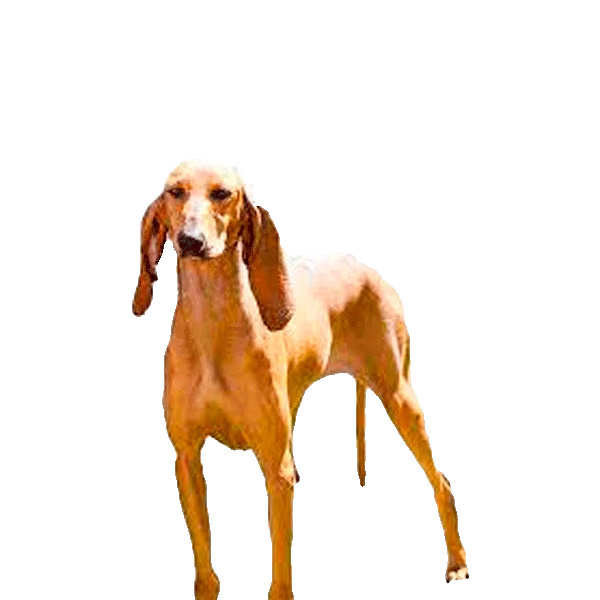
The Segugio Italiano is a gentle, friendly Italian scenthound combining an ancient hunting heritage with an affectionate home temperament.
How the Segugio Italiano coat is built, and what that means when you groom it.
The Segugio Italiano is a medium-sized Italian scenthound that pairs an ancient hunting background with a gentle, affectionate disposition at home.
The Segugio Italiano is a medium-sized scenthound from Italy, bred over centuries to track game across varied terrain. It is built for stamina rather than speed, with a lean frame, long muzzle, and a deep, ringing voice used on the trail. The breed exists in two coat varieties: a short, smooth coat and a coarse wirehaired coat. Both share the same conformation and working purpose.
Away from the field, the Segugio is friendly and even-tempered. It forms close attachments to its household and is gentle with the people it knows. The same nose and drive that make it an effective hunter mean it is happiest with regular activity and a job to focus on. Owners describe a dog that is calm indoors once its exercise needs are met and alert to scents and sounds around the home.
The breed remains closely tied to hunting culture in central Italy, where it is still worked on hare and other small game. As a companion it suits people who can offer daily exercise, secure space, and patient, consistent handling.
| Attribute | Detail |
|---|---|
| Origin | Italy |
| Size | Medium |
| Lifespan | 11 to 14 years |
| Group / role | Scenthound, tracking and hunting |
| Good with | Familiar people and children with supervision; best in active homes |
The Segugio Italiano fits households that spend time outdoors and can commit to daily exercise. It does well with owners who appreciate a tracking dog and can provide secure, fenced space, since a strong scent will draw the dog away. Its gentle nature makes it a good family companion for those prepared to meet its activity and stimulation needs. It is less suited to small apartments without access to long walks or to homes that are empty for long stretches each day.
The Segugio Italiano descends from ancient scenthounds used in Italy and was shaped over centuries into a dedicated tracking breed for hare and small game.
The Segugio Italiano is among the older hound types of the Italian peninsula. Scenthounds of similar build appear in Italian art and writing across many centuries, and the breed is generally traced to hounds kept for hunting on the peninsula since antiquity. Depictions of lean, long-eared tracking dogs are found in works from the Renaissance period, reflecting a long-standing role in Italian hunting life.
For generations the dogs were maintained by regional hunters who valued working ability over uniform appearance. They were used to find and follow game by scent, particularly hare, across the hills and woodland of central Italy. Selection focused on a steady nose, stamina, and a clear voice that allowed the handler to follow the chase.
Two coat types developed within the same working population: a short, smooth coat and a coarse wirehaired coat. These are recognized as varieties of one breed rather than separate breeds. Over time, breed standards were drawn up to describe the type and stabilize its features while preserving its hunting function.
The Segugio Italiano remains closely linked to its homeland, where it continues to be worked in the field. Outside Italy it is far less common and is kept by a smaller number of enthusiasts who value both its working heritage and its companionable temperament.
The Segugio Italiano is a lean, square-built medium scenthound with a long muzzle, low-set drop ears, and either a short smooth or coarse wirehaired coat.
The Segugio Italiano has an athletic, well-balanced build that suits long days on the trail. The body is roughly square in proportion, with a deep chest, level topline, and clean, dry musculature. The head is long and narrow with a domed skull, and the muzzle is straight and tapering. The ears are long, set low, and hang flat against the cheeks. The overall impression is of a refined, functional hound free of heaviness.
| Trait | Description |
|---|---|
| Height | Roughly 48 to 59 cm (19 to 23 in) at the withers |
| Weight | Roughly 18 to 28 kg (40 to 62 lb) |
| Coat | Two varieties: short smooth, or coarse wirehaired |
| Colors | Solid fawn in shades from deep red to pale; also black and tan |
| Eyes | Large, dark ochre, with a gentle expression |
The smooth variety has a short, dense, glossy coat that lies close to the body. The wirehaired variety carries a coarse, harsh coat, often with a slightly longer texture on the muzzle and over the eyes. Both coats are easy to keep and offer practical protection in the field.
The most common color is solid fawn, ranging from a deep reddish tone to a paler wheaten shade. A black and tan pattern also occurs. Small white markings on the chest, head, feet, or muzzle are permitted within the standard. The nose is black, and the expression is soft and attentive.
The Segugio Italiano is friendly, gentle, and focused, devoted to its household while retaining a strong scenting drive and alertness on the trail.
The Segugio Italiano combines a calm home manner with a determined working drive. With its own family it is affectionate and gentle, and it tends to bond closely with the people it lives with. It is generally good with children when interactions are supervised and the dog has had enough exercise to settle indoors.
With strangers the breed is typically reserved rather than aggressive. It will often note new arrivals and may give voice, then settle once it judges there is no concern. Early and ongoing socialization helps it stay relaxed around unfamiliar people and situations.
Around other dogs the Segugio is usually sociable, reflecting its background as a pack hunter. Caution is needed with small pets and other small animals, since a strong prey drive and a powerful nose can override training when a scent or movement triggers the chase. Secure fencing and a reliable recall are important, and off-leash freedom should be limited to safe, enclosed areas. Once worked or exercised, most Segugi are quiet and content to rest at home.
| Trait | Rating |
|---|---|
| Affection | 4 |
| Energy | 4 |
| Trainability | 3 |
| Vocalness | 4 |
| Shedding | 2 |
The Segugio Italiano needs daily exercise and mental work, with low grooming demands for the smooth coat and slightly more upkeep for the wirehaired variety.
The Segugio Italiano does best in a home with a securely fenced yard and access to open space for walks. It can adapt to various living situations if its exercise needs are met, but it is not well suited to long hours alone or to homes that cannot offer daily activity. A bored or under-exercised Segugio may bark or become restless. The breed tolerates a range of climates but should have shade and water in heat and shelter in cold.
An active medium scenthound, the Segugio Italiano does well on a complete, balanced diet matched to its age and workload, fed in two daily meals.
The Segugio Italiano needs a complete and balanced diet that supports an active, lean working build. Choose a quality food appropriate to the dog's life stage, with adequate protein for muscle maintenance and energy for daily exercise. Dogs that are worked or exercised heavily may need more food than less active companions. Because the breed is naturally lean, monitor body condition and adjust portions to keep the ribs easily felt but not visible.
| Life stage | Amount per day | Meals |
|---|---|---|
| Puppy (2 to 6 months) | Per product guide for growth, divided | 3 to 4 |
| Junior (6 to 12 months) | Roughly 2 to 3 cups of quality dry food | 2 to 3 |
| Adult | Roughly 2 to 3 cups, adjusted for activity | 2 |
| Senior | Adult amount, reduced if less active | 2 |
Keep treats to about ten percent of daily calories, and use small, low-fat rewards during training and scent work. Fresh water should be available at all times. A balanced commercial diet usually meets the breed's needs without extra supplements, but consult a veterinarian before adding joint support, fish oil, or other products, particularly for working or senior dogs. Amounts shown above are general starting points; follow the food label and your veterinarian's advice for the individual dog.
The Segugio Italiano is generally a hardy, healthy breed with a typical lifespan of 11 to 14 years, with ear care and a few orthopedic and eye concerns to watch.
The Segugio Italiano is considered a robust, working breed with relatively few inherited problems compared with many pedigree dogs. Its lean build and active history support good general health when the dog is kept fit and at a sensible weight. The typical lifespan is 11 to 14 years. As with any breed, choosing a responsibly bred puppy and keeping up with routine veterinary care reduces risk.
| Condition | Signs | Note |
|---|---|---|
| Ear infections | Head shaking, odor, scratching at ears | Long drop ears trap moisture; check and clean regularly |
| Hip dysplasia | Stiffness, reluctance to exercise, limping | Keep lean weight; screening of breeding stock helps |
| Eye conditions | Cloudiness, redness, vision changes | Have unusual eye signs checked promptly |
| Weight and joint strain | Reduced activity, difficulty rising | Maintain condition through diet and steady exercise |
The Segugio Italiano is intelligent and willing but independent, responding best to patient, reward-based training and early socialization.
The Segugio Italiano is a capable learner with a strong working mind, though its scenthound independence means it does not always offer instant obedience. When a trail or scent captures its attention, recall and focus can fade, so training should account for this drive rather than fight it. Short, consistent sessions that keep the dog interested produce better results than long, repetitive drills. The breed responds well to calm, fair handling and tends to shut down under harsh correction.
Socialization from puppyhood is important. Exposure to a range of people, dogs, places, and everyday sounds helps the Segugio grow into a confident, settled adult. Because the breed can be reserved with strangers, positive early experiences make a clear difference.
The Segugio Italiano reaches breeding maturity at one to two years and typically produces moderate litters, with pups weaned and socialized before going to new homes.
Responsible breeding of the Segugio Italiano begins with health-screened, temperamentally sound parents that fit the breed standard. Females are generally not bred until they are physically and mentally mature, usually after the first year and often nearer two years of age. Breeders aim to preserve the breed's working ability, sound conformation, and gentle disposition rather than appearance alone.
Gestation in dogs lasts roughly 63 days. The dam should receive good nutrition and veterinary care through pregnancy and whelping. Newborn puppies depend fully on the mother for warmth and milk in the first weeks, and the breeder monitors weight gain and early development closely.
Weaning typically begins around three to four weeks as puppies start to take solid food, and is usually complete by seven to eight weeks. Early handling and exposure to normal household sights and sounds lay the groundwork for confident adults. Puppies generally go to new homes at around eight weeks or later, by which time they should have begun socialization and received initial veterinary care. Prospective owners should expect a health record and the chance to meet the dam.
| Metric | Value |
|---|---|
| Breeding maturity | About 1 to 2 years |
| Gestation | Around 63 days |
| Typical litter size | Around 4 to 8 puppies |
| Weaning | About 7 to 8 weeks |
| Earliest to new home | Around 8 weeks |
A free lifetime United Pet Club record for your Segugio Italiano, with the microchip registered at no charge and nothing falling due each year.
Rangers and shelters can only call the number the scan hands them. Give your Segugio Italiano a free United Pet Club profile and that number is yours: dog registration takes a few minutes, costs nothing for his lifetime, and works with or without a chip in place.
A chipped Segugio Italiano without a registration is carrying a number nobody can use. File it with United Pet Club and the number works for him: free for life, open to every chip brand sold here, searchable from any clinic or pound in the country. Microchip registration now, free account while you're at it.
Sign up free with United Pet Club, add his name, breed, and a photo, and you're done. The lifetime plan keeps the profile live at no cost, and the chip number can go in whenever the vet's done his bit.
Add the 15-digit number to your free account with your address and mobile. Registration and every update after it are free, and chips from any manufacturer an Australian vet implants are accepted.
In most states and territories, yes, chipping is required and the register entry comes with it. The state register and your United Pet Club record do different jobs: one satisfies the council, the other keeps a current phone number one scan away, free.
Nothing with United Pet Club. Profile, chip registration, and unlimited updates are covered for his whole life, no annual fee in sight.
Common questions about the Segugio Italiano cover its size, temperament, care needs, lifespan, suitability, and availability.
It is a medium-sized scenthound, standing roughly 48 to 59 cm (19 to 23 in) at the withers and weighing about 18 to 28 kg (40 to 62 lb), with a lean, athletic build.
The Segugio Italiano is friendly, gentle, and focused. It is affectionate with its family, usually reserved with strangers, and carries a strong scenting drive that makes it alert and active outdoors.
Grooming is straightforward for both coat types, but the breed needs daily exercise and mental stimulation. Its nose and prey drive call for secure fencing and reliable recall, so it suits active, attentive owners.
The typical lifespan is 11 to 14 years. Regular veterinary care, a lean body condition, and routine ear checks support a long, healthy life.
Yes, for active households. It is gentle with familiar people and generally good with supervised children, and it tends to get on with other dogs. Care is needed around small pets due to its prey drive.
It can be vocal. As a scenthound it has a strong, carrying voice and may give tongue when it picks up a scent or notices something unfamiliar. Exercise and training help manage barking.
The breed is common in Italy but uncommon elsewhere. Outside its homeland, prospective owners may need to seek out specialist breeders and join a waiting list.
