The Sealyham Terrier is a calm, dignified Welsh terrier with a charming white coat, balancing alert courage with an easygoing nature.
How the Sealyham Terrier coat is built, and what that means when you groom it.
Caution: A Sealyham Terrier coat should be hand-stripped rather than clipped.
A wire coat is meant to be pulled out at the root once the hair is ready to release. Clippers cut it off part way instead, leaving the soft undercoat behind. The result is a coat that grows back limp and faded, and the weatherproof texture only returns after the hair is stripped out again.
A few of the Sealyham Terrier profiles members have added to United Pet Club.
The Sealyham Terrier is a small, sturdy white terrier bred in Wales for badger and otter work: composed at home, still game and alert when something's afoot.
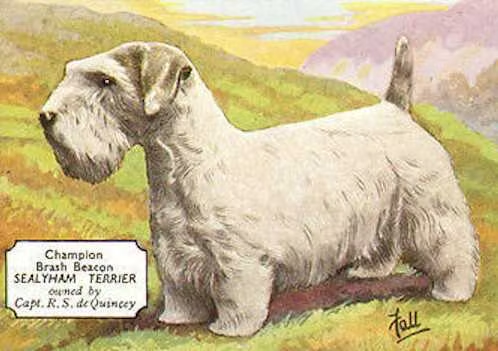
The Sealyham Terrier is a short-legged, solidly built terrier that Welsh hunters developed to go to ground after badgers, otters and other quarry. It's low-slung and broad through the chest, wears a mostly white coat, and carries a long head framed by folded ears and a full beard. A grown dog usually tips the scales at 10 to 11 kilograms, which makes the breed heftier and more solid than its modest height lets on.
Temperament is what really sets the Sealyham apart from more highly strung terriers. The breed is calm, loyal and good-natured indoors, happy to park itself near its people for most of the day. The alert, confident terrier character hasn't gone anywhere: a Sealyham will bark at anything unfamiliar and hold its ground if challenged, but its default setting is steady rather than wound up.
The Sealyham Terrier is uncommon these days and sits on several national lists of rare or vulnerable native breeds. Owners tend to describe a dog with a big personality that's genuinely easy to live with.
| Attribute | Detail |
|---|---|
| Origin | Wales |
| Size | Small (about 10 to 11 kg) |
| Lifespan | 12 to 14 years |
| Group/role | Terrier, originally a working earth dog |
| Good with | Families and considerate older children; can share a home with other pets when socialised early |
The Sealyham Terrier suits owners after a small dog with terrier spirit but a calmer day-to-day temperament. It adapts well to units and houses alike, since its exercise needs are moderate. First-time owners can manage a Sealyham if they stay consistent, because the breed is independent and can be stubborn. The white coat needs regular attention, so the dog suits people willing to brush it several times a week and book in for the occasional trim.
Bred in the 1800s at the Sealyham estate in Pembrokeshire, Wales, the Sealyham Terrier was built small and white to face badgers and otters underground.
The breed's name comes from Sealyham, an estate near Haverfordwest in Pembrokeshire, Wales. Its development is usually credited to Captain John Edwardes, who bred working terriers there through the middle and later 1800s. He was after a compact, hard dog that could go to ground after badger and otter and work alongside bigger hounds.
Edwardes bred for a white or mostly white coat so the dog stood out clearly in the field and wasn't mistaken for the quarry. The exact crosses he used were never written down in detail, but writers have linked the Sealyham to several West Country and Welsh terrier types of the period, plus possibly white terrier and other working strains. What emerged was a low, strong dog with a jaw far more powerful than its size would suggest.
The breed moved from a private working line to a recognised show dog in the early 1900s. A breed club formed in Britain in 1908, and recognition by the major kennel clubs followed over the next few years, including recognition in the United States in 1911. Through the 1920s and 1930s the Sealyham became fashionable, turning up in show rings and in portraits of well-known owners.
Popularity later fell away sharply. By the 21st century the Sealyham Terrier ranked among Britain's least numerous native breeds, and it's now listed as vulnerable or rare by several kennel bodies, Dogs Australia included. A small group of dedicated breeders keeps the line going here and overseas.
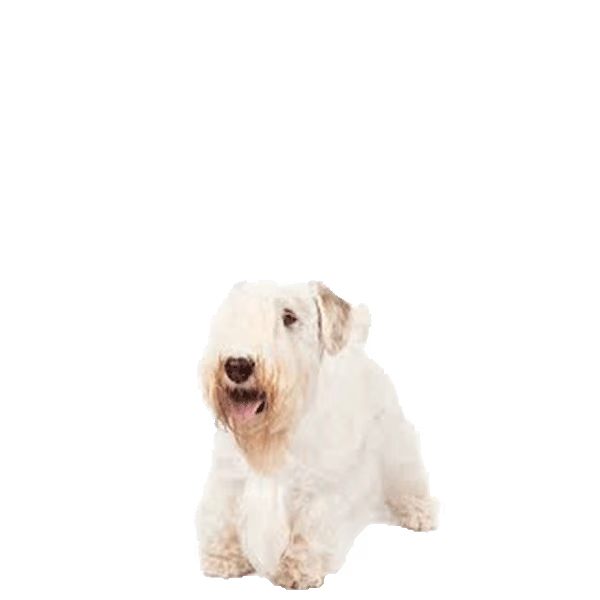
The Sealyham Terrier is a low, broad, sturdy white terrier with a long head, folded ears, a weatherproof double coat and a notable beard.
The Sealyham Terrier gives an impression of real substance on short legs. The body is longer than it is tall, the chest deep and broad, and the bone heavy for the dog's height. The head is long and broad across the skull, with a strong, square muzzle and folded ears that sit close to the cheek. Dark, deep-set eyes, a full beard and leg furnishings round out the look. The overall outline is balanced and workmanlike, not delicate.
| Trait | Standard |
|---|---|
| Height | About 25 to 28 cm at the shoulder |
| Weight | About 10 to 11 kg |
| Coat | Double coat: soft, dense undercoat under a hard, wiry outer coat |
| Colours | Mainly white; may carry lemon, tan, badger or brindle markings on the head and ears |
| Eyes | Dark, medium size, set fairly wide and deep |
The weatherproof double coat protected the dog during underground work and in wet country. The body coat is mostly white. Many Sealyhams carry coloured markings limited to the head and ears, ranging from pale lemon and tan through badger grey to brindle. Heavy patches across the body aren't typical of the breed. The hard outer coat is traditionally kept up by hand-stripping on show dogs, while a lot of companion dogs are clipped instead, which softens the texture over time. Because the coat is pale, keep an eye on exposed skin, especially around the nose, for sunburn through the harsher months; a freshly clipped dog has less natural protection.
The Sealyham Terrier is calm, loyal and good-natured at home, while staying alert and confident enough to double as a watchful little guard dog.
The Sealyham Terrier carries a steadier temperament than most terriers. At home it's calm and affectionate with its family and will happily settle for long stretches. The breed forms close bonds and tends to attach to the whole household rather than just one person.
Around strangers the Sealyham starts out alert and a bit reserved. It announces visitors with a deep bark well out of proportion to its size, which makes it an effective watchdog. Once introductions are done, most Sealyhams relax. The underlying terrier confidence means the breed isn't timid and will hold its ground if pushed.
How it goes with other animals depends on early socialisation. A Sealyham raised alongside other dogs and cats can live with them peacefully, but the hunting background means small pets, including rodents or the backyard chooks, can trigger the chase instinct. The breed is good with considerate children and patient by terrier standards, though rough handling is best avoided. Independence and a stubborn streak are par for the course, so the dog responds better to motivation than to drilling the same command over and over.
| Trait | Rating |
|---|---|
| Affection | 4 |
| Energy | 2 |
| Trainability | 3 |
| Vocalness | 3 |
| Shedding | 2 |
The Sealyham Terrier needs regular coat care, brushing several times a week plus periodic trimming or stripping, and moderate daily exercise timed around the heat.
The Sealyham Terrier is moderate in its overall care needs, with grooming the part that takes the most time. The double coat doesn't shed heavily, but it mats and picks up debris if left unchecked, and the white furnishings stain if they aren't kept clean.
The Sealyham Terrier adapts well to units and houses alike. Its calm indoor manner and moderate exercise needs suit smaller homes. A secure yard is a bonus, but fencing needs to be solid and dig-proof, because the breed will dig given half a chance. The weatherproof coat helps the dog cope with a range of conditions, though it shouldn't be left outside through the worst of an Australian summer; make sure it has shade, fresh water and a cool spot indoors on hot days.
The Sealyham Terrier does well on a complete diet for small breeds, fed in measured portions across two meals a day to keep weight gain in check.
The Sealyham Terrier needs a complete, balanced diet suited to a small-to-medium breed with moderate activity. Because the breed is solidly built and not especially active, it can put on weight if it's fed too freely. Measure portions and adjust them to the individual dog's age, weight and activity level rather than leaving food out all day. Fresh water should always be on hand.
| Life stage | Amount per day | Meals |
|---|---|---|
| Puppy (2 to 6 months) | Per puppy food label, split into small feeds | 3 to 4 |
| Junior (6 to 12 months) | Per label, transitioning towards adult food | 2 to 3 |
| Adult | About 3/4 to 1.25 cups of quality dry food | 2 |
| Senior | Slightly reduced, watch the weight | 2 |
Keep treats to roughly 10 per cent of daily calories to guard against the weight gain the breed is prone to. Use small, low-fat treats for training. Most Sealyhams on a complete commercial diet don't need extra supplements; run any joint, skin or coat supplement past a vet before adding it in.
The Sealyham Terrier is generally healthy with a lifespan of 12 to 14 years, though eye conditions, lens luxation and skin issues turn up in the breed.
The Sealyham Terrier is a generally hardy breed with a typical lifespan of 12 to 14 years. As with many purebred dogs, a number of inherited conditions turn up in the line, and responsible breeders screen for the most significant of these. Buying from a breeder who health-tests the parents lowers the risk of the conditions below.
| Condition | Signs | Note |
|---|---|---|
| Primary lens luxation | Cloudy or painful eye, sudden change in vision | Inherited; DNA testing of breeding stock is available |
| Retinal and other eye disorders | Loss of night vision, bumping into things | Eye screening of the parents is recommended |
| Skin and allergy issues | Itching, redness, recurrent ear trouble | Manage with diet, grooming and veterinary care |
| Joint problems | Stiffness, reluctance to jump | Keep the dog at a healthy weight |
The Sealyham Terrier is intelligent but independent, so training works best as short, motivating, reward-based sessions started early.
The Sealyham Terrier is intelligent and capable, but its independent, slightly stubborn streak means it won't drill endlessly the way some breeds will. The dog picks things up quickly once it sees a reason to cooperate, and switches off during dull repetition. Calm consistency works far better than force. Early socialisation with people, places and other animals helps the breed settle into the relaxed adult temperament it's known for. Because prey drive runs strong, a reliable recall takes patience, and many owners keep the dog on lead near small animals or traffic.
Sealyham Terriers reach maturity at one to two years, have litters of about three to five puppies after roughly 63 days of pregnancy, and should only be bred from health-tested parents.
Breeding the Sealyham Terrier is a careful undertaking, because the breed is rare and the gene pool is small. Responsible breeders put health screening, sound temperament and genetic diversity ahead of volume. Dogs reach physical and behavioural maturity between one and two years of age, and it's best to hold off breeding until the dog is mature and has passed the relevant health tests, including DNA testing for primary lens luxation and eye examinations.
Mating follows the standard canine pattern, and pregnancy runs about 63 days from conception. Litters tend to be small, usually around three to five puppies. Because of the breed's broad head and chest, breeders keep a close eye on whelping and bring in a vet. Puppies are weaned over several weeks and stay with the dam and littermates through an important socialisation window before heading to new homes, typically at around eight weeks or later. Given the breed's vulnerable status, anyone thinking about breeding should work with breed clubs, including terrier groups affiliated with Dogs Australia, and with experienced mentors.
| Metric | Value |
|---|---|
| Sexual maturity | About 1 to 2 years (breed only once mature and health-tested) |
| Gestation | About 63 days |
| Typical litter size | About 3 to 5 puppies |
| Weaning | About 6 to 8 weeks |
| Recommended screening | Eye examination and lens luxation DNA test |
A free lifetime United Pet Club record for your Sealyham Terrier, with the microchip registered at no charge and nothing falling due each year.
Rangers and shelters can only call the number the scan hands them. Give your Sealyham Terrier a free United Pet Club profile and that number is yours: dog registration takes a few minutes, costs nothing for his lifetime, and works with or without a chip in place.
A chipped Sealyham Terrier without a registration is carrying a number nobody can use. File it with United Pet Club and the number works for him: free for life, open to every chip brand sold here, searchable from any clinic or pound in the country. Microchip registration now, free account while you're at it.
Sign up free with United Pet Club, add his name, breed, and a photo, and you're done. The lifetime plan keeps the profile live at no cost, and the chip number can go in whenever the vet's done his bit.
Add the 15-digit number to your free account with your address and mobile. Registration and every update after it are free, and chips from any manufacturer an Australian vet implants are accepted.
In most states and territories, yes, chipping is required and the register entry comes with it. The state register and your United Pet Club record do different jobs: one satisfies the council, the other keeps a current phone number one scan away, free.
Nothing with United Pet Club. Profile, chip registration, and unlimited updates are covered for his whole life, no annual fee in sight.
Common questions about the Sealyham Terrier cover its size, temperament, grooming demands, lifespan, suitability and how hard the breed is to track down.
The Sealyham is a small breed, standing about 25 to 28 cm at the shoulder and weighing roughly 10 to 11 kilograms. It's short-legged but solidly built, so it carries more weight than its height would suggest.
Calm, loyal and good-natured at home, while staying alert and confident. The breed is steadier than most terriers, bonds closely with its family, and makes a watchful little guard dog.
Care is moderate overall, with grooming the main demand. Plan on brushing several times a week and having the coat stripped or clipped every few months. Exercise needs are modest, so the breed suits units and houses alike.
The typical lifespan is 12 to 14 years. Keeping the dog at a healthy weight, staying on top of vet and eye checks, and buying from health-tested parents all help towards a long life.
Yes, for a lot of households. It's good with considerate older children and can live with other pets when socialised early. First-time owners can manage one with consistent, reward-based training, since the breed is independent and can be stubborn.
Yes. The breed is uncommon these days and is listed as vulnerable or rare by several kennel bodies. Expect a wait for a puppy, and work with a recognised breeder or breed club, such as those affiliated with Dogs Australia.